
Agricultural spraying drone price: what affects the cost
Publication Date
author
Agricultural spraying drone price varies far beyond the sticker tag. For researchers, operators, buyers, and decision-makers, understanding cost means comparing payload, tank size, autonomy, service support, and component quality—much like evaluating a vtol drone for pipeline inspection or a drone thermal camera resolution comparison. This guide breaks down the real pricing factors behind agricultural spraying drones so you can assess value with data, not marketing claims.
If you are searching for agricultural spraying drone price, your real question is usually not “What is the cheapest model?” but rather “What am I actually paying for, and which cost drivers matter for my operation?” In practice, the price can vary significantly depending on spray capacity, frame design, radar and obstacle sensing, battery ecosystem, precision control, spare parts access, regulatory compliance, and after-sales support. For professional buyers, the right decision comes from looking at total operating value, not only upfront purchase cost.
What is the typical agricultural spraying drone price range?
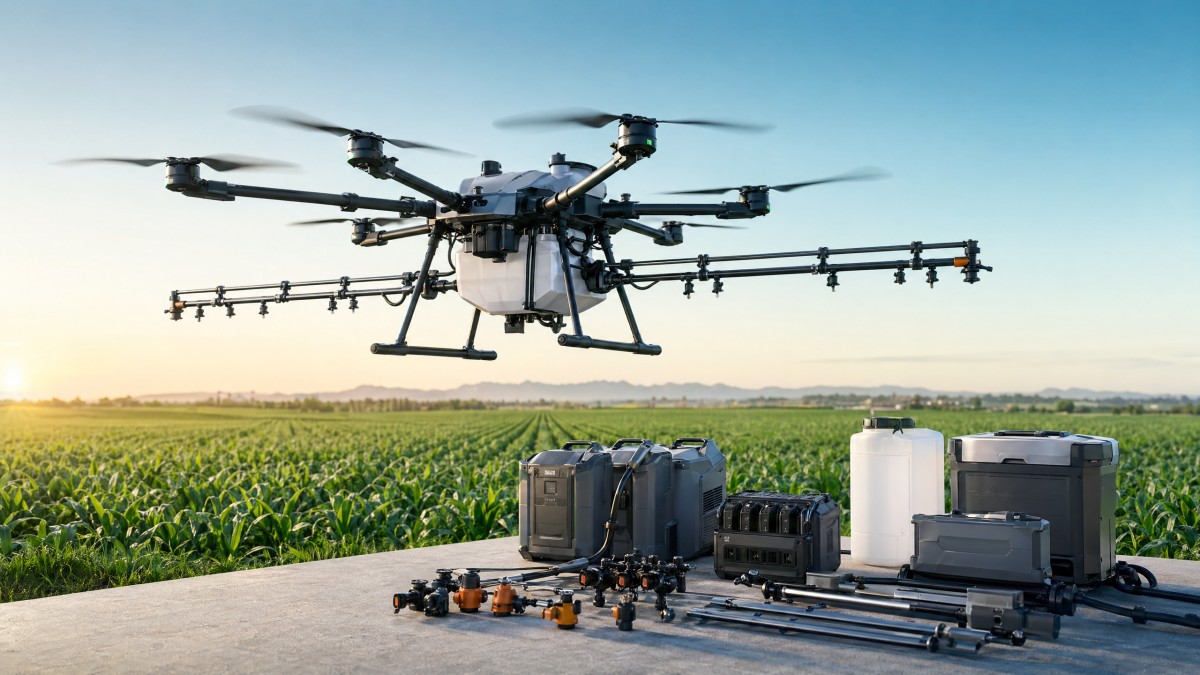
In broad market terms, agricultural spraying drone price typically falls into several practical bands:
- Entry-level or light-duty systems: often suited to small farms, test deployments, or basic crop spraying tasks.
- Mid-range professional drones: commonly used by service providers and growing farms that need stronger productivity, better route planning, and more stable spraying performance.
- High-capacity commercial platforms: built for larger acreage, heavier daily duty cycles, better sensing packages, faster workflow, and stronger support infrastructure.
However, these categories alone do not tell the full story. Two drones with similar listed tank volumes may have very different prices because one includes more reliable pumps, better flow control, higher wind resistance, smarter terrain following, and stronger fleet management software. That is why buyers should treat price bands as a starting point, not as a final comparison tool.
What affects the cost most in a spraying drone?
Several technical and commercial factors drive the final price.
1. Payload and tank capacity
Higher payload generally increases price because it requires stronger motors, ESCs, propellers, landing gear, and frame structure. A larger liquid tank also means more stringent requirements for center-of-gravity control and flight stability as fluid mass changes during spraying.
2. Power system and battery ecosystem
Battery performance is a major hidden cost factor. A lower-priced drone may still become expensive if it needs multiple extra battery sets, high-power chargers, or frequent battery replacement. Industrial users should compare:
- Battery cycle life
- Charging speed
- Thermal management
- Swap efficiency in the field
- Battery cost per season
3. Spray system quality
Nozzle design, pump type, droplet consistency, pressure stability, and flow calibration all affect both performance and price. For operators, poor spray consistency can waste chemical input, increase drift risk, and reduce crop coverage quality. A more expensive spray system may offer better actual return if it improves deposition efficiency and repeatability.
4. Positioning, sensing, and autonomy
Drones with RTK positioning, terrain following radar, obstacle avoidance, route memory, and intelligent mission planning usually cost more. But these features can directly improve application accuracy, reduce operator workload, and help maintain stable altitude over uneven farmland.
5. Airframe materials and durability
Commercial agricultural drones operate in harsh environments: moisture, agrochemicals, dust, vibration, and repeated takeoff cycles. Better corrosion resistance, stronger sealing, and higher structural durability often justify a higher price, especially for users running intensive seasonal operations.
6. Brand support and service network
After-sales support often explains a meaningful share of the price difference. Spare parts lead time, software updates, maintenance training, and local repair support can have more real-world value than a lower initial quote from a supplier with weak service coverage.
Why the cheapest agricultural spraying drone is often not the lowest-cost option
For procurement teams and business decision-makers, the purchase price is only one part of the cost picture. The more important metric is usually cost per hectare or cost per acre over time.
A cheaper drone can become more expensive if it causes:
- More downtime during peak spraying windows
- Lower field coverage per hour
- Higher battery replacement frequency
- More spray drift or uneven application
- Limited spare parts access
- Shorter service life
This is especially important for agricultural contractors and enterprise-scale farming operations. If a machine fails during a narrow treatment window, the operational loss can be far greater than the savings from buying a lower-priced unit.
How operators and buyers should compare value, not just price
A practical evaluation framework should include both engineering factors and business outcomes.
Field productivity
Ask how many hectares per hour the drone can realistically cover under normal working conditions, not just in ideal lab-style marketing scenarios. Coverage depends on refill time, battery swap time, route efficiency, wind conditions, and spray width.
Application precision
Compare the consistency of spray output, droplet control, altitude maintenance, and overlap performance. Better precision can lower chemical waste and support more predictable agronomic results.
Reliability under workload
For serious users, reliability should be evaluated under full-load operation, repeated daily cycles, and high-temperature environments. A drone that performs well in a demo may still underperform in actual field conditions.
Maintenance burden
Look at how often parts require replacement, how quickly pumps and nozzles can be serviced, and whether key components are modular. Lower maintenance complexity can significantly improve uptime.
Training and usability
For operators, interface quality and training support matter. A more intuitive mission planning workflow can reduce human error and shorten deployment time for new crews.
Which specifications deserve the closest attention during procurement?
For information researchers, procurement specialists, and technical decision-makers, these are often the most useful points to verify before purchase:
- Maximum takeoff weight and effective working payload
- Tank capacity versus actual stable spraying performance
- Flow rate range and calibration method
- Pump redundancy and nozzle compatibility
- RTK accuracy and navigation stability
- Terrain following performance over uneven fields
- Battery charging cycle time and expected cycle life
- Ingress protection and corrosion resistance
- Software update policy and fleet management capabilities
- Spare parts lead time and local service support
This approach aligns with the same disciplined comparison logic used in advanced UAV selection for industrial inspection, mapping, or thermal imaging systems: evaluate measurable performance parameters, not just promotional wording.
What hidden costs should enterprises plan for?
Many buyers underestimate the surrounding system cost. In addition to the drone itself, budgeting should include:
- Extra batteries and charging stations
- Transport cases or field logistics equipment
- Replacement nozzles, pumps, and wear parts
- Operator training and certification
- Software licensing or platform fees
- Maintenance labor
- Insurance and regulatory compliance costs
For enterprise procurement, these secondary costs can materially affect ROI. A drone platform with a higher purchase price but stronger operational ecosystem may produce a better total ownership outcome.
When does a premium-priced spraying drone make sense?
A higher-priced system is usually justified when one or more of the following conditions apply:
- You manage large acreage and need consistent daily throughput
- You operate in uneven or obstacle-rich terrain
- You require higher application precision to reduce chemical waste
- You rely on uptime during narrow seasonal windows
- You need traceable data and better fleet management for multi-team operations
- You want long-term supplier support and standardized maintenance workflows
On the other hand, if usage frequency is low and operational complexity is limited, a simpler and lower-cost drone may be fully adequate. The key is matching technical capability to mission profile.
How to make a smarter agricultural spraying drone buying decision
The best way to assess agricultural spraying drone price is to connect cost with measurable operational outcomes. Instead of asking only for a quote, ask suppliers for structured data:
- Actual field efficiency under load
- Recommended battery configuration for a full workday
- Component replacement intervals
- Spray uniformity performance
- Failure rates or maintenance records
- Support response time and parts availability
For buyers comparing multiple vendors, a weighted scorecard often works better than a simple price table. Include acquisition cost, expected service life, application quality, maintenance burden, software capability, and support strength. This gives a more accurate basis for investment decisions.
Conclusion: price matters, but performance economics matter more
Agricultural spraying drone price is shaped by much more than tank size or brand label. The real cost is influenced by payload engineering, battery architecture, spray system performance, autonomy features, structural durability, and supplier support. For operators, buyers, and enterprise decision-makers, the right question is not “Which drone is cheapest?” but “Which drone delivers the best value per season, per hectare, and per mission?”
When evaluated through performance, uptime, precision, and lifecycle cost, a more expensive drone may prove to be the more economical choice. In agricultural UAV procurement, data-driven comparison consistently leads to better outcomes than price-only selection.
Search News
Hot Articles
- Carbon Fiber StructuresHow to Specify Aerospace Carbon Fiber Assemblies for Lightweight, Load-Bearing PartsJul 11, 2026
- Machine VisionXiaomi, Alibaba DAMO Academy Drive Open-Source Robotics Model Ecosystem, Lowering Algorithm Development Barriers for Overseas SMEs Adopting Chinese Robotics SolutionsMar 30, 2026
- Cobots & ArmsShanxi 'AI+' Conference Showcases Embodied Intelligence with Multinational Buyer Engagement: Key Industry ImplicationsMar 30, 2026
Popular Tags
Recommended News
 Jul 11, 2026How to Specify Aerospace Carbon Fiber Assemblies for Lightweight, Load-Bearing PartsAerospace carbon fiber assemblies: learn how to specify laminate design, load data, joining methods, and inspection controls for lighter, reliable load-bearing aerospace parts.Elena Rostova (UAV Systems Researcher)
 Mar 30, 2026Xiaomi, Alibaba DAMO Academy Drive Open-Source Robotics Model Ecosystem, Lowering Algorithm Development Barriers for Overseas SMEs Adopting Chinese Robotics SolutionsXiaomi & Alibaba DAMO Academy's open-source robotics models lower algorithm barriers for global SMEs. Boost efficiency in manufacturing, logistics & smart retail with ROS 2 compatible solutions.TSV Data Lab
 Mar 30, 2026Shanxi 'AI+' Conference Showcases Embodied Intelligence with Multinational Buyer Engagement: Key Industry ImplicationsShanxi 'AI+' Conference highlights embodied intelligence with Tesla, Ubtech & Jiantao showcasing multimodal robotics. 40+ global buyers validated tech on-site, creating new B2B channels for industrial automation & AI solutions.Chen Wei (Automation Lead Engineer)
 Mar 30, 2026Zhongguancun Unveils 6G Integrated Sensing-Computing-Intelligence Platform to Empower Embodied Robots for Global Industrial ApplicationsZhongguancun's new 6G platform revolutionizes industrial robotics with <10ms latency, empowering global automotive, logistics & port automation. Discover how this tech boosts China's smart manufacturing exports.TSV Data Lab
 Mar 30, 2026Mech-Mind Tianjin Embodied Intelligence R&D and Production Base Goes Live, Cutting Delivery Time by 20%–30% for Global Customized AMR+Vision SolutionsMech-Mind's Tianjin AMR+Vision production base cuts delivery time by 20%-30% for欧美 & Latin American markets. Discover how this PLd-certified facility accelerates customized robotics solutions for smart manufacturing and logistics.Chen Wei (Automation Lead Engineer)
 Mar 30, 2026Boao Forum Reveals 'Co-evolution of Big and Small Brains' Trend in Humanoid Robots, China's Embodied Intelligence Accelerates Adaptation to Overseas Manufacturing Service ScenariosDiscover how China's humanoid robots, featuring 'Co-evolution of Big and Small Brains,' are revolutionizing global manufacturing. Learn about Embodied Tian Gong 3.0's ISO compliance and overseas deployment at Boao Forum 2026.Chen Wei (Automation Lead Engineer)
 Mar 30, 2026China Railway Industrial Secures Patent for Embodied Robotics in Material Handling, Boosting High-Precision Delivery Capabilities for Overseas Infrastructure and Manufacturing ProjectsChina Railway Industrial's new patent for embodied robotics in material handling boosts high-precision delivery for global infrastructure & manufacturing. Discover how this innovation enhances logistics accuracy in automotive, rail transit & EPC projects.Chen Wei (Automation Lead Engineer)
 Oct 26, 2026AMAXiMAL Releases Open-Source TopMod 3D v3 With Claude AIExplore AMAXiMAL’s free, open-source TopMod 3D v3 with Claude AI assistance, topology-based modeling and plywood fabrication tools that connect complex designs to physical builds.Dr. Marcus Vance
 Oct 26, 2026Choosing a SCADA System Integrator Company: PLC Compatibility and Long-Term SupportChoose a scada system integrator company with proven PLC compatibility and reliable long-term support. Discover what to test, compare, and require before investing.Victor Lin (Chief Software Architect)
 Oct 25, 2026Hesai Leads Global ADAS Main Lidar Shipments in Yole’s 2026 ReportHesai led global ADAS main lidar shipments with a 43% share in 2025, according to Yole’s 2026 report. Explore what this ranking reveals about its automotive market position.TSV Data Lab
 Oct 25, 2026Choosing an Aerospace Materials Manufacturer: Quality and Traceability ChecksChoosing an aerospace materials manufacturer? Learn how to verify certifications, test reports, and lot traceability to qualify suppliers confidently and reduce costly sourcing risks.Dr. Marcus Vance
 Oct 24, 2026Guotai Haitong: Global Entry-Level 3D Printer Shipments Rose 39% in Q1 2026Entry-level 3D printer shipments rose 39% in Q1 2026, Guotai Haitong reports. Explore how AI, multicolor printing and print farms are shaping market growth.Dr. Marcus Vance
 Oct 24, 2026Choosing an Industrial Vision Inspection Supplier: Acceptance Tests That MatterChoose an industrial vision inspection supplier with confidence. Discover acceptance tests for defect detection, false rejects, production speed, and reliable part rejection before you buy.TSV Data Lab
 Oct 23, 2026US Navy Raises Gecko Robotics Contract Ceiling to $300M for Robotic Fleet MaintenanceUS Navy raises Gecko Robotics’ contract ceiling to $300M for Pacific Fleet robotic inspections. Explore potential opportunities for maintenance suppliers and key procurement considerations.Chen Wei (Automation Lead Engineer)
 Oct 23, 2026Choosing Industrial Sensing Systems for Global Plants: Protocol CompatibilityCompare industrial sensing systems international buyers can trust. Explore protocol compatibility, reduce integration risks, and select proven configurations for reliable global plant deployments.TSV Data Lab
 Oct 22, 2026KUKA Showcases Physical AI and iiQKA.AI Vision at NVIDIA GTC BerlinExplore KUKA’s Physical AI showcase at NVIDIA GTC Berlin and discover how iiQKA.AI Vision aims to simplify robotic vision integration and improve 2D and 3D scene recognition.TSV Data Lab
 Oct 22, 2026Robotic Machining of Advanced Composites: What Tolerances Are Achievable?Explore advanced materials machining robotics: discover what drives achievable composite tolerances and how to validate accuracy before investing in your next machining system.Dr. Marcus Vance
 Oct 21, 2026China’s Industrial Robot Exports Near RMB 10 Billion in First Nine Months of 2026China’s industrial robot exports neared RMB 10 billion in January–September 2026, with value rising faster than volume. Explore the data and what it could mean for suppliers.Chen Wei (Automation Lead Engineer)
 Oct 21, 2026Low-Latency Industrial Data Processing: Pricing and Key Cost DriversExplore industrial data latency price drivers, from edge hardware to integration and support. Learn how to compare quotes, verify performance, and avoid unnecessary costs.TSV Data Lab
 Oct 20, 2026KUKA Launches iiQKA.AI Vision to Simplify Industrial Image ProcessingKUKA iiQKA.AI Vision simplifies industrial image processing with controller-based 2D and 3D vision. Explore drag-and-drop setup for vision-guided automation.TSV Data Lab
 Oct 20, 2026Smart Industrial Edge Devices: Key Criteria for Legacy PLC IntegrationChoose smart industrial edge devices for legacy PLC integration. Discover key criteria for compatibility, data quality, security, and reliable collection without disrupting control.TSV Data Lab
 Oct 19, 2026Choosing a Radar Sensor by Application: Range, Resolution, and Field of ViewSimplify radar sensor application based product selection. Compare range, resolution, and field of view to avoid blind spots and choose with confidence. Explore the guide.TSV Data Lab
 Oct 18, 2026Comparing Material Options for Procurement: Specs, Costs, and Supply RisksExplore procurement oriented technical content on material options, specs, costs, and supply risks. Compare alternatives to cut hidden expenses and make confident sourcing decisions.Dr. Marcus Vance
 Oct 17, 20265-Axis CNC Positioning Accuracy: How to Interpret ISO 230-2 Test ResultsAssess 5 axis CNC machining positioning accuracy with ISO 230-2. Learn to interpret repeatability, reversal error, and test conditions to compare suppliers and make confident acceptance decisions.Dr. Marcus Vance























