Drone for search and rescue operations: payload or flight time first?
Publication Date
author
When evaluating a drone for search and rescue operations, project leaders face a critical engineering trade-off: payload or flight time first? In high-stakes missions, this choice directly affects sensor capability, endurance, deployment efficiency, and total operational risk. This article cuts through marketing claims to examine which parameter matters most under real-world rescue scenarios, helping engineering and procurement teams make data-driven UAV decisions.
Why scenario differences matter before choosing a drone for search and rescue operations
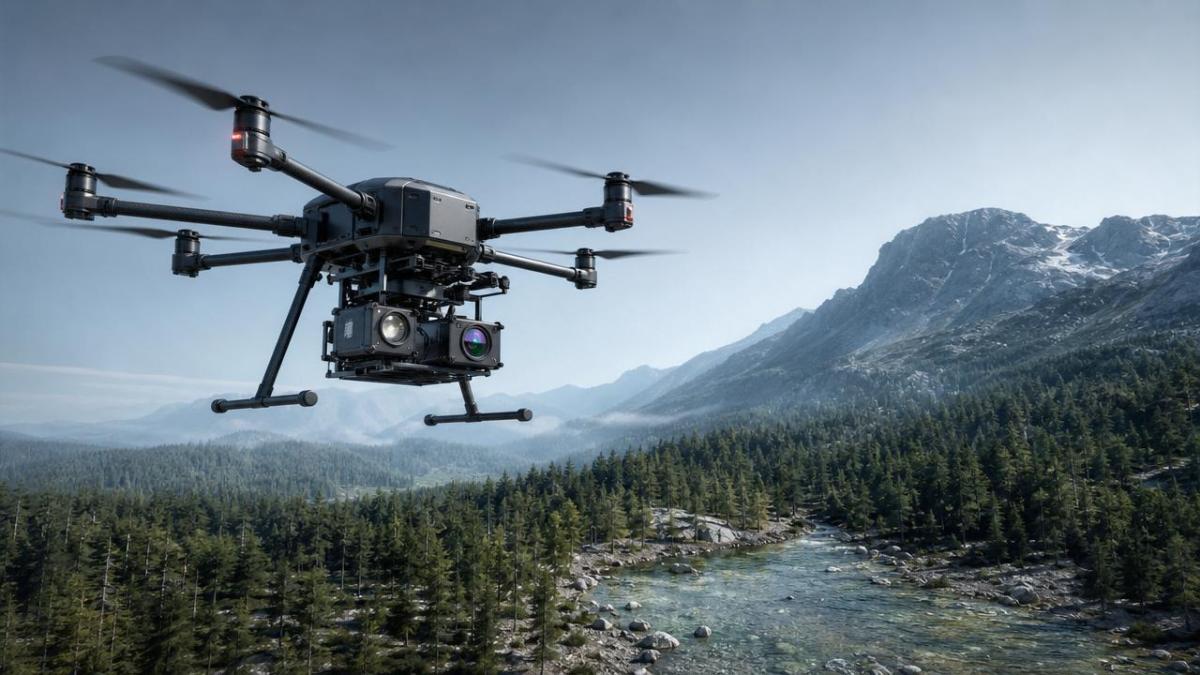
For a project manager, the biggest mistake is treating every rescue mission as if it has the same operating profile. A drone for search and rescue operations used over dense forest at first light is not facing the same constraints as one scanning a flooded urban district, a mountain slope, or a shoreline in high wind. In one scenario, long endurance may be the only way to cover enough territory before weather closes in. In another, carrying a thermal camera, spotlight, loudspeaker, drop kit, or LiDAR sensor may be what turns a search platform into a life-saving tool.
That is why the payload-versus-flight-time question should never be answered in isolation. Payload determines what the aircraft can see, measure, deliver, or communicate. Flight time determines how long it can stay useful without landing, swapping batteries, or redeploying another crew. For engineering-led procurement teams, the correct priority depends on mission geometry, terrain complexity, visibility, response window, launch conditions, and staffing model.
At TechStat Vanguard, the practical view is simple: parameters only matter in context. A heavier rescue drone with advanced sensors may look superior on a specification sheet, but if it can remain airborne for only 18 minutes in real wind conditions, it may fail the mission. Likewise, a lightweight platform promising exceptional endurance may be ineffective if it cannot carry the imaging payload required to detect a survivor under canopy or in low-light conditions.
The first decision rule: define the mission objective before comparing specifications
Before selecting any drone for search and rescue operations, project leaders should define the primary mission objective in operational language, not marketing language. Is the UAV expected to find a person quickly, maintain overwatch on a known target, relay situational awareness to ground teams, deliver small emergency supplies, or map hazards for secondary rescue entry? Each objective shifts the acceptable balance between payload and flight time.
A useful internal framework is to classify missions into three decision categories:
- Detection-first missions, where sensor quality and payload capability dominate.
- Coverage-first missions, where endurance and area sweep efficiency dominate.
- Intervention-support missions, where moderate endurance and multi-function payload balance are both required.
This classification helps teams avoid a common procurement error: choosing an aircraft based on maximum advertised flight time without checking whether that number assumes zero wind, no auxiliary payload, and ideal battery temperature. For a drone for search and rescue operations, useful endurance under mission load matters more than brochure endurance.
Typical rescue scenarios and what should come first
Different application environments change the answer. The table below provides a practical starting point for scenario-based decision making.
The message is clear: no single rule applies to every drone for search and rescue operations. Scenario fit is more important than headline specifications.
When flight time should be prioritized
Flight time should come first when the mission is defined by uncertainty in target location and the search area is physically large. In these cases, the drone’s job is to remain airborne long enough to reduce search gaps, maintain consistent observation patterns, and minimize downtime between sorties. This is especially relevant for wilderness, agricultural edge zones, floodplains, and coastal scans where ground access is slow.
For project teams, endurance is not only about air time. It also affects staffing, battery logistics, charger capacity, field vehicle loadout, and tempo of command decisions. A drone for search and rescue operations that can sustain longer missions may reduce the number of takeoff cycles, lower pilot fatigue, and improve continuity of thermal interpretation or visual spotting.
Choose a flight-time-first profile when these conditions apply:
- Search areas are broad and targets are not yet localized.
- Ground teams rely on prolonged airborne overwatch.
- The mission demands repeated grid scans with minimal interruption.
- Payload requirements can be satisfied by a lighter thermal-visual combo.
- Battery swap points are remote or operationally inconvenient.
However, teams should verify real endurance under full mission weight, route speed, and wind. A nominal 45-minute platform may deliver far less once a gimbal, thermal module, spotlight, and cold-weather battery derating are factored in.
When payload should be prioritized
Payload should come first when locating the subject depends on higher-fidelity sensing rather than broad-area persistence. In obstructed, cluttered, or low-light environments, the difference between mission success and failure often comes from sensor quality, zoom stability, thermal resolution, target classification, and auxiliary tools such as loudspeakers or precision drop systems.
A drone for search and rescue operations in dense woodland, collapsed urban zones, ravines, or nighttime incidents often benefits from carrying more than a basic camera. A payload-first configuration may include dual-sensor EO/IR, long-range zoom, spotlight, laser range support, or mapping payloads that help teams assess slope hazards and blocked access. In these scenarios, the aircraft is not just extending visibility; it is generating actionable data.
Select a payload-first profile when the mission includes:
- Heavy vegetation, rubble, or visual obstruction.
- Night or smoke-affected conditions.
- The need to identify rather than merely detect a subject.
- Small-item emergency delivery or two-way communication support.
- Regulated documentation needs for post-incident review.
The trade-off, of course, is that every added gram affects endurance, climb rate, and in some cases wind tolerance. Project managers should ask not “How much can it lift?” but “What payload combination can it carry while still meeting minimum usable flight time?”
How terrain, weather, and deployment model change the answer
The payload-versus-flight-time debate becomes more complex once environmental factors are introduced. High winds increase power draw and can negate endurance advantages. Cold temperatures reduce battery performance. High altitude reduces air density and limits useful lift. Rain or sea spray may restrict which payloads can be safely deployed. For a drone for search and rescue operations, these variables often matter more than paper specifications.
Deployment model matters as well. A centralized emergency services team with multiple battery sets, mobile charging, and trained observers can tolerate shorter per-flight endurance if the payload advantage is significant. A smaller field unit operating far from support vehicles may prefer fewer sorties and a simpler sensor stack. Engineering and procurement teams should therefore assess the wider system, not only the aircraft.
Practical evaluation checkpoints
- Useful flight time with mission payload, not empty-airframe endurance.
- Hover stability and image quality in expected wind bands.
- Battery swap cycle time and charger throughput.
- Thermal detection performance at real operating altitude.
- Transport, setup, and launch time under field conditions.
Common misjudgments when selecting a drone for search and rescue operations
Several recurring errors appear in UAV procurement for rescue use. The first is overvaluing maximum payload without defining payload necessity. If a team rarely uses cargo drops or advanced mapping sensors, paying the endurance penalty for unused capacity is inefficient. The second is assuming all thermal systems are equally effective. Thermal capability varies by resolution, refresh rate, lens configuration, processing quality, and environmental contrast.
Another common mistake is ignoring operator workflow. A highly capable drone for search and rescue operations may underperform if the data link, user interface, or handoff to ground teams is slow and confusing. Rescue missions are time-compressed. The value of payload data depends on how quickly it can be interpreted and acted upon.
Finally, teams often compare aircraft only at the unit level rather than at the fleet level. Sometimes the best answer is not one “perfect” platform, but a two-tier model: one endurance-focused drone for wide-area sweep and one payload-rich drone for close inspection and intervention support.
A scenario-based recommendation framework for project leaders
For managers responsible for procurement, budgeting, and deployment readiness, the strongest approach is to convert mission patterns into measurable thresholds. Instead of asking whether payload or flight time is more important in general, define the minimum values required by your most common incidents.
FAQ: practical questions about payload and endurance
Is the best drone for search and rescue operations always the one with the longest flight time?
No. Long endurance is valuable only if the drone can still detect, identify, and support the rescue task. If the sensor package is insufficient, extra minutes in the air may not improve outcomes.
Should smaller teams default to lighter UAVs?
Often yes, but not always. Smaller teams benefit from simpler logistics and faster launch, yet they may still need a payload-rich platform if most missions happen at night or in obstructed terrain.
Can one platform cover all rescue scenarios?
Rarely at a high standard. A modular system can help, but many organizations achieve better results by matching different aircraft profiles to different mission classes.
Final takeaway: choose mission effectiveness, not marketing extremes
The right drone for search and rescue operations is not the one that wins a brochure comparison on a single metric. It is the one that delivers the required sensor performance, usable endurance, and deployment reliability for your most frequent mission scenarios. If your operations are dominated by large-area uncertainty, put flight time first. If your incidents are shaped by darkness, clutter, terrain complexity, or intervention needs, put payload first. If your profile is mixed, define minimum thresholds for both and test against real field conditions.
For project leaders, the next step is straightforward: map your top three rescue scenarios, identify required payload functions, calculate useful endurance under expected conditions, and compare platforms at system level rather than headline level. That is how engineering teams reduce procurement risk, improve mission readiness, and select a UAV solution grounded in operational truth rather than sales language.
Search News
Hot Articles
- Carbon Fiber StructuresHow to Specify Aerospace Carbon Fiber Assemblies for Lightweight, Load-Bearing PartsJul 11, 2026
- Machine VisionXiaomi, Alibaba DAMO Academy Drive Open-Source Robotics Model Ecosystem, Lowering Algorithm Development Barriers for Overseas SMEs Adopting Chinese Robotics SolutionsMar 30, 2026
- Cobots & ArmsShanxi 'AI+' Conference Showcases Embodied Intelligence with Multinational Buyer Engagement: Key Industry ImplicationsMar 30, 2026
Popular Tags
Recommended News
 Jul 11, 2026How to Specify Aerospace Carbon Fiber Assemblies for Lightweight, Load-Bearing PartsAerospace carbon fiber assemblies: learn how to specify laminate design, load data, joining methods, and inspection controls for lighter, reliable load-bearing aerospace parts.Elena Rostova (UAV Systems Researcher)
 Mar 30, 2026Xiaomi, Alibaba DAMO Academy Drive Open-Source Robotics Model Ecosystem, Lowering Algorithm Development Barriers for Overseas SMEs Adopting Chinese Robotics SolutionsXiaomi & Alibaba DAMO Academy's open-source robotics models lower algorithm barriers for global SMEs. Boost efficiency in manufacturing, logistics & smart retail with ROS 2 compatible solutions.TSV Data Lab
 Mar 30, 2026Shanxi 'AI+' Conference Showcases Embodied Intelligence with Multinational Buyer Engagement: Key Industry ImplicationsShanxi 'AI+' Conference highlights embodied intelligence with Tesla, Ubtech & Jiantao showcasing multimodal robotics. 40+ global buyers validated tech on-site, creating new B2B channels for industrial automation & AI solutions.Chen Wei (Automation Lead Engineer)
 Mar 30, 2026Zhongguancun Unveils 6G Integrated Sensing-Computing-Intelligence Platform to Empower Embodied Robots for Global Industrial ApplicationsZhongguancun's new 6G platform revolutionizes industrial robotics with <10ms latency, empowering global automotive, logistics & port automation. Discover how this tech boosts China's smart manufacturing exports.TSV Data Lab
 Mar 30, 2026Mech-Mind Tianjin Embodied Intelligence R&D and Production Base Goes Live, Cutting Delivery Time by 20%–30% for Global Customized AMR+Vision SolutionsMech-Mind's Tianjin AMR+Vision production base cuts delivery time by 20%-30% for欧美 & Latin American markets. Discover how this PLd-certified facility accelerates customized robotics solutions for smart manufacturing and logistics.Chen Wei (Automation Lead Engineer)
 Mar 30, 2026Boao Forum Reveals 'Co-evolution of Big and Small Brains' Trend in Humanoid Robots, China's Embodied Intelligence Accelerates Adaptation to Overseas Manufacturing Service ScenariosDiscover how China's humanoid robots, featuring 'Co-evolution of Big and Small Brains,' are revolutionizing global manufacturing. Learn about Embodied Tian Gong 3.0's ISO compliance and overseas deployment at Boao Forum 2026.Chen Wei (Automation Lead Engineer)
 Mar 30, 2026China Railway Industrial Secures Patent for Embodied Robotics in Material Handling, Boosting High-Precision Delivery Capabilities for Overseas Infrastructure and Manufacturing ProjectsChina Railway Industrial's new patent for embodied robotics in material handling boosts high-precision delivery for global infrastructure & manufacturing. Discover how this innovation enhances logistics accuracy in automotive, rail transit & EPC projects.Chen Wei (Automation Lead Engineer)
 Sep 29, 2026ISO 9283 Repeatability: How to Evaluate Cobot Positioning PerformanceISO 9283 cobot repeatability explained: learn how payload, reach, approach direction, and test conditions affect positioning performance and cell capability.Chen Wei (Automation Lead Engineer)
 Sep 28, 2026Spindle Runout Measurement in Germany: DIN Standards, Methods, and Acceptance LimitsSpindle runout measurement Germany: explore DIN standards, proven methods, acceptance limits, and audit-ready practices for reliable machining quality.Dr. Marcus Vance
 Sep 27, 2026How to Select Wall-Mount Edge Devices for Space-Constrained Factory NetworksWall mount edge devices for space-constrained factories: evaluate workload, thermal design, power resilience, cable access, and network reliability for smarter deployments.TSV Data Lab
 Sep 26, 2026Machining Tolerance Analysis: How to Set Limits That Meet Function and Cost TargetsMachining tolerance analysis: learn how to set functional limits, control tolerance stacks, reduce inspection risk, and balance precision with production cost.Dr. Marcus Vance
 Sep 25, 2026How to Evaluate an Industrial Infrastructure Data Platform for Multi-Site OperationsIndustrial infrastructure data platform evaluation guide for multi-site operations: compare data quality, edge resilience, interoperability, governance, and scalable proof-of-value criteria.Victor Lin (Chief Software Architect)
 Sep 24, 2026How to Select Machine Vision Optics for Accurate Inspection at Different Working DistancesMachine vision optics selection guide for accurate inspection at every working distance. Compare FOV, pixel scale, DOF, distortion, lighting, and telecentric options.TSV Data Lab
 Sep 23, 2026How to Evaluate a Machine Vision System Integrator for High-Speed Inspection LinesChoose a machine vision system integrator with proven expertise in high-speed inspection, reliable reject timing, robust optics, and measurable acceptance criteria.TSV Data Lab
 Sep 28, 2026When is a SCADA API the right choice for connecting plant systems?SCADA API guide: learn when governed plant data integration improves traceability, security, and scalability—without compromising real-time control.Victor Lin (Chief Software Architect)
 Sep 27, 2026How SCADA data integration improves traceability across production linesSCADA data integration connects production-line data to improve traceability, accelerate quality investigations, and strengthen safety decisions.Victor Lin (Chief Software Architect)
 Sep 26, 2026What to define before starting SCADA integration planningSCADA integration planning starts with clear scope, control boundaries, data models, cybersecurity, and testing. Discover the definitions that reduce risk and costly rework.Victor Lin (Chief Software Architect)
 Sep 25, 2026How a smart factory with Industrial IoT reduces production blind spotsDiscover how a smart factory with Industrial IoT turns real-time machine, quality, and workflow data into actionable insights that reduce production blind spots and delivery risks.Victor Lin (Chief Software Architect)
 Sep 24, 2026When does Industrial IoT make smart manufacturing easier to scale?Smart manufacturing Industrial IoT scales when trusted data, interoperable systems, and secure workflows turn connected assets into measurable gains.TSV Data Lab
 Sep 23, 2026What drives ultra-precision machining cost at 1-micron tolerance?Ultra precision machining cost per part at 1 micron tolerance depends on process, material, metrology, and yield. Learn how to compare quotes confidently.Dr. Marcus Vance
 Sep 22, 2026Drone Engine-T550CC Applications: Build the UAV Power System Around the MissionAn application guide for Drone Engine-T550CC integration, covering payload planning, airframe matching, cooling, fuel, vibration, test procedures, documentation, and service preparation.Elena Rostova (UAV Systems Researcher)
 Sep 22, 2026How to Evaluate Industrial Edge Computing Vendors for Factory DeploymentIndustrial edge computing vendor evaluation guide for factories: compare latency, protocol fit, reliability, security, and lifecycle support before deployment.TSV Data Lab
 Sep 21, 2026Drone Payload Integration: Matching Power, Data, and Center of Gravity for Reliable FlightsDrone payload integration made practical: balance power, data, center of gravity, and endurance to build safer, more reliable mission-ready flights.Elena Rostova (UAV Systems Researcher)
 Sep 20, 2026Autonomous Navigation Pricing: Cost Drivers and Budget Benchmarks for AMR ProjectsAutonomous navigation price explained: compare AMR cost drivers, software, sensors, integration, safety, and lifecycle budgets to build a scalable project plan.Chen Wei (Automation Lead Engineer)