
Commercial Shawarma Machines Compared: Gas or Electric, Vertical Capacity, and Cleaning Needs
Publication Date
author
Commercial Shawarma Machines Compared: Gas or Electric, Vertical Capacity, and Cleaning Needs
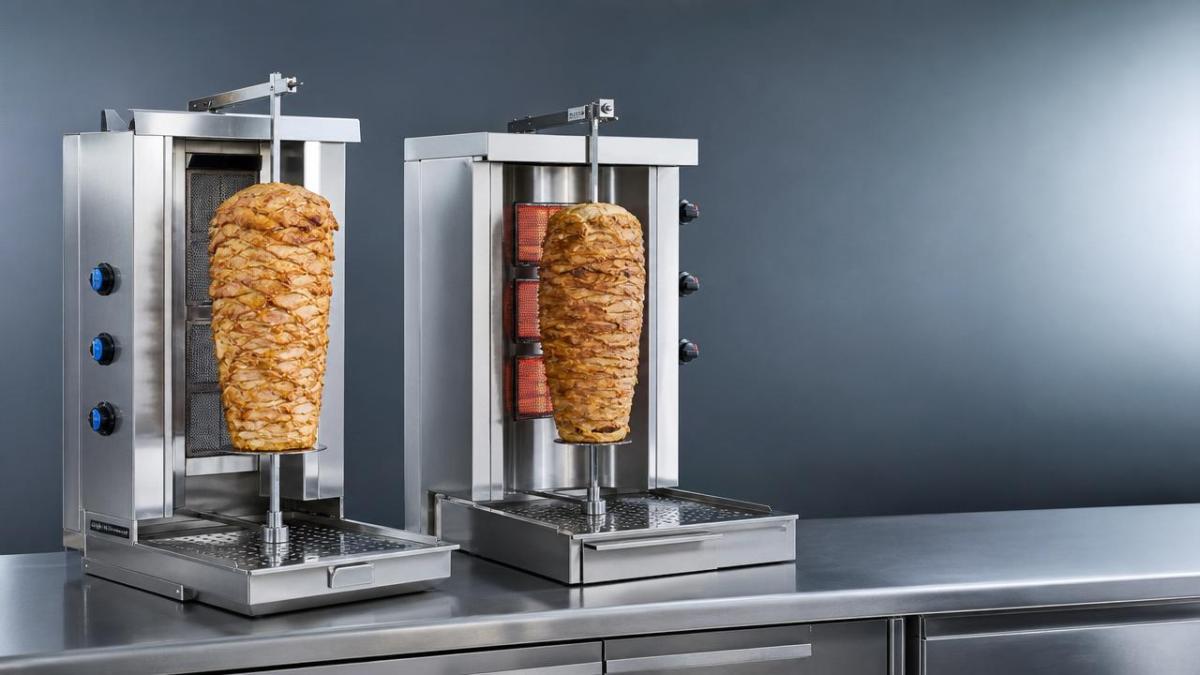
Choosing among shawarma machines commercial kitchens depend on is a practical business decision, not a cosmetic one.
Fuel type shapes running cost, recovery speed, and installation limits.
Vertical capacity affects throughput, batch planning, and product consistency during peak hours.
Cleaning needs influence labor time, hygiene control, and equipment uptime.
For buyers reviewing shawarma machines commercial options, these three variables usually decide total value.
The right unit supports stable slicing, predictable output, and safer back-of-house routines.
The wrong one creates bottlenecks, uneven roasting, and avoidable maintenance headaches.
This guide compares gas and electric models, explains vertical roasting capacity, and highlights cleaning trade-offs that matter in daily operation.
Why Shawarma Machine Selection Has Become More Strategic
In many foodservice businesses, labor is tighter and utility costs are less predictable than before.
That changes how buyers assess shawarma machines commercial suppliers offer.
A lower purchase price may look attractive, yet poor heat control can reduce yield over time.
A larger spit may promise volume, but oversizing can waste product during slower dayparts.
Cleaning design also matters more because hygiene checks are stricter and labor minutes are expensive.
In practical terms, machine choice should match service pattern, menu width, and site infrastructure.
- High-volume stores need reliable recovery and larger meat stacks.
- Compact urban kitchens need tighter footprints and easier ventilation planning.
- Multi-site operators need consistent controls and simpler staff training.
- Compliance-focused buyers need surfaces and parts that clean fast and inspect easily.
That is why comparing shawarma machines commercial portfolios requires more than checking a brochure capacity number.
Gas vs. Electric: Which Heating System Fits Better?
Gas and electric systems can both produce strong results, but they behave differently in real kitchens.
Gas Shawarma Machines Commercial Buyers Often Choose for Volume
Gas models usually deliver strong heat output and fast temperature response.
That makes them attractive for continuous service and heavier production windows.
They are often favored in busy kebab shops, food courts, and high-turnover takeaway operations.
- Faster heating response during rush periods.
- Often lower energy cost in gas-friendly regions.
- Good fit for larger vertical meat loads.
The trade-off is installation complexity.
Gas units may require stricter ventilation planning, line connections, and local approvals.
For chain operators, site variability can slow rollout across multiple locations.
Electric Shawarma Machines Commercial Buyers Prefer for Simplicity
Electric units are usually easier to install and easier to standardize across stores.
They suit kitchens where gas access is limited or ventilation rules are tighter.
Many buyers also value their cleaner control interface and more straightforward startup routine.
- Simpler installation in many indoor locations.
- Easier consistency across multi-unit operations.
- Often easier for staff onboarding and daily use.
However, electric performance depends heavily on element design and site power capacity.
A weak electrical setup can limit recovery and slow production when demand spikes.
A Practical Decision Rule
Choose gas when output intensity is high and the site already supports safe gas infrastructure.
Choose electric when rollout speed, standardization, and installation flexibility matter more.
How Much Vertical Capacity Do You Really Need?
Capacity is one of the most misunderstood specifications in shawarma machines commercial comparisons.
A bigger spit is not automatically a better investment.
The right size depends on hourly demand, menu variation, and product turnover speed.
Small to Mid Capacity
Smaller units suit cafes, limited-menu counters, and businesses testing shawarma demand.
They reduce product exposure during slow periods and lower waste risk.
They also save space in kitchens where every station competes for room.
Large Vertical Capacity
Larger units fit stores with sustained lunch and dinner traffic.
They are especially useful when the menu centers around shawarma rather than treating it as one item among many.
But more capacity only works when slicing speed, holding procedures, and replenishment planning are also disciplined.
Capacity Questions Worth Asking Suppliers
- What is the practical meat load, not only the maximum load?
- How evenly does the unit roast from top to bottom?
- Can burner or heating zones be adjusted independently?
- What is the recovery performance after repeated slicing?
- Is the footprint still workable with surrounding prep flow?
These questions reveal whether shawarma machines commercial vendors promote are sized for real throughput or for marketing optics.
Cleaning Needs: The Hidden Cost Behind Daily Operation
Cleaning is often treated as a maintenance note, yet it strongly affects operating economics.
For many buyers, this is where two similar shawarma machines commercial models start to separate.
What Makes a Machine Easier to Clean
- Removable drip trays with easy access.
- Smooth stainless surfaces with fewer tight corners.
- Shielded burners or elements that limit grease buildup.
- Spits and guards that detach without tools.
- Open layouts that allow visual inspection after wiping.
These details reduce end-of-day labor and improve cleaning consistency between shifts.
Where Cleaning Complexity Creates Risk
Grease can collect behind heat sources, around motor housings, and inside narrow seams.
If access is awkward, staff may rush the process or skip difficult areas.
That increases hygiene risk, downtime risk, and eventually service costs.
In actual operations, five extra cleaning minutes per day becomes meaningful across a year.
A Better Procurement Approach
Ask suppliers for a real cleaning workflow demonstration.
Do not rely only on polished product photos.
A short teardown video can reveal more than a feature sheet.
Side-by-Side Decision Table for Commercial Buyers
This kind of side-by-side review keeps shawarma machines commercial selection grounded in operational reality.
Common Buying Mistakes and How to Avoid Them
- Buying by maximum capacity alone instead of actual hourly demand.
- Ignoring ventilation, gas access, or electrical load limits until late.
- Underestimating cleaning labor when comparing similar prices.
- Choosing controls that are too complex for frequent staff turnover.
- Skipping test runs with the actual protein format used on site.
A disciplined review process lowers risk far more effectively than chasing the lowest quote.
Final Recommendation Framework
When comparing shawarma machines commercial suppliers present, start with three filters.
- Match heat system to site infrastructure and service intensity.
- Match vertical capacity to real throughput, not idealized demand.
- Match cleaning design to labor reality and hygiene standards.
If volume is high and infrastructure is ready, gas often wins on production strength.
If rollout flexibility and operational simplicity matter more, electric often becomes the better fit.
Either way, the best shawarma machines commercial investment is the one that holds quality steady under daily pressure.
Use supplier demos, cleaning checks, and realistic volume assumptions before final approval.
That approach leads to better output, lower friction, and a purchasing decision that keeps paying back after installation.
Search News
Hot Articles
- Carbon Fiber StructuresHow to Specify Aerospace Carbon Fiber Assemblies for Lightweight, Load-Bearing PartsJul 11, 2026
- Machine VisionXiaomi, Alibaba DAMO Academy Drive Open-Source Robotics Model Ecosystem, Lowering Algorithm Development Barriers for Overseas SMEs Adopting Chinese Robotics SolutionsMar 30, 2026
- Cobots & ArmsShanxi 'AI+' Conference Showcases Embodied Intelligence with Multinational Buyer Engagement: Key Industry ImplicationsMar 30, 2026
Popular Tags
Recommended News
 Jul 11, 2026How to Specify Aerospace Carbon Fiber Assemblies for Lightweight, Load-Bearing PartsAerospace carbon fiber assemblies: learn how to specify laminate design, load data, joining methods, and inspection controls for lighter, reliable load-bearing aerospace parts.Elena Rostova (UAV Systems Researcher)
 Mar 30, 2026Xiaomi, Alibaba DAMO Academy Drive Open-Source Robotics Model Ecosystem, Lowering Algorithm Development Barriers for Overseas SMEs Adopting Chinese Robotics SolutionsXiaomi & Alibaba DAMO Academy's open-source robotics models lower algorithm barriers for global SMEs. Boost efficiency in manufacturing, logistics & smart retail with ROS 2 compatible solutions.TSV Data Lab
 Mar 30, 2026Shanxi 'AI+' Conference Showcases Embodied Intelligence with Multinational Buyer Engagement: Key Industry ImplicationsShanxi 'AI+' Conference highlights embodied intelligence with Tesla, Ubtech & Jiantao showcasing multimodal robotics. 40+ global buyers validated tech on-site, creating new B2B channels for industrial automation & AI solutions.Chen Wei (Automation Lead Engineer)
 Mar 30, 2026Zhongguancun Unveils 6G Integrated Sensing-Computing-Intelligence Platform to Empower Embodied Robots for Global Industrial ApplicationsZhongguancun's new 6G platform revolutionizes industrial robotics with <10ms latency, empowering global automotive, logistics & port automation. Discover how this tech boosts China's smart manufacturing exports.TSV Data Lab
 Mar 30, 2026Mech-Mind Tianjin Embodied Intelligence R&D and Production Base Goes Live, Cutting Delivery Time by 20%–30% for Global Customized AMR+Vision SolutionsMech-Mind's Tianjin AMR+Vision production base cuts delivery time by 20%-30% for欧美 & Latin American markets. Discover how this PLd-certified facility accelerates customized robotics solutions for smart manufacturing and logistics.Chen Wei (Automation Lead Engineer)
 Mar 30, 2026Boao Forum Reveals 'Co-evolution of Big and Small Brains' Trend in Humanoid Robots, China's Embodied Intelligence Accelerates Adaptation to Overseas Manufacturing Service ScenariosDiscover how China's humanoid robots, featuring 'Co-evolution of Big and Small Brains,' are revolutionizing global manufacturing. Learn about Embodied Tian Gong 3.0's ISO compliance and overseas deployment at Boao Forum 2026.Chen Wei (Automation Lead Engineer)
 Mar 30, 2026China Railway Industrial Secures Patent for Embodied Robotics in Material Handling, Boosting High-Precision Delivery Capabilities for Overseas Infrastructure and Manufacturing ProjectsChina Railway Industrial's new patent for embodied robotics in material handling boosts high-precision delivery for global infrastructure & manufacturing. Discover how this innovation enhances logistics accuracy in automotive, rail transit & EPC projects.Chen Wei (Automation Lead Engineer)
 Oct 26, 2026AMAXiMAL Releases Open-Source TopMod 3D v3 With Claude AIExplore AMAXiMAL’s free, open-source TopMod 3D v3 with Claude AI assistance, topology-based modeling and plywood fabrication tools that connect complex designs to physical builds.Dr. Marcus Vance
 Oct 26, 2026Choosing a SCADA System Integrator Company: PLC Compatibility and Long-Term SupportChoose a scada system integrator company with proven PLC compatibility and reliable long-term support. Discover what to test, compare, and require before investing.Victor Lin (Chief Software Architect)
 Oct 25, 2026Hesai Leads Global ADAS Main Lidar Shipments in Yole’s 2026 ReportHesai led global ADAS main lidar shipments with a 43% share in 2025, according to Yole’s 2026 report. Explore what this ranking reveals about its automotive market position.TSV Data Lab
 Oct 25, 2026Choosing an Aerospace Materials Manufacturer: Quality and Traceability ChecksChoosing an aerospace materials manufacturer? Learn how to verify certifications, test reports, and lot traceability to qualify suppliers confidently and reduce costly sourcing risks.Dr. Marcus Vance
 Oct 24, 2026Guotai Haitong: Global Entry-Level 3D Printer Shipments Rose 39% in Q1 2026Entry-level 3D printer shipments rose 39% in Q1 2026, Guotai Haitong reports. Explore how AI, multicolor printing and print farms are shaping market growth.Dr. Marcus Vance
 Oct 24, 2026Choosing an Industrial Vision Inspection Supplier: Acceptance Tests That MatterChoose an industrial vision inspection supplier with confidence. Discover acceptance tests for defect detection, false rejects, production speed, and reliable part rejection before you buy.TSV Data Lab
 Oct 23, 2026US Navy Raises Gecko Robotics Contract Ceiling to $300M for Robotic Fleet MaintenanceUS Navy raises Gecko Robotics’ contract ceiling to $300M for Pacific Fleet robotic inspections. Explore potential opportunities for maintenance suppliers and key procurement considerations.Chen Wei (Automation Lead Engineer)
 Oct 23, 2026Choosing Industrial Sensing Systems for Global Plants: Protocol CompatibilityCompare industrial sensing systems international buyers can trust. Explore protocol compatibility, reduce integration risks, and select proven configurations for reliable global plant deployments.TSV Data Lab
 Oct 22, 2026KUKA Showcases Physical AI and iiQKA.AI Vision at NVIDIA GTC BerlinExplore KUKA’s Physical AI showcase at NVIDIA GTC Berlin and discover how iiQKA.AI Vision aims to simplify robotic vision integration and improve 2D and 3D scene recognition.TSV Data Lab
 Oct 22, 2026Robotic Machining of Advanced Composites: What Tolerances Are Achievable?Explore advanced materials machining robotics: discover what drives achievable composite tolerances and how to validate accuracy before investing in your next machining system.Dr. Marcus Vance
 Oct 21, 2026China’s Industrial Robot Exports Near RMB 10 Billion in First Nine Months of 2026China’s industrial robot exports neared RMB 10 billion in January–September 2026, with value rising faster than volume. Explore the data and what it could mean for suppliers.Chen Wei (Automation Lead Engineer)
 Oct 21, 2026Low-Latency Industrial Data Processing: Pricing and Key Cost DriversExplore industrial data latency price drivers, from edge hardware to integration and support. Learn how to compare quotes, verify performance, and avoid unnecessary costs.TSV Data Lab
 Oct 20, 2026KUKA Launches iiQKA.AI Vision to Simplify Industrial Image ProcessingKUKA iiQKA.AI Vision simplifies industrial image processing with controller-based 2D and 3D vision. Explore drag-and-drop setup for vision-guided automation.TSV Data Lab
 Oct 20, 2026Smart Industrial Edge Devices: Key Criteria for Legacy PLC IntegrationChoose smart industrial edge devices for legacy PLC integration. Discover key criteria for compatibility, data quality, security, and reliable collection without disrupting control.TSV Data Lab
 Oct 19, 2026Choosing a Radar Sensor by Application: Range, Resolution, and Field of ViewSimplify radar sensor application based product selection. Compare range, resolution, and field of view to avoid blind spots and choose with confidence. Explore the guide.TSV Data Lab
 Oct 18, 2026Comparing Material Options for Procurement: Specs, Costs, and Supply RisksExplore procurement oriented technical content on material options, specs, costs, and supply risks. Compare alternatives to cut hidden expenses and make confident sourcing decisions.Dr. Marcus Vance
 Oct 17, 20265-Axis CNC Positioning Accuracy: How to Interpret ISO 230-2 Test ResultsAssess 5 axis CNC machining positioning accuracy with ISO 230-2. Learn to interpret repeatability, reversal error, and test conditions to compare suppliers and make confident acceptance decisions.Dr. Marcus Vance























