Commercial Drone Range Explained: What Really Affects Flight Distance and Endurance?
Publication Date
author
Commercial Drone Range: Why the Number Is Never Just the Number
Commercial drone range is often treated like a simple spec, but real-world performance is built from many variables. Battery chemistry, payload, wind, temperature, radio link quality, and flight profile all shape how far a drone can go and how long it can stay airborne. For anyone comparing models for mapping, inspection, or agriculture, the useful question is not “What is the longest range?” but “What range is actually repeatable in my use case?”
That difference matters because spec-sheet numbers are usually measured in ideal conditions. TSV’s engineering-first mindset fits this topic well: parameters do not lie, but they do need context. A drone that looks strong on paper may lose endurance quickly once payloads, obstacle sensing, or unstable signal environments enter the picture.
What does commercial drone range actually mean?
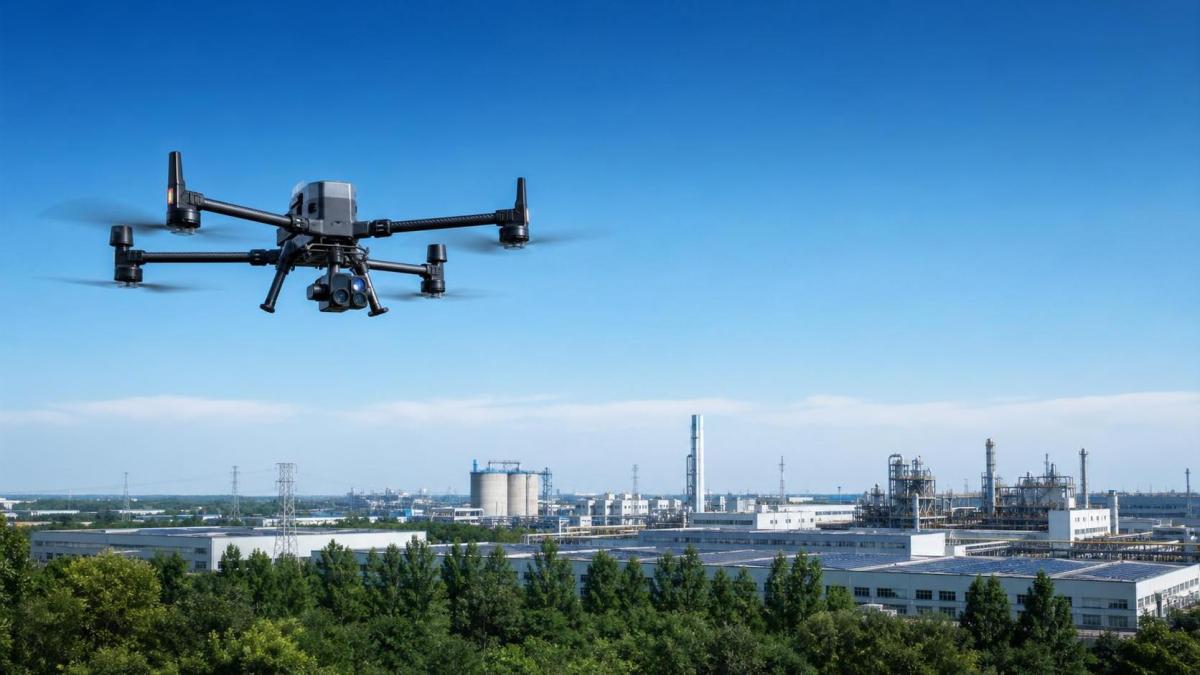
In practice, commercial drone range can mean two different things. One is control and transmission range, which describes how far the drone can stay reliably connected to the remote controller or network. The other is flight endurance, which means how long the aircraft can remain in the air before the battery is depleted.
Those numbers are related, but they are not identical. A drone may maintain signal at a long distance while still running out of power quickly. For most buyers, endurance is the more important number, because it determines how much work can be completed per flight and how many takeoffs are needed to finish a mission.
A useful rule is to treat “range” as a system result, not a single feature. The battery, propulsion system, aerodynamics, firmware, and payload all contribute to the final outcome.
Why do battery and payload change flight distance so much?
Battery capacity is only part of the story. A larger battery can extend flight time, but it also adds weight. Once weight rises, the motors need more power to keep the drone stable, which consumes energy faster. That is why two drones with similar battery ratings can behave very differently in the field.
Payload is the other major factor. A camera, thermal sensor, multispectral module, or delivery package changes the aircraft’s center of gravity and increases thrust demand. Even small payload changes can reduce hover efficiency and shorten usable endurance.
This is where real benchmarking matters. TSV-style analysis would look beyond headline capacity and compare all-in mission load, not just battery size. That is the only way to estimate commercial drone range with any confidence.
A quick comparison that helps separate marketing from reality
How do wind, temperature, and signal stability affect endurance?
Environmental conditions can erase a lot of theoretical range. Strong headwinds force the aircraft to use more thrust just to hold position or maintain route speed. Low temperatures reduce battery efficiency, which means the same pack may deliver less usable flight time than it does in mild weather.
Signal stability matters for more than convenience. When the link is weak, the aircraft may slow down, hover, reroute, or trigger safety behavior. Those responses are necessary, but they also change power consumption and mission efficiency.
This is especially relevant in industrial environments with metal structures, electromagnetic interference, or long corridor flights. In those conditions, a strong flight platform can still underperform if the communications layer is not robust enough.
Which drone types need the most careful range checks?
Not every drone buyer should evaluate range the same way. Mapping missions usually care about endurance, stable speed, and repeatable coverage. Inspection work often needs shorter but more precise flights, where hover stability and obstacle handling matter as much as distance. Agricultural use can be more demanding because payload, altitude, and field size all vary during the day.
If the mission requires frequent payload changes, the useful range should be checked at the heaviest expected configuration. If the environment is open and windy, the relevant number is not the manufacturer’s ideal cruise range, but the range with a realistic safety reserve.
A common mistake is comparing drones only by maximum transmission distance. For real operations, endurance and mission completion rate matter more than a distant theoretical link.
Common buying mistake versus better approach
How should you judge commercial drone range before buying?
The best approach is to ask for test conditions, not just final numbers. Look for flight time with the intended payload, wind assumptions, temperature range, and communication distance. If those details are missing, the spec is probably too optimistic to compare fairly.
It also helps to separate mission-critical range from comfort margin. A drone that can fly 35 minutes on paper but only 24 minutes in a real mission may still be useful, but only if that 24 minutes matches the workflow.
For data-driven selection, three questions usually solve most confusion: What payload is assumed? What environmental conditions are included? What reserve is left before return-to-home?
What are the most useful FAQ checks before making a decision?
A short checklist often gives more clarity than a long spec comparison. It keeps the focus on repeatable performance, which is exactly what matters when commercial drone range affects work quality, safety, and operating cost.
- Confirm endurance with the actual sensor, battery, and takeoff weight.
- Check how much time remains after return-to-home reserve is applied.
- Ask whether wind and temperature were included in the test data.
- Review signal stability in the kind of environment you expect to fly in.
- Compare battery replacement cost and cycle life, not just capacity.
These points are simple, but they prevent the most expensive mistake: buying for a number that never appears in normal use.
So what should the final takeaway be?
Commercial drone range is best understood as a result of engineering trade-offs. Battery chemistry, payload weight, wind, temperature, and link stability all shape the final number, and the best models are the ones that stay predictable when conditions get less ideal.
If you are comparing drones for mapping, inspection, or agriculture, start with the mission profile, not the headline spec. Then compare endurance under real load, real weather, and real operating distance. That is the most reliable way to turn a range claim into a practical decision.
In TSV terms, this is the value of engineering truth through data: define the test, measure the limits, and choose on evidence rather than noise.
Search News
Hot Articles
- Carbon Fiber StructuresHow to Specify Aerospace Carbon Fiber Assemblies for Lightweight, Load-Bearing PartsJul 11, 2026
- Machine VisionXiaomi, Alibaba DAMO Academy Drive Open-Source Robotics Model Ecosystem, Lowering Algorithm Development Barriers for Overseas SMEs Adopting Chinese Robotics SolutionsMar 30, 2026
- Cobots & ArmsShanxi 'AI+' Conference Showcases Embodied Intelligence with Multinational Buyer Engagement: Key Industry ImplicationsMar 30, 2026
Popular Tags
Recommended News
 Jul 11, 2026How to Specify Aerospace Carbon Fiber Assemblies for Lightweight, Load-Bearing PartsAerospace carbon fiber assemblies: learn how to specify laminate design, load data, joining methods, and inspection controls for lighter, reliable load-bearing aerospace parts.Elena Rostova (UAV Systems Researcher)
 Mar 30, 2026Xiaomi, Alibaba DAMO Academy Drive Open-Source Robotics Model Ecosystem, Lowering Algorithm Development Barriers for Overseas SMEs Adopting Chinese Robotics SolutionsXiaomi & Alibaba DAMO Academy's open-source robotics models lower algorithm barriers for global SMEs. Boost efficiency in manufacturing, logistics & smart retail with ROS 2 compatible solutions.TSV Data Lab
 Mar 30, 2026Shanxi 'AI+' Conference Showcases Embodied Intelligence with Multinational Buyer Engagement: Key Industry ImplicationsShanxi 'AI+' Conference highlights embodied intelligence with Tesla, Ubtech & Jiantao showcasing multimodal robotics. 40+ global buyers validated tech on-site, creating new B2B channels for industrial automation & AI solutions.Chen Wei (Automation Lead Engineer)
 Mar 30, 2026Zhongguancun Unveils 6G Integrated Sensing-Computing-Intelligence Platform to Empower Embodied Robots for Global Industrial ApplicationsZhongguancun's new 6G platform revolutionizes industrial robotics with <10ms latency, empowering global automotive, logistics & port automation. Discover how this tech boosts China's smart manufacturing exports.TSV Data Lab
 Mar 30, 2026Mech-Mind Tianjin Embodied Intelligence R&D and Production Base Goes Live, Cutting Delivery Time by 20%–30% for Global Customized AMR+Vision SolutionsMech-Mind's Tianjin AMR+Vision production base cuts delivery time by 20%-30% for欧美 & Latin American markets. Discover how this PLd-certified facility accelerates customized robotics solutions for smart manufacturing and logistics.Chen Wei (Automation Lead Engineer)
 Mar 30, 2026Boao Forum Reveals 'Co-evolution of Big and Small Brains' Trend in Humanoid Robots, China's Embodied Intelligence Accelerates Adaptation to Overseas Manufacturing Service ScenariosDiscover how China's humanoid robots, featuring 'Co-evolution of Big and Small Brains,' are revolutionizing global manufacturing. Learn about Embodied Tian Gong 3.0's ISO compliance and overseas deployment at Boao Forum 2026.Chen Wei (Automation Lead Engineer)
 Mar 30, 2026China Railway Industrial Secures Patent for Embodied Robotics in Material Handling, Boosting High-Precision Delivery Capabilities for Overseas Infrastructure and Manufacturing ProjectsChina Railway Industrial's new patent for embodied robotics in material handling boosts high-precision delivery for global infrastructure & manufacturing. Discover how this innovation enhances logistics accuracy in automotive, rail transit & EPC projects.Chen Wei (Automation Lead Engineer)
 Sep 25, 2026How to Evaluate an Industrial Infrastructure Data Platform for Multi-Site OperationsIndustrial infrastructure data platform evaluation guide for multi-site operations: compare data quality, edge resilience, interoperability, governance, and scalable proof-of-value criteria.Victor Lin (Chief Software Architect)
 Sep 24, 2026How to Select Machine Vision Optics for Accurate Inspection at Different Working DistancesMachine vision optics selection guide for accurate inspection at every working distance. Compare FOV, pixel scale, DOF, distortion, lighting, and telecentric options.TSV Data Lab
 Sep 23, 2026How to Evaluate a Machine Vision System Integrator for High-Speed Inspection LinesChoose a machine vision system integrator with proven expertise in high-speed inspection, reliable reject timing, robust optics, and measurable acceptance criteria.TSV Data Lab
 Sep 25, 2026How a smart factory with Industrial IoT reduces production blind spotsDiscover how a smart factory with Industrial IoT turns real-time machine, quality, and workflow data into actionable insights that reduce production blind spots and delivery risks.Victor Lin (Chief Software Architect)
 Sep 24, 2026When does Industrial IoT make smart manufacturing easier to scale?Smart manufacturing Industrial IoT scales when trusted data, interoperable systems, and secure workflows turn connected assets into measurable gains.TSV Data Lab
 Sep 23, 2026What drives ultra-precision machining cost at 1-micron tolerance?Ultra precision machining cost per part at 1 micron tolerance depends on process, material, metrology, and yield. Learn how to compare quotes confidently.Dr. Marcus Vance
 Sep 22, 2026Drone Engine-T550CC Applications: Build the UAV Power System Around the MissionAn application guide for Drone Engine-T550CC integration, covering payload planning, airframe matching, cooling, fuel, vibration, test procedures, documentation, and service preparation.Elena Rostova (UAV Systems Researcher)
 Sep 22, 2026How to Evaluate Industrial Edge Computing Vendors for Factory DeploymentIndustrial edge computing vendor evaluation guide for factories: compare latency, protocol fit, reliability, security, and lifecycle support before deployment.TSV Data Lab
 Sep 21, 2026Drone Payload Integration: Matching Power, Data, and Center of Gravity for Reliable FlightsDrone payload integration made practical: balance power, data, center of gravity, and endurance to build safer, more reliable mission-ready flights.Elena Rostova (UAV Systems Researcher)
 Sep 20, 2026Autonomous Navigation Pricing: Cost Drivers and Budget Benchmarks for AMR ProjectsAutonomous navigation price explained: compare AMR cost drivers, software, sensors, integration, safety, and lifecycle budgets to build a scalable project plan.Chen Wei (Automation Lead Engineer)
 Sep 19, 2026How to Scope Automation Integration Services for Multi-System Factory ProjectsAutomation integration services: learn how to scope multi-system factory projects with clear workflows, interface contracts, safety boundaries, and acceptance criteria.Victor Lin (Chief Software Architect)
 Sep 18, 2026Selecting UAV Aerospace Structural Parts for Strength, Weight, and Fatigue LifeUAV aerospace structural parts guide: compare strength, weight, stiffness, fatigue life, joints, and traceability to select reliable flight-ready components.Elena Rostova (UAV Systems Researcher)
 Sep 17, 2026Selecting Commercial Drone Payloads for European Inspection ProjectsCommercial drone payloads Europe: learn how to select RGB, thermal and LiDAR systems for compliant, reliable inspection data and better project outcomes.Elena Rostova (UAV Systems Researcher)
 Sep 16, 2026Machining Tolerance Validation: How to Verify Critical Dimensions Before Production ReleaseMachining tolerance analysis validation: verify critical dimensions, measurement systems, process capability, and tolerance stacks before production release.Dr. Marcus Vance
 Sep 15, 2026AGV Tape Guidance vs Laser Navigation: Which Fits Your Warehouse Layout?AGV tape guidance comparison: discover how tape and laser navigation fit changing warehouse layouts, docking needs, floor conditions, maintenance, and route flexibility.Chen Wei (Automation Lead Engineer)
 Sep 14, 2026How Point Cloud Analytics Improves Asset Inspection Workflows Across GCC ProjectsPoint cloud analytics GCC helps project leaders improve asset inspections with accurate change detection, safer workflows, and faster maintenance decisions.TSV Data Lab
 Sep 13, 2026How Aerospace Manufacturers Can Build a Digital Thread From Design to Certified ProductionDigital manufacturing for aerospace: learn how to build a traceable digital thread from design through certified production, supplier control, and audit-ready compliance.Victor Lin (Chief Software Architect)