Robot Testing Laboratory: Common Test Methods, Safety Checks, and Acceptance Criteria
Publication Date
author
In a robot testing laboratory, data has to settle every argument. Repeatability, fault recovery, emergency stop response, and compliance under real load are the measures that decide whether a system is ready for deployment or still hiding risk.
Why robot testing now carries more weight

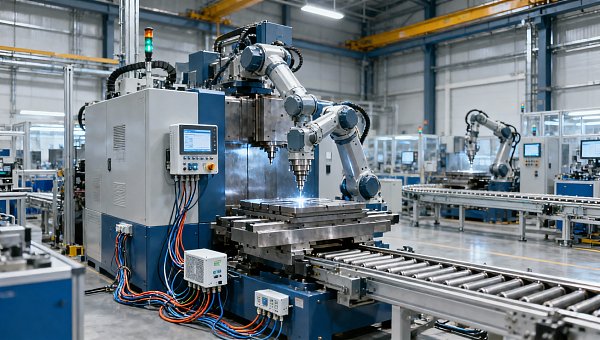
Robots are no longer limited to isolated factory cells. They appear in logistics, precision machining, medical support, inspection, warehouse transport, and mixed human-machine workspaces. That shift makes the robot testing laboratory more than a verification room; it becomes a gatekeeper for operational safety and supply chain confidence.
TSV’s engineering-first view fits this shift well. When specification noise is stripped away, what remains is simple: tolerances, failure thresholds, and response times. A robot that looks efficient in a brochure may still fail under vibration, heat, network delay, or repeated start-stop cycles.
That is why testing has moved from “nice to have” to a procurement and risk-control requirement. For complex industry users, a robot testing laboratory supports both quality release and safety signoff.
What a robot testing laboratory actually verifies
At a basic level, the laboratory checks whether the robot behaves the same way every time it is asked to do the same task. But that is only the starting point. It also checks whether the robot behaves safely when something goes wrong.
Common targets include positional accuracy, path repeatability, joint stability, payload handling, control latency, collision response, software fault handling, and the performance of protective functions. In practice, the laboratory must link mechanical behavior, control logic, sensors, and safety circuits into one measurable picture.
This is where TSV’s approach matters: the best report is not the one with the most adjectives, but the one that shows whether the robot stays within tolerance under the real conditions it will face.
Common test methods used in practice
A robot testing laboratory usually combines several test families instead of relying on one single pass-fail check. That combination gives a more truthful view of reliability.
- Repeatability tests measure whether the robot returns to the same point and follows the same motion path across many cycles.
- Load tests verify whether payload, center of gravity, and arm extension remain stable at operating limits.
- Endurance tests run the robot through long duty cycles to expose wear, drift, and thermal effects.
- Fault injection tests simulate sensor loss, communication interruption, servo alarms, and power anomalies.
- Safety function tests confirm the emergency stop, interlock, protective stop, and restart behavior.
In advanced setups, test teams also evaluate robot motion in mixed environments, where AGVs, conveyors, machine tools, or vision systems introduce timing conflicts. That matters because many failures only appear when the robot is embedded in a broader line, not when it runs alone on a bench.
Safety checks that should never be treated as routine
The most dangerous assumption in a robot testing laboratory is that a safety circuit works simply because it was installed. Every protective layer needs validation under controlled conditions.
Important checks include the stopping distance after emergency activation, the time needed for torque removal, the reliability of guard doors and light curtains, and the behavior of the robot after a reset. If the system restarts too quickly, the risk may be higher than expected. If it fails to restart predictably, production stability suffers.
A sound robot testing laboratory also looks at human interaction points. Teach pendants, maintenance modes, manual jog functions, and lockout procedures deserve the same attention as the robot arm itself. Safety is never only about motion; it is also about access control, sequencing, and operator behavior under pressure.
Acceptance criteria should be specific, not vague
A weak acceptance rule says the robot “performs well” or “meets expectations.” A strong one defines the exact boundary. That boundary may include position error, cycle-time variance, maximum vibration, safe stop distance, allowable fault recovery time, and the number of successful cycles required before release.
In many projects, acceptance criteria also need to reflect the application context. A robot in electronics assembly will face different tolerances than one in palletizing or aerospace part handling. The robot testing laboratory should therefore match the test profile to the duty profile, not to a generic checklist.
For high-value systems, acceptance is strongest when it combines three layers: measured performance, documented safety behavior, and traceable evidence of repeatability. That structure reduces later disputes and shortens qualification cycles.
How to read results without being misled
Raw pass-fail status is rarely enough. A robot may pass a short demo test and still show unstable trends after longer runs. The useful question is not only whether it passed, but how close it ran to the limit and under what conditions.
Look for drift across cycles, variation between axes, sensitivity to temperature, and fault recovery consistency. Also examine whether the lab used the intended tooling, actual payload, real cycle timing, and the same network or safety architecture planned for deployment. If those conditions differ, the result is only partial evidence.
This is where a mature robot testing laboratory becomes valuable to TSV-style benchmarking. It does not merely record data; it explains whether the data reflects real use or an idealized setup.
A practical comparison of key checks
What good deployment decisions look like
A robot testing laboratory should not be viewed as the end of the process. It is the point where engineering evidence becomes an operational decision. If the robot fails a stop-time check, the issue is not a paperwork problem; it is a design or integration issue. If repeatability is strong but fault recovery is unstable, the line may still suffer frequent interruptions.
The most dependable decisions usually come from a short list of disciplined questions: Does the robot stay within tolerance under real load? Do safety functions activate and recover predictably? Are the results traceable across shifts, configurations, and test runs? If the answer is yes, deployment risk is lower. If the answer is unclear, the laboratory work is not finished.
For mixed-industry environments, that discipline matters even more because robots often share space with sensors, machine tools, edge controllers, and human operators. A single weak assumption can become a system-wide failure.
The next step is straightforward: define the exact operating envelope, map the safety functions that matter most, and insist on measurable acceptance criteria before release. In a robot testing laboratory, engineering truth is not a slogan. It is the only reliable basis for trusting the machine.
Search News
Hot Articles
- Carbon Fiber StructuresHow to Specify Aerospace Carbon Fiber Assemblies for Lightweight, Load-Bearing PartsJul 11, 2026
- Machine VisionXiaomi, Alibaba DAMO Academy Drive Open-Source Robotics Model Ecosystem, Lowering Algorithm Development Barriers for Overseas SMEs Adopting Chinese Robotics SolutionsMar 30, 2026
- Cobots & ArmsShanxi 'AI+' Conference Showcases Embodied Intelligence with Multinational Buyer Engagement: Key Industry ImplicationsMar 30, 2026
Popular Tags
Recommended News
 Jul 11, 2026How to Specify Aerospace Carbon Fiber Assemblies for Lightweight, Load-Bearing PartsAerospace carbon fiber assemblies: learn how to specify laminate design, load data, joining methods, and inspection controls for lighter, reliable load-bearing aerospace parts.Elena Rostova (UAV Systems Researcher)
 Mar 30, 2026Xiaomi, Alibaba DAMO Academy Drive Open-Source Robotics Model Ecosystem, Lowering Algorithm Development Barriers for Overseas SMEs Adopting Chinese Robotics SolutionsXiaomi & Alibaba DAMO Academy's open-source robotics models lower algorithm barriers for global SMEs. Boost efficiency in manufacturing, logistics & smart retail with ROS 2 compatible solutions.TSV Data Lab
 Mar 30, 2026Shanxi 'AI+' Conference Showcases Embodied Intelligence with Multinational Buyer Engagement: Key Industry ImplicationsShanxi 'AI+' Conference highlights embodied intelligence with Tesla, Ubtech & Jiantao showcasing multimodal robotics. 40+ global buyers validated tech on-site, creating new B2B channels for industrial automation & AI solutions.Chen Wei (Automation Lead Engineer)
 Mar 30, 2026Zhongguancun Unveils 6G Integrated Sensing-Computing-Intelligence Platform to Empower Embodied Robots for Global Industrial ApplicationsZhongguancun's new 6G platform revolutionizes industrial robotics with <10ms latency, empowering global automotive, logistics & port automation. Discover how this tech boosts China's smart manufacturing exports.TSV Data Lab
 Mar 30, 2026Mech-Mind Tianjin Embodied Intelligence R&D and Production Base Goes Live, Cutting Delivery Time by 20%–30% for Global Customized AMR+Vision SolutionsMech-Mind's Tianjin AMR+Vision production base cuts delivery time by 20%-30% for欧美 & Latin American markets. Discover how this PLd-certified facility accelerates customized robotics solutions for smart manufacturing and logistics.Chen Wei (Automation Lead Engineer)
 Mar 30, 2026Boao Forum Reveals 'Co-evolution of Big and Small Brains' Trend in Humanoid Robots, China's Embodied Intelligence Accelerates Adaptation to Overseas Manufacturing Service ScenariosDiscover how China's humanoid robots, featuring 'Co-evolution of Big and Small Brains,' are revolutionizing global manufacturing. Learn about Embodied Tian Gong 3.0's ISO compliance and overseas deployment at Boao Forum 2026.Chen Wei (Automation Lead Engineer)
 Mar 30, 2026China Railway Industrial Secures Patent for Embodied Robotics in Material Handling, Boosting High-Precision Delivery Capabilities for Overseas Infrastructure and Manufacturing ProjectsChina Railway Industrial's new patent for embodied robotics in material handling boosts high-precision delivery for global infrastructure & manufacturing. Discover how this innovation enhances logistics accuracy in automotive, rail transit & EPC projects.Chen Wei (Automation Lead Engineer)
 Sep 25, 2026How to Evaluate an Industrial Infrastructure Data Platform for Multi-Site OperationsIndustrial infrastructure data platform evaluation guide for multi-site operations: compare data quality, edge resilience, interoperability, governance, and scalable proof-of-value criteria.Victor Lin (Chief Software Architect)
 Sep 24, 2026How to Select Machine Vision Optics for Accurate Inspection at Different Working DistancesMachine vision optics selection guide for accurate inspection at every working distance. Compare FOV, pixel scale, DOF, distortion, lighting, and telecentric options.TSV Data Lab
 Sep 23, 2026How to Evaluate a Machine Vision System Integrator for High-Speed Inspection LinesChoose a machine vision system integrator with proven expertise in high-speed inspection, reliable reject timing, robust optics, and measurable acceptance criteria.TSV Data Lab
 Sep 25, 2026How a smart factory with Industrial IoT reduces production blind spotsDiscover how a smart factory with Industrial IoT turns real-time machine, quality, and workflow data into actionable insights that reduce production blind spots and delivery risks.Victor Lin (Chief Software Architect)
 Sep 24, 2026When does Industrial IoT make smart manufacturing easier to scale?Smart manufacturing Industrial IoT scales when trusted data, interoperable systems, and secure workflows turn connected assets into measurable gains.TSV Data Lab
 Sep 23, 2026What drives ultra-precision machining cost at 1-micron tolerance?Ultra precision machining cost per part at 1 micron tolerance depends on process, material, metrology, and yield. Learn how to compare quotes confidently.Dr. Marcus Vance
 Sep 22, 2026Drone Engine-T550CC Applications: Build the UAV Power System Around the MissionAn application guide for Drone Engine-T550CC integration, covering payload planning, airframe matching, cooling, fuel, vibration, test procedures, documentation, and service preparation.Elena Rostova (UAV Systems Researcher)
 Sep 22, 2026How to Evaluate Industrial Edge Computing Vendors for Factory DeploymentIndustrial edge computing vendor evaluation guide for factories: compare latency, protocol fit, reliability, security, and lifecycle support before deployment.TSV Data Lab
 Sep 21, 2026Drone Payload Integration: Matching Power, Data, and Center of Gravity for Reliable FlightsDrone payload integration made practical: balance power, data, center of gravity, and endurance to build safer, more reliable mission-ready flights.Elena Rostova (UAV Systems Researcher)
 Sep 20, 2026Autonomous Navigation Pricing: Cost Drivers and Budget Benchmarks for AMR ProjectsAutonomous navigation price explained: compare AMR cost drivers, software, sensors, integration, safety, and lifecycle budgets to build a scalable project plan.Chen Wei (Automation Lead Engineer)
 Sep 19, 2026How to Scope Automation Integration Services for Multi-System Factory ProjectsAutomation integration services: learn how to scope multi-system factory projects with clear workflows, interface contracts, safety boundaries, and acceptance criteria.Victor Lin (Chief Software Architect)
 Sep 18, 2026Selecting UAV Aerospace Structural Parts for Strength, Weight, and Fatigue LifeUAV aerospace structural parts guide: compare strength, weight, stiffness, fatigue life, joints, and traceability to select reliable flight-ready components.Elena Rostova (UAV Systems Researcher)
 Sep 17, 2026Selecting Commercial Drone Payloads for European Inspection ProjectsCommercial drone payloads Europe: learn how to select RGB, thermal and LiDAR systems for compliant, reliable inspection data and better project outcomes.Elena Rostova (UAV Systems Researcher)
 Sep 16, 2026Machining Tolerance Validation: How to Verify Critical Dimensions Before Production ReleaseMachining tolerance analysis validation: verify critical dimensions, measurement systems, process capability, and tolerance stacks before production release.Dr. Marcus Vance
 Sep 15, 2026AGV Tape Guidance vs Laser Navigation: Which Fits Your Warehouse Layout?AGV tape guidance comparison: discover how tape and laser navigation fit changing warehouse layouts, docking needs, floor conditions, maintenance, and route flexibility.Chen Wei (Automation Lead Engineer)
 Sep 14, 2026How Point Cloud Analytics Improves Asset Inspection Workflows Across GCC ProjectsPoint cloud analytics GCC helps project leaders improve asset inspections with accurate change detection, safer workflows, and faster maintenance decisions.TSV Data Lab
 Sep 13, 2026How Aerospace Manufacturers Can Build a Digital Thread From Design to Certified ProductionDigital manufacturing for aerospace: learn how to build a traceable digital thread from design through certified production, supplier control, and audit-ready compliance.Victor Lin (Chief Software Architect)