Before buying a trampoline park for sale, check these risks
Publication Date
author
Evaluating a trampoline park for sale requires more than reviewing revenue claims or foot traffic. For procurement-minded decision-makers, the real risks lie in equipment compliance, maintenance records, liability exposure, site safety standards, and vendor transparency. Before committing capital, it is essential to verify the technical and operational factors that directly affect long-term performance, cost control, and acquisition confidence.
For buyers approaching a trampoline park for sale as an operating asset rather than a lifestyle purchase, due diligence should resemble an engineering review more than a marketing conversation. Revenue can fluctuate by season, but worn springs, undocumented repairs, outdated foam pits, and weak incident controls create persistent exposure that directly affects valuation.
In practical terms, procurement teams should test at least 5 core dimensions before signing a letter of intent: equipment condition, safety compliance, facility integrity, insurance and legal obligations, and supplier transparency. A site that looks attractive on social media can still hide 12–36 months of deferred maintenance, incompatible replacement parts, or unbudgeted capital expenditure.
Risk Mapping: What Buyers Should Check First in a Trampoline Park Acquisition
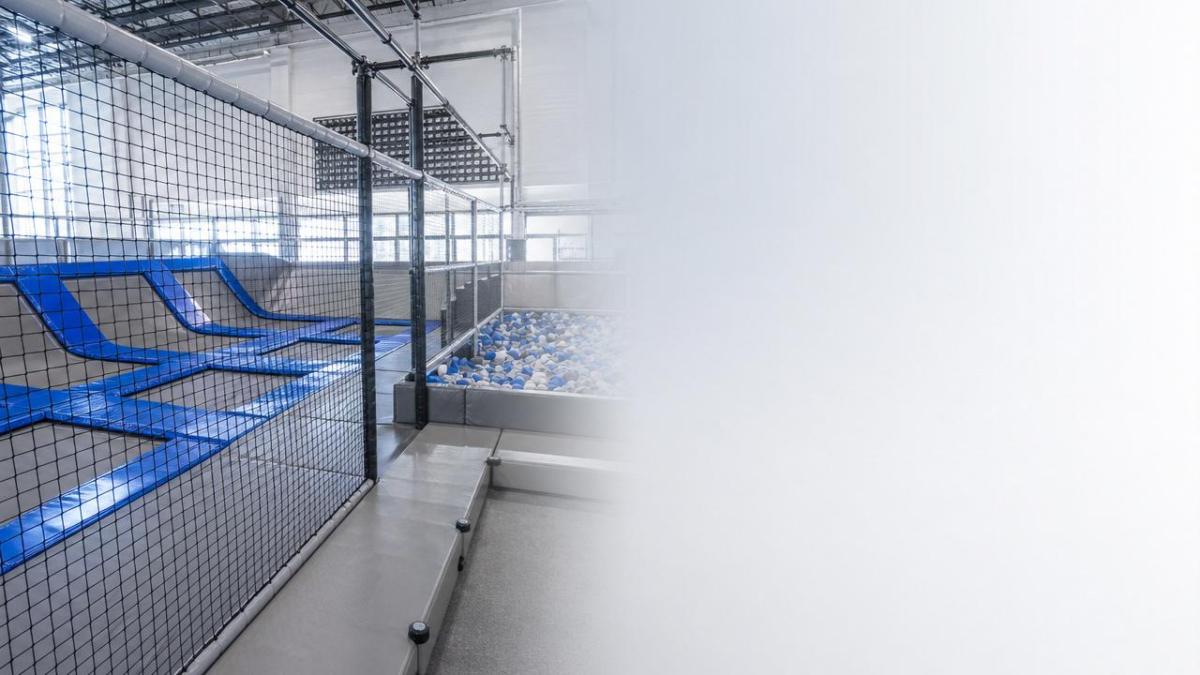
When screening a trampoline park for sale, the first step is to separate visible commercial performance from hidden technical risk. Procurement professionals should build a structured review process that identifies which issues are operationally manageable and which ones can materially change acquisition price, insurance cost, or reopening timelines.
Equipment age, wear cycle, and replacement exposure
Trampoline parks are mechanically simple on the surface, but their risk profile is cumulative. Mats, springs, pads, frames, netting, climbing elements, and airbags all have different wear cycles. In many facilities, high-impact zones may require inspection every 30 days and component replacement within 12–24 months depending on traffic intensity, cleaning protocols, and user weight distribution.
A buyer should ask for 3 years of maintenance logs at minimum. If the seller cannot provide dated inspection records, replacement invoices, and repair reports, that is not a paperwork issue alone; it is a visibility issue. Missing records make it difficult to estimate whether the next 6–12 months will require minor servicing or a major refurbishment program.
Red flags during physical inspection
- Padding compression, tearing, or exposed seams around impact edges
- Frame corrosion, weld cracking, or uneven anchor stability
- Inconsistent bounce response across adjacent trampoline beds
- Patch repairs without documented service history
- Airbag, pit, or landing zone materials that do not match current operating use
The table below outlines a practical first-pass framework buyers can use to assess common risk clusters in a trampoline park for sale before moving into pricing discussions.
A key takeaway is that equipment and documentation risk often move together. If a seller presents strong top-line numbers but cannot support routine inspection intervals, buyers should assume higher uncertainty in both maintenance spend and post-acquisition claims management.
Compliance and safety standards are not optional line items
A trampoline park purchase is not simply about acquiring fun equipment. It is the transfer of a public-use environment where high-frequency impact, mixed age groups, and staff supervision all influence liability. Buyers should review local building requirements, fire safety compliance, occupancy limits, accessibility obligations, and equipment installation records before finalizing any purchase agreement.
Even if the existing operator has been open for 5 or 10 years, that does not automatically confirm current compliance. Layout changes, new attraction zones, altered emergency paths, or undocumented repairs may have shifted the risk profile. A facility that passed inspection 4 years ago may still require immediate remediation before ownership transfer or insurance renewal.
Insurance history and claims pattern
One of the most overlooked steps when reviewing a trampoline park for sale is claims analysis. Ask for at least 24–36 months of incident and insurance history, including claim type, severity, settlement status, and root cause notes. A low count of severe claims may be more concerning than a moderate number of minor reports if the underlying cause points to structural or supervision failures.
Procurement teams should compare claims patterns against the park’s attendance level. For example, 8 recorded incidents across 300,000 annual visits tells a very different story than 8 incidents across 40,000 visits. Without this operational denominator, claims data can be misleading.
Operational Due Diligence: From Maintenance Records to Vendor Transparency
Once the initial risk screen is complete, buyers should move into operating proof. A trampoline park for sale should be evaluated like an asset-intensive service business, where uptime, replacement planning, staffing discipline, and supplier traceability all influence the real purchase value. This phase often determines whether a deal is scalable, negotiable, or better avoided.
What good maintenance documentation should include
A reliable seller should be able to provide preventive maintenance schedules, service intervals, repair tickets, inspection checklists, and part replacement records. Monthly checks are common for high-use surfaces, while structural reviews may follow quarterly or semiannual cycles. The more complex the attraction mix, the more important it is to confirm that maintenance was systematic rather than reactive.
Buyers should also verify whether replacement parts come from the original equipment supplier or from mixed third-party sources. Non-standard substitutions can reduce short-term cost, but they may complicate warranty support, compatibility, and future inspection outcomes. In procurement terms, this is a traceability problem, not only a parts problem.
Five records that should be requested before commercial negotiation
- 12–36 months of maintenance and repair logs
- Installation drawings or equipment layout documentation
- Incident, waiver, and internal safety audit records
- Insurance certificates and recent claims summaries
- Vendor list with part sourcing and service contact history
The next table gives a practical procurement checklist for distinguishing a transparent asset from a high-risk listing when assessing a trampoline park for sale.
This checklist helps buyers move beyond seller narrative. If 2 or more of these documentation categories are incomplete, procurement teams should either discount valuation, require remediation before close, or add post-close holdbacks tied to verified repairs and compliance proof.
Facility design and site constraints that affect long-term ROI
Not every profitable site is a durable site. Ceiling height, floor loading, HVAC performance, parking ratio, restroom capacity, and circulation paths all affect customer throughput and operational resilience. In a family entertainment environment, small layout defects can create larger safety and staffing issues during peak periods such as weekends, holidays, and school breaks.
As a rule of thumb, procurement teams should inspect at least 4 usage scenarios: standard weekday traffic, peak weekend traffic, party-event turnover, and emergency evacuation flow. A park that performs well at 40% utilization may become difficult to manage at 80% capacity if queue zones overlap, supervision lines are obstructed, or air circulation is inadequate for high occupancy.
Vendor dependence and parts availability
Some trampoline parks rely heavily on a single installer, maintenance provider, or parts source. That concentration risk matters. If proprietary pads, custom frames, or specialized landing systems can only be sourced through one vendor with a 6–10 week lead time, the buyer inherits both downtime exposure and pricing pressure.
It is worth asking whether critical spares are stocked on-site, how long standard replacement cycles take, and whether equivalent components are approved for use. A buyer with multi-site ambitions will generally prefer a park with standardized systems that support predictable servicing, simpler technician training, and consistent procurement terms.
How Procurement Teams Should Structure the Buying Decision
A disciplined acquisition process reduces the chance of overpaying for a trampoline park for sale that looks operationally healthy but carries hidden liabilities. The objective is not only to find a viable deal, but to translate technical findings into valuation logic, contract protections, and post-close action plans.
A practical 4-step evaluation model
1. Desktop review
Start with financial summaries, asset lists, maintenance records, lease terms, insurance data, and site drawings. This stage usually takes 5–10 business days and should identify documentation gaps before travel or detailed technical review begins.
2. On-site technical inspection
Perform a physical walkthrough with operations, facilities, and safety lenses. Photograph wear points, verify attraction count, compare equipment against records, and note visible patch repairs. For larger sites, 1 full day may be insufficient; 2 days often allows better observation of both equipment and operating procedures.
3. Commercial risk adjustment
Convert technical findings into cost estimates. Separate immediate spend in the first 90 days from medium-term spend in the next 12–24 months. This distinction matters because some issues justify a purchase price reduction, while others are better handled through escrow, seller credits, or mandatory remedial work before closing.
4. Post-acquisition stabilization plan
Before signing, buyers should already know the first 6 operating priorities after takeover. These may include replacing pads, updating inspection schedules, retraining staff, renegotiating maintenance contracts, or restructuring waiver and incident workflows. A deal is more resilient when operational recovery has been planned in advance.
Common buyer mistakes
- Relying on EBITDA claims without ring-fencing maintenance catch-up costs
- Assuming historical operations equal current compliance
- Reviewing injury claims without traffic context or root cause analysis
- Ignoring lease constraints that limit redesign or equipment replacement
- Underestimating the procurement risk of untraceable or mixed-source components
Questions that should be asked before issuing a final offer
Before a final bid is submitted, ask: Which components are already beyond normal service life? What is the average inspection frequency by zone? How many unresolved incidents remain open? Are replacement parts available within 2–6 weeks or only on extended lead times? Does the landlord permit refurbishment, signage changes, or layout updates?
These questions help buyers evaluate whether the asset is merely purchasable or truly operable under disciplined cost control. For procurement leaders, the difference is significant. A modest acquisition discount can quickly disappear if the site requires urgent structural work, refreshed safety surfaces, or insurance-driven retrofits immediately after close.
A trampoline park for sale should be assessed as a risk-managed operating system, not just a branded entertainment venue. The strongest deals typically combine transparent maintenance records, stable claims history, compliant facility conditions, and predictable spare-part sourcing. Where those elements are weak, buyers should slow the process, reprice the opportunity, or require clear corrective actions.
If you are evaluating an acquisition and need a more structured due diligence framework, technical screening checklist, or procurement-focused risk review, now is the right time to refine your assessment criteria. Contact us to discuss your acquisition priorities, request a tailored evaluation template, or explore more practical solutions for safer, more confident asset selection.
Search News
Hot Articles
- Carbon Fiber StructuresHow to Specify Aerospace Carbon Fiber Assemblies for Lightweight, Load-Bearing PartsJul 11, 2026
- Machine VisionXiaomi, Alibaba DAMO Academy Drive Open-Source Robotics Model Ecosystem, Lowering Algorithm Development Barriers for Overseas SMEs Adopting Chinese Robotics SolutionsMar 30, 2026
- Cobots & ArmsShanxi 'AI+' Conference Showcases Embodied Intelligence with Multinational Buyer Engagement: Key Industry ImplicationsMar 30, 2026
Popular Tags
Recommended News
 Jul 11, 2026How to Specify Aerospace Carbon Fiber Assemblies for Lightweight, Load-Bearing PartsAerospace carbon fiber assemblies: learn how to specify laminate design, load data, joining methods, and inspection controls for lighter, reliable load-bearing aerospace parts.Elena Rostova (UAV Systems Researcher)
 Mar 30, 2026Xiaomi, Alibaba DAMO Academy Drive Open-Source Robotics Model Ecosystem, Lowering Algorithm Development Barriers for Overseas SMEs Adopting Chinese Robotics SolutionsXiaomi & Alibaba DAMO Academy's open-source robotics models lower algorithm barriers for global SMEs. Boost efficiency in manufacturing, logistics & smart retail with ROS 2 compatible solutions.TSV Data Lab
 Mar 30, 2026Shanxi 'AI+' Conference Showcases Embodied Intelligence with Multinational Buyer Engagement: Key Industry ImplicationsShanxi 'AI+' Conference highlights embodied intelligence with Tesla, Ubtech & Jiantao showcasing multimodal robotics. 40+ global buyers validated tech on-site, creating new B2B channels for industrial automation & AI solutions.Chen Wei (Automation Lead Engineer)
 Mar 30, 2026Zhongguancun Unveils 6G Integrated Sensing-Computing-Intelligence Platform to Empower Embodied Robots for Global Industrial ApplicationsZhongguancun's new 6G platform revolutionizes industrial robotics with <10ms latency, empowering global automotive, logistics & port automation. Discover how this tech boosts China's smart manufacturing exports.TSV Data Lab
 Mar 30, 2026Mech-Mind Tianjin Embodied Intelligence R&D and Production Base Goes Live, Cutting Delivery Time by 20%–30% for Global Customized AMR+Vision SolutionsMech-Mind's Tianjin AMR+Vision production base cuts delivery time by 20%-30% for欧美 & Latin American markets. Discover how this PLd-certified facility accelerates customized robotics solutions for smart manufacturing and logistics.Chen Wei (Automation Lead Engineer)
 Mar 30, 2026Boao Forum Reveals 'Co-evolution of Big and Small Brains' Trend in Humanoid Robots, China's Embodied Intelligence Accelerates Adaptation to Overseas Manufacturing Service ScenariosDiscover how China's humanoid robots, featuring 'Co-evolution of Big and Small Brains,' are revolutionizing global manufacturing. Learn about Embodied Tian Gong 3.0's ISO compliance and overseas deployment at Boao Forum 2026.Chen Wei (Automation Lead Engineer)
 Mar 30, 2026China Railway Industrial Secures Patent for Embodied Robotics in Material Handling, Boosting High-Precision Delivery Capabilities for Overseas Infrastructure and Manufacturing ProjectsChina Railway Industrial's new patent for embodied robotics in material handling boosts high-precision delivery for global infrastructure & manufacturing. Discover how this innovation enhances logistics accuracy in automotive, rail transit & EPC projects.Chen Wei (Automation Lead Engineer)
 Sep 28, 2026Spindle Runout Measurement in Germany: DIN Standards, Methods, and Acceptance LimitsSpindle runout measurement Germany: explore DIN standards, proven methods, acceptance limits, and audit-ready practices for reliable machining quality.Dr. Marcus Vance
 Sep 27, 2026How to Select Wall-Mount Edge Devices for Space-Constrained Factory NetworksWall mount edge devices for space-constrained factories: evaluate workload, thermal design, power resilience, cable access, and network reliability for smarter deployments.TSV Data Lab
 Sep 26, 2026Machining Tolerance Analysis: How to Set Limits That Meet Function and Cost TargetsMachining tolerance analysis: learn how to set functional limits, control tolerance stacks, reduce inspection risk, and balance precision with production cost.Dr. Marcus Vance
 Sep 25, 2026How to Evaluate an Industrial Infrastructure Data Platform for Multi-Site OperationsIndustrial infrastructure data platform evaluation guide for multi-site operations: compare data quality, edge resilience, interoperability, governance, and scalable proof-of-value criteria.Victor Lin (Chief Software Architect)
 Sep 24, 2026How to Select Machine Vision Optics for Accurate Inspection at Different Working DistancesMachine vision optics selection guide for accurate inspection at every working distance. Compare FOV, pixel scale, DOF, distortion, lighting, and telecentric options.TSV Data Lab
 Sep 23, 2026How to Evaluate a Machine Vision System Integrator for High-Speed Inspection LinesChoose a machine vision system integrator with proven expertise in high-speed inspection, reliable reject timing, robust optics, and measurable acceptance criteria.TSV Data Lab
 Sep 28, 2026When is a SCADA API the right choice for connecting plant systems?SCADA API guide: learn when governed plant data integration improves traceability, security, and scalability—without compromising real-time control.Victor Lin (Chief Software Architect)
 Sep 27, 2026How SCADA data integration improves traceability across production linesSCADA data integration connects production-line data to improve traceability, accelerate quality investigations, and strengthen safety decisions.Victor Lin (Chief Software Architect)
 Sep 26, 2026What to define before starting SCADA integration planningSCADA integration planning starts with clear scope, control boundaries, data models, cybersecurity, and testing. Discover the definitions that reduce risk and costly rework.Victor Lin (Chief Software Architect)
 Sep 25, 2026How a smart factory with Industrial IoT reduces production blind spotsDiscover how a smart factory with Industrial IoT turns real-time machine, quality, and workflow data into actionable insights that reduce production blind spots and delivery risks.Victor Lin (Chief Software Architect)
 Sep 24, 2026When does Industrial IoT make smart manufacturing easier to scale?Smart manufacturing Industrial IoT scales when trusted data, interoperable systems, and secure workflows turn connected assets into measurable gains.TSV Data Lab
 Sep 23, 2026What drives ultra-precision machining cost at 1-micron tolerance?Ultra precision machining cost per part at 1 micron tolerance depends on process, material, metrology, and yield. Learn how to compare quotes confidently.Dr. Marcus Vance
 Sep 22, 2026Drone Engine-T550CC Applications: Build the UAV Power System Around the MissionAn application guide for Drone Engine-T550CC integration, covering payload planning, airframe matching, cooling, fuel, vibration, test procedures, documentation, and service preparation.Elena Rostova (UAV Systems Researcher)
 Sep 22, 2026How to Evaluate Industrial Edge Computing Vendors for Factory DeploymentIndustrial edge computing vendor evaluation guide for factories: compare latency, protocol fit, reliability, security, and lifecycle support before deployment.TSV Data Lab
 Sep 21, 2026Drone Payload Integration: Matching Power, Data, and Center of Gravity for Reliable FlightsDrone payload integration made practical: balance power, data, center of gravity, and endurance to build safer, more reliable mission-ready flights.Elena Rostova (UAV Systems Researcher)
 Sep 20, 2026Autonomous Navigation Pricing: Cost Drivers and Budget Benchmarks for AMR ProjectsAutonomous navigation price explained: compare AMR cost drivers, software, sensors, integration, safety, and lifecycle budgets to build a scalable project plan.Chen Wei (Automation Lead Engineer)
 Sep 19, 2026How to Scope Automation Integration Services for Multi-System Factory ProjectsAutomation integration services: learn how to scope multi-system factory projects with clear workflows, interface contracts, safety boundaries, and acceptance criteria.Victor Lin (Chief Software Architect)