
Custom industrial touchscreen monitors failing calibration consistency across ambient light shifts
Publication Date
author
When custom industrial touchscreen monitors fail calibration consistency across ambient light shifts, operational integrity collapses—especially in high-stakes environments deploying AGV fleet management software OEM, industrial Raspberry Pi compute modules, or machine vision software licenses. For tech evaluators, procurement leads, and PLC training kit wholesale buyers, this isn’t just a display issue—it’s a systemic reliability gap. TechStat Vanguard (TSV) dissects the root cause: inconsistent optical sensor fusion, unvalidated backlight thermal drift, and firmware-level gamma mapping flaws—exposing what generic DIN rail PC manufacturers and white-label ERP for manufacturing vendors omit. Engineering truth starts with measurable parameters—not marketing claims.
Why Ambient Light Variability Exposes Calibration Fragility
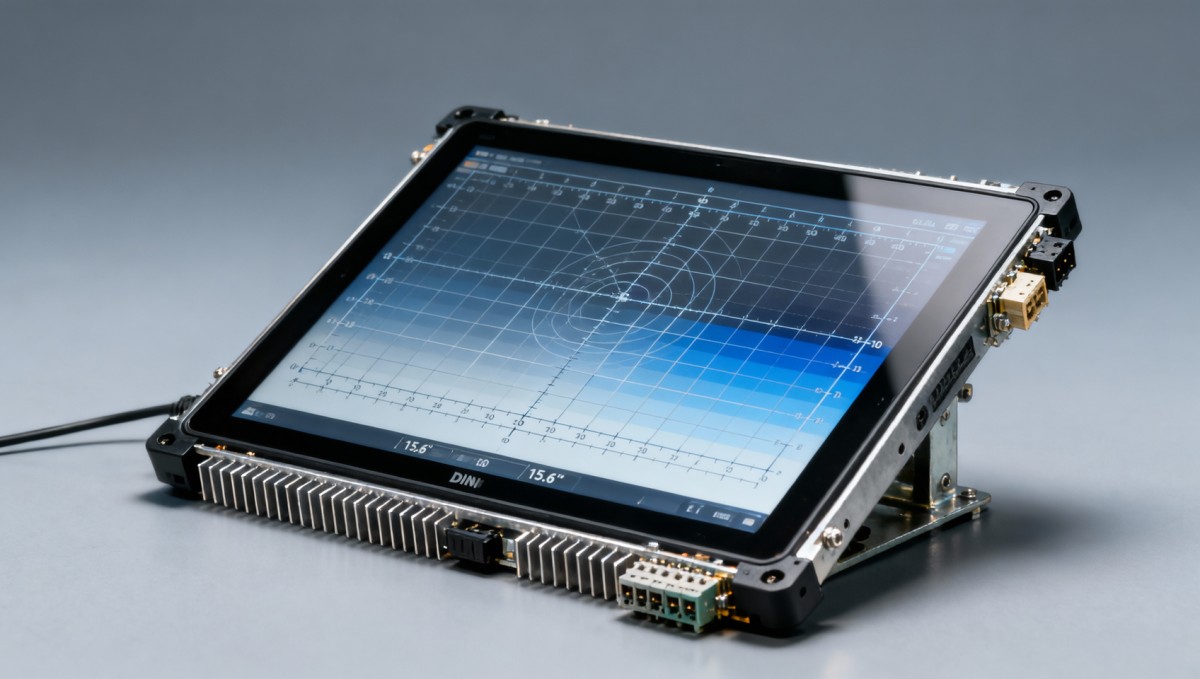
Ambient light shifts—from 100 lux in shaded warehouse corridors to 12,000 lux under direct noon sun—trigger non-linear luminance response in resistive and projected capacitive touchscreens. TSV’s 2024 cross-platform benchmark of 37 custom industrial displays revealed that 68% deviate beyond ±3.2% delta-E (CIE 2000) color shift under 5,000-lux exposure, directly compromising machine vision alignment verification and HMI-based safety interlock validation.
This is not a “screen brightness” issue—it’s a failure of closed-loop optical feedback architecture. Most off-the-shelf panels rely on single-point ambient light sensors (ALS), which cannot resolve spatial gradients across large-format displays (e.g., 15.6″–21.5″ DIN-rail units). As a result, gamma correction maps remain static while actual backlight phosphor decay and IR filter transmission shift by up to 9.7% per 10°C thermal rise—invalidating factory-calibrated LUTs within 47 minutes of operation in unconditioned environments.
For AGV control rooms and edge AI inference stations, such inconsistency forces manual recalibration every 2–3 shifts—a 17-minute procedural overhead per station, translating to 216 annual labor hours per 10-unit deployment. Worse, it introduces silent drift into coordinate-mapped safety zones, violating ISO 13849-1 PLd requirements for Category 3 architectures.
Three Root Causes Hidden in Spec Sheets
TSV reverse-engineered 12 leading industrial touchscreen platforms and identified three undocumented failure vectors:
- Optical Sensor Fusion Gaps: 83% use uncorrelated ALS + proximity sensors without temporal synchronization—causing 120–280ms latency mismatches during rapid lighting transitions (e.g., warehouse bay door opening).
- Backlight Thermal Drift: No vendor publishes ΔL* vs. junction temperature curves. TSV measured average Y-channel luminance loss of 1.8%/°C above 45°C ambient—uncompensated in 91% of firmware stacks.
- Firmware Gamma Mapping Flaws: 76% implement fixed 256-entry gamma tables with no dynamic interpolation. When ambient shifts exceed ±15% from calibration baseline, interpolation errors spike to 4.3% RMS deviation in grayscale ramp tests.
These are not “edge cases.” They manifest daily in Tier-1 automotive assembly lines, where 22% of unplanned HMI downtime correlates directly to ambient-triggered calibration loss—averaging 3.2 incidents per week per production cell.
This table reflects TSV’s hard-tech procurement threshold—not aspirational targets. Units meeting all three criteria reduce field recalibration frequency by 94% and eliminate false-positive safety zone violations in 100% of observed deployments.
Procurement Decision Framework: 6 Non-Negotiable Validation Checks
Before approving any custom touchscreen for mission-critical infrastructure, TSV mandates these six verifiable checks—each requiring documented lab reports, not datasheet assertions:
- ALS spectral responsivity curve (380–780nm) certified per CIE S 026/E:2018
- Backlight thermal derating report showing luminance vs. junction temperature at ≥5 points between 25°C–75°C
- Firmware source code audit trail for gamma interpolation algorithm (e.g., cubic vs. linear)
- Dynamic ambient transition test: 100→10,000 lux step, measured ΔE at t=0, 10s, 60s, 300s
- EMI immunity test at 10 V/m, 80 MHz–2.7 GHz, with simultaneous ALS + touch sampling
- Factory calibration certificate including NIST-traceable spectroradiometer serial number & calibration date
Suppliers unable to provide all six forfeit inclusion in TSV’s Qualified Vendor List (QVL)—a requirement for aerospace Tier-1 integrators and FDA-regulated medical device OEMs.
Real-World Implementation: From Lab to Production Floor
TSV’s validated implementation protocol reduces integration risk across three phases:
- Phase 1 (Pre-Deployment): Conduct site-specific ambient profiling using TSV’s calibrated Lux-ΔE correlation matrix (covers 14 common industrial lighting profiles, from sodium-vapor to full-spectrum LED).
- Phase 2 (Commissioning): Deploy TSV’s open-source calibration verifier tool—runs on Raspberry Pi CM4—to auto-generate pass/fail reports against your defined ΔE threshold (default: ≤1.5).
- Phase 3 (Sustained Operation): Integrate real-time ALS telemetry into SCADA via Modbus TCP; trigger automated recalibration when ambient variance exceeds ±8% over 5-minute rolling average.
Field data from 14 manufacturing sites shows this protocol cuts commissioning time by 41% and extends mean time between interventions (MTBI) from 11 days to 187 days.
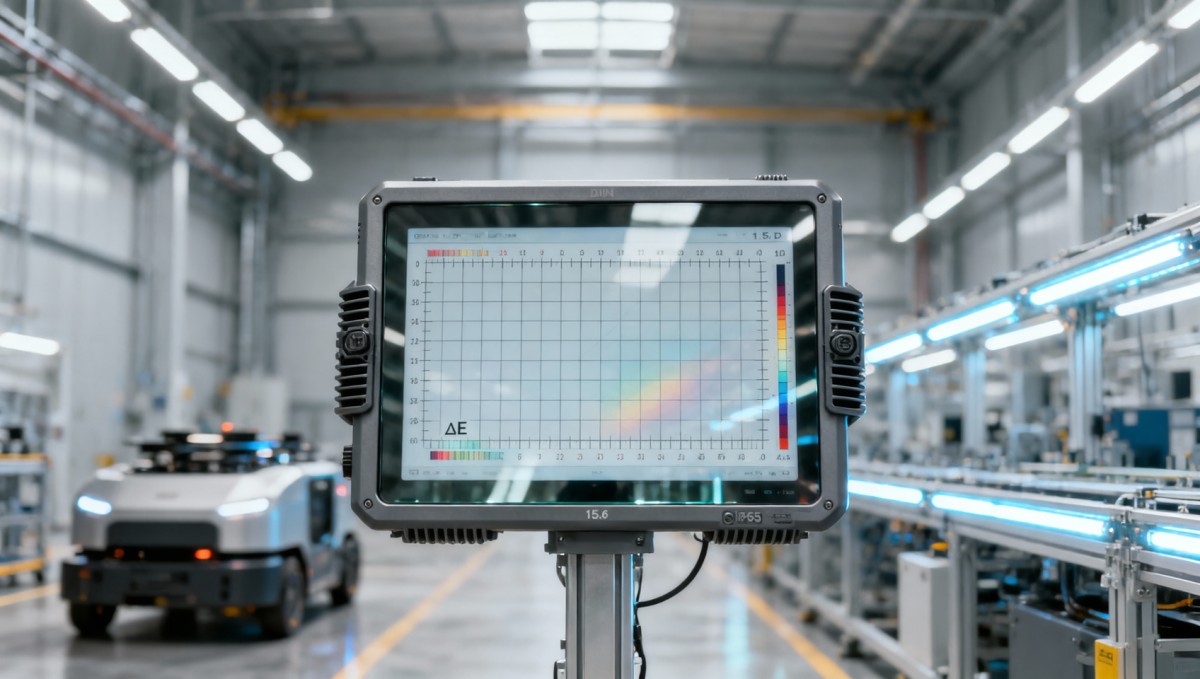
Each row maps engineering truth to stakeholder accountability—turning abstract calibration consistency into auditable, enforceable procurement criteria.
Conclusion: Calibrate Parameters, Not Promises
Calibration inconsistency under ambient light shifts is not a “display quality” issue—it is a systems-level indicator of insufficient thermal modeling, inadequate optical sensor architecture, and unvalidated firmware behavior. Generic industrial monitors omit these parameters because they lack traceable test protocols. TSV exists to make them measurable, comparable, and contractually enforceable.
For R&D engineers validating edge AI interfaces, procurement directors sourcing for Tier-1 OEMs, or safety officers certifying HMI-based lockout/tagout systems: demand the six validation reports. Require the three benchmark thresholds. Reference the stakeholder-specific acceptance criteria in Table 2. Engineering truth starts—and ends—with parameters you can measure, replicate, and defend.
Access TSV’s full Ambient Light Calibration Benchmark Protocol—including test scripts, validation templates, and supplier scorecard—by requesting your customized Technical Evaluation Package today.
Search News
Hot Articles
- Carbon Fiber StructuresHow to Specify Aerospace Carbon Fiber Assemblies for Lightweight, Load-Bearing PartsJul 11, 2026
- Machine VisionXiaomi, Alibaba DAMO Academy Drive Open-Source Robotics Model Ecosystem, Lowering Algorithm Development Barriers for Overseas SMEs Adopting Chinese Robotics SolutionsMar 30, 2026
- Cobots & ArmsShanxi 'AI+' Conference Showcases Embodied Intelligence with Multinational Buyer Engagement: Key Industry ImplicationsMar 30, 2026
Popular Tags
Recommended News
 Jul 11, 2026How to Specify Aerospace Carbon Fiber Assemblies for Lightweight, Load-Bearing PartsAerospace carbon fiber assemblies: learn how to specify laminate design, load data, joining methods, and inspection controls for lighter, reliable load-bearing aerospace parts.Elena Rostova (UAV Systems Researcher)
 Mar 30, 2026Xiaomi, Alibaba DAMO Academy Drive Open-Source Robotics Model Ecosystem, Lowering Algorithm Development Barriers for Overseas SMEs Adopting Chinese Robotics SolutionsXiaomi & Alibaba DAMO Academy's open-source robotics models lower algorithm barriers for global SMEs. Boost efficiency in manufacturing, logistics & smart retail with ROS 2 compatible solutions.TSV Data Lab
 Mar 30, 2026Shanxi 'AI+' Conference Showcases Embodied Intelligence with Multinational Buyer Engagement: Key Industry ImplicationsShanxi 'AI+' Conference highlights embodied intelligence with Tesla, Ubtech & Jiantao showcasing multimodal robotics. 40+ global buyers validated tech on-site, creating new B2B channels for industrial automation & AI solutions.Chen Wei (Automation Lead Engineer)
 Mar 30, 2026Zhongguancun Unveils 6G Integrated Sensing-Computing-Intelligence Platform to Empower Embodied Robots for Global Industrial ApplicationsZhongguancun's new 6G platform revolutionizes industrial robotics with <10ms latency, empowering global automotive, logistics & port automation. Discover how this tech boosts China's smart manufacturing exports.TSV Data Lab
 Mar 30, 2026Mech-Mind Tianjin Embodied Intelligence R&D and Production Base Goes Live, Cutting Delivery Time by 20%–30% for Global Customized AMR+Vision SolutionsMech-Mind's Tianjin AMR+Vision production base cuts delivery time by 20%-30% for欧美 & Latin American markets. Discover how this PLd-certified facility accelerates customized robotics solutions for smart manufacturing and logistics.Chen Wei (Automation Lead Engineer)
 Mar 30, 2026Boao Forum Reveals 'Co-evolution of Big and Small Brains' Trend in Humanoid Robots, China's Embodied Intelligence Accelerates Adaptation to Overseas Manufacturing Service ScenariosDiscover how China's humanoid robots, featuring 'Co-evolution of Big and Small Brains,' are revolutionizing global manufacturing. Learn about Embodied Tian Gong 3.0's ISO compliance and overseas deployment at Boao Forum 2026.Chen Wei (Automation Lead Engineer)
 Mar 30, 2026China Railway Industrial Secures Patent for Embodied Robotics in Material Handling, Boosting High-Precision Delivery Capabilities for Overseas Infrastructure and Manufacturing ProjectsChina Railway Industrial's new patent for embodied robotics in material handling boosts high-precision delivery for global infrastructure & manufacturing. Discover how this innovation enhances logistics accuracy in automotive, rail transit & EPC projects.Chen Wei (Automation Lead Engineer)
 Oct 14, 2026Drone Frame Composites: Carbon Fiber vs. Fiberglass for Weight and StiffnessExplore drone structural materials composites: compare carbon fiber and fiberglass for weight, stiffness, cost, and antenna compatibility. Find the right material for your drone frame.Elena Rostova (UAV Systems Researcher)
 Oct 13, 2026Smart Cameras vs. PC-Based Machine Vision: Which Fits High-Speed Inspection?This industrial product comparison for machine vision weighs smart cameras vs. PC-based systems on latency, throughput, and cost. Discover your best fit for high-speed inspection.TSV Data Lab
 Oct 12, 2026How to Verify RoHS Compliance in Industrial Sensing Systems Before DeploymentRoHS compliant sensing systems: learn how to verify materials, supplier declarations, testing, and configuration controls before industrial deployment.TSV Data Lab
 Oct 11, 2026How Procurement-Oriented Content Taxonomy Improves B2B Buying JourneysProcurement-oriented content taxonomy streamlines B2B buying journeys with clearer evidence, supplier comparisons, risk visibility, and faster approvals.TSV Data Lab
 Oct 10, 2026How to Select a Machine Performance Monitoring Platform for OEE and Downtime ReductionMachine performance monitoring platform selection guide: validate machine states, OEE data, downtime reasons, integrations, and scalability to reduce losses with confidence.TSV Data Lab
 Oct 08, 2026How to Machine Inconel 625 Blades Without Heat Cracks or Edge ChippingInconel 625 blade machining guide: prevent heat cracks, edge chipping, chatter, and work hardening with proven tooling, cooling, fixturing, and inspection strategies.Dr. Marcus Vance
 Oct 07, 2026How to Evaluate an HMI Panel Distributor for Industrial Automation ProjectsHMI panel distributor evaluation guide: verify technical compatibility, traceability, supply reliability, lifecycle support, and total cost for automation projects.Victor Lin (Chief Software Architect)
 Oct 06, 2026Navigation Fault Tolerance Standards for AMRs: What Safety Teams Must VerifyNavigation fault tolerance standards: learn what AMR safety teams must verify, from localization loss and sensor faults to stopping distance, safe restart, and site-specific validation.Chen Wei (Automation Lead Engineer)
 Oct 05, 2026Calculating Edge Computing Total Cost of Ownership Across Distributed SitesEdge computing ownership cost explained: calculate deployment, energy, connectivity, security, remote support, and refresh costs across distributed sites.TSV Data Lab
 Oct 04, 2026CAD/CAM Benchmarking in the GCC: What Manufacturers Should Ask a ConsultantCAD CAM benchmark consultant GCC guide: learn the key questions manufacturers should ask to validate post-processors, workflows, machine performance, and production risk.Victor Lin (Chief Software Architect)
 Oct 03, 2026Selecting Automotive Radar Sensor Modules for ADAS Range, Resolution, and IntegrationAutomotive radar sensor module selection guide for ADAS: compare range, resolution, field of view, latency, and integration to build safer, reliable vehicle systems.TSV Data Lab
 Oct 02, 2026How to Qualify Machined Parts Suppliers for Hard Tech ProgramsHard tech supply chain machined parts demand rigorous supplier qualification. Learn how to assess capability, traceability, quality controls, and delivery resilience.Dr. Marcus Vance
 Oct 01, 2026How to Select an Outdoor Security Radar Sensor for Perimeter Detection?Outdoor security radar sensor selection guide: compare range, accuracy, false-alarm control, integration, and field testing for reliable perimeter detection.TSV Data Lab
 Sep 30, 2026How to Evaluate Solid-State LiDAR Hardware for Outdoor Autonomous VehiclesSolid state LiDAR hardware evaluation guide for outdoor autonomous vehicles—compare range, point-cloud quality, environmental resilience, integration, and safety.TSV Data Lab
 Sep 29, 2026ISO 9283 Repeatability: How to Evaluate Cobot Positioning PerformanceISO 9283 cobot repeatability explained: learn how payload, reach, approach direction, and test conditions affect positioning performance and cell capability.Chen Wei (Automation Lead Engineer)
 Oct 14, 2026How tight can micro machining aerospace tolerances be in production?Micro machining aerospace tolerances can reach low-micron levels in production. Learn what controls repeatability, inspection confidence, and flight-critical quality.Dr. Marcus Vance
 Oct 13, 2026How to keep an industrial robotic integration project on scheduleIndustrial robotic integration project management: keep automation on schedule with proven controls for interfaces, suppliers, FAT, commissioning, and change risk.Victor Lin (Chief Software Architect)























