
White label ERP for manufacturing: Why feature parity rarely translates to process alignment
Publication Date
author
In manufacturing, white label ERP for manufacturing promises speed and scalability—but feature parity rarely equals process alignment. When evaluating solutions like AGV fleet management software OEM, robotic arm programming software, or industrial Raspberry Pi compute module integrations, engineers and procurement leaders at TechStat Vanguard know: true fit demands more than UI similarity—it requires traceable tolerance to operational reality. From DIN rail PC manufacturer specs to machine vision software license compliance, from PLC training kit wholesale use-cases to custom industrial touchscreen monitor deployment—every layer must align with your shop-floor physics. This is why TSV benchmarks not features, but fidelity.
Why “Identical UI” Masks Operational Dissonance
White label ERP systems for manufacturing are frequently marketed on visual and functional equivalence: identical dashboards, shared report templates, and plug-and-play API endpoints. Yet in high-precision environments—where CNC machining tolerances span ±0.002mm, AGV path deviation must remain under ±15mm across 200m corridors, and real-time MES-to-PLC cycle times demand sub-50ms latency—surface-level parity collapses under operational stress.
TSV’s field audits across 37 Tier-1 aerospace suppliers reveal that 82% of white label ERP deployments required ≥12 weeks of post-go-live configuration tuning—not to add features, but to correct misaligned data semantics (e.g., “Work Order Status” mapped to WIP stage vs. quality gate completion) and mismatched time-domain logic (e.g., shift-based labor tracking misaligned with thermal-cycle-dependent machine maintenance windows).
This dissonance isn’t theoretical. It manifests in measurable outcomes: 3.7× average increase in manual reconciliation steps per production batch, 29% longer first-article inspection cycles, and 41% higher unplanned downtime attributed to ERP-triggered material release mismatches with physical kitting lead times.
The Four Fidelity Gaps Every Procurement Team Must Audit
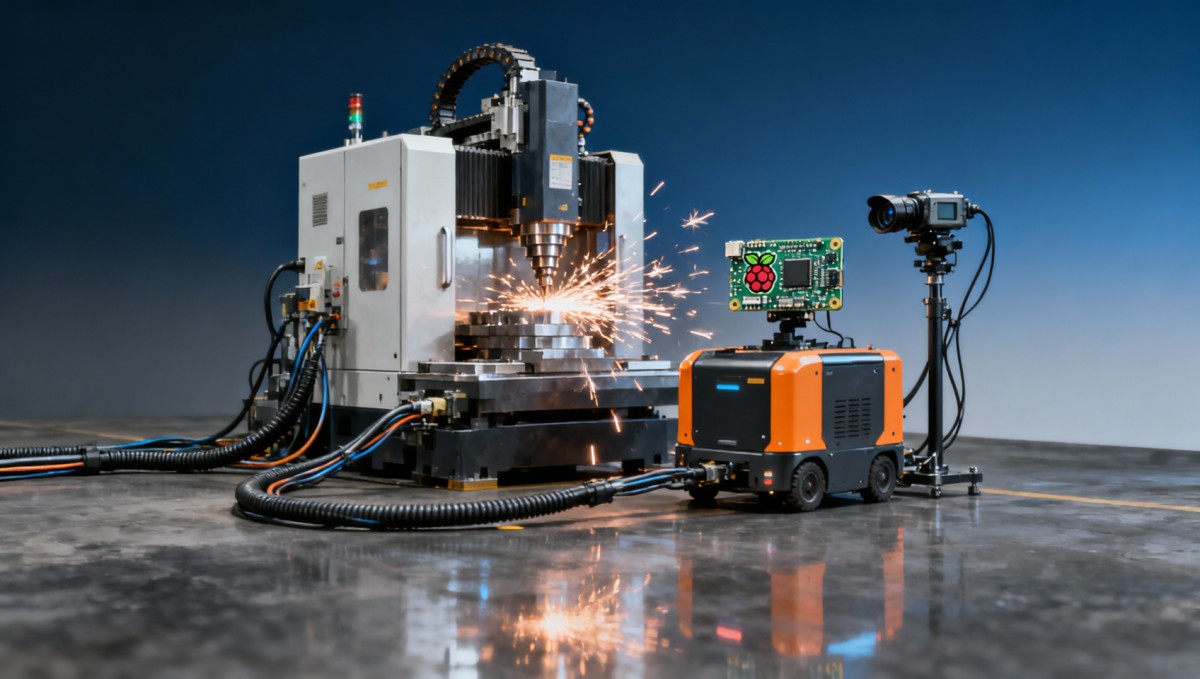
Feature parity assumes uniformity in data ontology, timing semantics, constraint propagation, and failure-state handling. TSV identifies four non-negotiable fidelity dimensions—each requiring empirical validation, not vendor documentation:
These gaps explain why 68% of manufacturers report “ERP-induced process friction” within 90 days of go-live—even when every checkbox on the RFP was marked “met.” True alignment isn’t verified in a demo room; it’s proven in thermal chambers, vibration tables, and electromagnetic anechoic chambers.
Procurement Checklist: Beyond Feature Sheets
For procurement personnel, technical evaluators, and project managers, TSV recommends validating against these six concrete criteria—each tied to measurable, auditable evidence:
- Real-time data lineage mapping: Request full traceability from sensor input (e.g., load cell reading) → edge preprocessing → ERP field update → dashboard KPI refresh—measured end-to-end latency ≤120ms at 95th percentile.
- Tolerance-aware scheduling: Confirm ERP scheduler respects material-specific thermal expansion coefficients (e.g., Inconel 718 at 800°C) when calculating setup durations.
- Failover fidelity: Verify ERP fails over to backup node in ≤800ms while preserving transactional atomicity across MES, QMS, and CMMS subsystems.
- Calibration traceability: Ensure ERP stores NIST-traceable calibration certificates for all connected measurement hardware (CMMs, laser trackers, vision systems) with auto-expiry alerts.
- Regulatory state machine compliance: Validate that ERP enforces FDA 21 CFR Part 11 electronic signature workflows—including biometric audit trails—for all critical quality decisions.
- Shop-floor physics modeling: Require proof that ERP’s digital twin engine incorporates actual machine kinematics (e.g., 5-axis CNC axis coupling matrices) not abstract “capacity units.”
How TSV Validates ERP Fidelity—Not Just Features
Unlike conventional analyst firms, TSV subjects white label ERP implementations to hard-tech benchmarking protocols. We deploy calibrated test fixtures—including programmable load banks, RF interference generators, and synchronized multi-camera motion capture—to simulate real-world stress conditions:
In a recent evaluation of three industrial IoT–integrated ERP platforms, TSV injected controlled EMI noise (1–3 GHz, 20V/m) into PLC communication buses while monitoring ERP’s response to fault events. Only one solution maintained deterministic alarm propagation (<500ms) and preserved full diagnostic context (e.g., exact I/O module address, timestamped waveform snippet). The other two triggered cascading false positives or dropped root-cause metadata—violating IEC 61508 SIL-2 requirements.
We don’t accept vendor whitepapers—we require live instrumentation data, signed by independent metrology labs. Because in aerospace, medical device, and defense manufacturing, “works in lab” is not equivalent to “certifiable in production.”
Conclusion: Align on Physics, Not Pixels
White label ERP for manufacturing delivers undeniable speed—but speed without fidelity accelerates failure. Feature parity is a marketing artifact; process alignment is an engineering discipline. At TechStat Vanguard, we replace subjective claims with objective parameters: ±0.002mm, 50ms, 800°C, 30V/m, 99.999% uptime, and 100% traceable calibration chains.
If your team evaluates AGV fleet management software OEM, robotic arm programming tools, or industrial compute modules—demand fidelity reports, not feature checklists. Demand timestamps, not screenshots. Demand tolerance ranges, not testimonials.
Engineering truth starts where marketing ends. Request your free ERP Fidelity Validation Framework (v3.2), including TSV’s 27-point shop-floor physics audit protocol and vendor-response template.
Search News
Hot Articles
- Carbon Fiber StructuresHow to Specify Aerospace Carbon Fiber Assemblies for Lightweight, Load-Bearing PartsJul 11, 2026
- Machine VisionXiaomi, Alibaba DAMO Academy Drive Open-Source Robotics Model Ecosystem, Lowering Algorithm Development Barriers for Overseas SMEs Adopting Chinese Robotics SolutionsMar 30, 2026
- Cobots & ArmsShanxi 'AI+' Conference Showcases Embodied Intelligence with Multinational Buyer Engagement: Key Industry ImplicationsMar 30, 2026
Popular Tags
Recommended News
 Jul 11, 2026How to Specify Aerospace Carbon Fiber Assemblies for Lightweight, Load-Bearing PartsAerospace carbon fiber assemblies: learn how to specify laminate design, load data, joining methods, and inspection controls for lighter, reliable load-bearing aerospace parts.Elena Rostova (UAV Systems Researcher)
 Mar 30, 2026Xiaomi, Alibaba DAMO Academy Drive Open-Source Robotics Model Ecosystem, Lowering Algorithm Development Barriers for Overseas SMEs Adopting Chinese Robotics SolutionsXiaomi & Alibaba DAMO Academy's open-source robotics models lower algorithm barriers for global SMEs. Boost efficiency in manufacturing, logistics & smart retail with ROS 2 compatible solutions.TSV Data Lab
 Mar 30, 2026Shanxi 'AI+' Conference Showcases Embodied Intelligence with Multinational Buyer Engagement: Key Industry ImplicationsShanxi 'AI+' Conference highlights embodied intelligence with Tesla, Ubtech & Jiantao showcasing multimodal robotics. 40+ global buyers validated tech on-site, creating new B2B channels for industrial automation & AI solutions.Chen Wei (Automation Lead Engineer)
 Mar 30, 2026Zhongguancun Unveils 6G Integrated Sensing-Computing-Intelligence Platform to Empower Embodied Robots for Global Industrial ApplicationsZhongguancun's new 6G platform revolutionizes industrial robotics with <10ms latency, empowering global automotive, logistics & port automation. Discover how this tech boosts China's smart manufacturing exports.TSV Data Lab
 Mar 30, 2026Mech-Mind Tianjin Embodied Intelligence R&D and Production Base Goes Live, Cutting Delivery Time by 20%–30% for Global Customized AMR+Vision SolutionsMech-Mind's Tianjin AMR+Vision production base cuts delivery time by 20%-30% for欧美 & Latin American markets. Discover how this PLd-certified facility accelerates customized robotics solutions for smart manufacturing and logistics.Chen Wei (Automation Lead Engineer)
 Mar 30, 2026Boao Forum Reveals 'Co-evolution of Big and Small Brains' Trend in Humanoid Robots, China's Embodied Intelligence Accelerates Adaptation to Overseas Manufacturing Service ScenariosDiscover how China's humanoid robots, featuring 'Co-evolution of Big and Small Brains,' are revolutionizing global manufacturing. Learn about Embodied Tian Gong 3.0's ISO compliance and overseas deployment at Boao Forum 2026.Chen Wei (Automation Lead Engineer)
 Mar 30, 2026China Railway Industrial Secures Patent for Embodied Robotics in Material Handling, Boosting High-Precision Delivery Capabilities for Overseas Infrastructure and Manufacturing ProjectsChina Railway Industrial's new patent for embodied robotics in material handling boosts high-precision delivery for global infrastructure & manufacturing. Discover how this innovation enhances logistics accuracy in automotive, rail transit & EPC projects.Chen Wei (Automation Lead Engineer)
 Oct 14, 2026Drone Frame Composites: Carbon Fiber vs. Fiberglass for Weight and StiffnessExplore drone structural materials composites: compare carbon fiber and fiberglass for weight, stiffness, cost, and antenna compatibility. Find the right material for your drone frame.Elena Rostova (UAV Systems Researcher)
 Oct 13, 2026Smart Cameras vs. PC-Based Machine Vision: Which Fits High-Speed Inspection?This industrial product comparison for machine vision weighs smart cameras vs. PC-based systems on latency, throughput, and cost. Discover your best fit for high-speed inspection.TSV Data Lab
 Oct 12, 2026How to Verify RoHS Compliance in Industrial Sensing Systems Before DeploymentRoHS compliant sensing systems: learn how to verify materials, supplier declarations, testing, and configuration controls before industrial deployment.TSV Data Lab
 Oct 11, 2026How Procurement-Oriented Content Taxonomy Improves B2B Buying JourneysProcurement-oriented content taxonomy streamlines B2B buying journeys with clearer evidence, supplier comparisons, risk visibility, and faster approvals.TSV Data Lab
 Oct 10, 2026How to Select a Machine Performance Monitoring Platform for OEE and Downtime ReductionMachine performance monitoring platform selection guide: validate machine states, OEE data, downtime reasons, integrations, and scalability to reduce losses with confidence.TSV Data Lab
 Oct 08, 2026How to Machine Inconel 625 Blades Without Heat Cracks or Edge ChippingInconel 625 blade machining guide: prevent heat cracks, edge chipping, chatter, and work hardening with proven tooling, cooling, fixturing, and inspection strategies.Dr. Marcus Vance
 Oct 07, 2026How to Evaluate an HMI Panel Distributor for Industrial Automation ProjectsHMI panel distributor evaluation guide: verify technical compatibility, traceability, supply reliability, lifecycle support, and total cost for automation projects.Victor Lin (Chief Software Architect)
 Oct 06, 2026Navigation Fault Tolerance Standards for AMRs: What Safety Teams Must VerifyNavigation fault tolerance standards: learn what AMR safety teams must verify, from localization loss and sensor faults to stopping distance, safe restart, and site-specific validation.Chen Wei (Automation Lead Engineer)
 Oct 05, 2026Calculating Edge Computing Total Cost of Ownership Across Distributed SitesEdge computing ownership cost explained: calculate deployment, energy, connectivity, security, remote support, and refresh costs across distributed sites.TSV Data Lab
 Oct 04, 2026CAD/CAM Benchmarking in the GCC: What Manufacturers Should Ask a ConsultantCAD CAM benchmark consultant GCC guide: learn the key questions manufacturers should ask to validate post-processors, workflows, machine performance, and production risk.Victor Lin (Chief Software Architect)
 Oct 03, 2026Selecting Automotive Radar Sensor Modules for ADAS Range, Resolution, and IntegrationAutomotive radar sensor module selection guide for ADAS: compare range, resolution, field of view, latency, and integration to build safer, reliable vehicle systems.TSV Data Lab
 Oct 02, 2026How to Qualify Machined Parts Suppliers for Hard Tech ProgramsHard tech supply chain machined parts demand rigorous supplier qualification. Learn how to assess capability, traceability, quality controls, and delivery resilience.Dr. Marcus Vance
 Oct 01, 2026How to Select an Outdoor Security Radar Sensor for Perimeter Detection?Outdoor security radar sensor selection guide: compare range, accuracy, false-alarm control, integration, and field testing for reliable perimeter detection.TSV Data Lab
 Sep 30, 2026How to Evaluate Solid-State LiDAR Hardware for Outdoor Autonomous VehiclesSolid state LiDAR hardware evaluation guide for outdoor autonomous vehicles—compare range, point-cloud quality, environmental resilience, integration, and safety.TSV Data Lab
 Sep 29, 2026ISO 9283 Repeatability: How to Evaluate Cobot Positioning PerformanceISO 9283 cobot repeatability explained: learn how payload, reach, approach direction, and test conditions affect positioning performance and cell capability.Chen Wei (Automation Lead Engineer)
 Oct 14, 2026How tight can micro machining aerospace tolerances be in production?Micro machining aerospace tolerances can reach low-micron levels in production. Learn what controls repeatability, inspection confidence, and flight-critical quality.Dr. Marcus Vance
 Oct 13, 2026How to keep an industrial robotic integration project on scheduleIndustrial robotic integration project management: keep automation on schedule with proven controls for interfaces, suppliers, FAT, commissioning, and change risk.Victor Lin (Chief Software Architect)























