Why lidar for autonomous driving vehicles still matters
Publication Date
author
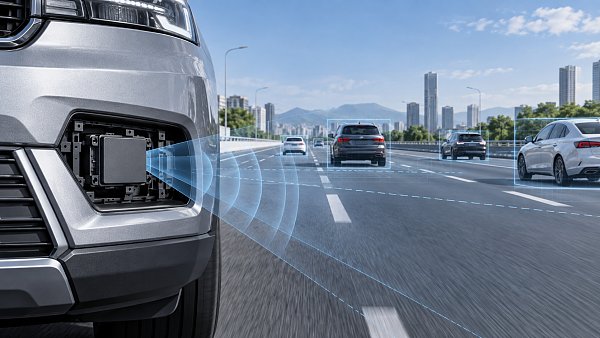
Why does lidar for autonomous driving vehicles still matter in a market crowded with camera-first claims and sensor-fusion hype? For engineers, procurement teams, and technology researchers, the short answer is practical rather than ideological: lidar continues to provide direct 3D ranging, predictable low-light performance, and an independent sensing layer that improves system safety when visibility, contrast, or edge cases challenge cameras alone.
The core search intent behind this topic is evaluative. Readers are not asking what lidar is. They want to know whether it still delivers measurable technical and commercial value, which scenarios justify its cost, and how to judge competing claims from camera-first, radar-first, or fusion-based architectures.
For information researchers, the most useful analysis is not a winner-takes-all argument. It is a grounded comparison of where lidar performs best, where it still struggles, and why many autonomous driving stacks continue to treat it as a critical redundancy and perception input rather than a luxury add-on.
What is the real reason lidar still matters in autonomous driving?

Lidar still matters because autonomous vehicles do not operate in controlled demos. They drive through darkness, glare, low-contrast scenes, unusual road geometry, partial occlusions, and unpredictable traffic behavior. In those conditions, direct distance measurement remains valuable.
Cameras infer depth through monocular estimation, stereo matching, motion cues, and neural network interpretation. That can work impressively, but it remains inference. Lidar measures distance explicitly by timing reflected laser pulses, producing a spatial map with fewer assumptions.
That distinction becomes important when safety margins shrink. At highway speed, perception latency, distance uncertainty, and classification ambiguity all compress decision time. A sensor that can supply reliable geometry, even before semantic labeling is perfect, contributes meaningful risk reduction.
This is why lidar remains relevant despite strong advances in computer vision. The debate is not whether cameras are powerful. They are. The practical question is whether relying mainly on passive vision is acceptable across the full operating design domain.
Which user concerns does lidar address better than camera-only systems?
The first concern is low-light and night performance. Cameras depend heavily on ambient light, exposure balance, headlight dynamics, and image-processing robustness. Lidar actively illuminates the scene and can maintain range perception where visual texture becomes weak.
The second concern is depth confidence. Camera systems can misjudge distance when objects have poor contrast, unusual shapes, reflective surfaces, or limited visual references. Lidar supplies explicit point-based ranging, which helps stabilize object localization and free-space estimation.
The third concern is redundancy. Safety-oriented system design rarely assumes a single perception modality will remain trustworthy in every condition. Lidar gives an independent sensing channel that can cross-check camera outputs and support safer fallback behavior.
The fourth concern is edge-case handling. Construction zones, irregular barriers, dark-painted vehicles, road debris, and partially visible obstacles can confuse perception stacks. Lidar does not solve every edge case, but it often improves geometric awareness when semantic confidence is unstable.
Where lidar creates the most measurable technical value
For engineering teams, the value of lidar is strongest where measurable perception quality matters more than headline narratives. This includes accurate object distance, lane-adjacent boundary detection, obstacle contour extraction, and motion planning support in cluttered scenes.
In urban driving, lidar helps separate vehicles, cyclists, curbs, poles, and pedestrians in dense environments. High-resolution 3D structure improves scene reconstruction, especially when shadows, backlighting, or partial occlusion reduce image clarity.
At intersections, lidar can support safer path planning by improving spatial understanding of crossing agents and roadside structures. Geometry matters here because incorrect distance estimation can produce either unsafe behavior or overly conservative driving.
On highways, lidar contributes to long-range detection confidence, cut-in tracking, and obstacle recognition ahead of the vehicle. The exact value depends on sensor architecture, wavelength, beam pattern, point-cloud density, and perception software quality.
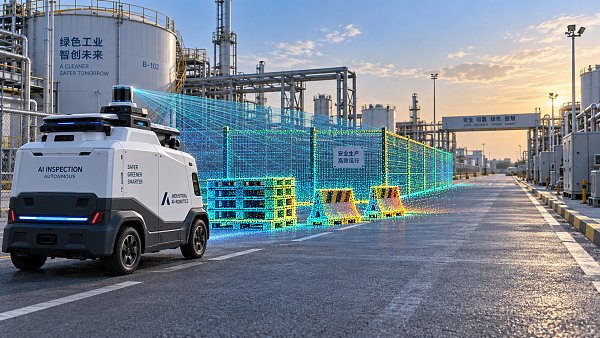
For automated parking, low-speed robotics, robo-taxis, and structured autonomous fleets, lidar often shows especially clear value. These systems benefit from precise localization, near-field spatial awareness, and consistent object boundary definition in repeated routes or mapped environments.
Why sensor fusion remains the stronger engineering position
The most credible answer is not “lidar versus cameras.” It is robust sensor fusion. Cameras provide rich semantic detail such as lane markings, traffic lights, signs, colors, gestures, and texture. Radar adds velocity robustness and strong performance in adverse weather.
Lidar contributes accurate 3D geometry and an active sensing layer. When fused well, these sensors offset one another’s weaknesses. A camera may classify well but estimate depth less confidently. Radar may track speed well but offer coarser shape detail. Lidar can bridge that gap.
For researchers and procurement teams, this matters because architecture decisions should reflect system safety goals, target geography, regulatory exposure, and environmental conditions. A mature fusion stack often delivers more defensible real-world performance than a purity-driven sensor ideology.
The stronger question is not whether one sensor can work in isolation during favorable tests. It is whether the full stack maintains acceptable perception quality across weather shifts, lighting transitions, sensor contamination, and rare but safety-critical events.
What are lidar’s real limitations and why do they not erase its value?
Cost remains the most discussed limitation. Historically, lidar was too expensive for volume passenger vehicles. That objection has weakened as solid-state designs, automotive-grade manufacturing, and supplier competition have driven prices down.
Integration complexity is another constraint. Lidar adds calibration requirements, compute load, thermal design considerations, cleaning needs, and packaging challenges. Roofline units can create styling and durability concerns, while embedded units face field-of-view tradeoffs.
Weather performance also deserves honest treatment. Heavy rain, fog, snow, and airborne particulates can reduce effective range and introduce noise. However, this does not automatically validate camera-only approaches, because the same environments also degrade image quality.
Point-cloud processing demands significant software maturity. Raw lidar data is not useful by itself. The system needs filtering, clustering, tracking, synchronization, and sensor fusion pipelines that perform reliably at automotive latency and safety requirements.
These limitations are real, but they do not eliminate lidar’s role. They simply mean that lidar should be judged as part of a total system design, where the relevant question is performance per safety-critical use case rather than isolated sensor elegance.
How should technical buyers evaluate lidar for autonomous driving vehicles?
Procurement and strategy teams should start with the operating design domain. Is the target platform built for urban autonomy, highway pilot, logistics vehicles, industrial transport, mining, or geo-fenced robo-taxi service? The answer changes sensor requirements immediately.
Next, evaluate measurable parameters rather than promotional language. Useful criteria include detection range at specified reflectivity, angular resolution, point-cloud density, frame rate, field of view, eye-safety compliance, power consumption, and thermal operating envelope.
It is equally important to ask how the vendor reports performance. Was range measured on high-reflectivity targets only, or on low-reflectivity objects that better represent real vehicles, tires, road debris, and dark clothing? Were results validated in motion or only in static tests?
Reliability data matters as much as peak performance. Automotive programs need vibration tolerance, ingress protection, long-term laser stability, contamination resistance, mean time between failures, and consistent calibration behavior over temperature cycles.
Software and integration support should not be treated as secondary. A technically strong lidar with weak software tools can delay deployment. Buyers should examine synchronization methods, driver maturity, perception SDK support, diagnostic capabilities, and compliance with vehicle architecture requirements.
When does lidar offer the clearest return on investment?
Lidar offers the clearest return when the cost of perception failure is high. That includes autonomous systems carrying passengers, operating in mixed urban traffic, navigating complex loading yards, or working in conditions where visibility and scene structure vary significantly.
The return is not only accident reduction. It also appears in reduced disengagements, smoother path planning, faster validation of edge cases, and shorter development cycles for teams that need stronger geometric ground truth during training and benchmarking.
For commercial fleets, an additional benefit is operational confidence. If lidar reduces false positives, unnecessary braking, or route interruptions, the gain extends beyond safety into uptime, maintenance efficiency, and customer trust.
In development programs, lidar can also improve perception benchmarking itself. Teams often use it as a high-confidence geometric reference when training or validating camera-based models. In that role, lidar supports the engineering process even when the final production architecture evolves.
Is the industry moving away from lidar or redefining its role?
The industry is not moving in a single direction. Some automakers promote camera-dominant architectures to reduce cost and complexity. Others continue investing in lidar, especially where higher autonomy levels demand stronger redundancy and better scene geometry.
What has changed is the role definition. Lidar is increasingly evaluated not as a symbolic marker of technical sophistication, but as a practical component with a specific job: improving depth reliability, supporting safer fusion, and reducing uncertainty in difficult perception conditions.
That is a healthier framing for the market. It moves the discussion away from ideology and toward engineering accountability. If a lidar unit improves detection confidence, lowers edge-case risk, and fits cost targets, it earns its place. If it does not, it should be questioned.
For information researchers, this means the right conclusion is conditional rather than absolute. Lidar is neither obsolete nor universally mandatory. Its importance depends on safety goals, autonomy level, deployment environment, and the maturity of the full perception stack.
Conclusion: why lidar still matters beyond the hype
Lidar for autonomous driving vehicles still matters because direct 3D sensing solves real perception problems that cameras alone do not always solve reliably. In low light, complex geometry, uncertain contrast, and safety-critical edge cases, lidar can provide measurable technical value.
The strongest case for lidar is not marketing theater or sensor tribalism. It is disciplined engineering: better ranging confidence, stronger redundancy, improved fusion, and a more defensible safety envelope across real operating conditions.
For engineers, researchers, and procurement leaders, the right question is not whether lidar sounds advanced. It is whether it improves measurable system performance in the intended deployment domain. In many autonomous driving applications, the answer is still yes.
Search News
Hot Articles
- Carbon Fiber StructuresHow to Specify Aerospace Carbon Fiber Assemblies for Lightweight, Load-Bearing PartsJul 11, 2026
- Machine VisionXiaomi, Alibaba DAMO Academy Drive Open-Source Robotics Model Ecosystem, Lowering Algorithm Development Barriers for Overseas SMEs Adopting Chinese Robotics SolutionsMar 30, 2026
- Cobots & ArmsShanxi 'AI+' Conference Showcases Embodied Intelligence with Multinational Buyer Engagement: Key Industry ImplicationsMar 30, 2026
Popular Tags
Recommended News
 Jul 11, 2026How to Specify Aerospace Carbon Fiber Assemblies for Lightweight, Load-Bearing PartsAerospace carbon fiber assemblies: learn how to specify laminate design, load data, joining methods, and inspection controls for lighter, reliable load-bearing aerospace parts.Elena Rostova (UAV Systems Researcher)
 Mar 30, 2026Xiaomi, Alibaba DAMO Academy Drive Open-Source Robotics Model Ecosystem, Lowering Algorithm Development Barriers for Overseas SMEs Adopting Chinese Robotics SolutionsXiaomi & Alibaba DAMO Academy's open-source robotics models lower algorithm barriers for global SMEs. Boost efficiency in manufacturing, logistics & smart retail with ROS 2 compatible solutions.TSV Data Lab
 Mar 30, 2026Shanxi 'AI+' Conference Showcases Embodied Intelligence with Multinational Buyer Engagement: Key Industry ImplicationsShanxi 'AI+' Conference highlights embodied intelligence with Tesla, Ubtech & Jiantao showcasing multimodal robotics. 40+ global buyers validated tech on-site, creating new B2B channels for industrial automation & AI solutions.Chen Wei (Automation Lead Engineer)
 Mar 30, 2026Zhongguancun Unveils 6G Integrated Sensing-Computing-Intelligence Platform to Empower Embodied Robots for Global Industrial ApplicationsZhongguancun's new 6G platform revolutionizes industrial robotics with <10ms latency, empowering global automotive, logistics & port automation. Discover how this tech boosts China's smart manufacturing exports.TSV Data Lab
 Mar 30, 2026Mech-Mind Tianjin Embodied Intelligence R&D and Production Base Goes Live, Cutting Delivery Time by 20%–30% for Global Customized AMR+Vision SolutionsMech-Mind's Tianjin AMR+Vision production base cuts delivery time by 20%-30% for欧美 & Latin American markets. Discover how this PLd-certified facility accelerates customized robotics solutions for smart manufacturing and logistics.Chen Wei (Automation Lead Engineer)
 Mar 30, 2026Boao Forum Reveals 'Co-evolution of Big and Small Brains' Trend in Humanoid Robots, China's Embodied Intelligence Accelerates Adaptation to Overseas Manufacturing Service ScenariosDiscover how China's humanoid robots, featuring 'Co-evolution of Big and Small Brains,' are revolutionizing global manufacturing. Learn about Embodied Tian Gong 3.0's ISO compliance and overseas deployment at Boao Forum 2026.Chen Wei (Automation Lead Engineer)
 Mar 30, 2026China Railway Industrial Secures Patent for Embodied Robotics in Material Handling, Boosting High-Precision Delivery Capabilities for Overseas Infrastructure and Manufacturing ProjectsChina Railway Industrial's new patent for embodied robotics in material handling boosts high-precision delivery for global infrastructure & manufacturing. Discover how this innovation enhances logistics accuracy in automotive, rail transit & EPC projects.Chen Wei (Automation Lead Engineer)
 Oct 03, 2026Selecting Automotive Radar Sensor Modules for ADAS Range, Resolution, and IntegrationAutomotive radar sensor module selection guide for ADAS: compare range, resolution, field of view, latency, and integration to build safer, reliable vehicle systems.TSV Data Lab
 Oct 02, 2026How to Qualify Machined Parts Suppliers for Hard Tech ProgramsHard tech supply chain machined parts demand rigorous supplier qualification. Learn how to assess capability, traceability, quality controls, and delivery resilience.Dr. Marcus Vance
 Oct 01, 2026How to Select an Outdoor Security Radar Sensor for Perimeter Detection?Outdoor security radar sensor selection guide: compare range, accuracy, false-alarm control, integration, and field testing for reliable perimeter detection.TSV Data Lab
 Sep 30, 2026How to Evaluate Solid-State LiDAR Hardware for Outdoor Autonomous VehiclesSolid state LiDAR hardware evaluation guide for outdoor autonomous vehicles—compare range, point-cloud quality, environmental resilience, integration, and safety.TSV Data Lab
 Sep 29, 2026ISO 9283 Repeatability: How to Evaluate Cobot Positioning PerformanceISO 9283 cobot repeatability explained: learn how payload, reach, approach direction, and test conditions affect positioning performance and cell capability.Chen Wei (Automation Lead Engineer)
 Oct 03, 2026Is Edge Computing Necessary for Real-Time Quality Inspection?Is industrial edge computing necessary for real-time quality inspection? Explore how latency, data volume, reliability, and control integration shape the right architecture.TSV Data Lab
 Oct 02, 2026What Documents Prove a Precision Machining Supplier Can Hold Tolerance?What documents prove a precision machining supplier can hold tolerance? Explore certificates, FAI reports, calibration, SPC, and traceability evidence to qualify suppliers with confidence.Dr. Marcus Vance
 Oct 01, 2026Can a Machining Supplier Meet Aerospace Fatigue Testing Requirements?Can a machining supplier meet aerospace fatigue testing requirements? Learn the traceability, process control, and test evidence needed for reliable aerospace parts.Dr. Marcus Vance
 Sep 30, 2026Which Industrial Robot Specifications Matter for High-Precision Assembly?Which industrial robot specifications matter most for high-precision assembly? Explore repeatability, accuracy, stiffness, vibration, calibration, and force control for reliable yields.Chen Wei (Automation Lead Engineer)
 Sep 29, 2026How Do You Verify Servo Motor Torque Under Continuous Load?How do I verify servo motor torque under continuous load? Learn RMS torque checks, torque-speed limits, thermal derating, and real-machine testing.Chen Wei (Automation Lead Engineer)
 Oct 02, 2026ZD330 Software Configuration: Verifying Cut-List Import Before PurchaseZD330 software and machine configuration: verify cut-list imports, data mapping, labels, and workflow before purchase to reduce errors and choose with confidence.Victor Lin (Chief Software Architect)
 Sep 28, 2026Spindle Runout Measurement in Germany: DIN Standards, Methods, and Acceptance LimitsSpindle runout measurement Germany: explore DIN standards, proven methods, acceptance limits, and audit-ready practices for reliable machining quality.Dr. Marcus Vance
 Sep 27, 2026How to Select Wall-Mount Edge Devices for Space-Constrained Factory NetworksWall mount edge devices for space-constrained factories: evaluate workload, thermal design, power resilience, cable access, and network reliability for smarter deployments.TSV Data Lab
 Sep 26, 2026Machining Tolerance Analysis: How to Set Limits That Meet Function and Cost TargetsMachining tolerance analysis: learn how to set functional limits, control tolerance stacks, reduce inspection risk, and balance precision with production cost.Dr. Marcus Vance
 Sep 25, 2026How to Evaluate an Industrial Infrastructure Data Platform for Multi-Site OperationsIndustrial infrastructure data platform evaluation guide for multi-site operations: compare data quality, edge resilience, interoperability, governance, and scalable proof-of-value criteria.Victor Lin (Chief Software Architect)
 Sep 24, 2026How to Select Machine Vision Optics for Accurate Inspection at Different Working DistancesMachine vision optics selection guide for accurate inspection at every working distance. Compare FOV, pixel scale, DOF, distortion, lighting, and telecentric options.TSV Data Lab
 Sep 23, 2026How to Evaluate a Machine Vision System Integrator for High-Speed Inspection LinesChoose a machine vision system integrator with proven expertise in high-speed inspection, reliable reject timing, robust optics, and measurable acceptance criteria.TSV Data Lab