What affects price in automotive radar sensor wholesale
Publication Date
author
In automotive radar sensor wholesale, price rarely reflects unit count alone. It is shaped by engineering depth, validation burden, semiconductor sourcing, and long-term supply reliability.
A lower quote may hide weaker detection stability, narrower temperature tolerance, or incomplete traceability. A higher quote may be justified when safety performance, compliance evidence, and production consistency are measurable.
For data-driven sourcing, automotive radar sensor wholesale should be evaluated as a technical risk equation. Price becomes clearer when each cost driver is linked to field performance and lifecycle control.
Core definition of price structure in automotive radar sensor wholesale
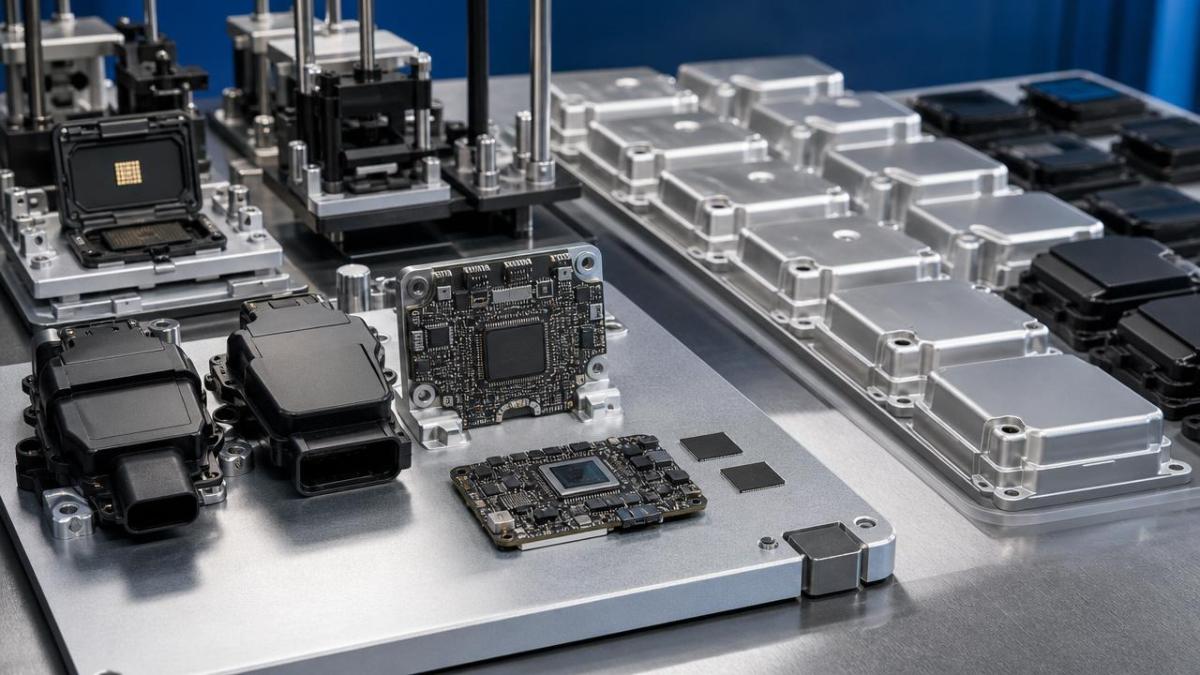
Automotive radar sensor wholesale refers to bulk sourcing of radar modules, radar transceivers, and integrated sensing units used in vehicles and mobility systems.
The quoted price usually combines hardware cost, software support, testing expense, packaging standards, and delivery commitments. In many cases, non-material factors move the final number more than raw parts.
Within automotive radar sensor wholesale, four layers often determine pricing:
- Radar architecture and frequency band
- Chipset origin and semiconductor availability
- Quality validation and automotive compliance
- Production scale, yield, and traceability discipline
This means automotive radar sensor wholesale should not be compared using headline unit price only. Technical equivalence must be confirmed before any cost comparison becomes meaningful.
Industry signals shaping current wholesale pricing
Across the broader industrial and mobility supply chain, radar demand is rising with ADAS expansion, autonomous platforms, logistics vehicles, and smart transport infrastructure.
That demand places pressure on upstream wafers, RF front-end components, packaging lines, and calibration resources. As a result, automotive radar sensor wholesale pricing remains sensitive to several market signals.
In automotive radar sensor wholesale, these signals can shift total acquisition cost even when datasheets appear similar. The deeper difference often sits in engineering control, not visible features.
Technical factors that affect automotive radar sensor wholesale prices
Frequency band and sensing range
Radar operating at 24 GHz and 77 GHz does not carry the same bill of materials or signal-processing demands. Higher-frequency systems usually support better resolution and object separation.
Long-range detection also raises cost. Antenna design, power management, and filtering become more demanding when stable performance is required across variable road and weather conditions.
Detection accuracy and point-cloud quality
A radar sensor that reports distance only is cheaper than one delivering richer velocity, angle, and target classification outputs. Better data quality requires stronger chipsets and calibration routines.
In automotive radar sensor wholesale, false positives and missed detections have cost implications. Reducing those errors often requires tighter testing and better firmware, increasing unit price.
Chip origin and component pedigree
Chip origin matters because it affects reliability records, process maturity, export control exposure, and continuity of supply. Proven automotive-grade semiconductors usually cost more than general industrial alternatives.
Automotive radar sensor wholesale quotes may rise when suppliers specify Tier-1 approved RF chips, qualified memory, or stricter PCB materials. Those choices often support lower field failure rates.
Environmental durability
Heat, vibration, moisture, and electromagnetic interference all affect cost. A sensor designed for harsh thermal cycling needs more robust enclosure sealing and more disciplined validation.
This is why automotive radar sensor wholesale pricing often differs sharply between urban passenger applications and heavy-duty, off-road, or commercial mobility use.
Compliance, validation, and traceability as price drivers
Testing is one of the least visible but most important elements in automotive radar sensor wholesale. Every validated condition adds cost, but also reduces uncertainty later.
Relevant pricing factors often include:
- EMC and electromagnetic compatibility testing
- Temperature, humidity, and vibration endurance
- Functional safety documentation support
- PPAP-style records and lot traceability
- Firmware revision control and failure analysis procedures
If a quote excludes these elements, the apparent savings may later become expensive through requalification, delayed launch, or warranty exposure.
Traceability is especially important. In automotive radar sensor wholesale, the ability to track chips, boards, firmware builds, and calibration records is part of real product value.
Business value of understanding wholesale radar pricing
Clear pricing logic improves more than cost control. It supports better technical selection, steadier forecasting, and cleaner supplier qualification across the wider industrial ecosystem.
When automotive radar sensor wholesale is assessed through engineering evidence, several benefits emerge:
- Budget decisions become tied to measurable performance.
- Risk from hidden quality gaps is reduced.
- Lifecycle cost becomes more predictable.
- Supplier comparisons become technically fairer.
This approach aligns with data-first industrial analysis. Parameters, tolerance stability, and validation depth should explain price before any purchasing commitment is made.
Typical pricing patterns by application scenario
Not every radar program requires the same specification depth. Automotive radar sensor wholesale pricing changes with use case, safety level, and operating environment.
These patterns show why automotive radar sensor wholesale cannot be benchmarked with a single market average. The correct reference point is the intended operating requirement.
Practical evaluation points before accepting a quote
A disciplined review process helps distinguish justified pricing from inflated pricing. The goal is to verify whether the quote matches real engineering substance.
- Request frequency band, range, angular resolution, and detection accuracy data.
- Confirm whether the chipset is automotive-grade and traceable by lot.
- Review EMC, thermal, vibration, and weatherproof test reports.
- Check firmware update policy and revision management discipline.
- Compare lead time stability, not only quoted unit cost.
- Ask how production yield and calibration consistency are controlled.
In automotive radar sensor wholesale, a technically complete quote often creates better total value than a cheaper offer with weak documentation and uncertain reproducibility.
Next-step framework for stronger sourcing decisions
A sound next step is to build a comparison sheet that links quoted price to measurable technical evidence. This removes emotion and exposes hidden cost risk.
For automotive radar sensor wholesale, include frequency, range, chip source, compliance scope, test depth, traceability, yield history, and warranty terms in one structured review.
This method reflects the TSV principle that engineering truth lives in parameters, not adjectives. When the data is clear, price becomes easier to defend, compare, and optimize.
Use that framework before locking any vendor shortlist. It supports lower qualification friction, sharper cost discipline, and stronger long-term returns in safety-critical mobility programs.
Search News
Hot Articles
- Carbon Fiber StructuresHow to Specify Aerospace Carbon Fiber Assemblies for Lightweight, Load-Bearing PartsJul 11, 2026
- Machine VisionXiaomi, Alibaba DAMO Academy Drive Open-Source Robotics Model Ecosystem, Lowering Algorithm Development Barriers for Overseas SMEs Adopting Chinese Robotics SolutionsMar 30, 2026
- Cobots & ArmsShanxi 'AI+' Conference Showcases Embodied Intelligence with Multinational Buyer Engagement: Key Industry ImplicationsMar 30, 2026
Popular Tags
Recommended News
 Jul 11, 2026How to Specify Aerospace Carbon Fiber Assemblies for Lightweight, Load-Bearing PartsAerospace carbon fiber assemblies: learn how to specify laminate design, load data, joining methods, and inspection controls for lighter, reliable load-bearing aerospace parts.Elena Rostova (UAV Systems Researcher)
 Mar 30, 2026Xiaomi, Alibaba DAMO Academy Drive Open-Source Robotics Model Ecosystem, Lowering Algorithm Development Barriers for Overseas SMEs Adopting Chinese Robotics SolutionsXiaomi & Alibaba DAMO Academy's open-source robotics models lower algorithm barriers for global SMEs. Boost efficiency in manufacturing, logistics & smart retail with ROS 2 compatible solutions.TSV Data Lab
 Mar 30, 2026Shanxi 'AI+' Conference Showcases Embodied Intelligence with Multinational Buyer Engagement: Key Industry ImplicationsShanxi 'AI+' Conference highlights embodied intelligence with Tesla, Ubtech & Jiantao showcasing multimodal robotics. 40+ global buyers validated tech on-site, creating new B2B channels for industrial automation & AI solutions.Chen Wei (Automation Lead Engineer)
 Mar 30, 2026Zhongguancun Unveils 6G Integrated Sensing-Computing-Intelligence Platform to Empower Embodied Robots for Global Industrial ApplicationsZhongguancun's new 6G platform revolutionizes industrial robotics with <10ms latency, empowering global automotive, logistics & port automation. Discover how this tech boosts China's smart manufacturing exports.TSV Data Lab
 Mar 30, 2026Mech-Mind Tianjin Embodied Intelligence R&D and Production Base Goes Live, Cutting Delivery Time by 20%–30% for Global Customized AMR+Vision SolutionsMech-Mind's Tianjin AMR+Vision production base cuts delivery time by 20%-30% for欧美 & Latin American markets. Discover how this PLd-certified facility accelerates customized robotics solutions for smart manufacturing and logistics.Chen Wei (Automation Lead Engineer)
 Mar 30, 2026Boao Forum Reveals 'Co-evolution of Big and Small Brains' Trend in Humanoid Robots, China's Embodied Intelligence Accelerates Adaptation to Overseas Manufacturing Service ScenariosDiscover how China's humanoid robots, featuring 'Co-evolution of Big and Small Brains,' are revolutionizing global manufacturing. Learn about Embodied Tian Gong 3.0's ISO compliance and overseas deployment at Boao Forum 2026.Chen Wei (Automation Lead Engineer)
 Mar 30, 2026China Railway Industrial Secures Patent for Embodied Robotics in Material Handling, Boosting High-Precision Delivery Capabilities for Overseas Infrastructure and Manufacturing ProjectsChina Railway Industrial's new patent for embodied robotics in material handling boosts high-precision delivery for global infrastructure & manufacturing. Discover how this innovation enhances logistics accuracy in automotive, rail transit & EPC projects.Chen Wei (Automation Lead Engineer)
 Oct 03, 2026Selecting Automotive Radar Sensor Modules for ADAS Range, Resolution, and IntegrationAutomotive radar sensor module selection guide for ADAS: compare range, resolution, field of view, latency, and integration to build safer, reliable vehicle systems.TSV Data Lab
 Oct 02, 2026How to Qualify Machined Parts Suppliers for Hard Tech ProgramsHard tech supply chain machined parts demand rigorous supplier qualification. Learn how to assess capability, traceability, quality controls, and delivery resilience.Dr. Marcus Vance
 Oct 01, 2026How to Select an Outdoor Security Radar Sensor for Perimeter Detection?Outdoor security radar sensor selection guide: compare range, accuracy, false-alarm control, integration, and field testing for reliable perimeter detection.TSV Data Lab
 Sep 30, 2026How to Evaluate Solid-State LiDAR Hardware for Outdoor Autonomous VehiclesSolid state LiDAR hardware evaluation guide for outdoor autonomous vehicles—compare range, point-cloud quality, environmental resilience, integration, and safety.TSV Data Lab
 Sep 29, 2026ISO 9283 Repeatability: How to Evaluate Cobot Positioning PerformanceISO 9283 cobot repeatability explained: learn how payload, reach, approach direction, and test conditions affect positioning performance and cell capability.Chen Wei (Automation Lead Engineer)
 Oct 03, 2026Is Edge Computing Necessary for Real-Time Quality Inspection?Is industrial edge computing necessary for real-time quality inspection? Explore how latency, data volume, reliability, and control integration shape the right architecture.TSV Data Lab
 Oct 02, 2026What Documents Prove a Precision Machining Supplier Can Hold Tolerance?What documents prove a precision machining supplier can hold tolerance? Explore certificates, FAI reports, calibration, SPC, and traceability evidence to qualify suppliers with confidence.Dr. Marcus Vance
 Oct 01, 2026Can a Machining Supplier Meet Aerospace Fatigue Testing Requirements?Can a machining supplier meet aerospace fatigue testing requirements? Learn the traceability, process control, and test evidence needed for reliable aerospace parts.Dr. Marcus Vance
 Sep 30, 2026Which Industrial Robot Specifications Matter for High-Precision Assembly?Which industrial robot specifications matter most for high-precision assembly? Explore repeatability, accuracy, stiffness, vibration, calibration, and force control for reliable yields.Chen Wei (Automation Lead Engineer)
 Sep 29, 2026How Do You Verify Servo Motor Torque Under Continuous Load?How do I verify servo motor torque under continuous load? Learn RMS torque checks, torque-speed limits, thermal derating, and real-machine testing.Chen Wei (Automation Lead Engineer)
 Oct 02, 2026ZD330 Software Configuration: Verifying Cut-List Import Before PurchaseZD330 software and machine configuration: verify cut-list imports, data mapping, labels, and workflow before purchase to reduce errors and choose with confidence.Victor Lin (Chief Software Architect)
 Sep 28, 2026Spindle Runout Measurement in Germany: DIN Standards, Methods, and Acceptance LimitsSpindle runout measurement Germany: explore DIN standards, proven methods, acceptance limits, and audit-ready practices for reliable machining quality.Dr. Marcus Vance
 Sep 27, 2026How to Select Wall-Mount Edge Devices for Space-Constrained Factory NetworksWall mount edge devices for space-constrained factories: evaluate workload, thermal design, power resilience, cable access, and network reliability for smarter deployments.TSV Data Lab
 Sep 26, 2026Machining Tolerance Analysis: How to Set Limits That Meet Function and Cost TargetsMachining tolerance analysis: learn how to set functional limits, control tolerance stacks, reduce inspection risk, and balance precision with production cost.Dr. Marcus Vance
 Sep 25, 2026How to Evaluate an Industrial Infrastructure Data Platform for Multi-Site OperationsIndustrial infrastructure data platform evaluation guide for multi-site operations: compare data quality, edge resilience, interoperability, governance, and scalable proof-of-value criteria.Victor Lin (Chief Software Architect)
 Sep 24, 2026How to Select Machine Vision Optics for Accurate Inspection at Different Working DistancesMachine vision optics selection guide for accurate inspection at every working distance. Compare FOV, pixel scale, DOF, distortion, lighting, and telecentric options.TSV Data Lab
 Sep 23, 2026How to Evaluate a Machine Vision System Integrator for High-Speed Inspection LinesChoose a machine vision system integrator with proven expertise in high-speed inspection, reliable reject timing, robust optics, and measurable acceptance criteria.TSV Data Lab