What should iot edge gateway software include?
Publication Date
author
Choosing the right IoT edge gateway software is no longer just a technical decision—it directly affects data integrity, latency, cybersecurity, and long-term scalability across modern industrial systems. For buyers, engineers, and operators evaluating AGV/AMR deployments, solid-state LiDAR integration, or broader edge AI infrastructure, understanding what software should actually include is essential to reducing risk, simplifying deployment, and ensuring measurable operational value.
What core functions should IoT edge gateway software include first?
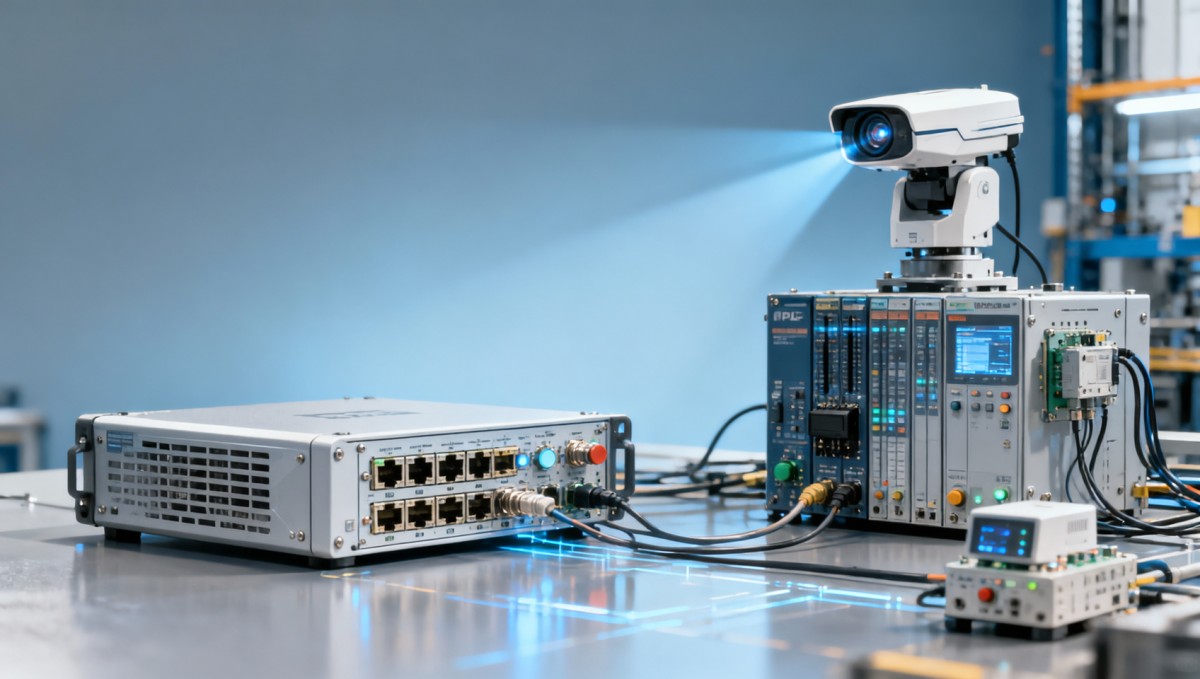
In industrial environments, IoT edge gateway software sits between field devices and upstream platforms. Its job is not limited to forwarding data. It must normalize protocols, buffer traffic during network instability, enforce security policies, and support local processing when millisecond-level response matters. For procurement teams, this means software capability often matters as much as hardware CPU, memory, or port count.
A useful evaluation method is to divide requirements into 4 layers: connectivity, data handling, management, and security. If one layer is weak, the gateway may work in a demo but fail in a live production line running 16–24 hours per day. This is especially important in mixed environments where PLCs, machine vision, LiDAR, and cloud dashboards all need to exchange data reliably.
For TSV-style technical assessment, the key question is simple: which functions are mandatory, and which are merely sales language? Software should be judged by engineering outcomes such as protocol stability, recoverability after power loss, local decision speed, and traceable event logs. Marketing labels alone do not help R&D engineers or senior procurement directors write a defensible specification sheet.
The non-negotiable software building blocks
- Multi-protocol support for industrial and IoT environments, typically including Modbus TCP/RTU, OPC UA, MQTT, HTTP/HTTPS, and where needed CAN, Profinet, EtherNet/IP, or serial integration.
- Data acquisition and normalization that can map raw registers, sensor streams, and status bits into structured tags, topics, or payloads without rewriting every upstream application.
- Local rules engine or edge computing runtime able to trigger alarms, filter noise, aggregate values over 1-second to 60-second windows, and execute simple workflows even if cloud connectivity is interrupted.
- Device management features such as remote configuration, software updates, backup and restore, diagnostics, audit logging, and role-based user access.
- Security controls including encrypted communication, certificate handling, firewall rules, secure boot compatibility where applicable, and support for segmented OT/IT deployment.
When these functions are present, the gateway software becomes a stable operational layer rather than a fragile translation box. In sectors like robotics, aerospace support systems, and precision manufacturing, that distinction can reduce troubleshooting time from several days to a few hours because fault boundaries are clearer and data paths are visible.
Which technical capabilities matter in real deployments?
Not every deployment needs the same edge gateway software stack. A packaging line collecting temperature and motor status has different needs from an AMR fleet ingesting LiDAR and navigation telemetry. Still, several technical performance dimensions appear repeatedly in successful projects: latency handling, protocol concurrency, offline resilience, and deterministic behavior under sustained load.
For example, software designed for edge AI or mobile robotics should process and route events with low jitter, not only low average latency. If average latency is acceptable but spikes occur every 30–60 seconds, operators may still see navigation errors, delayed safety responses, or inconsistent state updates between subsystems. Procurement documents should therefore ask about queue control, message prioritization, and local buffering logic.
Another overlooked issue is data survivability during link loss. In many plants and warehouses, uplink interruptions of a few seconds to several minutes are not rare. Good IoT edge gateway software should continue operating locally, cache critical records, and synchronize them later with clear timestamps. That protects traceability for maintenance, compliance review, and root-cause analysis.
Practical technical criteria to include in an RFQ
The table below summarizes a practical baseline for evaluating industrial IoT edge gateway software across common scenarios such as machine monitoring, AGV/AMR coordination, and sensor fusion at the edge.
These ranges are not universal pass-fail thresholds, but they help distinguish deployment-grade software from basic gateway utilities. In TSV’s data-first view, software should prove how it handles edge conditions, not just ideal lab conditions. That is particularly relevant where fleets, sensors, and machine cells produce bursty traffic rather than smooth data streams.
Why latency alone is an incomplete metric
Many buyers ask only for low latency, but edge gateway software should also be measured by consistency, timestamp precision, and message loss behavior. A system that handles 20 ms average forwarding but drops packets under load may be less useful than one that delivers 50 ms stable forwarding with full buffering and event traceability.
For solid-state LiDAR integration, machine vision coordination, or mobile robot telemetry, the software must also support prioritization. Safety-relevant events, motion status, and fault codes should never compete equally with noncritical logs or periodic environmental readings. That prioritization logic belongs in the software architecture, not in operator improvisation after commissioning.
How should buyers compare software options for different scenarios?
The best IoT edge gateway software for one use case may be the wrong choice for another. Enterprise decision-makers often overpay for features they never use, while operators struggle with missing diagnostics that should have been included from day one. A structured comparison should align software features with operational context, maintenance model, and expected expansion over the next 12–36 months.
In mixed industrial environments, three broad software profiles are common: protocol-centric gateway software, application-centric edge platforms, and fleet-scale remote management stacks. The right selection depends on whether the primary pain point is connectivity, local logic, or distributed lifecycle control across dozens or hundreds of installed nodes.
The table below helps compare these approaches in practical procurement terms rather than vague product slogans.
This comparison clarifies a frequent sourcing mistake: selecting by brand familiarity instead of software role. If the project involves only register collection from 20–50 assets, a focused gateway may be enough. If the goal includes local inference, event correlation, or fast control responses, a richer edge runtime becomes necessary.
Scenario-based selection logic
- If you need brownfield equipment integration within 2–4 weeks, prioritize protocol libraries, tag mapping, and easy commissioning tools.
- If you operate AGV/AMR fleets, prioritize telemetry prioritization, local logic, roaming network tolerance, and centralized update control.
- If you deploy machine vision or LiDAR at the edge, prioritize event filtering, timestamp consistency, and software compatibility with containerized workloads.
- If compliance and auditability are critical, prioritize logs, role separation, backup policies, and integration with enterprise identity or certificate management.
For procurement teams, this scenario mapping shortens qualification cycles. Instead of comparing dozens of feature lists, they can compare 5–7 decisive capabilities linked directly to plant performance, commissioning workload, and future expansion risk.
What should procurement, engineering, and operations check before purchase?
A strong buying process for IoT edge gateway software should involve at least 3 groups: engineering, operations, and procurement. Engineering checks protocol fit and integration depth. Operations checks maintainability, alarms, and recovery behavior. Procurement checks licensing clarity, support boundaries, and lifecycle cost over 1–3 years. When one group is missing, hidden risks often surface only after installation.
This is exactly where a data-driven review approach matters. TSV’s value proposition is rooted in filtering out ambiguous claims and bringing discussion back to measurable thresholds. Instead of asking whether the software is “advanced,” teams should ask whether it supports remote rollback, how many user roles exist, what happens after abnormal shutdown, and which logs can be exported for audit or troubleshooting.
A practical pre-purchase checklist
- Protocol and device fit: confirm field protocols, serial needs, tag count, polling cycles, and whether custom drivers are needed.
- Deployment architecture: define whether the gateway will run in a cabinet, vehicle, line-side enclosure, or distributed cell, and whether intermittent connectivity is expected.
- Security posture: check TLS support, account control, password policy, certificate workflow, patch mechanism, and segmentation compatibility between OT and IT zones.
- Lifecycle operations: verify remote diagnostics, alarm notification, log retention, software version control, and backup/restore procedure.
- Commercial terms: confirm licensing model, support response windows, update entitlement, and whether integration services are included or billed separately.
Typical pilot projects run in 3 stages: lab validation, site pilot, and scaled rollout. Depending on system complexity, the first two stages may take 2–6 weeks combined before procurement commits to wider deployment. This phased approach is often cheaper than selecting a platform based only on a demo dashboard.
Common mistakes that increase total cost
One common error is ignoring software maintainability and focusing only on acquisition price. A cheaper license can become expensive if every firmware update requires site visits, or if protocol mapping depends on one specialist. Another error is underestimating data governance. If tags, alarms, and event logs are not structured consistently from the start, analytics and troubleshooting become fragmented across teams.
There is also a compliance risk. In regulated or quality-sensitive production, incomplete audit trails can delay incident review or supplier qualification. Even when no sector-specific mandate applies, disciplined logging and version control remain valuable because they reduce dispute time between IT, integrators, and plant teams.
How do standards, implementation, and future trends affect software choice?
IoT edge gateway software should not be selected in isolation from standards and implementation workflow. In industrial environments, common expectations include secure communication practices, maintainable patching, timestamped logging, and interoperable data models. Depending on the project, teams may reference IEC-oriented industrial practices, OPC UA interoperability requirements, MQTT-based data transport, or internal IT security policies.
Implementation should also be planned as a controlled process rather than a one-time install. A typical rollout includes 4 steps: requirement mapping, lab verification, on-site commissioning, and operational review after 30–90 days. That final review is important because many software problems appear only under real traffic patterns, operator usage habits, and maintenance routines.
Looking ahead, edge gateway software is moving toward more modular runtimes, stronger remote fleet governance, and tighter integration with AI workflows. This does not mean every gateway needs advanced inference today. It does mean buyers should avoid locked architectures that cannot support containerized applications, additional protocols, or policy updates as operational needs evolve over the next 24–36 months.
FAQ for buyers and technical evaluators
How much local computing should edge gateway software provide?
For basic machine monitoring, rule-based filtering and protocol translation may be enough. For AMR, vision, or multi-sensor coordination, local event handling and application support become more important. A good rule is to define 3 classes of workload: pure forwarding, local rules, and compute-heavy edge applications. Buy software that fits the highest class you realistically expect within 12–24 months.
Is cloud connectivity always necessary?
No. Good IoT edge gateway software should continue core functions during network loss. In many industrial cases, cloud value lies in aggregation, analytics, and centralized visibility, while the edge handles immediate collection, buffering, and local actions. If operations stop when the WAN drops, the architecture is usually too dependent on upstream connectivity.
What is a reasonable delivery and validation expectation?
For standard configurations, software setup and pilot validation may take 1–4 weeks depending on protocol complexity, security review, and integration scope. Larger multi-site projects can extend much longer because user roles, certificate handling, and fleet governance need careful planning. Buyers should request a staged validation plan instead of a generic “quick deployment” promise.
Why work with a data-driven technical review partner?
When software claims sound similar, teams need a method to separate engineering value from presentation value. TechStat Vanguard approaches this problem by focusing on measurable technical criteria, benchmark logic, and specification-grade evaluation language. That is especially useful for enterprises comparing industrial IoT gateway software across robotics, aerospace-adjacent systems, sensor networks, and precision manufacturing environments.
If you are refining a spec sheet, qualifying suppliers, or comparing edge gateway software for a real deployment, contact TSV for support on parameter confirmation, protocol-fit analysis, software selection logic, rollout planning, delivery-cycle discussion, and compliance-oriented evaluation points. The most effective conversations usually start with 5 items: device list, protocol list, expected node count, latency tolerance, and security requirements.
Search News
Hot Articles
- Carbon Fiber StructuresHow to Specify Aerospace Carbon Fiber Assemblies for Lightweight, Load-Bearing PartsJul 11, 2026
- Machine VisionXiaomi, Alibaba DAMO Academy Drive Open-Source Robotics Model Ecosystem, Lowering Algorithm Development Barriers for Overseas SMEs Adopting Chinese Robotics SolutionsMar 30, 2026
- Cobots & ArmsShanxi 'AI+' Conference Showcases Embodied Intelligence with Multinational Buyer Engagement: Key Industry ImplicationsMar 30, 2026
Popular Tags
Recommended News
 Jul 11, 2026How to Specify Aerospace Carbon Fiber Assemblies for Lightweight, Load-Bearing PartsAerospace carbon fiber assemblies: learn how to specify laminate design, load data, joining methods, and inspection controls for lighter, reliable load-bearing aerospace parts.Elena Rostova (UAV Systems Researcher)
 Mar 30, 2026Xiaomi, Alibaba DAMO Academy Drive Open-Source Robotics Model Ecosystem, Lowering Algorithm Development Barriers for Overseas SMEs Adopting Chinese Robotics SolutionsXiaomi & Alibaba DAMO Academy's open-source robotics models lower algorithm barriers for global SMEs. Boost efficiency in manufacturing, logistics & smart retail with ROS 2 compatible solutions.TSV Data Lab
 Mar 30, 2026Shanxi 'AI+' Conference Showcases Embodied Intelligence with Multinational Buyer Engagement: Key Industry ImplicationsShanxi 'AI+' Conference highlights embodied intelligence with Tesla, Ubtech & Jiantao showcasing multimodal robotics. 40+ global buyers validated tech on-site, creating new B2B channels for industrial automation & AI solutions.Chen Wei (Automation Lead Engineer)
 Mar 30, 2026Zhongguancun Unveils 6G Integrated Sensing-Computing-Intelligence Platform to Empower Embodied Robots for Global Industrial ApplicationsZhongguancun's new 6G platform revolutionizes industrial robotics with <10ms latency, empowering global automotive, logistics & port automation. Discover how this tech boosts China's smart manufacturing exports.TSV Data Lab
 Mar 30, 2026Mech-Mind Tianjin Embodied Intelligence R&D and Production Base Goes Live, Cutting Delivery Time by 20%–30% for Global Customized AMR+Vision SolutionsMech-Mind's Tianjin AMR+Vision production base cuts delivery time by 20%-30% for欧美 & Latin American markets. Discover how this PLd-certified facility accelerates customized robotics solutions for smart manufacturing and logistics.Chen Wei (Automation Lead Engineer)
 Mar 30, 2026Boao Forum Reveals 'Co-evolution of Big and Small Brains' Trend in Humanoid Robots, China's Embodied Intelligence Accelerates Adaptation to Overseas Manufacturing Service ScenariosDiscover how China's humanoid robots, featuring 'Co-evolution of Big and Small Brains,' are revolutionizing global manufacturing. Learn about Embodied Tian Gong 3.0's ISO compliance and overseas deployment at Boao Forum 2026.Chen Wei (Automation Lead Engineer)
 Mar 30, 2026China Railway Industrial Secures Patent for Embodied Robotics in Material Handling, Boosting High-Precision Delivery Capabilities for Overseas Infrastructure and Manufacturing ProjectsChina Railway Industrial's new patent for embodied robotics in material handling boosts high-precision delivery for global infrastructure & manufacturing. Discover how this innovation enhances logistics accuracy in automotive, rail transit & EPC projects.Chen Wei (Automation Lead Engineer)
 Oct 18, 2026Comparing Material Options for Procurement: Specs, Costs, and Supply RisksExplore procurement oriented technical content on material options, specs, costs, and supply risks. Compare alternatives to cut hidden expenses and make confident sourcing decisions.Dr. Marcus Vance
 Oct 17, 20265-Axis CNC Positioning Accuracy: How to Interpret ISO 230-2 Test ResultsAssess 5 axis CNC machining positioning accuracy with ISO 230-2. Learn to interpret repeatability, reversal error, and test conditions to compare suppliers and make confident acceptance decisions.Dr. Marcus Vance
 Oct 16, 2026Choosing a Rugged Edge AI Box Supplier: Thermal Tests and Lifecycle SupportChoose a rugged edge AI box supplier with proven thermal performance and reliable lifecycle support. Discover the tests and commitments to verify before you buy.TSV Data Lab
 Oct 15, 2026R&D Cost Reduction Services: How to Evaluate Fees, Savings, and ROIEvaluate R&D cost reduction services with confidence. Compare fees, verify savings, and calculate ROI without compromising performance. Discover how to choose a provider that delivers real value.Chen Wei (Automation Lead Engineer)
 Oct 18, 2026What Should an AS9100 Machining Supplier Checklist Include?Build an AS9100 machining supplier checklist that verifies capability, traceability, inspection, and outsourced processes. Discover what to check before approving your next aerospace supplier.Dr. Marcus Vance
 Oct 17, 2026How Should You Interpret Industrial Robot Repeatability Specs?Decode industrial robot repeatability specifications, understand ISO 9283 test conditions, and avoid costly selection mistakes. Learn how to verify performance for your process.Chen Wei (Automation Lead Engineer)
 Oct 16, 2026How Can You Fairly Compare MTBF Across Industrial Servo Motors?Make a fair industrial servo motor MTBF comparison with matched operating profiles, failure criteria, and confidence bounds. Discover how to assess reliability beyond advertised numbers.Chen Wei (Automation Lead Engineer)
 Oct 15, 2026How Should You Compare TechStat Vanguard 5-Axis CNC Tolerances?TechStat Vanguard 5-axis CNC tolerance comparison: learn how to verify part accuracy, assess inspection evidence, and choose suppliers that reliably meet your drawing requirements.Dr. Marcus Vance
 Oct 14, 2026Drone Frame Composites: Carbon Fiber vs. Fiberglass for Weight and StiffnessExplore drone structural materials composites: compare carbon fiber and fiberglass for weight, stiffness, cost, and antenna compatibility. Find the right material for your drone frame.Elena Rostova (UAV Systems Researcher)
 Oct 13, 2026Smart Cameras vs. PC-Based Machine Vision: Which Fits High-Speed Inspection?This industrial product comparison for machine vision weighs smart cameras vs. PC-based systems on latency, throughput, and cost. Discover your best fit for high-speed inspection.TSV Data Lab
 Oct 12, 2026How to Verify RoHS Compliance in Industrial Sensing Systems Before DeploymentRoHS compliant sensing systems: learn how to verify materials, supplier declarations, testing, and configuration controls before industrial deployment.TSV Data Lab
 Oct 11, 2026How Procurement-Oriented Content Taxonomy Improves B2B Buying JourneysProcurement-oriented content taxonomy streamlines B2B buying journeys with clearer evidence, supplier comparisons, risk visibility, and faster approvals.TSV Data Lab
 Oct 10, 2026How to Select a Machine Performance Monitoring Platform for OEE and Downtime ReductionMachine performance monitoring platform selection guide: validate machine states, OEE data, downtime reasons, integrations, and scalability to reduce losses with confidence.TSV Data Lab
 Oct 08, 2026How to Machine Inconel 625 Blades Without Heat Cracks or Edge ChippingInconel 625 blade machining guide: prevent heat cracks, edge chipping, chatter, and work hardening with proven tooling, cooling, fixturing, and inspection strategies.Dr. Marcus Vance
 Oct 07, 2026How to Evaluate an HMI Panel Distributor for Industrial Automation ProjectsHMI panel distributor evaluation guide: verify technical compatibility, traceability, supply reliability, lifecycle support, and total cost for automation projects.Victor Lin (Chief Software Architect)
 Oct 06, 2026Navigation Fault Tolerance Standards for AMRs: What Safety Teams Must VerifyNavigation fault tolerance standards: learn what AMR safety teams must verify, from localization loss and sensor faults to stopping distance, safe restart, and site-specific validation.Chen Wei (Automation Lead Engineer)
 Oct 05, 2026Calculating Edge Computing Total Cost of Ownership Across Distributed SitesEdge computing ownership cost explained: calculate deployment, energy, connectivity, security, remote support, and refresh costs across distributed sites.TSV Data Lab