IoT Gateway for CNC Machine Monitoring and Data Gaps
Publication Date
author
For after-sales maintenance teams, an iot gateway for cnc machine monitoring is more than a connectivity tool—it is the first step toward exposing hidden downtime, unstable signals, and costly data gaps. In high-precision machining environments, reliable edge data helps technicians diagnose faults faster, verify machine status remotely, and support service decisions with measurable evidence instead of assumptions.
That need has become sharper as machine shops run mixed fleets of legacy CNC equipment, newer controllers, robot loaders, metrology devices, and plant-level MES or ERP systems. In many facilities, service teams still depend on operator descriptions, partial alarm logs, and delayed manual reports. The result is a maintenance loop that is reactive, slow, and vulnerable to missing context.
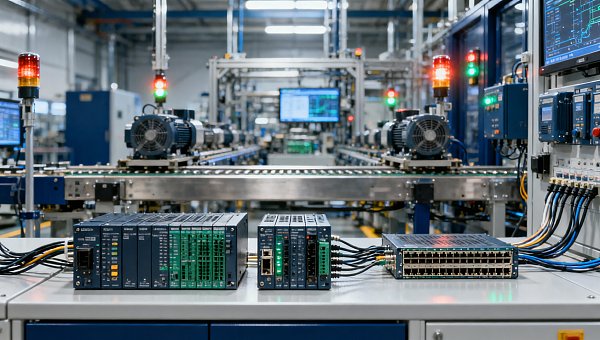
A well-selected iot gateway for cnc machine monitoring closes that gap at the edge. It collects machine signals in real time, normalizes data from different protocols, buffers records when networks fail, and pushes usable information to dashboards or service platforms. For organizations that value engineering truth over marketing claims, the gateway is not just an accessory. It is the evidence layer that reveals what actually happened, when it happened, and how often it repeats.
Why Data Gaps Persist in CNC Maintenance Environments

In CNC service operations, data gaps rarely come from a single failure point. They usually emerge from 4 overlapping conditions: incompatible machine protocols, unstable shop-floor networks, low-frequency polling, and incomplete event logging. A machine may be cutting normally at 09:15, idle at 09:17, and in alarm at 09:19, yet the maintenance record only shows one alarm snapshot at 09:20. That 5-minute gap can hide the root cause.
This is especially common in plants running equipment from multiple generations. A newer machining center may expose spindle load, feed override, axis status, cycle count, and temperature every 1 to 5 seconds. A legacy unit may offer only limited status words or serial output. Without an industrial gateway that can normalize these signals, after-sales teams receive fragmented data that is difficult to compare across 10, 20, or even 50 machines.
Common Causes of Incomplete CNC Data
- Protocol mismatch between controller brands, PLCs, and plant systems
- Network interruptions lasting 30 seconds to 15 minutes without local buffering
- Polling intervals set too wide, such as 60 seconds instead of 1 to 5 seconds
- Alarm-only collection that ignores pre-fault conditions like overload drift or idle spikes
- Manual data handoff from operators, which introduces delays and inconsistency
For maintenance teams, these weaknesses directly increase mean diagnostic time. When the service engineer cannot correlate spindle current, alarm sequence, and machine state transitions, troubleshooting may take 2 to 3 site visits instead of 1. Remote support becomes less effective, spare parts decisions are delayed, and repeated failures remain unresolved because the evidence trail is broken.
What a Gateway Must Capture Before an Alarm Happens
A practical iot gateway for cnc machine monitoring should capture both event data and context data. Event data includes alarms, cycle starts, stops, resets, and mode changes. Context data includes spindle load trends, axis movement status, vibration, temperature, coolant status, tool changes, and communication health. In many cases, the pre-alarm window of 3 to 10 minutes is more useful than the alarm code itself.
The table below outlines where data gaps usually appear and what maintenance teams should require from the edge layer.
The pattern is clear: maintenance performance depends less on having more dashboards and more on having cleaner edge capture. If the gateway cannot preserve timestamp integrity, bridge multiple protocols, and retain short-duration events, the monitoring stack will look complete while still hiding the reasons behind downtime.
How to Evaluate an IoT Gateway for CNC Machine Monitoring
After-sales teams should evaluate a gateway based on service outcomes, not brochure language. In practical terms, there are 5 decision areas: compatibility, edge reliability, data granularity, security, and service integration. A gateway that checks only one or two of these boxes may collect data, but it will not support repeatable maintenance decisions across distributed machine fleets.
1. Controller and Protocol Compatibility
A mixed CNC environment may include Ethernet-based protocols, serial connections, PLC tags, and digital I/O. For maintenance use, the gateway should support at least the protocols most common in the facility and allow mapping without rewriting the full machine logic. If onboarding one machine takes 2 days instead of 2 hours, scaling the project to 30 assets becomes expensive very quickly.
Minimum Compatibility Checklist
- Support for legacy and modern CNC communication paths
- Tag mapping for spindle, axis, alarm, cycle, and machine mode data
- Timestamp synchronization across multiple assets
- Ability to ingest sensor add-ons such as vibration or temperature probes
2. Edge Reliability During Network Interruptions
For service teams, local buffering is not optional. A plant may experience brief outages several times per month, and remote facilities may face longer interruptions. The gateway should store data locally for a defined retention window, such as 24 to 72 hours, then forward records in sequence when the link returns. Without this function, the exact moment of a fault may disappear from history.
3. Useful Sampling Strategy Instead of Raw Volume
Not every signal needs millisecond collection. Maintenance teams need the right density at the right point. Alarm states, cycle transitions, spindle load spikes, and interlock changes may justify sub-second or 1-second logging. Slower variables such as ambient temperature or shift-level utilization may only need 30-second or 60-second intervals. The goal is not maximum data volume. The goal is actionable resolution.
The following table provides a practical evaluation framework for selecting an iot gateway for cnc machine monitoring in after-sales scenarios.
The strongest candidates are not always the ones with the longest feature lists. For maintenance organizations, the best gateway is the one that preserves fault context, integrates with existing workflows, and can be rolled out across multiple sites without creating a new support burden.
Implementation Steps That Reduce Downtime and Rework
Deployment quality matters as much as product selection. Many monitoring projects fail because they begin with broad visibility goals instead of a narrow maintenance objective. A better approach is to define 3 to 5 failure modes first, then build the gateway configuration around those conditions. For CNC assets, common targets include spindle overload recurrence, unplanned idle periods, thermal drift, tool change faults, and communication loss.
A 5-Step Rollout Model for Service Teams
- Audit 5 to 10 critical machines and identify available controller signals.
- Define the fault signatures that matter, including threshold values and event sequences.
- Configure edge polling, local retention, and alert logic for a 2 to 4 week pilot.
- Validate timestamps against operator logs, alarm histories, and machine clocks.
- Expand to additional lines only after false positives and missing tags are reduced.
This phased method is aligned with a data-first engineering mindset. It avoids the common mistake of connecting everything and understanding nothing. By starting with a pilot, the team can verify whether the iot gateway for cnc machine monitoring actually closes gaps in diagnosis time, rather than simply increasing the amount of raw data stored.
Recommended Signals for an Initial Pilot
A first deployment should focus on 8 to 12 tags per machine, not 100. The initial set usually includes machine power state, operating mode, cycle active, alarm code, spindle load, feed rate override, axis ready state, and communication heartbeat. If supported, adding one external condition signal such as vibration or cabinet temperature can significantly improve failure interpretation.
Why Small Signal Sets Work Better First
When a pilot starts with limited but high-value tags, maintenance engineers can validate correlation logic faster. They can see whether a spindle alarm is preceded by load fluctuation over 15% to 20%, whether idle periods exceed a 10-minute threshold during scheduled production, or whether faults cluster by shift. This creates usable maintenance intelligence within weeks instead of waiting months for a larger integration to stabilize.
Common Mistakes, Service Risks, and What to Avoid
Even good hardware underperforms when the deployment assumptions are weak. One frequent error is treating all machine data as equally important. Another is assuming that a cloud dashboard alone solves service problems. For after-sales teams, the real value comes from verified edge capture, consistent tag naming, and workflows that turn machine events into repair actions.
Mistake 1: Monitoring Without Diagnostic Intent
If the project goal is simply “improve visibility,” the configuration usually becomes too broad. Maintenance teams should instead ask narrower questions: Which alarms cause the most repeat visits within 30 days? Which stoppages last under 3 minutes but occur more than 20 times per week? Which assets show load instability before a spindle or servo fault? These questions shape useful monitoring rules.
Mistake 2: Ignoring Timestamp and Clock Alignment
A 90-second time drift between the CNC controller, gateway, and service platform can break root-cause analysis. Alarm order, operator actions, and network reconnects may appear out of sequence. Time synchronization should be part of commissioning, and it should be rechecked during firmware changes or controller maintenance.
Mistake 3: No Ownership of Data Quality
Someone must own tag validation, missing-data review, and alert tuning. In many plants, no one does. Within 60 to 90 days, false alerts rise, unused tags accumulate, and engineers stop trusting the system. Data quality reviews should be scheduled monthly, with a short checklist covering missing packets, failed polls, stale tags, and unresolved alarm mappings.
FAQ for After-Sales Maintenance Teams
Can a gateway help with legacy CNC machines?
Yes, in many cases it can. The exact result depends on what the controller exposes. Even when full process data is unavailable, a gateway can often collect machine state, alarm outputs, runtime, power status, and external sensor signals. That still gives service teams better evidence than manual logs alone.
How fast can maintenance teams see value?
A focused pilot can show useful patterns in 2 to 4 weeks, especially when it targets a known issue such as recurring spindle overload or random idle loss. Full multi-line standardization takes longer, but early value usually comes from faster remote diagnosis and fewer repeat visits.
What is the biggest buying mistake?
Choosing a platform based on dashboard appearance rather than edge reliability. If local buffering, protocol handling, and timestamp integrity are weak, the most attractive interface will still present incomplete truth. In precision manufacturing support, incomplete truth is often more dangerous than no data at all.
For organizations that maintain CNC assets across demanding production environments, an iot gateway for cnc machine monitoring should be judged by one standard: does it turn fragmented machine behavior into reliable service evidence? When it does, after-sales teams troubleshoot faster, verify problems remotely, reduce unnecessary site visits, and make maintenance recommendations with confidence grounded in actual machine data.
TechStat Vanguard advocates this same principle across advanced manufacturing: parameters matter, timestamps matter, and edge integrity matters. If you are reviewing gateway options, planning a pilot, or trying to eliminate costly data gaps in CNC service operations, now is the right time to assess your current signal chain, define your critical fault scenarios, and build a more reliable monitoring architecture. Contact us to discuss a tailored evaluation framework, request solution details, or explore more data-driven monitoring strategies for your maintenance workflow.
Search News
Hot Articles
- Carbon Fiber StructuresHow to Specify Aerospace Carbon Fiber Assemblies for Lightweight, Load-Bearing PartsJul 11, 2026
- Machine VisionXiaomi, Alibaba DAMO Academy Drive Open-Source Robotics Model Ecosystem, Lowering Algorithm Development Barriers for Overseas SMEs Adopting Chinese Robotics SolutionsMar 30, 2026
- Cobots & ArmsShanxi 'AI+' Conference Showcases Embodied Intelligence with Multinational Buyer Engagement: Key Industry ImplicationsMar 30, 2026
Popular Tags
Recommended News
 Jul 11, 2026How to Specify Aerospace Carbon Fiber Assemblies for Lightweight, Load-Bearing PartsAerospace carbon fiber assemblies: learn how to specify laminate design, load data, joining methods, and inspection controls for lighter, reliable load-bearing aerospace parts.Elena Rostova (UAV Systems Researcher)
 Mar 30, 2026Xiaomi, Alibaba DAMO Academy Drive Open-Source Robotics Model Ecosystem, Lowering Algorithm Development Barriers for Overseas SMEs Adopting Chinese Robotics SolutionsXiaomi & Alibaba DAMO Academy's open-source robotics models lower algorithm barriers for global SMEs. Boost efficiency in manufacturing, logistics & smart retail with ROS 2 compatible solutions.TSV Data Lab
 Mar 30, 2026Shanxi 'AI+' Conference Showcases Embodied Intelligence with Multinational Buyer Engagement: Key Industry ImplicationsShanxi 'AI+' Conference highlights embodied intelligence with Tesla, Ubtech & Jiantao showcasing multimodal robotics. 40+ global buyers validated tech on-site, creating new B2B channels for industrial automation & AI solutions.Chen Wei (Automation Lead Engineer)
 Mar 30, 2026Zhongguancun Unveils 6G Integrated Sensing-Computing-Intelligence Platform to Empower Embodied Robots for Global Industrial ApplicationsZhongguancun's new 6G platform revolutionizes industrial robotics with <10ms latency, empowering global automotive, logistics & port automation. Discover how this tech boosts China's smart manufacturing exports.TSV Data Lab
 Mar 30, 2026Mech-Mind Tianjin Embodied Intelligence R&D and Production Base Goes Live, Cutting Delivery Time by 20%–30% for Global Customized AMR+Vision SolutionsMech-Mind's Tianjin AMR+Vision production base cuts delivery time by 20%-30% for欧美 & Latin American markets. Discover how this PLd-certified facility accelerates customized robotics solutions for smart manufacturing and logistics.Chen Wei (Automation Lead Engineer)
 Mar 30, 2026Boao Forum Reveals 'Co-evolution of Big and Small Brains' Trend in Humanoid Robots, China's Embodied Intelligence Accelerates Adaptation to Overseas Manufacturing Service ScenariosDiscover how China's humanoid robots, featuring 'Co-evolution of Big and Small Brains,' are revolutionizing global manufacturing. Learn about Embodied Tian Gong 3.0's ISO compliance and overseas deployment at Boao Forum 2026.Chen Wei (Automation Lead Engineer)
 Mar 30, 2026China Railway Industrial Secures Patent for Embodied Robotics in Material Handling, Boosting High-Precision Delivery Capabilities for Overseas Infrastructure and Manufacturing ProjectsChina Railway Industrial's new patent for embodied robotics in material handling boosts high-precision delivery for global infrastructure & manufacturing. Discover how this innovation enhances logistics accuracy in automotive, rail transit & EPC projects.Chen Wei (Automation Lead Engineer)
 Sep 28, 2026Spindle Runout Measurement in Germany: DIN Standards, Methods, and Acceptance LimitsSpindle runout measurement Germany: explore DIN standards, proven methods, acceptance limits, and audit-ready practices for reliable machining quality.Dr. Marcus Vance
 Sep 27, 2026How to Select Wall-Mount Edge Devices for Space-Constrained Factory NetworksWall mount edge devices for space-constrained factories: evaluate workload, thermal design, power resilience, cable access, and network reliability for smarter deployments.TSV Data Lab
 Sep 26, 2026Machining Tolerance Analysis: How to Set Limits That Meet Function and Cost TargetsMachining tolerance analysis: learn how to set functional limits, control tolerance stacks, reduce inspection risk, and balance precision with production cost.Dr. Marcus Vance
 Sep 25, 2026How to Evaluate an Industrial Infrastructure Data Platform for Multi-Site OperationsIndustrial infrastructure data platform evaluation guide for multi-site operations: compare data quality, edge resilience, interoperability, governance, and scalable proof-of-value criteria.Victor Lin (Chief Software Architect)
 Sep 24, 2026How to Select Machine Vision Optics for Accurate Inspection at Different Working DistancesMachine vision optics selection guide for accurate inspection at every working distance. Compare FOV, pixel scale, DOF, distortion, lighting, and telecentric options.TSV Data Lab
 Sep 23, 2026How to Evaluate a Machine Vision System Integrator for High-Speed Inspection LinesChoose a machine vision system integrator with proven expertise in high-speed inspection, reliable reject timing, robust optics, and measurable acceptance criteria.TSV Data Lab
 Sep 28, 2026When is a SCADA API the right choice for connecting plant systems?SCADA API guide: learn when governed plant data integration improves traceability, security, and scalability—without compromising real-time control.Victor Lin (Chief Software Architect)
 Sep 27, 2026How SCADA data integration improves traceability across production linesSCADA data integration connects production-line data to improve traceability, accelerate quality investigations, and strengthen safety decisions.Victor Lin (Chief Software Architect)
 Sep 26, 2026What to define before starting SCADA integration planningSCADA integration planning starts with clear scope, control boundaries, data models, cybersecurity, and testing. Discover the definitions that reduce risk and costly rework.Victor Lin (Chief Software Architect)
 Sep 25, 2026How a smart factory with Industrial IoT reduces production blind spotsDiscover how a smart factory with Industrial IoT turns real-time machine, quality, and workflow data into actionable insights that reduce production blind spots and delivery risks.Victor Lin (Chief Software Architect)
 Sep 24, 2026When does Industrial IoT make smart manufacturing easier to scale?Smart manufacturing Industrial IoT scales when trusted data, interoperable systems, and secure workflows turn connected assets into measurable gains.TSV Data Lab
 Sep 23, 2026What drives ultra-precision machining cost at 1-micron tolerance?Ultra precision machining cost per part at 1 micron tolerance depends on process, material, metrology, and yield. Learn how to compare quotes confidently.Dr. Marcus Vance
 Sep 22, 2026Drone Engine-T550CC Applications: Build the UAV Power System Around the MissionAn application guide for Drone Engine-T550CC integration, covering payload planning, airframe matching, cooling, fuel, vibration, test procedures, documentation, and service preparation.Elena Rostova (UAV Systems Researcher)
 Sep 22, 2026How to Evaluate Industrial Edge Computing Vendors for Factory DeploymentIndustrial edge computing vendor evaluation guide for factories: compare latency, protocol fit, reliability, security, and lifecycle support before deployment.TSV Data Lab
 Sep 21, 2026Drone Payload Integration: Matching Power, Data, and Center of Gravity for Reliable FlightsDrone payload integration made practical: balance power, data, center of gravity, and endurance to build safer, more reliable mission-ready flights.Elena Rostova (UAV Systems Researcher)
 Sep 20, 2026Autonomous Navigation Pricing: Cost Drivers and Budget Benchmarks for AMR ProjectsAutonomous navigation price explained: compare AMR cost drivers, software, sensors, integration, safety, and lifecycle budgets to build a scalable project plan.Chen Wei (Automation Lead Engineer)
 Sep 19, 2026How to Scope Automation Integration Services for Multi-System Factory ProjectsAutomation integration services: learn how to scope multi-system factory projects with clear workflows, interface contracts, safety boundaries, and acceptance criteria.Victor Lin (Chief Software Architect)