Industrial IoT edge computing integration starts with one hard question
Publication Date
author
Industrial IoT edge computing integration does not begin with hardware selection or platform architecture—it begins with one hard question: what decisions must happen at the edge, and why? For enterprise leaders navigating noisy vendor claims and rising operational complexity, the answer shapes latency, resilience, cybersecurity, and ROI. This article cuts through the hype to examine the engineering logic behind integration choices that actually scale.
Why scenario differences matter before any industrial IoT edge computing integration decision
Enterprise teams often discuss industrial IoT edge computing integration as if it were a single project category. It is not. A packaging plant trying to reduce line stoppages, a cold-chain operator protecting temperature-sensitive inventory, and an aerospace supplier validating machine tool performance all use similar language, but they face very different operational realities. Latency tolerance, data criticality, uptime requirements, regulatory exposure, and local autonomy are not equal across these environments.
That is why the first practical question is not “Which edge platform should we buy?” but “Which business decisions fail if the cloud is slow, unavailable, or too expensive?” Once leaders define that boundary, industrial IoT edge computing integration becomes a disciplined engineering exercise instead of a software shopping exercise.
For decision-makers, this distinction matters because wrong-fit integration usually creates hidden costs: duplicated data pipelines, unmanaged device fleets, excess cybersecurity exposure, and analytics that never influence frontline operations. Right-fit integration, by contrast, aligns compute placement with real process risk.
The hard question: which decisions must stay local, and which can move upstream?
Industrial IoT edge computing integration works best when enterprises divide workloads into decision layers. The edge is valuable when milliseconds matter, when local systems must continue operating during network loss, or when raw sensor streams are too costly to move continuously. The cloud is valuable when workloads need broader historical context, cross-site comparison, large-scale model training, or centralized governance.
A useful rule is simple: if a delayed decision can stop production, compromise safety, damage quality, or break service continuity, it likely belongs at the edge. If a decision improves long-horizon planning, supplier benchmarking, fleet optimization, or executive reporting, it may belong in regional or cloud layers.
This framework helps enterprises avoid a common mistake: pushing too much intelligence to the cloud and then discovering that the plant, warehouse, vehicle, or field asset cannot wait for remote processing.
Typical application scenarios for industrial IoT edge computing integration
The most effective way to evaluate industrial IoT edge computing integration is by examining concrete use cases. The table below compares common scenarios and highlights what enterprise leaders should prioritize.
The pattern is clear. Industrial IoT edge computing integration is strongest where local context must drive immediate action, while higher layers aggregate history, governance, and cross-site learning.
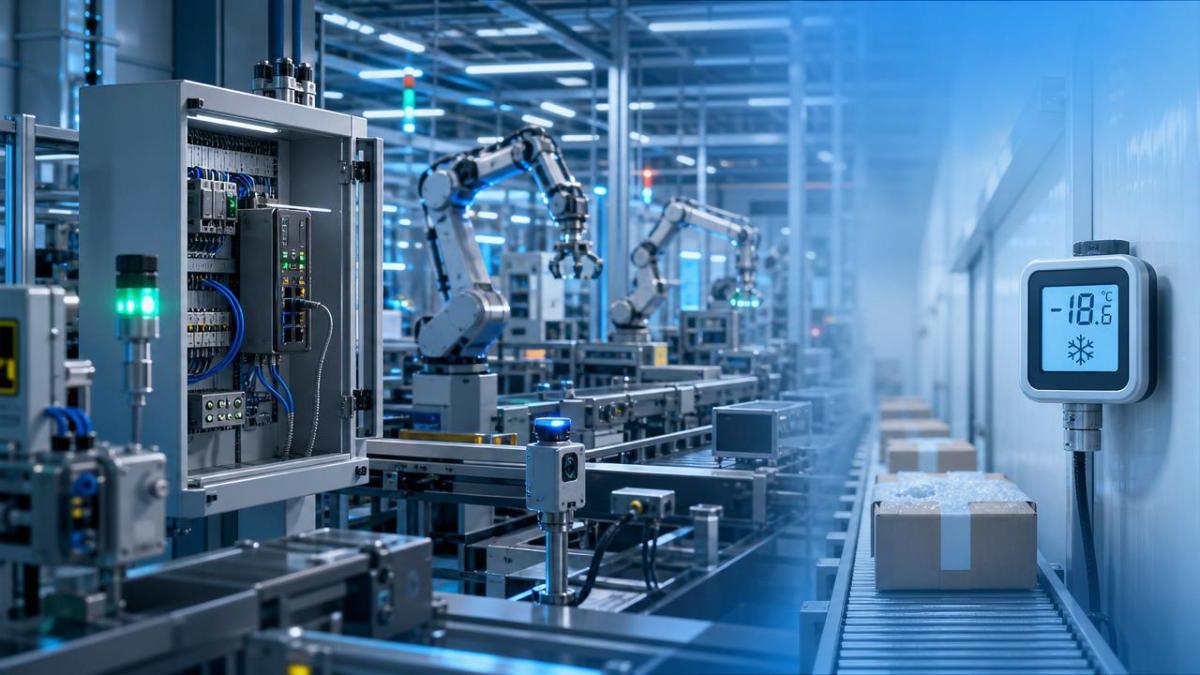
Scenario 1: smart factories where downtime costs more than infrastructure
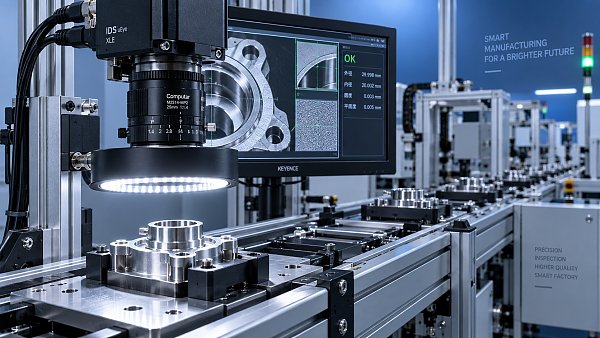
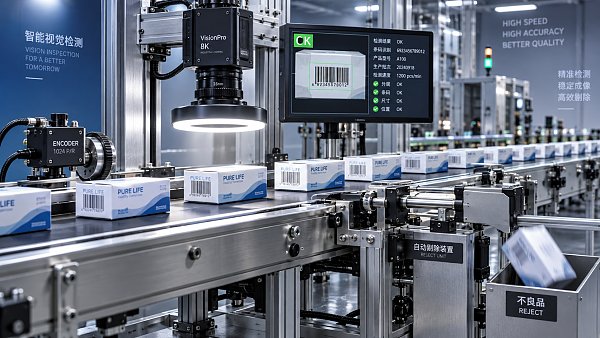
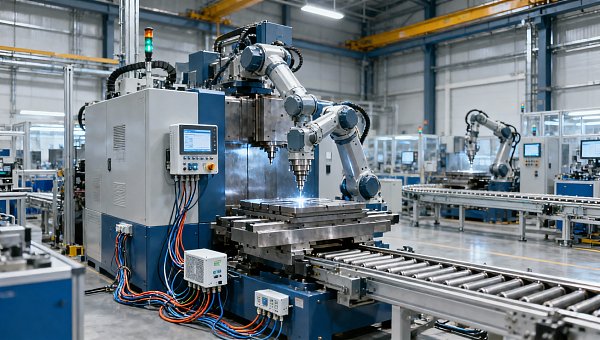
In discrete manufacturing, industrial IoT edge computing integration is usually justified by downtime economics. If a vision system detects a defect, if a servo begins drifting, or if a collaborative robot enters an abnormal state, the value of the response is measured in seconds. Cloud dashboards do not protect output if the line must decide immediately.
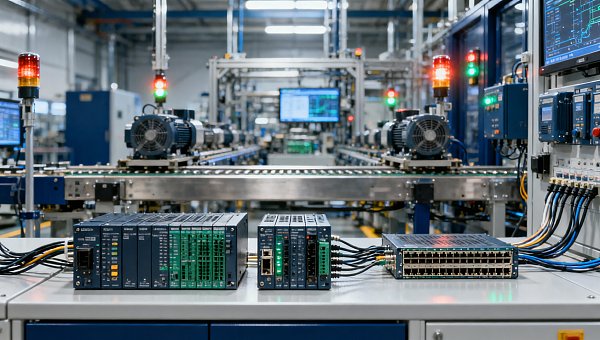
In this scenario, edge systems should handle local sensor fusion, event scoring, and equipment-level orchestration. Leaders should ask whether the edge layer can continue operating through network interruption, whether it integrates cleanly with PLCs and SCADA, and whether it supports deterministic response paths rather than only retrospective analytics.
This is also where vendor claims often become misleading. A platform may advertise AI at the edge, but the real question is whether inference latency remains stable under load, whether timestamp accuracy is preserved across devices, and whether model updates can be governed without disrupting production.
Best fit indicators
Choose industrial IoT edge computing integration aggressively in factory settings when unplanned stoppages are expensive, machine vision generates heavy data streams, and operators need local decisions without relying on WAN performance.
Scenario 2: logistics networks where visibility must survive movement and fragmentation
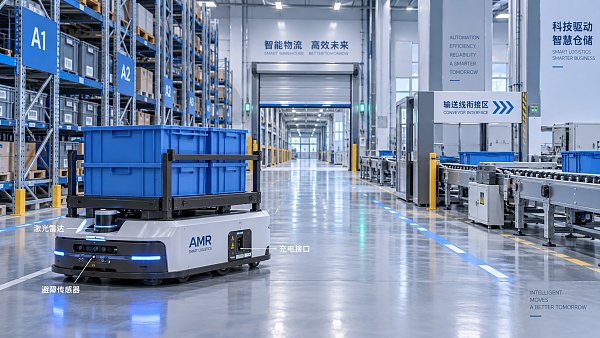
Warehousing, yard operations, and transport-linked facilities create a different challenge. Here, industrial IoT edge computing integration is less about machine-cycle precision and more about coordinating many moving assets across unstable connectivity zones. Barcode readers, RFID portals, environmental sensors, autonomous mobile robots, and dock systems all generate decisions that cannot wait for perfectly synchronized cloud access.
For this scenario, edge infrastructure should prioritize local event normalization, buffering, and workflow continuity. If a warehouse loses cloud connectivity, receiving, staging, and dispatch should continue. If AMRs encounter congestion, routing logic should adapt locally. If cold storage sensors detect threshold breaches, staff should be alerted immediately without waiting for central systems.
Decision-makers should pay close attention to integration breadth. A logistics edge stack that works only with one robot fleet or one WMS connector may solve a pilot but fail at network scale.
Scenario 3: remote operations where edge autonomy is not optional
Utilities, field infrastructure, mining zones, agricultural systems, and dispersed energy assets represent one of the clearest cases for industrial IoT edge computing integration. In these environments, connectivity may be intermittent, expensive, or both. The edge is not simply an optimization layer; it is the operational backbone.
Enterprises in these sectors should focus on local filtering, exception detection, protocol translation, and autonomous safety logic. Sending every raw data point upstream is often wasteful. Better architecture compresses, prioritizes, and escalates only what matters. This reduces transmission cost while preserving response capability.
A key judgment point is maintenance strategy. Remote industrial IoT edge computing integration succeeds only if edge devices can be patched, monitored, and recovered at scale. Otherwise, enterprises replace connectivity risk with fleet management risk.
Scenario 4: regulated and high-value operations where data integrity matters as much as speed
In aerospace supply chains, medical device production, food processing, and regulated cold chains, industrial IoT edge computing integration must support both real-time response and trustworthy records. Local decisions may protect product quality, but those decisions also need traceability.
Here the design priority shifts slightly. Leaders should ask not only whether the edge can act fast, but whether it can preserve auditable logs, synchronize event histories correctly, enforce role-based access, and support validation requirements. In these settings, edge computing is not just operational technology; it becomes part of the evidence chain.
How requirements differ by enterprise size and operating model
Not every company should pursue industrial IoT edge computing integration in the same way. A single-site manufacturer with one modernization program has very different needs from a multinational operator with dozens of facilities and diverse automation vendors.
This is where many board-level decisions go wrong. They evaluate industrial IoT edge computing integration as a technology trend instead of as an operating model decision.
Common misjudgments that derail industrial IoT edge computing integration
The first misjudgment is assuming edge means “put a server on site.” In reality, integration requires clear workload partitioning, device lifecycle management, and cybersecurity controls across OT and IT boundaries.
The second is leading with data collection volume rather than actionability. More data does not guarantee better outcomes. Enterprises should prioritize the events and decisions that change operations.
The third is ignoring protocol and legacy complexity. Many industrial environments contain aging controllers, mixed communication standards, and inconsistent timestamp behavior. Industrial IoT edge computing integration must solve this translation layer reliably.
The fourth is underestimating supportability. If edge nodes cannot be securely updated, remotely diagnosed, and consistently configured, scale will collapse under operational overhead.
A practical decision framework for scenario-fit evaluation
Before approving an initiative, enterprise leaders should test industrial IoT edge computing integration against five filters. First, what is the maximum acceptable delay for the target decision? Second, what happens if connectivity fails for one hour or one day? Third, how much raw data is generated locally, and what is its transport cost? Fourth, what evidence, traceability, or security controls must remain intact? Fifth, can the organization operate and maintain an edge estate over time?
If the answer set points to low latency, local resilience, heavy data streams, and operational autonomy, the case for industrial IoT edge computing integration is strong. If the use case is mostly historical reporting with no local action, a lighter architecture may be enough.
FAQ for enterprise buyers and strategy teams
Is industrial IoT edge computing integration only for large manufacturers?
No. Midmarket firms often benefit quickly when a single bottleneck, such as defect detection or asset visibility, creates measurable losses. The right scope matters more than company size.
Can cloud-first architecture replace edge in most cases?
Not when operations depend on real-time response, local continuity, or efficient handling of high-frequency sensor data. Cloud remains essential, but not sufficient for every scenario.
What should be measured in an evaluation phase?
Focus on decision latency, packet loss tolerance, local failover behavior, integration effort with existing OT systems, cybersecurity posture, and measurable business outcomes such as downtime reduction or spoilage prevention.
Conclusion: match industrial IoT edge computing integration to the decision, not the hype
The strongest industrial IoT edge computing integration strategies do not start with branded platforms or generic transformation goals. They start by identifying where real operational decisions occur, how fast those decisions must happen, and what failure would cost. From there, scenario fit becomes clearer: factories need local responsiveness, logistics networks need continuity, remote assets need autonomy, and regulated operations need both action and traceability.
For enterprise decision-makers, the next step is straightforward. Map one high-value scenario, define which decisions must happen at the edge, document the required latency and resilience thresholds, and evaluate vendors against those parameters. In hard-tech environments, engineering truth comes from measurable fit. Industrial IoT edge computing integration succeeds when architecture follows operational reality.
Search News
Hot Articles
- Carbon Fiber StructuresHow to Specify Aerospace Carbon Fiber Assemblies for Lightweight, Load-Bearing PartsJul 11, 2026
- Machine VisionXiaomi, Alibaba DAMO Academy Drive Open-Source Robotics Model Ecosystem, Lowering Algorithm Development Barriers for Overseas SMEs Adopting Chinese Robotics SolutionsMar 30, 2026
- Cobots & ArmsShanxi 'AI+' Conference Showcases Embodied Intelligence with Multinational Buyer Engagement: Key Industry ImplicationsMar 30, 2026
Popular Tags
Recommended News
 Jul 11, 2026How to Specify Aerospace Carbon Fiber Assemblies for Lightweight, Load-Bearing PartsAerospace carbon fiber assemblies: learn how to specify laminate design, load data, joining methods, and inspection controls for lighter, reliable load-bearing aerospace parts.Elena Rostova (UAV Systems Researcher)
 Mar 30, 2026Xiaomi, Alibaba DAMO Academy Drive Open-Source Robotics Model Ecosystem, Lowering Algorithm Development Barriers for Overseas SMEs Adopting Chinese Robotics SolutionsXiaomi & Alibaba DAMO Academy's open-source robotics models lower algorithm barriers for global SMEs. Boost efficiency in manufacturing, logistics & smart retail with ROS 2 compatible solutions.TSV Data Lab
 Mar 30, 2026Shanxi 'AI+' Conference Showcases Embodied Intelligence with Multinational Buyer Engagement: Key Industry ImplicationsShanxi 'AI+' Conference highlights embodied intelligence with Tesla, Ubtech & Jiantao showcasing multimodal robotics. 40+ global buyers validated tech on-site, creating new B2B channels for industrial automation & AI solutions.Chen Wei (Automation Lead Engineer)
 Mar 30, 2026Zhongguancun Unveils 6G Integrated Sensing-Computing-Intelligence Platform to Empower Embodied Robots for Global Industrial ApplicationsZhongguancun's new 6G platform revolutionizes industrial robotics with <10ms latency, empowering global automotive, logistics & port automation. Discover how this tech boosts China's smart manufacturing exports.TSV Data Lab
 Mar 30, 2026Mech-Mind Tianjin Embodied Intelligence R&D and Production Base Goes Live, Cutting Delivery Time by 20%–30% for Global Customized AMR+Vision SolutionsMech-Mind's Tianjin AMR+Vision production base cuts delivery time by 20%-30% for欧美 & Latin American markets. Discover how this PLd-certified facility accelerates customized robotics solutions for smart manufacturing and logistics.Chen Wei (Automation Lead Engineer)
 Mar 30, 2026Boao Forum Reveals 'Co-evolution of Big and Small Brains' Trend in Humanoid Robots, China's Embodied Intelligence Accelerates Adaptation to Overseas Manufacturing Service ScenariosDiscover how China's humanoid robots, featuring 'Co-evolution of Big and Small Brains,' are revolutionizing global manufacturing. Learn about Embodied Tian Gong 3.0's ISO compliance and overseas deployment at Boao Forum 2026.Chen Wei (Automation Lead Engineer)
 Mar 30, 2026China Railway Industrial Secures Patent for Embodied Robotics in Material Handling, Boosting High-Precision Delivery Capabilities for Overseas Infrastructure and Manufacturing ProjectsChina Railway Industrial's new patent for embodied robotics in material handling boosts high-precision delivery for global infrastructure & manufacturing. Discover how this innovation enhances logistics accuracy in automotive, rail transit & EPC projects.Chen Wei (Automation Lead Engineer)
 Sep 29, 2026ISO 9283 Repeatability: How to Evaluate Cobot Positioning PerformanceISO 9283 cobot repeatability explained: learn how payload, reach, approach direction, and test conditions affect positioning performance and cell capability.Chen Wei (Automation Lead Engineer)
 Sep 28, 2026Spindle Runout Measurement in Germany: DIN Standards, Methods, and Acceptance LimitsSpindle runout measurement Germany: explore DIN standards, proven methods, acceptance limits, and audit-ready practices for reliable machining quality.Dr. Marcus Vance
 Sep 27, 2026How to Select Wall-Mount Edge Devices for Space-Constrained Factory NetworksWall mount edge devices for space-constrained factories: evaluate workload, thermal design, power resilience, cable access, and network reliability for smarter deployments.TSV Data Lab
 Sep 26, 2026Machining Tolerance Analysis: How to Set Limits That Meet Function and Cost TargetsMachining tolerance analysis: learn how to set functional limits, control tolerance stacks, reduce inspection risk, and balance precision with production cost.Dr. Marcus Vance
 Sep 25, 2026How to Evaluate an Industrial Infrastructure Data Platform for Multi-Site OperationsIndustrial infrastructure data platform evaluation guide for multi-site operations: compare data quality, edge resilience, interoperability, governance, and scalable proof-of-value criteria.Victor Lin (Chief Software Architect)
 Sep 24, 2026How to Select Machine Vision Optics for Accurate Inspection at Different Working DistancesMachine vision optics selection guide for accurate inspection at every working distance. Compare FOV, pixel scale, DOF, distortion, lighting, and telecentric options.TSV Data Lab
 Sep 23, 2026How to Evaluate a Machine Vision System Integrator for High-Speed Inspection LinesChoose a machine vision system integrator with proven expertise in high-speed inspection, reliable reject timing, robust optics, and measurable acceptance criteria.TSV Data Lab
 Sep 28, 2026When is a SCADA API the right choice for connecting plant systems?SCADA API guide: learn when governed plant data integration improves traceability, security, and scalability—without compromising real-time control.Victor Lin (Chief Software Architect)
 Sep 27, 2026How SCADA data integration improves traceability across production linesSCADA data integration connects production-line data to improve traceability, accelerate quality investigations, and strengthen safety decisions.Victor Lin (Chief Software Architect)
 Sep 26, 2026What to define before starting SCADA integration planningSCADA integration planning starts with clear scope, control boundaries, data models, cybersecurity, and testing. Discover the definitions that reduce risk and costly rework.Victor Lin (Chief Software Architect)
 Sep 25, 2026How a smart factory with Industrial IoT reduces production blind spotsDiscover how a smart factory with Industrial IoT turns real-time machine, quality, and workflow data into actionable insights that reduce production blind spots and delivery risks.Victor Lin (Chief Software Architect)
 Sep 24, 2026When does Industrial IoT make smart manufacturing easier to scale?Smart manufacturing Industrial IoT scales when trusted data, interoperable systems, and secure workflows turn connected assets into measurable gains.TSV Data Lab
 Sep 23, 2026What drives ultra-precision machining cost at 1-micron tolerance?Ultra precision machining cost per part at 1 micron tolerance depends on process, material, metrology, and yield. Learn how to compare quotes confidently.Dr. Marcus Vance
 Sep 22, 2026Drone Engine-T550CC Applications: Build the UAV Power System Around the MissionAn application guide for Drone Engine-T550CC integration, covering payload planning, airframe matching, cooling, fuel, vibration, test procedures, documentation, and service preparation.Elena Rostova (UAV Systems Researcher)
 Sep 22, 2026How to Evaluate Industrial Edge Computing Vendors for Factory DeploymentIndustrial edge computing vendor evaluation guide for factories: compare latency, protocol fit, reliability, security, and lifecycle support before deployment.TSV Data Lab
 Sep 21, 2026Drone Payload Integration: Matching Power, Data, and Center of Gravity for Reliable FlightsDrone payload integration made practical: balance power, data, center of gravity, and endurance to build safer, more reliable mission-ready flights.Elena Rostova (UAV Systems Researcher)
 Sep 20, 2026Autonomous Navigation Pricing: Cost Drivers and Budget Benchmarks for AMR ProjectsAutonomous navigation price explained: compare AMR cost drivers, software, sensors, integration, safety, and lifecycle budgets to build a scalable project plan.Chen Wei (Automation Lead Engineer)