Industrial IoT data throughput analysis should start at the edge
Publication Date
author
Industrial IoT data throughput analysis should begin where data is created: at the edge. For technical evaluators, edge-level visibility reveals real bottlenecks in latency, packet loss, protocol conversion, and gateway load before they distort cloud-side conclusions. This article explains why industrial IoT data throughput analysis at the edge delivers more accurate performance benchmarks and stronger engineering decisions.
Why edge-first throughput analysis matters
In industrial environments, data does not start in a dashboard, a historian, or a cloud analytics platform. It starts on machines, sensors, controllers, cameras, drives, and gateways operating under real constraints. That is why industrial IoT data throughput analysis should start at the edge. When evaluation begins only at the cloud or enterprise layer, engineers often measure a cleaned, delayed, aggregated version of reality rather than the actual behavior of the system.
For technical assessment teams, this distinction is critical. A cloud report may show acceptable average throughput, while the edge reveals burst congestion during machine changeovers, packet collisions on shared segments, CPU saturation in protocol conversion, or timestamp drift during high-load events. These issues can materially affect predictive maintenance, closed-loop control, machine vision inspection, and traceability compliance.
At TechStat Vanguard, the core engineering principle is simple: parameters do not lie. In the same way that machining tolerance cannot be inferred from a marketing brochure, industrial IoT data throughput analysis cannot be trusted if it ignores the physical point of data creation. Edge-first measurement creates a defensible performance baseline for system architecture, vendor benchmarking, and expansion planning.
What industrial IoT data throughput analysis actually measures
The phrase is often reduced to network speed, but in practice it is broader. Industrial IoT data throughput analysis examines how much useful data moves through an operational system over time, under what latency conditions, with what reliability, and through how many transformation stages. In factory and infrastructure deployments, throughput must be evaluated together with determinism and data integrity.
A strong evaluation usually includes several dimensions: raw packet rate, payload volume, protocol overhead, edge gateway processing load, buffering behavior, retransmission rate, serialization delay, uplink capacity, and the impact of security layers such as VPN tunnels or encryption. The objective is not simply to confirm that data moves, but to determine whether the right data reaches the right destination at the right time for the intended use case.
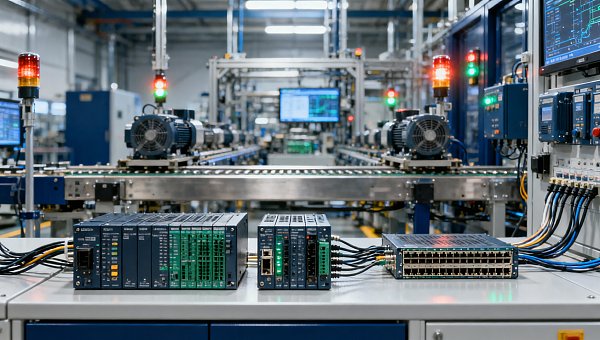
This is especially relevant when one site combines legacy PLCs, OPC UA servers, Modbus devices, industrial Ethernet, machine vision streams, and edge AI inference nodes. Each layer adds processing cost. Industrial IoT data throughput analysis helps evaluators separate transport limitations from compute limitations and temporary burst behavior from structural bottlenecks.
Industry context: why this topic has become urgent
Across advanced manufacturing, logistics, utilities, aerospace assembly, and process industries, edge architectures are becoming denser. More devices now generate high-frequency telemetry, image data, event logs, and condition-monitoring signals than many legacy networks were designed to handle. At the same time, industrial teams are expected to support predictive maintenance, energy optimization, quality analytics, and remote operations on the same infrastructure.
The result is a rising gap between nominal bandwidth and operational throughput. On paper, a network may appear sufficient. In the field, the same network may struggle when vibration sensors spike during startup, cameras trigger simultaneous uploads, or protocol gateways translate between deterministic shop-floor data and cloud-native message formats. Industrial IoT data throughput analysis closes that gap by grounding performance claims in site-level engineering evidence.
This matters beyond manufacturing alone. Comprehensive industries increasingly rely on interconnected hard-tech ecosystems, where robotics, sensor fusion, UAV telemetry, machine vision, and precision equipment all contribute to a larger digital workflow. In such environments, throughput analysis is not an isolated IT task; it is part of operational risk management and engineering validation.
Why cloud-side metrics are not enough
Cloud dashboards are useful, but they can hide the very issues technical evaluators need to understand. Aggregation smooths burst traffic. Compression reduces apparent payload size. Filtering removes noisy events. Delayed batch uploads can create a false impression of stable throughput. If teams rely only on these metrics, they may optimize the wrong segment of the architecture.
Consider a plant where vibration, temperature, and current data are sampled at different rates. A gateway may buffer all streams locally and send them upstream in periodic bursts. The cloud records acceptable average throughput, yet maintenance models receive stale inputs during critical intervals. Similarly, a vision cell may deliver compressed image metadata to the cloud while dropping edge frames under processor overload. Without edge-level inspection, throughput appears healthy while quality assurance degrades.
Industrial IoT data throughput analysis at the edge exposes these mismatches. It shows where data is delayed, transformed, lost, or deprioritized before central systems ever see it. For technical evaluators, that is the difference between nominal monitoring and true performance characterization.
Core metrics technical evaluators should prioritize
An effective evaluation framework balances transport volume with timing, reliability, and processing efficiency. The following overview highlights the metrics most often tied to real engineering outcomes.
Using this framework, industrial IoT data throughput analysis becomes more than a bandwidth check. It becomes a diagnostic method for identifying where architecture, device behavior, and workload design fail to align.
Typical edge scenarios where throughput analysis creates value
Not every industrial workload stresses the edge in the same way. Evaluators should map data patterns to application type before drawing conclusions. The table below shows how different scenarios change the meaning of throughput performance.
These differences explain why technical teams should avoid one-size-fits-all benchmarks. Industrial IoT data throughput analysis is valuable precisely because it can be tied to the actual mission profile of a system rather than to theoretical interface limits.
Common bottlenecks found at the edge
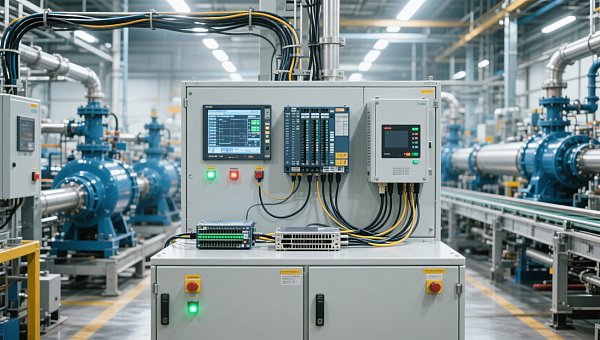
Edge-first assessment often uncovers problems that are invisible in architecture diagrams. One common issue is protocol conversion overhead. A gateway may support multiple industrial protocols, but real throughput drops sharply when many tags require simultaneous normalization, encryption, and forwarding. Another issue is uneven polling design, where aggressive sampling on noncritical assets consumes bandwidth needed for time-sensitive signals.
Physical network conditions also matter. Electromagnetic noise, connector degradation, poor segmentation, and unmanaged switches can all contribute to retries and intermittent loss. In wireless industrial environments, roaming delays, channel contention, and antenna placement may influence throughput more than nominal radio specifications suggest. Storage and buffering design are equally important, especially when links to higher layers are unstable or intentionally rate-limited.
For evaluators, the key lesson is that industrial IoT data throughput analysis should not stop at traffic counts. It should investigate the operational chain: data source, local transport, edge processing, queueing, uplink policy, and final delivery behavior.
A practical evaluation approach for technical teams
A disciplined assessment process usually starts by defining the required outcome of the system. Is the goal near-real-time alarm handling, historical trend collection, machine learning input, or high-resolution visual inspection? Once that is clear, teams can map acceptable thresholds for throughput, latency, and loss based on application criticality.
Next, build a measurement plan at the edge. Collect data directly from devices, switches, gateways, and local compute nodes under normal and stress conditions. Test startup surges, recipe changes, maintenance windows, camera trigger bursts, and failover events. Compare raw device output with what is forwarded upstream. This gap analysis is central to trustworthy industrial IoT data throughput analysis.
Technical evaluators should also document transformation rules. Filtering, aggregation, compression, and protocol translation are not neutral steps; they change throughput characteristics and sometimes alter engineering meaning. Finally, repeat the benchmark after configuration changes. Throughput analysis is only useful when results are reproducible and tied to a known system state.
What stronger analysis enables for decision-makers
When industrial IoT data throughput analysis starts at the edge, organizations make better decisions in several areas. Engineering teams can size gateways according to actual conversion and buffering demand. Operations teams can prioritize traffic classes instead of overprovisioning every segment. Procurement teams can compare vendors using measurable throughput under realistic conditions rather than generic maximum ratings.
This is fully aligned with a data-driven hard-tech evaluation philosophy. Whether the asset is a robot cell, a UAV telemetry link, a machine vision station, or a distributed sensor network, the most valuable benchmark is the one that reflects field behavior. In that sense, industrial IoT data throughput analysis supports more than network optimization; it supports supplier qualification, deployment risk reduction, and long-term architectural resilience.
Final perspective and next-step guidance
For technical evaluators, the message is straightforward: begin where the signals are born, not where they are summarized. Edge-first industrial IoT data throughput analysis reveals the physical and computational constraints that shape real performance. It improves benchmark quality, clarifies root causes, and prevents cloud-side metrics from masking engineering weaknesses.
Organizations building modern industrial infrastructure should treat edge throughput analysis as a standard part of system validation. Define the workload, measure under realistic conditions, examine protocol and gateway behavior, and validate the complete path from sensor to application. In complex industrial ecosystems, truth comes from measured parameters. That is where better architecture decisions begin.
Search News
Hot Articles
- Carbon Fiber StructuresHow to Specify Aerospace Carbon Fiber Assemblies for Lightweight, Load-Bearing PartsJul 11, 2026
- Machine VisionXiaomi, Alibaba DAMO Academy Drive Open-Source Robotics Model Ecosystem, Lowering Algorithm Development Barriers for Overseas SMEs Adopting Chinese Robotics SolutionsMar 30, 2026
- Cobots & ArmsShanxi 'AI+' Conference Showcases Embodied Intelligence with Multinational Buyer Engagement: Key Industry ImplicationsMar 30, 2026
Popular Tags
Recommended News
 Jul 11, 2026How to Specify Aerospace Carbon Fiber Assemblies for Lightweight, Load-Bearing PartsAerospace carbon fiber assemblies: learn how to specify laminate design, load data, joining methods, and inspection controls for lighter, reliable load-bearing aerospace parts.Elena Rostova (UAV Systems Researcher)
 Mar 30, 2026Xiaomi, Alibaba DAMO Academy Drive Open-Source Robotics Model Ecosystem, Lowering Algorithm Development Barriers for Overseas SMEs Adopting Chinese Robotics SolutionsXiaomi & Alibaba DAMO Academy's open-source robotics models lower algorithm barriers for global SMEs. Boost efficiency in manufacturing, logistics & smart retail with ROS 2 compatible solutions.TSV Data Lab
 Mar 30, 2026Shanxi 'AI+' Conference Showcases Embodied Intelligence with Multinational Buyer Engagement: Key Industry ImplicationsShanxi 'AI+' Conference highlights embodied intelligence with Tesla, Ubtech & Jiantao showcasing multimodal robotics. 40+ global buyers validated tech on-site, creating new B2B channels for industrial automation & AI solutions.Chen Wei (Automation Lead Engineer)
 Mar 30, 2026Zhongguancun Unveils 6G Integrated Sensing-Computing-Intelligence Platform to Empower Embodied Robots for Global Industrial ApplicationsZhongguancun's new 6G platform revolutionizes industrial robotics with <10ms latency, empowering global automotive, logistics & port automation. Discover how this tech boosts China's smart manufacturing exports.TSV Data Lab
 Mar 30, 2026Mech-Mind Tianjin Embodied Intelligence R&D and Production Base Goes Live, Cutting Delivery Time by 20%–30% for Global Customized AMR+Vision SolutionsMech-Mind's Tianjin AMR+Vision production base cuts delivery time by 20%-30% for欧美 & Latin American markets. Discover how this PLd-certified facility accelerates customized robotics solutions for smart manufacturing and logistics.Chen Wei (Automation Lead Engineer)
 Mar 30, 2026Boao Forum Reveals 'Co-evolution of Big and Small Brains' Trend in Humanoid Robots, China's Embodied Intelligence Accelerates Adaptation to Overseas Manufacturing Service ScenariosDiscover how China's humanoid robots, featuring 'Co-evolution of Big and Small Brains,' are revolutionizing global manufacturing. Learn about Embodied Tian Gong 3.0's ISO compliance and overseas deployment at Boao Forum 2026.Chen Wei (Automation Lead Engineer)
 Mar 30, 2026China Railway Industrial Secures Patent for Embodied Robotics in Material Handling, Boosting High-Precision Delivery Capabilities for Overseas Infrastructure and Manufacturing ProjectsChina Railway Industrial's new patent for embodied robotics in material handling boosts high-precision delivery for global infrastructure & manufacturing. Discover how this innovation enhances logistics accuracy in automotive, rail transit & EPC projects.Chen Wei (Automation Lead Engineer)
 Sep 29, 2026ISO 9283 Repeatability: How to Evaluate Cobot Positioning PerformanceISO 9283 cobot repeatability explained: learn how payload, reach, approach direction, and test conditions affect positioning performance and cell capability.Chen Wei (Automation Lead Engineer)
 Sep 28, 2026Spindle Runout Measurement in Germany: DIN Standards, Methods, and Acceptance LimitsSpindle runout measurement Germany: explore DIN standards, proven methods, acceptance limits, and audit-ready practices for reliable machining quality.Dr. Marcus Vance
 Sep 27, 2026How to Select Wall-Mount Edge Devices for Space-Constrained Factory NetworksWall mount edge devices for space-constrained factories: evaluate workload, thermal design, power resilience, cable access, and network reliability for smarter deployments.TSV Data Lab
 Sep 26, 2026Machining Tolerance Analysis: How to Set Limits That Meet Function and Cost TargetsMachining tolerance analysis: learn how to set functional limits, control tolerance stacks, reduce inspection risk, and balance precision with production cost.Dr. Marcus Vance
 Sep 25, 2026How to Evaluate an Industrial Infrastructure Data Platform for Multi-Site OperationsIndustrial infrastructure data platform evaluation guide for multi-site operations: compare data quality, edge resilience, interoperability, governance, and scalable proof-of-value criteria.Victor Lin (Chief Software Architect)
 Sep 24, 2026How to Select Machine Vision Optics for Accurate Inspection at Different Working DistancesMachine vision optics selection guide for accurate inspection at every working distance. Compare FOV, pixel scale, DOF, distortion, lighting, and telecentric options.TSV Data Lab
 Sep 23, 2026How to Evaluate a Machine Vision System Integrator for High-Speed Inspection LinesChoose a machine vision system integrator with proven expertise in high-speed inspection, reliable reject timing, robust optics, and measurable acceptance criteria.TSV Data Lab
 Sep 28, 2026When is a SCADA API the right choice for connecting plant systems?SCADA API guide: learn when governed plant data integration improves traceability, security, and scalability—without compromising real-time control.Victor Lin (Chief Software Architect)
 Sep 27, 2026How SCADA data integration improves traceability across production linesSCADA data integration connects production-line data to improve traceability, accelerate quality investigations, and strengthen safety decisions.Victor Lin (Chief Software Architect)
 Sep 26, 2026What to define before starting SCADA integration planningSCADA integration planning starts with clear scope, control boundaries, data models, cybersecurity, and testing. Discover the definitions that reduce risk and costly rework.Victor Lin (Chief Software Architect)
 Sep 25, 2026How a smart factory with Industrial IoT reduces production blind spotsDiscover how a smart factory with Industrial IoT turns real-time machine, quality, and workflow data into actionable insights that reduce production blind spots and delivery risks.Victor Lin (Chief Software Architect)
 Sep 24, 2026When does Industrial IoT make smart manufacturing easier to scale?Smart manufacturing Industrial IoT scales when trusted data, interoperable systems, and secure workflows turn connected assets into measurable gains.TSV Data Lab
 Sep 23, 2026What drives ultra-precision machining cost at 1-micron tolerance?Ultra precision machining cost per part at 1 micron tolerance depends on process, material, metrology, and yield. Learn how to compare quotes confidently.Dr. Marcus Vance
 Sep 22, 2026Drone Engine-T550CC Applications: Build the UAV Power System Around the MissionAn application guide for Drone Engine-T550CC integration, covering payload planning, airframe matching, cooling, fuel, vibration, test procedures, documentation, and service preparation.Elena Rostova (UAV Systems Researcher)
 Sep 22, 2026How to Evaluate Industrial Edge Computing Vendors for Factory DeploymentIndustrial edge computing vendor evaluation guide for factories: compare latency, protocol fit, reliability, security, and lifecycle support before deployment.TSV Data Lab
 Sep 21, 2026Drone Payload Integration: Matching Power, Data, and Center of Gravity for Reliable FlightsDrone payload integration made practical: balance power, data, center of gravity, and endurance to build safer, more reliable mission-ready flights.Elena Rostova (UAV Systems Researcher)
 Sep 20, 2026Autonomous Navigation Pricing: Cost Drivers and Budget Benchmarks for AMR ProjectsAutonomous navigation price explained: compare AMR cost drivers, software, sensors, integration, safety, and lifecycle budgets to build a scalable project plan.Chen Wei (Automation Lead Engineer)