How to choose a reliable uav data link supplier in 2026
Publication Date
author
Choosing a reliable uav data link supplier in 2026 is no longer about brand claims or vague performance promises. For business evaluators facing complex UAV procurement decisions, the real differentiators are verified transmission stability, anti-interference capability, integration readiness, compliance traceability, and lifecycle support. This guide outlines the engineering and sourcing criteria that matter most when qualifying suppliers for commercial, industrial, and mission-critical UAV operations.
In practical terms, the supplier decision now affects far more than radio hardware cost. It influences flight safety, payload effectiveness, certification readiness, deployment speed, and total cost over a 3 to 5 year operating cycle.
For procurement teams, the challenge is filtering marketing language from measurable engineering capability. A strong uav data link supplier should be evaluated the way any critical aerospace subsystem is evaluated: through parameters, test evidence, integration discipline, and post-sale support performance.
Why supplier selection has become a strategic UAV risk issue in 2026
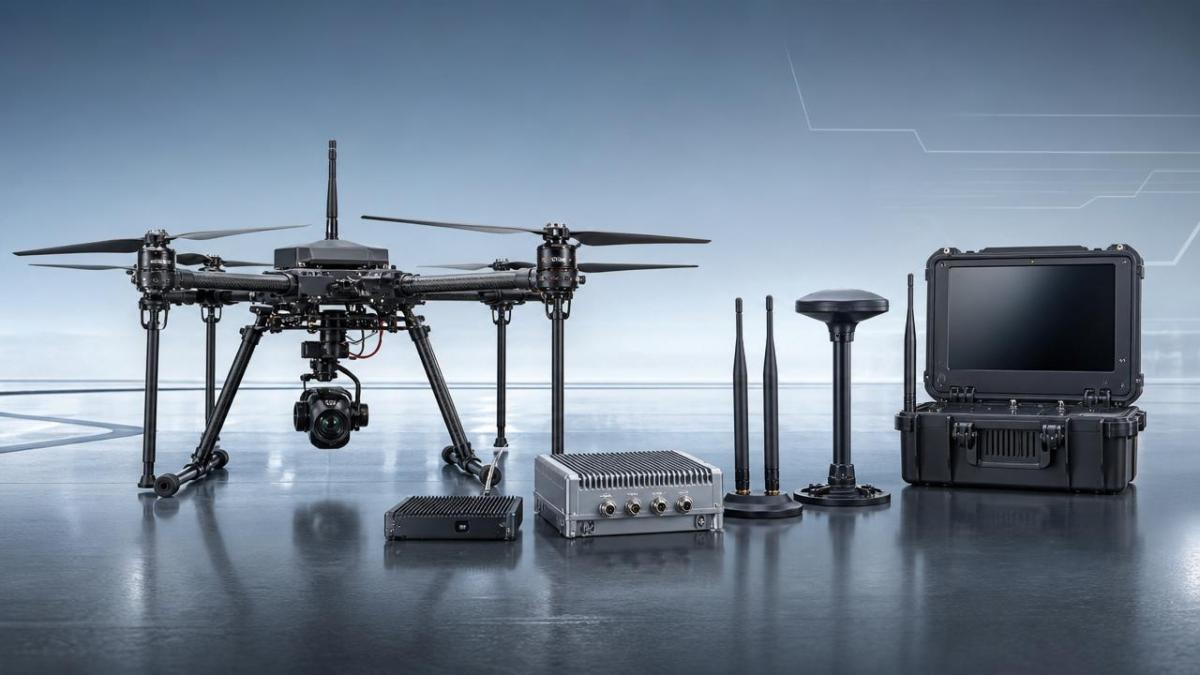
UAV platforms are being deployed across surveying, infrastructure inspection, agriculture, public safety, logistics trials, and industrial security. In each of these use cases, the data link is no longer a secondary accessory. It is the control path, telemetry backbone, and often the payload data channel.
A weak link can create cascading failures. A 200 millisecond latency spike may be manageable for basic telemetry, but it can become unacceptable in BVLOS operations, high-value mapping flights, or dense electromagnetic environments near utilities and industrial sites.
The business impact of unstable links
When a uav data link supplier cannot prove stable packet delivery, procurement risk rises sharply. Signal interruptions can lead to incomplete missions, reflight costs, operator downtime, payload data loss, and in some sectors, regulatory exposure.
For example, repeating one mapping mission may add 1 to 3 extra field days, additional crew costs, and avoidable battery cycles. Over 50 to 100 annual sorties, that inefficiency becomes a budgeting issue, not just a technical inconvenience.
Why evaluators need engineering evidence, not brochures
The most reliable suppliers can usually provide test results across distance, bandwidth, interference tolerance, operating temperature, and integration scenarios. Business evaluators should request these in structured form rather than relying on generic range claims.
- Measured air-to-ground range under clear line-of-sight and urban interference conditions
- Latency range for control commands, telemetry, and video transmission
- Packet loss thresholds at different payload data rates
- Power consumption under standby, cruise, and peak transmission modes
- Operating stability within typical field temperatures such as -20°C to 55°C
A credible supplier will also explain what was tested, under which assumptions, and what the edge cases are. That level of transparency is often a stronger indicator of reliability than the headline specification itself.
Core technical criteria for evaluating a uav data link supplier
The most effective way to compare suppliers is to use a weighted scorecard. This keeps commercial teams aligned with engineering teams and reduces the chance of selecting a low-cost option that creates integration or operational failures later.
Five criteria that should appear on every evaluation sheet
The table below summarizes five decision dimensions that matter in most commercial and industrial UAV programs. These are practical checkpoints for shortlist evaluation, pilot testing, and final vendor approval.
The key takeaway is that no single specification decides the outcome. A supplier with longer advertised range may still be a weaker choice if latency variation, EMI tolerance, or software integration are poorly controlled.
H4 checklist: link performance questions to ask
Range claims must be tied to use conditions
Ask whether the quoted range was measured at sea level, in open terrain, with directional antennas, or under regulatory power limits. A claimed 30 km link does not mean 30 km in an industrial corridor or urban inspection route.
Bandwidth must match payload class
A mapping UAV sending telemetry only has very different needs from a platform carrying EO/IR video or LiDAR previews. Verify whether the supplier supports low-rate command channels, medium-rate telemetry, and high-rate payload streams without destabilizing control traffic.
Redundancy matters in higher-risk operations
For mission-critical deployments, business evaluators should ask about dual-link architecture, fallback modes, and fail-safe behavior. A supplier that supports redundant paths or rapid handover can materially reduce operational risk.
Commercial due diligence: how to screen suppliers beyond the datasheet
An excellent lab specification does not automatically translate into supplier reliability. Procurement teams should evaluate process maturity, documentation discipline, and responsiveness with the same rigor used for electrical performance.
What business evaluators should verify in the first 30 days
A structured first-round review can usually be completed in 2 to 4 weeks. The goal is to eliminate vendors that cannot support repeatable deployment, not simply to compare unit pricing.
- Request interface documentation, test summaries, and support scope within 5 business days.
- Confirm lead time ranges for samples, pilot orders, and production lots.
- Verify whether firmware revisions are traceable and change-controlled.
- Ask for known limitations in EMI-heavy, high-humidity, or long-endurance missions.
- Review after-sales response commitments such as 24 hour, 48 hour, or 72 hour technical support windows.
This process quickly reveals whether a uav data link supplier is prepared for industrial account requirements or is mainly operating as a low-visibility component trader.
Supplier comparison matrix for procurement teams
The following matrix helps business evaluators compare suppliers across commercial and engineering dimensions at the same time. It is especially useful when 3 to 5 vendors remain on the shortlist.
The pattern is simple: trustworthy suppliers reduce uncertainty. They make engineering limits visible, communicate changes early, and support validation rather than avoiding it.
Application-based selection: match the supplier to the mission profile
Not every UAV program needs the same link architecture. A reliable uav data link supplier for agricultural spraying may not be the best fit for corridor inspection, tactical security, or persistent mapping operations.
Commercial mapping and surveying
These missions typically prioritize stable telemetry, route confidence, and enough downstream bandwidth for operational previews. Evaluators should focus on long-endurance stability, GPS coexistence behavior, and easy integration with autopilot ecosystems.
Industrial inspection and utilities
Powerlines, substations, towers, and industrial plants often create severe electromagnetic complexity. In these environments, anti-interference performance and fast recovery from signal degradation may matter more than maximum range claims.
Public safety and mission-critical response
Emergency operations usually demand fast setup, dependable encrypted links, and predictable behavior in congested RF conditions. Support response times also matter more here, since downtime can disrupt operations within hours rather than weeks.
Agriculture and wide-area field operations
Agricultural users may prioritize coverage, hardware durability, and manageable cost per fleet unit. Even then, evaluators should still verify connector robustness, dust tolerance, and support for repeated seasonal deployment cycles.
Common mistakes when choosing a uav data link supplier
Many procurement setbacks come from avoidable evaluation errors. These mistakes often appear during early sourcing, when teams are pressured to compare quotes before technical validation is complete.
Mistake 1: prioritizing range over link quality
A longer theoretical range does not guarantee better field performance. Stable throughput, predictable latency, and recovery behavior usually matter more than headline distance once the aircraft enters real-world RF conditions.
Mistake 2: ignoring software and integration costs
A lower hardware price can be erased by 4 to 8 extra weeks of integration effort. If the supplier cannot provide mature SDKs, protocol clarity, or troubleshooting support, internal engineering costs rise quickly.
Mistake 3: failing to test under mission conditions
Bench tests are necessary, but they are not enough. Flight verification should include at least 3 dimensions: control stability, payload transmission behavior, and link recovery in the actual operating environment.
Mistake 4: treating support as optional
Firmware issues, frequency planning changes, and field failures are inevitable over time. Suppliers that cannot support diagnosis, replacement planning, and version tracking create hidden operational risk.
A practical qualification workflow for 2026 procurement teams
For most organizations, the best approach is to combine engineering validation with staged procurement gates. This reduces late-stage surprises and improves cross-functional alignment between sourcing, R&D, and operations.
Recommended 4-step process
- Define the mission profile, payload load, expected range, and environmental constraints.
- Shortlist 3 to 5 suppliers based on documentation quality and interface fit.
- Run controlled bench and flight tests over 2 to 6 weeks using the same evaluation script.
- Approve the supplier only after support responsiveness, firmware traceability, and supply continuity are reviewed.
This method helps avoid the common trap of buying a promising module that works in a demo but fails during scaled fleet deployment.
Questions to include in your RFQ package
- What are the tested latency and packet loss values at different payload rates?
- Which interfaces and flight controller environments are already supported?
- How are firmware changes documented and communicated to customers?
- What are sample lead times, pilot batch lead times, and repeat production lead times?
- What technical support is available during integration and field deployment?
A disciplined RFQ structure makes supplier comparison more objective and gives evaluators a stronger basis for final commercial negotiation.
In 2026, choosing the right uav data link supplier means selecting a partner that can support performance, traceability, and deployment confidence across the full operational lifecycle. The strongest suppliers are not the loudest marketers. They are the ones that can demonstrate stable link behavior, transparent limits, integration readiness, and accountable service.
For business evaluators, the winning approach is clear: compare suppliers through measurable criteria, mission-based testing, and lifecycle support capability. If you are preparing a UAV sourcing program, refining a spec sheet, or qualifying alternatives for industrial deployment, now is the right time to review technical assumptions before volume decisions are locked in.
To reduce trial-and-error costs and improve supplier qualification speed, contact us to discuss your UAV data link requirements, request a tailored evaluation framework, or learn more about practical hard-tech sourcing solutions.
Search News
Hot Articles
- Carbon Fiber StructuresHow to Specify Aerospace Carbon Fiber Assemblies for Lightweight, Load-Bearing PartsJul 11, 2026
- Machine VisionXiaomi, Alibaba DAMO Academy Drive Open-Source Robotics Model Ecosystem, Lowering Algorithm Development Barriers for Overseas SMEs Adopting Chinese Robotics SolutionsMar 30, 2026
- Cobots & ArmsShanxi 'AI+' Conference Showcases Embodied Intelligence with Multinational Buyer Engagement: Key Industry ImplicationsMar 30, 2026
Popular Tags
Recommended News
 Jul 11, 2026How to Specify Aerospace Carbon Fiber Assemblies for Lightweight, Load-Bearing PartsAerospace carbon fiber assemblies: learn how to specify laminate design, load data, joining methods, and inspection controls for lighter, reliable load-bearing aerospace parts.Elena Rostova (UAV Systems Researcher)
 Mar 30, 2026Xiaomi, Alibaba DAMO Academy Drive Open-Source Robotics Model Ecosystem, Lowering Algorithm Development Barriers for Overseas SMEs Adopting Chinese Robotics SolutionsXiaomi & Alibaba DAMO Academy's open-source robotics models lower algorithm barriers for global SMEs. Boost efficiency in manufacturing, logistics & smart retail with ROS 2 compatible solutions.TSV Data Lab
 Mar 30, 2026Shanxi 'AI+' Conference Showcases Embodied Intelligence with Multinational Buyer Engagement: Key Industry ImplicationsShanxi 'AI+' Conference highlights embodied intelligence with Tesla, Ubtech & Jiantao showcasing multimodal robotics. 40+ global buyers validated tech on-site, creating new B2B channels for industrial automation & AI solutions.Chen Wei (Automation Lead Engineer)
 Mar 30, 2026Zhongguancun Unveils 6G Integrated Sensing-Computing-Intelligence Platform to Empower Embodied Robots for Global Industrial ApplicationsZhongguancun's new 6G platform revolutionizes industrial robotics with <10ms latency, empowering global automotive, logistics & port automation. Discover how this tech boosts China's smart manufacturing exports.TSV Data Lab
 Mar 30, 2026Mech-Mind Tianjin Embodied Intelligence R&D and Production Base Goes Live, Cutting Delivery Time by 20%–30% for Global Customized AMR+Vision SolutionsMech-Mind's Tianjin AMR+Vision production base cuts delivery time by 20%-30% for欧美 & Latin American markets. Discover how this PLd-certified facility accelerates customized robotics solutions for smart manufacturing and logistics.Chen Wei (Automation Lead Engineer)
 Mar 30, 2026Boao Forum Reveals 'Co-evolution of Big and Small Brains' Trend in Humanoid Robots, China's Embodied Intelligence Accelerates Adaptation to Overseas Manufacturing Service ScenariosDiscover how China's humanoid robots, featuring 'Co-evolution of Big and Small Brains,' are revolutionizing global manufacturing. Learn about Embodied Tian Gong 3.0's ISO compliance and overseas deployment at Boao Forum 2026.Chen Wei (Automation Lead Engineer)
 Mar 30, 2026China Railway Industrial Secures Patent for Embodied Robotics in Material Handling, Boosting High-Precision Delivery Capabilities for Overseas Infrastructure and Manufacturing ProjectsChina Railway Industrial's new patent for embodied robotics in material handling boosts high-precision delivery for global infrastructure & manufacturing. Discover how this innovation enhances logistics accuracy in automotive, rail transit & EPC projects.Chen Wei (Automation Lead Engineer)
 Oct 03, 2026Selecting Automotive Radar Sensor Modules for ADAS Range, Resolution, and IntegrationAutomotive radar sensor module selection guide for ADAS: compare range, resolution, field of view, latency, and integration to build safer, reliable vehicle systems.TSV Data Lab
 Oct 02, 2026How to Qualify Machined Parts Suppliers for Hard Tech ProgramsHard tech supply chain machined parts demand rigorous supplier qualification. Learn how to assess capability, traceability, quality controls, and delivery resilience.Dr. Marcus Vance
 Oct 01, 2026How to Select an Outdoor Security Radar Sensor for Perimeter Detection?Outdoor security radar sensor selection guide: compare range, accuracy, false-alarm control, integration, and field testing for reliable perimeter detection.TSV Data Lab
 Sep 30, 2026How to Evaluate Solid-State LiDAR Hardware for Outdoor Autonomous VehiclesSolid state LiDAR hardware evaluation guide for outdoor autonomous vehicles—compare range, point-cloud quality, environmental resilience, integration, and safety.TSV Data Lab
 Sep 29, 2026ISO 9283 Repeatability: How to Evaluate Cobot Positioning PerformanceISO 9283 cobot repeatability explained: learn how payload, reach, approach direction, and test conditions affect positioning performance and cell capability.Chen Wei (Automation Lead Engineer)
 Oct 03, 2026Is Edge Computing Necessary for Real-Time Quality Inspection?Is industrial edge computing necessary for real-time quality inspection? Explore how latency, data volume, reliability, and control integration shape the right architecture.TSV Data Lab
 Oct 02, 2026What Documents Prove a Precision Machining Supplier Can Hold Tolerance?What documents prove a precision machining supplier can hold tolerance? Explore certificates, FAI reports, calibration, SPC, and traceability evidence to qualify suppliers with confidence.Dr. Marcus Vance
 Oct 01, 2026Can a Machining Supplier Meet Aerospace Fatigue Testing Requirements?Can a machining supplier meet aerospace fatigue testing requirements? Learn the traceability, process control, and test evidence needed for reliable aerospace parts.Dr. Marcus Vance
 Sep 30, 2026Which Industrial Robot Specifications Matter for High-Precision Assembly?Which industrial robot specifications matter most for high-precision assembly? Explore repeatability, accuracy, stiffness, vibration, calibration, and force control for reliable yields.Chen Wei (Automation Lead Engineer)
 Sep 29, 2026How Do You Verify Servo Motor Torque Under Continuous Load?How do I verify servo motor torque under continuous load? Learn RMS torque checks, torque-speed limits, thermal derating, and real-machine testing.Chen Wei (Automation Lead Engineer)
 Oct 02, 2026ZD330 Software Configuration: Verifying Cut-List Import Before PurchaseZD330 software and machine configuration: verify cut-list imports, data mapping, labels, and workflow before purchase to reduce errors and choose with confidence.Victor Lin (Chief Software Architect)
 Sep 28, 2026Spindle Runout Measurement in Germany: DIN Standards, Methods, and Acceptance LimitsSpindle runout measurement Germany: explore DIN standards, proven methods, acceptance limits, and audit-ready practices for reliable machining quality.Dr. Marcus Vance
 Sep 27, 2026How to Select Wall-Mount Edge Devices for Space-Constrained Factory NetworksWall mount edge devices for space-constrained factories: evaluate workload, thermal design, power resilience, cable access, and network reliability for smarter deployments.TSV Data Lab
 Sep 26, 2026Machining Tolerance Analysis: How to Set Limits That Meet Function and Cost TargetsMachining tolerance analysis: learn how to set functional limits, control tolerance stacks, reduce inspection risk, and balance precision with production cost.Dr. Marcus Vance
 Sep 25, 2026How to Evaluate an Industrial Infrastructure Data Platform for Multi-Site OperationsIndustrial infrastructure data platform evaluation guide for multi-site operations: compare data quality, edge resilience, interoperability, governance, and scalable proof-of-value criteria.Victor Lin (Chief Software Architect)
 Sep 24, 2026How to Select Machine Vision Optics for Accurate Inspection at Different Working DistancesMachine vision optics selection guide for accurate inspection at every working distance. Compare FOV, pixel scale, DOF, distortion, lighting, and telecentric options.TSV Data Lab
 Sep 23, 2026How to Evaluate a Machine Vision System Integrator for High-Speed Inspection LinesChoose a machine vision system integrator with proven expertise in high-speed inspection, reliable reject timing, robust optics, and measurable acceptance criteria.TSV Data Lab