When to Use Edge Computing for Motion Control in High-Speed, Low-Latency Systems
Publication Date
author
Where edge computing for motion control starts to make practical sense

High-speed automation rewards precision, not slogans.
A few microseconds of delay can shift cut quality, pick accuracy, or coordinated robot timing.
That is why edge computing for motion control matters most in systems where timing errors become physical defects.
In practice, the decision is rarely about adopting a fashionable architecture.
It is about placing compute close enough to the machine so command loops stay deterministic under load.
This fits the TSV view of engineering truth.
Parameters, tolerance windows, and measured latency matter more than broad claims about smart factories.
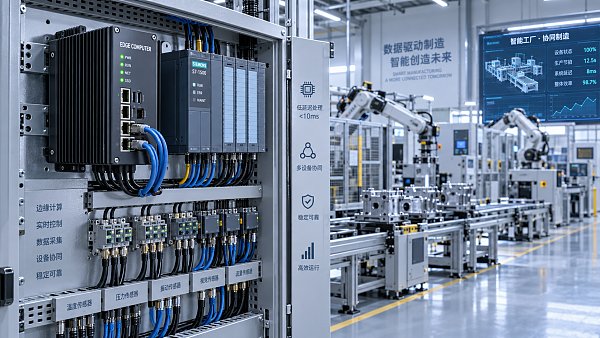
Edge computing for motion control becomes valuable when centralized control adds unstable latency, network dependency, or integration bottlenecks.
Why the right architecture changes from one motion system to another
Different machines fail in different ways.
A packaging line may lose throughput first.
A CNC platform may lose surface finish first.
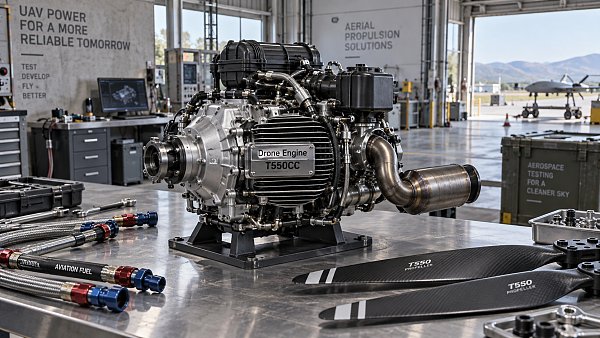
A UAV test rig may lose synchronization between sensing and actuation.
So the question is not simply whether edge computing for motion control is good.
The better question is where local processing changes the control outcome in measurable terms.
Several variables usually decide that outcome.
- Cycle time and acceptable jitter inside the control loop.
- Number of axes that must interpolate together.
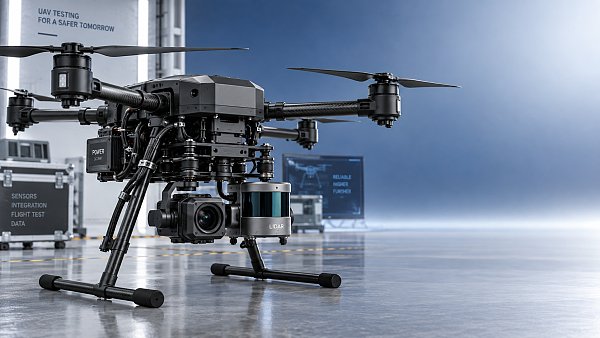
- Dependency on machine vision, LiDAR, or high-rate feedback streams.
- Risk of network congestion between control, analytics, and supervisory systems.
- Recovery requirements during packet loss, gateway faults, or cloud interruption.
When those variables tighten, edge computing for motion control often moves from optional to necessary.
On fast packaging and pick-and-place lines, latency shows up as throughput loss first
This is one of the most common real-world triggers for edge deployment.
Conveyors, delta robots, vision inspection, and servo drives must respond as one timed system.
If image processing or trajectory updates travel too far upstream, misses begin to accumulate quietly.
Operators may see small placement drift before they see a full stoppage.
In this setting, edge computing for motion control works best when local nodes handle vision inference, path correction, and immediate exception logic.
Supervisory systems can still sit above the edge layer.
The point is to keep the time-critical decisions near the drives and sensors.
A common mistake is to compare only average latency.
What damages these lines is often jitter during peak traffic, recipe switching, or simultaneous data logging.
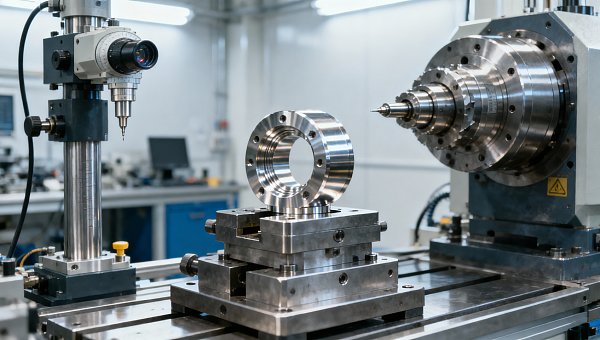
Multi-axis machining and precision forming need local determinism, not just fast compute
High-speed cutting, grinding, and forming create a different decision pattern.
Here, motion smoothness matters as much as raw command speed.
A control architecture may look acceptable in simulation, yet still produce chatter, thermal variation, or path deviation on the floor.
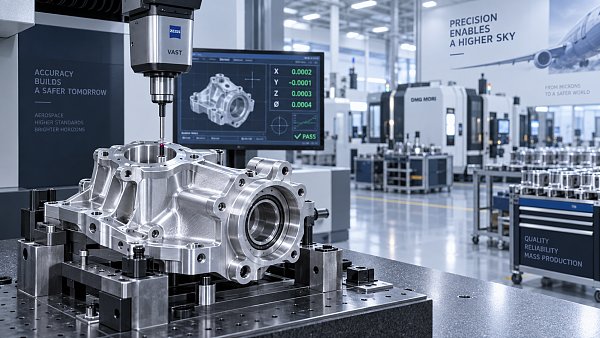
Edge computing for motion control becomes useful when interpolation, spindle feedback, and vibration-aware adjustments must occur without transport delay.
That is especially true where tolerance targets are narrow and scrap cost is high.
TSV’s benchmark-driven mindset is relevant here.
The right question is not whether an edge node is powerful.
It is whether the architecture protects repeatability, contour accuracy, and stable loop timing under full production conditions.
Where demand shifts across common motion environments
The same keyword can imply very different design priorities.
A comparison table makes that easier to judge.
Mobile robotics and UAV systems usually need local judgment before central coordination
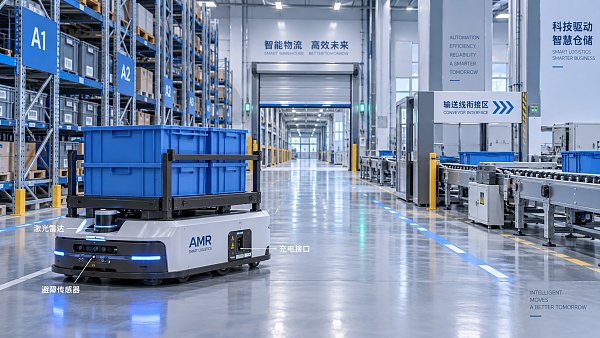
AGVs, AMRs, and autonomous aerial platforms do not move through stable conditions all day.
They encounter changing lighting, interference, temporary obstacles, and shifting route density.
That makes edge computing for motion control attractive when local sensor fusion must affect motion instantly.
A central platform can still plan missions and optimize traffic.
But braking, avoidance, and stabilization decisions should not depend on a remote round trip.
This is also where marketing language often hides weak engineering detail.
Claims about intelligent autonomy mean little unless latency budgets, packet resilience, and sensor-to-actuator timing are measured end to end.
In complex electromagnetic environments, that measurement discipline matters even more.
When edge computing for motion control is unnecessary or oversized
Not every machine benefits from pushing control logic to the edge.
Some systems have modest cycle demands, predictable loads, and proven PLC performance.
In those cases, added edge layers can increase validation burden without improving control quality.
This happens often in slower material handling cells or isolated machines with limited feedback complexity.
Another oversized approach is using edge hardware for data aggregation while leaving the actual timing bottleneck unresolved.
If the servo network, drive tuning, or encoder quality is the real issue, edge placement alone will not fix it.
The engineering discipline is to map the failure source before choosing the architecture.
Misreads that appear frequently during specification work
- Treating average latency as enough, while ignoring worst-case jitter.
- Assuming similar machine layouts have identical timing requirements.
- Comparing compute performance, but not bus load, sync accuracy, or recovery logic.
- Looking at acquisition cost alone, without counting commissioning and maintenance complexity.
- Forgetting environmental limits such as heat, dust, vibration, and EMI exposure.
A practical way to judge fit before committing architecture
A useful evaluation starts with the motion loop, not the IT diagram.
Measure where decisions are made, how fast feedback arrives, and what happens during communication disruption.
Then compare those findings against actual machine constraints.
For many advanced manufacturing environments, the following checks give a clearer answer than vendor positioning.
- Define the maximum allowed latency and jitter for each critical axis group.
- Separate safety functions, hard real-time control, and noncritical analytics.
- Stress-test communication under full sensor traffic and recipe changes.
- Check whether local control must continue during uplink or cloud interruption.
- Validate maintenance impact, firmware workflow, and interoperability with existing drives.
If those checks show that local processing protects tolerance, throughput, or stability, edge computing for motion control is justified.
If not, a simpler control stack may be the stronger engineering choice.
What the next decision should focus on
The strongest use case for edge computing for motion control appears where motion quality depends on immediate local response.
That is common in fast robotics, precision machining, autonomous vehicles, and sensor-heavy closed-loop systems.
The weakest use case appears where control demands are steady, low-rate, and already deterministic.
A sound next step is to build a scene-specific checklist.
Document latency limits, feedback rates, fault behavior, environmental constraints, and maintenance impact for each machine family.
That approach cuts through information noise and keeps the decision aligned with measurable engineering truth.
In motion systems, architecture should follow timing evidence, not architecture fashion.
Search News
Hot Articles
- Carbon Fiber StructuresHow to Specify Aerospace Carbon Fiber Assemblies for Lightweight, Load-Bearing PartsJul 11, 2026
- Machine VisionXiaomi, Alibaba DAMO Academy Drive Open-Source Robotics Model Ecosystem, Lowering Algorithm Development Barriers for Overseas SMEs Adopting Chinese Robotics SolutionsMar 30, 2026
- Cobots & ArmsShanxi 'AI+' Conference Showcases Embodied Intelligence with Multinational Buyer Engagement: Key Industry ImplicationsMar 30, 2026
Popular Tags
Recommended News
 Jul 11, 2026How to Specify Aerospace Carbon Fiber Assemblies for Lightweight, Load-Bearing PartsAerospace carbon fiber assemblies: learn how to specify laminate design, load data, joining methods, and inspection controls for lighter, reliable load-bearing aerospace parts.Elena Rostova (UAV Systems Researcher)
 Mar 30, 2026Xiaomi, Alibaba DAMO Academy Drive Open-Source Robotics Model Ecosystem, Lowering Algorithm Development Barriers for Overseas SMEs Adopting Chinese Robotics SolutionsXiaomi & Alibaba DAMO Academy's open-source robotics models lower algorithm barriers for global SMEs. Boost efficiency in manufacturing, logistics & smart retail with ROS 2 compatible solutions.TSV Data Lab
 Mar 30, 2026Shanxi 'AI+' Conference Showcases Embodied Intelligence with Multinational Buyer Engagement: Key Industry ImplicationsShanxi 'AI+' Conference highlights embodied intelligence with Tesla, Ubtech & Jiantao showcasing multimodal robotics. 40+ global buyers validated tech on-site, creating new B2B channels for industrial automation & AI solutions.Chen Wei (Automation Lead Engineer)
 Mar 30, 2026Zhongguancun Unveils 6G Integrated Sensing-Computing-Intelligence Platform to Empower Embodied Robots for Global Industrial ApplicationsZhongguancun's new 6G platform revolutionizes industrial robotics with <10ms latency, empowering global automotive, logistics & port automation. Discover how this tech boosts China's smart manufacturing exports.TSV Data Lab
 Mar 30, 2026Mech-Mind Tianjin Embodied Intelligence R&D and Production Base Goes Live, Cutting Delivery Time by 20%–30% for Global Customized AMR+Vision SolutionsMech-Mind's Tianjin AMR+Vision production base cuts delivery time by 20%-30% for欧美 & Latin American markets. Discover how this PLd-certified facility accelerates customized robotics solutions for smart manufacturing and logistics.Chen Wei (Automation Lead Engineer)
 Mar 30, 2026Boao Forum Reveals 'Co-evolution of Big and Small Brains' Trend in Humanoid Robots, China's Embodied Intelligence Accelerates Adaptation to Overseas Manufacturing Service ScenariosDiscover how China's humanoid robots, featuring 'Co-evolution of Big and Small Brains,' are revolutionizing global manufacturing. Learn about Embodied Tian Gong 3.0's ISO compliance and overseas deployment at Boao Forum 2026.Chen Wei (Automation Lead Engineer)
 Mar 30, 2026China Railway Industrial Secures Patent for Embodied Robotics in Material Handling, Boosting High-Precision Delivery Capabilities for Overseas Infrastructure and Manufacturing ProjectsChina Railway Industrial's new patent for embodied robotics in material handling boosts high-precision delivery for global infrastructure & manufacturing. Discover how this innovation enhances logistics accuracy in automotive, rail transit & EPC projects.Chen Wei (Automation Lead Engineer)
 Sep 23, 2026How to Evaluate a Machine Vision System Integrator for High-Speed Inspection LinesChoose a machine vision system integrator with proven expertise in high-speed inspection, reliable reject timing, robust optics, and measurable acceptance criteria.TSV Data Lab
 Sep 23, 2026What drives ultra-precision machining cost at 1-micron tolerance?Ultra precision machining cost per part at 1 micron tolerance depends on process, material, metrology, and yield. Learn how to compare quotes confidently.Dr. Marcus Vance
 Sep 22, 2026Drone Engine-T550CC Applications: Build the UAV Power System Around the MissionAn application guide for Drone Engine-T550CC integration, covering payload planning, airframe matching, cooling, fuel, vibration, test procedures, documentation, and service preparation.Elena Rostova (UAV Systems Researcher)
 Sep 22, 2026How to Evaluate Industrial Edge Computing Vendors for Factory DeploymentIndustrial edge computing vendor evaluation guide for factories: compare latency, protocol fit, reliability, security, and lifecycle support before deployment.TSV Data Lab
 Sep 21, 2026Drone Payload Integration: Matching Power, Data, and Center of Gravity for Reliable FlightsDrone payload integration made practical: balance power, data, center of gravity, and endurance to build safer, more reliable mission-ready flights.Elena Rostova (UAV Systems Researcher)
 Sep 20, 2026Autonomous Navigation Pricing: Cost Drivers and Budget Benchmarks for AMR ProjectsAutonomous navigation price explained: compare AMR cost drivers, software, sensors, integration, safety, and lifecycle budgets to build a scalable project plan.Chen Wei (Automation Lead Engineer)
 Sep 19, 2026How to Scope Automation Integration Services for Multi-System Factory ProjectsAutomation integration services: learn how to scope multi-system factory projects with clear workflows, interface contracts, safety boundaries, and acceptance criteria.Victor Lin (Chief Software Architect)
 Sep 18, 2026Selecting UAV Aerospace Structural Parts for Strength, Weight, and Fatigue LifeUAV aerospace structural parts guide: compare strength, weight, stiffness, fatigue life, joints, and traceability to select reliable flight-ready components.Elena Rostova (UAV Systems Researcher)
 Sep 17, 2026Selecting Commercial Drone Payloads for European Inspection ProjectsCommercial drone payloads Europe: learn how to select RGB, thermal and LiDAR systems for compliant, reliable inspection data and better project outcomes.Elena Rostova (UAV Systems Researcher)
 Sep 16, 2026Machining Tolerance Validation: How to Verify Critical Dimensions Before Production ReleaseMachining tolerance analysis validation: verify critical dimensions, measurement systems, process capability, and tolerance stacks before production release.Dr. Marcus Vance
 Sep 15, 2026AGV Tape Guidance vs Laser Navigation: Which Fits Your Warehouse Layout?AGV tape guidance comparison: discover how tape and laser navigation fit changing warehouse layouts, docking needs, floor conditions, maintenance, and route flexibility.Chen Wei (Automation Lead Engineer)
 Sep 14, 2026How Point Cloud Analytics Improves Asset Inspection Workflows Across GCC ProjectsPoint cloud analytics GCC helps project leaders improve asset inspections with accurate change detection, safer workflows, and faster maintenance decisions.TSV Data Lab
 Sep 13, 2026How Aerospace Manufacturers Can Build a Digital Thread From Design to Certified ProductionDigital manufacturing for aerospace: learn how to build a traceable digital thread from design through certified production, supplier control, and audit-ready compliance.Victor Lin (Chief Software Architect)
 Sep 12, 2026How to Select a Thermal Sensor for Mapping Drones in Surveying ProjectsMapping drone thermal sensor selection made simple: compare GSD, radiometric data, NETD, calibration, and workflow fit for accurate, survey-ready thermal maps.Elena Rostova (UAV Systems Researcher)
 Sep 11, 2026Integrating Photogrammetry Workflows into Digital Twin Projects Without Data BottlenecksPhotogrammetry workflow integration for digital twins: learn how to streamline capture, validation, versioning, and delivery to prevent data bottlenecks.Victor Lin (Chief Software Architect)
 Sep 10, 2026Hard-Tech Supply Chain Procurement: Qualifying Suppliers to Cut Lead-Time RiskHard-tech supply chain procurement guide: qualify suppliers with proven process, traceability, capacity, and change control to reduce lead-time risk.Chen Wei (Automation Lead Engineer)
 Sep 09, 2026Industrial Application Notes: Cost Factors That Shape Automation Project BudgetsIndustrial application notes cost factors explained: uncover the engineering, safety, integration, and commissioning variables that shape accurate automation budgets.Victor Lin (Chief Software Architect)