UAV Center of Gravity Calculation Mistakes That Ruin Stability
Publication Date
author
A small error in uav center of gravity calculation can quietly destroy stability, reduce payload efficiency, and distort flight test results long before failure becomes visible. For engineers, operators, and buyers evaluating drone payload capacity vs flight time, flight controller latency benchmark data, and carbon fiber frame vibration dampening, understanding these mistakes is essential to selecting reliable UAV platforms and preventing costly performance and safety compromises.
Why center of gravity mistakes create instability long before a UAV fails
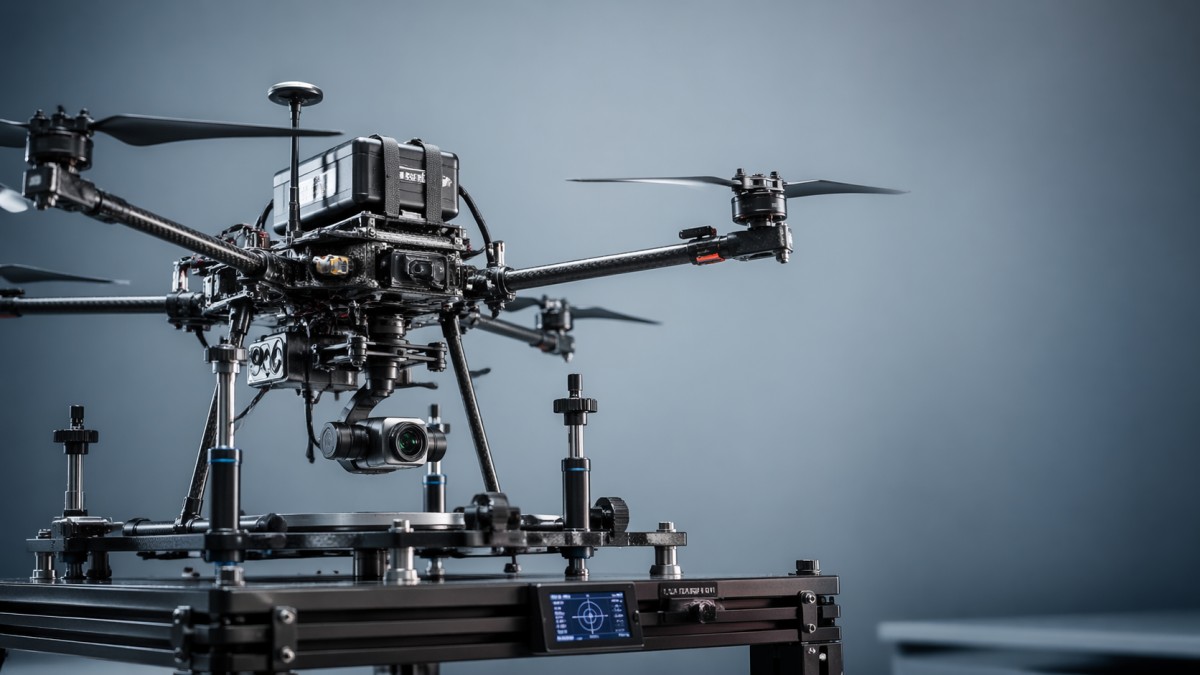
In practical UAV engineering, the center of gravity is not a paperwork detail. It is a flight-critical variable that shapes pitch authority, roll balance, hover efficiency, landing behavior, and how much compensation the flight controller must generate in real time. A drone can still arm, take off, and complete a short mission while carrying a hidden imbalance, which is exactly why bad center of gravity calculation often survives early testing.
For information researchers and procurement teams, this creates a common trap: suppliers may publish payload, endurance, and frame material data, but they often do not explain whether those figures were measured at the recommended center of gravity envelope or under an artificially favorable payload arrangement. A platform that flies 35–45 minutes in a centered configuration may lose meaningful stability margin once a camera, LiDAR, sprayer, or relay module shifts mass by only a few centimeters.
Operators see the problem differently. They notice trim drift, persistent motor heating asymmetry, weak braking in forward flight, oscillation after turns, or inconsistent auto-landing flare. None of these symptoms automatically means the frame or controller is defective. Very often, the root issue is that the uav center of gravity calculation ignored real cable routing, battery movement under vibration, or the effect of mounting brackets and dampers.
At TSV, we treat stability as a parameter-driven issue rather than a marketing claim. For UAV and aerospace metrics, the useful question is not whether a system is described as stable, but under what mass distribution, what payload range, what vibration condition, and what controller latency profile that stability was demonstrated. That distinction matters for R&D teams validating prototypes, for procurement managers comparing quotes, and for enterprise decision-makers trying to reduce trial-and-error cycles from 2–4 rounds down to a more disciplined qualification process.
- A forward-shifted center of gravity usually increases the control demand on rear motors and changes pitch response during acceleration and descent.
- A rear-shifted center of gravity can make braking, flare, and hover stabilization less predictable, especially with changing battery voltage.
- Lateral imbalance may not show up clearly in static inspection, but it can increase energy draw and create uneven thermal loading over 15–30 minute missions.
Which UAV center of gravity calculation mistakes appear most often in field and procurement reviews?
The most common mistake is calculating center of gravity from nominal component mass alone. Teams often use catalog weights for batteries, gimbals, cameras, antennas, and payload pods, then ignore harnesses, adapters, quick-release plates, vibration isolators, and fasteners. On small and mid-size UAV platforms, these “minor” items can alter the effective mass distribution enough to change control effort and hover current draw.
A second mistake is treating the airframe as symmetric in all build states. Carbon fiber frame vibration dampening performance may be excellent in the base platform, but actual installations are rarely symmetric. A side-mounted communication unit, offset battery tray, or uneven landing gear reinforcement shifts the aircraft’s balance line. If the design review checks only geometric symmetry and not measured balance, the error gets embedded in production.
A third mistake is evaluating center of gravity at only one fuel or battery condition. On electric UAVs, pack voltage decreases during flight, but more importantly, modular battery placement, pack swelling tolerance, and latch preload can change how the mass behaves under vibration. On hybrid or liquid-carrying missions such as spraying, the center of gravity can migrate during the mission itself. This is why static bench balance alone is not enough for application-grade validation.
A fourth mistake is separating flight controller tuning from center of gravity validation. Teams sometimes tune around imbalance, then present the aircraft as stable. That approach hides the real issue. Excess compensation can mask design defects in calm air but reappear during crosswind, aggressive waypoint transitions, emergency descent, or payload release. When flight controller latency benchmark data is already tight, unnecessary compensation consumes control margin that should be reserved for disturbances.
Four frequent calculation errors that distort decision-making
The table below summarizes how common center of gravity mistakes affect engineering interpretation, field behavior, and procurement judgment. This is useful when screening supplier claims and when building internal acceptance criteria for 3 sample units, 1 pilot lot, or a larger deployment batch.
For buyers, the practical lesson is simple: endurance and payload should never be accepted as standalone values. Ask whether they were tested with the final mission stack installed, whether balance was checked after cable routing, and whether the published range reflects a centered or edge-of-envelope configuration.
What operators should verify before blaming the airframe
Before assuming a UAV has a frame defect or poor controller quality, operators should check whether the measured center of gravity matches the intended datum. This is especially important after battery replacement, payload swap, repair, or accessory integration. Even a stable platform should be revalidated whenever the mission stack changes by more than one meaningful hardware element.
- Confirm the datum point and coordinate system used by engineering, maintenance, and supplier documentation are identical.
- Measure the aircraft in mission-ready condition, not as an empty frame or showroom configuration.
- Recheck balance after 10–15 flights if mounts settle, foam pads compress, or batteries shift under vibration.
How do center of gravity errors affect payload, flight time, and controller behavior?
The strongest business impact of a bad uav center of gravity calculation is not always a crash. More often, it is lost efficiency. A UAV that should operate near a target payload band may be forced to fly below that useful load because the off-center mass requires extra control effort and raises average power consumption. In commercial mapping, inspection, and agricultural operations, that translates into fewer hectares, fewer survey lines, or more battery swaps per shift.
This is where drone payload capacity vs flight time becomes a misleading headline metric if balance is not disclosed. Two UAVs can both list the same maximum payload, yet one may hold stable hover and predictable maneuvering only within a narrower center of gravity window. The other may carry the payload safely only after reducing speed, limiting climb rate, or accepting shorter endurance. Those trade-offs matter in procurement because they change operating cost over 6–12 months.
Flight controller latency benchmark data also needs context. A low-latency controller does not eliminate the penalty of poor balance. It can react faster, but it still spends control authority correcting a preventable mass-distribution error. When disturbance rejection capacity is consumed by static imbalance, the aircraft becomes more sensitive to gusts, aggressive waypoint transitions, and payload-induced vibration. In other words, control speed cannot fully compensate for bad geometry.
Carbon fiber frame vibration dampening shows a similar interaction. Buyers may assume a carbon fiber structure automatically solves stability concerns, but frame material and laminate quality do not remove the need for accurate balance. If the center of gravity sits outside the recommended envelope, vibration can couple with uneven thrust demand and produce blurred imaging, noisier point clouds, or inconsistent inspection results even when the frame itself is mechanically robust.
A practical comparison for engineering and sourcing teams
The table below helps compare centered and off-centered configurations from a decision perspective. It does not claim universal numbers for every aircraft. Instead, it shows the common relationships procurement teams should verify during test plans and supplier qualification.
When a supplier quote seems attractive, ask whether the offered battery tray, payload bracket, and damping set were part of the test configuration. If not, the platform may still need redesign work after purchase, which increases integration cost and extends deployment by 2–6 weeks.
Three performance areas that usually degrade first
In many UAV programs, the first signs appear in these areas before a safety event occurs. Recognizing them early helps both operators and procurement reviewers avoid misclassifying the problem.
- Endurance drops sooner than expected, especially at mid-to-high payload where control corrections become more energy intensive.
- Thermal symmetry across motors and ESCs deteriorates, indicating one side is persistently working harder.
- Data collection quality becomes inconsistent, producing repeat missions and reducing commercial efficiency.
What should buyers, engineers, and operators check before selecting a UAV platform?
A good procurement process does not stop at asking for payload and endurance brochures. It defines a measurable evaluation path. For UAV programs in surveying, public safety, industrial inspection, agriculture, or logistics testing, buyers should request the center of gravity envelope, the reference datum definition, and the installed configuration used during endurance and stability demonstrations. If a supplier cannot explain these clearly, the performance data may be incomplete for enterprise use.
For engineering teams, the key is to separate design capability from tuning compensation. A platform should be examined in at least 3 states where applicable: empty baseline, typical mission load, and upper-range payload configuration. This does not require exotic testing, but it does require discipline. Without those checkpoints, teams may validate an aircraft that works in a narrow lab setup yet struggles in daily operations.
For operators, acceptance should include simple field indicators that align with the engineering intent. If the aircraft requires constant trim-like correction, shows uneven landing posture, or exhibits repeatable directional bias over multiple batteries, these are not minor quirks. They are reasons to trigger a balance review before scaling use. In many organizations, this step saves more money than chasing repeated controller retuning or premature motor replacement.
At enterprise level, decision-makers should also consider supplier transparency. Tech-heavy procurement increasingly depends on whether vendors can provide benchmark-style documentation rather than sales adjectives. TSV’s approach is built around that gap. We focus on exact parameter interpretation, realistic configuration review, and supply-chain-facing clarity that helps shorten qualification cycles and improve spec-sheet accuracy.
A practical UAV evaluation checklist for sourcing teams
Use the following checks when comparing 2–5 candidate UAV platforms. They help connect center of gravity calculation to real purchasing decisions, service planning, and long-term operating cost.
- Request the tested center of gravity range for each payload class, not only the maximum payload headline figure.
- Confirm whether endurance testing was done with the final sensor stack, brackets, cables, and landing gear installed.
- Ask if the aircraft was validated across at least 3 battery states or mission phases, especially for variable-load operations.
- Review whether flight controller latency benchmark data was collected with the same payload geometry you will actually deploy.
- Check whether carbon fiber frame vibration dampening was assessed under loaded flight rather than only on an empty structural test.
Standards and documentation signals worth asking about
Not every UAV vendor will present documentation in the same format, but serious suppliers should still be able to define their mass properties process, change-control procedure, and test conditions. In regulated or safety-sensitive programs, teams often align documentation with broader quality systems and traceability practices even when the UAV itself is a commercial platform. That discipline reduces ambiguity during maintenance, modifications, and acceptance reviews.
If your deployment involves industrial sites, public infrastructure, or cross-border supply chains, it is wise to ask how the supplier records configuration changes, serial-level differences, and replacement part impact on balance. A vendor that cannot track those changes may create hidden service risk over the first 6–18 months of operation.
FAQ: common questions about UAV center of gravity calculation mistakes
Search demand around UAV stability often comes from mixed audiences: researchers comparing platforms, pilots troubleshooting behavior, buyers preparing RFQs, and managers reviewing risk. These questions address the most common decision points without reducing the topic to generic advice.
How much center of gravity shift is too much?
There is no single universal number that applies to every UAV because frame geometry, controller tuning, propeller sizing, and payload class all matter. The correct answer is the supplier’s approved center of gravity envelope for that exact configuration. If a vendor only gives a broad payload rating but no allowable balance range, treat that as incomplete technical data and request clarification before purchase.
Can software tuning fix a bad center of gravity calculation?
Software can compensate, but compensation is not the same as correction. Tuning may make a UAV appear stable in light wind or short indoor tests, yet it still consumes control margin continuously. That reduced margin becomes visible in gusts, emergency maneuvers, or long-duration missions. In procurement terms, software-only correction can hide future operating cost and reliability problems.
Why do flight time claims sometimes collapse after payload integration?
Because payload mass alone is only part of the equation. Once brackets, harnesses, dampers, and sensor orientation are added, the center of gravity may move outside the efficient zone. The UAV then spends more energy on stabilization. That is why drone payload capacity vs flight time should always be evaluated together with the installed geometry and not as two isolated specifications.
What is the best time to review center of gravity in a project?
Ideally at 3 points: during early design selection, after full payload integration, and after any significant change such as a new battery, sensor, or mounting system. For fleet operators, reviewing balance at scheduled maintenance intervals or after repeated hard landings is also a sensible practice.
Why work with TSV when evaluating UAV stability, payload reality, and supplier claims?
TSV was built for environments where technical decisions are too expensive to leave to vague wording. In UAV and aerospace metrics, we do not treat stability as a branding phrase. We examine the parameters that actually govern outcomes: payload extremes, mass distribution, controller response context, vibration behavior, and the difference between brochure performance and mission-ready performance. That approach is useful when your team must compare suppliers across regions, validate hard-tech claims, or reduce qualification uncertainty.
For information researchers, we help transform scattered claims into structured technical comparison. For operators, we help connect field symptoms to measurable causes rather than trial-and-error retuning. For procurement teams, we support clearer RFQ language and more realistic evaluation dimensions. For enterprise decision-makers, our data-driven methodology helps reduce avoidable rework, shorten supplier screening cycles, and improve confidence before capital commitment.
If you are assessing a UAV program, contact TSV for support on parameter confirmation, payload configuration review, flight controller latency benchmark interpretation, carbon fiber frame vibration dampening comparison, center of gravity risk screening, supplier documentation analysis, delivery-cycle discussion, and quotation-oriented technical alignment. A focused review at the specification stage often prevents weeks of redesign and avoids selecting a platform that looks strong on paper but weak in mission reality.
When the decision affects flight safety, operating efficiency, and supply-chain trust, the right question is not who uses the strongest adjective. It is who can explain the numbers, the tolerances, and the testing conditions clearly enough for your team to act. That is where TSV brings value: engineering truth through data.
Search News
Hot Articles
- Carbon Fiber StructuresHow to Specify Aerospace Carbon Fiber Assemblies for Lightweight, Load-Bearing PartsJul 11, 2026
- Machine VisionXiaomi, Alibaba DAMO Academy Drive Open-Source Robotics Model Ecosystem, Lowering Algorithm Development Barriers for Overseas SMEs Adopting Chinese Robotics SolutionsMar 30, 2026
- Cobots & ArmsShanxi 'AI+' Conference Showcases Embodied Intelligence with Multinational Buyer Engagement: Key Industry ImplicationsMar 30, 2026
Popular Tags
Recommended News
 Jul 11, 2026How to Specify Aerospace Carbon Fiber Assemblies for Lightweight, Load-Bearing PartsAerospace carbon fiber assemblies: learn how to specify laminate design, load data, joining methods, and inspection controls for lighter, reliable load-bearing aerospace parts.Elena Rostova (UAV Systems Researcher)
 Mar 30, 2026Xiaomi, Alibaba DAMO Academy Drive Open-Source Robotics Model Ecosystem, Lowering Algorithm Development Barriers for Overseas SMEs Adopting Chinese Robotics SolutionsXiaomi & Alibaba DAMO Academy's open-source robotics models lower algorithm barriers for global SMEs. Boost efficiency in manufacturing, logistics & smart retail with ROS 2 compatible solutions.TSV Data Lab
 Mar 30, 2026Shanxi 'AI+' Conference Showcases Embodied Intelligence with Multinational Buyer Engagement: Key Industry ImplicationsShanxi 'AI+' Conference highlights embodied intelligence with Tesla, Ubtech & Jiantao showcasing multimodal robotics. 40+ global buyers validated tech on-site, creating new B2B channels for industrial automation & AI solutions.Chen Wei (Automation Lead Engineer)
 Mar 30, 2026Zhongguancun Unveils 6G Integrated Sensing-Computing-Intelligence Platform to Empower Embodied Robots for Global Industrial ApplicationsZhongguancun's new 6G platform revolutionizes industrial robotics with <10ms latency, empowering global automotive, logistics & port automation. Discover how this tech boosts China's smart manufacturing exports.TSV Data Lab
 Mar 30, 2026Mech-Mind Tianjin Embodied Intelligence R&D and Production Base Goes Live, Cutting Delivery Time by 20%–30% for Global Customized AMR+Vision SolutionsMech-Mind's Tianjin AMR+Vision production base cuts delivery time by 20%-30% for欧美 & Latin American markets. Discover how this PLd-certified facility accelerates customized robotics solutions for smart manufacturing and logistics.Chen Wei (Automation Lead Engineer)
 Mar 30, 2026Boao Forum Reveals 'Co-evolution of Big and Small Brains' Trend in Humanoid Robots, China's Embodied Intelligence Accelerates Adaptation to Overseas Manufacturing Service ScenariosDiscover how China's humanoid robots, featuring 'Co-evolution of Big and Small Brains,' are revolutionizing global manufacturing. Learn about Embodied Tian Gong 3.0's ISO compliance and overseas deployment at Boao Forum 2026.Chen Wei (Automation Lead Engineer)
 Mar 30, 2026China Railway Industrial Secures Patent for Embodied Robotics in Material Handling, Boosting High-Precision Delivery Capabilities for Overseas Infrastructure and Manufacturing ProjectsChina Railway Industrial's new patent for embodied robotics in material handling boosts high-precision delivery for global infrastructure & manufacturing. Discover how this innovation enhances logistics accuracy in automotive, rail transit & EPC projects.Chen Wei (Automation Lead Engineer)
 Oct 22, 2026KUKA Showcases Physical AI and iiQKA.AI Vision at NVIDIA GTC BerlinExplore KUKA’s Physical AI showcase at NVIDIA GTC Berlin and discover how iiQKA.AI Vision aims to simplify robotic vision integration and improve 2D and 3D scene recognition.TSV Data Lab
 Oct 22, 2026Robotic Machining of Advanced Composites: What Tolerances Are Achievable?Explore advanced materials machining robotics: discover what drives achievable composite tolerances and how to validate accuracy before investing in your next machining system.Dr. Marcus Vance
 Oct 21, 2026China’s Industrial Robot Exports Near RMB 10 Billion in First Nine Months of 2026China’s industrial robot exports neared RMB 10 billion in January–September 2026, with value rising faster than volume. Explore the data and what it could mean for suppliers.Chen Wei (Automation Lead Engineer)
 Oct 21, 2026Low-Latency Industrial Data Processing: Pricing and Key Cost DriversExplore industrial data latency price drivers, from edge hardware to integration and support. Learn how to compare quotes, verify performance, and avoid unnecessary costs.TSV Data Lab
 Oct 20, 2026KUKA Launches iiQKA.AI Vision to Simplify Industrial Image ProcessingKUKA iiQKA.AI Vision simplifies industrial image processing with controller-based 2D and 3D vision. Explore drag-and-drop setup for vision-guided automation.TSV Data Lab
 Oct 20, 2026Smart Industrial Edge Devices: Key Criteria for Legacy PLC IntegrationChoose smart industrial edge devices for legacy PLC integration. Discover key criteria for compatibility, data quality, security, and reliable collection without disrupting control.TSV Data Lab
 Oct 19, 2026Choosing a Radar Sensor by Application: Range, Resolution, and Field of ViewSimplify radar sensor application based product selection. Compare range, resolution, and field of view to avoid blind spots and choose with confidence. Explore the guide.TSV Data Lab
 Oct 18, 2026Comparing Material Options for Procurement: Specs, Costs, and Supply RisksExplore procurement oriented technical content on material options, specs, costs, and supply risks. Compare alternatives to cut hidden expenses and make confident sourcing decisions.Dr. Marcus Vance
 Oct 17, 20265-Axis CNC Positioning Accuracy: How to Interpret ISO 230-2 Test ResultsAssess 5 axis CNC machining positioning accuracy with ISO 230-2. Learn to interpret repeatability, reversal error, and test conditions to compare suppliers and make confident acceptance decisions.Dr. Marcus Vance
 Oct 16, 2026Choosing a Rugged Edge AI Box Supplier: Thermal Tests and Lifecycle SupportChoose a rugged edge AI box supplier with proven thermal performance and reliable lifecycle support. Discover the tests and commitments to verify before you buy.TSV Data Lab
 Oct 15, 2026R&D Cost Reduction Services: How to Evaluate Fees, Savings, and ROIEvaluate R&D cost reduction services with confidence. Compare fees, verify savings, and calculate ROI without compromising performance. Discover how to choose a provider that delivers real value.Chen Wei (Automation Lead Engineer)
 Oct 22, 2026How Do You Test AMR Navigation Accuracy in a Warehouse?Test AMR navigation accuracy in warehouses with practical methods for localization, path tracking, and docking. Learn to set tolerances and compare robots before deployment.Chen Wei (Automation Lead Engineer)
 Oct 21, 2026How Should You Balance Cobot Payload Against Reach?Explore cobot payload versus reach to choose the right robot. Learn how tooling, load limits, workspace, and cycle time affect performance—and avoid costly selection mistakes.Chen Wei (Automation Lead Engineer)
 Oct 20, 2026How Do You Measure Industrial IoT Gateway Latency Under Load?Measure industrial IoT gateway latency under load with reliable timestamps, realistic traffic, and tail-latency analysis. Discover how to expose bottlenecks and choose the right gateway.TSV Data Lab
 Oct 19, 2026How Do You Verify That Precision Machined Parts Meet Tolerances?Master precision machining tolerance verification with the right tools, datum setups, and acceptance rules. Learn how to validate parts confidently and reduce costly inspection errors.Dr. Marcus Vance
 Oct 18, 2026What Should an AS9100 Machining Supplier Checklist Include?Build an AS9100 machining supplier checklist that verifies capability, traceability, inspection, and outsourced processes. Discover what to check before approving your next aerospace supplier.Dr. Marcus Vance
 Oct 17, 2026How Should You Interpret Industrial Robot Repeatability Specs?Decode industrial robot repeatability specifications, understand ISO 9283 test conditions, and avoid costly selection mistakes. Learn how to verify performance for your process.Chen Wei (Automation Lead Engineer)