The Hardest Part of VTOL Flight Is Often the Transition Window
Publication Date
author
In VTOL operations, the most demanding moment is often the transition window, where VTOL transition phase aerodynamics, UAV center of gravity calculation, flight controller latency benchmark, and drone propeller thrust efficiency must align with precision. For engineers, operators, procurement teams, and decision-makers, understanding these variables is essential to evaluating drone payload capacity vs flight time, UAV wind resistance rating, and real-world platform reliability beyond marketing claims.
The central answer is straightforward: many VTOL aircraft do not fail in hover and do not fail in forward cruise—they fail, or become operationally unsafe, in the narrow band between the two. That transition window compresses aerodynamic uncertainty, control-loop responsiveness, center-of-gravity sensitivity, propulsion margins, and operator workload into a few critical seconds. If a platform is poorly balanced, underpowered, delayed in control response, or tested only in ideal conditions, transition becomes the first place those weaknesses appear.
For technical evaluators and buyers, this means a VTOL platform should never be judged only by advertised endurance, payload, or top speed. The better question is: how repeatably does it transition under real mission loads, crosswinds, battery sag, and changing center of gravity?
Why the transition window is usually the real make-or-break test
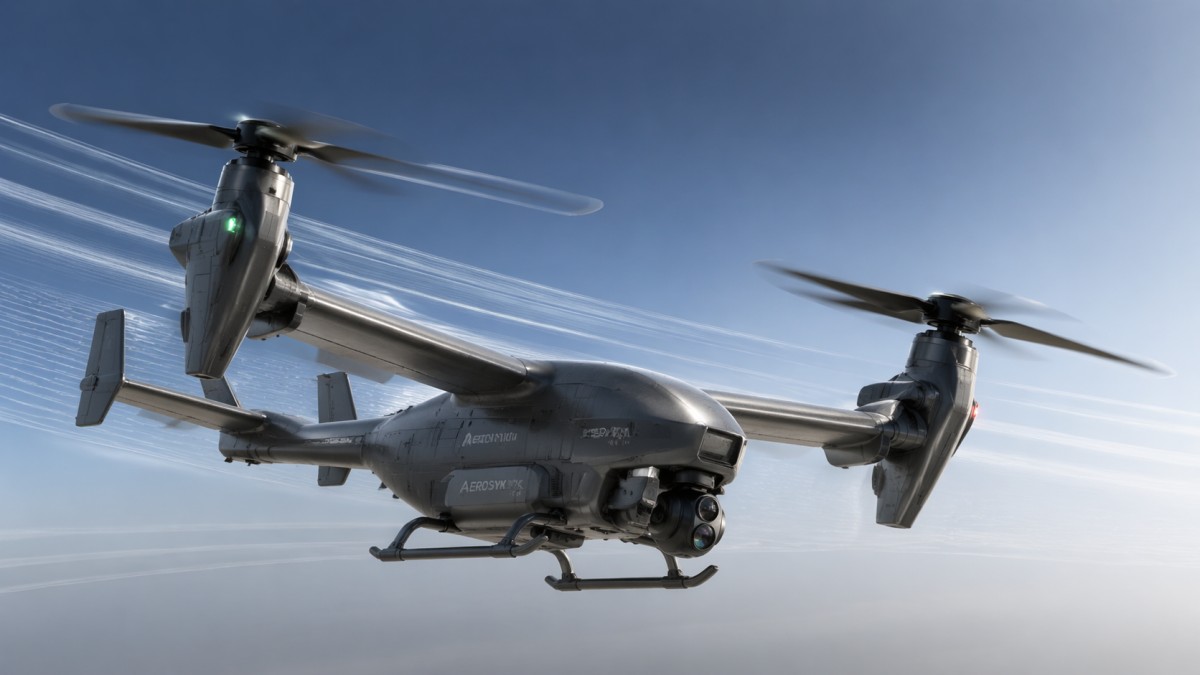
During hover, the aircraft relies primarily on vertical thrust and low-speed stabilization logic. During cruise, the wing, fuselage, and forward propulsion system take over much of the lift and efficiency burden. The transition window is different because both flight regimes overlap imperfectly.
At that moment, the aircraft must manage several coupled changes at once:
- Rotor thrust vectors are changing in magnitude or direction
- Wing lift is rising but may still be insufficient
- Control surfaces become more effective as airspeed builds
- Battery voltage may dip under transient power demand
- The center of gravity may shift the pitch moment unexpectedly under payload
- Flight controller logic must arbitrate between hover and fixed-wing control laws
This is why VTOL transition phase aerodynamics matter so much. Transition is not simply “hover plus forward motion.” It is an unstable handoff between two aerodynamic states. The aircraft is often operating in a speed range where rotor wash interacts with wings and control surfaces, where induced drag remains high, and where pitch authority can deteriorate quickly if the handoff is not sequenced correctly.
For operators, the practical implication is simple: the aircraft that looks excellent in a spec sheet may still show oscillation, nose drop, altitude loss, or delayed recovery in transition. For procurement teams, this is one of the clearest reasons to request test data rather than relying on headline metrics.
What engineers and operators should check first: CG, thrust margin, and control latency
If the goal is to understand whether a VTOL platform is transition-stable in the real world, three evaluation areas should move to the top of the checklist.
1. UAV center of gravity calculation under actual payload configurations
A platform may transition well with an empty bay and poorly with a mission payload. That is often a center-of-gravity problem, not a purely aerodynamic one.
UAV center of gravity calculation should not be treated as a one-time design number. It should be verified across the actual payload envelope:
- Sensor payload installed vs removed
- Front-loaded vs belly-mounted payloads
- Battery position changes
- Fuel or battery depletion effects over mission time
- Field modifications such as communications modules or gimbals
Even small shifts in CG can increase pitch instability during the conversion from rotor-supported lift to wing-supported lift. If the aircraft requires excessive control compensation, that can reduce efficiency and raise the probability of transition upset in wind.
2. Propulsion headroom and drone propeller thrust efficiency
Many teams focus on total thrust, but total thrust alone is not enough. What matters in transition is available thrust margin at the exact speed and attitude where lift transfer occurs.
Drone propeller thrust efficiency should be evaluated under real electrical and aerodynamic conditions, including:
- Battery voltage sag under load
- Air density changes due to altitude and temperature
- Propeller efficiency at non-static inflow conditions
- Transient motor response during rapid attitude corrections
- Performance degradation after wear, dust, or minor blade damage
An aircraft that has enough thrust to hover is not automatically an aircraft with enough transition margin. If power reserve is narrow, any gust, CG offset, or control delay can force a temporary altitude drop or unstable pitch excursion.
3. Flight controller latency benchmark and mode-switch quality
Transition safety depends heavily on software timing. A weak flight controller latency benchmark can show up as late correction, overshoot, oscillation, or poor blending between control modes.
Teams should look beyond processor claims and ask for measurable timing behavior:
- Sensor fusion update rate
- Command-to-actuation latency
- Mode-switch transition delay
- Recovery time after disturbance injection
- Behavior under GNSS degradation or electromagnetic interference
For engineering and operational users, the practical question is not whether the controller is “advanced,” but whether it remains predictable when the aircraft passes through its least forgiving speed regime.
How transition performance affects payload, endurance, and wind tolerance in real missions
One of the biggest buying mistakes in VTOL evaluation is treating payload, endurance, and wind resistance as isolated headline numbers. In reality, they are tightly connected through transition behavior.
Drone payload capacity vs flight time is not a simple trade-off
The common assumption is that more payload simply means less flight time. That is true, but incomplete. In VTOL aircraft, more payload can also worsen transition quality by changing CG, increasing stall margin sensitivity, and forcing higher power draw during acceleration.
So when comparing drone payload capacity vs flight time, buyers should ask:
- At what payload was the endurance figure achieved?
- Was that payload mounted in the same location used in the actual mission?
- Was transition tested repeatedly at max payload?
- How much altitude loss occurred during transition under load?
- Did repeated transitions materially affect battery reserve planning?
A platform may show acceptable total endurance in brochure conditions while still delivering poor mission confidence if transition at useful payload is marginal.
UAV wind resistance rating often breaks down first in transition
UAV wind resistance rating is another metric that can be misleading when stripped of context. Hover wind tolerance and cruise wind tolerance are not the same as transition wind tolerance.
Crosswind and gust effects are especially important during conversion because the aircraft may briefly have reduced control authority, non-linear aerodynamic response, or shifting lift sources. A platform rated for a certain wind level may meet that threshold in straight cruise but become inconsistent in transition.
Decision-makers should therefore ask for wind data segmented by flight phase:
- Hover hold in steady wind
- Forward cruise in headwind and crosswind
- Transition in steady crosswind
- Transition under gust conditions
- Abort-transition and recovery performance
If the vendor cannot separate these conditions, the wind rating is of limited value for mission assurance.
What procurement teams and enterprise decision-makers should demand from vendors
For procurement, the main objective is not to become an aerodynamics lab. It is to reduce technical ambiguity before purchase, deployment, or fleet standardization. The best way to do that is to request evidence tied directly to transition performance.
Ask for test conditions, not just outcomes
A claim such as “stable transition” or “wind resistance up to X m/s” is insufficient without context. Require test documentation covering:
- Aircraft takeoff weight during testing
- Payload geometry and mounting position
- Battery state of charge and battery age
- Ambient temperature, density altitude, and wind conditions
- Transition altitude loss, overshoot, and control error data
- Number of repeated runs and pass/fail consistency
Prioritize repeatability over isolated best-case performance
One clean demonstration flight is less valuable than a repeatable data series. For enterprise users, especially in mapping, inspection, logistics, agriculture, or defense-adjacent applications, the issue is not whether the aircraft can transition once. It is whether it can do so reliably across operators, payload swaps, weather variation, and fleet aging.
The strongest suppliers are usually willing to provide:
- Transition success rate across multiple sorties
- Tolerance to CG variation
- Latency and control-loop benchmark data
- Power margin data near maximum takeoff weight
- Maintenance intervals affecting transition-critical components
Watch for common red flags
- Endurance figures published without payload context
- Wind ratings published without flight-phase segmentation
- No disclosed center-of-gravity envelope
- No evidence of degraded-mode or abort-transition testing
- Transition demonstrations performed only in ideal weather
- Overreliance on adjectives instead of benchmarked parameters
These red flags do not automatically mean a platform is poor. But they do mean the risk of hidden transition weakness is higher.
How to evaluate a VTOL platform more intelligently before deployment
For engineers, pilots, and technical buyers, a practical evaluation framework can be much more useful than broad product comparisons.
A stronger VTOL assessment process usually includes the following questions:
- Does the aircraft maintain safe pitch and altitude margins throughout transition?
- Has the UAV center of gravity calculation been validated for every intended payload layout?
- Is there enough propulsion reserve beyond nominal hover requirements?
- Has drone propeller thrust efficiency been characterized under real mission voltage and airflow conditions?
- Is the flight controller latency benchmark documented under disturbance and mode-switch conditions?
- Are drone payload capacity vs flight time figures tied to realistic mission profiles rather than laboratory numbers?
- Is the UAV wind resistance rating broken down by hover, cruise, and transition?
This framework is valuable because it links flight science to procurement reality. It helps technical teams screen platforms before field failures expose hidden design compromises.
Conclusion: the best VTOL platforms are the ones that stay predictable in the handoff
The hardest part of VTOL flight is often the transition window because that is where aerodynamic uncertainty, CG sensitivity, software responsiveness, propulsion margin, and environmental disturbance all converge. In other words, transition is where engineering truth shows up fastest.
For users and operators, this means safer mission planning and better platform handling. For procurement teams, it means more disciplined supplier evaluation. For enterprise decision-makers, it means understanding that brochure metrics alone do not capture operational reliability.
When reviewing any VTOL system, focus less on idealized top-line claims and more on how the aircraft behaves in the transition band under real payload, real wind, and real control-loop conditions. That is usually where platform maturity, design quality, and mission readiness become measurable.
Search News
Hot Articles
- Carbon Fiber StructuresHow to Specify Aerospace Carbon Fiber Assemblies for Lightweight, Load-Bearing PartsJul 11, 2026
- Machine VisionXiaomi, Alibaba DAMO Academy Drive Open-Source Robotics Model Ecosystem, Lowering Algorithm Development Barriers for Overseas SMEs Adopting Chinese Robotics SolutionsMar 30, 2026
- Cobots & ArmsShanxi 'AI+' Conference Showcases Embodied Intelligence with Multinational Buyer Engagement: Key Industry ImplicationsMar 30, 2026
Popular Tags
Recommended News
 Jul 11, 2026How to Specify Aerospace Carbon Fiber Assemblies for Lightweight, Load-Bearing PartsAerospace carbon fiber assemblies: learn how to specify laminate design, load data, joining methods, and inspection controls for lighter, reliable load-bearing aerospace parts.Elena Rostova (UAV Systems Researcher)
 Mar 30, 2026Xiaomi, Alibaba DAMO Academy Drive Open-Source Robotics Model Ecosystem, Lowering Algorithm Development Barriers for Overseas SMEs Adopting Chinese Robotics SolutionsXiaomi & Alibaba DAMO Academy's open-source robotics models lower algorithm barriers for global SMEs. Boost efficiency in manufacturing, logistics & smart retail with ROS 2 compatible solutions.TSV Data Lab
 Mar 30, 2026Shanxi 'AI+' Conference Showcases Embodied Intelligence with Multinational Buyer Engagement: Key Industry ImplicationsShanxi 'AI+' Conference highlights embodied intelligence with Tesla, Ubtech & Jiantao showcasing multimodal robotics. 40+ global buyers validated tech on-site, creating new B2B channels for industrial automation & AI solutions.Chen Wei (Automation Lead Engineer)
 Mar 30, 2026Zhongguancun Unveils 6G Integrated Sensing-Computing-Intelligence Platform to Empower Embodied Robots for Global Industrial ApplicationsZhongguancun's new 6G platform revolutionizes industrial robotics with <10ms latency, empowering global automotive, logistics & port automation. Discover how this tech boosts China's smart manufacturing exports.TSV Data Lab
 Mar 30, 2026Mech-Mind Tianjin Embodied Intelligence R&D and Production Base Goes Live, Cutting Delivery Time by 20%–30% for Global Customized AMR+Vision SolutionsMech-Mind's Tianjin AMR+Vision production base cuts delivery time by 20%-30% for欧美 & Latin American markets. Discover how this PLd-certified facility accelerates customized robotics solutions for smart manufacturing and logistics.Chen Wei (Automation Lead Engineer)
 Mar 30, 2026Boao Forum Reveals 'Co-evolution of Big and Small Brains' Trend in Humanoid Robots, China's Embodied Intelligence Accelerates Adaptation to Overseas Manufacturing Service ScenariosDiscover how China's humanoid robots, featuring 'Co-evolution of Big and Small Brains,' are revolutionizing global manufacturing. Learn about Embodied Tian Gong 3.0's ISO compliance and overseas deployment at Boao Forum 2026.Chen Wei (Automation Lead Engineer)
 Mar 30, 2026China Railway Industrial Secures Patent for Embodied Robotics in Material Handling, Boosting High-Precision Delivery Capabilities for Overseas Infrastructure and Manufacturing ProjectsChina Railway Industrial's new patent for embodied robotics in material handling boosts high-precision delivery for global infrastructure & manufacturing. Discover how this innovation enhances logistics accuracy in automotive, rail transit & EPC projects.Chen Wei (Automation Lead Engineer)
 Oct 22, 2026KUKA Showcases Physical AI and iiQKA.AI Vision at NVIDIA GTC BerlinExplore KUKA’s Physical AI showcase at NVIDIA GTC Berlin and discover how iiQKA.AI Vision aims to simplify robotic vision integration and improve 2D and 3D scene recognition.TSV Data Lab
 Oct 22, 2026Robotic Machining of Advanced Composites: What Tolerances Are Achievable?Explore advanced materials machining robotics: discover what drives achievable composite tolerances and how to validate accuracy before investing in your next machining system.Dr. Marcus Vance
 Oct 21, 2026China’s Industrial Robot Exports Near RMB 10 Billion in First Nine Months of 2026China’s industrial robot exports neared RMB 10 billion in January–September 2026, with value rising faster than volume. Explore the data and what it could mean for suppliers.Chen Wei (Automation Lead Engineer)
 Oct 21, 2026Low-Latency Industrial Data Processing: Pricing and Key Cost DriversExplore industrial data latency price drivers, from edge hardware to integration and support. Learn how to compare quotes, verify performance, and avoid unnecessary costs.TSV Data Lab
 Oct 20, 2026KUKA Launches iiQKA.AI Vision to Simplify Industrial Image ProcessingKUKA iiQKA.AI Vision simplifies industrial image processing with controller-based 2D and 3D vision. Explore drag-and-drop setup for vision-guided automation.TSV Data Lab
 Oct 20, 2026Smart Industrial Edge Devices: Key Criteria for Legacy PLC IntegrationChoose smart industrial edge devices for legacy PLC integration. Discover key criteria for compatibility, data quality, security, and reliable collection without disrupting control.TSV Data Lab
 Oct 19, 2026Choosing a Radar Sensor by Application: Range, Resolution, and Field of ViewSimplify radar sensor application based product selection. Compare range, resolution, and field of view to avoid blind spots and choose with confidence. Explore the guide.TSV Data Lab
 Oct 18, 2026Comparing Material Options for Procurement: Specs, Costs, and Supply RisksExplore procurement oriented technical content on material options, specs, costs, and supply risks. Compare alternatives to cut hidden expenses and make confident sourcing decisions.Dr. Marcus Vance
 Oct 17, 20265-Axis CNC Positioning Accuracy: How to Interpret ISO 230-2 Test ResultsAssess 5 axis CNC machining positioning accuracy with ISO 230-2. Learn to interpret repeatability, reversal error, and test conditions to compare suppliers and make confident acceptance decisions.Dr. Marcus Vance
 Oct 16, 2026Choosing a Rugged Edge AI Box Supplier: Thermal Tests and Lifecycle SupportChoose a rugged edge AI box supplier with proven thermal performance and reliable lifecycle support. Discover the tests and commitments to verify before you buy.TSV Data Lab
 Oct 15, 2026R&D Cost Reduction Services: How to Evaluate Fees, Savings, and ROIEvaluate R&D cost reduction services with confidence. Compare fees, verify savings, and calculate ROI without compromising performance. Discover how to choose a provider that delivers real value.Chen Wei (Automation Lead Engineer)
 Oct 22, 2026How Do You Test AMR Navigation Accuracy in a Warehouse?Test AMR navigation accuracy in warehouses with practical methods for localization, path tracking, and docking. Learn to set tolerances and compare robots before deployment.Chen Wei (Automation Lead Engineer)
 Oct 21, 2026How Should You Balance Cobot Payload Against Reach?Explore cobot payload versus reach to choose the right robot. Learn how tooling, load limits, workspace, and cycle time affect performance—and avoid costly selection mistakes.Chen Wei (Automation Lead Engineer)
 Oct 20, 2026How Do You Measure Industrial IoT Gateway Latency Under Load?Measure industrial IoT gateway latency under load with reliable timestamps, realistic traffic, and tail-latency analysis. Discover how to expose bottlenecks and choose the right gateway.TSV Data Lab
 Oct 19, 2026How Do You Verify That Precision Machined Parts Meet Tolerances?Master precision machining tolerance verification with the right tools, datum setups, and acceptance rules. Learn how to validate parts confidently and reduce costly inspection errors.Dr. Marcus Vance
 Oct 18, 2026What Should an AS9100 Machining Supplier Checklist Include?Build an AS9100 machining supplier checklist that verifies capability, traceability, inspection, and outsourced processes. Discover what to check before approving your next aerospace supplier.Dr. Marcus Vance
 Oct 17, 2026How Should You Interpret Industrial Robot Repeatability Specs?Decode industrial robot repeatability specifications, understand ISO 9283 test conditions, and avoid costly selection mistakes. Learn how to verify performance for your process.Chen Wei (Automation Lead Engineer)