
RTOS benchmarks look simple until interrupt jitter shows up
Publication Date
author
A real time operating system rtos benchmark can look impressive on paper, yet fail under real interrupt jitter, task contention, and edge latency pressure. For engineers, buyers, and decision-makers evaluating industrial systems, the real question is how benchmark claims translate into stable control, reliable response, and measurable field performance.
Why RTOS benchmarks often mislead in industrial buying decisions
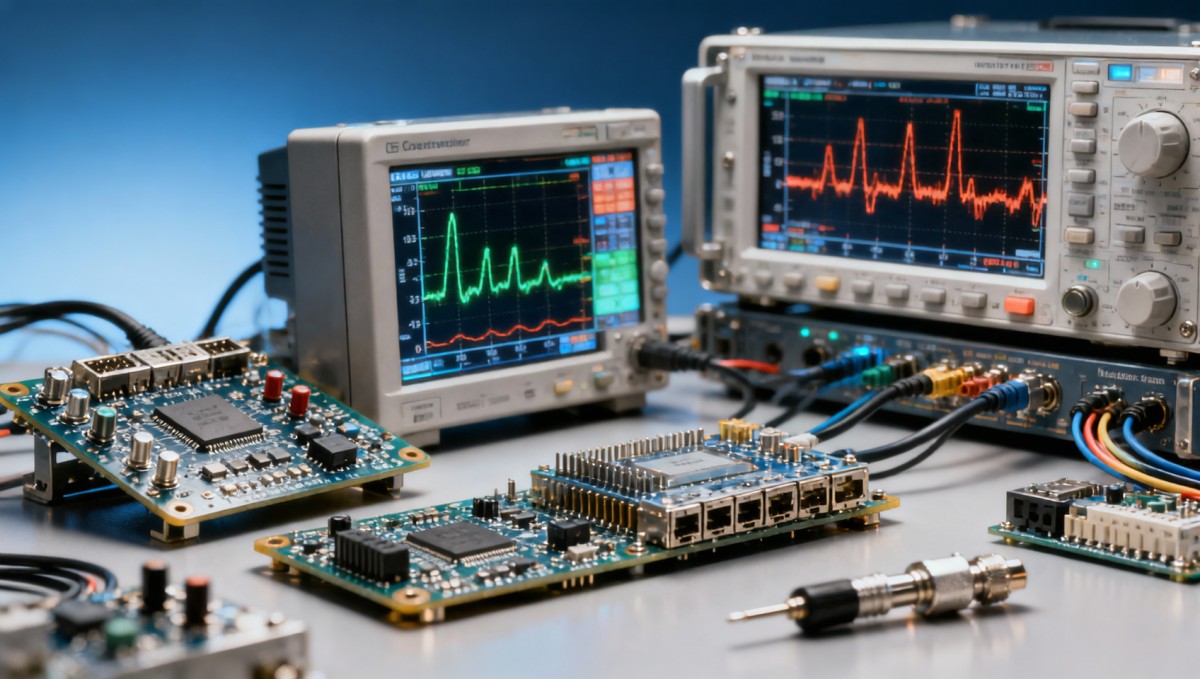
In many industrial, robotics, edge AI, UAV, and precision control projects, a published RTOS benchmark is treated as a shortcut for product evaluation. That is risky. A benchmark may measure context switch time, semaphore latency, or scheduler throughput under a narrow lab setup, but still reveal little about behavior during interrupt bursts, DMA traffic, network stack load, or mixed-priority workloads running for 8–24 hours.
This gap matters to four different audiences. Information researchers need a cleaner way to compare technical claims. Operators need systems that stay stable during shifts, not just during demos. Procurement teams need repeatable criteria across vendors. Enterprise decision-makers need proof that benchmark numbers support uptime, safety margins, and lifecycle cost control rather than a marketing headline.
At TechStat Vanguard, the working principle is simple: parameters do not lie, but incomplete parameters do mislead. In hard-tech supply chains, benchmark interpretation must return to engineering fundamentals. That means asking what was measured, under which load condition, with what interrupt rate, on what processor class, and with which middleware stack enabled.
For most B2B evaluations, there are 4 core questions behind an RTOS benchmark: was jitter measured, was tail latency captured, were mixed workloads used, and was long-duration stability verified. If even 1 of these 4 is missing, benchmark confidence drops sharply for field deployment decisions.
- A low average interrupt latency may still hide unacceptable worst-case spikes during Ethernet, CAN, SPI, or sensor fusion bursts.
- A fast scheduler benchmark may ignore memory pressure, cache effects, and ISR nesting depth common in deployed hardware.
- A clean lab trace captured over 30 seconds is not equivalent to stable operation over 72 hours of continuous runtime.
- A vendor datasheet may report median values, while control systems often fail on 99.9th percentile latency, not on average numbers.
What should a useful RTOS benchmark actually measure?
A useful RTOS benchmark must connect software timing behavior to real machine outcomes. For industrial automation, that usually means servo loop stability, deterministic I/O handling, fault response, and communication predictability. For sensors and edge AI, the concern shifts toward timestamp integrity, packet handling, throughput under load, and bounded latency across multiple threads and interrupts.
The most important change is moving from single-number reporting to layered measurement. A practical benchmark should include average latency, worst-case latency, jitter band, sustained load duration, and test conditions. Without this structure, buyers cannot compare two solutions fairly, especially when one vendor tests bare RTOS kernel timing and another tests with drivers, TCP/IP stack, file system, and logging enabled.
For cross-functional teams, it helps to divide benchmark quality into 3 layers: kernel timing, platform timing, and application timing. Kernel timing covers scheduler and IPC primitives. Platform timing adds interrupts, drivers, and buses. Application timing validates control loops, acquisition pipelines, or edge workloads. Procurement decisions should rarely be based on layer 1 alone.
The table below summarizes benchmark dimensions that provide stronger decision value than a single RTOS headline number. These are not universal pass-fail thresholds, because acceptable values depend on motion control, UAV flight control, machine vision, or gateway duties. Still, the structure itself is a reliable filter when comparing claims across suppliers.
When benchmark reports include these dimensions, searchers can understand the topic more clearly, operators can map numbers to real system behavior, and procurement teams gain a traceable basis for supplier comparison. This is the kind of evidence-driven framing TSV advocates across hard-tech sourcing and technical benchmarking work.
Three measurement layers that reduce ambiguity
Kernel-level timing should be captured with minimal services enabled. Platform-level timing should then add common drivers, storage, bus traffic, and communication stacks. Finally, application-level timing should replay realistic loads such as 1 kHz control loops, packet bursts every 10–20 ms, or image-processing triggers. This 3-step structure prevents marketing teams from presenting one narrow result as if it represented the whole system.
For enterprise buyers, this matters because the purchased unit is not a kernel in isolation. It is a board, a toolchain, drivers, middleware, application code, and maintenance burden. A benchmark only becomes procurement-grade when it reflects that broader stack.
A practical review should also record CPU utilization bands such as 30%, 60%, and 80% load. Many systems remain stable at moderate utilization but show jitter expansion once interrupt density and memory traffic increase together. That transition zone is often where deployment risk begins.
Which scenarios expose interrupt jitter fastest?
Interrupt jitter becomes visible fastest in systems with overlapping timing domains. Motion control is one example: encoder reads, PWM updates, fieldbus communication, and diagnostic logging can collide within sub-millisecond windows. If the RTOS benchmark never tested those overlaps, a “fast” result says very little about machine behavior on the factory floor.
UAV and aerospace-adjacent embedded systems provide another clear case. Flight control loops, sensor fusion, GPS input, telemetry, and storage writes can create bursty timing pressure. In these designs, jitter is not just a software nuisance. It can distort estimation timing, inflate control variance, and reduce confidence in edge-case response during electromagnetic interference or communication congestion.
Sensors and edge AI gateways also punish weak benchmark methodology. A gateway may handle industrial Ethernet, serial buses, local inference, and timestamped sensor streams at once. A benchmark that reports good IPC timing while ignoring packet storms or synchronized input bursts every 50–100 ms can create a false sense of determinism.
In practice, buyers should map benchmarks to use cases before assigning value. The same RTOS may be sufficient for periodic HMI tasks but unsuitable for tightly bounded control loops. Procurement quality improves when evaluation teams tie benchmark interpretation to specific cycle times, bus loads, and recovery expectations rather than generic performance language.
Scenario-based stress points worth testing
- Motion and robotics: 250 µs–1 ms loop targets, nested interrupts, and synchronized I/O updates.
- Machine vision and edge AI: frame triggers, DMA transfers, inference scheduling, and network egress contention.
- Industrial gateways: protocol conversion, timestamp integrity, and sustained throughput under mixed traffic.
- UAV control stacks: IMU sampling, telemetry bursts, flash writes, and priority inversion risks during navigation updates.
Why operators notice problems before dashboards do
Operators often report the earliest signs of poor real-time behavior: intermittent alarms, unstable cycle times, delayed stop responses, drift in synchronized actions, or sporadic communication faults. These are classic symptoms of jitter and tail latency. Yet they may not appear in a benchmark summary that only highlights throughput or average response.
That is why TSV-style engineering review emphasizes field relevance. A benchmark should be judged not by how attractive it looks in isolation, but by how well it predicts the exact failure modes users and maintenance teams will face during real shifts, maintenance windows, and thermal variations.
How to compare RTOS benchmark reports before procurement
Procurement teams often receive benchmark claims from multiple vendors, but the reports are rarely aligned. One may present microsecond latency on a stripped configuration. Another may show broader application performance on a different CPU and compiler. A fair comparison requires a normalized checklist. Without it, the lowest published number can win the discussion while delivering the highest operational risk.
The first normalization step is environment disclosure. Ask for processor architecture, clock range, memory configuration, compiler options, enabled middleware, and measurement method. The second step is workload disclosure: interrupt frequency, number of tasks, bus traffic type, and test duration. The third step is result disclosure: average, peak, percentile, and failure conditions. These 3 disclosure blocks should appear in every benchmark review.
The table below can be used as a vendor comparison worksheet. It is designed for engineering, sourcing, and management teams to discuss the same evidence set instead of debating isolated benchmark numbers. This approach is especially useful when evaluating embedded control systems, industrial gateways, robotics controllers, and sensor processing nodes.
This comparison method supports purchasing decisions more effectively than broad adjectives or isolated demo numbers. It also shortens internal review cycles because engineering, sourcing, and leadership can evaluate the same matrix within 1–2 meetings instead of running separate interpretations in parallel.
A 5-point procurement checklist
- Confirm whether the benchmark includes worst-case and percentile latency, not only average values.
- Check whether interrupt sources and frequencies reflect your actual deployment profile.
- Require evidence from at least 2 runtime windows, such as short functional runs and longer soak runs.
- Review whether middleware, communication stacks, and tracing tools were enabled during measurement.
- Tie benchmark acceptance to contract-level deliverables such as response bounds, validation steps, and escalation path.
When these 5 checks are used consistently, benchmark review becomes a sourcing discipline rather than a marketing reaction. That aligns with TSV’s role as a commercial filter for technical truth in advanced manufacturing ecosystems.
Common misconceptions, implementation risks, and FAQ
A common misconception is that a faster RTOS benchmark automatically means a better deployed system. In reality, the right question is whether the timing profile stays within acceptable bounds under the exact control, communication, and logging pattern your application demands. “Fast” and “deterministic” are not synonyms.
Another misconception is that certification or standards work can replace timing validation. Functional safety and sector standards may shape development discipline, but they do not eliminate the need for benchmark relevance. Whether your environment references IEC-oriented automation practices, aerospace quality workflows, or medical-device adjacent traceability, timing evidence still needs application-level confirmation.
Implementation risk usually appears in 3 places: unrealistic test loads, missing tail-latency reporting, and poor alignment between engineering and procurement requirements. If one team asks for a low benchmark number while another team actually needs bounded latency under mixed traffic, supplier selection becomes inconsistent from day one.
The best corrective action is to define a short validation path before purchase order approval. In many projects, a 2-stage review works well: document review first, then workload replay on target hardware. That process is often faster and cheaper than discovering jitter-related instability after integration has already started.
How should an RTOS benchmark be validated before purchase?
Start with documentation. Request test setup details, timing method, enabled software components, and failure criteria. Then move to workload replay that matches your environment. For example, test control and communication bursts together, not separately. If your line or device expects 1 ms class timing, validate under the actual interrupt mix rather than under a simplified demo image.
What latency data matters most for buyers?
Average latency is useful, but worst-case and 99.9th percentile latency usually matter more in procurement. Machines and edge devices fail on spikes, not on averages. Also ask how long the benchmark ran. A 20-minute result and a 48-hour result should not carry the same decision weight.
Are synthetic benchmarks still useful?
Yes, but only as a baseline. Synthetic RTOS benchmarks are helpful for spotting scheduler efficiency or IPC overhead, especially in early research. They become insufficient when used alone for final vendor selection. Treat them as one data point inside a broader application timing review.
How long does benchmark-based evaluation usually take?
For many B2B teams, a structured evaluation can be completed in 1–3 weeks depending on hardware access, benchmark completeness, and internal approval workflow. If documents are incomplete or workloads must be recreated from scratch, the cycle often extends. Clear data requests at the start reduce that delay significantly.
Why work with TSV when benchmark claims are hard to trust?
TechStat Vanguard was built for exactly this problem: information noise in hard-tech evaluation. In sectors ranging from robotics and automation to UAV systems, sensors, edge AI, and precision manufacturing, benchmark claims are often framed for visibility rather than decision accuracy. TSV focuses on stripping away that noise and converting claims into engineering-grade comparison logic.
Our approach is relevant when your team needs help with 4 decision areas: parameter confirmation, benchmark interpretation, supplier comparison, and validation planning. Instead of treating an RTOS benchmark as a standalone sales asset, we examine the surrounding stack, likely deployment conditions, and the operational risk hidden in missing data such as interrupt jitter, contention, and tail-latency behavior.
If you are preparing a specification sheet, narrowing a supplier list, or reviewing a control platform for industrial, edge, or embedded deployment, TSV can help you structure the decision. Typical consultation topics include interrupt latency criteria, test-condition review, scenario-based benchmark comparison, expected validation flow, and practical questions about delivery readiness and technical documentation quality.
Contact TSV if you need support on benchmark parameter review, product selection logic, scenario-fit analysis, delivery cycle discussion, custom validation scope, certification-related documentation expectations, sample evaluation planning, or quote-stage technical comparison. In hard-tech procurement, better timing evidence does more than improve performance claims. It reduces trial-and-error cost, shortens qualification cycles, and leads to more defensible decisions.
Search News
Hot Articles
- Carbon Fiber StructuresHow to Specify Aerospace Carbon Fiber Assemblies for Lightweight, Load-Bearing PartsJul 11, 2026
- Machine VisionXiaomi, Alibaba DAMO Academy Drive Open-Source Robotics Model Ecosystem, Lowering Algorithm Development Barriers for Overseas SMEs Adopting Chinese Robotics SolutionsMar 30, 2026
- Cobots & ArmsShanxi 'AI+' Conference Showcases Embodied Intelligence with Multinational Buyer Engagement: Key Industry ImplicationsMar 30, 2026
Popular Tags
Recommended News
 Jul 11, 2026How to Specify Aerospace Carbon Fiber Assemblies for Lightweight, Load-Bearing PartsAerospace carbon fiber assemblies: learn how to specify laminate design, load data, joining methods, and inspection controls for lighter, reliable load-bearing aerospace parts.Elena Rostova (UAV Systems Researcher)
 Mar 30, 2026Xiaomi, Alibaba DAMO Academy Drive Open-Source Robotics Model Ecosystem, Lowering Algorithm Development Barriers for Overseas SMEs Adopting Chinese Robotics SolutionsXiaomi & Alibaba DAMO Academy's open-source robotics models lower algorithm barriers for global SMEs. Boost efficiency in manufacturing, logistics & smart retail with ROS 2 compatible solutions.TSV Data Lab
 Mar 30, 2026Shanxi 'AI+' Conference Showcases Embodied Intelligence with Multinational Buyer Engagement: Key Industry ImplicationsShanxi 'AI+' Conference highlights embodied intelligence with Tesla, Ubtech & Jiantao showcasing multimodal robotics. 40+ global buyers validated tech on-site, creating new B2B channels for industrial automation & AI solutions.Chen Wei (Automation Lead Engineer)
 Mar 30, 2026Zhongguancun Unveils 6G Integrated Sensing-Computing-Intelligence Platform to Empower Embodied Robots for Global Industrial ApplicationsZhongguancun's new 6G platform revolutionizes industrial robotics with <10ms latency, empowering global automotive, logistics & port automation. Discover how this tech boosts China's smart manufacturing exports.TSV Data Lab
 Mar 30, 2026Mech-Mind Tianjin Embodied Intelligence R&D and Production Base Goes Live, Cutting Delivery Time by 20%–30% for Global Customized AMR+Vision SolutionsMech-Mind's Tianjin AMR+Vision production base cuts delivery time by 20%-30% for欧美 & Latin American markets. Discover how this PLd-certified facility accelerates customized robotics solutions for smart manufacturing and logistics.Chen Wei (Automation Lead Engineer)
 Mar 30, 2026Boao Forum Reveals 'Co-evolution of Big and Small Brains' Trend in Humanoid Robots, China's Embodied Intelligence Accelerates Adaptation to Overseas Manufacturing Service ScenariosDiscover how China's humanoid robots, featuring 'Co-evolution of Big and Small Brains,' are revolutionizing global manufacturing. Learn about Embodied Tian Gong 3.0's ISO compliance and overseas deployment at Boao Forum 2026.Chen Wei (Automation Lead Engineer)
 Mar 30, 2026China Railway Industrial Secures Patent for Embodied Robotics in Material Handling, Boosting High-Precision Delivery Capabilities for Overseas Infrastructure and Manufacturing ProjectsChina Railway Industrial's new patent for embodied robotics in material handling boosts high-precision delivery for global infrastructure & manufacturing. Discover how this innovation enhances logistics accuracy in automotive, rail transit & EPC projects.Chen Wei (Automation Lead Engineer)
 Oct 13, 2026Smart Cameras vs. PC-Based Machine Vision: Which Fits High-Speed Inspection?This industrial product comparison for machine vision weighs smart cameras vs. PC-based systems on latency, throughput, and cost. Discover your best fit for high-speed inspection.TSV Data Lab
 Oct 12, 2026How to Verify RoHS Compliance in Industrial Sensing Systems Before DeploymentRoHS compliant sensing systems: learn how to verify materials, supplier declarations, testing, and configuration controls before industrial deployment.TSV Data Lab
 Oct 11, 2026How Procurement-Oriented Content Taxonomy Improves B2B Buying JourneysProcurement-oriented content taxonomy streamlines B2B buying journeys with clearer evidence, supplier comparisons, risk visibility, and faster approvals.TSV Data Lab
 Oct 10, 2026How to Select a Machine Performance Monitoring Platform for OEE and Downtime ReductionMachine performance monitoring platform selection guide: validate machine states, OEE data, downtime reasons, integrations, and scalability to reduce losses with confidence.TSV Data Lab
 Oct 08, 2026How to Machine Inconel 625 Blades Without Heat Cracks or Edge ChippingInconel 625 blade machining guide: prevent heat cracks, edge chipping, chatter, and work hardening with proven tooling, cooling, fixturing, and inspection strategies.Dr. Marcus Vance
 Oct 07, 2026How to Evaluate an HMI Panel Distributor for Industrial Automation ProjectsHMI panel distributor evaluation guide: verify technical compatibility, traceability, supply reliability, lifecycle support, and total cost for automation projects.Victor Lin (Chief Software Architect)
 Oct 06, 2026Navigation Fault Tolerance Standards for AMRs: What Safety Teams Must VerifyNavigation fault tolerance standards: learn what AMR safety teams must verify, from localization loss and sensor faults to stopping distance, safe restart, and site-specific validation.Chen Wei (Automation Lead Engineer)
 Oct 05, 2026Calculating Edge Computing Total Cost of Ownership Across Distributed SitesEdge computing ownership cost explained: calculate deployment, energy, connectivity, security, remote support, and refresh costs across distributed sites.TSV Data Lab
 Oct 04, 2026CAD/CAM Benchmarking in the GCC: What Manufacturers Should Ask a ConsultantCAD CAM benchmark consultant GCC guide: learn the key questions manufacturers should ask to validate post-processors, workflows, machine performance, and production risk.Victor Lin (Chief Software Architect)
 Oct 03, 2026Selecting Automotive Radar Sensor Modules for ADAS Range, Resolution, and IntegrationAutomotive radar sensor module selection guide for ADAS: compare range, resolution, field of view, latency, and integration to build safer, reliable vehicle systems.TSV Data Lab
 Oct 02, 2026How to Qualify Machined Parts Suppliers for Hard Tech ProgramsHard tech supply chain machined parts demand rigorous supplier qualification. Learn how to assess capability, traceability, quality controls, and delivery resilience.Dr. Marcus Vance
 Oct 01, 2026How to Select an Outdoor Security Radar Sensor for Perimeter Detection?Outdoor security radar sensor selection guide: compare range, accuracy, false-alarm control, integration, and field testing for reliable perimeter detection.TSV Data Lab
 Sep 30, 2026How to Evaluate Solid-State LiDAR Hardware for Outdoor Autonomous VehiclesSolid state LiDAR hardware evaluation guide for outdoor autonomous vehicles—compare range, point-cloud quality, environmental resilience, integration, and safety.TSV Data Lab
 Sep 29, 2026ISO 9283 Repeatability: How to Evaluate Cobot Positioning PerformanceISO 9283 cobot repeatability explained: learn how payload, reach, approach direction, and test conditions affect positioning performance and cell capability.Chen Wei (Automation Lead Engineer)
 Oct 13, 2026How to keep an industrial robotic integration project on scheduleIndustrial robotic integration project management: keep automation on schedule with proven controls for interfaces, suppliers, FAT, commissioning, and change risk.Victor Lin (Chief Software Architect)
 Oct 12, 2026What should be included in predictive maintenance pricing for factories?Predictive maintenance pricing for factories: compare sensors, software, integration, support, and total cost to secure measurable uptime gains and avoid hidden expenses.TSV Data Lab
 Oct 11, 2026How payload and reach change the cost of an industrial robotCost of industrial robot systems depends heavily on payload and reach. Learn how sizing, torque, tooling, safety, and lifecycle factors shape smarter automation investments.Chen Wei (Automation Lead Engineer)























