High torque density servo motors bring heat issues too
Publication Date
author
As demand for smaller, more powerful motion systems grows, servo motors high torque density designs are becoming a top evaluation priority for engineering teams. Yet higher torque in a compact package often brings a hidden tradeoff: heat. For technical assessors, understanding how thermal buildup affects efficiency, insulation life, control stability, and long-term reliability is essential before approving any motor for precision automation applications.
Why do servo motors high torque density designs run hotter?
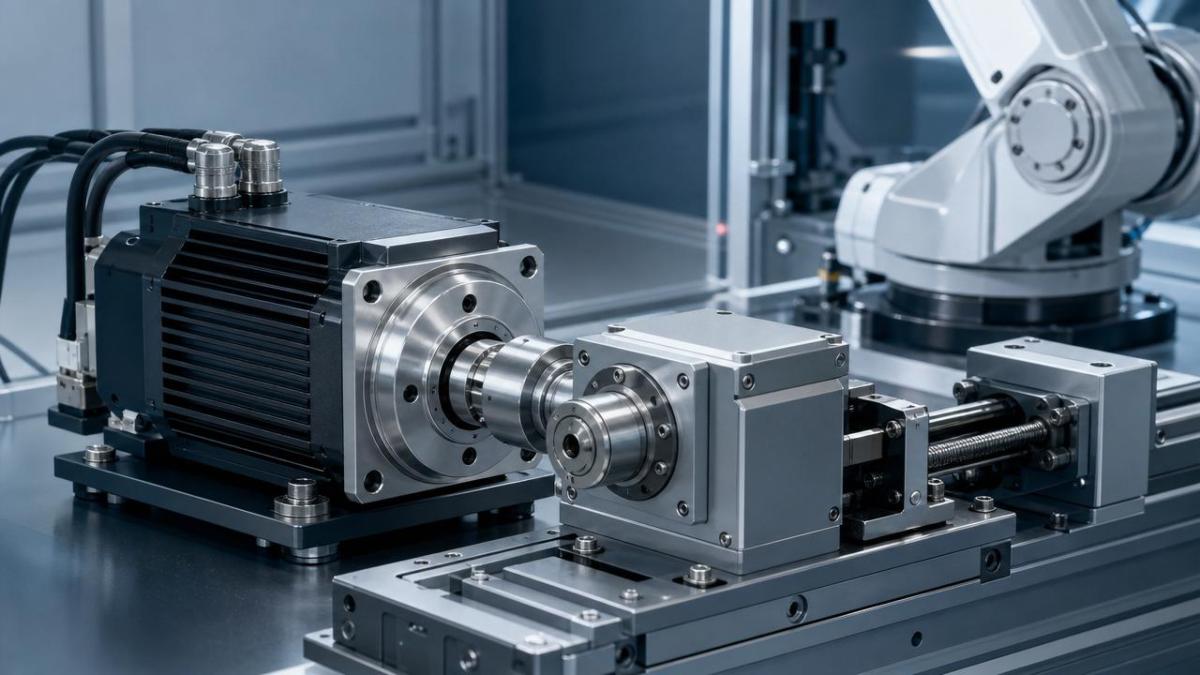
In most industrial sectors, compact servo systems are now expected to deliver more torque per kilogram, faster acceleration, and tighter motion control in less installation space. That pressure is especially visible in robotics, CNC auxiliary axes, AGV steering modules, packaging lines, aerospace actuators, and edge-automation equipment. The engineering benefit is obvious: less footprint, lower moving mass, and better machine integration. The thermal penalty is less obvious until qualification testing begins.
A high torque density servo motor typically achieves its output through stronger magnetic loading, higher current density, optimized slot fill, and more aggressive electromagnetic design. Each of those gains can increase copper loss, core loss, or local hot spots. When the frame gets smaller, the available area for heat dissipation also shrinks. That means the motor may reach critical winding temperature faster during peak duty, repeated start-stop cycles, or enclosed cabinet operation.
For technical assessment teams, this is where marketing language often becomes dangerous. A brochure may highlight peak torque and compact size while saying very little about thermal saturation, temperature rise at rated load, derating conditions, or ambient assumptions. TSV’s data-first approach matters here because the useful question is not simply whether the motor is compact. The useful question is whether it can sustain commanded torque without crossing thermal, insulation, or bearing limits in the real application profile.
- Higher current density raises copper losses, especially under frequent acceleration and deceleration.
- Compact frames reduce thermal mass and external cooling surface, shortening the time to heat soak.
- Enclosed machine designs, poor cabinet airflow, and nearby heat sources can make a nominally acceptable motor fail in actual service.
- Control tuning that chases aggressive dynamic response may increase RMS current and continuous heating.
What heat changes in real applications: from efficiency to reliability
Heat is not just a surface-temperature issue. In servo motors high torque density applications, thermal rise changes multiple engineering outcomes at once. Winding resistance increases with temperature, which reduces efficiency and can require more current for the same torque response. Magnet temperature matters too, because excessive heat can reduce magnetic performance over time. Bearings, seals, encoder components, and cable insulation also age faster when exposed to repeated high-temperature cycles.
Motion quality can degrade before hard failure appears. A motor that runs too hot may show torque drift, unstable positioning under sustained load, nuisance faults from thermal sensors, or inconsistent cycle time after long shifts. In precision automation, even small thermal shifts can affect repeatability, especially when the motor is mounted near metrology-sensitive assemblies, lightweight arms, or high-speed indexing systems.
Technical evaluators should therefore read heat behavior as a system-level risk, not an isolated component issue. The critical review points are thermal stability under duty cycle, compatibility with the drive and feedback system, and the motor’s ability to hold performance inside the actual ambient envelope. That is consistent with TSV’s engineering philosophy: parameters do not lie, and tolerance to thermal stress often determines whether a compact motor is a robust procurement choice or a field-service liability.
Primary performance areas affected by thermal buildup
- Continuous torque capability under long-cycle operation.
- Insulation system life, especially under repeated overload or elevated ambient conditions.
- Encoder accuracy and feedback stability if heat propagates into sensing elements.
- Bearing lubrication life, which directly affects noise, vibration, and service interval.
- Drive derating, fault frequency, and current-loop stability in tightly tuned servo systems.
Which parameters should technical assessors verify first?
When comparing servo motors high torque density options, assessors should not start with peak torque alone. Peak torque may only be available for a short duration and under specific cooling conditions. A better starting point is to verify the thermal path between electromagnetic output and actual operating environment. The table below highlights practical evaluation points that are more useful than broad claims about compact power.
These checks help engineering teams separate nominal capability from usable capability. In many procurement reviews, a motor looks competitive until the evaluator discovers that the attractive torque figure depends on forced cooling, low ambient temperature, or a light-duty profile that does not match the target machine.
A practical thermal review checklist
- Map actual duty cycle, including acceleration peaks, holding periods, regeneration events, and total cycle repetition.
- Confirm cabinet ambient, nearby heat sources, airflow restrictions, and installation orientation.
- Review continuous current, RMS torque, and overload frequency against motor thermal model.
- Verify whether the selected drive applies thermal protection based on real sensor input or only an estimated model.
- Check whether compliance, cleanliness, washdown, or enclosure requirements limit cooling options.
How do cooling methods compare for compact high torque servo systems?
Cooling strategy can change procurement decisions as much as motor torque rating. In compact machinery, the motor alone cannot be evaluated without its thermal management method. The following comparison is useful when reviewing servo motors high torque density designs across automation, mobile equipment, and precision manufacturing environments.
The best option depends on contamination risk, serviceability, enclosure design, and total cost of ownership. For example, a packaging line may accept forced air if maintenance access is easy, while a sealed aerospace or medical subsystem may need a passive or liquid-managed architecture with tighter thermal validation.
Where do technical assessment teams misjudge risk most often?
One common mistake is treating catalog torque as if it were available at any speed and any temperature. In reality, torque-speed curves, thermal derating, and drive current limits interact. Another mistake is assuming that a motor passing a short bench test will remain stable in a fully enclosed machine during an eight-hour shift. Real risk appears when continuous thermal loading, ambient fluctuation, and motion profile combine.
A second misjudgment is underestimating how heat migrates into adjacent components. A compact actuator may protect its winding but still raise the temperature of the encoder, brake, cable gland, or nearby sensor bracket. That can create failure modes outside the motor datasheet. TSV regularly emphasizes this system perspective because supply chain decisions based only on one highlighted parameter often generate expensive redesign loops later.
- Do not approve a motor based only on peak torque, frame size, and price.
- Do not assume insulation class alone guarantees acceptable life under cyclic overload.
- Do not ignore installation constraints such as vertical mounting, sealed covers, or bundled cable routing.
- Do not separate motor selection from drive tuning and load inertia analysis.
How should procurement and engineering teams select the right servo motor?
A reliable selection process for servo motors high torque density applications should combine performance data, thermal evidence, and implementation practicality. Technical assessors often operate under tight delivery timelines and incomplete supplier transparency. A structured evaluation method reduces supplier qualification cycles and avoids expensive substitutions after FAT or field deployment.
Recommended selection logic
- Define the real load case: inertia, acceleration, dwell, holding torque, shock events, and ambient range.
- Identify the thermal bottleneck first: winding, housing, brake, encoder, or enclosure air temperature.
- Compare continuous torque at application temperature, not only nameplate conditions.
- Review whether passive cooling is enough or if added thermal infrastructure is justified.
- Validate with a representative duty-cycle test rather than a short no-load demonstration.
If two candidates show similar torque density, the better procurement choice is often the one with more transparent thermal data, cleaner integration assumptions, and lower derating risk. That may not be the cheapest motor on paper, but it frequently lowers commissioning time and lifecycle uncertainty.
Standards, compliance, and documentation that matter
In cross-industry procurement, technical assessors should also verify whether the motor documentation supports the target compliance pathway. The exact requirement depends on sector, but commonly reviewed items include insulation system data, thermal protection method, environmental limits, EMC considerations at system level, and traceable test conditions for performance curves.
Where machinery safety or sector-specific qualification is involved, it is not enough for the servo motor to look thermally capable in isolation. The complete actuator chain must remain stable within the compliance envelope. This is particularly important in robotics, aerospace support systems, medical subsystems, and high-precision machining cells where overheating can trigger secondary risks beyond motor damage.
Documentation quality is often an early indicator of supplier maturity. Clear test boundaries and traceable assumptions help engineers compare options faster and reduce the risk of approving a motor that only performs well under favorable laboratory conditions.
FAQ: practical questions about servo motors high torque density evaluation
How can I tell whether a servo motor is truly high torque density or simply aggressively rated?
Compare continuous torque relative to frame size and mass, then review the ambient temperature, cooling method, and allowable duty cycle behind that number. If the motor only reaches the promoted value during brief overload or with external cooling, its practical torque density may be lower than expected in your system.
Are servo motors high torque density always the best choice for compact machines?
Not always. They are attractive when space, moving mass, and acceleration matter. However, if the machine has poor airflow, long holding periods, or strict thermal stability requirements, a slightly larger motor with lower heat stress may deliver better lifecycle performance and easier control tuning.
What should procurement prioritize when supplier data is incomplete?
Prioritize continuous torque at actual ambient, thermal protection method, duty-cycle assumptions, and derating behavior. Ask for temperature-rise data or a representative test method summary. If those cannot be provided, the sourcing risk increases even if price and lead time look favorable.
Can drive tuning reduce heat problems?
Yes, in many cases. Excessive current-loop aggressiveness, poor inertia matching, and unnecessary holding torque can increase RMS current and heating. But tuning is not a substitute for sufficient thermal capacity. It should be treated as an optimization layer, not a rescue plan for an undersized motor.
Why technical teams consult TSV before final approval
TechStat Vanguard focuses on a problem many global engineering teams face every day: information noise. When servo motors high torque density claims vary across catalogs, benchmark logic becomes more valuable than marketing adjectives. TSV helps technical evaluators reframe the decision around measurable items such as continuous thermal capability, derating transparency, integration constraints, and supplier traceability.
Our value is especially relevant when your team must balance compactness, precision, compliance, and delivery pressure across robotics, UAV subsystems, edge automation, and precision machinery environments. Instead of relying on broad claims, you can use TSV-style evaluation logic to shorten trial-and-error cycles and draft stronger internal spec sheets.
What you can contact us about
- Parameter confirmation for continuous torque, peak duty, and thermal limits.
- Product selection support for compact servo systems in constrained thermal environments.
- Comparison of cooling strategies, motor sizing tradeoffs, and alternative architecture options.
- Discussion of delivery timelines, documentation depth, sample evaluation priorities, and validation checkpoints.
- Review of certification-related questions, application assumptions, and quotation communication criteria.
If your project requires a more disciplined way to evaluate servo motors high torque density performance under real thermal constraints, contact TSV with your duty cycle, ambient conditions, installation layout, and control requirements. That gives your team a clearer path to spec validation, supplier screening, and lower-risk procurement decisions.
Search News
Hot Articles
- Carbon Fiber StructuresHow to Specify Aerospace Carbon Fiber Assemblies for Lightweight, Load-Bearing PartsJul 11, 2026
- Machine VisionXiaomi, Alibaba DAMO Academy Drive Open-Source Robotics Model Ecosystem, Lowering Algorithm Development Barriers for Overseas SMEs Adopting Chinese Robotics SolutionsMar 30, 2026
- Cobots & ArmsShanxi 'AI+' Conference Showcases Embodied Intelligence with Multinational Buyer Engagement: Key Industry ImplicationsMar 30, 2026
Popular Tags
Recommended News
 Jul 11, 2026How to Specify Aerospace Carbon Fiber Assemblies for Lightweight, Load-Bearing PartsAerospace carbon fiber assemblies: learn how to specify laminate design, load data, joining methods, and inspection controls for lighter, reliable load-bearing aerospace parts.Elena Rostova (UAV Systems Researcher)
 Mar 30, 2026Xiaomi, Alibaba DAMO Academy Drive Open-Source Robotics Model Ecosystem, Lowering Algorithm Development Barriers for Overseas SMEs Adopting Chinese Robotics SolutionsXiaomi & Alibaba DAMO Academy's open-source robotics models lower algorithm barriers for global SMEs. Boost efficiency in manufacturing, logistics & smart retail with ROS 2 compatible solutions.TSV Data Lab
 Mar 30, 2026Shanxi 'AI+' Conference Showcases Embodied Intelligence with Multinational Buyer Engagement: Key Industry ImplicationsShanxi 'AI+' Conference highlights embodied intelligence with Tesla, Ubtech & Jiantao showcasing multimodal robotics. 40+ global buyers validated tech on-site, creating new B2B channels for industrial automation & AI solutions.Chen Wei (Automation Lead Engineer)
 Mar 30, 2026Zhongguancun Unveils 6G Integrated Sensing-Computing-Intelligence Platform to Empower Embodied Robots for Global Industrial ApplicationsZhongguancun's new 6G platform revolutionizes industrial robotics with <10ms latency, empowering global automotive, logistics & port automation. Discover how this tech boosts China's smart manufacturing exports.TSV Data Lab
 Mar 30, 2026Mech-Mind Tianjin Embodied Intelligence R&D and Production Base Goes Live, Cutting Delivery Time by 20%–30% for Global Customized AMR+Vision SolutionsMech-Mind's Tianjin AMR+Vision production base cuts delivery time by 20%-30% for欧美 & Latin American markets. Discover how this PLd-certified facility accelerates customized robotics solutions for smart manufacturing and logistics.Chen Wei (Automation Lead Engineer)
 Mar 30, 2026Boao Forum Reveals 'Co-evolution of Big and Small Brains' Trend in Humanoid Robots, China's Embodied Intelligence Accelerates Adaptation to Overseas Manufacturing Service ScenariosDiscover how China's humanoid robots, featuring 'Co-evolution of Big and Small Brains,' are revolutionizing global manufacturing. Learn about Embodied Tian Gong 3.0's ISO compliance and overseas deployment at Boao Forum 2026.Chen Wei (Automation Lead Engineer)
 Mar 30, 2026China Railway Industrial Secures Patent for Embodied Robotics in Material Handling, Boosting High-Precision Delivery Capabilities for Overseas Infrastructure and Manufacturing ProjectsChina Railway Industrial's new patent for embodied robotics in material handling boosts high-precision delivery for global infrastructure & manufacturing. Discover how this innovation enhances logistics accuracy in automotive, rail transit & EPC projects.Chen Wei (Automation Lead Engineer)
 Sep 29, 2026ISO 9283 Repeatability: How to Evaluate Cobot Positioning PerformanceISO 9283 cobot repeatability explained: learn how payload, reach, approach direction, and test conditions affect positioning performance and cell capability.Chen Wei (Automation Lead Engineer)
 Sep 28, 2026Spindle Runout Measurement in Germany: DIN Standards, Methods, and Acceptance LimitsSpindle runout measurement Germany: explore DIN standards, proven methods, acceptance limits, and audit-ready practices for reliable machining quality.Dr. Marcus Vance
 Sep 27, 2026How to Select Wall-Mount Edge Devices for Space-Constrained Factory NetworksWall mount edge devices for space-constrained factories: evaluate workload, thermal design, power resilience, cable access, and network reliability for smarter deployments.TSV Data Lab
 Sep 26, 2026Machining Tolerance Analysis: How to Set Limits That Meet Function and Cost TargetsMachining tolerance analysis: learn how to set functional limits, control tolerance stacks, reduce inspection risk, and balance precision with production cost.Dr. Marcus Vance
 Sep 25, 2026How to Evaluate an Industrial Infrastructure Data Platform for Multi-Site OperationsIndustrial infrastructure data platform evaluation guide for multi-site operations: compare data quality, edge resilience, interoperability, governance, and scalable proof-of-value criteria.Victor Lin (Chief Software Architect)
 Sep 24, 2026How to Select Machine Vision Optics for Accurate Inspection at Different Working DistancesMachine vision optics selection guide for accurate inspection at every working distance. Compare FOV, pixel scale, DOF, distortion, lighting, and telecentric options.TSV Data Lab
 Sep 23, 2026How to Evaluate a Machine Vision System Integrator for High-Speed Inspection LinesChoose a machine vision system integrator with proven expertise in high-speed inspection, reliable reject timing, robust optics, and measurable acceptance criteria.TSV Data Lab
 Sep 28, 2026When is a SCADA API the right choice for connecting plant systems?SCADA API guide: learn when governed plant data integration improves traceability, security, and scalability—without compromising real-time control.Victor Lin (Chief Software Architect)
 Sep 27, 2026How SCADA data integration improves traceability across production linesSCADA data integration connects production-line data to improve traceability, accelerate quality investigations, and strengthen safety decisions.Victor Lin (Chief Software Architect)
 Sep 26, 2026What to define before starting SCADA integration planningSCADA integration planning starts with clear scope, control boundaries, data models, cybersecurity, and testing. Discover the definitions that reduce risk and costly rework.Victor Lin (Chief Software Architect)
 Sep 25, 2026How a smart factory with Industrial IoT reduces production blind spotsDiscover how a smart factory with Industrial IoT turns real-time machine, quality, and workflow data into actionable insights that reduce production blind spots and delivery risks.Victor Lin (Chief Software Architect)
 Sep 24, 2026When does Industrial IoT make smart manufacturing easier to scale?Smart manufacturing Industrial IoT scales when trusted data, interoperable systems, and secure workflows turn connected assets into measurable gains.TSV Data Lab
 Sep 23, 2026What drives ultra-precision machining cost at 1-micron tolerance?Ultra precision machining cost per part at 1 micron tolerance depends on process, material, metrology, and yield. Learn how to compare quotes confidently.Dr. Marcus Vance
 Sep 22, 2026Drone Engine-T550CC Applications: Build the UAV Power System Around the MissionAn application guide for Drone Engine-T550CC integration, covering payload planning, airframe matching, cooling, fuel, vibration, test procedures, documentation, and service preparation.Elena Rostova (UAV Systems Researcher)
 Sep 22, 2026How to Evaluate Industrial Edge Computing Vendors for Factory DeploymentIndustrial edge computing vendor evaluation guide for factories: compare latency, protocol fit, reliability, security, and lifecycle support before deployment.TSV Data Lab
 Sep 21, 2026Drone Payload Integration: Matching Power, Data, and Center of Gravity for Reliable FlightsDrone payload integration made practical: balance power, data, center of gravity, and endurance to build safer, more reliable mission-ready flights.Elena Rostova (UAV Systems Researcher)
 Sep 20, 2026Autonomous Navigation Pricing: Cost Drivers and Budget Benchmarks for AMR ProjectsAutonomous navigation price explained: compare AMR cost drivers, software, sensors, integration, safety, and lifecycle budgets to build a scalable project plan.Chen Wei (Automation Lead Engineer)