Why repeatability benchmarks vary across collaborative robot tasks
Publication Date
author
Collaborative robots repeatability benchmarks often differ sharply from one task to another, and that variation can mislead technical evaluators comparing vendors or validating process risk. For engineering teams, the real question is not a headline micron figure, but how payload, speed, tooling, trajectory, mounting, and environmental noise affect repeatability in actual production conditions. This article examines why benchmark gaps emerge and how to interpret them with engineering rigor.
Why a checklist-based review is necessary before comparing repeatability claims
For technical assessment teams, collaborative robots repeatability benchmarks are only useful when the test boundary conditions are visible and comparable. A single datasheet value may come from a short stroke, light payload, stable temperature, rigid fixture, and low-speed point-to-point motion. Yet the same robot may produce very different results during arc motion, dispensing, screwdriving, machine tending, or vision-guided picking.
That is why a checklist-based method works better than a marketing-led comparison. It forces evaluators to confirm what was measured, how it was measured, and whether the benchmark matches the intended process window. At TechStat Vanguard, this discipline matters because parameters do not lie, but context determines whether a parameter has decision value.
First-pass checklist: the factors that most often cause benchmark variation
Before reviewing vendor claims, confirm the following items. These are the fastest filters for understanding why collaborative robots repeatability benchmarks vary across tasks.
- Test definition: Was the value measured as unidirectional repeatability, bidirectional repeatability, path repeatability, or return-to-point consistency? These are not equivalent.
- Payload state: Was the robot tested unloaded, at nominal payload, or close to maximum payload? End-of-arm tooling mass and center of gravity can shift results significantly.
- Speed and acceleration: Higher cycle rates increase structural deflection, servo lag, and settling error, especially in long-reach collaborative robots.
- Trajectory type: A fixed-point test often looks better than a curved path, force-controlled insertion, or blended motion with multiple waypoints.
- Mounting condition: Floor, wall, ceiling, mobile base, and lightweight stands all change vibration behavior and compliance.
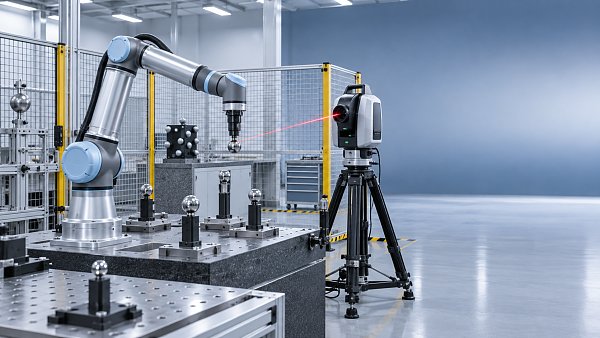
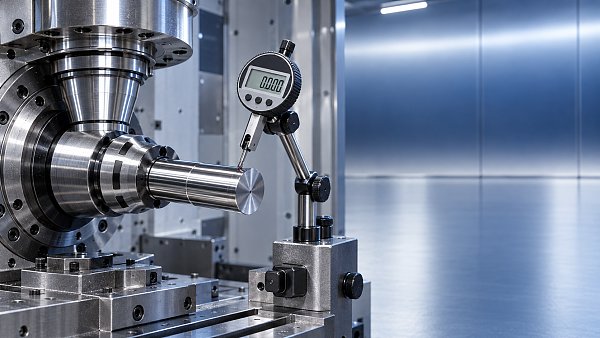
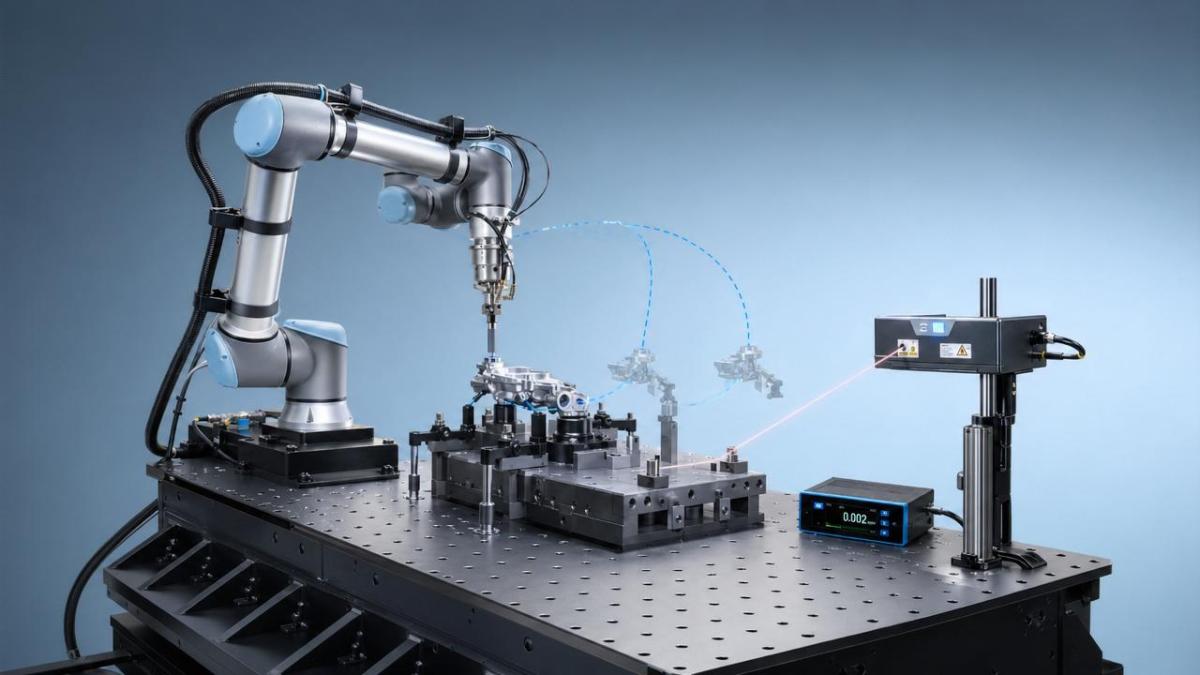
- Measurement instrument: Laser tracker, dial indicator, ballbar, vision metrology, and application-level gauge studies produce different views of the same robot.
- Thermal and environmental noise: Temperature drift, nearby presses, air turbulence, cable drag, and electromagnetic interference can widen measured variation.
- Software mode: Safety limits, smoothing, collision sensitivity, and force-control settings may improve safety but alter motion stability.
Use this judgment standard: ask what kind of repeatability is being benchmarked
A common failure in vendor comparison is treating all repeatability numbers as if they describe the same physical behavior. Technical evaluators should separate at least four benchmark categories.
1. Point repeatability
This is the familiar datasheet figure and often the best-looking value. It describes how consistently the robot can return to the same programmed point under defined conditions. It is useful, but it does not fully predict sealant bead quality, weld seam consistency, or insertion success across tolerance stacks.
2. Path repeatability
This measures how consistently the robot follows a trajectory, not just the endpoint. For polishing, dispensing, cutting, and vision scanning, path behavior often matters more than point behavior. Many collaborative robots repeatability benchmarks look weaker here because blended motion amplifies joint compliance and control-loop limitations.
3. Process repeatability
This is the production-level metric that should matter most: repeated output quality under actual tooling, workholding, cycle time, and part variability. A robot may be highly repeatable in metrology space but less repeatable in the real process because tool wear, spindle load, cable forces, and part presentation dominate the error budget.
4. System repeatability
This includes the full cell: robot, gripper, vision, feeder, fixture, safety settings, PLC timing, and operator interaction. For technical assessments, this is often the most honest benchmark. It explains why two integrators using the same arm can report very different outcomes.
Task-by-task checklist: where benchmark gaps usually appear
Pick-and-place and packaging
These tasks may tolerate moderate path error if the pick window and drop zone are forgiving. However, benchmark variation appears when acceleration rises, boxes shift, suction cups flex, or mobile bases add vibration. In such cells, collaborative robots repeatability benchmarks should be paired with throughput tests and gripper compliance analysis.
Machine tending
Door position, chuck tolerance, part seating, and gripper finger wear often drive real variation more than the robot arm itself. Evaluators should inspect insertion angles, approach velocity, and whether the benchmark includes repeated door cycles and thermal growth from the machine tool environment.
Dispensing, gluing, and welding
Here path repeatability and orientation stability are critical. A robot with an excellent point benchmark can still underperform if wrist oscillation, corner smoothing, or speed fluctuation changes the process bead or heat input. Ask for tests over representative path lengths and curvature, not just static return-point numbers.
Screwdriving and precision assembly
Force interaction changes the benchmark picture. Once contact begins, compliance in the arm, tool, and fixture can help or hurt success. In these tasks, collaborative robots repeatability benchmarks should be combined with insertion force curves, torque-angle data, and misalignment recovery tests.
Vision-guided handling
Many teams blame robot repeatability for errors caused by calibration drift, lens distortion, lighting changes, or timestamp latency between image capture and motion execution. If the benchmark involves vision, demand separation of camera error, robot error, and fixture error.
A practical evaluation table for technical assessment teams
Common blind spots that distort collaborative robots repeatability benchmarks
- Confusing repeatability with accuracy. A robot can return consistently to the wrong point and still show excellent repeatability.
- Ignoring warm-up effects. Bearings, gearboxes, and drives may behave differently after thermal stabilization.
- Using ideal fixtures during testing, then deploying into flexible or operator-loaded fixtures in production.
- Skipping cable and hose influence. Dress packs can introduce changing forces that affect the wrist and endpoint.
- Comparing ISO-style figures with application-level gauge studies without clarifying the statistical basis.
- Overlooking safety settings. Reduced speed, safe zones, and collision thresholds can materially change motion behavior.
Execution advice: how to run a fair benchmark before supplier selection
- Define the process-critical output first: insertion success, seam width, bead uniformity, pick yield, or Cpk.
- Translate that output into a measurable robot requirement: point consistency, path deviation, orientation stability, or contact-force control.
- Test the robot with production-realistic payload, tool geometry, cable routing, and mounting stiffness.
- Measure performance across multiple workspace zones, especially extended reach and awkward joint configurations.
- Run enough cycles to reveal drift, not just a short demonstration. Include start-up, warm, and end-of-shift conditions.
- Separate robot-arm performance from cell-level performance so root causes remain visible.
What technical evaluators should prepare before asking vendors for data
To make collaborative robots repeatability benchmarks useful, procurement and engineering teams should provide vendors with a clear test brief. Include payload mass, tool center point, center of gravity, required reach, cycle time, part tolerance, mounting concept, environmental constraints, and whether the process is point-based or path-based. Also specify acceptable statistical evidence such as sample count, confidence level, and whether you need raw traces or only summary values.
This approach shortens qualification cycles and reduces the risk of selecting a robot on an attractive but irrelevant benchmark. It also aligns with TSV’s data-first view of hard-tech evaluation: benchmark numbers matter only when they survive application reality.
Conclusion: benchmark the task, not just the robot
The reason collaborative robots repeatability benchmarks vary across tasks is simple: the task changes the error budget. Payload, posture, dynamics, tooling, fixture compliance, software settings, and environmental disturbance all reshape the final result. For technical assessment personnel, the best decision framework is a checklist that distinguishes point, path, process, and system repeatability, then tests each under realistic operating conditions.
If your team needs to move from generic vendor comparison to engineering-grade validation, the next step is to prepare a structured benchmark request. Prioritize the actual application, target tolerances, takt time, measurement method, acceptance threshold, and expected service environment. Those are the questions that should be clarified first when discussing parameters, solution fit, implementation timing, budget exposure, and supplier cooperation models.
Search News
Hot Articles
- Carbon Fiber StructuresHow to Specify Aerospace Carbon Fiber Assemblies for Lightweight, Load-Bearing PartsJul 11, 2026
- Machine VisionXiaomi, Alibaba DAMO Academy Drive Open-Source Robotics Model Ecosystem, Lowering Algorithm Development Barriers for Overseas SMEs Adopting Chinese Robotics SolutionsMar 30, 2026
- Cobots & ArmsShanxi 'AI+' Conference Showcases Embodied Intelligence with Multinational Buyer Engagement: Key Industry ImplicationsMar 30, 2026
Popular Tags
Recommended News
 Jul 11, 2026How to Specify Aerospace Carbon Fiber Assemblies for Lightweight, Load-Bearing PartsAerospace carbon fiber assemblies: learn how to specify laminate design, load data, joining methods, and inspection controls for lighter, reliable load-bearing aerospace parts.Elena Rostova (UAV Systems Researcher)
 Mar 30, 2026Xiaomi, Alibaba DAMO Academy Drive Open-Source Robotics Model Ecosystem, Lowering Algorithm Development Barriers for Overseas SMEs Adopting Chinese Robotics SolutionsXiaomi & Alibaba DAMO Academy's open-source robotics models lower algorithm barriers for global SMEs. Boost efficiency in manufacturing, logistics & smart retail with ROS 2 compatible solutions.TSV Data Lab
 Mar 30, 2026Shanxi 'AI+' Conference Showcases Embodied Intelligence with Multinational Buyer Engagement: Key Industry ImplicationsShanxi 'AI+' Conference highlights embodied intelligence with Tesla, Ubtech & Jiantao showcasing multimodal robotics. 40+ global buyers validated tech on-site, creating new B2B channels for industrial automation & AI solutions.Chen Wei (Automation Lead Engineer)
 Mar 30, 2026Zhongguancun Unveils 6G Integrated Sensing-Computing-Intelligence Platform to Empower Embodied Robots for Global Industrial ApplicationsZhongguancun's new 6G platform revolutionizes industrial robotics with <10ms latency, empowering global automotive, logistics & port automation. Discover how this tech boosts China's smart manufacturing exports.TSV Data Lab
 Mar 30, 2026Mech-Mind Tianjin Embodied Intelligence R&D and Production Base Goes Live, Cutting Delivery Time by 20%–30% for Global Customized AMR+Vision SolutionsMech-Mind's Tianjin AMR+Vision production base cuts delivery time by 20%-30% for欧美 & Latin American markets. Discover how this PLd-certified facility accelerates customized robotics solutions for smart manufacturing and logistics.Chen Wei (Automation Lead Engineer)
 Mar 30, 2026Boao Forum Reveals 'Co-evolution of Big and Small Brains' Trend in Humanoid Robots, China's Embodied Intelligence Accelerates Adaptation to Overseas Manufacturing Service ScenariosDiscover how China's humanoid robots, featuring 'Co-evolution of Big and Small Brains,' are revolutionizing global manufacturing. Learn about Embodied Tian Gong 3.0's ISO compliance and overseas deployment at Boao Forum 2026.Chen Wei (Automation Lead Engineer)
 Mar 30, 2026China Railway Industrial Secures Patent for Embodied Robotics in Material Handling, Boosting High-Precision Delivery Capabilities for Overseas Infrastructure and Manufacturing ProjectsChina Railway Industrial's new patent for embodied robotics in material handling boosts high-precision delivery for global infrastructure & manufacturing. Discover how this innovation enhances logistics accuracy in automotive, rail transit & EPC projects.Chen Wei (Automation Lead Engineer)
 Sep 29, 2026ISO 9283 Repeatability: How to Evaluate Cobot Positioning PerformanceISO 9283 cobot repeatability explained: learn how payload, reach, approach direction, and test conditions affect positioning performance and cell capability.Chen Wei (Automation Lead Engineer)
 Sep 29, 2026How Do You Verify Servo Motor Torque Under Continuous Load?How do I verify servo motor torque under continuous load? Learn RMS torque checks, torque-speed limits, thermal derating, and real-machine testing.Chen Wei (Automation Lead Engineer)
 Sep 28, 2026Spindle Runout Measurement in Germany: DIN Standards, Methods, and Acceptance LimitsSpindle runout measurement Germany: explore DIN standards, proven methods, acceptance limits, and audit-ready practices for reliable machining quality.Dr. Marcus Vance
 Sep 27, 2026How to Select Wall-Mount Edge Devices for Space-Constrained Factory NetworksWall mount edge devices for space-constrained factories: evaluate workload, thermal design, power resilience, cable access, and network reliability for smarter deployments.TSV Data Lab
 Sep 26, 2026Machining Tolerance Analysis: How to Set Limits That Meet Function and Cost TargetsMachining tolerance analysis: learn how to set functional limits, control tolerance stacks, reduce inspection risk, and balance precision with production cost.Dr. Marcus Vance
 Sep 25, 2026How to Evaluate an Industrial Infrastructure Data Platform for Multi-Site OperationsIndustrial infrastructure data platform evaluation guide for multi-site operations: compare data quality, edge resilience, interoperability, governance, and scalable proof-of-value criteria.Victor Lin (Chief Software Architect)
 Sep 24, 2026How to Select Machine Vision Optics for Accurate Inspection at Different Working DistancesMachine vision optics selection guide for accurate inspection at every working distance. Compare FOV, pixel scale, DOF, distortion, lighting, and telecentric options.TSV Data Lab
 Sep 23, 2026How to Evaluate a Machine Vision System Integrator for High-Speed Inspection LinesChoose a machine vision system integrator with proven expertise in high-speed inspection, reliable reject timing, robust optics, and measurable acceptance criteria.TSV Data Lab
 Sep 29, 2026How MES and OEE work together to identify production lossesMES and OEE work together to uncover hidden production losses, connect downtime, speed, and quality data, and drive smarter shop-floor improvements.Victor Lin (Chief Software Architect)
 Sep 28, 2026When is a SCADA API the right choice for connecting plant systems?SCADA API guide: learn when governed plant data integration improves traceability, security, and scalability—without compromising real-time control.Victor Lin (Chief Software Architect)
 Sep 27, 2026How SCADA data integration improves traceability across production linesSCADA data integration connects production-line data to improve traceability, accelerate quality investigations, and strengthen safety decisions.Victor Lin (Chief Software Architect)
 Sep 26, 2026What to define before starting SCADA integration planningSCADA integration planning starts with clear scope, control boundaries, data models, cybersecurity, and testing. Discover the definitions that reduce risk and costly rework.Victor Lin (Chief Software Architect)
 Sep 25, 2026How a smart factory with Industrial IoT reduces production blind spotsDiscover how a smart factory with Industrial IoT turns real-time machine, quality, and workflow data into actionable insights that reduce production blind spots and delivery risks.Victor Lin (Chief Software Architect)
 Sep 24, 2026When does Industrial IoT make smart manufacturing easier to scale?Smart manufacturing Industrial IoT scales when trusted data, interoperable systems, and secure workflows turn connected assets into measurable gains.TSV Data Lab
 Sep 23, 2026What drives ultra-precision machining cost at 1-micron tolerance?Ultra precision machining cost per part at 1 micron tolerance depends on process, material, metrology, and yield. Learn how to compare quotes confidently.Dr. Marcus Vance
 Sep 22, 2026Drone Engine-T550CC Applications: Build the UAV Power System Around the MissionAn application guide for Drone Engine-T550CC integration, covering payload planning, airframe matching, cooling, fuel, vibration, test procedures, documentation, and service preparation.Elena Rostova (UAV Systems Researcher)
 Sep 22, 2026How to Evaluate Industrial Edge Computing Vendors for Factory DeploymentIndustrial edge computing vendor evaluation guide for factories: compare latency, protocol fit, reliability, security, and lifecycle support before deployment.TSV Data Lab