Welding Robot Arm Price: What Changes the Quote More Than You Expect
Publication Date
author
For finance approvers, welding robot arm price is rarely driven by the robot alone. The final quote can shift sharply based on payload, reach, welding power source, integration complexity, safety systems, and long-term maintenance risk. This guide breaks down the hidden cost drivers behind vendor pricing so you can compare proposals with greater confidence and avoid expensive assumptions before approval.
Why the welding robot arm price often moves far beyond the base robot
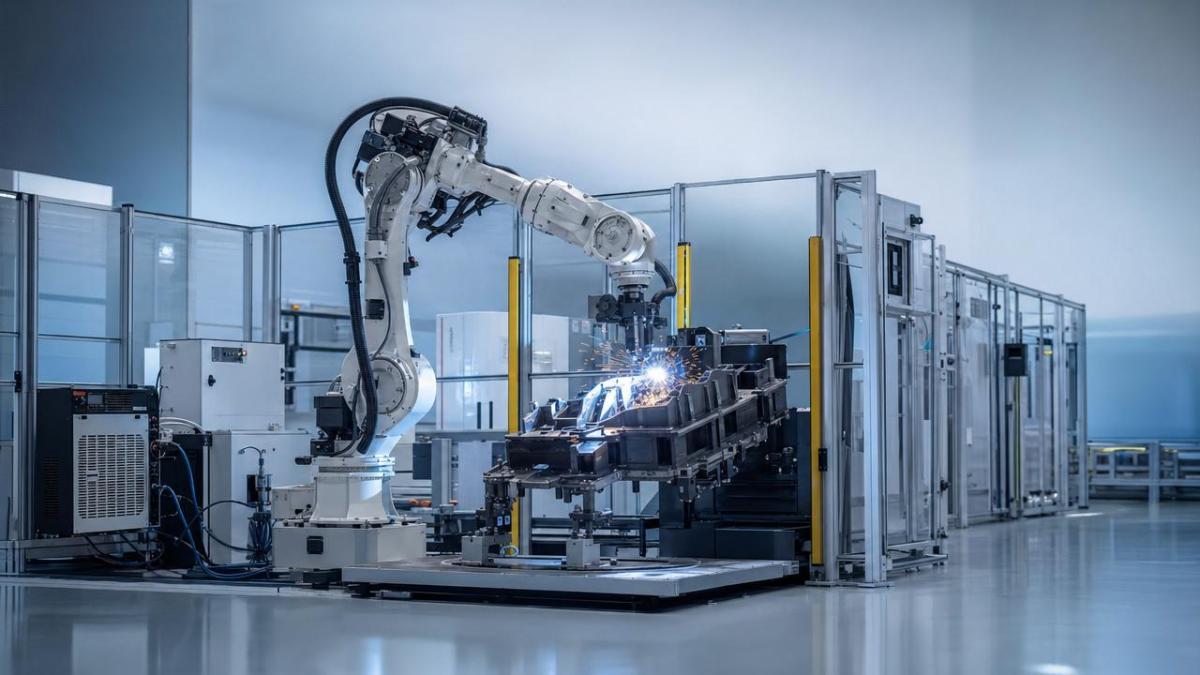
A finance team reviewing automation proposals usually sees one visible number first: the robot arm itself. In practice, the welding robot arm price is a system price, not a single component price. The quoted amount may cover the manipulator, controller, teach pendant, welding package, fixture interface, safety fencing, programming, commissioning, and operator training. If one vendor includes these elements while another excludes three or four of them, the lower quote may be misleading rather than economical.
This is where disciplined technical filtering matters. In TSV’s view, parameters do not lie. A quote for a 6-axis robot with 10 kg payload and 1.4 m reach should not be compared directly against a proposal built for 20 kg payload, 1.8 m reach, multi-station welding, and offline programming support. For a finance approver, the first task is to normalize the scope into comparable line items across 3 categories: hardware, integration, and lifecycle support.
In many industrial procurement cases, the robot body may represent only 35%–55% of the total project cost. The balance can sit in welding peripherals, safety systems, electrical design, software integration, and installation labor. That ratio changes further in high-mix production, where part variation increases fixture complexity and programming hours. This is why two quotations for an apparently similar welding cell can differ by 20%–60% without either supplier being irrational.
For CFOs, controllers, and capital approval committees, the practical question is not “What is the cheapest robot?” but “Which quote best matches production demand, risk tolerance, and expected payback period over 3–5 years?” Asking that question early prevents under-scoped purchasing and avoids a second approval cycle later.
What finance approvers should separate before comparing proposals
- Base robot package: arm, controller, cabling, standard teach interface, and listed payload or reach configuration.
- Welding process package: power source, torch, wire feeder, torch cleaner, seam tracking, and cooling options.
- Cell-level cost: fixtures, positioners, safety enclosure, extraction, electrical cabinet work, and commissioning.
- Lifecycle cost: spares, preventive maintenance, software support, operator training refresh, and downtime exposure.
Once these layers are separated, proposal review becomes more objective. It also aligns with TSV’s engineering-first approach: remove marketing language, isolate measurable variables, and compare operational consequences instead of slogans.
Which technical parameters change the quote the most?
Not every specification affects cost equally. In most procurement reviews, 5 factors move the welding robot arm price more than expected: payload, reach, duty cycle, welding process complexity, and positional accuracy under real production conditions. A robot selected only on nominal capacity can become expensive if the actual weld torch, cable set, anti-collision device, and mounting geometry push the arm near its dynamic limits.
Payload is a common source of hidden overspending. If the application needs only a torch package and light cable management, a higher payload class may add cost without improving throughput. Yet under-sizing also creates risk. A robot rated for 8 kg may look sufficient on paper, but once dress pack, torch reamer interaction, and repetitive acceleration are considered, the safer selection may move into the 10–12 kg range. That difference can materially change the final quote.
Reach has a similar effect. A longer arm can reduce repositioning or support multi-fixture access, but it can also increase cost, floor space requirements, and safety envelope size. Finance approvers should ask whether the extra 200–400 mm of reach creates measurable value, such as eliminating a second station or reducing manual loading interruptions. If not, the specification may be overbuilt.
Welding process type also matters. MIG/MAG, TIG, laser-hybrid, or thick-section arc welding do not create the same system architecture. Higher-end process control may require advanced power sources, seam tracking, cooling systems, and more extensive parameter validation. Those additions often affect integration hours more than the mechanical arm cost itself.
Cost-impact view of common quote variables
The table below helps finance teams identify which parameters most often explain quote divergence when suppliers appear to offer a similar welding robot arm price.
The key takeaway is simple: if the quote difference is large, do not start with brand assumptions. Start with scope normalization and parameter alignment. A lower nominal welding robot arm price can still produce a higher total installed cost if it requires added tooling, slower commissioning, or a future retrofit.
A practical approval question set
- Does the payload include torch, dress pack, anti-collision hardware, and dynamic acceleration margin?
- Is the stated repeatability relevant to actual part fit-up tolerance and fixture quality?
- Will added reach remove a secondary handling step or only increase the cell footprint?
- Is the selected welding package standard, pulse, tandem, or application-specific?
Why integration, safety, and installation can outweigh the arm cost
For many approval teams, the surprise is not the robot line item but the integration section. A welding cell is an engineered production asset. It needs layout planning, fixture interface, process parameter tuning, cable routing, interlocks, and acceptance criteria. When workpieces vary across 10 or 20 part families, programming and validation can consume more budget than a small difference in robot brand.
Safety is another major driver. A collaborative marketing message should not be mistaken for a low-cost safety design. In welding applications, arc flash, fumes, hot spatter, moving axes, and rotating positioners often require more than simple area scanning. Depending on the cell, safety scope may include fences, light curtains, door interlocks, emergency stop circuits, extraction interfaces, and documented risk assessment under applicable machine safety practices.
Installation conditions also affect the welding robot arm price. Floor flatness, utility readiness, power quality, gas supply routing, and extraction placement can shift project cost and timeline by 1–3 weeks. If plant-side preparation is weak, the integrator either prices in contingency or returns later with change orders. Finance approvers should insist on a site-preparation checklist before approving the budget.
This is exactly where data-driven procurement reduces noise. TSV-style evaluation does not stop at brochure specifications. It asks for measurable installation assumptions, acceptance boundaries, and escalation paths if the line cannot reach target output during commissioning.
Typical quote elements outside the robot arm
When comparing welding robot arm price proposals, finance teams can use the matrix below to identify non-robot cost centers that frequently create approval risk.
A quote that excludes two or three of these items may look attractive at approval stage but become more expensive after revision. Good financial control is not only about negotiating unit price. It is about locking the system boundary before capital release.
A 4-step review sequence for capital approval
- Confirm process scope: material type, joint type, part count, shift pattern, and expected daily throughput.
- Validate site assumptions: power, gas, floor space, extraction, and loading method.
- Normalize cost lines: robot, weld package, fixtures, safety, integration, and training.
- Link payment to acceptance milestones: factory acceptance, site installation, process validation, and output stability.
How to compare low-price and full-scope proposals without making a false saving
A common procurement mistake is treating all welding robot arm price quotes as if they represent the same deliverable. They rarely do. One supplier may bid a basic cell intended for internal engineering support, while another prices a turnkey package with process tuning and acceptance documents. The first looks cheaper; the second may be cheaper in total risk-adjusted cost.
For finance approvers, the right comparison model is total cost of deployment over 12–36 months. That means combining purchase price with startup delay risk, scrap exposure, maintenance burden, software dependency, and future expansion cost. In sectors with fluctuating order mix, the ability to reprogram quickly or add a second fixture later may justify a higher initial quote.
This approach is especially important in a mixed industrial environment. A fabricator serving construction equipment, agricultural machinery, energy components, or transport assemblies may not need aerospace-grade precision everywhere, but it still needs predictable throughput and documented process control. A financially sound quote is one that matches production reality, not one that simply wins the first spreadsheet comparison.
At TSV, this is the core discipline: use engineering benchmarks to reduce trial-and-error cost. The finance function benefits when technical teams are required to justify each premium with a measurable operational outcome such as reduced fixture changeover, lower rework frequency, or shorter commissioning.
Comparison logic for quote approval
- If annual volume is stable and part geometry is simple, a standard arc welding cell may be enough, provided the quote includes safety and training.
- If product mix changes weekly, offline programming and fixture strategy often matter more than a small reduction in robot list price.
- If downtime cost is high, spare part access, service response terms, and controller familiarity should be valued explicitly.
- If compliance review is strict, documented safety integration and acceptance protocols reduce hidden approval risk.
What a “cheap” quote may actually be missing
Low quotes often omit fixture refinement, sample weld validation, operator training depth, software licenses, or post-startup support during the first 30–90 days. None of these items is glamorous, but each one affects the real operating cost of a welding robot arm price decision. Finance teams should treat omissions as deferred cost, not cost elimination.
Another warning sign is vague language such as “subject to final process confirmation” without a defined change-control mechanism. If the process is not frozen, the quote should clearly state which technical assumptions are fixed and which may trigger additional charges.
FAQ: what finance approvers usually ask before approving a welding robot arm price
How long is the normal delivery and commissioning cycle?
For a standard welding cell, hardware lead time may fall in the 6–12 week range, while full integration and site commissioning can add another 2–6 weeks depending on fixtures, safety scope, and plant readiness. Custom tooling, imported components, or software-heavy programming can extend this further. Approval should therefore consider both cash timing and production start timing.
Should a finance team approve based on ROI alone?
ROI matters, but it should not stand alone. A sound review combines 4 lenses: capital cost, deployment risk, operating stability, and scalability. A project with a nominally stronger ROI can still fail if startup slips by 8 weeks, if scrap remains high due to poor fixturing, or if maintenance support is weak. Financial approval works best when the technical team supplies assumptions that are testable.
Which standards or compliance topics should be discussed early?
Requirements vary by region and plant policy, but discussion usually includes machine safety design, risk assessment, electrical integration practices, fume extraction considerations, and documented acceptance procedures. If the welded product enters regulated sectors such as transport, energy, medical support equipment, or aerospace sub-tier supply, traceability expectations may also influence software and documentation scope.
When does a higher welding robot arm price make sense?
A higher price may be justified when it removes a second fixture station, shortens setup, supports more part families, improves uptime, or reduces dependency on a single programmer. It may also be justified when a vendor provides a better-defined acceptance plan and support structure. Higher cost is not automatically better, but unexplained low cost is often a warning signal.
Why choose TSV when evaluating welding robot arm price and supplier quotes?
TechStat Vanguard is built for one purpose: filtering noise out of hard-tech procurement. In automation sourcing, that means separating marketing claims from measurable engineering variables. For finance approvers reviewing a welding robot arm price, our value is not generic promotion. It is structured technical clarity that helps your team compare proposals on scope, risk, parameter logic, and implementation realism.
We support evaluation across the factors that most influence approval quality: payload and reach matching, power source scope, safety architecture, commissioning assumptions, and lifecycle exposure. This is especially useful when multiple vendors present different quote structures and internal stakeholders cannot easily tell whether a premium is justified or a low quote is incomplete.
If your team is preparing for budget approval, supplier negotiation, or technical clarification, you can contact TSV for practical guidance on 6 key items: parameter confirmation, quote scope normalization, delivery timeline review, customization boundaries, compliance discussion, and risk-focused comparison of alternative configurations. This shortens qualification cycles and reduces the chance of approving an attractive number that later becomes a costly exception.
Bring us your current supplier quotations, your expected throughput, your part family complexity, and your site constraints. We can help your team frame the right questions before release of capital, so the final welding robot arm price decision is based on engineering truth rather than sales language.
Search News
Hot Articles
- Carbon Fiber StructuresHow to Specify Aerospace Carbon Fiber Assemblies for Lightweight, Load-Bearing PartsJul 11, 2026
- Machine VisionXiaomi, Alibaba DAMO Academy Drive Open-Source Robotics Model Ecosystem, Lowering Algorithm Development Barriers for Overseas SMEs Adopting Chinese Robotics SolutionsMar 30, 2026
- Cobots & ArmsShanxi 'AI+' Conference Showcases Embodied Intelligence with Multinational Buyer Engagement: Key Industry ImplicationsMar 30, 2026
Popular Tags
Recommended News
 Jul 11, 2026How to Specify Aerospace Carbon Fiber Assemblies for Lightweight, Load-Bearing PartsAerospace carbon fiber assemblies: learn how to specify laminate design, load data, joining methods, and inspection controls for lighter, reliable load-bearing aerospace parts.Elena Rostova (UAV Systems Researcher)
 Mar 30, 2026Xiaomi, Alibaba DAMO Academy Drive Open-Source Robotics Model Ecosystem, Lowering Algorithm Development Barriers for Overseas SMEs Adopting Chinese Robotics SolutionsXiaomi & Alibaba DAMO Academy's open-source robotics models lower algorithm barriers for global SMEs. Boost efficiency in manufacturing, logistics & smart retail with ROS 2 compatible solutions.TSV Data Lab
 Mar 30, 2026Shanxi 'AI+' Conference Showcases Embodied Intelligence with Multinational Buyer Engagement: Key Industry ImplicationsShanxi 'AI+' Conference highlights embodied intelligence with Tesla, Ubtech & Jiantao showcasing multimodal robotics. 40+ global buyers validated tech on-site, creating new B2B channels for industrial automation & AI solutions.Chen Wei (Automation Lead Engineer)
 Mar 30, 2026Zhongguancun Unveils 6G Integrated Sensing-Computing-Intelligence Platform to Empower Embodied Robots for Global Industrial ApplicationsZhongguancun's new 6G platform revolutionizes industrial robotics with <10ms latency, empowering global automotive, logistics & port automation. Discover how this tech boosts China's smart manufacturing exports.TSV Data Lab
 Mar 30, 2026Mech-Mind Tianjin Embodied Intelligence R&D and Production Base Goes Live, Cutting Delivery Time by 20%–30% for Global Customized AMR+Vision SolutionsMech-Mind's Tianjin AMR+Vision production base cuts delivery time by 20%-30% for欧美 & Latin American markets. Discover how this PLd-certified facility accelerates customized robotics solutions for smart manufacturing and logistics.Chen Wei (Automation Lead Engineer)
 Mar 30, 2026Boao Forum Reveals 'Co-evolution of Big and Small Brains' Trend in Humanoid Robots, China's Embodied Intelligence Accelerates Adaptation to Overseas Manufacturing Service ScenariosDiscover how China's humanoid robots, featuring 'Co-evolution of Big and Small Brains,' are revolutionizing global manufacturing. Learn about Embodied Tian Gong 3.0's ISO compliance and overseas deployment at Boao Forum 2026.Chen Wei (Automation Lead Engineer)
 Mar 30, 2026China Railway Industrial Secures Patent for Embodied Robotics in Material Handling, Boosting High-Precision Delivery Capabilities for Overseas Infrastructure and Manufacturing ProjectsChina Railway Industrial's new patent for embodied robotics in material handling boosts high-precision delivery for global infrastructure & manufacturing. Discover how this innovation enhances logistics accuracy in automotive, rail transit & EPC projects.Chen Wei (Automation Lead Engineer)
 Oct 29, 2026Aerospace Aluminum Alloy Strength: 2024-T3 vs. 7075-T6 ComparedCompare aerospace aluminum alloy strength in 2024-T3 vs. 7075-T6. Explore fatigue, corrosion, and weight trade-offs to choose the right alloy for your design.Dr. Marcus Vance
 Oct 28, 2026IDC: Global Quadruped Robot Shipments Rise 92.5% in H1 2026 as Volume and Value DivergeGlobal quadruped robot shipments rose 92.5% in H1 2026, according to IDC. Explore what diverging volume and value trends mean for industrial buyers and manufacturers.Chen Wei (Automation Lead Engineer)
 Oct 28, 2026Interpreting Industrial IoT Latency Data for Monitoring and Real-Time ControlInterpret industrial category latency data to assess jitter, deadline misses, and real-time readiness. Learn how to benchmark IIoT systems and choose monitoring and control solutions.TSV Data Lab
 Oct 27, 2026GXO and Agility Robotics Expand Partnership to Accelerate US Humanoid Robot DeploymentGXO and Agility Robotics plan to expand US humanoid robot deployment with Digit 4 in early 2027. Explore warehouse automation plans, service terms and future Digit 5 upgrades.Chen Wei (Automation Lead Engineer)
 Oct 27, 2026Robotic Automation Costs: Budgeting for Equipment, Integration, and MaintenancePlan your robotics automation cost with confidence. Explore equipment, integration, and maintenance expenses, compare quotes, and build a realistic budget for better ROI.Chen Wei (Automation Lead Engineer)
 Oct 26, 2026AMAXiMAL Releases Open-Source TopMod 3D v3 With Claude AIExplore AMAXiMAL’s free, open-source TopMod 3D v3 with Claude AI assistance, topology-based modeling and plywood fabrication tools that connect complex designs to physical builds.Dr. Marcus Vance
 Oct 26, 2026Choosing a SCADA System Integrator Company: PLC Compatibility and Long-Term SupportChoose a scada system integrator company with proven PLC compatibility and reliable long-term support. Discover what to test, compare, and require before investing.Victor Lin (Chief Software Architect)
 Oct 25, 2026Hesai Leads Global ADAS Main Lidar Shipments in Yole’s 2026 ReportHesai led global ADAS main lidar shipments with a 43% share in 2025, according to Yole’s 2026 report. Explore what this ranking reveals about its automotive market position.TSV Data Lab
 Oct 25, 2026Choosing an Aerospace Materials Manufacturer: Quality and Traceability ChecksChoosing an aerospace materials manufacturer? Learn how to verify certifications, test reports, and lot traceability to qualify suppliers confidently and reduce costly sourcing risks.Dr. Marcus Vance
 Oct 24, 2026Guotai Haitong: Global Entry-Level 3D Printer Shipments Rose 39% in Q1 2026Entry-level 3D printer shipments rose 39% in Q1 2026, Guotai Haitong reports. Explore how AI, multicolor printing and print farms are shaping market growth.Dr. Marcus Vance
 Oct 24, 2026Choosing an Industrial Vision Inspection Supplier: Acceptance Tests That MatterChoose an industrial vision inspection supplier with confidence. Discover acceptance tests for defect detection, false rejects, production speed, and reliable part rejection before you buy.TSV Data Lab
 Oct 23, 2026US Navy Raises Gecko Robotics Contract Ceiling to $300M for Robotic Fleet MaintenanceUS Navy raises Gecko Robotics’ contract ceiling to $300M for Pacific Fleet robotic inspections. Explore potential opportunities for maintenance suppliers and key procurement considerations.Chen Wei (Automation Lead Engineer)
 Oct 23, 2026Choosing Industrial Sensing Systems for Global Plants: Protocol CompatibilityCompare industrial sensing systems international buyers can trust. Explore protocol compatibility, reduce integration risks, and select proven configurations for reliable global plant deployments.TSV Data Lab
 Oct 22, 2026KUKA Showcases Physical AI and iiQKA.AI Vision at NVIDIA GTC BerlinExplore KUKA’s Physical AI showcase at NVIDIA GTC Berlin and discover how iiQKA.AI Vision aims to simplify robotic vision integration and improve 2D and 3D scene recognition.TSV Data Lab
 Oct 22, 2026Robotic Machining of Advanced Composites: What Tolerances Are Achievable?Explore advanced materials machining robotics: discover what drives achievable composite tolerances and how to validate accuracy before investing in your next machining system.Dr. Marcus Vance
 Oct 21, 2026China’s Industrial Robot Exports Near RMB 10 Billion in First Nine Months of 2026China’s industrial robot exports neared RMB 10 billion in January–September 2026, with value rising faster than volume. Explore the data and what it could mean for suppliers.Chen Wei (Automation Lead Engineer)
 Oct 21, 2026Low-Latency Industrial Data Processing: Pricing and Key Cost DriversExplore industrial data latency price drivers, from edge hardware to integration and support. Learn how to compare quotes, verify performance, and avoid unnecessary costs.TSV Data Lab