How to Read a Welding Robot Arm Price Quote Before You Approve It
Publication Date
author
A welding robot arm price quote can look straightforward until hidden variables start affecting total cost, integration risk, and long-term ROI. For business evaluators, reading a welding robot arm price proposal correctly means looking beyond the headline number to payload class, reach, controller options, duty cycle, safety package, and after-sales commitments. This guide shows how to decode each line item before approval.
Why quote review changes by application scenario
The same welding robot arm price can be reasonable in one factory and completely misaligned in another. A thin-sheet furniture producer, an automotive parts supplier, and a heavy steel fabricator may all request robotic welding, yet their operating realities are not comparable. Cycle time, weld consistency, part size variation, fixture complexity, and uptime expectations all change what a quote should contain.
For business evaluators, the central mistake is approving a proposal based only on capital expenditure. In practice, the true financial decision sits at the intersection of equipment price, commissioning effort, training burden, rework reduction, and expected service life. A lower initial welding robot arm price can create a higher total cost if the system needs custom guarding, additional tracks, premium torches, or repeated software tuning after installation.
That is why scenario-based review matters. Instead of asking, “Is this quote cheap or expensive?” ask, “Is this quote complete for our production environment?” When this framing is used, business teams become better at spotting omissions, inflated options, and vendor assumptions that could later turn into change orders.
Three quote-reading principles for evaluators
- Match the quoted robot specification to the real welding application, not the sales brochure.
- Separate standard package pricing from integration, tooling, and service costs.
- Evaluate commercial risk and technical risk together before approving the welding robot arm price.
What often gets missed in first-pass reviews
Many first-pass reviews focus on robot brand, arm size, and total number. However, quote quality often depends more on peripheral scope: welding power source compatibility, torch cleaning station, seam tracking, positioners, extraction, spare consumables, offline programming licenses, and warranty response terms. These items determine whether the quoted system can move from procurement to stable production with minimal disruption.
Typical scenarios where a welding robot arm price means different things
To evaluate a welding robot arm price correctly, start with the production scenario. A quote for repetitive, high-volume welding should look very different from one designed for high-mix, low-volume production. The same applies when comparing light-gauge materials with heavy structural steel or compact cells with extended-reach systems.
Below are common business situations where quote structure and cost drivers shift significantly. Reviewing line items in the context of these scenarios helps evaluators understand whether a proposal is engineered for fit or simply priced to win.
If your supplier does not clearly connect system design to operating conditions, the quoted welding robot arm price may be incomplete. A precise vendor should explain why each option exists and what production problem it solves.
Scenario 1: High-volume repetitive welding lines
In repetitive manufacturing, the welding robot arm price should be judged against throughput stability. If the line runs the same parts daily, the value of a quote is not only in the robot arm but in the speed and repeatability of the full cell. Here, underpriced quotes may omit dual-axis positioners, anti-collision torch packages, torch cleaning units, or spare wear parts needed to sustain takt time.
Business evaluators should ask whether the quoted configuration supports target output without operator bottlenecks. A lower-cost robot with slower programming logic or reduced integration depth can erode gains through downtime. In this scenario, the best welding robot arm price often includes more automation accessories because those add-ons directly protect output economics.
Also review acceptance criteria. If the supplier guarantees cycle performance, first-pass yield, or weld bead consistency, a higher quote can still be commercially safer than a low number with vague commissioning boundaries.
Scenario 2: High-mix, low-volume fabrication
For job shops and flexible production environments, the right welding robot arm price depends on changeover efficiency. A quote that appears expensive may include offline programming tools, intuitive HMI functions, quick fixture interfaces, or seam finding systems that reduce setup time across varied parts.
In this scenario, the main risk is buying a system optimized for repetition instead of adaptability. Evaluators should confirm how new weld paths are created, who owns the programming files, and whether training covers in-house modification. If each product change requires paid vendor support, the initial welding robot arm price will understate future operating cost.
A practical review point is the balance between automation depth and human skill. Flexible cells often deliver better ROI when they are easy to reprogram rather than highly customized for one geometry. The quote should reflect that strategy clearly.
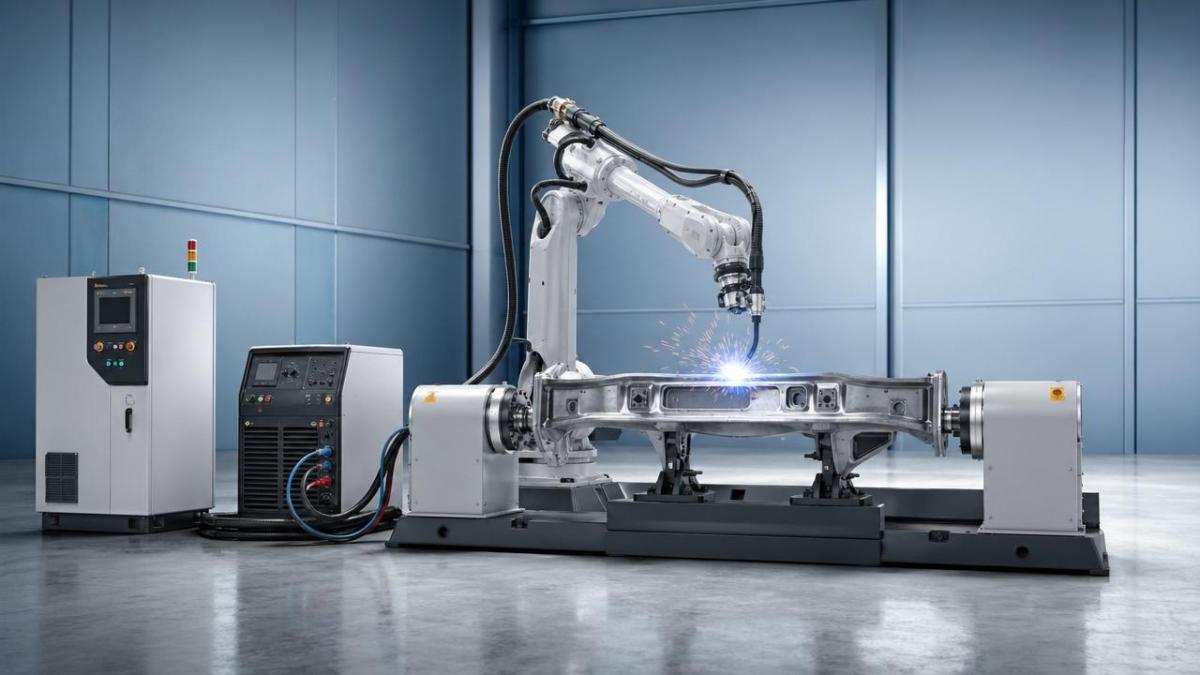
Scenario 3: Heavy steel, large assemblies, or long weld seams
Heavy fabrication changes the meaning of welding robot arm price because reach, payload, and thermal durability become major cost drivers. A larger arm class, floor-mounted track, external axis, or reinforced cable routing can materially change the quote. These are not optional luxuries if part geometry demands them.
Reviewers should verify whether the robot’s working envelope covers the largest part without awkward positioning or excessive reposition cycles. If not, the quote may look attractive but create practical production limits. Safety also becomes more expensive in large-format cells, especially when guarding, interlocks, smoke extraction, and operator access are considered.
For this scenario, insist on a clear scope boundary between standard robot supply and heavy-cell integration. Hidden costs often appear in foundations, cable routing, fixture engineering, and on-site installation time.
How to decode each major line item in a welding robot arm price quote
Once the application scenario is clear, move line by line through the proposal. A well-built welding robot arm price quote should separate hardware, integration, software, safety, service, and commercial terms. If several categories are bundled into one number, comparison becomes difficult and post-approval surprises become more likely.
The purpose of line-item review is not only cost control. It is also fit validation. Every component should answer a production need: payload for torch and cable mass, reach for part geometry, controller features for weld path complexity, and service terms for uptime expectations.
Below is a practical checklist evaluators can use before approving a welding robot arm price proposal.
Core hardware
- Robot arm model, payload, reach, mounting orientation
- Controller generation, teach pendant, communication ports
- Welding power source brand, process compatibility, torch package
- Positioner, rotary table, track, or external axis if required
If the hardware selection is oversized, you may be paying unnecessary capital cost. If undersized, the system may struggle with access, speed, or weld quality. Ask the vendor to justify selection with part drawings, torch angles, and duty-cycle assumptions.
Integration and software scope
- Offline programming license and ownership terms
- PLC, HMI, MES, or ERP connectivity if relevant
- Vision, seam tracking, touch sensing, or adaptive control
- Factory acceptance test and site acceptance test definitions
Software omissions are common reasons a welding robot arm price quote looks competitive. If your operation requires digital traceability or frequent program edits, these functions should not remain ambiguous.
Safety and compliance items
Check guarding, light curtains, interlocks, fume extraction interfaces, and applicable electrical compliance. In many projects, these items move between the robot supplier, the integrator, and the buyer. If ownership is unclear, budget risk rises immediately.
Common quote misjudgments by business evaluators
Approving a welding robot arm price too quickly usually happens because commercial teams rely on summary totals while technical assumptions remain unresolved. This does not mean evaluators must become robotics engineers. It means they need the right questions and comparison framework.
The most frequent misjudgment is comparing two quotes that define scope differently. One supplier may include installation, training, and commissioning, while another prices only the robot package. On paper, the second number looks better. In real procurement, it may be the less complete offer.
Another error is treating warranty language as a minor detail. Response time, spare part availability, remote diagnostics, and technician travel terms all affect operational risk. For production-critical equipment, these items can justify a higher welding robot arm price if they meaningfully reduce downtime exposure.
Red flags that deserve follow-up
- The quote does not define what is excluded.
- Programming, fixture design, or safety validation are described vaguely.
- Cycle time promises appear without test conditions.
- Training is included, but trainee level, duration, and outcomes are missing.
- After-sales support is generic and not tied to SLA expectations.
A practical comparison method
Build a side-by-side matrix with five headings: equipment scope, integration scope, production assumptions, acceptance criteria, and life-cycle support. Then compare every welding robot arm price against the same structure. This method exposes whether a supplier is truly lower cost or simply less explicit.
How to align approval with ROI, risk, and next-step validation
The final approval decision should connect the welding robot arm price to business outcomes. Those outcomes may include labor savings, improved weld repeatability, reduced scrap, safer working conditions, shorter lead times, or increased capacity. The quote should support at least one measurable objective, and ideally several.
For business evaluators, the most reliable path is to request a documented assumption sheet before sign-off. This should include part family range, annual volume, welding process, shift pattern, expected uptime, consumable assumptions, and support coverage. When assumptions are written down, quote comparisons become more objective and contract risk falls.
At TechStat Vanguard’s data-first standard, a decision should be anchored in parameters, not adjectives. If a supplier cannot explain why the quoted welding robot arm price matches your operating scenario, the proposal is not yet ready for approval. A strong quote is not simply affordable; it is technically traceable, commercially transparent, and operationally aligned with your plant reality.
Final approval checklist
- Confirm the quote matches your actual welding scenario and part mix.
- Verify all required hardware, software, safety, and commissioning items.
- Check exclusions, warranty terms, and support response commitments.
- Compare total delivered scope, not just the headline welding robot arm price.
- Approve only after technical assumptions and acceptance criteria are documented.
When to ask for a revised quote
Request revision when the proposal lacks scope clarity, does not reflect your production scenario, or leaves integration ownership uncertain. In many cases, a revised welding robot arm price quote that is slightly higher but fully defined will produce better ROI and a faster path to stable production than an incomplete low-cost offer.
Search News
Hot Articles
- Carbon Fiber StructuresHow to Specify Aerospace Carbon Fiber Assemblies for Lightweight, Load-Bearing PartsJul 11, 2026
- Machine VisionXiaomi, Alibaba DAMO Academy Drive Open-Source Robotics Model Ecosystem, Lowering Algorithm Development Barriers for Overseas SMEs Adopting Chinese Robotics SolutionsMar 30, 2026
- Cobots & ArmsShanxi 'AI+' Conference Showcases Embodied Intelligence with Multinational Buyer Engagement: Key Industry ImplicationsMar 30, 2026
Popular Tags
Recommended News
 Jul 11, 2026How to Specify Aerospace Carbon Fiber Assemblies for Lightweight, Load-Bearing PartsAerospace carbon fiber assemblies: learn how to specify laminate design, load data, joining methods, and inspection controls for lighter, reliable load-bearing aerospace parts.Elena Rostova (UAV Systems Researcher)
 Mar 30, 2026Xiaomi, Alibaba DAMO Academy Drive Open-Source Robotics Model Ecosystem, Lowering Algorithm Development Barriers for Overseas SMEs Adopting Chinese Robotics SolutionsXiaomi & Alibaba DAMO Academy's open-source robotics models lower algorithm barriers for global SMEs. Boost efficiency in manufacturing, logistics & smart retail with ROS 2 compatible solutions.TSV Data Lab
 Mar 30, 2026Shanxi 'AI+' Conference Showcases Embodied Intelligence with Multinational Buyer Engagement: Key Industry ImplicationsShanxi 'AI+' Conference highlights embodied intelligence with Tesla, Ubtech & Jiantao showcasing multimodal robotics. 40+ global buyers validated tech on-site, creating new B2B channels for industrial automation & AI solutions.Chen Wei (Automation Lead Engineer)
 Mar 30, 2026Zhongguancun Unveils 6G Integrated Sensing-Computing-Intelligence Platform to Empower Embodied Robots for Global Industrial ApplicationsZhongguancun's new 6G platform revolutionizes industrial robotics with <10ms latency, empowering global automotive, logistics & port automation. Discover how this tech boosts China's smart manufacturing exports.TSV Data Lab
 Mar 30, 2026Mech-Mind Tianjin Embodied Intelligence R&D and Production Base Goes Live, Cutting Delivery Time by 20%–30% for Global Customized AMR+Vision SolutionsMech-Mind's Tianjin AMR+Vision production base cuts delivery time by 20%-30% for欧美 & Latin American markets. Discover how this PLd-certified facility accelerates customized robotics solutions for smart manufacturing and logistics.Chen Wei (Automation Lead Engineer)
 Mar 30, 2026Boao Forum Reveals 'Co-evolution of Big and Small Brains' Trend in Humanoid Robots, China's Embodied Intelligence Accelerates Adaptation to Overseas Manufacturing Service ScenariosDiscover how China's humanoid robots, featuring 'Co-evolution of Big and Small Brains,' are revolutionizing global manufacturing. Learn about Embodied Tian Gong 3.0's ISO compliance and overseas deployment at Boao Forum 2026.Chen Wei (Automation Lead Engineer)
 Mar 30, 2026China Railway Industrial Secures Patent for Embodied Robotics in Material Handling, Boosting High-Precision Delivery Capabilities for Overseas Infrastructure and Manufacturing ProjectsChina Railway Industrial's new patent for embodied robotics in material handling boosts high-precision delivery for global infrastructure & manufacturing. Discover how this innovation enhances logistics accuracy in automotive, rail transit & EPC projects.Chen Wei (Automation Lead Engineer)
 Oct 28, 2026IDC: Global Quadruped Robot Shipments Rise 92.5% in H1 2026 as Volume and Value DivergeGlobal quadruped robot shipments rose 92.5% in H1 2026, according to IDC. Explore what diverging volume and value trends mean for industrial buyers and manufacturers.Chen Wei (Automation Lead Engineer)
 Oct 28, 2026Interpreting Industrial IoT Latency Data for Monitoring and Real-Time ControlInterpret industrial category latency data to assess jitter, deadline misses, and real-time readiness. Learn how to benchmark IIoT systems and choose monitoring and control solutions.TSV Data Lab
 Oct 27, 2026GXO and Agility Robotics Expand Partnership to Accelerate US Humanoid Robot DeploymentGXO and Agility Robotics plan to expand US humanoid robot deployment with Digit 4 in early 2027. Explore warehouse automation plans, service terms and future Digit 5 upgrades.Chen Wei (Automation Lead Engineer)
 Oct 27, 2026Robotic Automation Costs: Budgeting for Equipment, Integration, and MaintenancePlan your robotics automation cost with confidence. Explore equipment, integration, and maintenance expenses, compare quotes, and build a realistic budget for better ROI.Chen Wei (Automation Lead Engineer)
 Oct 26, 2026AMAXiMAL Releases Open-Source TopMod 3D v3 With Claude AIExplore AMAXiMAL’s free, open-source TopMod 3D v3 with Claude AI assistance, topology-based modeling and plywood fabrication tools that connect complex designs to physical builds.Dr. Marcus Vance
 Oct 26, 2026Choosing a SCADA System Integrator Company: PLC Compatibility and Long-Term SupportChoose a scada system integrator company with proven PLC compatibility and reliable long-term support. Discover what to test, compare, and require before investing.Victor Lin (Chief Software Architect)
 Oct 25, 2026Hesai Leads Global ADAS Main Lidar Shipments in Yole’s 2026 ReportHesai led global ADAS main lidar shipments with a 43% share in 2025, according to Yole’s 2026 report. Explore what this ranking reveals about its automotive market position.TSV Data Lab
 Oct 25, 2026Choosing an Aerospace Materials Manufacturer: Quality and Traceability ChecksChoosing an aerospace materials manufacturer? Learn how to verify certifications, test reports, and lot traceability to qualify suppliers confidently and reduce costly sourcing risks.Dr. Marcus Vance
 Oct 24, 2026Guotai Haitong: Global Entry-Level 3D Printer Shipments Rose 39% in Q1 2026Entry-level 3D printer shipments rose 39% in Q1 2026, Guotai Haitong reports. Explore how AI, multicolor printing and print farms are shaping market growth.Dr. Marcus Vance
 Oct 24, 2026Choosing an Industrial Vision Inspection Supplier: Acceptance Tests That MatterChoose an industrial vision inspection supplier with confidence. Discover acceptance tests for defect detection, false rejects, production speed, and reliable part rejection before you buy.TSV Data Lab
 Oct 23, 2026US Navy Raises Gecko Robotics Contract Ceiling to $300M for Robotic Fleet MaintenanceUS Navy raises Gecko Robotics’ contract ceiling to $300M for Pacific Fleet robotic inspections. Explore potential opportunities for maintenance suppliers and key procurement considerations.Chen Wei (Automation Lead Engineer)
 Oct 23, 2026Choosing Industrial Sensing Systems for Global Plants: Protocol CompatibilityCompare industrial sensing systems international buyers can trust. Explore protocol compatibility, reduce integration risks, and select proven configurations for reliable global plant deployments.TSV Data Lab
 Oct 22, 2026KUKA Showcases Physical AI and iiQKA.AI Vision at NVIDIA GTC BerlinExplore KUKA’s Physical AI showcase at NVIDIA GTC Berlin and discover how iiQKA.AI Vision aims to simplify robotic vision integration and improve 2D and 3D scene recognition.TSV Data Lab
 Oct 22, 2026Robotic Machining of Advanced Composites: What Tolerances Are Achievable?Explore advanced materials machining robotics: discover what drives achievable composite tolerances and how to validate accuracy before investing in your next machining system.Dr. Marcus Vance
 Oct 21, 2026China’s Industrial Robot Exports Near RMB 10 Billion in First Nine Months of 2026China’s industrial robot exports neared RMB 10 billion in January–September 2026, with value rising faster than volume. Explore the data and what it could mean for suppliers.Chen Wei (Automation Lead Engineer)
 Oct 21, 2026Low-Latency Industrial Data Processing: Pricing and Key Cost DriversExplore industrial data latency price drivers, from edge hardware to integration and support. Learn how to compare quotes, verify performance, and avoid unnecessary costs.TSV Data Lab
 Oct 20, 2026KUKA Launches iiQKA.AI Vision to Simplify Industrial Image ProcessingKUKA iiQKA.AI Vision simplifies industrial image processing with controller-based 2D and 3D vision. Explore drag-and-drop setup for vision-guided automation.TSV Data Lab