Industrial cobot manufacturer China, where quality really varies
Publication Date
author
Choosing an industrial cobot manufacturer China offers is rarely a simple price comparison, because quality, repeatability, integration depth, and long-term reliability can differ sharply between suppliers. For business evaluation teams, separating polished marketing from verifiable engineering data is essential. This article examines where those differences really come from and how to assess Chinese cobot manufacturers with greater technical confidence.
Why the market is changing faster than many buyers expect
The industrial cobot market in China is no longer defined by low-cost entry alone. Over the past few years, several shifts have changed how buyers should evaluate suppliers. First, collaborative robots have moved from pilot deployments into higher-mix, medium-volume production environments. Second, end users increasingly expect cobots to integrate with machine vision, force sensing, MES systems, traceability workflows, and flexible end-of-arm tooling. Third, global customers are under pressure to shorten implementation cycles while reducing engineering risk.
These shifts matter because they expose the real capability gap between one industrial cobot manufacturer China produces and another. A supplier that can assemble acceptable demo units may still struggle with consistency across batches, software updates, export documentation, safety validation, spare parts response, or overseas commissioning support. For business evaluation teams, the practical question is no longer “Can this cobot move?” but “Can this supplier support stable, scalable deployment over three to five years?”
This is where quality really varies: not only in the robot arm itself, but across the entire engineering stack behind it. Repeatability under realistic loads, controller stability, field failure rates, joint thermal behavior, cable management, firmware discipline, and application engineering all influence the total value of a cobot purchase.
The strongest trend signal: buyers are shifting from price-led sourcing to risk-led qualification
In earlier purchasing cycles, many companies approached a Chinese cobot supplier with a short comparison list: payload, reach, headline price, and warranty term. That method is becoming less reliable. As cobots enter welding, screwdriving, machine tending, dispensing, packaging, and electronics assembly, the cost of unstable performance rises quickly. A low initial quote can become expensive if programming is weak, cycle times drift, or local support is slow.
As a result, the better evaluation teams now qualify an industrial cobot manufacturer China market participants offer through risk categories: engineering maturity, supply continuity, component traceability, application fit, cyber and software governance, certification credibility, and service responsiveness. This trend is especially visible in sectors where uptime, validation, and process repeatability matter more than a one-time equipment discount.
Why quality varies so much among industrial cobot manufacturers in China
The phrase industrial cobot manufacturer China sounds singular in search results, but the supplier landscape is highly uneven. Some firms are evolving into serious automation companies with increasingly disciplined R&D and production systems. Others remain sales-driven assemblers with limited control over core technologies. The variation is usually driven by five structural factors.
1. Control over core components
A manufacturer with stronger command of reducers, servo tuning logic, controllers, safety architecture, and software stack generally has more room to optimize performance and fix issues quickly. A supplier relying heavily on externally sourced subsystems may still sell competitive units, but engineering response can be slower and consistency harder to maintain.
2. Manufacturing discipline and batch consistency
The same model number can behave differently across production lots if torque calibration, assembly tolerances, testing procedures, or supplier quality management are weak. Business evaluators should pay attention to how each industrial cobot manufacturer China buyers shortlist handles incoming inspection, end-of-line test records, and change control.
3. Software maturity
For cobots, software quality is often as important as hardware quality. Instability in path planning, HMI logic, API behavior, safety parameter handling, or update management can create costly problems after installation. A polished interface is not enough; version management, bug resolution speed, and backwards compatibility matter.
4. Application engineering depth
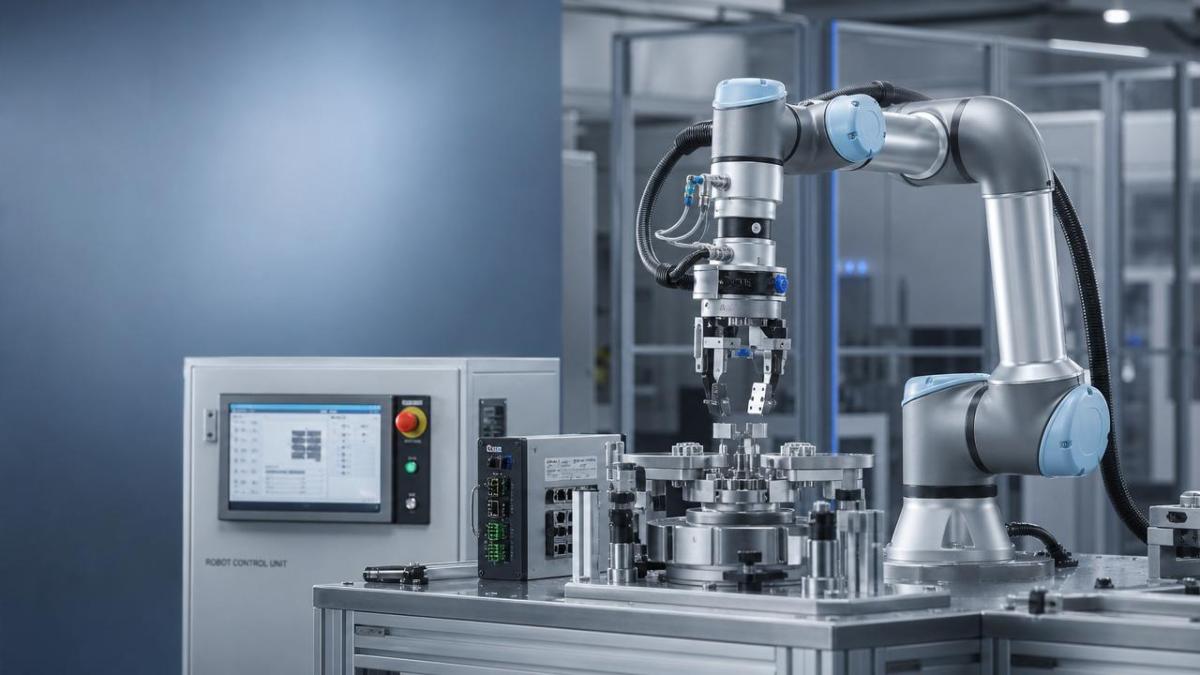
A robot arm rarely works alone. Grippers, vision systems, feeders, fixtures, safety devices, and PLC communication determine project success. Some Chinese cobot suppliers are improving fast in standardized cells; others still depend heavily on system integrators for problem-solving. The more complex the task, the bigger this capability gap becomes.
5. Global support readiness
Export-oriented buyers must evaluate documentation quality, response time across time zones, spare parts logistics, English-language technical support, and compliance familiarity. An industrial cobot manufacturer China based may be strong domestically but still immature in international execution.
What is driving these differences right now
Several forces are widening the gap between stronger and weaker suppliers. Labor cost pressure continues to support automation demand, but customers also want more flexibility than traditional hard automation can provide. At the same time, domestic competition in China is intense, pushing manufacturers to release models quickly. This speed can improve innovation, but it can also expose weak validation practices.
Another major driver is customer sophistication. Buyers now ask harder questions about force control, safety modes, communication protocols, end-effector compatibility, and deployment evidence in similar industries. That trend benefits manufacturers with transparent engineering processes and hurts those relying on vague claims. In parallel, supply chain localization efforts have reduced dependence on some imported components, but they have also created new variability in subsystem quality depending on each brand’s qualification standards.
Who feels the impact most across the buying process
The consequences of supplier variation are not the same for every stakeholder. Understanding this helps business evaluation teams frame internal discussions more effectively.
The most important signals to watch when evaluating a Chinese cobot supplier
A disciplined evaluation process should focus on signals that are hard to fake. Ask for repeatability data under actual payload ranges rather than no-load claims. Review cycle stability over extended run time, not just a short demonstration. Confirm how safety functions are validated and how software releases are documented. If possible, inspect failed component handling, field service logs, and engineering change procedures.
Another strong indicator is how a supplier handles uncomfortable questions. A capable industrial cobot manufacturer China buyers can trust usually responds with test boundaries, application caveats, and integration constraints. A weak one often returns only brochure language. This difference in communication style often reflects the underlying engineering culture.
How business evaluation teams should adapt their judgment framework
The current market does not reward passive comparison. Teams should shift from static vendor selection to scenario-based qualification. Start by defining the production reality: payload variance, takt time, duty cycle, workpiece tolerance, operator interaction, environmental conditions, communication interfaces, and expansion plans. Then test whether the supplier can support that reality consistently.
A practical framework for evaluating any industrial cobot manufacturer China offers should include four layers. First, product layer: arm architecture, controller performance, safety functions, and software usability. Second, manufacturing layer: quality control, calibration discipline, and supply chain traceability. Third, project layer: tooling support, integration capability, and application references. Fourth, service layer: response time, training quality, documentation standards, and spare parts availability.
What the next phase of the market is likely to reward
Looking forward, the market is likely to reward Chinese cobot manufacturers that can prove stable performance in defined industrial use cases rather than those chasing broad but shallow product catalogs. Buyers increasingly prefer credible specialization: better arc welding packages, more reliable electronics assembly support, stronger machine tending integration, or more mature palletizing cells. In other words, depth is beginning to matter more than breadth.
There is also likely to be more scrutiny around software ecosystem strength. APIs, offline programming tools, data connectivity, and maintenance diagnostics will become more important as cobots move deeper into digital manufacturing systems. For overseas buyers, the most competitive industrial cobot manufacturer China can produce will not simply be the one with lower hardware cost, but the one that reduces uncertainty across validation, operation, and scaling.
A practical decision checklist before shortlisting suppliers
Before moving into final sourcing, business evaluation teams should confirm a few judgment points. Can the supplier show evidence of stable performance in an application close to yours? Are test conditions clearly defined? Is software support disciplined and documented? Can the company support cross-border communication and spare parts service? Are there warning signs of overpromising on payload, speed, or ease of deployment?
If those questions remain unclear, the risk is not just choosing the wrong robot. It is choosing the wrong engineering partner. In a market where the phrase industrial cobot manufacturer China covers companies of very different maturity levels, good evaluation depends on turning broad supplier claims into measurable verification points.
Final judgment for teams assessing industrial cobot manufacturer China options
The biggest market change is clear: cobot sourcing is becoming less about access and more about proof. Quality really varies because supplier capability is distributed unevenly across component control, software maturity, production discipline, application engineering, and global support. That variation will become even more important as collaborative robots move into more demanding industrial tasks.
For teams evaluating an industrial cobot manufacturer China offers, the best next step is to build a verification-based shortlist rather than a marketing-based one. Focus on repeatable engineering evidence, realistic deployment scenarios, and service readiness after installation. If your organization wants to understand how these trends affect its own sourcing path, start by confirming three issues: which process risks are most expensive for your plant, which technical parameters must be proven in advance, and which supplier capabilities will still matter after the purchase order is signed.
Search News
Hot Articles
- Carbon Fiber StructuresHow to Specify Aerospace Carbon Fiber Assemblies for Lightweight, Load-Bearing PartsJul 11, 2026
- Machine VisionXiaomi, Alibaba DAMO Academy Drive Open-Source Robotics Model Ecosystem, Lowering Algorithm Development Barriers for Overseas SMEs Adopting Chinese Robotics SolutionsMar 30, 2026
- Cobots & ArmsShanxi 'AI+' Conference Showcases Embodied Intelligence with Multinational Buyer Engagement: Key Industry ImplicationsMar 30, 2026
Popular Tags
Recommended News
 Jul 11, 2026How to Specify Aerospace Carbon Fiber Assemblies for Lightweight, Load-Bearing PartsAerospace carbon fiber assemblies: learn how to specify laminate design, load data, joining methods, and inspection controls for lighter, reliable load-bearing aerospace parts.Elena Rostova (UAV Systems Researcher)
 Mar 30, 2026Xiaomi, Alibaba DAMO Academy Drive Open-Source Robotics Model Ecosystem, Lowering Algorithm Development Barriers for Overseas SMEs Adopting Chinese Robotics SolutionsXiaomi & Alibaba DAMO Academy's open-source robotics models lower algorithm barriers for global SMEs. Boost efficiency in manufacturing, logistics & smart retail with ROS 2 compatible solutions.TSV Data Lab
 Mar 30, 2026Shanxi 'AI+' Conference Showcases Embodied Intelligence with Multinational Buyer Engagement: Key Industry ImplicationsShanxi 'AI+' Conference highlights embodied intelligence with Tesla, Ubtech & Jiantao showcasing multimodal robotics. 40+ global buyers validated tech on-site, creating new B2B channels for industrial automation & AI solutions.Chen Wei (Automation Lead Engineer)
 Mar 30, 2026Zhongguancun Unveils 6G Integrated Sensing-Computing-Intelligence Platform to Empower Embodied Robots for Global Industrial ApplicationsZhongguancun's new 6G platform revolutionizes industrial robotics with <10ms latency, empowering global automotive, logistics & port automation. Discover how this tech boosts China's smart manufacturing exports.TSV Data Lab
 Mar 30, 2026Mech-Mind Tianjin Embodied Intelligence R&D and Production Base Goes Live, Cutting Delivery Time by 20%–30% for Global Customized AMR+Vision SolutionsMech-Mind's Tianjin AMR+Vision production base cuts delivery time by 20%-30% for欧美 & Latin American markets. Discover how this PLd-certified facility accelerates customized robotics solutions for smart manufacturing and logistics.Chen Wei (Automation Lead Engineer)
 Mar 30, 2026Boao Forum Reveals 'Co-evolution of Big and Small Brains' Trend in Humanoid Robots, China's Embodied Intelligence Accelerates Adaptation to Overseas Manufacturing Service ScenariosDiscover how China's humanoid robots, featuring 'Co-evolution of Big and Small Brains,' are revolutionizing global manufacturing. Learn about Embodied Tian Gong 3.0's ISO compliance and overseas deployment at Boao Forum 2026.Chen Wei (Automation Lead Engineer)
 Mar 30, 2026China Railway Industrial Secures Patent for Embodied Robotics in Material Handling, Boosting High-Precision Delivery Capabilities for Overseas Infrastructure and Manufacturing ProjectsChina Railway Industrial's new patent for embodied robotics in material handling boosts high-precision delivery for global infrastructure & manufacturing. Discover how this innovation enhances logistics accuracy in automotive, rail transit & EPC projects.Chen Wei (Automation Lead Engineer)
 Sep 28, 2026Spindle Runout Measurement in Germany: DIN Standards, Methods, and Acceptance LimitsSpindle runout measurement Germany: explore DIN standards, proven methods, acceptance limits, and audit-ready practices for reliable machining quality.Dr. Marcus Vance
 Sep 27, 2026How to Select Wall-Mount Edge Devices for Space-Constrained Factory NetworksWall mount edge devices for space-constrained factories: evaluate workload, thermal design, power resilience, cable access, and network reliability for smarter deployments.TSV Data Lab
 Sep 26, 2026Machining Tolerance Analysis: How to Set Limits That Meet Function and Cost TargetsMachining tolerance analysis: learn how to set functional limits, control tolerance stacks, reduce inspection risk, and balance precision with production cost.Dr. Marcus Vance
 Sep 25, 2026How to Evaluate an Industrial Infrastructure Data Platform for Multi-Site OperationsIndustrial infrastructure data platform evaluation guide for multi-site operations: compare data quality, edge resilience, interoperability, governance, and scalable proof-of-value criteria.Victor Lin (Chief Software Architect)
 Sep 24, 2026How to Select Machine Vision Optics for Accurate Inspection at Different Working DistancesMachine vision optics selection guide for accurate inspection at every working distance. Compare FOV, pixel scale, DOF, distortion, lighting, and telecentric options.TSV Data Lab
 Sep 23, 2026How to Evaluate a Machine Vision System Integrator for High-Speed Inspection LinesChoose a machine vision system integrator with proven expertise in high-speed inspection, reliable reject timing, robust optics, and measurable acceptance criteria.TSV Data Lab
 Sep 28, 2026When is a SCADA API the right choice for connecting plant systems?SCADA API guide: learn when governed plant data integration improves traceability, security, and scalability—without compromising real-time control.Victor Lin (Chief Software Architect)
 Sep 27, 2026How SCADA data integration improves traceability across production linesSCADA data integration connects production-line data to improve traceability, accelerate quality investigations, and strengthen safety decisions.Victor Lin (Chief Software Architect)
 Sep 26, 2026What to define before starting SCADA integration planningSCADA integration planning starts with clear scope, control boundaries, data models, cybersecurity, and testing. Discover the definitions that reduce risk and costly rework.Victor Lin (Chief Software Architect)
 Sep 25, 2026How a smart factory with Industrial IoT reduces production blind spotsDiscover how a smart factory with Industrial IoT turns real-time machine, quality, and workflow data into actionable insights that reduce production blind spots and delivery risks.Victor Lin (Chief Software Architect)
 Sep 24, 2026When does Industrial IoT make smart manufacturing easier to scale?Smart manufacturing Industrial IoT scales when trusted data, interoperable systems, and secure workflows turn connected assets into measurable gains.TSV Data Lab
 Sep 23, 2026What drives ultra-precision machining cost at 1-micron tolerance?Ultra precision machining cost per part at 1 micron tolerance depends on process, material, metrology, and yield. Learn how to compare quotes confidently.Dr. Marcus Vance
 Sep 22, 2026Drone Engine-T550CC Applications: Build the UAV Power System Around the MissionAn application guide for Drone Engine-T550CC integration, covering payload planning, airframe matching, cooling, fuel, vibration, test procedures, documentation, and service preparation.Elena Rostova (UAV Systems Researcher)
 Sep 22, 2026How to Evaluate Industrial Edge Computing Vendors for Factory DeploymentIndustrial edge computing vendor evaluation guide for factories: compare latency, protocol fit, reliability, security, and lifecycle support before deployment.TSV Data Lab
 Sep 21, 2026Drone Payload Integration: Matching Power, Data, and Center of Gravity for Reliable FlightsDrone payload integration made practical: balance power, data, center of gravity, and endurance to build safer, more reliable mission-ready flights.Elena Rostova (UAV Systems Researcher)
 Sep 20, 2026Autonomous Navigation Pricing: Cost Drivers and Budget Benchmarks for AMR ProjectsAutonomous navigation price explained: compare AMR cost drivers, software, sensors, integration, safety, and lifecycle budgets to build a scalable project plan.Chen Wei (Automation Lead Engineer)
 Sep 19, 2026How to Scope Automation Integration Services for Multi-System Factory ProjectsAutomation integration services: learn how to scope multi-system factory projects with clear workflows, interface contracts, safety boundaries, and acceptance criteria.Victor Lin (Chief Software Architect)