
Industrial Robots Still Win in These High Throughput Production Tasks
Publication Date
author
Industrial robots still dominate the highest-throughput production lines where cycle time, repeatability, and uptime define profitability. While collaborative robots expand flexible automation, engineers and buyers in aerospace, medical, and automotive sectors still rely on industrial robots alongside custom machining for robotics joints, cnc milling for automotive engine blocks, and precision grinding for aerospace bearings to meet demanding output, tolerance, and reliability targets.
Why industrial robots still lead when throughput is the main KPI
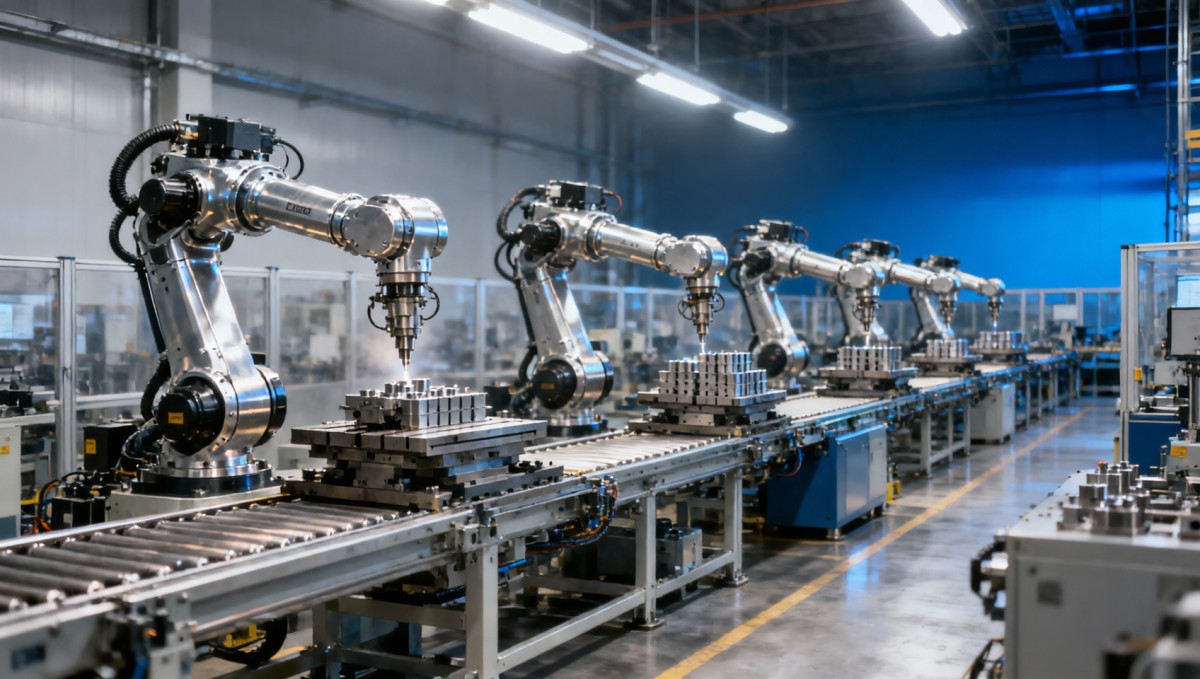
In high throughput production tasks, the central question is not whether automation is useful. It is whether the automation stack can maintain target output for 2 shifts, 3 shifts, or continuous operation without unacceptable drift, stoppage, or maintenance burden. Industrial robots remain the preferred choice because their structure, drive systems, payload range, and enclosure designs are built for speed, rigidity, and repeatable motion under industrial duty cycles.
For information researchers and technical buyers, the distinction matters. A robot that looks capable in a demo may underperform once it faces abrasive dust, coolant mist, heavy end effectors, or sub-30-second takt times. TechStat Vanguard focuses on engineering truth rather than marketing labels. In robotics and automation, that means comparing absolute repeatability, servo stability, uptime expectations, and maintenance intervals instead of relying on vague claims about smart manufacturing readiness.
For operators and plant managers, industrial robots win because they tolerate repetitive acceleration and deceleration better in fixed, guarded cells. They also integrate more naturally with conveyors, high-speed fixtures, machine tending stations, palletizing stacks, and in-line inspection systems. In lines where output loss from one hour of downtime can affect an entire weekly schedule, robust automation has direct commercial value.
For executives, the economic logic is simple. If a production task requires thousands of repeated cycles per shift, tight path control, and predictable availability across 12- to 24-month planning windows, industrial robots usually outperform more flexible but slower alternatives. That is especially true when the robotic cell is supported by precision machining for critical components such as robot joints, spindle-related fixtures, aerospace bearing races, and automotive engine block machining interfaces.
Three production conditions where industrial robots keep their edge
- Short cycle applications, often in the 5- to 20-second range, where every tenth of a second matters and the motion path is highly repeatable.
- Payload-intensive operations, such as machine tending, casting handling, welding, or palletizing, where tool weight and part weight exceed the practical comfort zone of many collaborative robots.
- Harsh factory environments involving oil, vibration, heat, metal chips, or abrasive particles, where enclosed industrial robot designs and proven maintenance plans reduce unplanned stops.
Which high throughput tasks still favor industrial robots over cobots?
The answer depends on takt time, payload, guarding strategy, and process stability. Cobots are valuable in mixed-model assembly, low-volume changeover, and human-shared workspaces. But when output scales up and motion becomes repetitive at high speed, industrial robots typically provide better cycle time discipline and less compromise on stiffness. This is why many advanced manufacturers deploy both technologies rather than forcing one platform into all tasks.
In automotive production, industrial robots remain strong in body welding, press tending, engine block transfer, coating, and palletizing. The reason is not tradition. It is that these tasks combine fast travel, repetitive positioning, and heavy or awkward part handling. CNC milling for automotive engine blocks also depends on repeatable loading and unloading sequences where robot consistency supports machine utilization and fixture alignment.
In aerospace, high throughput does not always mean commodity volume. It often means stable, uninterrupted processing of demanding parts under strict tolerance control. Precision grinding for aerospace bearings, handling of machined housings, and support operations around inspection or deburring cells benefit from industrial robots because rigid motion and protected operation reduce variability over long runs.
In medical and electronics environments, the decision is more nuanced. Cleanliness, compact cells, and traceability matter. Yet industrial robots still lead in fast pick-and-place, packaging, tray handling, and repetitive machine tending where 24/7 consistency is more important than direct human collaboration. Buyers should evaluate not only the robot type, but also the entire automation cell including grippers, sensors, guarding, controllers, and machined interfaces.
Application comparison by task profile
The table below helps procurement teams compare typical scenarios by output pressure, payload, and process stability. It is not a universal rulebook, but it reflects common engineering logic used in supplier screening and automation planning.
A practical takeaway is that high throughput production tasks reward disciplined, engineered consistency. When the line objective is stable output per hour rather than shared human interaction, industrial robots usually remain the safer procurement decision.
What technical metrics should buyers verify before making a robot decision?
Too many buying decisions fail because teams compare list prices and rated payloads but ignore motion behavior under real load. In TSV’s benchmarking mindset, the correct question is not only what the robot can carry, but what it can carry at speed, at reach, over repeated cycles, and with what level of accuracy drift. For high throughput production, those details shape both scrap risk and operating cost.
A disciplined evaluation should include at least 5 core checks: repeatability, payload at usable reach, cycle time under real tooling, environmental protection, and maintenance intervals. If the task involves custom machining for robotics joints or high-precision fixturing, teams should also assess the dimensional stability of mating parts, lubrication strategy, and how thermal expansion may affect positioning over long production windows.
For operators, one hidden variable is recovery after interruption. A robot that restarts quickly after tool change, jam removal, or sensor reset may outperform a nominally faster option. In plants running 16 to 24 hours per day, even short stoppages accumulate. Procurement should therefore include restart logic, spare parts access, and service response expectations in supplier discussions.
For executive teams, the real benchmark is line-level productivity, not brochure-level robot performance. That means evaluating the robot together with servo drives, controllers, vision, safety fencing, machine interfaces, and machined structural parts. Parameters do not lie, but they must be interpreted as a system.
Key metrics for industrial robot selection
The following table summarizes practical metrics that buyers can request during technical clarification, factory acceptance planning, or supplier qualification. These are common engineering checkpoints in high throughput automation projects.
This metric-based approach aligns with TSV’s data-first positioning. It reduces supplier ambiguity and helps engineering, procurement, and operations teams speak the same language during selection and acceptance.
A four-step validation routine before purchase
- Define the true task envelope: part weight, tool weight, reach, takt time, and environmental conditions.
- Request application-specific performance confirmation rather than only catalog values.
- Check how the robot integrates with machined fixtures, loaders, sensors, and safety architecture.
- Review maintenance planning, spare parts pathway, and acceptance criteria before order release.
How do precision machining and robot performance connect in real production?
A common misconception is that robot performance depends only on the robot brand or controller. In reality, high throughput automation often succeeds or fails at the interface level. Custom machining for robotics joints, tool plates, base frames, engine block fixtures, and bearing-related handling components can determine whether the motion system holds accuracy over time or slowly degrades due to vibration, looseness, or thermal distortion.
Consider robotic machine tending in automotive lines. If the gripper mount, part nest, or loading fixture is not machined to the needed tolerance band, the line may experience compounding errors. The robot repeats its taught path, but the real part position shifts. That can reduce spindle utilization, increase probe correction cycles, or introduce quality escapes. CNC milling for automotive engine blocks and the fixtures around them therefore belong in the same engineering conversation as robot selection.
The same logic applies in aerospace support processes. Precision grinding for aerospace bearings and related handling operations require stable interfaces, low runout risk, and careful contamination control. When fixtures, transfer grippers, and support housings are machined with consistent quality, the robot cell behaves more predictably across batches and over longer maintenance intervals.
This is where TSV’s cross-sector perspective becomes useful. Robotics, precision machining, and quality control should not be analyzed as isolated topics. A buyer comparing suppliers should ask how machining capability, tolerance management, and robot integration interact within a single throughput target and quality plan.
Where machining quality most affects robot cell stability
- Robot bases and mounting plates, where flatness and rigidity influence calibration retention over months of operation.
- End-of-arm tooling interfaces, where tolerance stack-up affects grip repeatability and part orientation.
- Fixtures for engine blocks, bearing components, or aerospace parts, where positional consistency supports both speed and quality.
- Ground and machined wear components, where surface finish and material selection influence service life and maintenance frequency.
What should procurement teams compare beyond price?
Price matters, but it is rarely the deciding factor in high throughput production tasks. A lower initial quote may lead to slower cycles, higher scrap exposure, more frequent downtime, or weak spare-part support. Procurement teams should compare total operating fit over a 12- to 36-month horizon, especially in plants where output interruptions carry a measurable cost.
A strong sourcing process usually includes 6 evaluation dimensions: process fit, cycle performance, mechanical durability, serviceability, integration burden, and compliance readiness. This helps teams avoid the trap of buying a robot with attractive brochure specifications but poor real-world suitability. It also aligns engineering, purchasing, and management around objective checkpoints rather than vendor narrative alone.
Lead time is another overlooked variable. Depending on configuration complexity, safety scope, and fixture customization, an industrial robot cell may require several stages: specification, technical confirmation, fabrication, integration, testing, and commissioning. Even when the robot body is available quickly, custom tooling, machined parts, and acceptance planning can extend the project timeline by 4 to 12 weeks or more.
For multinational buyers, standardization also matters. If multiple plants will replicate the same cell, evaluate controller familiarity, spare commonality, operator training needs, and documentation quality. A slightly higher purchase price may be justified if it reduces rollout friction across sites and shortens ramp-up during future expansion.
Procurement checklist for high throughput robot cells
Use the following shortlist during supplier comparison, RFQ review, and technical-commercial negotiation. It keeps attention on measurable issues that affect output and risk.
The procurement conclusion is straightforward: do not buy a robot in isolation. Buy a validated production capability with known constraints, measurable performance, and clear support conditions.
Common sourcing mistakes to avoid
- Comparing only payload and reach without reviewing cycle time at full tooling weight.
- Ignoring fixture machining quality and assuming the robot alone determines repeatability.
- Underestimating the commissioning window, operator training, and spare-parts planning.
- Treating high throughput and high flexibility as equal priorities when the business case clearly favors one.
FAQ: practical questions from engineers, buyers, and plant leaders
Are industrial robots always better than cobots for fast production lines?
No. They are usually better when the line requires high speed, stable repetition, heavier payloads, and guarded operation. Cobots remain effective for lower-volume assembly, frequent changeovers, and human-shared work areas. The right decision depends on whether throughput, flexibility, or mixed collaboration is the leading business objective.
What delivery timeline is common for a high throughput robot cell?
A common project path includes 3 stages: technical definition, integration and build, then testing and commissioning. Depending on tooling complexity and custom machining content, the total timeline often ranges from several weeks to a few months. Buyers should request milestone clarity for fixture fabrication, electrical integration, FAT, and on-site startup.
How important is precision machining if the robot already has good repeatability?
It is highly important. Robot repeatability does not eliminate poor fixture quality, unstable gripper mounts, or misaligned interfaces. In machine tending, bearing handling, and engine block workflows, machining quality often determines whether the robot’s theoretical performance becomes practical line stability.
What standards or compliance topics should buyers review?
The exact list depends on sector and geography, but teams commonly review machine safety integration, electrical compliance, documentation quality, and industry-specific quality systems such as AS9100 in aerospace supply chains or ISO 13485 in medical device environments. The key is to match robot cell documentation and validation to the end-use industry, not just the robot component itself.
Why work with a data-driven technical partner before you commit?
Industrial robots still win in high throughput production tasks, but the winning decision is rarely about the arm alone. It depends on measurable fit between robot capability, machined interfaces, process demands, uptime expectations, and compliance context. That is exactly where a data-driven engineering filter creates value.
TechStat Vanguard helps global engineering teams, procurement managers, and decision-makers cut through information noise. Our approach focuses on benchmark logic, parameter interpretation, supplier comparison structure, and manufacturing reality across robotics, precision machining, aerospace metrics, and industrial sensing. We prioritize what can be checked, validated, and specified.
If you are evaluating industrial robots for machine tending, palletizing, high-speed transfer, bearing handling, or automated support around CNC milling and grinding, you can consult TSV for parameter confirmation, selection logic, delivery planning, and specification drafting. We can also help clarify how custom machining, tolerance expectations, and service assumptions should be written into your RFQ or technical review process.
Contact us when you need structured support on 5 key issues: robot type selection, throughput-oriented cell design, machining interface requirements, expected delivery stages, and compliance or documentation checkpoints. For teams under pressure to reduce trial-and-error costs and shorten supplier qualification cycles, that conversation often saves far more than it costs.
Search News
Hot Articles
- Carbon Fiber StructuresHow to Specify Aerospace Carbon Fiber Assemblies for Lightweight, Load-Bearing PartsJul 11, 2026
- Machine VisionXiaomi, Alibaba DAMO Academy Drive Open-Source Robotics Model Ecosystem, Lowering Algorithm Development Barriers for Overseas SMEs Adopting Chinese Robotics SolutionsMar 30, 2026
- Cobots & ArmsShanxi 'AI+' Conference Showcases Embodied Intelligence with Multinational Buyer Engagement: Key Industry ImplicationsMar 30, 2026
Popular Tags
Recommended News
 Jul 11, 2026How to Specify Aerospace Carbon Fiber Assemblies for Lightweight, Load-Bearing PartsAerospace carbon fiber assemblies: learn how to specify laminate design, load data, joining methods, and inspection controls for lighter, reliable load-bearing aerospace parts.Elena Rostova (UAV Systems Researcher)
 Mar 30, 2026Xiaomi, Alibaba DAMO Academy Drive Open-Source Robotics Model Ecosystem, Lowering Algorithm Development Barriers for Overseas SMEs Adopting Chinese Robotics SolutionsXiaomi & Alibaba DAMO Academy's open-source robotics models lower algorithm barriers for global SMEs. Boost efficiency in manufacturing, logistics & smart retail with ROS 2 compatible solutions.TSV Data Lab
 Mar 30, 2026Shanxi 'AI+' Conference Showcases Embodied Intelligence with Multinational Buyer Engagement: Key Industry ImplicationsShanxi 'AI+' Conference highlights embodied intelligence with Tesla, Ubtech & Jiantao showcasing multimodal robotics. 40+ global buyers validated tech on-site, creating new B2B channels for industrial automation & AI solutions.Chen Wei (Automation Lead Engineer)
 Mar 30, 2026Zhongguancun Unveils 6G Integrated Sensing-Computing-Intelligence Platform to Empower Embodied Robots for Global Industrial ApplicationsZhongguancun's new 6G platform revolutionizes industrial robotics with <10ms latency, empowering global automotive, logistics & port automation. Discover how this tech boosts China's smart manufacturing exports.TSV Data Lab
 Mar 30, 2026Mech-Mind Tianjin Embodied Intelligence R&D and Production Base Goes Live, Cutting Delivery Time by 20%–30% for Global Customized AMR+Vision SolutionsMech-Mind's Tianjin AMR+Vision production base cuts delivery time by 20%-30% for欧美 & Latin American markets. Discover how this PLd-certified facility accelerates customized robotics solutions for smart manufacturing and logistics.Chen Wei (Automation Lead Engineer)
 Mar 30, 2026Boao Forum Reveals 'Co-evolution of Big and Small Brains' Trend in Humanoid Robots, China's Embodied Intelligence Accelerates Adaptation to Overseas Manufacturing Service ScenariosDiscover how China's humanoid robots, featuring 'Co-evolution of Big and Small Brains,' are revolutionizing global manufacturing. Learn about Embodied Tian Gong 3.0's ISO compliance and overseas deployment at Boao Forum 2026.Chen Wei (Automation Lead Engineer)
 Mar 30, 2026China Railway Industrial Secures Patent for Embodied Robotics in Material Handling, Boosting High-Precision Delivery Capabilities for Overseas Infrastructure and Manufacturing ProjectsChina Railway Industrial's new patent for embodied robotics in material handling boosts high-precision delivery for global infrastructure & manufacturing. Discover how this innovation enhances logistics accuracy in automotive, rail transit & EPC projects.Chen Wei (Automation Lead Engineer)
 Oct 14, 2026Drone Frame Composites: Carbon Fiber vs. Fiberglass for Weight and StiffnessExplore drone structural materials composites: compare carbon fiber and fiberglass for weight, stiffness, cost, and antenna compatibility. Find the right material for your drone frame.Elena Rostova (UAV Systems Researcher)
 Oct 13, 2026Smart Cameras vs. PC-Based Machine Vision: Which Fits High-Speed Inspection?This industrial product comparison for machine vision weighs smart cameras vs. PC-based systems on latency, throughput, and cost. Discover your best fit for high-speed inspection.TSV Data Lab
 Oct 12, 2026How to Verify RoHS Compliance in Industrial Sensing Systems Before DeploymentRoHS compliant sensing systems: learn how to verify materials, supplier declarations, testing, and configuration controls before industrial deployment.TSV Data Lab
 Oct 11, 2026How Procurement-Oriented Content Taxonomy Improves B2B Buying JourneysProcurement-oriented content taxonomy streamlines B2B buying journeys with clearer evidence, supplier comparisons, risk visibility, and faster approvals.TSV Data Lab
 Oct 10, 2026How to Select a Machine Performance Monitoring Platform for OEE and Downtime ReductionMachine performance monitoring platform selection guide: validate machine states, OEE data, downtime reasons, integrations, and scalability to reduce losses with confidence.TSV Data Lab
 Oct 08, 2026How to Machine Inconel 625 Blades Without Heat Cracks or Edge ChippingInconel 625 blade machining guide: prevent heat cracks, edge chipping, chatter, and work hardening with proven tooling, cooling, fixturing, and inspection strategies.Dr. Marcus Vance
 Oct 07, 2026How to Evaluate an HMI Panel Distributor for Industrial Automation ProjectsHMI panel distributor evaluation guide: verify technical compatibility, traceability, supply reliability, lifecycle support, and total cost for automation projects.Victor Lin (Chief Software Architect)
 Oct 06, 2026Navigation Fault Tolerance Standards for AMRs: What Safety Teams Must VerifyNavigation fault tolerance standards: learn what AMR safety teams must verify, from localization loss and sensor faults to stopping distance, safe restart, and site-specific validation.Chen Wei (Automation Lead Engineer)
 Oct 05, 2026Calculating Edge Computing Total Cost of Ownership Across Distributed SitesEdge computing ownership cost explained: calculate deployment, energy, connectivity, security, remote support, and refresh costs across distributed sites.TSV Data Lab
 Oct 04, 2026CAD/CAM Benchmarking in the GCC: What Manufacturers Should Ask a ConsultantCAD CAM benchmark consultant GCC guide: learn the key questions manufacturers should ask to validate post-processors, workflows, machine performance, and production risk.Victor Lin (Chief Software Architect)
 Oct 03, 2026Selecting Automotive Radar Sensor Modules for ADAS Range, Resolution, and IntegrationAutomotive radar sensor module selection guide for ADAS: compare range, resolution, field of view, latency, and integration to build safer, reliable vehicle systems.TSV Data Lab
 Oct 02, 2026How to Qualify Machined Parts Suppliers for Hard Tech ProgramsHard tech supply chain machined parts demand rigorous supplier qualification. Learn how to assess capability, traceability, quality controls, and delivery resilience.Dr. Marcus Vance
 Oct 01, 2026How to Select an Outdoor Security Radar Sensor for Perimeter Detection?Outdoor security radar sensor selection guide: compare range, accuracy, false-alarm control, integration, and field testing for reliable perimeter detection.TSV Data Lab
 Sep 30, 2026How to Evaluate Solid-State LiDAR Hardware for Outdoor Autonomous VehiclesSolid state LiDAR hardware evaluation guide for outdoor autonomous vehicles—compare range, point-cloud quality, environmental resilience, integration, and safety.TSV Data Lab
 Sep 29, 2026ISO 9283 Repeatability: How to Evaluate Cobot Positioning PerformanceISO 9283 cobot repeatability explained: learn how payload, reach, approach direction, and test conditions affect positioning performance and cell capability.Chen Wei (Automation Lead Engineer)
 Oct 14, 2026How tight can micro machining aerospace tolerances be in production?Micro machining aerospace tolerances can reach low-micron levels in production. Learn what controls repeatability, inspection confidence, and flight-critical quality.Dr. Marcus Vance
 Oct 13, 2026How to keep an industrial robotic integration project on scheduleIndustrial robotic integration project management: keep automation on schedule with proven controls for interfaces, suppliers, FAT, commissioning, and change risk.Victor Lin (Chief Software Architect)























