
Common mistakes in robotic arm selection for electronics assembly
Publication Date
author
Choosing the right robotic arm for electronics assembly is rarely about payload alone. Many teams overlook repeatability, ESD safety, vision integration, cycle-time stability, and long-term maintenance costs—mistakes that can derail yield, quality, and ROI. This guide breaks down the most common selection errors, helping researchers, operators, buyers, and decision-makers evaluate automation with clearer engineering logic and procurement confidence.
Why robotic arm selection goes wrong so often in electronics assembly
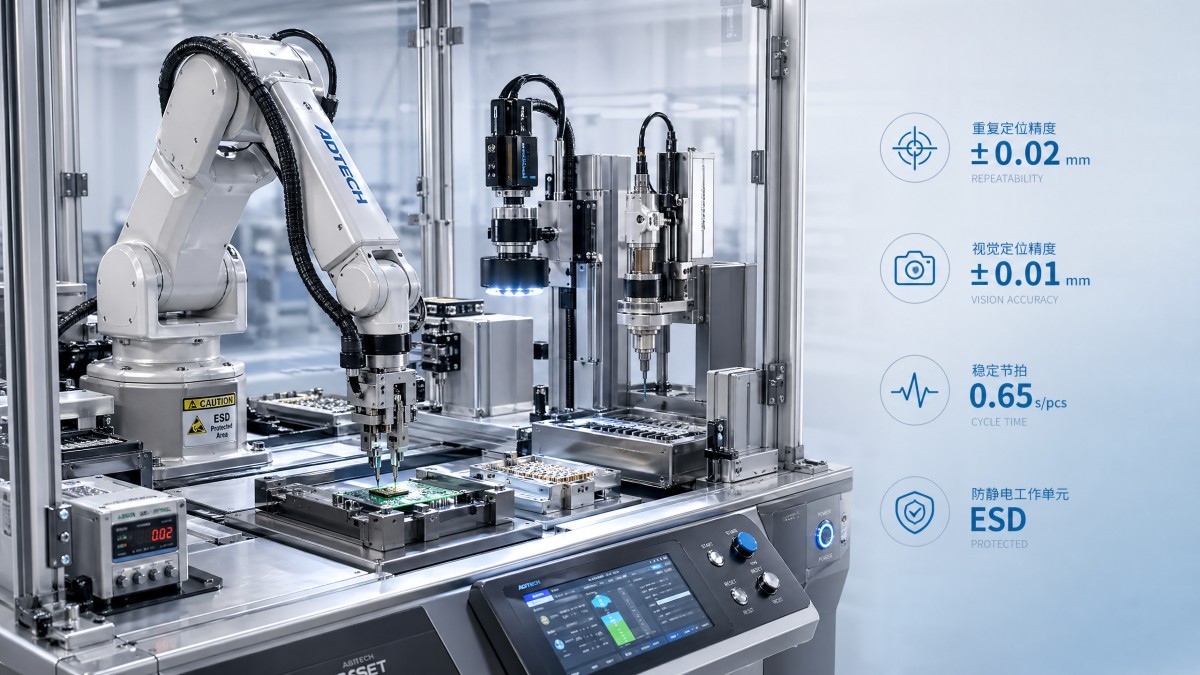
Electronics assembly looks lightweight, but the selection logic behind a robotic arm is rarely simple. A board, connector, shielding can, or micro-fastener may weigh only a few grams, yet the process can demand repeatability in the ±0.01 mm to ±0.05 mm range, stable trajectory control over 24/7 shifts, and safe interaction with ESD-sensitive components. When procurement teams focus on brochure-level specifications, the real production constraints remain hidden until commissioning.
This is where mistakes begin. Engineers may define the project around maximum payload and reach, while operators worry about access angles, tool clearance, and recovery after stoppages. Buyers compare quoted prices, but overlook controller compatibility, spare parts lead time, and software licensing. Decision-makers expect a 12–24 month payback, yet the integration scope keeps expanding because the original robotic arm selection did not reflect the actual assembly sequence.
For information researchers and enterprise leaders, the core challenge is noise. Many vendor materials emphasize speed, intelligence, or flexibility without clarifying test conditions. TechStat Vanguard approaches robotic arm selection differently: parameters first, marketing second. In electronics assembly, tolerances, vibration behavior, cable routing, cleanroom suitability, and interface maturity matter more than generic claims about automation performance.
A useful starting point is to map the robotic arm not to a product category, but to a process window. Is the arm handling PCB loading, screwdriving, solder support, dispensing, inspection transfer, or final packing? Each task changes the priority order of repeatability, speed, compliance, force control, and vision integration. A wrong selection at this stage can create hidden quality costs for the next 3–5 years.
Four reasons selection errors persist across factories
- Teams evaluate the robot in isolation instead of as part of a full cell that includes grippers, feeders, fixtures, cameras, screw systems, and safety devices.
- Key process variables such as cycle-to-cycle stability, acceleration limits, and recovery after fault reset are not written into the RFQ.
- Suppliers provide nominal values, but buyers do not ask whether those values were measured with full tooling load, maximum reach, or vision-triggered motion.
- Cross-functional review happens too late, so production, maintenance, QA, and EHS concerns surface only after the purchasing decision.
If your team wants fewer surprises, the first discipline is simple: define the process, define the tolerance stack, and only then shortlist the robotic arm. In electronics assembly, the arm is not just a mover. It is part of a precision system where one weak interface can affect throughput, yield, and traceability.
What buyers and engineers often underestimate: the technical criteria behind a stable assembly cell
The most expensive mistake in robotic arm selection is choosing based on a short list of visible metrics while ignoring the parameters that control process stability. In electronics assembly, a robotic arm that looks adequate on paper may still fail when handling miniature connectors, aligning test fixtures, or moving between closely spaced stations. The key is to assess not one specification, but the interaction between motion, end-of-arm tooling, sensing, and process sensitivity.
Repeatability is a common example. A supplier may publish repeatability at the robot flange under ideal conditions, but your assembly cell may add a 150 mm to 300 mm tool extension, vacuum tubing, camera brackets, or a compliant screwdriver spindle. That changes dynamic behavior. For fine-pitch or high-density electronics work, the effective positioning capability at the tool tip matters more than the headline robot number.
Another overlooked factor is ESD protection. Many automation teams treat ESD as a workstation issue rather than a robotic arm selection issue. In practice, arm materials, cable management, grounding design, and end-effector construction all influence risk. If the process includes bare PCB handling, semiconductor packaging, or sensor module assembly, ESD-safe integration must be reviewed from the first design stage, not added after pilot validation.
The table below highlights the technical criteria that deserve more attention during robotic arm selection for electronics assembly. These are not universal pass/fail values; they are evaluation points that should be matched to task type, product mix, and tolerance requirements.
This comparison shows why robotic arm selection is a systems-engineering exercise. A low payload arm can still be the wrong choice if its wrist stiffness is insufficient for precision screwdriving, or if its software interfaces slow down camera-to-motion synchronization by even a small but repeated margin over thousands of cycles per shift.
Three technical questions to ask before approving a shortlist
1. Can the robot hold accuracy with real tooling installed?
Nominal repeatability is not enough. Ask for tests with the intended gripper, spindle, or suction tool, including cable drag and actual acceleration settings. In many cells, a 10%–20% increase in tooling mass or offset can change settling time and alignment quality.
2. What happens during micro-stops and restarts?
Operators and maintenance teams know that recovery behavior matters. A robot that resumes poorly after a sensor trip, feeder alarm, or part miss can lose more production than one with slightly slower nominal speed. Evaluate restart consistency over at least 20–30 repeated interruptions.
3. How open is the integration environment?
A robotic arm for electronics assembly often depends on external vision, barcode reading, torque traceability, and recipe switching. Check whether the controller supports practical integration with common industrial communication layers, and whether future line expansion will require extra software licenses or gateway hardware.
Common mistakes in robotic arm selection and how to prevent them early
Some mistakes appear small during vendor comparison but become costly after installation. In electronics assembly, the wrong robotic arm selection can create a chain reaction: inaccurate picking causes fixture wear, fixture wear causes inspection drift, inspection drift causes false rejects, and false rejects undermine the expected ROI. Prevention starts by naming the errors clearly.
One frequent error is over-specifying payload and under-specifying process precision. Teams buy a larger arm for “future flexibility,” but the extra mass, footprint, and inertia reduce suitability for fine assembly. Another error is buying a fast arm for a process that is actually constrained by feeders, curing time, or operator handoff. In that case, high robot speed does little except raise cost and tuning complexity.
A third mistake is neglecting maintainability. For a line that runs 2 or 3 shifts, spare part availability, preventive maintenance intervals, cable wear points, and local service response can matter as much as purchase price. Procurement teams sometimes discover too late that a critical joint harness or controller board has a 6–10 week lead time, which changes the downtime risk profile entirely.
The next table translates common robotic arm selection mistakes into practical prevention actions that buyers, process engineers, and decision-makers can use during specification review.
These mistakes are avoidable when the selection process is disciplined. The RFQ should not be a short price request; it should be a technical decision document. If your team compares robotic arms without fixed acceptance criteria, every supplier appears competitive until commissioning exposes the gaps.
A practical 5-point review before purchase order release
- Define the assembly process by station, including target takt, product variants, and tolerance-critical motions.
- Validate end-of-arm tooling mass, center of gravity, and cable routing with the shortlisted robotic arm.
- Confirm interface requirements for vision, PLC, MES, scanners, screwdriving, and traceability devices.
- Review maintenance assumptions, including consumables, spare parts lead times, and service availability in the target region.
- Run a cross-functional signoff with engineering, operations, quality, procurement, and EHS before final approval.
For mixed-model electronics production, this review is especially valuable. A robotic arm that performs well on 1 SKU may struggle when product variants increase to 10, 20, or more. Early scenario testing usually costs less than late-stage redesign.
How to build a better procurement and implementation plan
A sound robotic arm selection process links technical fit, commercial fit, and implementation fit. That means the best option is not always the lowest quotation or the most advanced platform. The right choice is the one that can meet the assembly requirement with manageable integration risk, realistic support, and acceptable lifecycle cost over a 3–7 year horizon.
For procurement teams, one of the most useful practices is separating cost into at least 4 layers: robot hardware, tooling and peripherals, integration and programming, and lifetime service cost. In electronics assembly, the robot itself may represent only part of the actual investment. Vision systems, feeders, ESD measures, fixtures, validation time, and software commissioning often decide whether the project remains on budget.
Implementation planning should also include a staged timeline. A typical project may move through 3 phases: specification and vendor review, cell design and testing, then commissioning and operator training. Depending on customization level, this can take 6–8 weeks for a simpler loading application or 12–20 weeks for a more integrated assembly and inspection cell. Underestimating this timeline creates avoidable pressure on both supplier and plant teams.
The checklist below can help teams compare robotic arm options with better procurement discipline and fewer hidden assumptions.
Procurement checklist for electronics assembly automation
- Process suitability: confirm the robot can support insertion, screwdriving, dispensing, inspection transfer, or packaging without compromising access or precision.
- Technical acceptance: define repeatability needs, cycle-time window, payload with tooling, and interface requirements in measurable terms.
- Compliance and environment: review machine safety architecture, ESD measures, and any clean production requirements relevant to the site.
- Support model: ask about training scope, fault diagnostics, maintenance intervals, and regional spare parts access.
- Scalability: evaluate whether the same platform can support future product variants, software upgrades, or additional stations.
What standards and compliance topics should be reviewed?
Machine safety and integration
Even when the robotic arm is compact, the full cell may require safety review covering guards, interlocks, emergency stops, safe speed behavior, and restart procedures. For collaborative applications, allowable interaction still depends on the task, tooling, and risk assessment, not just the robot category.
ESD control discipline
For sensitive electronics assembly, buyers should verify that robot-cell design aligns with plant ESD practices. That includes grounded surfaces, appropriate materials, cable handling, and compatible end effectors. ESD review is often a 5-item to 8-item checklist exercise, and it should happen before FAT rather than after installation.
Traceability and quality records
If the cell includes torque tools, barcode tracking, or in-line vision inspection, make sure the robotic arm controller and higher-level systems can exchange status and records in a practical way. This becomes important when customers require serial-level traceability or audit-ready production logs.
FAQ and next-step guidance for more confident robotic arm selection
Many teams researching robotic arm selection for electronics assembly ask similar questions, especially when balancing cost, quality, and lead time. The answers below are intended to support researchers, operators, procurement teams, and business leaders who need clearer decision criteria before moving to vendor engagement.
The main theme is consistency: define the process window, challenge vague specifications, and verify integration details early. That approach reduces trial-and-error and helps align technical selection with commercial reality.
How should we choose between a compact industrial robot and a cobot?
Start with the task, not the label. If the process needs higher speed, fixed guarding, and tightly controlled motion for repetitive assembly, a compact industrial robot may be the better fit. If the process involves shared workspace, frequent changeover, or operator-assisted loading with moderate speed, a cobot may be worth evaluating. In either case, compare real cycle time, tool-point stability, and safety architecture rather than assuming one category is automatically better.
What is the biggest hidden cost in robotic arm selection?
Integration mismatch is often the hidden cost. A robot that is inexpensive upfront can become costly if it requires additional gateways, custom programming, more validation time, or frequent service visits. Over a 3-year to 5-year operating period, downtime risk and engineering rework can outweigh the initial price difference.
How much testing is enough before purchase?
For electronics assembly, a desktop demo is rarely enough. A stronger approach is a representative test covering actual parts, intended tooling, camera logic if relevant, and at least one realistic motion sequence. If the application is tolerance-sensitive, ask for repeated cycle verification and recovery tests, not just a one-time success demonstration.
Why choose TechStat Vanguard for selection support and supplier evaluation?
TechStat Vanguard is built for teams that need engineering truth instead of marketing noise. We focus on parameter-based evaluation, benchmarking logic, and supply-chain clarity across robotics, automation, sensors, edge AI, and precision manufacturing. For robotic arm selection in electronics assembly, that means helping you separate brochure claims from production-relevant criteria: repeatability under tooling load, interface practicality, maintainability, and risk exposure over the full project lifecycle.
If you are preparing a new automation project or reviewing existing supplier options, you can contact TSV for support on specification refinement, robotic arm selection logic, tolerance-related review points, integration questions, expected delivery windows, maintenance risk checks, and quote comparison structure. We can also help frame RFQ documents, supplier evaluation matrices, and engineering questions that reduce qualification cycles and improve procurement confidence.
For teams under deadline pressure, it is often most effective to begin with 4 concrete items: target process, required precision window, interface list, and project timeline. With those inputs, the discussion moves quickly from generic automation talk to actionable selection guidance.
Search News
Hot Articles
- Carbon Fiber StructuresHow to Specify Aerospace Carbon Fiber Assemblies for Lightweight, Load-Bearing PartsJul 11, 2026
- Machine VisionXiaomi, Alibaba DAMO Academy Drive Open-Source Robotics Model Ecosystem, Lowering Algorithm Development Barriers for Overseas SMEs Adopting Chinese Robotics SolutionsMar 30, 2026
- Cobots & ArmsShanxi 'AI+' Conference Showcases Embodied Intelligence with Multinational Buyer Engagement: Key Industry ImplicationsMar 30, 2026
Popular Tags
Recommended News
 Jul 11, 2026How to Specify Aerospace Carbon Fiber Assemblies for Lightweight, Load-Bearing PartsAerospace carbon fiber assemblies: learn how to specify laminate design, load data, joining methods, and inspection controls for lighter, reliable load-bearing aerospace parts.Elena Rostova (UAV Systems Researcher)
 Mar 30, 2026Xiaomi, Alibaba DAMO Academy Drive Open-Source Robotics Model Ecosystem, Lowering Algorithm Development Barriers for Overseas SMEs Adopting Chinese Robotics SolutionsXiaomi & Alibaba DAMO Academy's open-source robotics models lower algorithm barriers for global SMEs. Boost efficiency in manufacturing, logistics & smart retail with ROS 2 compatible solutions.TSV Data Lab
 Mar 30, 2026Shanxi 'AI+' Conference Showcases Embodied Intelligence with Multinational Buyer Engagement: Key Industry ImplicationsShanxi 'AI+' Conference highlights embodied intelligence with Tesla, Ubtech & Jiantao showcasing multimodal robotics. 40+ global buyers validated tech on-site, creating new B2B channels for industrial automation & AI solutions.Chen Wei (Automation Lead Engineer)
 Mar 30, 2026Zhongguancun Unveils 6G Integrated Sensing-Computing-Intelligence Platform to Empower Embodied Robots for Global Industrial ApplicationsZhongguancun's new 6G platform revolutionizes industrial robotics with <10ms latency, empowering global automotive, logistics & port automation. Discover how this tech boosts China's smart manufacturing exports.TSV Data Lab
 Mar 30, 2026Mech-Mind Tianjin Embodied Intelligence R&D and Production Base Goes Live, Cutting Delivery Time by 20%–30% for Global Customized AMR+Vision SolutionsMech-Mind's Tianjin AMR+Vision production base cuts delivery time by 20%-30% for欧美 & Latin American markets. Discover how this PLd-certified facility accelerates customized robotics solutions for smart manufacturing and logistics.Chen Wei (Automation Lead Engineer)
 Mar 30, 2026Boao Forum Reveals 'Co-evolution of Big and Small Brains' Trend in Humanoid Robots, China's Embodied Intelligence Accelerates Adaptation to Overseas Manufacturing Service ScenariosDiscover how China's humanoid robots, featuring 'Co-evolution of Big and Small Brains,' are revolutionizing global manufacturing. Learn about Embodied Tian Gong 3.0's ISO compliance and overseas deployment at Boao Forum 2026.Chen Wei (Automation Lead Engineer)
 Mar 30, 2026China Railway Industrial Secures Patent for Embodied Robotics in Material Handling, Boosting High-Precision Delivery Capabilities for Overseas Infrastructure and Manufacturing ProjectsChina Railway Industrial's new patent for embodied robotics in material handling boosts high-precision delivery for global infrastructure & manufacturing. Discover how this innovation enhances logistics accuracy in automotive, rail transit & EPC projects.Chen Wei (Automation Lead Engineer)
 Oct 26, 2026AMAXiMAL Releases Open-Source TopMod 3D v3 With Claude AIExplore AMAXiMAL’s free, open-source TopMod 3D v3 with Claude AI assistance, topology-based modeling and plywood fabrication tools that connect complex designs to physical builds.Dr. Marcus Vance
 Oct 26, 2026Choosing a SCADA System Integrator Company: PLC Compatibility and Long-Term SupportChoose a scada system integrator company with proven PLC compatibility and reliable long-term support. Discover what to test, compare, and require before investing.Victor Lin (Chief Software Architect)
 Oct 25, 2026Hesai Leads Global ADAS Main Lidar Shipments in Yole’s 2026 ReportHesai led global ADAS main lidar shipments with a 43% share in 2025, according to Yole’s 2026 report. Explore what this ranking reveals about its automotive market position.TSV Data Lab
 Oct 25, 2026Choosing an Aerospace Materials Manufacturer: Quality and Traceability ChecksChoosing an aerospace materials manufacturer? Learn how to verify certifications, test reports, and lot traceability to qualify suppliers confidently and reduce costly sourcing risks.Dr. Marcus Vance
 Oct 24, 2026Guotai Haitong: Global Entry-Level 3D Printer Shipments Rose 39% in Q1 2026Entry-level 3D printer shipments rose 39% in Q1 2026, Guotai Haitong reports. Explore how AI, multicolor printing and print farms are shaping market growth.Dr. Marcus Vance
 Oct 24, 2026Choosing an Industrial Vision Inspection Supplier: Acceptance Tests That MatterChoose an industrial vision inspection supplier with confidence. Discover acceptance tests for defect detection, false rejects, production speed, and reliable part rejection before you buy.TSV Data Lab
 Oct 23, 2026US Navy Raises Gecko Robotics Contract Ceiling to $300M for Robotic Fleet MaintenanceUS Navy raises Gecko Robotics’ contract ceiling to $300M for Pacific Fleet robotic inspections. Explore potential opportunities for maintenance suppliers and key procurement considerations.Chen Wei (Automation Lead Engineer)
 Oct 23, 2026Choosing Industrial Sensing Systems for Global Plants: Protocol CompatibilityCompare industrial sensing systems international buyers can trust. Explore protocol compatibility, reduce integration risks, and select proven configurations for reliable global plant deployments.TSV Data Lab
 Oct 22, 2026KUKA Showcases Physical AI and iiQKA.AI Vision at NVIDIA GTC BerlinExplore KUKA’s Physical AI showcase at NVIDIA GTC Berlin and discover how iiQKA.AI Vision aims to simplify robotic vision integration and improve 2D and 3D scene recognition.TSV Data Lab
 Oct 22, 2026Robotic Machining of Advanced Composites: What Tolerances Are Achievable?Explore advanced materials machining robotics: discover what drives achievable composite tolerances and how to validate accuracy before investing in your next machining system.Dr. Marcus Vance
 Oct 21, 2026China’s Industrial Robot Exports Near RMB 10 Billion in First Nine Months of 2026China’s industrial robot exports neared RMB 10 billion in January–September 2026, with value rising faster than volume. Explore the data and what it could mean for suppliers.Chen Wei (Automation Lead Engineer)
 Oct 21, 2026Low-Latency Industrial Data Processing: Pricing and Key Cost DriversExplore industrial data latency price drivers, from edge hardware to integration and support. Learn how to compare quotes, verify performance, and avoid unnecessary costs.TSV Data Lab
 Oct 20, 2026KUKA Launches iiQKA.AI Vision to Simplify Industrial Image ProcessingKUKA iiQKA.AI Vision simplifies industrial image processing with controller-based 2D and 3D vision. Explore drag-and-drop setup for vision-guided automation.TSV Data Lab
 Oct 20, 2026Smart Industrial Edge Devices: Key Criteria for Legacy PLC IntegrationChoose smart industrial edge devices for legacy PLC integration. Discover key criteria for compatibility, data quality, security, and reliable collection without disrupting control.TSV Data Lab
 Oct 19, 2026Choosing a Radar Sensor by Application: Range, Resolution, and Field of ViewSimplify radar sensor application based product selection. Compare range, resolution, and field of view to avoid blind spots and choose with confidence. Explore the guide.TSV Data Lab
 Oct 18, 2026Comparing Material Options for Procurement: Specs, Costs, and Supply RisksExplore procurement oriented technical content on material options, specs, costs, and supply risks. Compare alternatives to cut hidden expenses and make confident sourcing decisions.Dr. Marcus Vance
 Oct 17, 20265-Axis CNC Positioning Accuracy: How to Interpret ISO 230-2 Test ResultsAssess 5 axis CNC machining positioning accuracy with ISO 230-2. Learn to interpret repeatability, reversal error, and test conditions to compare suppliers and make confident acceptance decisions.Dr. Marcus Vance























