
Cash Drawers Wholesale Buying Guide: Sizes, Locks, and POS Compatibility
Publication Date
author
Buying cash drawers wholesale is not just a price comparison exercise—it is a specification decision that affects checkout speed, loss prevention, POS uptime, and long-term maintenance costs. For procurement teams evaluating bulk orders, the right choice depends on drawer size, till layout, lock mechanism, interface type, duty cycle, and compatibility with existing POS hardware. This guide breaks down the key engineering and sourcing criteria so you can compare suppliers with clearer data, reduce mismatch risks, and purchase cash drawers that fit real retail, hospitality, and service-counter environments.
Why Cash Drawers Wholesale Decisions Need Engineering Discipline
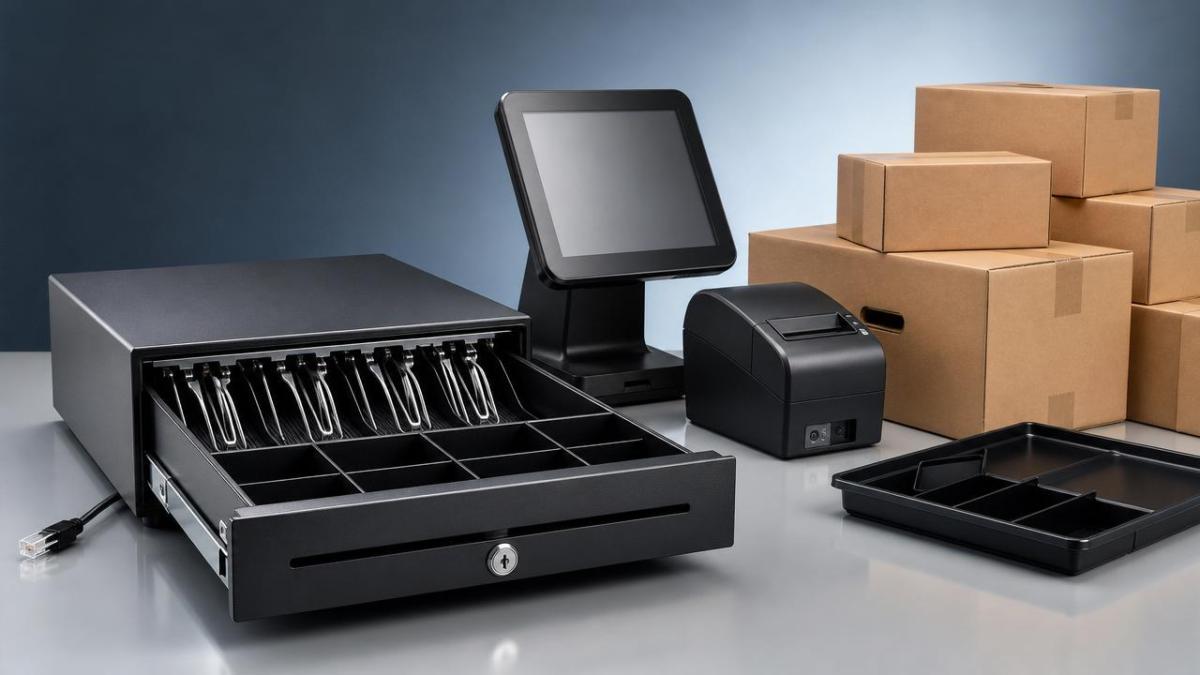
Procurement teams often see cash drawers as simple checkout accessories. In practice, they are mechanical, electrical, and operational components inside a revenue-critical POS system.
A poor cash drawers wholesale decision can create drawer jams, wrong cable interfaces, oversized counters, weak key control, or inconsistent till layouts across branches.
At TechStat Vanguard, the sourcing lens is simple: remove marketing noise and compare measurable parameters. Drawer life cycle, steel thickness, solenoid voltage, media slot design, and interface behavior matter more than vague claims.
- Retail chains need consistent dimensions, standardized tills, and predictable replacement parts across multiple store formats.
- Hospitality operators need rapid open-close cycles, spill-resistant counters, and easy cashier shift reconciliation.
- Service counters need compact installation, secure storage for mixed payments, and compatibility with receipt printer kick ports.
- Procurement managers need clear supplier data, not only unit price, to avoid hidden installation and support costs.
When cash drawers wholesale sourcing is approached as a specification exercise, suppliers become easier to compare and purchase risks become easier to control.
Which Drawer Size Fits Your Checkout Environment?
Size selection affects counter layout, cashier movement, cash capacity, and shipping cost. Before requesting quotes, procurement teams should map the drawer footprint against the actual checkout furniture.
The table below provides a practical sizing reference for cash drawers wholesale evaluation across common commercial settings.
The lowest-priced drawer may become expensive if it forces counter modification. For cash drawers wholesale orders, sample testing on one real checkout station is safer than relying on catalog dimensions alone.
How to Validate Size Before Bulk Ordering
Measure the counter depth, open-drawer clearance, printer position, cable path, and cashier standing zone. Then confirm whether the drawer can open fully without hitting shelves, scanners, or customer-facing devices.
Locks, Tills, and Loss Prevention: What Should Procurement Teams Check?
Cash control is not only a security department issue. It directly affects procurement because lock type, key strategy, and removable till design influence replacement cost and store operations.
When buying cash drawers wholesale, ask suppliers for exact lock descriptions and replacement part availability. Generic phrases such as “secure lock” are not enough for multi-site deployment.
- Three-position locks typically support open, online, and locked states, allowing operational flexibility during POS service interruptions.
- Key-alike programs can simplify store management, but they increase risk if a key is lost across many locations.
- Key-different configurations improve separation between branches, although they require stricter key tracking and spare key administration.
- Removable tills accelerate shift changes, but buyers should confirm insert material, bill clip tension, and coin cup stability.
A practical compromise is to segment keying by region, store format, or risk level. This makes cash drawers wholesale deployment more manageable without creating a single point of failure.
POS Compatibility: Interface Type Is a Critical Procurement Filter
A cash drawer does not operate independently in most checkout environments. It opens through a POS terminal, receipt printer, or controller command, depending on system architecture.
For cash drawers wholesale sourcing, interface mismatch is one of the most common causes of returns. The table below summarizes common connection paths and decision points.
Compatibility should be verified with exact printer models, POS terminals, and software behavior. A small pilot batch can expose issues before a cash drawers wholesale order reaches every branch.
Cable and Voltage Details That Are Often Missed
Do not assume all RJ-style connectors behave identically. Procurement teams should request wiring diagrams, solenoid voltage requirements, connector type, cable length, and replacement cable availability.
Where possible, document compatible device combinations in a sourcing specification. This prevents future buyers from repeating the same validation work.
Duty Cycle, Materials, and Mechanical Reliability
High-traffic cash handling depends on repeatable mechanical performance. Drawer slides, rollers, latch systems, springs, and solenoids determine whether the unit remains reliable after months of checkout activity.
For cash drawers wholesale evaluations, buyers should ask for comparable mechanical parameters rather than only accepting “heavy-duty” or “commercial grade” descriptions.
TSV’s data-driven procurement philosophy is useful here: define what must be measured, request the evidence, then compare suppliers using the same yardstick.
Cost Analysis: Unit Price Is Only One Part of Wholesale Value
A cash drawers wholesale quotation should be evaluated as a total deployment cost. Freight, packaging, spare parts, dead-on-arrival handling, and branch-level installation time may change the real economics.
- Compare landed cost, including duties, local transport, palletization, and damage-resistant packaging for bulk shipments.
- Request spare till inserts, lock cylinders, cables, mounting brackets, and keys as separate line items.
- Estimate installation labor by store format, especially when under-counter mounting or cable rerouting is needed.
- Define warranty handling rules, including whether defective units are replaced, repaired, credited, or returned for inspection.
Bulk purchasing power is valuable, but a lower unit price can disappear if replacement cables are unavailable or if packaging causes high transport damage.
When Should You Pay More?
Paying more can be rational when the drawer has verified compatibility, stronger service parts support, documented cycle testing, and better packaging for long-distance logistics.
Supplier Qualification Checklist for Cash Drawers Wholesale
Procurement risk drops when the supplier evaluation process is explicit. Instead of collecting promotional claims, ask for documents, samples, drawings, and operational commitments.
- Request dimensional drawings with tolerances for drawer body, open depth, mounting holes, cable exit, and till layout.
- Ask for packaging specifications, carton drop-test references if available, pallet quantity, and gross weight for logistics planning.
- Confirm compatibility samples with the buyer’s actual POS printer, POS terminal, and operating software before mass production.
- Clarify production lead time, inspection checkpoints, acceptable quality limits, and shipment split options for phased rollout.
- Document spare part continuity, including keys, locks, till trays, coin cups, bill clips, and interface cables.
A reliable supplier should be able to respond with measurable details. If the response remains vague, the cash drawers wholesale project may carry avoidable rollout risk.
Compliance, Safety, and Documentation Expectations
Cash drawers are not usually the most regulated POS component, but documentation still matters. Electrical interfaces, materials, packaging, and regional import requirements can affect purchasing decisions.
The following table helps procurement teams align technical documents with internal review and import compliance expectations.
For cash drawers wholesale programs across countries, importers should also review labeling, carton markings, and local electrical documentation requirements with compliance teams.
Common Mistakes That Delay Bulk Deployment
Many project delays are preventable. They usually come from assumptions made during quotation, not from complex technical barriers.
- Ordering only by exterior size while ignoring open-drawer clearance and cashier working space.
- Assuming every receipt printer can trigger every drawer without checking voltage and pin assignment.
- Selecting one till layout globally while store cash denominations and transaction habits differ by region.
- Failing to include spare keys, cables, and till trays in the first cash drawers wholesale purchase.
- Approving a sample without testing loaded drawers during actual cashier operations and peak transaction periods.
The best corrective action is a controlled pilot. Test five to twenty units across representative sites, then refine specifications before releasing the full purchase order.
FAQ: Practical Questions Before Buying Cash Drawers Wholesale
How many samples should procurement request before a bulk order?
For cash drawers wholesale sourcing, request enough samples to test each store format, POS printer type, and mounting condition. One sample may not reveal cable, clearance, or till workflow issues.
Are heavy-duty cash drawers always the better choice?
Not always. Heavy-duty units can be more durable, but they may cost more, weigh more, and require stronger counters. Match duty cycle to transaction volume.
What is the biggest hidden risk in POS cash drawer procurement?
Interface mismatch is the most common hidden risk. The drawer, printer, cable, voltage, pinout, and POS command behavior must work as one system.
Should buyers choose key-alike or key-different locks?
Key-alike locks simplify operations across many drawers, while key-different locks improve separation between sites. Many buyers segment lock strategy by region or store risk level.
Why Choose TechStat Vanguard for Sourcing Clarity?
TechStat Vanguard supports procurement teams by turning supplier claims into measurable comparison points. Our approach is built around data, tolerance, compatibility, and traceable decision logic.
For cash drawers wholesale projects, TSV can help structure specification reviews, supplier questionnaires, sample validation plans, and parameter-based comparison matrices before bulk purchasing.
- Consult us for drawer size confirmation, till layout review, interface matching, and POS compatibility risk checks.
- Request support in comparing quotations by landed cost, warranty terms, spare parts, packaging, and delivery schedule.
- Use TSV-style specification discipline to define sample testing, inspection criteria, and rollout documentation for multi-site deployment.
- Discuss customized sourcing needs, including lock strategy, bracket requirements, regional compliance expectations, and phased shipment planning.
If your team is preparing a cash drawers wholesale RFQ, start with parameter confirmation rather than price alone. Clear data reduces mismatch, protects checkout uptime, and improves long-term procurement value.
Search News
Hot Articles
- Carbon Fiber StructuresHow to Specify Aerospace Carbon Fiber Assemblies for Lightweight, Load-Bearing PartsJul 11, 2026
- Machine VisionXiaomi, Alibaba DAMO Academy Drive Open-Source Robotics Model Ecosystem, Lowering Algorithm Development Barriers for Overseas SMEs Adopting Chinese Robotics SolutionsMar 30, 2026
- Cobots & ArmsShanxi 'AI+' Conference Showcases Embodied Intelligence with Multinational Buyer Engagement: Key Industry ImplicationsMar 30, 2026
Popular Tags
Recommended News
 Jul 11, 2026How to Specify Aerospace Carbon Fiber Assemblies for Lightweight, Load-Bearing PartsAerospace carbon fiber assemblies: learn how to specify laminate design, load data, joining methods, and inspection controls for lighter, reliable load-bearing aerospace parts.Elena Rostova (UAV Systems Researcher)
 Mar 30, 2026Xiaomi, Alibaba DAMO Academy Drive Open-Source Robotics Model Ecosystem, Lowering Algorithm Development Barriers for Overseas SMEs Adopting Chinese Robotics SolutionsXiaomi & Alibaba DAMO Academy's open-source robotics models lower algorithm barriers for global SMEs. Boost efficiency in manufacturing, logistics & smart retail with ROS 2 compatible solutions.TSV Data Lab
 Mar 30, 2026Shanxi 'AI+' Conference Showcases Embodied Intelligence with Multinational Buyer Engagement: Key Industry ImplicationsShanxi 'AI+' Conference highlights embodied intelligence with Tesla, Ubtech & Jiantao showcasing multimodal robotics. 40+ global buyers validated tech on-site, creating new B2B channels for industrial automation & AI solutions.Chen Wei (Automation Lead Engineer)
 Mar 30, 2026Zhongguancun Unveils 6G Integrated Sensing-Computing-Intelligence Platform to Empower Embodied Robots for Global Industrial ApplicationsZhongguancun's new 6G platform revolutionizes industrial robotics with <10ms latency, empowering global automotive, logistics & port automation. Discover how this tech boosts China's smart manufacturing exports.TSV Data Lab
 Mar 30, 2026Mech-Mind Tianjin Embodied Intelligence R&D and Production Base Goes Live, Cutting Delivery Time by 20%–30% for Global Customized AMR+Vision SolutionsMech-Mind's Tianjin AMR+Vision production base cuts delivery time by 20%-30% for欧美 & Latin American markets. Discover how this PLd-certified facility accelerates customized robotics solutions for smart manufacturing and logistics.Chen Wei (Automation Lead Engineer)
 Mar 30, 2026Boao Forum Reveals 'Co-evolution of Big and Small Brains' Trend in Humanoid Robots, China's Embodied Intelligence Accelerates Adaptation to Overseas Manufacturing Service ScenariosDiscover how China's humanoid robots, featuring 'Co-evolution of Big and Small Brains,' are revolutionizing global manufacturing. Learn about Embodied Tian Gong 3.0's ISO compliance and overseas deployment at Boao Forum 2026.Chen Wei (Automation Lead Engineer)
 Mar 30, 2026China Railway Industrial Secures Patent for Embodied Robotics in Material Handling, Boosting High-Precision Delivery Capabilities for Overseas Infrastructure and Manufacturing ProjectsChina Railway Industrial's new patent for embodied robotics in material handling boosts high-precision delivery for global infrastructure & manufacturing. Discover how this innovation enhances logistics accuracy in automotive, rail transit & EPC projects.Chen Wei (Automation Lead Engineer)
 Oct 16, 2026Choosing a Rugged Edge AI Box Supplier: Thermal Tests and Lifecycle SupportChoose a rugged edge AI box supplier with proven thermal performance and reliable lifecycle support. Discover the tests and commitments to verify before you buy.TSV Data Lab
 Oct 15, 2026R&D Cost Reduction Services: How to Evaluate Fees, Savings, and ROIEvaluate R&D cost reduction services with confidence. Compare fees, verify savings, and calculate ROI without compromising performance. Discover how to choose a provider that delivers real value.Chen Wei (Automation Lead Engineer)
 Oct 16, 2026How Can You Fairly Compare MTBF Across Industrial Servo Motors?Make a fair industrial servo motor MTBF comparison with matched operating profiles, failure criteria, and confidence bounds. Discover how to assess reliability beyond advertised numbers.Chen Wei (Automation Lead Engineer)
 Oct 15, 2026How Should You Compare TechStat Vanguard 5-Axis CNC Tolerances?TechStat Vanguard 5-axis CNC tolerance comparison: learn how to verify part accuracy, assess inspection evidence, and choose suppliers that reliably meet your drawing requirements.Dr. Marcus Vance
 Oct 14, 2026Drone Frame Composites: Carbon Fiber vs. Fiberglass for Weight and StiffnessExplore drone structural materials composites: compare carbon fiber and fiberglass for weight, stiffness, cost, and antenna compatibility. Find the right material for your drone frame.Elena Rostova (UAV Systems Researcher)
 Oct 13, 2026Smart Cameras vs. PC-Based Machine Vision: Which Fits High-Speed Inspection?This industrial product comparison for machine vision weighs smart cameras vs. PC-based systems on latency, throughput, and cost. Discover your best fit for high-speed inspection.TSV Data Lab
 Oct 12, 2026How to Verify RoHS Compliance in Industrial Sensing Systems Before DeploymentRoHS compliant sensing systems: learn how to verify materials, supplier declarations, testing, and configuration controls before industrial deployment.TSV Data Lab
 Oct 11, 2026How Procurement-Oriented Content Taxonomy Improves B2B Buying JourneysProcurement-oriented content taxonomy streamlines B2B buying journeys with clearer evidence, supplier comparisons, risk visibility, and faster approvals.TSV Data Lab
 Oct 10, 2026How to Select a Machine Performance Monitoring Platform for OEE and Downtime ReductionMachine performance monitoring platform selection guide: validate machine states, OEE data, downtime reasons, integrations, and scalability to reduce losses with confidence.TSV Data Lab
 Oct 08, 2026How to Machine Inconel 625 Blades Without Heat Cracks or Edge ChippingInconel 625 blade machining guide: prevent heat cracks, edge chipping, chatter, and work hardening with proven tooling, cooling, fixturing, and inspection strategies.Dr. Marcus Vance
 Oct 07, 2026How to Evaluate an HMI Panel Distributor for Industrial Automation ProjectsHMI panel distributor evaluation guide: verify technical compatibility, traceability, supply reliability, lifecycle support, and total cost for automation projects.Victor Lin (Chief Software Architect)
 Oct 06, 2026Navigation Fault Tolerance Standards for AMRs: What Safety Teams Must VerifyNavigation fault tolerance standards: learn what AMR safety teams must verify, from localization loss and sensor faults to stopping distance, safe restart, and site-specific validation.Chen Wei (Automation Lead Engineer)
 Oct 05, 2026Calculating Edge Computing Total Cost of Ownership Across Distributed SitesEdge computing ownership cost explained: calculate deployment, energy, connectivity, security, remote support, and refresh costs across distributed sites.TSV Data Lab
 Oct 04, 2026CAD/CAM Benchmarking in the GCC: What Manufacturers Should Ask a ConsultantCAD CAM benchmark consultant GCC guide: learn the key questions manufacturers should ask to validate post-processors, workflows, machine performance, and production risk.Victor Lin (Chief Software Architect)
 Oct 03, 2026Selecting Automotive Radar Sensor Modules for ADAS Range, Resolution, and IntegrationAutomotive radar sensor module selection guide for ADAS: compare range, resolution, field of view, latency, and integration to build safer, reliable vehicle systems.TSV Data Lab
 Oct 02, 2026How to Qualify Machined Parts Suppliers for Hard Tech ProgramsHard tech supply chain machined parts demand rigorous supplier qualification. Learn how to assess capability, traceability, quality controls, and delivery resilience.Dr. Marcus Vance
 Oct 01, 2026How to Select an Outdoor Security Radar Sensor for Perimeter Detection?Outdoor security radar sensor selection guide: compare range, accuracy, false-alarm control, integration, and field testing for reliable perimeter detection.TSV Data Lab























