6 Axis Robot Arm Wholesale Pricing Is Not the Real Cost
Publication Date
author
For financial approvers, 6 axis robot arm wholesale quotes rarely reveal the full investment picture.
A low entry price can hide integration delays, software limits, spare part exposure, and unstable cycle performance.
In practice, the true cost of 6 axis robot arm wholesale depends on lifecycle economics, not invoice value alone.
This matters across general industry, where welding, tending, palletizing, inspection, and assembly require stable throughput and predictable maintenance.
At TechStat Vanguard, the useful question is simple: what does the robot cost after commissioning, downtime, and five years of operation?
What 6 Axis Robot Arm Wholesale Pricing Usually Includes
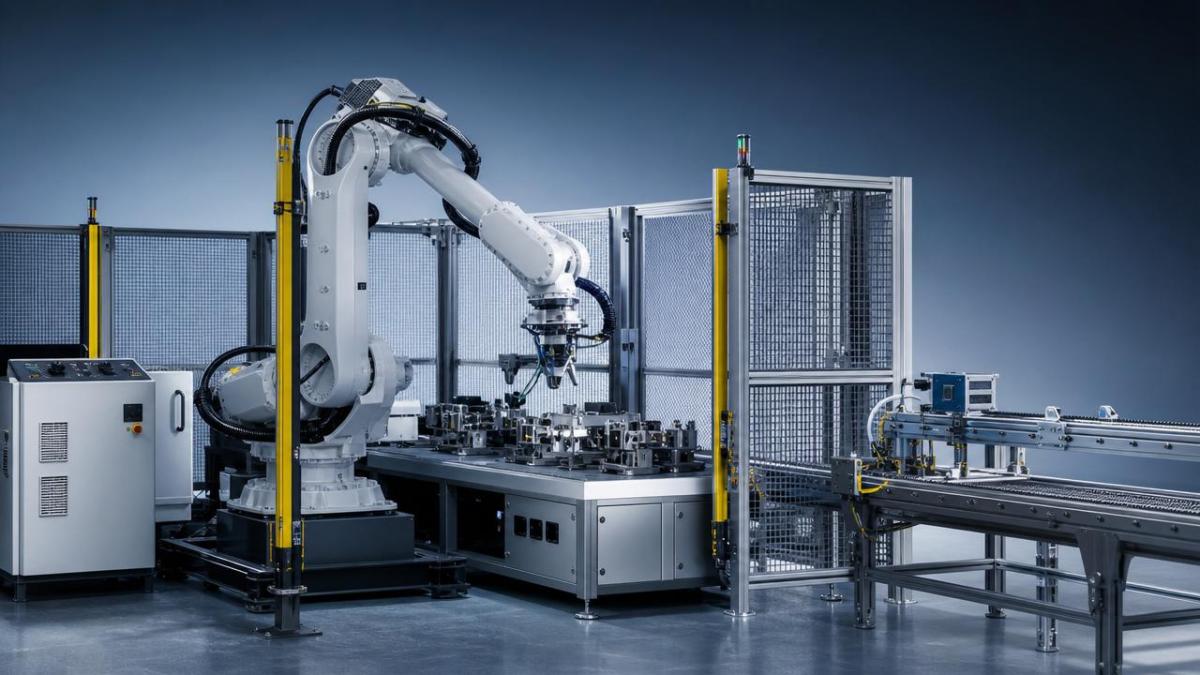
Most 6 axis robot arm wholesale quotations cover the manipulator, controller, standard teach pendant, and basic documentation.
Some packages also include a base plate, limited cables, or factory acceptance testing.
However, many cost drivers sit outside the quoted hardware scope.
These hidden items often determine whether a low-cost robot becomes a high-cost automation asset.
- End-of-arm tooling and grippers
- Safety fencing, scanners, and interlocks
- Offline programming and simulation licenses
- PLC, MES, and vision integration
- Commissioning labor and operator training
- Spare parts kits and local service support
That is why comparing two 6 axis robot arm wholesale offers by unit price alone creates misleading conclusions.
The Difference Between Price and Real Cost
Real cost combines capital expense, engineering effort, operating efficiency, and interruption risk.
A cheaper robot can become more expensive if repeatability drifts, service lead time is long, or software cannot support process changes.
A practical view is total cost of ownership, or TCO.
When reviewing 6 axis robot arm wholesale proposals, TCO reveals whether the apparent discount is genuine or temporary.
Current Industry Signals Affecting 6 Axis Robot Arm Wholesale Decisions
The market for 6 axis robot arm wholesale is shaped by more than labor substitution.
Demand now reflects flexibility, digital compatibility, and resilience under supply chain uncertainty.
- Mixed-product lines require fast program switching and easier redeployment.
- Shorter product cycles increase the value of simulation and offline programming.
- Energy costs raise interest in servo efficiency and standby consumption.
- Traceability requirements make controller data access more important.
- Service localization now matters as much as hardware specifications.
In this environment, the best 6 axis robot arm wholesale option is often the system with fewer operational unknowns.
That aligns with TSV’s approach: parameters matter, but supportability and measurable uptime matter more.
Key Cost Drivers Behind Lifecycle Performance
Integration Complexity
A robot rarely operates alone.
It must communicate with conveyors, fixtures, sensors, safety systems, and factory software.
If integration libraries are limited, engineering hours rise quickly.
Repeatability Under Real Load
Catalog repeatability may look strong, yet actual performance can change with offset tooling and dynamic motion.
Poor path consistency increases scrap, rework, and inspection burden.
Serviceability and Spares
A low-cost 6 axis robot arm wholesale deal loses value when a failed reducer stops production for weeks.
Local parts availability and remote diagnostics deserve financial weighting.
Software Ecosystem
Controller usability, simulation tools, and code portability affect every future line modification.
Rigid or proprietary environments can create long-term vendor lock-in.
Energy and Duty Cycle
Continuous operation exposes hidden power consumption and thermal stress.
Over several years, these factors affect operating cost and reliability.
Application Value Across General Industry
A 6 axis robot arm wholesale program can still deliver excellent value when matched to the right process profile.
The benefit comes from consistency, labor stabilization, and safer handling of repetitive tasks.
The strongest return appears when the robot’s kinematics, software, and maintenance model fit the application’s real operating envelope.
Practical Evaluation Framework Before Committing
Before accepting any 6 axis robot arm wholesale quote, create a decision sheet that extends beyond commercial terms.
- Define payload, reach, duty cycle, and accuracy under actual tooling conditions.
- Request controller, fieldbus, and software license details in writing.
- Map preventive maintenance intervals and annual consumable needs.
- Verify local service response time and spare parts stocking policy.
- Estimate downtime cost per hour, then test failure scenario exposure.
- Compare expected output, scrap rate, and energy use, not just robot price.
This process turns 6 axis robot arm wholesale selection into an engineering decision rather than a catalog comparison.
Common Misreadings in Wholesale Robot Comparisons
Several errors repeatedly distort cost evaluation.
- Assuming all repeatability figures reflect identical test methods
- Treating optional software as included operating capability
- Ignoring integration labor for safety and communication layers
- Overlooking long-term gearbox, cable, and battery replacement cycles
- Failing to price downtime caused by remote-only support models
Each issue can shift the real economics of 6 axis robot arm wholesale far beyond the initial discount shown on paper.
Operational Guidance for Better Long-Term Value
Better outcomes come from disciplined specification and measurable acceptance standards.
Use benchmark trials that reflect real parts, real cycle times, and real shift duration.
Document motion accuracy under load, controller openness, and expected recovery time after failure.
Where possible, connect 6 axis robot arm wholesale evaluation to plant KPIs such as OEE, scrap, and maintenance hours.
That creates traceable value and reduces the risk of buying a low-price system with high operational friction.
Next-Step View
The most useful 6 axis robot arm wholesale analysis starts after the quotation arrives, not before.
Review the full technical scope, service structure, software path, and downtime exposure as one financial model.
That approach reflects the TSV principle: engineering truth comes from verified operating data, not headline pricing.
When cost is measured across years of production, the real winner is rarely the cheapest quote.
Search News
Hot Articles
- Carbon Fiber StructuresHow to Specify Aerospace Carbon Fiber Assemblies for Lightweight, Load-Bearing PartsJul 11, 2026
- Machine VisionXiaomi, Alibaba DAMO Academy Drive Open-Source Robotics Model Ecosystem, Lowering Algorithm Development Barriers for Overseas SMEs Adopting Chinese Robotics SolutionsMar 30, 2026
- Cobots & ArmsShanxi 'AI+' Conference Showcases Embodied Intelligence with Multinational Buyer Engagement: Key Industry ImplicationsMar 30, 2026
Popular Tags
Recommended News
 Jul 11, 2026How to Specify Aerospace Carbon Fiber Assemblies for Lightweight, Load-Bearing PartsAerospace carbon fiber assemblies: learn how to specify laminate design, load data, joining methods, and inspection controls for lighter, reliable load-bearing aerospace parts.Elena Rostova (UAV Systems Researcher)
 Mar 30, 2026Xiaomi, Alibaba DAMO Academy Drive Open-Source Robotics Model Ecosystem, Lowering Algorithm Development Barriers for Overseas SMEs Adopting Chinese Robotics SolutionsXiaomi & Alibaba DAMO Academy's open-source robotics models lower algorithm barriers for global SMEs. Boost efficiency in manufacturing, logistics & smart retail with ROS 2 compatible solutions.TSV Data Lab
 Mar 30, 2026Shanxi 'AI+' Conference Showcases Embodied Intelligence with Multinational Buyer Engagement: Key Industry ImplicationsShanxi 'AI+' Conference highlights embodied intelligence with Tesla, Ubtech & Jiantao showcasing multimodal robotics. 40+ global buyers validated tech on-site, creating new B2B channels for industrial automation & AI solutions.Chen Wei (Automation Lead Engineer)
 Mar 30, 2026Zhongguancun Unveils 6G Integrated Sensing-Computing-Intelligence Platform to Empower Embodied Robots for Global Industrial ApplicationsZhongguancun's new 6G platform revolutionizes industrial robotics with <10ms latency, empowering global automotive, logistics & port automation. Discover how this tech boosts China's smart manufacturing exports.TSV Data Lab
 Mar 30, 2026Mech-Mind Tianjin Embodied Intelligence R&D and Production Base Goes Live, Cutting Delivery Time by 20%–30% for Global Customized AMR+Vision SolutionsMech-Mind's Tianjin AMR+Vision production base cuts delivery time by 20%-30% for欧美 & Latin American markets. Discover how this PLd-certified facility accelerates customized robotics solutions for smart manufacturing and logistics.Chen Wei (Automation Lead Engineer)
 Mar 30, 2026Boao Forum Reveals 'Co-evolution of Big and Small Brains' Trend in Humanoid Robots, China's Embodied Intelligence Accelerates Adaptation to Overseas Manufacturing Service ScenariosDiscover how China's humanoid robots, featuring 'Co-evolution of Big and Small Brains,' are revolutionizing global manufacturing. Learn about Embodied Tian Gong 3.0's ISO compliance and overseas deployment at Boao Forum 2026.Chen Wei (Automation Lead Engineer)
 Mar 30, 2026China Railway Industrial Secures Patent for Embodied Robotics in Material Handling, Boosting High-Precision Delivery Capabilities for Overseas Infrastructure and Manufacturing ProjectsChina Railway Industrial's new patent for embodied robotics in material handling boosts high-precision delivery for global infrastructure & manufacturing. Discover how this innovation enhances logistics accuracy in automotive, rail transit & EPC projects.Chen Wei (Automation Lead Engineer)
 Sep 28, 2026Spindle Runout Measurement in Germany: DIN Standards, Methods, and Acceptance LimitsSpindle runout measurement Germany: explore DIN standards, proven methods, acceptance limits, and audit-ready practices for reliable machining quality.Dr. Marcus Vance
 Sep 27, 2026How to Select Wall-Mount Edge Devices for Space-Constrained Factory NetworksWall mount edge devices for space-constrained factories: evaluate workload, thermal design, power resilience, cable access, and network reliability for smarter deployments.TSV Data Lab
 Sep 26, 2026Machining Tolerance Analysis: How to Set Limits That Meet Function and Cost TargetsMachining tolerance analysis: learn how to set functional limits, control tolerance stacks, reduce inspection risk, and balance precision with production cost.Dr. Marcus Vance
 Sep 25, 2026How to Evaluate an Industrial Infrastructure Data Platform for Multi-Site OperationsIndustrial infrastructure data platform evaluation guide for multi-site operations: compare data quality, edge resilience, interoperability, governance, and scalable proof-of-value criteria.Victor Lin (Chief Software Architect)
 Sep 24, 2026How to Select Machine Vision Optics for Accurate Inspection at Different Working DistancesMachine vision optics selection guide for accurate inspection at every working distance. Compare FOV, pixel scale, DOF, distortion, lighting, and telecentric options.TSV Data Lab
 Sep 23, 2026How to Evaluate a Machine Vision System Integrator for High-Speed Inspection LinesChoose a machine vision system integrator with proven expertise in high-speed inspection, reliable reject timing, robust optics, and measurable acceptance criteria.TSV Data Lab
 Sep 28, 2026When is a SCADA API the right choice for connecting plant systems?SCADA API guide: learn when governed plant data integration improves traceability, security, and scalability—without compromising real-time control.Victor Lin (Chief Software Architect)
 Sep 27, 2026How SCADA data integration improves traceability across production linesSCADA data integration connects production-line data to improve traceability, accelerate quality investigations, and strengthen safety decisions.Victor Lin (Chief Software Architect)
 Sep 26, 2026What to define before starting SCADA integration planningSCADA integration planning starts with clear scope, control boundaries, data models, cybersecurity, and testing. Discover the definitions that reduce risk and costly rework.Victor Lin (Chief Software Architect)
 Sep 25, 2026How a smart factory with Industrial IoT reduces production blind spotsDiscover how a smart factory with Industrial IoT turns real-time machine, quality, and workflow data into actionable insights that reduce production blind spots and delivery risks.Victor Lin (Chief Software Architect)
 Sep 24, 2026When does Industrial IoT make smart manufacturing easier to scale?Smart manufacturing Industrial IoT scales when trusted data, interoperable systems, and secure workflows turn connected assets into measurable gains.TSV Data Lab
 Sep 23, 2026What drives ultra-precision machining cost at 1-micron tolerance?Ultra precision machining cost per part at 1 micron tolerance depends on process, material, metrology, and yield. Learn how to compare quotes confidently.Dr. Marcus Vance
 Sep 22, 2026Drone Engine-T550CC Applications: Build the UAV Power System Around the MissionAn application guide for Drone Engine-T550CC integration, covering payload planning, airframe matching, cooling, fuel, vibration, test procedures, documentation, and service preparation.Elena Rostova (UAV Systems Researcher)
 Sep 22, 2026How to Evaluate Industrial Edge Computing Vendors for Factory DeploymentIndustrial edge computing vendor evaluation guide for factories: compare latency, protocol fit, reliability, security, and lifecycle support before deployment.TSV Data Lab
 Sep 21, 2026Drone Payload Integration: Matching Power, Data, and Center of Gravity for Reliable FlightsDrone payload integration made practical: balance power, data, center of gravity, and endurance to build safer, more reliable mission-ready flights.Elena Rostova (UAV Systems Researcher)
 Sep 20, 2026Autonomous Navigation Pricing: Cost Drivers and Budget Benchmarks for AMR ProjectsAutonomous navigation price explained: compare AMR cost drivers, software, sensors, integration, safety, and lifecycle budgets to build a scalable project plan.Chen Wei (Automation Lead Engineer)
 Sep 19, 2026How to Scope Automation Integration Services for Multi-System Factory ProjectsAutomation integration services: learn how to scope multi-system factory projects with clear workflows, interface contracts, safety boundaries, and acceptance criteria.Victor Lin (Chief Software Architect)