Why warehouse sorting robot wholesale prices vary so much
Publication Date
author
Why do warehouse sorting robot wholesale prices swing so widely from one supplier to another? The short answer is that unit price reflects far more than a chassis, a battery, or a quoted payload. In this market, cost is shaped by navigation architecture, sensor stack, sorting accuracy, software depth, safety compliance, component origin, and lifecycle support. For any technical evaluation, the real question is not “Which quote is lower?” but “What engineering capability is actually included?”
That is why a checklist-based method matters. It turns a confusing supplier comparison into a structured review of performance thresholds, integration workload, and hidden operating risk. In warehouse sorting robot wholesale sourcing, a cheap quote can become expensive after deployment, while a higher quote may include the controls, data interfaces, and durability needed for stable throughput.
Why warehouse sorting robot wholesale quotes differ at the engineering level
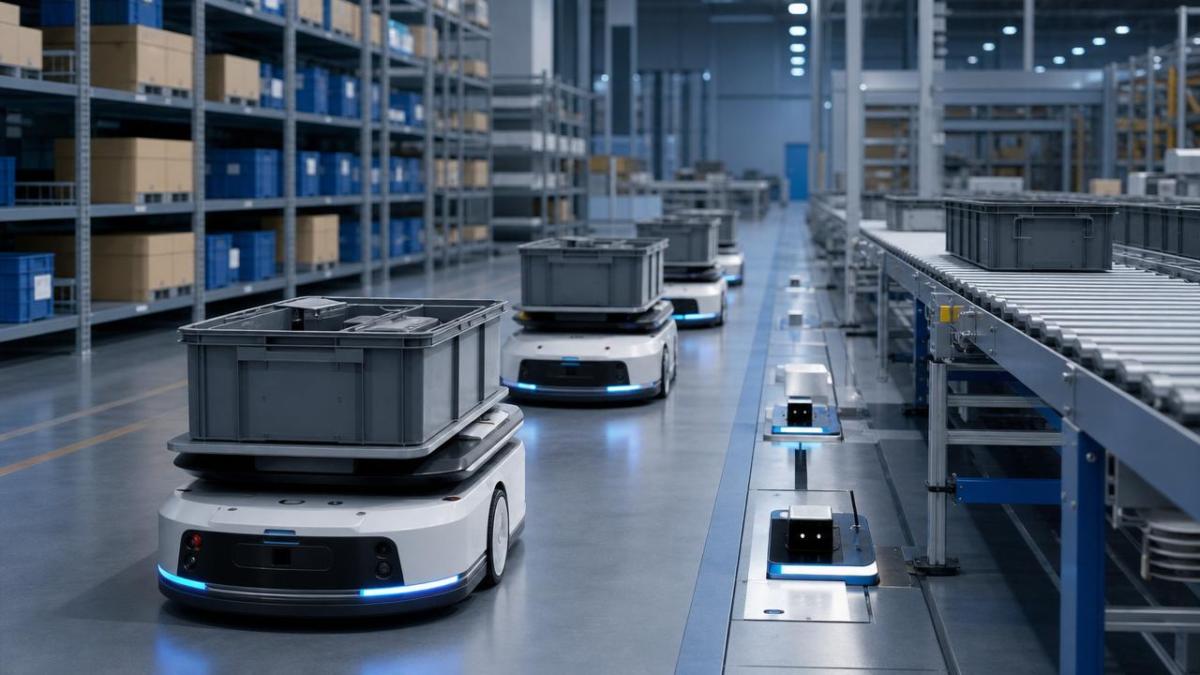
The largest price gaps usually come from architecture, not appearance. Two robots may look similar in brochures, yet one may use basic QR code navigation while another runs SLAM with obstacle prediction and fleet coordination. Those are not cosmetic differences. They change routing precision, labor savings, and failure rates.
Another driver is specification honesty. Some suppliers quote peak payload, ideal sorting speed, or lab-tested battery endurance. Others quote continuous operating figures under real warehouse conditions. In warehouse sorting robot wholesale, comparing unmatched test standards leads directly to misleading price conclusions.
Checklist for evaluating warehouse sorting robot wholesale pricing
Use the following checklist to identify what is truly included in a warehouse sorting robot wholesale offer and where cost differences originate.
- Verify navigation method. Check whether the robot uses magnetic strip, QR code, laser SLAM, visual SLAM, or hybrid navigation, because autonomy level heavily affects price and deployment flexibility.
- Confirm payload class. Separate nominal payload from continuous payload, incline performance, and center-of-gravity limits, since heavier-duty frames, motors, and reducers raise cost significantly.
- Measure sorting accuracy. Request error rate, repeatability, missed-bin frequency, and recovery logic, because low pricing often hides weaker sensing or looser motion control tolerances.
- Check throughput assumptions. Ask whether quoted parcels per hour depend on standard carton sizes, fixed aisle width, or ideal traffic conditions that rarely exist in working sites.
- Inspect sensor configuration. Compare LiDAR count, depth cameras, bumper sensors, encoder resolution, and safety scanners, since the sensor stack is a major contributor to robot cost.
- Review software scope. Determine whether fleet management, task scheduling, API access, map editing, data dashboards, and WMS integration are included or sold as extra modules.
- Audit battery and charging design. Evaluate chemistry, cycle life, swap versus auto-charging, charge time, and thermal protection, because uptime architecture affects both price and operating stability.
- Trace core components. Identify motor brands, controllers, bearings, safety PLCs, and communication modules, since traceable industrial-grade components cost more but reduce long-term risk.
- Confirm compliance level. Check CE, UL-related electrical practices, EMC resilience, and warehouse safety logic, because certified designs carry higher upfront engineering and validation costs.
- Examine after-sales structure. Compare spare parts coverage, remote diagnostics, commissioning support, response time, and software update policy before judging a lower wholesale quote.
The biggest cost drivers behind warehouse sorting robot wholesale
1. Navigation and localization stack
Navigation is often the first major divider in warehouse sorting robot wholesale pricing. Entry systems using markers or fixed paths cost less, but require environmental preparation and offer limited adaptability. Advanced autonomous systems cost more because they need better sensors, stronger processors, and more mature algorithms.
If the warehouse layout changes often, paying more for flexible localization may reduce future remapping and infrastructure costs. In static environments, simpler methods may remain economical.
2. Mechanical structure and duty cycle
A robot built for 8-hour light duty is different from one designed for near-continuous multi-shift operation. Frame rigidity, wheel material, reducer selection, bearing life, and thermal management all influence price. These are hidden in photos, but visible in failure rates.
Low wholesale pricing may reflect lighter materials, lower ingress protection, or limited endurance testing. That can be acceptable for modest seasonal demand, but risky for dense fulfillment centers.
3. Software integration depth
In many projects, software explains more price variation than hardware. A quote may or may not include fleet orchestration, route optimization, dynamic traffic avoidance, dashboard reporting, exception handling, and interfaces with WMS, ERP, or conveyor controls.
For warehouse sorting robot wholesale, software omissions are a common source of hidden cost. A lower equipment price can shift integration expense to later project phases.
How pricing changes by application scenario
E-commerce fulfillment
High-SKU e-commerce operations usually need fast task switching, congestion handling, and strong integration with order systems. In this case, warehouse sorting robot wholesale pricing rises with software sophistication, not only with hardware size.
Peak-season resilience also matters. Robots may need higher battery availability, larger fleet coordination capacity, and better exception recovery for mixed parcel dimensions.
Manufacturing intralogistics
Factory environments often prioritize repeatable route discipline, MES connectivity, and compatibility with carts, racks, or fixed transfer points. Here, extreme sorting speed may matter less than stable handoff accuracy and shift-long reliability.
A lower-priced robot can work if workflows are predictable. But if the site includes mixed traffic, narrow corridors, or strict safety zoning, a more advanced platform becomes justified.
Cross-docking and parcel hubs
These sites often demand higher speed, faster obstacle handling, and stronger mechanical protection. Shock loads, uneven package flow, and long operating windows push pricing upward. The right comparison point is throughput per hour with real error rate, not headline top speed.
Commonly overlooked factors that distort wholesale price comparisons
One overlooked factor is commissioning scope. Some warehouse sorting robot wholesale quotes include mapping, calibration, training, and trial-run optimization. Others stop at equipment delivery. That difference changes total project cost immediately.
Another issue is spare parts packaging. A lower initial quote may exclude batteries, wheels, sensors, chargers, or controller backups. If uptime matters, those omissions can erase any purchase savings.
Software licensing is also frequently buried. Annual fees for fleet control, cloud dashboards, or API access can materially change the economics of a warehouse sorting robot wholesale agreement over three to five years.
Finally, traceability matters. Suppliers using well-documented industrial components often quote higher prices because they can support maintenance, replacement, and version control more reliably.
Practical steps to compare warehouse sorting robot wholesale offers correctly
- Build a single comparison sheet with navigation type, payload, sorting accuracy, throughput, battery strategy, safety features, and software modules.
- Normalize every performance claim by requesting test conditions, duty cycle assumptions, floor type, aisle width, and parcel size range.
- Separate one-time hardware cost from integration, licensing, commissioning, training, and annual service charges.
- Ask for core component lists and replacement lead times to estimate operational resilience, not just purchase price.
- Request a pilot or benchmark case with measurable KPIs before scaling a fleet-level order.
Conclusion: price variation reflects system depth, not just supplier margin
The reason warehouse sorting robot wholesale prices vary so much is simple: different quotes represent different technical realities. Navigation intelligence, component grade, duty-cycle robustness, software integration, and service coverage all reshape the final number.
The most reliable next step is to compare offers through engineering parameters and lifecycle cost, not brochure language. When the checklist is applied consistently, warehouse sorting robot wholesale decisions become clearer, risk drops, and the selected system is far more likely to perform as promised.
Search News
Hot Articles
- Carbon Fiber StructuresHow to Specify Aerospace Carbon Fiber Assemblies for Lightweight, Load-Bearing PartsJul 11, 2026
- Machine VisionXiaomi, Alibaba DAMO Academy Drive Open-Source Robotics Model Ecosystem, Lowering Algorithm Development Barriers for Overseas SMEs Adopting Chinese Robotics SolutionsMar 30, 2026
- Cobots & ArmsShanxi 'AI+' Conference Showcases Embodied Intelligence with Multinational Buyer Engagement: Key Industry ImplicationsMar 30, 2026
Popular Tags
Recommended News
 Jul 11, 2026How to Specify Aerospace Carbon Fiber Assemblies for Lightweight, Load-Bearing PartsAerospace carbon fiber assemblies: learn how to specify laminate design, load data, joining methods, and inspection controls for lighter, reliable load-bearing aerospace parts.Elena Rostova (UAV Systems Researcher)
 Mar 30, 2026Xiaomi, Alibaba DAMO Academy Drive Open-Source Robotics Model Ecosystem, Lowering Algorithm Development Barriers for Overseas SMEs Adopting Chinese Robotics SolutionsXiaomi & Alibaba DAMO Academy's open-source robotics models lower algorithm barriers for global SMEs. Boost efficiency in manufacturing, logistics & smart retail with ROS 2 compatible solutions.TSV Data Lab
 Mar 30, 2026Shanxi 'AI+' Conference Showcases Embodied Intelligence with Multinational Buyer Engagement: Key Industry ImplicationsShanxi 'AI+' Conference highlights embodied intelligence with Tesla, Ubtech & Jiantao showcasing multimodal robotics. 40+ global buyers validated tech on-site, creating new B2B channels for industrial automation & AI solutions.Chen Wei (Automation Lead Engineer)
 Mar 30, 2026Zhongguancun Unveils 6G Integrated Sensing-Computing-Intelligence Platform to Empower Embodied Robots for Global Industrial ApplicationsZhongguancun's new 6G platform revolutionizes industrial robotics with <10ms latency, empowering global automotive, logistics & port automation. Discover how this tech boosts China's smart manufacturing exports.TSV Data Lab
 Mar 30, 2026Mech-Mind Tianjin Embodied Intelligence R&D and Production Base Goes Live, Cutting Delivery Time by 20%–30% for Global Customized AMR+Vision SolutionsMech-Mind's Tianjin AMR+Vision production base cuts delivery time by 20%-30% for欧美 & Latin American markets. Discover how this PLd-certified facility accelerates customized robotics solutions for smart manufacturing and logistics.Chen Wei (Automation Lead Engineer)
 Mar 30, 2026Boao Forum Reveals 'Co-evolution of Big and Small Brains' Trend in Humanoid Robots, China's Embodied Intelligence Accelerates Adaptation to Overseas Manufacturing Service ScenariosDiscover how China's humanoid robots, featuring 'Co-evolution of Big and Small Brains,' are revolutionizing global manufacturing. Learn about Embodied Tian Gong 3.0's ISO compliance and overseas deployment at Boao Forum 2026.Chen Wei (Automation Lead Engineer)
 Mar 30, 2026China Railway Industrial Secures Patent for Embodied Robotics in Material Handling, Boosting High-Precision Delivery Capabilities for Overseas Infrastructure and Manufacturing ProjectsChina Railway Industrial's new patent for embodied robotics in material handling boosts high-precision delivery for global infrastructure & manufacturing. Discover how this innovation enhances logistics accuracy in automotive, rail transit & EPC projects.Chen Wei (Automation Lead Engineer)
 Sep 29, 2026ISO 9283 Repeatability: How to Evaluate Cobot Positioning PerformanceISO 9283 cobot repeatability explained: learn how payload, reach, approach direction, and test conditions affect positioning performance and cell capability.Chen Wei (Automation Lead Engineer)
 Sep 28, 2026Spindle Runout Measurement in Germany: DIN Standards, Methods, and Acceptance LimitsSpindle runout measurement Germany: explore DIN standards, proven methods, acceptance limits, and audit-ready practices for reliable machining quality.Dr. Marcus Vance
 Sep 27, 2026How to Select Wall-Mount Edge Devices for Space-Constrained Factory NetworksWall mount edge devices for space-constrained factories: evaluate workload, thermal design, power resilience, cable access, and network reliability for smarter deployments.TSV Data Lab
 Sep 26, 2026Machining Tolerance Analysis: How to Set Limits That Meet Function and Cost TargetsMachining tolerance analysis: learn how to set functional limits, control tolerance stacks, reduce inspection risk, and balance precision with production cost.Dr. Marcus Vance
 Sep 25, 2026How to Evaluate an Industrial Infrastructure Data Platform for Multi-Site OperationsIndustrial infrastructure data platform evaluation guide for multi-site operations: compare data quality, edge resilience, interoperability, governance, and scalable proof-of-value criteria.Victor Lin (Chief Software Architect)
 Sep 24, 2026How to Select Machine Vision Optics for Accurate Inspection at Different Working DistancesMachine vision optics selection guide for accurate inspection at every working distance. Compare FOV, pixel scale, DOF, distortion, lighting, and telecentric options.TSV Data Lab
 Sep 23, 2026How to Evaluate a Machine Vision System Integrator for High-Speed Inspection LinesChoose a machine vision system integrator with proven expertise in high-speed inspection, reliable reject timing, robust optics, and measurable acceptance criteria.TSV Data Lab
 Sep 28, 2026When is a SCADA API the right choice for connecting plant systems?SCADA API guide: learn when governed plant data integration improves traceability, security, and scalability—without compromising real-time control.Victor Lin (Chief Software Architect)
 Sep 27, 2026How SCADA data integration improves traceability across production linesSCADA data integration connects production-line data to improve traceability, accelerate quality investigations, and strengthen safety decisions.Victor Lin (Chief Software Architect)
 Sep 26, 2026What to define before starting SCADA integration planningSCADA integration planning starts with clear scope, control boundaries, data models, cybersecurity, and testing. Discover the definitions that reduce risk and costly rework.Victor Lin (Chief Software Architect)
 Sep 25, 2026How a smart factory with Industrial IoT reduces production blind spotsDiscover how a smart factory with Industrial IoT turns real-time machine, quality, and workflow data into actionable insights that reduce production blind spots and delivery risks.Victor Lin (Chief Software Architect)
 Sep 24, 2026When does Industrial IoT make smart manufacturing easier to scale?Smart manufacturing Industrial IoT scales when trusted data, interoperable systems, and secure workflows turn connected assets into measurable gains.TSV Data Lab
 Sep 23, 2026What drives ultra-precision machining cost at 1-micron tolerance?Ultra precision machining cost per part at 1 micron tolerance depends on process, material, metrology, and yield. Learn how to compare quotes confidently.Dr. Marcus Vance
 Sep 22, 2026Drone Engine-T550CC Applications: Build the UAV Power System Around the MissionAn application guide for Drone Engine-T550CC integration, covering payload planning, airframe matching, cooling, fuel, vibration, test procedures, documentation, and service preparation.Elena Rostova (UAV Systems Researcher)
 Sep 22, 2026How to Evaluate Industrial Edge Computing Vendors for Factory DeploymentIndustrial edge computing vendor evaluation guide for factories: compare latency, protocol fit, reliability, security, and lifecycle support before deployment.TSV Data Lab
 Sep 21, 2026Drone Payload Integration: Matching Power, Data, and Center of Gravity for Reliable FlightsDrone payload integration made practical: balance power, data, center of gravity, and endurance to build safer, more reliable mission-ready flights.Elena Rostova (UAV Systems Researcher)
 Sep 20, 2026Autonomous Navigation Pricing: Cost Drivers and Budget Benchmarks for AMR ProjectsAutonomous navigation price explained: compare AMR cost drivers, software, sensors, integration, safety, and lifecycle budgets to build a scalable project plan.Chen Wei (Automation Lead Engineer)