How to Verify a Heavy Duty AGV Manufacturer Before a Large Order
Publication Date
author
Before placing a high-value order, buyers need more than polished brochures and broad claims. Verifying a heavy duty agv manufacturer means examining engineering data, production consistency, compliance records, and real project performance. This guide helps procurement teams cut through marketing noise and assess whether a supplier can truly deliver reliable, scalable AGV systems for demanding industrial operations.
Why verification matters in heavy-duty AGV sourcing
A heavy duty agv manufacturer does not simply supply a vehicle. In most industrial projects, the supplier is shaping part of the customer’s internal logistics architecture, automation reliability, safety exposure, and long-term maintenance burden. That is why verification should begin long before commercial negotiation reaches unit price or lead time.
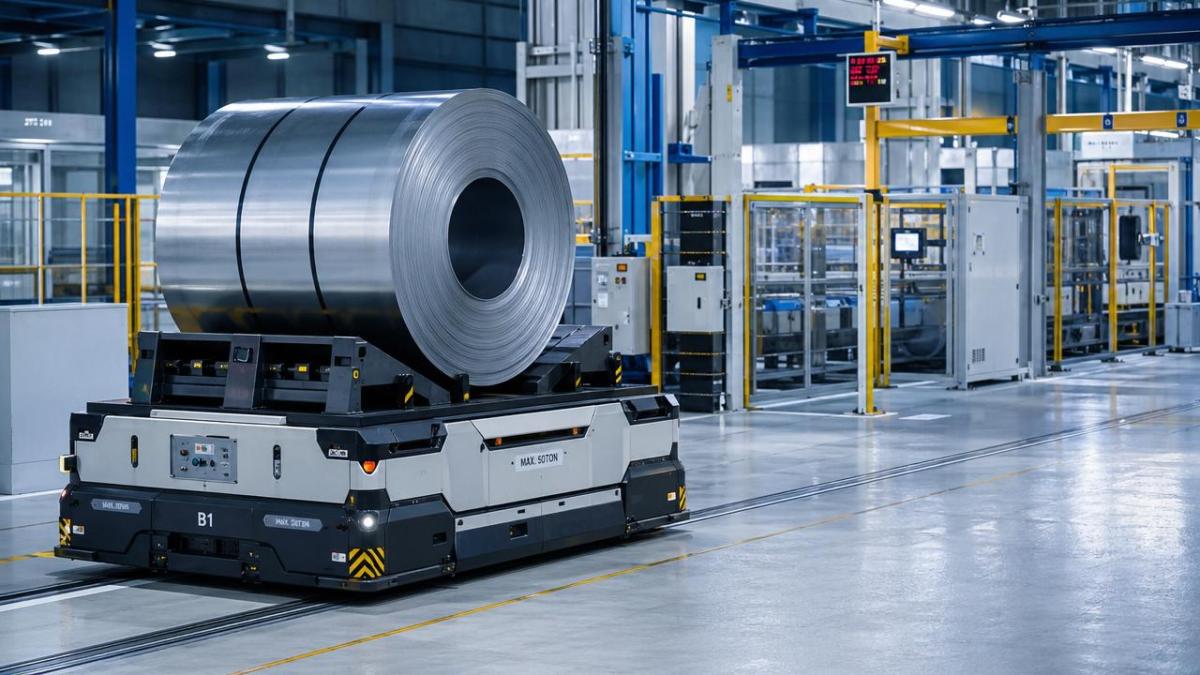
Heavy-duty AGVs are used to move steel coils, battery packs, aerospace structures, molds, paper rolls, castings, and oversized components in environments where failure is expensive. A navigation error, insufficient load margin, weak frame design, or unstable control system can interrupt production, damage assets, and create serious safety risks. For procurement teams, the real question is not whether a supplier can build an AGV, but whether it can build one that performs consistently under the exact conditions of the plant.
In today’s market, many suppliers present similar language: smart, robust, customized, high-precision, Industry 4.0 ready. These claims are easy to publish and hard to verify. Procurement professionals therefore need a data-based evaluation method that focuses on measurable engineering truth rather than presentation quality.
What “verification” should include
Verification is broader than a supplier audit checklist. It should cover product capability, manufacturing maturity, software stability, quality systems, field performance, after-sales support, and commercial transparency. A capable heavy duty agv manufacturer will normally be able to show evidence across all of these areas without relying on vague promises.
- Technical fitness for your load, route, environment, and shift pattern
- Manufacturing consistency and documented quality control
- Compliance with applicable safety and electrical standards
- Real project references with comparable duty cycles
- Service response capability and spare parts planning
This approach aligns with a broader industrial reality: buyers increasingly need parameter-level evidence. In advanced manufacturing, the cost of poor supplier qualification is often much higher than the cost of slower verification.
What defines a credible heavy duty AGV manufacturer
A credible heavy duty agv manufacturer combines mechanical engineering, controls integration, software validation, and project execution discipline. It is not enough to assemble purchased components into a mobile platform. The manufacturer must prove that the complete system can carry high loads safely, navigate reliably, and remain serviceable across years of industrial use.
For buyers, credibility usually becomes visible in the quality of details. Suppliers with real capability can explain frame structure calculations, wheel selection logic, braking redundancy, battery sizing assumptions, communication protocols, obstacle detection behavior, and failure mode handling. Weak suppliers often return to general language when asked for exact values or test conditions.
The table below helps procurement teams distinguish between surface-level claims and deeper indicators of a reliable heavy duty agv manufacturer.
Key indicators to review
Look for engineering specificity
When a heavy duty agv manufacturer can explain not just what the machine does but how and under which constraints it does it, buyers gain a stronger basis for supplier qualification. Specificity is often the clearest sign that the supplier’s design is grounded in engineering rather than sales material.
How to verify technical capability before committing
Technical verification should begin with the application itself. Procurement teams should define real operating conditions before asking suppliers for final quotations. Without a clear technical baseline, even a competent heavy duty agv manufacturer may appear comparable to an unqualified one. The result is a misleading bid comparison.
Critical variables include payload weight, load dimensions, center of gravity, floor flatness, turning radius, slope, dock interface, aisle width, ambient temperature, dust, electromagnetic interference, shift duration, and charging strategy. A supplier that requests this data early usually understands project risk better than one that issues a quick standard proposal.
Once the operating profile is clear, buyers should move from general product review to evidence-based technical validation.
Documents and tests worth requesting
- General arrangement drawings and load envelope diagrams
- Motor, reducer, controller, battery, and sensor brand lists
- Rated speed under full load and braking distance data
- Navigation accuracy results under plant-like conditions
- Finite element analysis or structural verification for frame design
- FAT checklist, acceptance criteria, and sample test records
Focus on the complete duty cycle
A specification sheet may show a maximum load rating, but procurement teams should ask whether that rating applies to continuous use, intermittent use, straight travel only, or a limited speed profile. A heavy duty agv manufacturer should clarify how performance changes when the AGV turns, stops frequently, crosses joints, or runs long shifts. This is especially important in automotive, metals, aerospace, and energy production where the duty cycle is demanding and interruptions are costly.
Software capability also deserves scrutiny. Path planning, fleet control, traffic logic, station docking, and fault recovery all affect uptime. If the supplier relies on third-party software, buyers should understand responsibility boundaries for debugging, updates, and integration support.
Manufacturing maturity, quality control, and compliance checks
Even strong designs fail in the field when manufacturing execution is weak. That is why procurement should verify whether a heavy duty agv manufacturer has stable production processes, documented inspections, and traceability for critical components. Site visits are ideal, but remote audits can still reveal much if conducted carefully.
Look at welding quality, cable routing discipline, electrical cabinet layout, labeling consistency, battery protection design, and final assembly testing. These details often reflect the supplier’s internal standards. Ask whether each unit receives functional testing, load simulation, safety checks, and software validation before shipment.
Compliance is another core issue. Depending on the market and application, buyers may need evidence linked to CE, ISO-related quality systems, electrical safety rules, or local industrial safety requirements. A serious heavy duty agv manufacturer should be ready to discuss exactly which standards apply and which documents can be supplied.
Factory audit priorities
An audit should not become a superficial showroom visit. Procurement should structure it around process evidence and consistency.
- Verify incoming inspection of key purchased parts
- Review welding, machining, and assembly controls
- Check calibration status of measuring tools
- Inspect FAT records and nonconformance handling
- Confirm spare parts stocking and service documentation
Traceability reduces future disputes
If a fault occurs after commissioning, traceability becomes essential. Buyers should ask how the manufacturer tracks controller versions, battery batches, wheel materials, and software releases. A mature heavy duty agv manufacturer can usually identify what was installed on a given unit and what changes were introduced over time. That capability shortens troubleshooting and improves lifecycle support.
Reference projects, service capability, and commercial risk review
A supplier’s installed base is one of the strongest practical indicators of reliability. However, procurement teams should go beyond counting the number of projects. The more relevant question is whether the heavy duty agv manufacturer has delivered systems comparable to your own use case in payload, route complexity, environmental conditions, and integration depth.
When reviewing references, ask about uptime, commissioning duration, software stability, spare parts availability, and post-installation responsiveness. A supplier may have impressive demonstration units but limited experience scaling across multiple vehicles or multiple plants. For large orders, this distinction matters.
Commercial risk should also be examined. Long lead projects expose buyers to schedule drift, specification changes, and support uncertainty. Financial stability, contract clarity, and warranty scope all affect total procurement risk.
Questions to ask reference customers
- Did the AGV meet the promised payload and accuracy in real use?
- How many software or hardware issues appeared in the first year?
- Was the commissioning team technically competent and responsive?
- How fast were spare parts and remote support delivered?
- Would you place a repeat order with the same heavy duty agv manufacturer?
Review total lifecycle support, not just initial supply
For procurement personnel, lifecycle support often determines whether the purchase remains successful after installation. Service manuals, training plans, preventive maintenance intervals, battery replacement policy, software update terms, and local support arrangements should all be clarified before contract signature. The most attractive quotation can become the most expensive option if service dependency is underestimated.
A practical verification framework for procurement teams
To make supplier selection more objective, procurement can use a staged verification framework. This helps teams compare each heavy duty agv manufacturer on evidence rather than presentation style. It also creates a clearer audit trail for internal approval, especially when the order value is high or the AGV project affects critical production flow.
A useful framework begins with qualification, moves into technical validation, then tests commercial readiness and support capability. Engineering, operations, EHS, and maintenance should all contribute. AGV projects often fail when one function evaluates the supplier in isolation.
Below is a simple review model that many buyers can adapt to their own risk profile.
Suggested verification stages
Final decision criteria
The best heavy duty agv manufacturer is not always the cheapest or the most well-known. The best choice is the supplier whose evidence shows repeatable technical performance, clear quality discipline, relevant project experience, and dependable lifecycle support for your operating environment. That conclusion should be supported by documents, tests, and verified references rather than assumptions.
For procurement teams working in a market crowded with broad claims, disciplined verification is a competitive advantage. It reduces commissioning surprises, protects operational continuity, and creates a stronger foundation for long-term automation investment. When evaluating a heavy duty agv manufacturer, let engineering data, process evidence, and field results lead the decision.
Search News
Hot Articles
- Carbon Fiber StructuresHow to Specify Aerospace Carbon Fiber Assemblies for Lightweight, Load-Bearing PartsJul 11, 2026
- Machine VisionXiaomi, Alibaba DAMO Academy Drive Open-Source Robotics Model Ecosystem, Lowering Algorithm Development Barriers for Overseas SMEs Adopting Chinese Robotics SolutionsMar 30, 2026
- Cobots & ArmsShanxi 'AI+' Conference Showcases Embodied Intelligence with Multinational Buyer Engagement: Key Industry ImplicationsMar 30, 2026
Popular Tags
Recommended News
 Jul 11, 2026How to Specify Aerospace Carbon Fiber Assemblies for Lightweight, Load-Bearing PartsAerospace carbon fiber assemblies: learn how to specify laminate design, load data, joining methods, and inspection controls for lighter, reliable load-bearing aerospace parts.Elena Rostova (UAV Systems Researcher)
 Mar 30, 2026Xiaomi, Alibaba DAMO Academy Drive Open-Source Robotics Model Ecosystem, Lowering Algorithm Development Barriers for Overseas SMEs Adopting Chinese Robotics SolutionsXiaomi & Alibaba DAMO Academy's open-source robotics models lower algorithm barriers for global SMEs. Boost efficiency in manufacturing, logistics & smart retail with ROS 2 compatible solutions.TSV Data Lab
 Mar 30, 2026Shanxi 'AI+' Conference Showcases Embodied Intelligence with Multinational Buyer Engagement: Key Industry ImplicationsShanxi 'AI+' Conference highlights embodied intelligence with Tesla, Ubtech & Jiantao showcasing multimodal robotics. 40+ global buyers validated tech on-site, creating new B2B channels for industrial automation & AI solutions.Chen Wei (Automation Lead Engineer)
 Mar 30, 2026Zhongguancun Unveils 6G Integrated Sensing-Computing-Intelligence Platform to Empower Embodied Robots for Global Industrial ApplicationsZhongguancun's new 6G platform revolutionizes industrial robotics with <10ms latency, empowering global automotive, logistics & port automation. Discover how this tech boosts China's smart manufacturing exports.TSV Data Lab
 Mar 30, 2026Mech-Mind Tianjin Embodied Intelligence R&D and Production Base Goes Live, Cutting Delivery Time by 20%–30% for Global Customized AMR+Vision SolutionsMech-Mind's Tianjin AMR+Vision production base cuts delivery time by 20%-30% for欧美 & Latin American markets. Discover how this PLd-certified facility accelerates customized robotics solutions for smart manufacturing and logistics.Chen Wei (Automation Lead Engineer)
 Mar 30, 2026Boao Forum Reveals 'Co-evolution of Big and Small Brains' Trend in Humanoid Robots, China's Embodied Intelligence Accelerates Adaptation to Overseas Manufacturing Service ScenariosDiscover how China's humanoid robots, featuring 'Co-evolution of Big and Small Brains,' are revolutionizing global manufacturing. Learn about Embodied Tian Gong 3.0's ISO compliance and overseas deployment at Boao Forum 2026.Chen Wei (Automation Lead Engineer)
 Mar 30, 2026China Railway Industrial Secures Patent for Embodied Robotics in Material Handling, Boosting High-Precision Delivery Capabilities for Overseas Infrastructure and Manufacturing ProjectsChina Railway Industrial's new patent for embodied robotics in material handling boosts high-precision delivery for global infrastructure & manufacturing. Discover how this innovation enhances logistics accuracy in automotive, rail transit & EPC projects.Chen Wei (Automation Lead Engineer)
 Oct 29, 2026Aerospace Aluminum Alloy Strength: 2024-T3 vs. 7075-T6 ComparedCompare aerospace aluminum alloy strength in 2024-T3 vs. 7075-T6. Explore fatigue, corrosion, and weight trade-offs to choose the right alloy for your design.Dr. Marcus Vance
 Oct 28, 2026IDC: Global Quadruped Robot Shipments Rise 92.5% in H1 2026 as Volume and Value DivergeGlobal quadruped robot shipments rose 92.5% in H1 2026, according to IDC. Explore what diverging volume and value trends mean for industrial buyers and manufacturers.Chen Wei (Automation Lead Engineer)
 Oct 28, 2026Interpreting Industrial IoT Latency Data for Monitoring and Real-Time ControlInterpret industrial category latency data to assess jitter, deadline misses, and real-time readiness. Learn how to benchmark IIoT systems and choose monitoring and control solutions.TSV Data Lab
 Oct 27, 2026GXO and Agility Robotics Expand Partnership to Accelerate US Humanoid Robot DeploymentGXO and Agility Robotics plan to expand US humanoid robot deployment with Digit 4 in early 2027. Explore warehouse automation plans, service terms and future Digit 5 upgrades.Chen Wei (Automation Lead Engineer)
 Oct 27, 2026Robotic Automation Costs: Budgeting for Equipment, Integration, and MaintenancePlan your robotics automation cost with confidence. Explore equipment, integration, and maintenance expenses, compare quotes, and build a realistic budget for better ROI.Chen Wei (Automation Lead Engineer)
 Oct 26, 2026AMAXiMAL Releases Open-Source TopMod 3D v3 With Claude AIExplore AMAXiMAL’s free, open-source TopMod 3D v3 with Claude AI assistance, topology-based modeling and plywood fabrication tools that connect complex designs to physical builds.Dr. Marcus Vance
 Oct 26, 2026Choosing a SCADA System Integrator Company: PLC Compatibility and Long-Term SupportChoose a scada system integrator company with proven PLC compatibility and reliable long-term support. Discover what to test, compare, and require before investing.Victor Lin (Chief Software Architect)
 Oct 25, 2026Hesai Leads Global ADAS Main Lidar Shipments in Yole’s 2026 ReportHesai led global ADAS main lidar shipments with a 43% share in 2025, according to Yole’s 2026 report. Explore what this ranking reveals about its automotive market position.TSV Data Lab
 Oct 25, 2026Choosing an Aerospace Materials Manufacturer: Quality and Traceability ChecksChoosing an aerospace materials manufacturer? Learn how to verify certifications, test reports, and lot traceability to qualify suppliers confidently and reduce costly sourcing risks.Dr. Marcus Vance
 Oct 24, 2026Guotai Haitong: Global Entry-Level 3D Printer Shipments Rose 39% in Q1 2026Entry-level 3D printer shipments rose 39% in Q1 2026, Guotai Haitong reports. Explore how AI, multicolor printing and print farms are shaping market growth.Dr. Marcus Vance
 Oct 24, 2026Choosing an Industrial Vision Inspection Supplier: Acceptance Tests That MatterChoose an industrial vision inspection supplier with confidence. Discover acceptance tests for defect detection, false rejects, production speed, and reliable part rejection before you buy.TSV Data Lab
 Oct 23, 2026US Navy Raises Gecko Robotics Contract Ceiling to $300M for Robotic Fleet MaintenanceUS Navy raises Gecko Robotics’ contract ceiling to $300M for Pacific Fleet robotic inspections. Explore potential opportunities for maintenance suppliers and key procurement considerations.Chen Wei (Automation Lead Engineer)
 Oct 23, 2026Choosing Industrial Sensing Systems for Global Plants: Protocol CompatibilityCompare industrial sensing systems international buyers can trust. Explore protocol compatibility, reduce integration risks, and select proven configurations for reliable global plant deployments.TSV Data Lab
 Oct 22, 2026KUKA Showcases Physical AI and iiQKA.AI Vision at NVIDIA GTC BerlinExplore KUKA’s Physical AI showcase at NVIDIA GTC Berlin and discover how iiQKA.AI Vision aims to simplify robotic vision integration and improve 2D and 3D scene recognition.TSV Data Lab
 Oct 22, 2026Robotic Machining of Advanced Composites: What Tolerances Are Achievable?Explore advanced materials machining robotics: discover what drives achievable composite tolerances and how to validate accuracy before investing in your next machining system.Dr. Marcus Vance
 Oct 21, 2026China’s Industrial Robot Exports Near RMB 10 Billion in First Nine Months of 2026China’s industrial robot exports neared RMB 10 billion in January–September 2026, with value rising faster than volume. Explore the data and what it could mean for suppliers.Chen Wei (Automation Lead Engineer)
 Oct 21, 2026Low-Latency Industrial Data Processing: Pricing and Key Cost DriversExplore industrial data latency price drivers, from edge hardware to integration and support. Learn how to compare quotes, verify performance, and avoid unnecessary costs.TSV Data Lab