Custom AMR AGV Supplier Guide for Mixed Workflow Automation
Publication Date
author
Selecting a custom AMR AGV supplier for mixed workflow automation is no longer a branding exercise—it is an engineering decision tied to throughput, navigation stability, safety logic, and lifecycle cost. For project managers and engineering leads, this guide cuts through sales language to focus on the data, integration realities, and supplier benchmarks that determine whether an automation project scales reliably across complex production environments.
In mixed workflow settings, mobile automation rarely operates in a single, clean, repetitive loop. It must serve production lines, buffer zones, inspection points, warehouse lanes, and sometimes manual workstations within the same facility. That means the right custom AMR AGV supplier is not simply a machine vendor, but an integration partner capable of mapping process variability, validating traffic logic, and supporting phased deployment without disrupting daily output.
For organizations working under hard-tech procurement discipline, the evaluation standard should be clear: measurable navigation performance, payload-fit engineering, interface compatibility, response times for service, and the supplier’s ability to prove what happens under real operating stress. This article outlines the technical and commercial checkpoints that matter most when sourcing a custom AMR AGV supplier for multi-process environments.
Why Mixed Workflow Automation Changes Supplier Selection
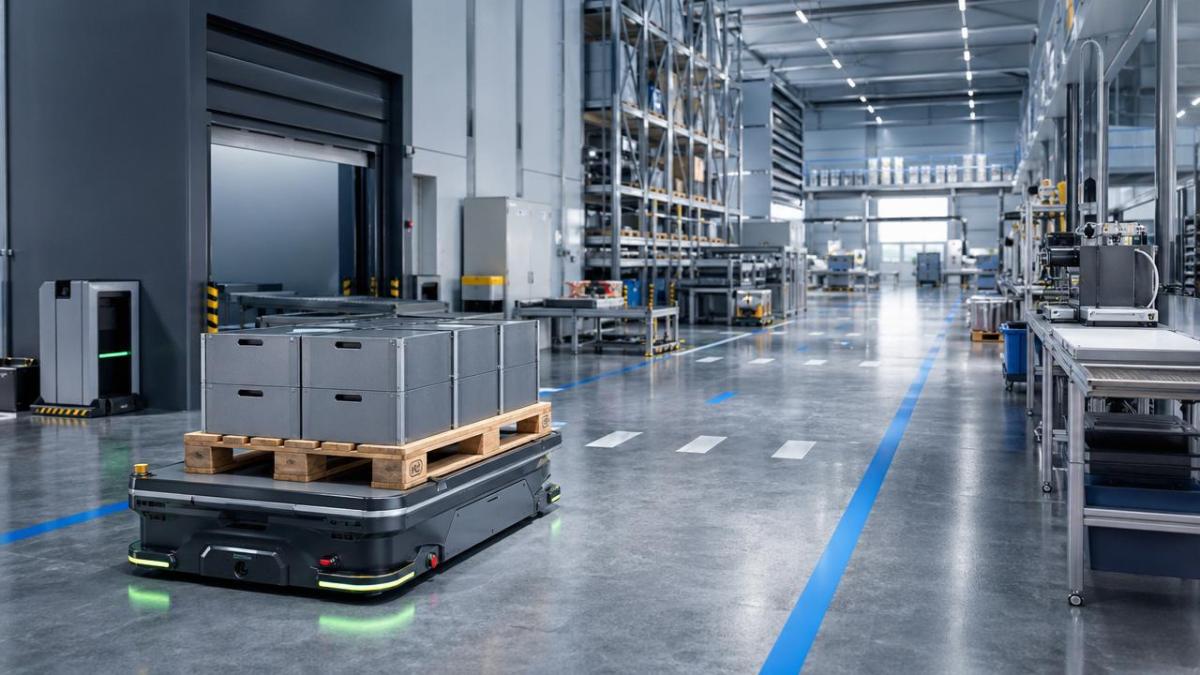
A conventional AGV project in a fixed route environment may prioritize route repeatability and low configuration complexity. Mixed workflow automation is different. One vehicle fleet may need to move pallets in the morning, feed assembly cells at noon, and support semi-finished goods transfer during shift change. That raises requirements for software orchestration, dynamic rerouting, and safe interaction with forklifts, pedestrians, and manual carts.
In practical terms, project leaders should examine whether a supplier can support at least 3 core workflow types within one control architecture: point-to-point transport, line-side feeding, and exception-based dispatching. If the proposed platform only performs well in a single repetitive loop, scaling often fails when route density increases by 20% to 40% or when aisle occupation becomes unpredictable.
Another issue is map stability. In mixed facilities, environmental change is normal. Temporary racks, open doors, reflective surfaces, and human traffic all affect navigation reliability. A custom AMR AGV supplier should explain how its system handles map updates, obstacle classification, and recovery logic after route interruption. A navigation recovery time under 5 to 15 seconds is often workable; longer delays can erode takt alignment in busy plants.
Engineering teams should also separate AMR and AGV suitability by process. AMRs generally fit dynamic paths and variable routing, while AGVs still perform well in tightly controlled lanes with predictable loads. Many mixed workflow projects benefit from hybrid planning rather than forcing one technology into every task. A competent supplier should be able to identify where customization creates value and where standardization reduces unnecessary system risk.
Typical mixed-workflow requirements
- Payload bands that vary from 100 kg line-side bins to 1,500 kg pallet movement.
- Traffic coordination across 2 to 4 intersecting departments, not just one warehouse aisle.
- Integration with MES, WMS, ERP, automatic doors, elevators, and charging stations.
- Operational availability targets commonly above 95% during 2-shift or 3-shift production.
The strategic point is simple: mixed workflow automation exposes weak suppliers quickly. If they cannot define behavior under edge cases, they will struggle in commissioning, and your internal team will absorb the delay cost.
How to Evaluate a Custom AMR AGV Supplier Beyond Marketing Claims
A strong evaluation process begins with measurable criteria. Instead of asking whether a supplier is “advanced,” ask for payload range, positioning accuracy, fleet dispatch logic, obstacle avoidance behavior, battery cycle assumptions, and implementation boundaries. The most useful supplier discussions happen when engineering, operations, and procurement review the same data sheet, not when each team receives a different sales narrative.
Project managers should request proof in four categories: vehicle performance, software integration, safety architecture, and after-sales responsiveness. For example, a positioning tolerance of ±10 mm to ±20 mm may be sufficient for some cart transport tasks, but docking to automated transfer stations may require tighter repeatability combined with mechanical alignment aids. The key is not the number alone, but whether the supplier connects it to your use case.
The table below shows a practical decision framework for comparing a custom AMR AGV supplier during early technical and commercial review.
The main takeaway is that the best custom AMR AGV supplier is usually the one that exposes limitations early. Suppliers who define payload ceilings, floor conditions, charging constraints, and interface dependencies reduce project surprises later.
Red flags during supplier qualification
Technical ambiguity
If a supplier cannot distinguish between nominal payload and continuous-duty payload, or avoids discussing floor flatness, turning radius, and sensor blind zones, the proposal is likely immature. Mixed workflow automation magnifies these gaps during FAT and SAT.
Undefined customization scope
Customization should be partitioned into vehicle body, top module, software workflow, and site integration. Without that breakdown, a 6-week project can easily expand into 12 to 20 weeks because every revision becomes an engineering change order.
Core Technical Parameters Project Leaders Should Review
When reviewing a custom AMR AGV supplier, technical fit matters more than brochure breadth. A vehicle that looks versatile on paper may fail if its battery sizing, sensor stack, or traffic logic does not match duty cycle reality. For mixed workflow sites, the most useful review method is to connect each parameter to a specific route, load profile, and interface point.
Start with load and motion data. Evaluate payload, center-of-gravity sensitivity, slope handling, speed range, braking distance, and turning envelope. A 500 kg transport task is not equivalent to a 500 kg elevated load with off-center balance. Likewise, a top speed of 1.5 m/s may sound adequate, but if safe cornering forces speed down to 0.6 m/s in dense traffic, throughput assumptions can collapse.
Sensor and localization design is equally important. In reflective or changing environments, the supplier should explain how LiDAR, vision, markers, or QR support redundancy. Ask what happens if one sensor degrades or a route area is partially obstructed for 10 to 30 minutes. That answer reveals whether the platform is built for real operations or only clean demonstrations.
Key parameters to validate before purchase
The following table highlights practical engineering checkpoints rather than generic product features.
These ranges are not universal pass-fail values, but they help frame supplier discussions in operational terms. The right custom AMR AGV supplier should translate parameters into route simulations, charging policy, and failure recovery behavior.
Integration questions that save time later
- What data exchange is standard versus custom for MES, WMS, or PLC layers?
- How are traffic rules prioritized when manual override and automated dispatch conflict?
- Can the supplier simulate throughput with 5, 10, or 20 concurrent missions before deployment?
- What acceptance criteria will be used at FAT and SAT, and who defines failure thresholds?
These questions reduce the risk of buying a technically capable vehicle wrapped in an underdefined software package. In many projects, software assumptions—not hardware limitations—cause the largest commissioning delay.
Implementation, Commissioning, and Risk Control
Choosing a custom AMR AGV supplier is only the first stage. Delivery quality depends on project governance, validation method, and change control. In mixed workflow automation, implementation often succeeds when the site team defines not just routes, but exception handling: blocked aisle logic, battery fallback rules, shift handover behavior, and interface loss procedures.
A realistic deployment schedule for a moderate customization project may run 8 to 16 weeks from final specification to onsite stabilization, depending on software scope and facility readiness. That timeline usually includes requirement freeze, simulation or layout review, FAT, site installation, SAT, operator training, and a monitored ramp-up period. If a supplier promises immediate go-live without these checkpoints, caution is justified.
Risk control should focus on three layers: process risk, technical risk, and organizational risk. Process risk includes unclear route ownership and poor task prioritization. Technical risk includes unreliable Wi-Fi coverage, undetected floor defects, and missing I/O definitions. Organizational risk includes weak operator training and no agreed escalation path between plant staff, integrator, and supplier.
Recommended deployment sequence
- Phase 1: Define 1 pilot workflow with measurable KPIs such as transfer time, docking success rate, and exception frequency.
- Phase 2: Validate 2 to 3 adjacent workflows and test traffic interaction under peak shift conditions.
- Phase 3: Expand to full mixed workflow scheduling only after software and charging behavior remain stable for 2 to 4 weeks.
This staged method protects throughput while giving the custom AMR AGV supplier time to tune task allocation, map behavior, and human-machine interaction settings. It also gives procurement teams clearer evidence for release milestones and final acceptance.
Common implementation mistakes
A frequent mistake is evaluating vehicles without validating peripheral devices. Doors, conveyors, lifts, and charging stations create hidden dependencies. Another is underestimating change management. Even a technically strong system can underperform for the first 2 to 6 weeks if operators lack route rules, dispatch visibility, or manual intervention procedures.
Procurement Checklist, Lifecycle Support, and Supplier Fit
For project managers, procurement quality is not only about purchase price. It is about total fit over a 3 to 7 year operating horizon. The supplier should provide a clear commercial structure covering hardware, customization engineering, software licensing, commissioning, training, spare parts, and update policy. Without that detail, low entry quotes can become high total ownership costs.
Lifecycle support deserves special attention. Ask how frequently preventive maintenance is recommended, what consumables are expected, and whether critical spare parts are stocked regionally or built to order. In many industrial environments, a 24-hour spare response for common parts and a documented remote diagnostic process can matter more than a slightly lower upfront price.
Supplier fit also includes communication maturity. A reliable custom AMR AGV supplier usually provides interface documentation, revision control, and escalation ownership in writing. That discipline helps engineering teams manage scope and helps procurement teams compare offers on equal terms.
Final procurement checklist
Use the checklist below to structure internal review before purchase approval.
The strongest purchasing outcome usually comes from cross-functional review: operations validates flow logic, engineering validates technical fit, IT validates interfaces, and procurement validates lifecycle terms. That is the level of discipline mixed workflow automation requires.
FAQ for engineering and project teams
How do I know if I need a custom AMR AGV supplier instead of a standard model provider?
If your site requires special top modules, nonstandard docking, mixed dispatch logic, or integration with more than 2 major systems, customization is usually justified. Standard platforms are suitable when workflows are stable, interfaces are simple, and route variability is limited.
What delivery timeline is realistic?
For moderate complexity, 8 to 16 weeks is a common range from design freeze to stabilized operation. Highly integrated projects involving elevators, multi-floor traffic, or deep software customization may take longer.
Which KPI should be tracked after go-live?
Track mission completion rate, docking success rate, average recovery time after interruption, battery utilization, and operator intervention frequency. These indicators reveal whether the supplier’s solution is truly scaling or simply running.
Selecting a custom AMR AGV supplier for mixed workflow automation requires more than feature comparison. It calls for disciplined evaluation of parameters, integration depth, commissioning method, and long-term support structure. When the supplier can connect payload, navigation, software interfaces, and service response directly to your production reality, project risk drops and deployment confidence rises.
For project managers and engineering leaders, the best next step is to turn these checkpoints into a formal supplier review sheet before RFQ release. If you are assessing mixed workflow automation options and need a more structured specification framework or tailored solution path, contact us to discuss your application, compare technical approaches, and get a customized plan.
Search News
Hot Articles
- Carbon Fiber StructuresHow to Specify Aerospace Carbon Fiber Assemblies for Lightweight, Load-Bearing PartsJul 11, 2026
- Machine VisionXiaomi, Alibaba DAMO Academy Drive Open-Source Robotics Model Ecosystem, Lowering Algorithm Development Barriers for Overseas SMEs Adopting Chinese Robotics SolutionsMar 30, 2026
- Cobots & ArmsShanxi 'AI+' Conference Showcases Embodied Intelligence with Multinational Buyer Engagement: Key Industry ImplicationsMar 30, 2026
Popular Tags
Recommended News
 Jul 11, 2026How to Specify Aerospace Carbon Fiber Assemblies for Lightweight, Load-Bearing PartsAerospace carbon fiber assemblies: learn how to specify laminate design, load data, joining methods, and inspection controls for lighter, reliable load-bearing aerospace parts.Elena Rostova (UAV Systems Researcher)
 Mar 30, 2026Xiaomi, Alibaba DAMO Academy Drive Open-Source Robotics Model Ecosystem, Lowering Algorithm Development Barriers for Overseas SMEs Adopting Chinese Robotics SolutionsXiaomi & Alibaba DAMO Academy's open-source robotics models lower algorithm barriers for global SMEs. Boost efficiency in manufacturing, logistics & smart retail with ROS 2 compatible solutions.TSV Data Lab
 Mar 30, 2026Shanxi 'AI+' Conference Showcases Embodied Intelligence with Multinational Buyer Engagement: Key Industry ImplicationsShanxi 'AI+' Conference highlights embodied intelligence with Tesla, Ubtech & Jiantao showcasing multimodal robotics. 40+ global buyers validated tech on-site, creating new B2B channels for industrial automation & AI solutions.Chen Wei (Automation Lead Engineer)
 Mar 30, 2026Zhongguancun Unveils 6G Integrated Sensing-Computing-Intelligence Platform to Empower Embodied Robots for Global Industrial ApplicationsZhongguancun's new 6G platform revolutionizes industrial robotics with <10ms latency, empowering global automotive, logistics & port automation. Discover how this tech boosts China's smart manufacturing exports.TSV Data Lab
 Mar 30, 2026Mech-Mind Tianjin Embodied Intelligence R&D and Production Base Goes Live, Cutting Delivery Time by 20%–30% for Global Customized AMR+Vision SolutionsMech-Mind's Tianjin AMR+Vision production base cuts delivery time by 20%-30% for欧美 & Latin American markets. Discover how this PLd-certified facility accelerates customized robotics solutions for smart manufacturing and logistics.Chen Wei (Automation Lead Engineer)
 Mar 30, 2026Boao Forum Reveals 'Co-evolution of Big and Small Brains' Trend in Humanoid Robots, China's Embodied Intelligence Accelerates Adaptation to Overseas Manufacturing Service ScenariosDiscover how China's humanoid robots, featuring 'Co-evolution of Big and Small Brains,' are revolutionizing global manufacturing. Learn about Embodied Tian Gong 3.0's ISO compliance and overseas deployment at Boao Forum 2026.Chen Wei (Automation Lead Engineer)
 Mar 30, 2026China Railway Industrial Secures Patent for Embodied Robotics in Material Handling, Boosting High-Precision Delivery Capabilities for Overseas Infrastructure and Manufacturing ProjectsChina Railway Industrial's new patent for embodied robotics in material handling boosts high-precision delivery for global infrastructure & manufacturing. Discover how this innovation enhances logistics accuracy in automotive, rail transit & EPC projects.Chen Wei (Automation Lead Engineer)
 Oct 28, 2026IDC: Global Quadruped Robot Shipments Rise 92.5% in H1 2026 as Volume and Value DivergeGlobal quadruped robot shipments rose 92.5% in H1 2026, according to IDC. Explore what diverging volume and value trends mean for industrial buyers and manufacturers.Chen Wei (Automation Lead Engineer)
 Oct 28, 2026Interpreting Industrial IoT Latency Data for Monitoring and Real-Time ControlInterpret industrial category latency data to assess jitter, deadline misses, and real-time readiness. Learn how to benchmark IIoT systems and choose monitoring and control solutions.TSV Data Lab
 Oct 27, 2026GXO and Agility Robotics Expand Partnership to Accelerate US Humanoid Robot DeploymentGXO and Agility Robotics plan to expand US humanoid robot deployment with Digit 4 in early 2027. Explore warehouse automation plans, service terms and future Digit 5 upgrades.Chen Wei (Automation Lead Engineer)
 Oct 27, 2026Robotic Automation Costs: Budgeting for Equipment, Integration, and MaintenancePlan your robotics automation cost with confidence. Explore equipment, integration, and maintenance expenses, compare quotes, and build a realistic budget for better ROI.Chen Wei (Automation Lead Engineer)
 Oct 26, 2026AMAXiMAL Releases Open-Source TopMod 3D v3 With Claude AIExplore AMAXiMAL’s free, open-source TopMod 3D v3 with Claude AI assistance, topology-based modeling and plywood fabrication tools that connect complex designs to physical builds.Dr. Marcus Vance
 Oct 26, 2026Choosing a SCADA System Integrator Company: PLC Compatibility and Long-Term SupportChoose a scada system integrator company with proven PLC compatibility and reliable long-term support. Discover what to test, compare, and require before investing.Victor Lin (Chief Software Architect)
 Oct 25, 2026Hesai Leads Global ADAS Main Lidar Shipments in Yole’s 2026 ReportHesai led global ADAS main lidar shipments with a 43% share in 2025, according to Yole’s 2026 report. Explore what this ranking reveals about its automotive market position.TSV Data Lab
 Oct 25, 2026Choosing an Aerospace Materials Manufacturer: Quality and Traceability ChecksChoosing an aerospace materials manufacturer? Learn how to verify certifications, test reports, and lot traceability to qualify suppliers confidently and reduce costly sourcing risks.Dr. Marcus Vance
 Oct 24, 2026Guotai Haitong: Global Entry-Level 3D Printer Shipments Rose 39% in Q1 2026Entry-level 3D printer shipments rose 39% in Q1 2026, Guotai Haitong reports. Explore how AI, multicolor printing and print farms are shaping market growth.Dr. Marcus Vance
 Oct 24, 2026Choosing an Industrial Vision Inspection Supplier: Acceptance Tests That MatterChoose an industrial vision inspection supplier with confidence. Discover acceptance tests for defect detection, false rejects, production speed, and reliable part rejection before you buy.TSV Data Lab
 Oct 23, 2026US Navy Raises Gecko Robotics Contract Ceiling to $300M for Robotic Fleet MaintenanceUS Navy raises Gecko Robotics’ contract ceiling to $300M for Pacific Fleet robotic inspections. Explore potential opportunities for maintenance suppliers and key procurement considerations.Chen Wei (Automation Lead Engineer)
 Oct 23, 2026Choosing Industrial Sensing Systems for Global Plants: Protocol CompatibilityCompare industrial sensing systems international buyers can trust. Explore protocol compatibility, reduce integration risks, and select proven configurations for reliable global plant deployments.TSV Data Lab
 Oct 22, 2026KUKA Showcases Physical AI and iiQKA.AI Vision at NVIDIA GTC BerlinExplore KUKA’s Physical AI showcase at NVIDIA GTC Berlin and discover how iiQKA.AI Vision aims to simplify robotic vision integration and improve 2D and 3D scene recognition.TSV Data Lab
 Oct 22, 2026Robotic Machining of Advanced Composites: What Tolerances Are Achievable?Explore advanced materials machining robotics: discover what drives achievable composite tolerances and how to validate accuracy before investing in your next machining system.Dr. Marcus Vance
 Oct 21, 2026China’s Industrial Robot Exports Near RMB 10 Billion in First Nine Months of 2026China’s industrial robot exports neared RMB 10 billion in January–September 2026, with value rising faster than volume. Explore the data and what it could mean for suppliers.Chen Wei (Automation Lead Engineer)
 Oct 21, 2026Low-Latency Industrial Data Processing: Pricing and Key Cost DriversExplore industrial data latency price drivers, from edge hardware to integration and support. Learn how to compare quotes, verify performance, and avoid unnecessary costs.TSV Data Lab
 Oct 20, 2026KUKA Launches iiQKA.AI Vision to Simplify Industrial Image ProcessingKUKA iiQKA.AI Vision simplifies industrial image processing with controller-based 2D and 3D vision. Explore drag-and-drop setup for vision-guided automation.TSV Data Lab