Custom AMR AGV supplier selection gets harder after deployment
Publication Date
author
Choosing a custom AMR AGV supplier is rarely hardest at the quoting stage—it becomes harder after deployment, when uptime, software compatibility, navigation stability, and service response directly affect throughput and cost. For procurement teams, the real challenge is not comparing brochures, but identifying which supplier can still deliver engineering truth once systems enter live production.
Why does a custom AMR AGV supplier become harder to judge after go-live?
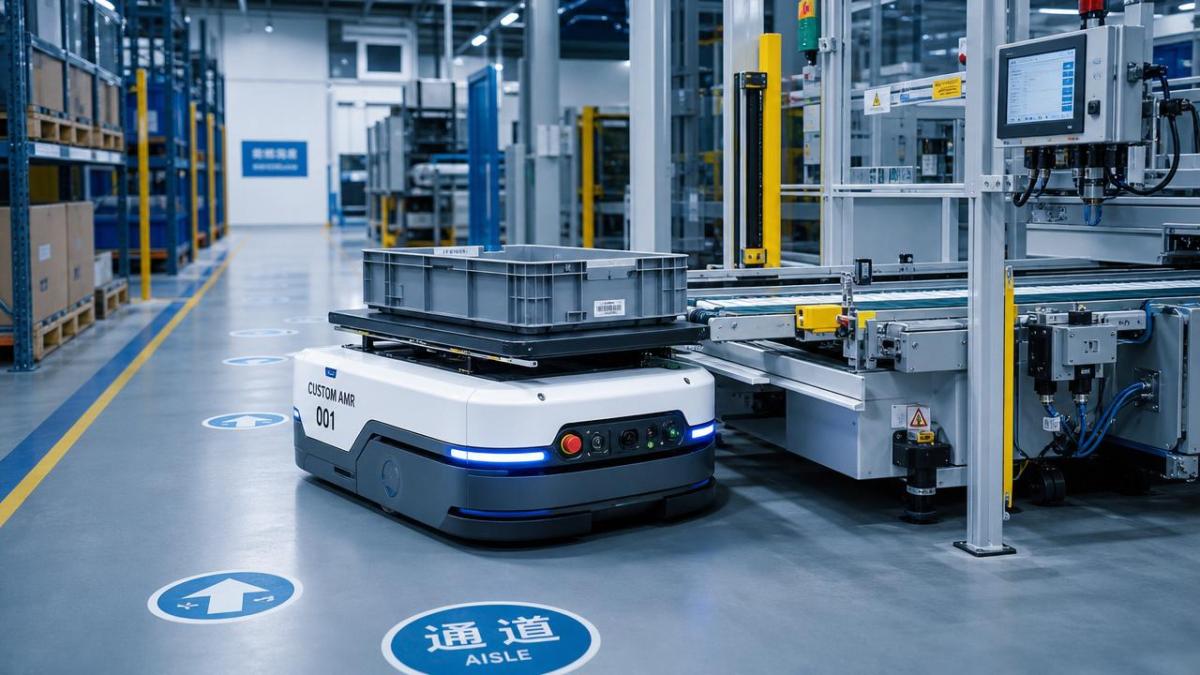
Before deployment, most vendors look similar on paper. Payload, speed, battery life, and list price are easy to place side by side. After deployment, however, differences emerge in fault recovery logic, map maintenance, Wi-Fi roaming stability, fleet orchestration, and on-site service discipline. That is where procurement risk moves from capital expense to operating loss.
For buyers in mixed manufacturing, warehousing, electronics assembly, automotive sub-systems, medical device logistics, and high-mix industrial environments, a custom AMR AGV supplier is not simply selling a mobile robot. The supplier is becoming part of your live production infrastructure. If the software stack conflicts with MES, WMS, ERP, or edge gateways, the procurement decision keeps costing money long after acceptance testing ends.
This is exactly why TechStat Vanguard focuses on engineering truth rather than promotional language. In AMR and AGV sourcing, parameters do not stop at brochure values. Procurement must ask what happens under real floor vibration, mixed pedestrian traffic, reflective surfaces, changing SKU dimensions, and cross-shift maintenance habits.
- A robot that passes a showroom demo may still fail in dense aisle intersections or narrow transfer points.
- A supplier with low initial pricing may require expensive software changes, proprietary batteries, or repeated site visits later.
- A platform that seems “custom” may actually be a standard chassis with limited API openness and weak lifecycle support.
What procurement teams should evaluate beyond the quotation
A capable custom AMR AGV supplier must be assessed as a systems partner, not only a hardware vendor. The strongest procurement files usually compare technical fit, operational resilience, service response, and expansion readiness at the same time. The table below shows the dimensions that matter most when the deployment enters daily production.
For procurement personnel, this means the lowest quote is rarely the lowest ownership burden. A custom AMR AGV supplier that can document fault logs, software interfaces, and service workflows with engineering clarity is often easier to manage across multiple factories and longer program horizons.
Questions worth putting into the RFQ and technical review
- What are the conditions that trigger navigation degradation, and how is recovery handled without manual intervention?
- Which interfaces are standard, which are chargeable customizations, and who owns future maintenance of those interfaces?
- How are software updates tested, versioned, rolled back, and approved in a production environment?
- What spare parts are regionally stocked, and what are the lead times for critical components such as LiDAR, controllers, and drive assemblies?
How to compare suppliers when every platform claims to be customizable
“Custom” means different things in the market. Some suppliers offer real architectural flexibility across top module, lifting mechanism, conveyor interface, charging mode, and software orchestration. Others only adjust outer dimensions or fixtures while keeping a closed controller stack. Procurement should separate cosmetic customization from deployable customization.
The next comparison table helps buyers distinguish suppliers that can support evolving operations from those that only fit a single pilot project.
A procurement team should not reject standardization or customization by default. The real judgment is whether the supplier’s engineering method matches your operational variability. TechStat Vanguard’s data-led approach is useful here because it forces discussion back to repeatability, tolerance, compatibility, and fault behavior.
Signs that customization is technically meaningful
- The supplier can explain how changes affect center of gravity, turning radius, charging pattern, and safety zone behavior.
- Interface definitions are documented early, including PLC handshakes, data fields, and abnormal-state feedback.
- The vendor distinguishes prototype capability from long-term maintainability and spare part support.
Which technical parameters matter most after deployment?
Many buyers focus first on payload and travel speed. Those matter, but they are not enough. In live plants, the stronger indicators are localization consistency, docking repeatability, queue handling logic, battery charge strategy, obstacle recovery time, and controller compatibility with local network conditions.
For a custom AMR AGV supplier, parameter transparency should include not just nominal values but also operating boundaries. A useful procurement dialogue asks under which floor conditions, route densities, and duty cycles the stated performance remains stable.
Post-deployment parameter checklist for buyers
- Docking accuracy under repeated cycles, especially for conveyor transfer, lift table alignment, or machine loading positions.
- Fleet behavior in congestion, including traffic priority logic, deadlock avoidance, and rerouting latency.
- Battery management strategy, such as opportunity charging versus fixed charging windows, and the effect on shift continuity.
- Sensor contamination tolerance in dusty, reflective, or variable-light environments common to industrial facilities.
- Remote diagnostic depth, including accessible logs, event timestamps, device health indicators, and software alert granularity.
These points align with TSV’s position that engineering truth must be measurable. Procurement teams reduce supplier qualification cycles when they request operational boundaries and service evidence instead of broad claims about intelligence or automation efficiency.
What are the hidden cost drivers in custom AMR AGV procurement?
The purchase price is only one part of the sourcing decision. In many projects, hidden costs appear through integration engineering, software revision cycles, delayed commissioning, retraining, spare part dependency, and local support gaps. A custom AMR AGV supplier should therefore be evaluated through total cost of ownership rather than invoice value alone.
The table below highlights cost categories that procurement should map before supplier award.
This is where procurement can create real value. By structuring cost visibility before award, the team avoids the common trap of buying a cheap vehicle and inheriting an expensive ecosystem. In practical terms, the best custom AMR AGV supplier is often the one that makes downstream costs more predictable, not the one that minimizes the first quote.
How should buyers handle standards, safety, and compliance expectations?
Compliance discussions should remain grounded and project-specific. Procurement does not need vague statements about safety readiness. It needs documentation scope, risk assessment responsibilities, and evidence that the supplier understands the operational environment. Depending on geography and application, buyers may need to review machinery safety principles, battery transport considerations, electromagnetic compatibility, local workplace safety rules, and data access policies.
A practical compliance review should include
- Safety function explanation for emergency stop behavior, speed zoning, obstacle detection logic, and manual recovery mode.
- Electrical and battery documentation relevant to shipping, installation, charging area design, and maintenance access.
- Cyber and network coordination, especially when the AMR fleet exchanges data with factory systems or cloud dashboards.
- Site acceptance protocol defining route tests, docking checks, alarm conditions, and operator sign-off responsibilities.
A disciplined custom AMR AGV supplier will not hide behind generic labels. It will clarify what is standard, what is site-dependent, and what must be jointly validated by engineering, EHS, IT, and procurement.
What implementation approach reduces procurement risk?
A strong sourcing strategy does not end with PO placement. It defines an implementation sequence that protects schedule, budget, and operational continuity. This is especially important in comprehensive industrial settings where material flow, production takt, and IT architecture are rarely simple.
- Start with route and process mapping. Confirm handoff points, obstacle patterns, shift structure, and exception scenarios.
- Lock interface definitions early. Do not leave workflow messaging, machine signals, or traffic priorities to late-stage interpretation.
- Use staged acceptance. Separate factory acceptance, on-site commissioning, and production stabilization into measurable gates.
- Plan service readiness before launch. Spare parts, admin rights, troubleshooting SOPs, and escalation contacts should be in place before handover.
- Review expansion logic. Add future stations, process changes, and multi-robot scaling assumptions into the initial contract discussion.
Procurement teams that follow this method usually shorten the gap between installation and stable output. More importantly, they reduce disputes about whether a problem belongs to the vehicle vendor, the software team, or the plant environment.
FAQ: common procurement questions about choosing a custom AMR AGV supplier
How do I know whether a custom AMR AGV supplier can support future line changes?
Ask how maps, routes, dock points, top modules, and software interfaces are modified after deployment. If every change requires vendor-side redevelopment, scaling will be slow and costly. A better supplier can explain which changes are configurable, which require validation, and which affect safety or fleet logic.
What is the biggest mistake buyers make during supplier comparison?
The most common mistake is comparing only payload, speed, and price. These are visible but incomplete. Buyers should also compare recovery behavior, service response, software openness, spare parts continuity, and acceptance methodology. Those factors determine whether the system remains productive after month one.
Are AMR and AGV suppliers suitable for the same applications?
Not always. Some structured routes with fixed stations may fit AGV logic efficiently. Dynamic facilities with frequent obstacle variation or evolving workflows may benefit more from AMR flexibility. A custom AMR AGV supplier should be able to explain where each architecture makes operational and economic sense instead of pushing one answer for every use case.
How should procurement evaluate support quality before signing?
Request a support matrix. It should show response windows, remote troubleshooting path, spare parts availability, software update policy, and escalation ownership. Also ask for sample documentation such as maintenance manuals, alarm lists, and interface descriptions. Documentation quality often predicts service quality.
Why a data-driven evaluation model gives buyers an advantage
Procurement teams operate under pressure: delivery deadlines, budget controls, cross-functional demands, and limited tolerance for post-launch surprises. In that environment, marketing claims are not enough. A data-driven method improves supplier selection because it converts vague promises into observable engineering criteria.
That is where TechStat Vanguard adds value. TSV was built to cut through information noise in hard-tech supply chains. Instead of rewarding buzzwords, we focus on benchmarking logic, operational parameters, traceable documentation, and the real thresholds that determine field performance. For buyers assessing a custom AMR AGV supplier, this approach supports faster qualification and better internal alignment with engineering, operations, and leadership teams.
Why choose us for custom AMR AGV supplier evaluation and sourcing support?
If your team is comparing a custom AMR AGV supplier for factory logistics, warehouse automation, production transfer, or mixed industrial handling, TechStat Vanguard can help you turn broad vendor claims into decision-grade evidence. Our role is not to inflate marketing language but to sharpen your sourcing judgment with engineering-focused evaluation.
- We can help review parameter definitions, operating boundaries, and integration assumptions before RFQ release.
- We can support product selection discussions across payload class, navigation method, top module design, and software compatibility.
- We can help structure supplier comparison around delivery cycle, customization scope, service readiness, and lifecycle risk.
- We can assist with certification and compliance review points, acceptance criteria, sample evaluation logic, and quotation communication priorities.
If you are preparing a new automation purchase or re-evaluating an existing custom AMR AGV supplier after deployment issues, contact us with your route conditions, payload requirements, software environment, expected delivery timeline, and service expectations. We can help you clarify parameters, compare solution paths, challenge hidden costs, and define a sourcing framework grounded in engineering truth.
Search News
Hot Articles
- Carbon Fiber StructuresHow to Specify Aerospace Carbon Fiber Assemblies for Lightweight, Load-Bearing PartsJul 11, 2026
- Machine VisionXiaomi, Alibaba DAMO Academy Drive Open-Source Robotics Model Ecosystem, Lowering Algorithm Development Barriers for Overseas SMEs Adopting Chinese Robotics SolutionsMar 30, 2026
- Cobots & ArmsShanxi 'AI+' Conference Showcases Embodied Intelligence with Multinational Buyer Engagement: Key Industry ImplicationsMar 30, 2026
Popular Tags
Recommended News
 Jul 11, 2026How to Specify Aerospace Carbon Fiber Assemblies for Lightweight, Load-Bearing PartsAerospace carbon fiber assemblies: learn how to specify laminate design, load data, joining methods, and inspection controls for lighter, reliable load-bearing aerospace parts.Elena Rostova (UAV Systems Researcher)
 Mar 30, 2026Xiaomi, Alibaba DAMO Academy Drive Open-Source Robotics Model Ecosystem, Lowering Algorithm Development Barriers for Overseas SMEs Adopting Chinese Robotics SolutionsXiaomi & Alibaba DAMO Academy's open-source robotics models lower algorithm barriers for global SMEs. Boost efficiency in manufacturing, logistics & smart retail with ROS 2 compatible solutions.TSV Data Lab
 Mar 30, 2026Shanxi 'AI+' Conference Showcases Embodied Intelligence with Multinational Buyer Engagement: Key Industry ImplicationsShanxi 'AI+' Conference highlights embodied intelligence with Tesla, Ubtech & Jiantao showcasing multimodal robotics. 40+ global buyers validated tech on-site, creating new B2B channels for industrial automation & AI solutions.Chen Wei (Automation Lead Engineer)
 Mar 30, 2026Zhongguancun Unveils 6G Integrated Sensing-Computing-Intelligence Platform to Empower Embodied Robots for Global Industrial ApplicationsZhongguancun's new 6G platform revolutionizes industrial robotics with <10ms latency, empowering global automotive, logistics & port automation. Discover how this tech boosts China's smart manufacturing exports.TSV Data Lab
 Mar 30, 2026Mech-Mind Tianjin Embodied Intelligence R&D and Production Base Goes Live, Cutting Delivery Time by 20%–30% for Global Customized AMR+Vision SolutionsMech-Mind's Tianjin AMR+Vision production base cuts delivery time by 20%-30% for欧美 & Latin American markets. Discover how this PLd-certified facility accelerates customized robotics solutions for smart manufacturing and logistics.Chen Wei (Automation Lead Engineer)
 Mar 30, 2026Boao Forum Reveals 'Co-evolution of Big and Small Brains' Trend in Humanoid Robots, China's Embodied Intelligence Accelerates Adaptation to Overseas Manufacturing Service ScenariosDiscover how China's humanoid robots, featuring 'Co-evolution of Big and Small Brains,' are revolutionizing global manufacturing. Learn about Embodied Tian Gong 3.0's ISO compliance and overseas deployment at Boao Forum 2026.Chen Wei (Automation Lead Engineer)
 Mar 30, 2026China Railway Industrial Secures Patent for Embodied Robotics in Material Handling, Boosting High-Precision Delivery Capabilities for Overseas Infrastructure and Manufacturing ProjectsChina Railway Industrial's new patent for embodied robotics in material handling boosts high-precision delivery for global infrastructure & manufacturing. Discover how this innovation enhances logistics accuracy in automotive, rail transit & EPC projects.Chen Wei (Automation Lead Engineer)
 Sep 29, 2026ISO 9283 Repeatability: How to Evaluate Cobot Positioning PerformanceISO 9283 cobot repeatability explained: learn how payload, reach, approach direction, and test conditions affect positioning performance and cell capability.Chen Wei (Automation Lead Engineer)
 Sep 28, 2026Spindle Runout Measurement in Germany: DIN Standards, Methods, and Acceptance LimitsSpindle runout measurement Germany: explore DIN standards, proven methods, acceptance limits, and audit-ready practices for reliable machining quality.Dr. Marcus Vance
 Sep 27, 2026How to Select Wall-Mount Edge Devices for Space-Constrained Factory NetworksWall mount edge devices for space-constrained factories: evaluate workload, thermal design, power resilience, cable access, and network reliability for smarter deployments.TSV Data Lab
 Sep 26, 2026Machining Tolerance Analysis: How to Set Limits That Meet Function and Cost TargetsMachining tolerance analysis: learn how to set functional limits, control tolerance stacks, reduce inspection risk, and balance precision with production cost.Dr. Marcus Vance
 Sep 25, 2026How to Evaluate an Industrial Infrastructure Data Platform for Multi-Site OperationsIndustrial infrastructure data platform evaluation guide for multi-site operations: compare data quality, edge resilience, interoperability, governance, and scalable proof-of-value criteria.Victor Lin (Chief Software Architect)
 Sep 24, 2026How to Select Machine Vision Optics for Accurate Inspection at Different Working DistancesMachine vision optics selection guide for accurate inspection at every working distance. Compare FOV, pixel scale, DOF, distortion, lighting, and telecentric options.TSV Data Lab
 Sep 23, 2026How to Evaluate a Machine Vision System Integrator for High-Speed Inspection LinesChoose a machine vision system integrator with proven expertise in high-speed inspection, reliable reject timing, robust optics, and measurable acceptance criteria.TSV Data Lab
 Sep 28, 2026When is a SCADA API the right choice for connecting plant systems?SCADA API guide: learn when governed plant data integration improves traceability, security, and scalability—without compromising real-time control.Victor Lin (Chief Software Architect)
 Sep 27, 2026How SCADA data integration improves traceability across production linesSCADA data integration connects production-line data to improve traceability, accelerate quality investigations, and strengthen safety decisions.Victor Lin (Chief Software Architect)
 Sep 26, 2026What to define before starting SCADA integration planningSCADA integration planning starts with clear scope, control boundaries, data models, cybersecurity, and testing. Discover the definitions that reduce risk and costly rework.Victor Lin (Chief Software Architect)
 Sep 25, 2026How a smart factory with Industrial IoT reduces production blind spotsDiscover how a smart factory with Industrial IoT turns real-time machine, quality, and workflow data into actionable insights that reduce production blind spots and delivery risks.Victor Lin (Chief Software Architect)
 Sep 24, 2026When does Industrial IoT make smart manufacturing easier to scale?Smart manufacturing Industrial IoT scales when trusted data, interoperable systems, and secure workflows turn connected assets into measurable gains.TSV Data Lab
 Sep 23, 2026What drives ultra-precision machining cost at 1-micron tolerance?Ultra precision machining cost per part at 1 micron tolerance depends on process, material, metrology, and yield. Learn how to compare quotes confidently.Dr. Marcus Vance
 Sep 22, 2026Drone Engine-T550CC Applications: Build the UAV Power System Around the MissionAn application guide for Drone Engine-T550CC integration, covering payload planning, airframe matching, cooling, fuel, vibration, test procedures, documentation, and service preparation.Elena Rostova (UAV Systems Researcher)
 Sep 22, 2026How to Evaluate Industrial Edge Computing Vendors for Factory DeploymentIndustrial edge computing vendor evaluation guide for factories: compare latency, protocol fit, reliability, security, and lifecycle support before deployment.TSV Data Lab
 Sep 21, 2026Drone Payload Integration: Matching Power, Data, and Center of Gravity for Reliable FlightsDrone payload integration made practical: balance power, data, center of gravity, and endurance to build safer, more reliable mission-ready flights.Elena Rostova (UAV Systems Researcher)
 Sep 20, 2026Autonomous Navigation Pricing: Cost Drivers and Budget Benchmarks for AMR ProjectsAutonomous navigation price explained: compare AMR cost drivers, software, sensors, integration, safety, and lifecycle budgets to build a scalable project plan.Chen Wei (Automation Lead Engineer)