AMR Obstacle Avoidance Latency and Why Near Misses Happen
Publication Date
author
AMR obstacle avoidance latency is often the hidden variable behind near misses, unexpected stops, and unsafe navigation in fast-changing facilities. For quality control and safety programs, the issue is not only whether an autonomous mobile robot can detect an obstacle, but whether the full chain of sensing, computation, decision, and braking happens fast enough for the actual environment. In mixed industrial settings, even a small delay can turn a safe buffer into a dangerous gap. This article explains how amr obstacle avoidance latency builds up, why near misses happen in real operations, and which engineering benchmarks matter when safer deployment is the goal.
When AMR obstacle avoidance latency becomes a real risk in changing environments
Different operating environments create very different tolerance limits for AMR behavior. A slow AMR carrying light cartons in a wide aisle can absorb more delay than a high-throughput unit moving near forklifts, pedestrians, pallet jacks, or conveyor intersections. That is why amr obstacle avoidance latency should never be reviewed as a single catalog value. It has to be judged against traffic density, vehicle speed, floor condition, sensor occlusion, and stopping distance under load.
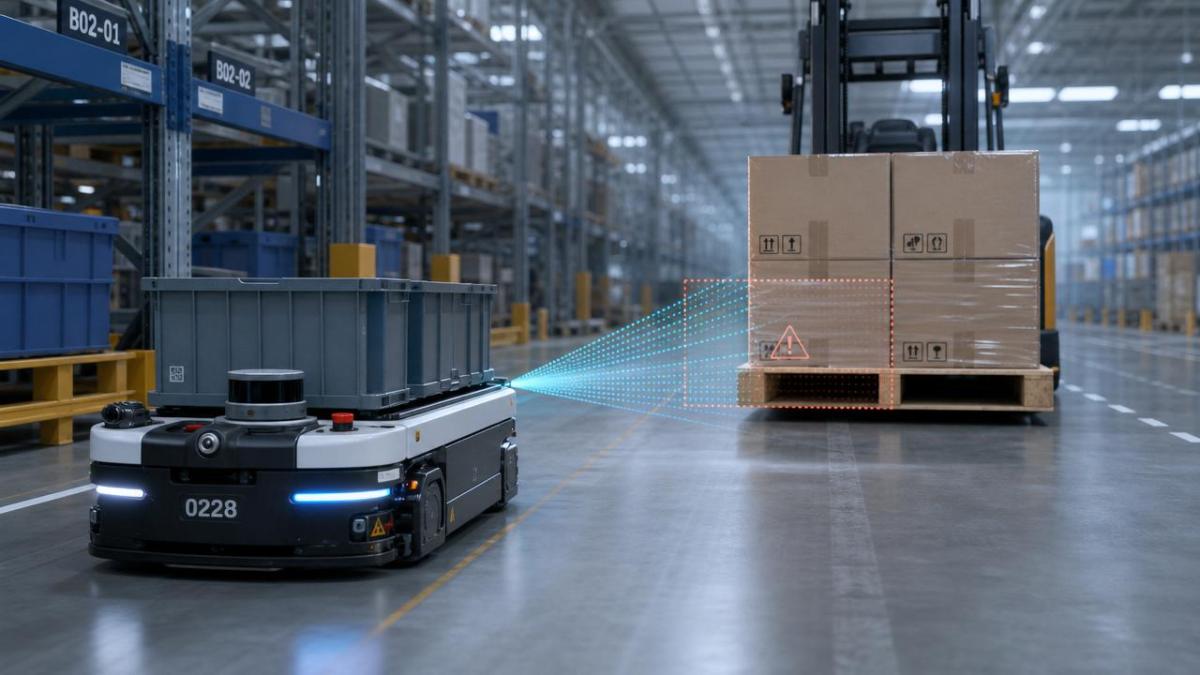
In practice, near misses often occur not because one subsystem completely fails, but because several acceptable delays stack together. A LiDAR scan cycle adds milliseconds, sensor fusion adds more, a loaded CPU postpones object classification, path planning rechecks alternatives, and motor control adds final response lag. Each stage may look compliant in isolation, yet the accumulated amr obstacle avoidance latency can exceed the safe reaction window for dynamic obstacles.
This matters across the broader industrial landscape because AMRs are now used in electronics, pharmaceuticals, food handling, aerospace support logistics, warehouse replenishment, and flexible manufacturing cells. Facilities with frequent layout changes, reflective surfaces, variable lighting, or mixed human-machine traffic are especially sensitive to latency-related navigation risk.
Why near misses happen in warehouse traffic rather than in lab demonstrations
High traffic intersections compress reaction time
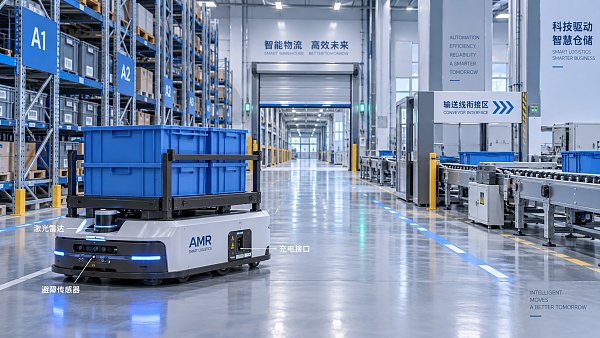
In warehouse intersections, AMRs face crossing carts, reverse forklift motion, partially visible pallets, and workers stepping out from rack ends. In these conditions, amr obstacle avoidance latency is exposed by changing line-of-sight rather than by steady-state movement. A robot may detect an object only after it clears a blind edge, leaving less time for classification and deceleration.
The core judgment point here is not raw top speed, but time-to-collision under partial visibility. If obstacle detection range shrinks because of occlusion, then even moderate latency becomes operationally significant. Near misses often happen when a system tuned for open aisles is deployed into high-intersection traffic without revalidating safety buffers.
Payload changes alter stopping behavior
An unloaded AMR and a fully loaded AMR do not share the same braking distance. Yet some deployments rely too heavily on nominal obstacle avoidance settings. When payload mass changes center of gravity and wheel traction, the same amr obstacle avoidance latency produces different real stopping performance. This gap is a common reason why simulation results look safe while live operations produce sudden stop events or near contact.
Where manufacturing cells expose latency that simple navigation tests miss
Reflective surfaces and tight geometry stress sensor timing
Manufacturing cells introduce polished metal, machine guarding, narrow turning radii, and temporary staging carts. These features can complicate LiDAR returns, reduce vision confidence, or trigger extra filtering steps. As a result, amr obstacle avoidance latency may increase even when the robot is moving at a conservative speed. The operational problem is that latency spikes are often intermittent, making them harder to catch than permanent sensor faults.
Network and compute load create invisible delay
Some AMR fleets depend on shared compute resources, map updates, or cloud-assisted diagnostics. In a manufacturing setting with edge devices, machine vision streams, and industrial IoT traffic, processing contention can become a real issue. Even if motion control is local, overloaded CPUs and delayed message queues can increase amr obstacle avoidance latency at the worst possible moment. Near misses then appear random, while the true cause is timing instability under peak system load.
How healthcare, food, and clean operations demand a different latency judgment
In regulated or hygiene-sensitive environments, the risk profile is different. Hallways may be narrower, human movement less predictable, and sudden manual interventions more common. Here, amr obstacle avoidance latency must be judged not only by collision avoidance, but by motion smoothness, false-stop rate, and restart behavior. A robot that brakes safely but too often can still disrupt throughput, sterile handling patterns, or time-critical material delivery.
The key judgment point in these scenarios is balance. If the latency budget is too high, the AMR reacts late. If detection thresholds are too aggressive to compensate, nuisance stops rise sharply. The right benchmark is therefore not a single latency number, but a relationship between detection confidence, braking profile, and operational continuity.
Scenario differences that change what AMR obstacle avoidance latency really means
The same quoted latency can be acceptable in one setting and risky in another. The table below shows how scenario context changes evaluation priorities.
Engineering checks that improve scenario fit before deployment scales
Reducing amr obstacle avoidance latency is not always about one faster sensor. The stronger approach is to control the entire latency budget and validate it in the intended environment.
- Measure end-to-end latency, not just sensor refresh rate. Include perception, fusion, planning, actuation, and brake onset.
- Test under loaded and unloaded conditions. Braking profiles should be verified with real payload distributions.
- Track latency variance, not only average latency. Spikes are often more dangerous than a slightly slower but stable system.
- Use intersection, blind-corner, and occlusion tests. Straight-line obstacle checks are not enough for realistic AMR navigation safety.
- Audit compute utilization during peak facility activity. AMR obstacle avoidance latency often rises when other edge workloads increase.
- Benchmark false-stop rate together with avoidance response. A safer fleet must remain operationally usable.
Common misjudgments that hide the true cause of near misses
One common mistake is treating AMR obstacle avoidance latency as a fixed specification rather than a situational performance outcome. Vendor data may be accurate for a reference setup, yet real floors, degraded wheel friction, reflective packaging, and map updates can change effective response time.
Another misjudgment is focusing only on maximum speed. Two AMRs moving at the same speed can have very different risk levels if one has better sensor placement, lower compute jitter, and shorter brake onset delay. Likewise, a near miss is often blamed on operator behavior or route congestion when the deeper issue is accumulated timing lag across multiple subsystems.
A further blind spot is relying on pass-fail obstacle tests instead of continuous telemetry. To understand why near misses happen, event logs should capture object detection time stamps, planner decision times, commanded deceleration, actual wheel response, and environmental context. Without that chain, latency remains invisible until a more serious event occurs.
What to do next if AMR obstacle avoidance latency is under review
A practical next step is to create a scenario-based validation matrix for every AMR route segment: open aisle, blind corner, crosswalk, machine cell entrance, staging zone, and pedestrian overlap area. For each segment, record speed, payload state, expected obstacle type, minimum detection distance, and measured amr obstacle avoidance latency. This converts a vague safety concern into an engineering dataset that can be compared over time.
It is also useful to define benchmark thresholds for end-to-end reaction time, loaded stopping distance, latency variance, and nuisance stop frequency before fleet expansion. That approach aligns with the data-first philosophy increasingly adopted across advanced industry: parameters do not lie, and tolerances define safe operation. When amr obstacle avoidance latency is measured in realistic scenarios rather than assumed from brochure values, near misses become easier to explain, easier to prevent, and far less likely to repeat.
Search News
Hot Articles
- Carbon Fiber StructuresHow to Specify Aerospace Carbon Fiber Assemblies for Lightweight, Load-Bearing PartsJul 11, 2026
- Machine VisionXiaomi, Alibaba DAMO Academy Drive Open-Source Robotics Model Ecosystem, Lowering Algorithm Development Barriers for Overseas SMEs Adopting Chinese Robotics SolutionsMar 30, 2026
- Cobots & ArmsShanxi 'AI+' Conference Showcases Embodied Intelligence with Multinational Buyer Engagement: Key Industry ImplicationsMar 30, 2026
Popular Tags
Recommended News
 Jul 11, 2026How to Specify Aerospace Carbon Fiber Assemblies for Lightweight, Load-Bearing PartsAerospace carbon fiber assemblies: learn how to specify laminate design, load data, joining methods, and inspection controls for lighter, reliable load-bearing aerospace parts.Elena Rostova (UAV Systems Researcher)
 Mar 30, 2026Xiaomi, Alibaba DAMO Academy Drive Open-Source Robotics Model Ecosystem, Lowering Algorithm Development Barriers for Overseas SMEs Adopting Chinese Robotics SolutionsXiaomi & Alibaba DAMO Academy's open-source robotics models lower algorithm barriers for global SMEs. Boost efficiency in manufacturing, logistics & smart retail with ROS 2 compatible solutions.TSV Data Lab
 Mar 30, 2026Shanxi 'AI+' Conference Showcases Embodied Intelligence with Multinational Buyer Engagement: Key Industry ImplicationsShanxi 'AI+' Conference highlights embodied intelligence with Tesla, Ubtech & Jiantao showcasing multimodal robotics. 40+ global buyers validated tech on-site, creating new B2B channels for industrial automation & AI solutions.Chen Wei (Automation Lead Engineer)
 Mar 30, 2026Zhongguancun Unveils 6G Integrated Sensing-Computing-Intelligence Platform to Empower Embodied Robots for Global Industrial ApplicationsZhongguancun's new 6G platform revolutionizes industrial robotics with <10ms latency, empowering global automotive, logistics & port automation. Discover how this tech boosts China's smart manufacturing exports.TSV Data Lab
 Mar 30, 2026Mech-Mind Tianjin Embodied Intelligence R&D and Production Base Goes Live, Cutting Delivery Time by 20%–30% for Global Customized AMR+Vision SolutionsMech-Mind's Tianjin AMR+Vision production base cuts delivery time by 20%-30% for欧美 & Latin American markets. Discover how this PLd-certified facility accelerates customized robotics solutions for smart manufacturing and logistics.Chen Wei (Automation Lead Engineer)
 Mar 30, 2026Boao Forum Reveals 'Co-evolution of Big and Small Brains' Trend in Humanoid Robots, China's Embodied Intelligence Accelerates Adaptation to Overseas Manufacturing Service ScenariosDiscover how China's humanoid robots, featuring 'Co-evolution of Big and Small Brains,' are revolutionizing global manufacturing. Learn about Embodied Tian Gong 3.0's ISO compliance and overseas deployment at Boao Forum 2026.Chen Wei (Automation Lead Engineer)
 Mar 30, 2026China Railway Industrial Secures Patent for Embodied Robotics in Material Handling, Boosting High-Precision Delivery Capabilities for Overseas Infrastructure and Manufacturing ProjectsChina Railway Industrial's new patent for embodied robotics in material handling boosts high-precision delivery for global infrastructure & manufacturing. Discover how this innovation enhances logistics accuracy in automotive, rail transit & EPC projects.Chen Wei (Automation Lead Engineer)
 Sep 28, 2026Spindle Runout Measurement in Germany: DIN Standards, Methods, and Acceptance LimitsSpindle runout measurement Germany: explore DIN standards, proven methods, acceptance limits, and audit-ready practices for reliable machining quality.Dr. Marcus Vance
 Sep 27, 2026How to Select Wall-Mount Edge Devices for Space-Constrained Factory NetworksWall mount edge devices for space-constrained factories: evaluate workload, thermal design, power resilience, cable access, and network reliability for smarter deployments.TSV Data Lab
 Sep 26, 2026Machining Tolerance Analysis: How to Set Limits That Meet Function and Cost TargetsMachining tolerance analysis: learn how to set functional limits, control tolerance stacks, reduce inspection risk, and balance precision with production cost.Dr. Marcus Vance
 Sep 25, 2026How to Evaluate an Industrial Infrastructure Data Platform for Multi-Site OperationsIndustrial infrastructure data platform evaluation guide for multi-site operations: compare data quality, edge resilience, interoperability, governance, and scalable proof-of-value criteria.Victor Lin (Chief Software Architect)
 Sep 24, 2026How to Select Machine Vision Optics for Accurate Inspection at Different Working DistancesMachine vision optics selection guide for accurate inspection at every working distance. Compare FOV, pixel scale, DOF, distortion, lighting, and telecentric options.TSV Data Lab
 Sep 23, 2026How to Evaluate a Machine Vision System Integrator for High-Speed Inspection LinesChoose a machine vision system integrator with proven expertise in high-speed inspection, reliable reject timing, robust optics, and measurable acceptance criteria.TSV Data Lab
 Sep 28, 2026When is a SCADA API the right choice for connecting plant systems?SCADA API guide: learn when governed plant data integration improves traceability, security, and scalability—without compromising real-time control.Victor Lin (Chief Software Architect)
 Sep 27, 2026How SCADA data integration improves traceability across production linesSCADA data integration connects production-line data to improve traceability, accelerate quality investigations, and strengthen safety decisions.Victor Lin (Chief Software Architect)
 Sep 26, 2026What to define before starting SCADA integration planningSCADA integration planning starts with clear scope, control boundaries, data models, cybersecurity, and testing. Discover the definitions that reduce risk and costly rework.Victor Lin (Chief Software Architect)
 Sep 25, 2026How a smart factory with Industrial IoT reduces production blind spotsDiscover how a smart factory with Industrial IoT turns real-time machine, quality, and workflow data into actionable insights that reduce production blind spots and delivery risks.Victor Lin (Chief Software Architect)
 Sep 24, 2026When does Industrial IoT make smart manufacturing easier to scale?Smart manufacturing Industrial IoT scales when trusted data, interoperable systems, and secure workflows turn connected assets into measurable gains.TSV Data Lab
 Sep 23, 2026What drives ultra-precision machining cost at 1-micron tolerance?Ultra precision machining cost per part at 1 micron tolerance depends on process, material, metrology, and yield. Learn how to compare quotes confidently.Dr. Marcus Vance
 Sep 22, 2026Drone Engine-T550CC Applications: Build the UAV Power System Around the MissionAn application guide for Drone Engine-T550CC integration, covering payload planning, airframe matching, cooling, fuel, vibration, test procedures, documentation, and service preparation.Elena Rostova (UAV Systems Researcher)
 Sep 22, 2026How to Evaluate Industrial Edge Computing Vendors for Factory DeploymentIndustrial edge computing vendor evaluation guide for factories: compare latency, protocol fit, reliability, security, and lifecycle support before deployment.TSV Data Lab
 Sep 21, 2026Drone Payload Integration: Matching Power, Data, and Center of Gravity for Reliable FlightsDrone payload integration made practical: balance power, data, center of gravity, and endurance to build safer, more reliable mission-ready flights.Elena Rostova (UAV Systems Researcher)
 Sep 20, 2026Autonomous Navigation Pricing: Cost Drivers and Budget Benchmarks for AMR ProjectsAutonomous navigation price explained: compare AMR cost drivers, software, sensors, integration, safety, and lifecycle budgets to build a scalable project plan.Chen Wei (Automation Lead Engineer)
 Sep 19, 2026How to Scope Automation Integration Services for Multi-System Factory ProjectsAutomation integration services: learn how to scope multi-system factory projects with clear workflows, interface contracts, safety boundaries, and acceptance criteria.Victor Lin (Chief Software Architect)