
AGV AMR: which one fits your factory better?
Publication Date
author
Choosing between AGV and AMR systems is no longer just a navigation question—it affects throughput, safety, software integration, labor utilization, and long-term ROI. For factories evaluating automation alongside solid-state LiDAR, machine vision software license options, IoT edge gateway software, or a digital twin solution provider, the real issue is operational fit. In most cases, the answer is straightforward: if your routes, stops, and workflows are stable and repetitive, an AGV often delivers lower complexity and predictable cost. If your factory changes frequently, mixes traffic types, or needs flexible routing around people and obstacles, an AMR is usually the better fit. The right decision depends less on buzzwords and more on map stability, material flow variability, integration requirements, and the cost of downtime.
What is the real difference between AGV and AMR in a factory?
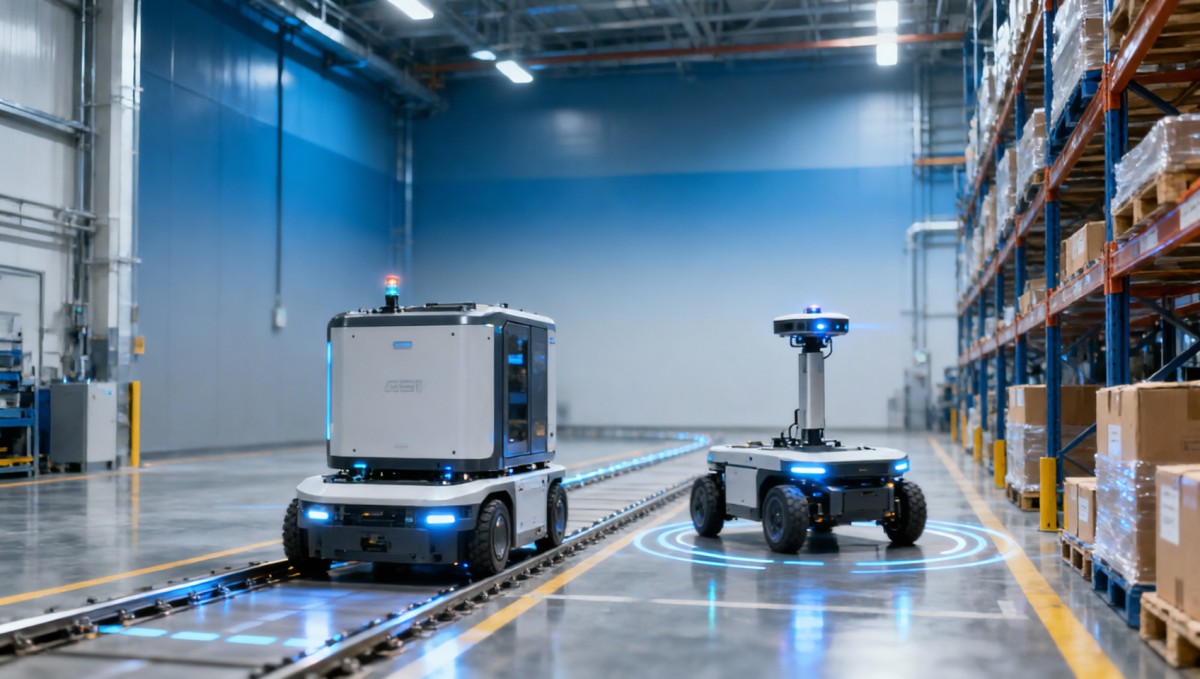
For searchers comparing AGV AMR solutions, the core intent is usually practical: which system will improve internal logistics without creating new bottlenecks, software headaches, or safety risks?
An AGV (Automated Guided Vehicle) typically follows predefined routes using guidance methods such as magnetic tape, QR codes, reflectors, or fixed-path navigation logic. It performs best in structured environments where pickup points, drop-off points, and traffic rules rarely change.
An AMR (Autonomous Mobile Robot) uses onboard sensing and dynamic navigation—often combining LiDAR, cameras, encoders, and software intelligence—to move more flexibly. It can reroute around obstacles, adapt to layout changes, and handle more variable workflows.
That distinction matters because the purchase decision is not about which technology sounds more advanced. It is about which one matches your plant’s operating reality:
- Stable, repetitive routes: AGV is often enough.
- Frequent layout changes: AMR usually fits better.
- Mixed pedestrian and forklift traffic: AMR often offers stronger adaptive behavior.
- Tight budget and simple deployment goals: AGV may provide faster payback.
Which one fits your factory better: the fastest way to decide
For procurement teams and factory decision-makers, the quickest way to choose is to evaluate five operational variables.
1. How often does your layout change?
If production cells, storage zones, or line-side delivery points move frequently, AMRs reduce reconfiguration effort. If your routes remain fixed for years, AGVs can be simpler and more cost-effective.
2. How predictable is your material flow?
AGVs work well when transport cycles are consistent: same route, same timing, same stop logic. AMRs perform better when task priorities shift throughout the day, such as variable SKU handling, dynamic dispatching, or multiple production lines competing for logistics resources.
3. What kind of traffic does the vehicle share space with?
In facilities with operators, pallet jacks, forklifts, and temporary obstructions, AMRs generally have an advantage because they can dynamically react and reroute. In segregated lanes with controlled traffic, AGVs remain highly effective.
4. How complex is your software stack?
If you already use MES, WMS, ERP, machine vision systems, IoT edge gateway software, or plan to connect to a digital twin solution provider, integration flexibility becomes critical. AMR platforms often market stronger interoperability, but buyers should verify actual API maturity, fleet management logic, latency behavior, and alarm handling rather than assuming compatibility.
5. What is the cost of failure or stoppage?
When a route disruption can stop high-value production, recovery behavior matters more than brochure specifications. Ask whether the system can safely resume operations after obstruction, network interruption, or map conflict. The best AGV AMR solution is the one that fails predictably and recovers cleanly.
When AGV is the better choice
AGVs are often underrated because AMRs get more attention in modern automation discussions. But in many factories, AGVs are the better engineering choice.
- Fixed manufacturing lines: predictable transport between warehouse, buffer, and production cells.
- High-volume, repetitive intralogistics: stable routes support efficient scheduling.
- Highly controlled environments: fewer unexpected obstacles reduce the need for dynamic rerouting.
- Cost-sensitive projects: lower system complexity can mean easier training and maintenance.
- Facilities prioritizing deterministic behavior: fixed guidance can be easier to validate in regulated workflows.
For operators, AGVs are also easier to understand because movement logic is visible and route-based. For buyers, this can reduce onboarding time and deployment risk.
When AMR is the better choice
AMRs are usually a stronger fit when operational flexibility has real business value.
- Frequent product changeovers: routes and priorities shift with demand.
- Brownfield factories: existing layouts may be too complex for extensive fixed-path infrastructure.
- Mixed-traffic environments: people and vehicles create variable movement conditions.
- Multi-point delivery and dynamic dispatch: AMRs can optimize task allocation more intelligently.
- Factories scaling automation over time: adding routes and adapting workflows is often easier.
That said, AMR flexibility is only valuable if the surrounding stack supports it. Navigation quality depends on sensor performance, map accuracy, software tuning, and the site’s real-world conditions. For example, reflective surfaces, poor floor consistency, narrow aisles, or unstable wireless coverage can reduce actual performance.
What procurement teams should compare beyond the brochure
Many AGV AMR comparisons fail because they focus on headline specs instead of purchasing risk. Serious evaluation should include the following:
Navigation reliability
Do not just ask what sensors are used. Ask how the vehicle performs under dust, low light, reflective metal, crowded aisles, and partial obstructions. If solid-state LiDAR is used, request data on detection robustness, false positives, and edge-case behavior.
Safety strategy
Understand how the system handles emergency stops, speed reduction zones, pedestrian detection, and safe rerouting. Safety is not just a certification checkbox; it affects throughput and acceptance on the shop floor.
Fleet management
Single-robot demos are easy. Real value comes from multi-vehicle orchestration, traffic control, charging logic, and congestion handling.
Integration depth
Ask whether the platform connects cleanly with WMS, MES, ERP, PLCs, elevator controls, automatic doors, and machine vision systems. Verify actual deployment references rather than slide-deck promises.
Maintenance and support
Check spare part access, remote diagnostics, software update process, cybersecurity policy, and mean time to repair. A lower purchase price can become expensive if support response is weak.
Total cost of ownership
Compare not only hardware cost but also mapping, commissioning, software licenses, site modifications, training, battery replacement, and downtime risk. This is where many projects underestimate the real difference between AGV and AMR adoption.
How operators and engineers should evaluate real-world usability
Operators and plant engineers often see issues that management misses. A technically impressive system can still fail in day-to-day use if it creates friction on the floor.
Focus on these practical questions:
- How easy is it to call, dispatch, or override the vehicle?
- How clearly does the interface show alarms and route status?
- What happens when pallets are misaligned or aisles are partially blocked?
- Can line-side teams recover from minor issues without waiting for specialists?
- How much training is required for shift-based operation?
If possible, run a pilot in actual production conditions instead of a clean demo area. Watch for hesitation behavior, recovery time, traffic interaction, and manual intervention frequency. Those details often determine whether the system creates labor savings or hidden inefficiencies.
How AGV and AMR decisions connect to the wider smart factory stack
Factories rarely evaluate mobile automation in isolation. AGV and AMR projects increasingly sit within broader digital transformation plans that include machine vision software license decisions, industrial connectivity, traceability, and simulation.
That is why buyers should assess whether the mobile robotics platform can support:
- IoT edge gateway software for device connectivity and local data processing
- Digital twin solution provider workflows for route simulation, bottleneck analysis, and capacity planning
- Machine vision integration for pallet recognition, station verification, or load validation
- Data traceability for cycle time, fleet utilization, congestion points, and downtime root-cause analysis
The more your factory depends on coordinated software systems, the less useful a simplistic AGV-versus-AMR debate becomes. The real question is which platform fits your future architecture with the least operational compromise.
A practical decision framework for buyers and plant leaders
If you need a simple rule of thumb, use this:
- Choose AGV if your process is stable, routes are fixed, traffic is controlled, and you want predictable automation with lower complexity.
- Choose AMR if your environment changes often, workflow priorities shift, traffic is mixed, and flexibility creates measurable business value.
Before signing, require suppliers to demonstrate:
- Performance in your actual environment
- Clear integration scope and responsibility boundaries
- Recovery behavior under failure conditions
- Total cost of ownership over multiple years
- Scalability from pilot to full deployment
That approach helps researchers validate claims, operators judge usability, procurement teams compare risk, and executives link automation investment to throughput and ROI.
Conclusion: the best AGV AMR choice is the one that matches operational reality
There is no universal winner in the AGV AMR comparison. AGVs remain highly effective for structured, repetitive transport in controlled facilities. AMRs deliver stronger flexibility in dynamic, mixed-traffic, and evolving production environments. The better option is the one that aligns with your layout stability, material flow variability, integration requirements, and tolerance for downtime risk.
For factories making broader automation decisions, this choice should be evaluated as part of the full technical stack—not as a standalone trend purchase. If you assess navigation reliability, safety behavior, fleet logic, software integration, and total cost with an engineering-first lens, the right answer becomes much clearer.
Search News
Hot Articles
- Carbon Fiber StructuresHow to Specify Aerospace Carbon Fiber Assemblies for Lightweight, Load-Bearing PartsJul 11, 2026
- Machine VisionXiaomi, Alibaba DAMO Academy Drive Open-Source Robotics Model Ecosystem, Lowering Algorithm Development Barriers for Overseas SMEs Adopting Chinese Robotics SolutionsMar 30, 2026
- Cobots & ArmsShanxi 'AI+' Conference Showcases Embodied Intelligence with Multinational Buyer Engagement: Key Industry ImplicationsMar 30, 2026
Popular Tags
Recommended News
 Jul 11, 2026How to Specify Aerospace Carbon Fiber Assemblies for Lightweight, Load-Bearing PartsAerospace carbon fiber assemblies: learn how to specify laminate design, load data, joining methods, and inspection controls for lighter, reliable load-bearing aerospace parts.Elena Rostova (UAV Systems Researcher)
 Mar 30, 2026Xiaomi, Alibaba DAMO Academy Drive Open-Source Robotics Model Ecosystem, Lowering Algorithm Development Barriers for Overseas SMEs Adopting Chinese Robotics SolutionsXiaomi & Alibaba DAMO Academy's open-source robotics models lower algorithm barriers for global SMEs. Boost efficiency in manufacturing, logistics & smart retail with ROS 2 compatible solutions.TSV Data Lab
 Mar 30, 2026Shanxi 'AI+' Conference Showcases Embodied Intelligence with Multinational Buyer Engagement: Key Industry ImplicationsShanxi 'AI+' Conference highlights embodied intelligence with Tesla, Ubtech & Jiantao showcasing multimodal robotics. 40+ global buyers validated tech on-site, creating new B2B channels for industrial automation & AI solutions.Chen Wei (Automation Lead Engineer)
 Mar 30, 2026Zhongguancun Unveils 6G Integrated Sensing-Computing-Intelligence Platform to Empower Embodied Robots for Global Industrial ApplicationsZhongguancun's new 6G platform revolutionizes industrial robotics with <10ms latency, empowering global automotive, logistics & port automation. Discover how this tech boosts China's smart manufacturing exports.TSV Data Lab
 Mar 30, 2026Mech-Mind Tianjin Embodied Intelligence R&D and Production Base Goes Live, Cutting Delivery Time by 20%–30% for Global Customized AMR+Vision SolutionsMech-Mind's Tianjin AMR+Vision production base cuts delivery time by 20%-30% for欧美 & Latin American markets. Discover how this PLd-certified facility accelerates customized robotics solutions for smart manufacturing and logistics.Chen Wei (Automation Lead Engineer)
 Mar 30, 2026Boao Forum Reveals 'Co-evolution of Big and Small Brains' Trend in Humanoid Robots, China's Embodied Intelligence Accelerates Adaptation to Overseas Manufacturing Service ScenariosDiscover how China's humanoid robots, featuring 'Co-evolution of Big and Small Brains,' are revolutionizing global manufacturing. Learn about Embodied Tian Gong 3.0's ISO compliance and overseas deployment at Boao Forum 2026.Chen Wei (Automation Lead Engineer)
 Mar 30, 2026China Railway Industrial Secures Patent for Embodied Robotics in Material Handling, Boosting High-Precision Delivery Capabilities for Overseas Infrastructure and Manufacturing ProjectsChina Railway Industrial's new patent for embodied robotics in material handling boosts high-precision delivery for global infrastructure & manufacturing. Discover how this innovation enhances logistics accuracy in automotive, rail transit & EPC projects.Chen Wei (Automation Lead Engineer)
 Oct 18, 2026Comparing Material Options for Procurement: Specs, Costs, and Supply RisksExplore procurement oriented technical content on material options, specs, costs, and supply risks. Compare alternatives to cut hidden expenses and make confident sourcing decisions.Dr. Marcus Vance
 Oct 17, 20265-Axis CNC Positioning Accuracy: How to Interpret ISO 230-2 Test ResultsAssess 5 axis CNC machining positioning accuracy with ISO 230-2. Learn to interpret repeatability, reversal error, and test conditions to compare suppliers and make confident acceptance decisions.Dr. Marcus Vance
 Oct 16, 2026Choosing a Rugged Edge AI Box Supplier: Thermal Tests and Lifecycle SupportChoose a rugged edge AI box supplier with proven thermal performance and reliable lifecycle support. Discover the tests and commitments to verify before you buy.TSV Data Lab
 Oct 15, 2026R&D Cost Reduction Services: How to Evaluate Fees, Savings, and ROIEvaluate R&D cost reduction services with confidence. Compare fees, verify savings, and calculate ROI without compromising performance. Discover how to choose a provider that delivers real value.Chen Wei (Automation Lead Engineer)
 Oct 17, 2026How Should You Interpret Industrial Robot Repeatability Specs?Decode industrial robot repeatability specifications, understand ISO 9283 test conditions, and avoid costly selection mistakes. Learn how to verify performance for your process.Chen Wei (Automation Lead Engineer)
 Oct 16, 2026How Can You Fairly Compare MTBF Across Industrial Servo Motors?Make a fair industrial servo motor MTBF comparison with matched operating profiles, failure criteria, and confidence bounds. Discover how to assess reliability beyond advertised numbers.Chen Wei (Automation Lead Engineer)
 Oct 15, 2026How Should You Compare TechStat Vanguard 5-Axis CNC Tolerances?TechStat Vanguard 5-axis CNC tolerance comparison: learn how to verify part accuracy, assess inspection evidence, and choose suppliers that reliably meet your drawing requirements.Dr. Marcus Vance
 Oct 14, 2026Drone Frame Composites: Carbon Fiber vs. Fiberglass for Weight and StiffnessExplore drone structural materials composites: compare carbon fiber and fiberglass for weight, stiffness, cost, and antenna compatibility. Find the right material for your drone frame.Elena Rostova (UAV Systems Researcher)
 Oct 13, 2026Smart Cameras vs. PC-Based Machine Vision: Which Fits High-Speed Inspection?This industrial product comparison for machine vision weighs smart cameras vs. PC-based systems on latency, throughput, and cost. Discover your best fit for high-speed inspection.TSV Data Lab
 Oct 12, 2026How to Verify RoHS Compliance in Industrial Sensing Systems Before DeploymentRoHS compliant sensing systems: learn how to verify materials, supplier declarations, testing, and configuration controls before industrial deployment.TSV Data Lab
 Oct 11, 2026How Procurement-Oriented Content Taxonomy Improves B2B Buying JourneysProcurement-oriented content taxonomy streamlines B2B buying journeys with clearer evidence, supplier comparisons, risk visibility, and faster approvals.TSV Data Lab
 Oct 10, 2026How to Select a Machine Performance Monitoring Platform for OEE and Downtime ReductionMachine performance monitoring platform selection guide: validate machine states, OEE data, downtime reasons, integrations, and scalability to reduce losses with confidence.TSV Data Lab
 Oct 08, 2026How to Machine Inconel 625 Blades Without Heat Cracks or Edge ChippingInconel 625 blade machining guide: prevent heat cracks, edge chipping, chatter, and work hardening with proven tooling, cooling, fixturing, and inspection strategies.Dr. Marcus Vance
 Oct 07, 2026How to Evaluate an HMI Panel Distributor for Industrial Automation ProjectsHMI panel distributor evaluation guide: verify technical compatibility, traceability, supply reliability, lifecycle support, and total cost for automation projects.Victor Lin (Chief Software Architect)
 Oct 06, 2026Navigation Fault Tolerance Standards for AMRs: What Safety Teams Must VerifyNavigation fault tolerance standards: learn what AMR safety teams must verify, from localization loss and sensor faults to stopping distance, safe restart, and site-specific validation.Chen Wei (Automation Lead Engineer)
 Oct 05, 2026Calculating Edge Computing Total Cost of Ownership Across Distributed SitesEdge computing ownership cost explained: calculate deployment, energy, connectivity, security, remote support, and refresh costs across distributed sites.TSV Data Lab
 Oct 04, 2026CAD/CAM Benchmarking in the GCC: What Manufacturers Should Ask a ConsultantCAD CAM benchmark consultant GCC guide: learn the key questions manufacturers should ask to validate post-processors, workflows, machine performance, and production risk.Victor Lin (Chief Software Architect)























