
What does food traceability software really improve?
Publication Date
author
What does food beverage traceability software really improve? Beyond basic compliance, it gives operators, buyers, and executives clearer batch visibility, faster recalls, stronger supplier verification, and more reliable production data. In complex manufacturing environments that increasingly connect with white label erp for manufacturing, iot edge gateway software, machine vision software license, and AGV AMR workflows, traceability becomes a practical tool for reducing risk, proving quality, and making better sourcing decisions.
For food and beverage businesses, the real value of traceability software is not limited to storing lot codes or creating audit trails. It improves the daily mechanics of production, warehousing, quality control, and supplier management. In facilities where thousands of units can move through filling, labeling, packing, and dispatch within a single shift, even a 15-minute delay in identifying an affected batch can expand waste, recall cost, and customer exposure.
This matters to multiple stakeholders. Operators need faster exception handling on the line. Procurement teams need better supplier evidence before approving materials. Quality managers need documented chain-of-custody records. Executives need data that can support decisions across multiple plants, SKUs, and sourcing regions. In a data-driven manufacturing environment, traceability software becomes part of a broader operational intelligence stack rather than a standalone compliance tool.
How traceability software improves visibility from raw material to finished shipment
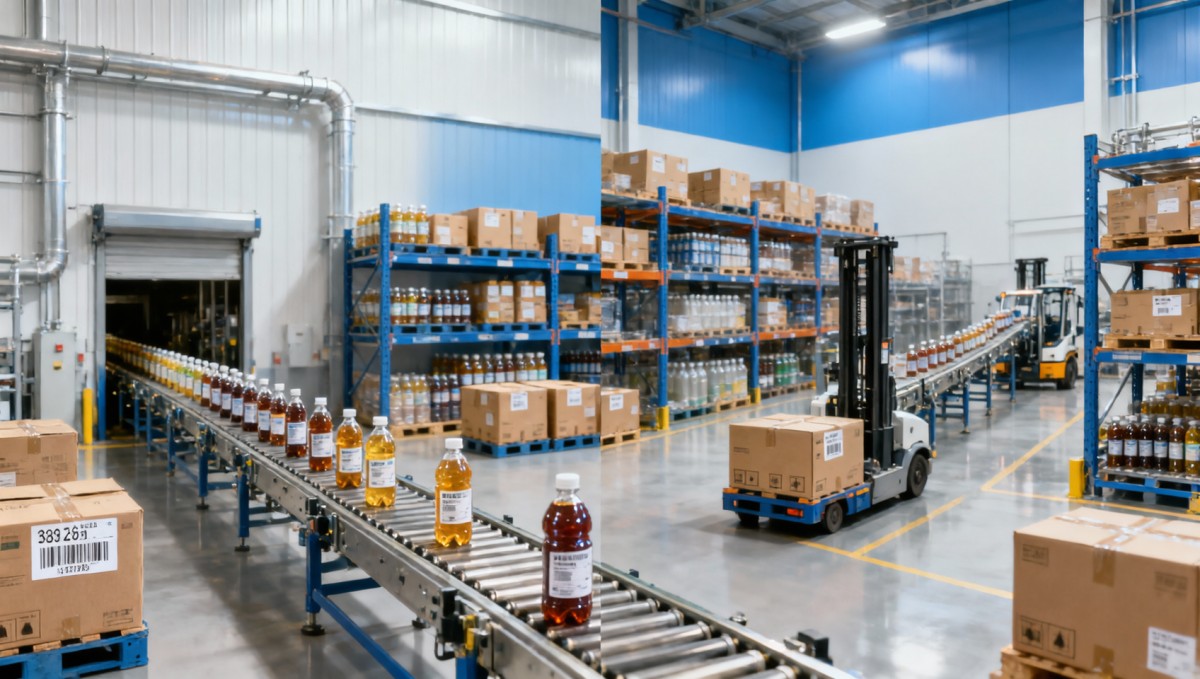
The first major improvement is visibility. Food traceability software links incoming materials, processing steps, packaging events, warehouse movements, and shipment records into one connected flow. Instead of checking 4 or 5 separate logs maintained by production, QA, warehouse, and procurement teams, users can trace one lot across the full process path in seconds or minutes rather than hours.
This visibility is especially valuable in mixed production environments where the same line may handle multiple formulations, packaging sizes, or private-label products within a 24-hour schedule. Without structured traceability, changeovers create data gaps. With software-based tracking, a plant can connect batch numbers, operator actions, machine timestamps, and supplier lot references into a searchable record set.
For buyers and sourcing teams, this visibility extends upstream. It becomes easier to verify whether one ingredient lot was used in 2 products or 20 products, whether packaging material came from an approved vendor list, and whether receiving records matched the purchase order, certificate files, and release status. That reduces dependence on email chains and spreadsheet reconstruction during supplier reviews.
In modern plants, traceability software also performs better when integrated with adjacent systems. An ERP may hold order, cost, and inventory data; an IoT edge gateway may capture machine signals every 1-5 seconds; machine vision may confirm label match or code readability; AGV and AMR workflows may move pallets between cold storage and staging areas. Traceability improves when these systems contribute consistent event records rather than isolated data silos.
What better visibility looks like in practice
A practical visibility model usually includes at least 6 linked data points: supplier lot, internal batch, production timestamp, equipment or line ID, packaging code, and shipment destination. Once those links are standardized, teams can answer operational questions more quickly, such as which shift consumed a material lot, which warehouse location still holds the affected stock, and which customer orders were shipped within a defined 2-hour production window.
The table below shows how visibility changes before and after traceability software is implemented in a typical food and beverage operation.
The key takeaway is that visibility is not just a reporting feature. It changes response speed, data trust, and the precision of downstream actions. In high-mix production, that difference directly affects waste control, inventory quarantine scope, and customer communication quality.
Recall readiness, quality containment, and the cost of slow trace-back
The second major improvement is faster recall execution and tighter containment. A strong food traceability software platform reduces the time required to identify affected materials, in-process inventory, finished goods, and outbound shipments. In many operations, a trace-back exercise that once took 3-6 hours across paper forms and spreadsheets can often be narrowed to a much shorter investigation window when the underlying records are connected.
This speed matters because recall cost grows with uncertainty. If a quality team cannot isolate exposure precisely, the default reaction is often broader quarantine, wider product hold, and more customer notifications than may be necessary. Better traceability software helps define the true boundary of risk: which lot, which time block, which line, which packaging run, and which shipments. That can mean the difference between a targeted hold and a plant-wide disruption.
Operators also benefit. During a contamination alert, allergen mislabeling event, or temperature-control deviation, line teams need clear instructions fast. When the system can show that only product made between 09:20 and 10:05 on one filler was affected, production leaders can separate impacted stock without shutting down unrelated output for an entire shift. This improves both product safety response and operational continuity.
Executives and procurement leaders should also view recall readiness as a sourcing issue. If one supplier repeatedly creates incomplete lot records, inconsistent COA linkage, or delayed exception responses, that supplier increases downstream recall exposure. Traceability software turns supplier performance into measurable evidence instead of anecdotal complaint history.
Common recall-control improvements
- Faster affected-lot identification, often within one investigation session instead of multiple departments reconciling records separately.
- Narrower quarantine scope because the software can link product, packaging, and shipment details more precisely.
- Better documentation for internal review, customer response, and regulatory communication.
- Improved mock recall testing, with response drills that can be benchmarked every quarter or every 6 months.
Why precision matters more than broad data collection
Many companies collect large volumes of quality and production data but still struggle in actual recall scenarios. The issue is usually not lack of data; it is broken linkage between events. A useful traceability architecture must connect lot genealogy, process timestamps, packaging confirmation, and outbound logistics records. If even 1 of those 4 layers is missing or delayed by 12-24 hours, the recall response becomes slower and less defensible.
The following table outlines practical recall-readiness checkpoints that procurement, operations, and QA teams can review during software evaluation.
A good system should not only store history but support action. The strongest platforms help teams move from “we think these pallets are affected” to “we can isolate 3 production runs, 2 warehouse locations, and 4 customer shipments with documented evidence.”
Supplier verification and procurement decisions become more evidence-based
Food traceability software also improves procurement quality by strengthening supplier verification. In many companies, supplier approval still depends on audits, certificates, pricing history, and subjective experience. Those inputs matter, but they are incomplete without lot-level performance evidence. Traceability software shows how suppliers behave in actual operations: delivery consistency, documentation accuracy, hold rates, rejection frequency, and issue response time.
For procurement teams handling multiple raw material categories, this is highly practical. A low-price supplier may look attractive on unit cost, but repeated documentation gaps can trigger receiving delays, extra inspection steps, or broader recall exposure. If a supplier causes 3 nonconformance events in 90 days, that issue should be visible in the same decision framework as price, lead time, and MOQ.
This is where TechStat Vanguard’s data-first perspective is useful. In hard-tech and advanced manufacturing, TSV argues that decisions should be grounded in measurable parameters, not marketing adjectives. The same logic applies to food and beverage traceability. Buyers do not need vague claims about “excellent quality control.” They need evidence on lot accuracy, exception rate, and response performance under real operating conditions.
Traceability software can also support cross-functional supplier reviews. Procurement, QA, operations, and finance often evaluate vendors differently. A shared traceability record helps standardize the conversation around batch compliance, release delays, incoming variance, and repeat deviations. That leads to faster requalification decisions and fewer disputes over root cause.
Procurement metrics worth monitoring
- Lot documentation completeness rate across the last 30, 60, or 90 days.
- Average receiving hold time caused by missing or mismatched supplier records.
- Frequency of batch-related deviations per supplier or material category.
- Time to corrective response after a traceability-related issue is reported.
Selection criteria for buyers and decision-makers
When evaluating traceability software for procurement impact, buyers should confirm whether the system can handle supplier master data, lot genealogy, digital document attachment, and nonconformance linkage in one workflow. If those functions are split across disconnected modules, the value for sourcing decisions weakens. The objective is to connect supplier evidence to operational performance, not simply archive vendor files.
Another factor is integration depth. If the platform connects with ERP purchasing records, warehouse scans, and inspection checkpoints, supplier evaluation becomes more accurate. If it remains a standalone QA tool, procurement may still rely on manual consolidation. For multi-site businesses, the ability to compare supplier behavior across 2, 5, or 10 facilities can significantly improve contract decisions.
Operational data quality, automation links, and implementation priorities
Another real improvement is data quality. Food beverage traceability software makes production data more consistent when it captures events at the source rather than after the fact. Manual entry at the end of a shift often creates timestamp gaps, lot-code typos, and missing status updates. By contrast, barcode scans, machine signals, vision inspection triggers, and warehouse movement events can build a cleaner data trail with less rework.
This becomes critical in increasingly automated plants. A line using machine vision software license controls for label verification can feed pass-fail results into the traceability record. An IoT edge gateway can collect temperature, runtime, or alarm-state signals every few seconds. AGV and AMR systems can register pallet transfers between production and cold storage. When linked correctly, these signals turn traceability software into a live operational record instead of a delayed compliance archive.
Implementation should still be phased. Most companies get better results by starting with 3 core layers: material receiving, batch execution, and finished goods dispatch. Once those are stable, they can extend to equipment states, quality exceptions, and automated warehouse events. Trying to integrate every possible signal in phase 1 often creates avoidable complexity and slows user adoption.
A realistic rollout may take 6-12 weeks for a focused pilot in one line or one product family, followed by expansion across additional SKUs and shifts. The important point is not speed alone but data discipline. Naming conventions, batch rules, scan points, and user permissions need to be standardized early. Poor master data design can limit system value even if the software itself is capable.
Recommended implementation sequence
- Map current trace points across receiving, processing, packaging, storage, and shipping.
- Define mandatory data fields such as supplier lot, internal batch, line ID, timestamp, and disposition status.
- Pilot digital capture on 1 production line or 1 high-risk product category for 2-4 weeks.
- Validate recall drill performance, data completeness, and operator workflow fit before scale-up.
The table below summarizes a practical implementation model for businesses that want traceability gains without disrupting plant operations.
The main conclusion is simple: traceability software works best when implemented as an operational data system, not just a compliance project. The stronger the connection between line events, warehouse events, and supplier records, the more useful the platform becomes for daily decisions.
Common misconceptions and FAQ for software selection
Many companies delay investment because they assume food traceability software is only necessary for large enterprises or heavily regulated export operations. In reality, mid-sized producers, contract packers, beverage bottlers, frozen food plants, and private-label manufacturers can all benefit. The trigger is usually not company size alone, but production complexity: more SKUs, more suppliers, more shift changes, and more customer-specific labeling all increase the need for reliable batch genealogy.
Another misconception is that ERP alone is enough. ERP is essential for planning, purchasing, costing, and inventory control, but many ERP environments do not capture trace events with the granularity needed for rapid quarantine or root-cause reconstruction. This is why manufacturers often combine ERP with specialized traceability, warehouse scanning, machine data capture, or inspection systems.
There is also a frequent usability concern. Teams worry that more scanning or digital steps will slow the line. In practice, poor workflow design causes most adoption problems, not the concept of traceability itself. If critical capture points are limited to high-value checkpoints and the interface is aligned with operator routines, the added burden can remain manageable while data accuracy improves substantially.
How do you know if your plant needs stronger traceability software?
A business usually needs stronger traceability when batch reconstruction requires multiple departments, when mock recalls take more than a few hours, when supplier lots are difficult to connect to finished shipments, or when customer complaints cannot be isolated to a defined production window. If these issues appear even once per quarter, the process risk is already visible.
What should buyers check first during software evaluation?
Start with 4 questions: Can the system trace backward and forward by lot? Can it integrate with current ERP and shop-floor data sources? Can it support recall drills and exception workflow? Can non-technical users operate it during a live issue? If one of these areas is weak, the software may look good in demonstration but underperform in real plant conditions.
Is traceability software only about compliance?
No. Compliance is the baseline. The broader value is in decision quality, production control, supplier evaluation, and response speed. Better traceability can reduce unnecessary hold inventory, improve root-cause analysis, support customer confidence, and provide more credible operational data to managers and buyers alike.
Food beverage traceability software really improves 4 things that matter in everyday operations: visibility, recall speed, supplier verification, and data reliability. Those gains become even more important as manufacturing environments connect ERP platforms, IoT edge systems, machine vision inspection, and automated material handling into one digital process chain. For information researchers, plant users, procurement teams, and business decision-makers, the best choice is a platform that links batch data to real operational events with clarity and discipline.
If your organization is reviewing traceability options, planning a digital quality upgrade, or comparing solutions for multi-site food and beverage production, now is the right time to define your critical trace points and software requirements. Contact us to discuss your application, get a tailored solution outline, or explore more data-driven manufacturing and traceability strategies.
Search News
Hot Articles
- Carbon Fiber StructuresHow to Specify Aerospace Carbon Fiber Assemblies for Lightweight, Load-Bearing PartsJul 11, 2026
- Machine VisionXiaomi, Alibaba DAMO Academy Drive Open-Source Robotics Model Ecosystem, Lowering Algorithm Development Barriers for Overseas SMEs Adopting Chinese Robotics SolutionsMar 30, 2026
- Cobots & ArmsShanxi 'AI+' Conference Showcases Embodied Intelligence with Multinational Buyer Engagement: Key Industry ImplicationsMar 30, 2026
Popular Tags
Recommended News
 Jul 11, 2026How to Specify Aerospace Carbon Fiber Assemblies for Lightweight, Load-Bearing PartsAerospace carbon fiber assemblies: learn how to specify laminate design, load data, joining methods, and inspection controls for lighter, reliable load-bearing aerospace parts.Elena Rostova (UAV Systems Researcher)
 Mar 30, 2026Xiaomi, Alibaba DAMO Academy Drive Open-Source Robotics Model Ecosystem, Lowering Algorithm Development Barriers for Overseas SMEs Adopting Chinese Robotics SolutionsXiaomi & Alibaba DAMO Academy's open-source robotics models lower algorithm barriers for global SMEs. Boost efficiency in manufacturing, logistics & smart retail with ROS 2 compatible solutions.TSV Data Lab
 Mar 30, 2026Shanxi 'AI+' Conference Showcases Embodied Intelligence with Multinational Buyer Engagement: Key Industry ImplicationsShanxi 'AI+' Conference highlights embodied intelligence with Tesla, Ubtech & Jiantao showcasing multimodal robotics. 40+ global buyers validated tech on-site, creating new B2B channels for industrial automation & AI solutions.Chen Wei (Automation Lead Engineer)
 Mar 30, 2026Zhongguancun Unveils 6G Integrated Sensing-Computing-Intelligence Platform to Empower Embodied Robots for Global Industrial ApplicationsZhongguancun's new 6G platform revolutionizes industrial robotics with <10ms latency, empowering global automotive, logistics & port automation. Discover how this tech boosts China's smart manufacturing exports.TSV Data Lab
 Mar 30, 2026Mech-Mind Tianjin Embodied Intelligence R&D and Production Base Goes Live, Cutting Delivery Time by 20%–30% for Global Customized AMR+Vision SolutionsMech-Mind's Tianjin AMR+Vision production base cuts delivery time by 20%-30% for欧美 & Latin American markets. Discover how this PLd-certified facility accelerates customized robotics solutions for smart manufacturing and logistics.Chen Wei (Automation Lead Engineer)
 Mar 30, 2026Boao Forum Reveals 'Co-evolution of Big and Small Brains' Trend in Humanoid Robots, China's Embodied Intelligence Accelerates Adaptation to Overseas Manufacturing Service ScenariosDiscover how China's humanoid robots, featuring 'Co-evolution of Big and Small Brains,' are revolutionizing global manufacturing. Learn about Embodied Tian Gong 3.0's ISO compliance and overseas deployment at Boao Forum 2026.Chen Wei (Automation Lead Engineer)
 Mar 30, 2026China Railway Industrial Secures Patent for Embodied Robotics in Material Handling, Boosting High-Precision Delivery Capabilities for Overseas Infrastructure and Manufacturing ProjectsChina Railway Industrial's new patent for embodied robotics in material handling boosts high-precision delivery for global infrastructure & manufacturing. Discover how this innovation enhances logistics accuracy in automotive, rail transit & EPC projects.Chen Wei (Automation Lead Engineer)
 Oct 18, 2026Comparing Material Options for Procurement: Specs, Costs, and Supply RisksExplore procurement oriented technical content on material options, specs, costs, and supply risks. Compare alternatives to cut hidden expenses and make confident sourcing decisions.Dr. Marcus Vance
 Oct 17, 20265-Axis CNC Positioning Accuracy: How to Interpret ISO 230-2 Test ResultsAssess 5 axis CNC machining positioning accuracy with ISO 230-2. Learn to interpret repeatability, reversal error, and test conditions to compare suppliers and make confident acceptance decisions.Dr. Marcus Vance
 Oct 16, 2026Choosing a Rugged Edge AI Box Supplier: Thermal Tests and Lifecycle SupportChoose a rugged edge AI box supplier with proven thermal performance and reliable lifecycle support. Discover the tests and commitments to verify before you buy.TSV Data Lab
 Oct 15, 2026R&D Cost Reduction Services: How to Evaluate Fees, Savings, and ROIEvaluate R&D cost reduction services with confidence. Compare fees, verify savings, and calculate ROI without compromising performance. Discover how to choose a provider that delivers real value.Chen Wei (Automation Lead Engineer)
 Oct 17, 2026How Should You Interpret Industrial Robot Repeatability Specs?Decode industrial robot repeatability specifications, understand ISO 9283 test conditions, and avoid costly selection mistakes. Learn how to verify performance for your process.Chen Wei (Automation Lead Engineer)
 Oct 16, 2026How Can You Fairly Compare MTBF Across Industrial Servo Motors?Make a fair industrial servo motor MTBF comparison with matched operating profiles, failure criteria, and confidence bounds. Discover how to assess reliability beyond advertised numbers.Chen Wei (Automation Lead Engineer)
 Oct 15, 2026How Should You Compare TechStat Vanguard 5-Axis CNC Tolerances?TechStat Vanguard 5-axis CNC tolerance comparison: learn how to verify part accuracy, assess inspection evidence, and choose suppliers that reliably meet your drawing requirements.Dr. Marcus Vance
 Oct 14, 2026Drone Frame Composites: Carbon Fiber vs. Fiberglass for Weight and StiffnessExplore drone structural materials composites: compare carbon fiber and fiberglass for weight, stiffness, cost, and antenna compatibility. Find the right material for your drone frame.Elena Rostova (UAV Systems Researcher)
 Oct 13, 2026Smart Cameras vs. PC-Based Machine Vision: Which Fits High-Speed Inspection?This industrial product comparison for machine vision weighs smart cameras vs. PC-based systems on latency, throughput, and cost. Discover your best fit for high-speed inspection.TSV Data Lab
 Oct 12, 2026How to Verify RoHS Compliance in Industrial Sensing Systems Before DeploymentRoHS compliant sensing systems: learn how to verify materials, supplier declarations, testing, and configuration controls before industrial deployment.TSV Data Lab
 Oct 11, 2026How Procurement-Oriented Content Taxonomy Improves B2B Buying JourneysProcurement-oriented content taxonomy streamlines B2B buying journeys with clearer evidence, supplier comparisons, risk visibility, and faster approvals.TSV Data Lab
 Oct 10, 2026How to Select a Machine Performance Monitoring Platform for OEE and Downtime ReductionMachine performance monitoring platform selection guide: validate machine states, OEE data, downtime reasons, integrations, and scalability to reduce losses with confidence.TSV Data Lab
 Oct 08, 2026How to Machine Inconel 625 Blades Without Heat Cracks or Edge ChippingInconel 625 blade machining guide: prevent heat cracks, edge chipping, chatter, and work hardening with proven tooling, cooling, fixturing, and inspection strategies.Dr. Marcus Vance
 Oct 07, 2026How to Evaluate an HMI Panel Distributor for Industrial Automation ProjectsHMI panel distributor evaluation guide: verify technical compatibility, traceability, supply reliability, lifecycle support, and total cost for automation projects.Victor Lin (Chief Software Architect)
 Oct 06, 2026Navigation Fault Tolerance Standards for AMRs: What Safety Teams Must VerifyNavigation fault tolerance standards: learn what AMR safety teams must verify, from localization loss and sensor faults to stopping distance, safe restart, and site-specific validation.Chen Wei (Automation Lead Engineer)
 Oct 05, 2026Calculating Edge Computing Total Cost of Ownership Across Distributed SitesEdge computing ownership cost explained: calculate deployment, energy, connectivity, security, remote support, and refresh costs across distributed sites.TSV Data Lab
 Oct 04, 2026CAD/CAM Benchmarking in the GCC: What Manufacturers Should Ask a ConsultantCAD CAM benchmark consultant GCC guide: learn the key questions manufacturers should ask to validate post-processors, workflows, machine performance, and production risk.Victor Lin (Chief Software Architect)























