
Industrial 3D printing service China for low volume metal parts
Publication Date
author
For teams evaluating industrial 3d printing service China for low volume metal parts, reliable decisions start with verifiable data—not marketing claims. This guide examines 3d printing titanium porosity test results, micro machining tolerance limits, 5 axis cnc surface finish ra, and cnc milling chatter frequency analysis to help engineers, operators, buyers, and executives compare suppliers with greater technical confidence.
Why low volume metal part sourcing in China needs a data-first evaluation model
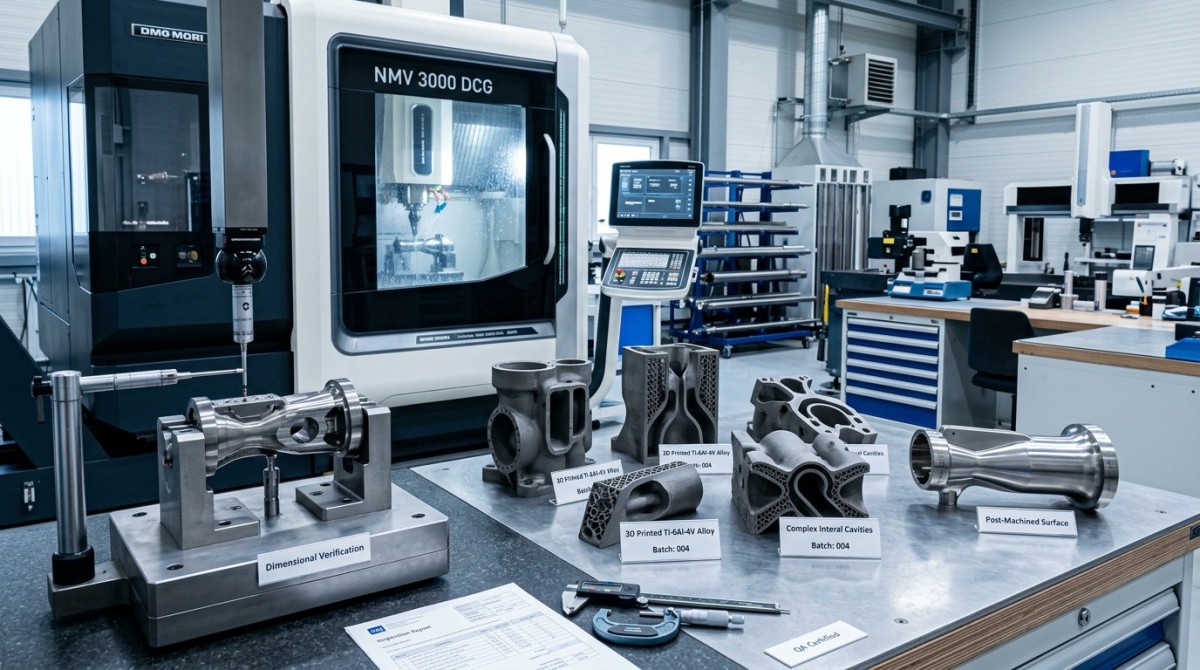
An industrial 3d printing service China provider can be a strong option when a team needs 5 pieces, 20 pieces, or 200 pieces of metal components without committing to expensive hard tooling. Yet the real challenge is not finding a supplier. The challenge is filtering out vague claims and identifying who can actually control porosity, surface condition, dimensional repeatability, and post-processing stability across low volume metal parts.
This is exactly where a parameter-led assessment becomes useful. In hard-tech procurement, TSV’s position is simple: tolerances, process windows, and inspection logic matter more than adjectives. For R&D teams, the wrong supplier can add 2–6 weeks of redesign delay. For procurement, unclear specifications can create hidden cost in secondary machining, scrap, or failed incoming inspection. For executives, uncertainty at the prototype or bridge-production stage often becomes a schedule risk.
Low volume metal parts are common in aerospace fixtures, robotics brackets, UAV structural nodes, automation end-effectors, medical prototypes, and customized sensor housings. In these cases, industrial 3d printing service China sourcing is often evaluated against CNC machining, investment casting, or hybrid routes. The right answer depends on geometry complexity, alloy choice, tolerance bands, and the acceptable lead time, not on a single process being universally better.
A practical sourcing review should separate four layers: build quality, post-processing capability, inspection discipline, and communication accuracy. If a supplier can explain layer thickness ranges, support strategy, HIP or heat treatment options, and machining datum planning in clear engineering language, qualification becomes faster. If the discussion stays at “good quality” and “fast delivery,” risk remains high.
What different stakeholders usually need to verify
- Researchers and technical evaluators usually focus on design freedom, alloy compatibility, porosity behavior, support removal impact, and whether critical faces can be finish-machined to the required datum scheme.
- Operators and users care about assembly fit, thread quality, burr control, edge condition, and how repeatably the part performs after 50–500 duty cycles in real equipment.
- Procurement teams need a clear quote structure, batch-size effect on unit cost, packaging standards, export communication reliability, and realistic lead time bands such as 7–15 days or 2–4 weeks depending on complexity.
- Business decision-makers tend to look at supply chain resilience, technical transparency, ability to move from prototype to pilot lot, and the cost of requalification if the first supplier underperforms.
For most buying teams, the first qualification discussion should answer a simple question: can the supplier prove how the part is made, measured, and released? If the answer is yes, industrial 3d printing service China sourcing becomes far more manageable, especially for low volume metal parts with complex geometry and demanding downstream assembly requirements.
Which technical indicators matter most for low volume metal parts?
When teams compare industrial 3d printing service China options, they often start with material lists and price. That is understandable, but incomplete. For engineering-grade low volume metal parts, the stronger comparison framework includes density-related quality, tolerance capability, surface condition, and process stability after post-treatment. These factors affect both function and total cost.
Take 3d printing titanium porosity test discussion as an example. Titanium parts for lightweight brackets, housings, or aerospace-adjacent applications are often judged by how consistently the process controls voids and internal defects. A responsible supplier should explain test methods used in qualification, whether the data comes from representative coupons or actual builds, and how heat treatment or HIP may affect the final condition. The key issue is not a single impressive number, but whether the process remains stable across repeated builds.
Micro machining tolerance limits also matter because many additively manufactured parts still require secondary machining on sealing faces, bores, or locating features. A supplier that offers both additive manufacturing and precision finishing can reduce datum transfer error. In practical sourcing, buyers should ask which features are printed near-net-shape and which are intended for finish machining within tolerance bands such as ±0.02 mm, ±0.05 mm, or wider depending on size and geometry.
Another overlooked issue is 5 axis cnc surface finish Ra after additive builds. Many low volume metal parts need smoother functional surfaces for sealing, sliding, optical alignment, or fatigue-sensitive zones. The discussion should therefore include whether surfaces are left as-printed, bead blasted, machined, polished, or chemically treated, and what roughness range is realistic for each route. Surface condition is not cosmetic only; it influences wear, contamination retention, and crack initiation risk.
A practical parameter checklist before supplier shortlisting
The table below helps teams organize technical review points before requesting samples or pilot parts from an industrial 3d printing service China supplier.
These are not niche questions. They are procurement accelerators. If a supplier can answer them clearly within the RFQ stage, the buying team can reduce qualification ambiguity and compare vendors on technical substance rather than presentation style.
Typical technical review sequence
- Review drawing intent and classify features into printed, support-affected, and finish-machined zones.
- Confirm alloy route, heat treatment path, and any special concerns around porosity, distortion, or residual stress.
- Define 3–6 key acceptance dimensions, 1–3 critical surfaces, and the inspection method for each feature.
- Request a first article or small pilot lot before scaling to low volume production.
This sequence is especially useful when the part has mixed requirements, such as internal channels plus external precision mounting faces. It also aligns with TSV’s engineering-first philosophy: parameters should drive the sourcing conversation from the beginning.
How does industrial 3d printing compare with CNC and casting for low volume metal parts?
Many buyers ask the same practical question: should this part be 3D printed, machined from billet, or moved to a small casting route? The answer depends on geometry complexity, material waste tolerance, feature accessibility, and the lot size at which tooling begins to make economic sense. In low volume metal parts procurement, no process wins every case.
Industrial 3d printing service China sourcing is often strongest when the design contains internal lattices, conformal channels, weight-reduction structures, or part consolidation opportunities. CNC machining remains attractive when tolerances are tight across many faces and the geometry is accessible in 3-axis or 5-axis setups. Casting can become relevant when geometry is stable and volume starts to justify tooling, though secondary machining is still usually needed.
For bridge production, the hybrid path is increasingly common: print the complex preform, then finish-machine datums and interfaces. This can preserve design flexibility while improving dimensional confidence. In such cases, discussion of 5 axis cnc surface finish Ra and chatter control becomes essential because the machining stage determines final usability on critical zones.
Procurement teams should also compare risk, not only process cost. A cheaper quote loses value if the part needs repeated rework, unpredictable support scars, or design changes after test fit. Time-to-validation often matters more than nominal piece price during prototype and pilot phases.
Process selection matrix for common sourcing scenarios
The following table is useful when deciding whether industrial 3d printing service China is the right route for a specific low volume metal parts project.
This matrix should not replace drawing review, but it gives a solid starting point. In practice, many buyers save time by asking two suppliers to evaluate the same part using different routes. The more detailed the feedback on porosity control, tolerance strategy, and post-processing, the stronger the final decision will be.
Three warning signs during comparison
- The supplier promises very tight tolerances on all printed surfaces without distinguishing as-built condition from machined features.
- The quote does not separate printing, heat treatment, support removal, machining, and inspection, making cost drivers impossible to evaluate.
- There is no meaningful explanation of how thin walls, distortion-prone areas, or chatter-sensitive finishing operations are managed.
When these warning signs appear, a low initial price can quickly turn into engineering rework. Buyers should treat process clarity as part of the quotation value, not as optional detail.
What should procurement teams check before placing an order?
Procurement success with an industrial 3d printing service China supplier often depends on the quality of the RFQ package. If drawings, tolerance notes, and acceptance logic are vague, even a capable supplier may quote on different assumptions. The result is avoidable back-and-forth, price drift, or incoming inspection disputes. A better approach is to define what must be measured, what can remain process-typical, and what is only cosmetic.
For low volume metal parts, a well-prepared RFQ usually includes 3 layers of information: functional geometry, material and post-treatment route, and release criteria. On timing, common quotation feedback can take 1–3 business days for simple parts and longer for assemblies or hybrid process planning. Common delivery windows may range from 7–15 days for straightforward builds to 2–4 weeks if machining, heat treatment, or extra inspection is required.
Buyers should also confirm whether the supplier can support first article inspection, sample labeling, and revision traceability. This is particularly important for teams moving from prototype to pilot production, where one design may pass through 2–3 revisions before release. Without revision discipline, the risk of mixed batches increases.
TSV’s data-driven perspective is useful here: procurement should not ask for generic assurance. It should ask for measurable release logic. Which dimensions will be checked? Which surfaces require roughness verification? Which build records are retained? Which heat treatment steps are documented? These questions reduce noise and reveal supplier maturity quickly.
Six-point RFQ checklist for industrial 3d printing service China projects
- Identify 3–6 critical dimensions and mark them clearly on the drawing or inspection note.
- State the alloy, desired condition, and any post-processing such as stress relief, machining, blasting, or polishing.
- Define whether acceptance is based on a first article, sample set, or full lot inspection for the first order.
- Clarify whether threads, sealing faces, and datum bores are printed or machined after the build.
- Ask the supplier to flag any feature that exceeds practical micro machining tolerance limits or likely support-removal risk.
- Request a clear cost breakdown so that process changes can be discussed without restarting the entire quote.
This checklist helps technical and commercial teams work from the same baseline. It also improves supplier comparison because each vendor responds to the same decision framework rather than interpreting the project independently.
Common compliance and documentation topics
Specific certification needs depend on the end-use industry, but buyers commonly ask about material traceability, dimensional reports, heat treatment records, and process documentation. In aerospace- or medical-adjacent projects, discussions may reference standards such as AS9100 or ISO13485 at the system level, even if the part itself is still under prototype evaluation. Buyers should request only documentation relevant to the project stage.
That distinction matters. Over-specifying documentation for an early prototype can slow the project and raise cost unnecessarily. Under-specifying it for validation parts can create approval delays later. A balanced procurement model matches document depth to phase: prototype, pilot lot, or low volume recurring production.
FAQ: what buyers and engineers often ask before choosing a supplier
How do I know whether a part is suitable for industrial 3d printing service China sourcing?
A part is usually a strong candidate when geometry complexity is high, internal channels are beneficial, weight reduction matters, or the quantity is too low to justify tooling. Typical examples include 1–50 prototype parts or 50–200 bridge-production parts, especially when design iteration is still active. If the part is simple, fully accessible to machining tools, and needs tight tolerances on most faces, CNC may be the better first option.
What should I ask about 3d printing titanium porosity test results?
Ask how process validation is done, whether the test data comes from representative coupons or production-equivalent builds, and how the supplier manages lot consistency. Also ask how post-treatment affects internal quality and whether critical parts require additional inspection methods. The goal is not to demand unrealistic perfection. The goal is to understand process control and whether the supplier can explain it clearly.
How important are micro machining tolerance limits after printing?
They are very important because many low volume metal parts depend on post-machined interfaces to function correctly. A printed part may carry the shape efficiently, but bores, sealing faces, and locator features often require secondary machining. If the supplier can define which features are realistically held at ±0.02 mm, ±0.05 mm, or a looser tolerance band, your drawing review becomes faster and more realistic.
Why should I care about 5 axis cnc surface finish Ra and chatter analysis?
Because final performance often depends on the machined surfaces, not just the printed shape. Roughness affects sealing, friction, wear, and appearance. Chatter affects dimensional control and can damage thin-wall regions or delicate structures. If your part includes lightweight ribs, thin flanges, or difficult setups, asking about cnc milling chatter frequency analysis is a practical way to judge whether the supplier understands finishing risk.
Why choose a data-driven evaluation partner, and what should you discuss next?
In global sourcing, the difference between a workable supplier and a risky one is often hidden in process explanation, not in headline pricing. A data-driven evaluation approach helps teams compare industrial 3d printing service China options on what actually affects delivery success: low volume metal parts capability, tolerance planning, post-processing control, and documentation readiness. That is the value of TSV’s engineering-centered perspective.
Instead of relying on generic claims, teams can use a structured decision model built around actual procurement questions. Can the supplier explain the route for titanium or other alloys? Can it define what will be printed and what will be machined? Can it discuss 5 axis cnc surface finish Ra on key interfaces? Can it respond to concerns around porosity, distortion, and chatter with process logic rather than sales language? These are the signals that shorten qualification cycles.
If you are comparing suppliers now, the next conversation should be specific. Share your drawing set, expected quantity range, target lead time, and critical acceptance points. Useful topics include parameter confirmation, manufacturability review, low volume metal parts process selection, post-treatment options, realistic delivery windows, sample support, documentation expectations, and quotation structure. That level of detail helps both engineering and procurement teams make decisions with fewer assumptions.
To move forward efficiently, contact us with your part files, material preference, annual or pilot quantity, and any known constraints on tolerance, roughness, certification, or assembly fit. We can help frame the right questions for supplier comparison, clarify where industrial 3d printing service China makes sense, and identify when CNC or a hybrid route may offer a better outcome for low volume metal parts.
Search News
Hot Articles
- Carbon Fiber StructuresHow to Specify Aerospace Carbon Fiber Assemblies for Lightweight, Load-Bearing PartsJul 11, 2026
- Machine VisionXiaomi, Alibaba DAMO Academy Drive Open-Source Robotics Model Ecosystem, Lowering Algorithm Development Barriers for Overseas SMEs Adopting Chinese Robotics SolutionsMar 30, 2026
- Cobots & ArmsShanxi 'AI+' Conference Showcases Embodied Intelligence with Multinational Buyer Engagement: Key Industry ImplicationsMar 30, 2026
Popular Tags
Recommended News
 Jul 11, 2026How to Specify Aerospace Carbon Fiber Assemblies for Lightweight, Load-Bearing PartsAerospace carbon fiber assemblies: learn how to specify laminate design, load data, joining methods, and inspection controls for lighter, reliable load-bearing aerospace parts.Elena Rostova (UAV Systems Researcher)
 Mar 30, 2026Xiaomi, Alibaba DAMO Academy Drive Open-Source Robotics Model Ecosystem, Lowering Algorithm Development Barriers for Overseas SMEs Adopting Chinese Robotics SolutionsXiaomi & Alibaba DAMO Academy's open-source robotics models lower algorithm barriers for global SMEs. Boost efficiency in manufacturing, logistics & smart retail with ROS 2 compatible solutions.TSV Data Lab
 Mar 30, 2026Shanxi 'AI+' Conference Showcases Embodied Intelligence with Multinational Buyer Engagement: Key Industry ImplicationsShanxi 'AI+' Conference highlights embodied intelligence with Tesla, Ubtech & Jiantao showcasing multimodal robotics. 40+ global buyers validated tech on-site, creating new B2B channels for industrial automation & AI solutions.Chen Wei (Automation Lead Engineer)
 Mar 30, 2026Zhongguancun Unveils 6G Integrated Sensing-Computing-Intelligence Platform to Empower Embodied Robots for Global Industrial ApplicationsZhongguancun's new 6G platform revolutionizes industrial robotics with <10ms latency, empowering global automotive, logistics & port automation. Discover how this tech boosts China's smart manufacturing exports.TSV Data Lab
 Mar 30, 2026Mech-Mind Tianjin Embodied Intelligence R&D and Production Base Goes Live, Cutting Delivery Time by 20%–30% for Global Customized AMR+Vision SolutionsMech-Mind's Tianjin AMR+Vision production base cuts delivery time by 20%-30% for欧美 & Latin American markets. Discover how this PLd-certified facility accelerates customized robotics solutions for smart manufacturing and logistics.Chen Wei (Automation Lead Engineer)
 Mar 30, 2026Boao Forum Reveals 'Co-evolution of Big and Small Brains' Trend in Humanoid Robots, China's Embodied Intelligence Accelerates Adaptation to Overseas Manufacturing Service ScenariosDiscover how China's humanoid robots, featuring 'Co-evolution of Big and Small Brains,' are revolutionizing global manufacturing. Learn about Embodied Tian Gong 3.0's ISO compliance and overseas deployment at Boao Forum 2026.Chen Wei (Automation Lead Engineer)
 Mar 30, 2026China Railway Industrial Secures Patent for Embodied Robotics in Material Handling, Boosting High-Precision Delivery Capabilities for Overseas Infrastructure and Manufacturing ProjectsChina Railway Industrial's new patent for embodied robotics in material handling boosts high-precision delivery for global infrastructure & manufacturing. Discover how this innovation enhances logistics accuracy in automotive, rail transit & EPC projects.Chen Wei (Automation Lead Engineer)
 Oct 27, 2026GXO and Agility Robotics Expand Partnership to Accelerate US Humanoid Robot DeploymentGXO and Agility Robotics plan to expand US humanoid robot deployment with Digit 4 in early 2027. Explore warehouse automation plans, service terms and future Digit 5 upgrades.Chen Wei (Automation Lead Engineer)
 Oct 27, 2026Robotic Automation Costs: Budgeting for Equipment, Integration, and MaintenancePlan your robotics automation cost with confidence. Explore equipment, integration, and maintenance expenses, compare quotes, and build a realistic budget for better ROI.Chen Wei (Automation Lead Engineer)
 Oct 26, 2026AMAXiMAL Releases Open-Source TopMod 3D v3 With Claude AIExplore AMAXiMAL’s free, open-source TopMod 3D v3 with Claude AI assistance, topology-based modeling and plywood fabrication tools that connect complex designs to physical builds.Dr. Marcus Vance
 Oct 26, 2026Choosing a SCADA System Integrator Company: PLC Compatibility and Long-Term SupportChoose a scada system integrator company with proven PLC compatibility and reliable long-term support. Discover what to test, compare, and require before investing.Victor Lin (Chief Software Architect)
 Oct 25, 2026Hesai Leads Global ADAS Main Lidar Shipments in Yole’s 2026 ReportHesai led global ADAS main lidar shipments with a 43% share in 2025, according to Yole’s 2026 report. Explore what this ranking reveals about its automotive market position.TSV Data Lab
 Oct 25, 2026Choosing an Aerospace Materials Manufacturer: Quality and Traceability ChecksChoosing an aerospace materials manufacturer? Learn how to verify certifications, test reports, and lot traceability to qualify suppliers confidently and reduce costly sourcing risks.Dr. Marcus Vance
 Oct 24, 2026Guotai Haitong: Global Entry-Level 3D Printer Shipments Rose 39% in Q1 2026Entry-level 3D printer shipments rose 39% in Q1 2026, Guotai Haitong reports. Explore how AI, multicolor printing and print farms are shaping market growth.Dr. Marcus Vance
 Oct 24, 2026Choosing an Industrial Vision Inspection Supplier: Acceptance Tests That MatterChoose an industrial vision inspection supplier with confidence. Discover acceptance tests for defect detection, false rejects, production speed, and reliable part rejection before you buy.TSV Data Lab
 Oct 23, 2026US Navy Raises Gecko Robotics Contract Ceiling to $300M for Robotic Fleet MaintenanceUS Navy raises Gecko Robotics’ contract ceiling to $300M for Pacific Fleet robotic inspections. Explore potential opportunities for maintenance suppliers and key procurement considerations.Chen Wei (Automation Lead Engineer)
 Oct 23, 2026Choosing Industrial Sensing Systems for Global Plants: Protocol CompatibilityCompare industrial sensing systems international buyers can trust. Explore protocol compatibility, reduce integration risks, and select proven configurations for reliable global plant deployments.TSV Data Lab
 Oct 22, 2026KUKA Showcases Physical AI and iiQKA.AI Vision at NVIDIA GTC BerlinExplore KUKA’s Physical AI showcase at NVIDIA GTC Berlin and discover how iiQKA.AI Vision aims to simplify robotic vision integration and improve 2D and 3D scene recognition.TSV Data Lab
 Oct 22, 2026Robotic Machining of Advanced Composites: What Tolerances Are Achievable?Explore advanced materials machining robotics: discover what drives achievable composite tolerances and how to validate accuracy before investing in your next machining system.Dr. Marcus Vance
 Oct 21, 2026China’s Industrial Robot Exports Near RMB 10 Billion in First Nine Months of 2026China’s industrial robot exports neared RMB 10 billion in January–September 2026, with value rising faster than volume. Explore the data and what it could mean for suppliers.Chen Wei (Automation Lead Engineer)
 Oct 21, 2026Low-Latency Industrial Data Processing: Pricing and Key Cost DriversExplore industrial data latency price drivers, from edge hardware to integration and support. Learn how to compare quotes, verify performance, and avoid unnecessary costs.TSV Data Lab
 Oct 20, 2026KUKA Launches iiQKA.AI Vision to Simplify Industrial Image ProcessingKUKA iiQKA.AI Vision simplifies industrial image processing with controller-based 2D and 3D vision. Explore drag-and-drop setup for vision-guided automation.TSV Data Lab
 Oct 20, 2026Smart Industrial Edge Devices: Key Criteria for Legacy PLC IntegrationChoose smart industrial edge devices for legacy PLC integration. Discover key criteria for compatibility, data quality, security, and reliable collection without disrupting control.TSV Data Lab
 Oct 19, 2026Choosing a Radar Sensor by Application: Range, Resolution, and Field of ViewSimplify radar sensor application based product selection. Compare range, resolution, and field of view to avoid blind spots and choose with confidence. Explore the guide.TSV Data Lab























