Industrial 3D Printing Service China for Low Volume Metal Parts
Publication Date
author
For procurement teams evaluating industrial 3d printing service china options, reliable data matters more than promotional claims. This article examines how low volume metal parts suppliers in China perform across material capability, dimensional consistency, lead time, and cost efficiency—helping buyers reduce sourcing risk, shorten qualification cycles, and make decisions based on engineering facts rather than marketplace noise. In a market where prototype urgency, certification pathways, and end-use performance often conflict, the right sourcing choice depends less on slogans and more on matching process capability to the real application scenario.
When low volume metal parts justify an industrial 3d printing service china approach
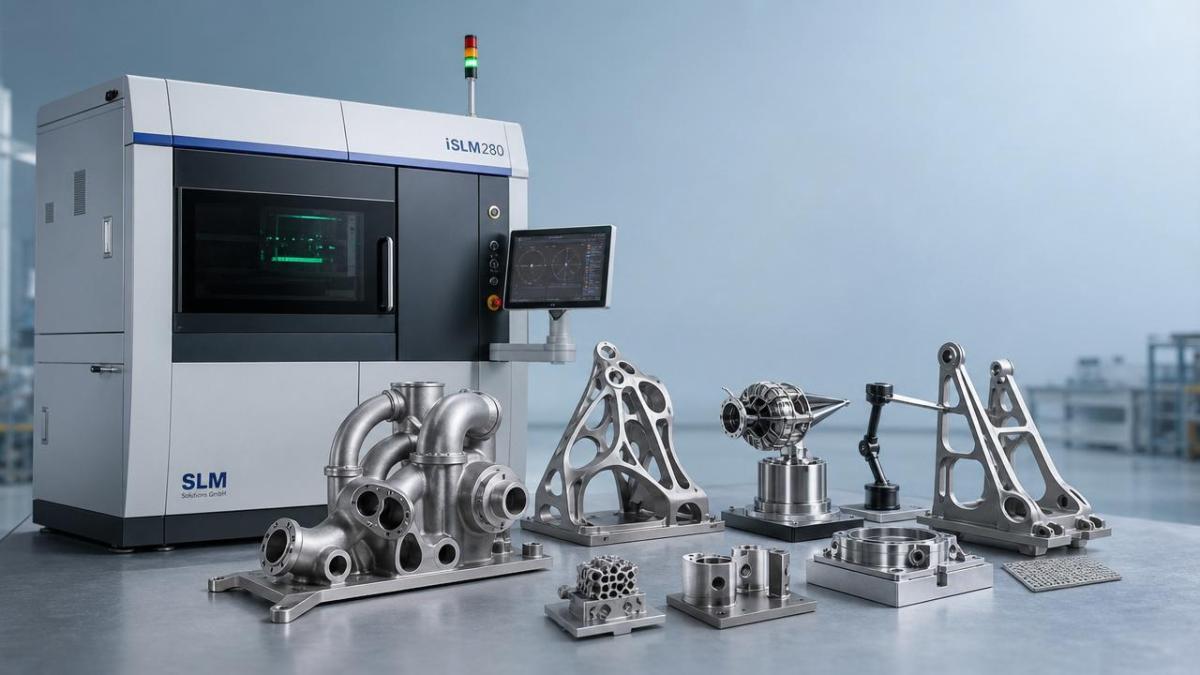
An industrial 3d printing service china solution is most valuable when part geometry is complex, quantity is limited, and time-to-validation matters more than the lowest unit price. This usually applies to functional prototypes, bridge production, spare parts, lightweight assemblies, internal channels, lattice structures, and tooling inserts that are difficult or wasteful to produce by conventional machining alone.
The engineering value changes by scenario. A flight component bracket, a medical device housing, an automation end-effector, and a thermal management manifold may all use metal additive manufacturing, but they do not share the same qualification logic. Some projects prioritize density and fatigue resistance, while others focus on speed, post-processing flexibility, or redesign freedom. That is why any industrial 3d printing service china evaluation should begin with application context rather than vendor brochures.
Scenario 1: Prototype validation where geometry complexity matters more than piece price
For R&D validation, the best industrial 3d printing service china partner is often the one that can translate CAD intent into a stable build strategy with minimal delay. In this scenario, the part may still change after testing, so tooling investment is hard to justify. Metal 3D printing becomes efficient when internal cooling paths, undercuts, topology optimization, or part consolidation would otherwise require multiple machining setups or welded assemblies.
The main decision points here are build size envelope, available alloys, support removal strategy, and how quickly the supplier can return inspection data after first build. Dimensional repeatability is still important, but early-stage projects usually benefit most from fast iteration, manufacturability feedback, and clear communication around warpage risk, thin-wall limits, and achievable surface condition after finishing.
Scenario 2: Bridge production when low volume metal parts need stable repeatability
A different sourcing logic applies when low volume metal parts are moving beyond prototype status but do not yet justify molds, castings, or dedicated fixtures. In this bridge-production scenario, an industrial 3d printing service china supplier must show process control, not just printing capacity. Repeat builds should demonstrate consistent density, powder handling discipline, heat treatment records, and traceable inspection routines.
This is where many sourcing decisions succeed or fail. A supplier may quote an attractive lead time, but if orientation changes between builds or post-machining datum strategy is not fixed, dimensional drift can undermine assembly fit. For bridge production, review whether the supplier can lock process parameters, provide lot traceability, and maintain repeatability across multiple batches instead of treating every order as a one-off prototype job.
Scenario 3: End-use industrial parts where compliance and material data drive selection
For end-use parts, industrial 3d printing service china decisions should be based on evidence tied to mechanical performance and quality documentation. Typical materials include stainless steel, aluminum alloys, titanium alloys, tool steel, Inconel, and cobalt-chrome, but material availability alone is not enough. What matters is whether the service provider can show density levels, tensile values, hardness range, heat treatment procedures, and non-destructive or dimensional inspection routes relevant to the intended use.
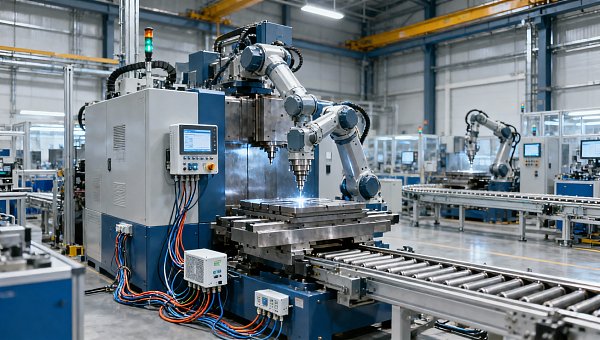
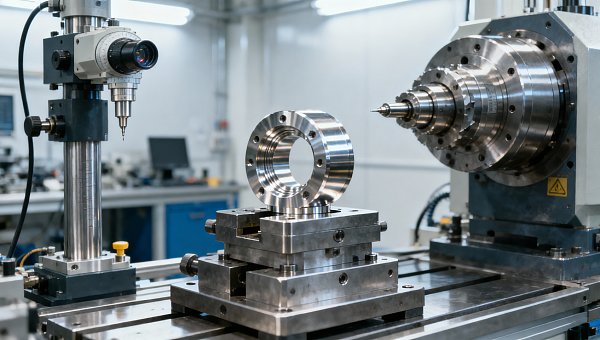
In sectors such as automation, energy, medical support equipment, aerospace subassemblies, and high-performance industrial tooling, qualification often requires a hybrid workflow: printing for shape freedom, CNC machining for critical interfaces, and surface treatment for corrosion, wear, or sealing performance. A capable industrial 3d printing service china partner should therefore be assessed as a process chain provider, not only as a machine owner.
How application scenarios change supplier evaluation criteria
The same industrial 3d printing service china keyword can hide very different sourcing realities. The table below shows how requirements shift by scenario and why a single quote comparison rarely captures total project risk.
What to compare in an industrial 3d printing service china quote beyond price
A serious industrial 3d printing service china comparison should include technical and commercial factors in the same review sheet. Unit cost alone can be misleading because support volume, build nesting, powder type, machining allowance, and post-processing route all affect final value. A lower quote may lead to slower qualification or more scrap if critical assumptions are hidden.
- Material scope: stainless steel, AlSi10Mg, Ti-6Al-4V, Inconel 718, tool steels, and any equivalent grade documentation.
- Machine and process type: SLM, DMLS, EBM, or binder jetting, depending on performance and finish targets.
- Tolerance plan: as-printed tolerance, post-machined tolerance, datum definition, and CMM reporting format.
- Surface path: blasting, polishing, machining, coating, passivation, HIP, or heat treatment requirements.
- Lead time breakdown: file review, print queue, heat treatment, machining, inspection, and export packing.
- Documentation: certificate of conformity, material certs, dimensional report, process record, and traceability level.
In many low volume metal parts programs, the best total outcome comes from suppliers that combine additive manufacturing with CNC finishing and engineering review. This hybrid capability reduces handoff friction and makes the industrial 3d printing service china workflow more predictable from first article to repeat order.
Recommended matching strategies by scenario
Common sourcing mistakes in industrial 3d printing service china projects
One common mistake is assuming all metal additive suppliers deliver the same performance if they list the same alloy. Powder quality, machine calibration, layer strategy, thermal stress management, and post-processing discipline can create major differences in density, residual stress, and final accuracy. Another frequent error is requesting tight tolerances everywhere, even when only a few interfaces are function-critical. That increases cost without improving function.
A third issue is failing to separate as-printed geometry from finished geometry. Many low volume metal parts need machining stock on sealing faces, bores, threads, and assembly datums. Without this planning, a promising industrial 3d printing service china quote can lead to rework, leakage, or poor fit during assembly. Finally, some projects underestimate logistics and documentation timing. Export packaging, customs paperwork, and inspection reports can influence schedule almost as much as the print run itself.
A practical next step for low risk supplier qualification
The most effective way to qualify an industrial 3d printing service china source is to start with a controlled trial package rather than a broad supplier list. Select one representative part, define critical dimensions, specify the intended alloy and finishing route, and request a complete response including DFM notes, lead time split, inspection format, and achievable tolerances in both printed and machined conditions.
This data-first approach aligns with TSV’s view that parameters matter more than adjectives. For low volume metal parts, the right partner is not simply the cheapest or fastest on paper, but the one whose process evidence matches the application scenario. If the supplier can demonstrate repeatable build quality, transparent documentation, and realistic engineering communication, the industrial 3d printing service china option becomes a strategic tool for reducing qualification friction and accelerating deployment with fewer downstream surprises.
Search News
Hot Articles
- Carbon Fiber StructuresHow to Specify Aerospace Carbon Fiber Assemblies for Lightweight, Load-Bearing PartsJul 11, 2026
- Machine VisionXiaomi, Alibaba DAMO Academy Drive Open-Source Robotics Model Ecosystem, Lowering Algorithm Development Barriers for Overseas SMEs Adopting Chinese Robotics SolutionsMar 30, 2026
- Cobots & ArmsShanxi 'AI+' Conference Showcases Embodied Intelligence with Multinational Buyer Engagement: Key Industry ImplicationsMar 30, 2026
Popular Tags
Recommended News
 Jul 11, 2026How to Specify Aerospace Carbon Fiber Assemblies for Lightweight, Load-Bearing PartsAerospace carbon fiber assemblies: learn how to specify laminate design, load data, joining methods, and inspection controls for lighter, reliable load-bearing aerospace parts.Elena Rostova (UAV Systems Researcher)
 Mar 30, 2026Xiaomi, Alibaba DAMO Academy Drive Open-Source Robotics Model Ecosystem, Lowering Algorithm Development Barriers for Overseas SMEs Adopting Chinese Robotics SolutionsXiaomi & Alibaba DAMO Academy's open-source robotics models lower algorithm barriers for global SMEs. Boost efficiency in manufacturing, logistics & smart retail with ROS 2 compatible solutions.TSV Data Lab
 Mar 30, 2026Shanxi 'AI+' Conference Showcases Embodied Intelligence with Multinational Buyer Engagement: Key Industry ImplicationsShanxi 'AI+' Conference highlights embodied intelligence with Tesla, Ubtech & Jiantao showcasing multimodal robotics. 40+ global buyers validated tech on-site, creating new B2B channels for industrial automation & AI solutions.Chen Wei (Automation Lead Engineer)
 Mar 30, 2026Zhongguancun Unveils 6G Integrated Sensing-Computing-Intelligence Platform to Empower Embodied Robots for Global Industrial ApplicationsZhongguancun's new 6G platform revolutionizes industrial robotics with <10ms latency, empowering global automotive, logistics & port automation. Discover how this tech boosts China's smart manufacturing exports.TSV Data Lab
 Mar 30, 2026Mech-Mind Tianjin Embodied Intelligence R&D and Production Base Goes Live, Cutting Delivery Time by 20%–30% for Global Customized AMR+Vision SolutionsMech-Mind's Tianjin AMR+Vision production base cuts delivery time by 20%-30% for欧美 & Latin American markets. Discover how this PLd-certified facility accelerates customized robotics solutions for smart manufacturing and logistics.Chen Wei (Automation Lead Engineer)
 Mar 30, 2026Boao Forum Reveals 'Co-evolution of Big and Small Brains' Trend in Humanoid Robots, China's Embodied Intelligence Accelerates Adaptation to Overseas Manufacturing Service ScenariosDiscover how China's humanoid robots, featuring 'Co-evolution of Big and Small Brains,' are revolutionizing global manufacturing. Learn about Embodied Tian Gong 3.0's ISO compliance and overseas deployment at Boao Forum 2026.Chen Wei (Automation Lead Engineer)
 Mar 30, 2026China Railway Industrial Secures Patent for Embodied Robotics in Material Handling, Boosting High-Precision Delivery Capabilities for Overseas Infrastructure and Manufacturing ProjectsChina Railway Industrial's new patent for embodied robotics in material handling boosts high-precision delivery for global infrastructure & manufacturing. Discover how this innovation enhances logistics accuracy in automotive, rail transit & EPC projects.Chen Wei (Automation Lead Engineer)
 Sep 28, 2026Spindle Runout Measurement in Germany: DIN Standards, Methods, and Acceptance LimitsSpindle runout measurement Germany: explore DIN standards, proven methods, acceptance limits, and audit-ready practices for reliable machining quality.Dr. Marcus Vance
 Sep 27, 2026How to Select Wall-Mount Edge Devices for Space-Constrained Factory NetworksWall mount edge devices for space-constrained factories: evaluate workload, thermal design, power resilience, cable access, and network reliability for smarter deployments.TSV Data Lab
 Sep 26, 2026Machining Tolerance Analysis: How to Set Limits That Meet Function and Cost TargetsMachining tolerance analysis: learn how to set functional limits, control tolerance stacks, reduce inspection risk, and balance precision with production cost.Dr. Marcus Vance
 Sep 25, 2026How to Evaluate an Industrial Infrastructure Data Platform for Multi-Site OperationsIndustrial infrastructure data platform evaluation guide for multi-site operations: compare data quality, edge resilience, interoperability, governance, and scalable proof-of-value criteria.Victor Lin (Chief Software Architect)
 Sep 24, 2026How to Select Machine Vision Optics for Accurate Inspection at Different Working DistancesMachine vision optics selection guide for accurate inspection at every working distance. Compare FOV, pixel scale, DOF, distortion, lighting, and telecentric options.TSV Data Lab
 Sep 23, 2026How to Evaluate a Machine Vision System Integrator for High-Speed Inspection LinesChoose a machine vision system integrator with proven expertise in high-speed inspection, reliable reject timing, robust optics, and measurable acceptance criteria.TSV Data Lab
 Sep 28, 2026When is a SCADA API the right choice for connecting plant systems?SCADA API guide: learn when governed plant data integration improves traceability, security, and scalability—without compromising real-time control.Victor Lin (Chief Software Architect)
 Sep 27, 2026How SCADA data integration improves traceability across production linesSCADA data integration connects production-line data to improve traceability, accelerate quality investigations, and strengthen safety decisions.Victor Lin (Chief Software Architect)
 Sep 26, 2026What to define before starting SCADA integration planningSCADA integration planning starts with clear scope, control boundaries, data models, cybersecurity, and testing. Discover the definitions that reduce risk and costly rework.Victor Lin (Chief Software Architect)
 Sep 25, 2026How a smart factory with Industrial IoT reduces production blind spotsDiscover how a smart factory with Industrial IoT turns real-time machine, quality, and workflow data into actionable insights that reduce production blind spots and delivery risks.Victor Lin (Chief Software Architect)
 Sep 24, 2026When does Industrial IoT make smart manufacturing easier to scale?Smart manufacturing Industrial IoT scales when trusted data, interoperable systems, and secure workflows turn connected assets into measurable gains.TSV Data Lab
 Sep 23, 2026What drives ultra-precision machining cost at 1-micron tolerance?Ultra precision machining cost per part at 1 micron tolerance depends on process, material, metrology, and yield. Learn how to compare quotes confidently.Dr. Marcus Vance
 Sep 22, 2026Drone Engine-T550CC Applications: Build the UAV Power System Around the MissionAn application guide for Drone Engine-T550CC integration, covering payload planning, airframe matching, cooling, fuel, vibration, test procedures, documentation, and service preparation.Elena Rostova (UAV Systems Researcher)
 Sep 22, 2026How to Evaluate Industrial Edge Computing Vendors for Factory DeploymentIndustrial edge computing vendor evaluation guide for factories: compare latency, protocol fit, reliability, security, and lifecycle support before deployment.TSV Data Lab
 Sep 21, 2026Drone Payload Integration: Matching Power, Data, and Center of Gravity for Reliable FlightsDrone payload integration made practical: balance power, data, center of gravity, and endurance to build safer, more reliable mission-ready flights.Elena Rostova (UAV Systems Researcher)
 Sep 20, 2026Autonomous Navigation Pricing: Cost Drivers and Budget Benchmarks for AMR ProjectsAutonomous navigation price explained: compare AMR cost drivers, software, sensors, integration, safety, and lifecycle budgets to build a scalable project plan.Chen Wei (Automation Lead Engineer)
 Sep 19, 2026How to Scope Automation Integration Services for Multi-System Factory ProjectsAutomation integration services: learn how to scope multi-system factory projects with clear workflows, interface contracts, safety boundaries, and acceptance criteria.Victor Lin (Chief Software Architect)