
Aerospace Prototype 3D Printing Works Best When Design Changes Stay Frequent
Publication Date
author
In aerospace development, 3d printing for aerospace prototypes delivers the greatest value when design iterations remain frequent, timelines stay compressed, and engineering teams need fast validation before committing to tooling or custom machining. For R&D leaders, procurement teams, and operators evaluating performance, cost, and risk, this article explains why additive manufacturing outpaces traditional methods during early-stage change, while connecting its role to broader precision workflows across industrial robots, UAV systems, and high-spec aerospace components.
Why frequent design changes make aerospace prototype 3D printing the practical choice
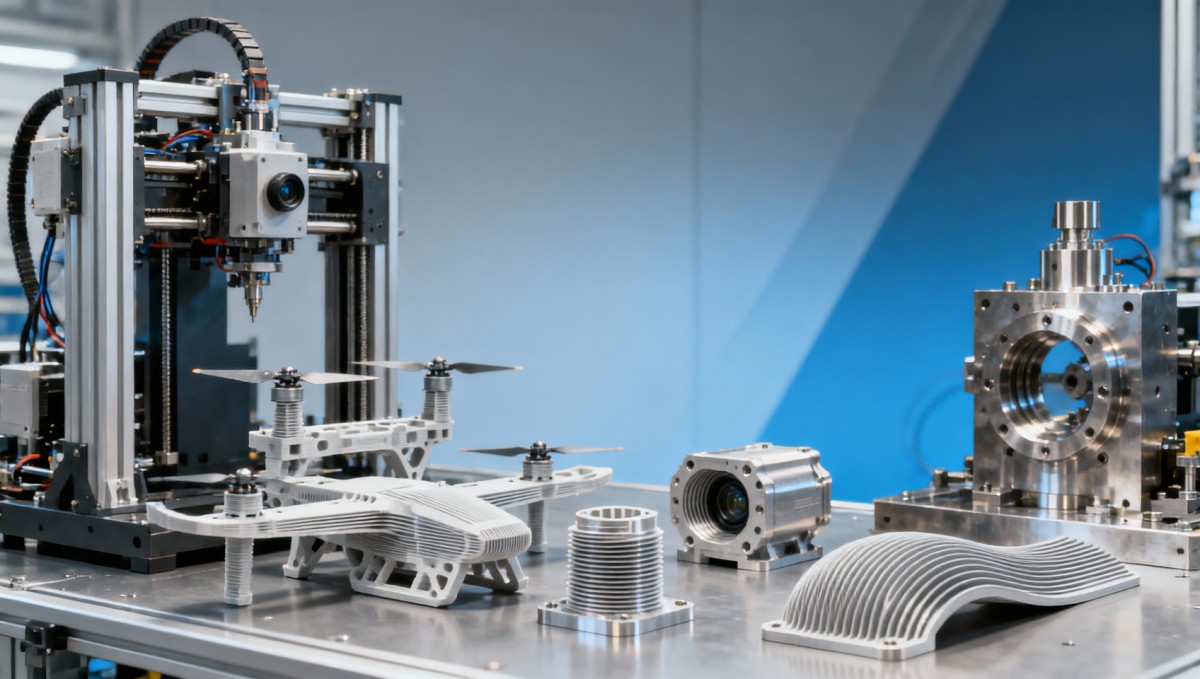
Aerospace programs rarely move from concept to frozen geometry in one pass. Wing brackets, UAV enclosures, sensor mounts, airflow ducts, antenna housings, and cockpit-adjacent covers often go through 3–8 design loops before teams finalize weight, fit, thermal behavior, cable routing, or fastening strategy. In that environment, 3d printing for aerospace prototypes is not simply a fast fabrication method; it is a risk-control tool that keeps engineering decisions aligned with real hardware instead of CAD assumptions.
Traditional machining remains essential once dimensions stabilize, but every design revision in CNC or molded tooling can trigger extra programming, fixture changes, scrap, and queue delays. For prototype phases with weekly updates, that process becomes expensive and slow. Additive manufacturing reduces this penalty because geometry changes usually require a file update rather than a new tool path setup, mold modification, or dedicated fixture redesign. The more unstable the design, the stronger the business case becomes.
This matters to more than engineers. Operators need assemblies that can be handled, tested, and installed without repeated rework. Procurement teams need a sourcing path that does not lock budget too early. Business decision-makers need a development sequence that lowers trial-and-error costs during the first 2–6 weeks of validation, especially when aerospace parts interact with robotics, embedded sensors, UAV payload modules, or lightweight structural systems.
At TechStat Vanguard, this is where data-first evaluation becomes useful. Instead of asking whether a prototype supplier sounds innovative, buyers should ask measurable questions: What tolerance band is realistic for the selected process? Which material family can survive handling, heat, vibration, or fit-up checks? How many revision rounds can be completed in 10 business days? Parameters, not slogans, determine whether additive manufacturing actually shortens the learning cycle.
What changes most often in early-stage aerospace development?
The highest-change areas are usually not the final flight-critical cores. They are surrounding interfaces and integration features that reveal issues only after physical assembly. Common examples include:
- Mounting interfaces that shift by 0.2–1.0 mm after tolerance stack-up analysis.
- Cable channels, vent paths, or sensor windows modified after EMI, thermal, or access reviews.
- Weight-reduction features adjusted after the first balance test or payload allocation update.
- Operator-facing parts revised after maintenance teams flag poor access, sharp edges, or difficult fastener reach.
These are exactly the situations where aerospace prototype 3D printing works best. It supports learning before the organization spends on hard tooling, long-lead material blocks, or repeat fixture qualification.
How additive manufacturing compares with machining during rapid iteration
Decision-makers often ask a simple question: if the final part may still be machined or produced by another process, why print prototypes first? The answer is that prototype manufacturing and production manufacturing solve different problems. Early prototypes prioritize speed, geometry validation, ergonomics, and design feedback. Production methods prioritize repeatability, certified process control, and unit economics at stable volume.
The comparison below helps procurement teams and technical reviewers decide when 3d printing for aerospace prototypes is the right temporary path and when it is time to switch to CNC, sheet metal, or composite fabrication.
The key takeaway is not that one method replaces the other. It is that each method should be used at the correct maturity stage. Teams lose time when they apply production logic too early or prototype logic too late.
When does the crossover point usually happen?
A practical crossover often appears after 2–3 consecutive revision cycles with no major interface changes, when dimensions stop shifting, and when the project moves from “Will this work?” to “Can we repeat this reliably?” At that point, procurement can begin comparing machined aluminum, titanium, engineering polymers, composite layups, or hybrid routes. Before that point, forcing a production process often creates hidden cost rather than savings.
This crossover is especially important in UAV and autonomous aerial systems. Payload integration can change rapidly as teams re-balance sensors, battery placement, communications modules, and environmental shielding. A bracket that seems finalized in CAD may still require 2–4 physical trials once the actual harness, antenna spacing, or maintenance access is reviewed on the bench.
For information researchers and sourcing teams, the right question is not “Which process is cheaper?” but “Cheaper at which revision stage?” That framing improves quoting decisions and reduces the risk of buying to the wrong maturity level.
What technical factors should buyers verify before ordering aerospace 3D printed prototypes?
Not all prototype suppliers are equally suitable for aerospace work. Even for non-flight parts, engineering teams should examine process capability, material relevance, inspection discipline, and finishing consistency. A fast quote means little if the part arrives warped, porous, dimensionally unstable, or unsuitable for downstream assembly checks. In B2B procurement, the first review should focus on technical fit, not only lead time.
The table below outlines a practical screening framework that can be used during supplier comparison, RFQ preparation, or internal approval discussions. It is especially useful when prototype components connect to robotics tooling, UAV subsystems, edge sensors, or precision-machined structures.
For many projects, the biggest mistake is assuming all prototype parts need production-grade precision. They do not. Instead, buyers should define 3 levels of requirement: visual and ergonomic model, functional assembly prototype, and engineering validation part. Each level should have its own tolerance, surface, and material expectations. That simple separation reduces cost and improves quote accuracy.
A practical checklist for engineers and buyers
- Identify 5–8 critical dimensions that must be measured, rather than requesting blanket tight tolerances on the whole model.
- State the prototype purpose clearly: fit check, thermal mock-up, vibration fixture, operator access review, or low-load functional testing.
- Specify the expected revision cadence, such as every 7 days or every 2 weeks, so the supplier can plan capacity realistically.
- Ask whether inserts, threads, sealing faces, or datum surfaces require secondary machining after printing.
These details help suppliers quote what you actually need, not what a generic RFQ template implies. In hard-tech procurement, clarity on use case is often worth more than an aggressive unit price.
Where standards and compliance still matter
Prototype work is not exempt from disciplined quality thinking. Aerospace teams should still align documentation and process language with recognized frameworks such as AS9100-oriented quality culture when applicable, especially if prototype learnings will feed into qualified suppliers later. If the prototype supports a medical-device-adjacent robot, lab automation system, or regulated inspection equipment, traceability expectations may also echo ISO13485-style documentation discipline even when the part itself is not a certified medical component.
The practical point is this: compliance starts with habits. Revision naming, material batch awareness, and inspection logic introduced during prototypes can shorten later supplier qualification cycles by several weeks.
Which aerospace and adjacent applications benefit most from fast-iteration prototypes?
Aerospace prototype 3D printing creates the strongest value where geometry is evolving, interfaces are dense, and hardware must be reviewed in real space. That includes commercial aerospace development, UAV platforms, payload integration, robotics end-effectors used in aerospace assembly, and sensor housings that bridge electronics with structural packaging. In these applications, one printed iteration can reveal issues that would remain invisible in a simulation review.
For UAV systems, 3d printing for aerospace prototypes is often used for camera pods, antenna mounts, battery carriers, lightweight ducts, and gimbal-adjacent brackets. These parts may not represent the final production route, but they accelerate center-of-gravity checks, wiring access decisions, and field-maintenance reviews. A single redesign that trims 50–150 grams or relocates a cable bundle can materially improve integration before the next flight-test window.
In robotics and automation, prototype printing supports jigs, grippers, alignment fixtures, temporary covers, and sensor brackets used on aerospace assembly lines. Here, the priority is often not flight performance but manufacturing workflow. If a robot cell needs a revised end-effector face or vision mount within 3–5 days to maintain line debugging, additive manufacturing becomes operationally valuable well beyond the aerospace component itself.
For edge AI and sensor systems, printed housings and brackets allow teams to evaluate field of view, electromagnetic clearance, cooling paths, and serviceability. This is especially useful when LiDAR, machine vision, radar, or communications hardware must be integrated into compact airborne or industrial structures without delaying the next validation round.
Application scenarios with the strongest fit
The following scenarios are typically strong candidates for aerospace prototype 3D printing because they combine low initial volume, interface complexity, and a high chance of design updates.
- UAV payload integration programs where enclosure shape, mount position, and cooling features may change across 2–5 flight test phases.
- Cabin-adjacent or ground-support components needing ergonomic review, access validation, or maintenance simulation before final material choice.
- Automation fixtures for aerospace production cells where line-side debugging cannot wait for a full machined-tooling cycle.
- Sensor packaging projects that require repeated checks for line-of-sight, shielding clearance, and cable exit geometry.
The common pattern is simple: if the design is still learning, print first. If the design has stopped learning and must now repeat, transition to the best-fit production method.
How should procurement teams evaluate cost, lead time, and transition risk?
Cost discussions in prototype sourcing are often distorted by unit-price comparisons. A printed part can cost more per piece than a future machined or molded part, yet still lower the total program cost if it removes one failed design loop, one missed review gate, or one unnecessary tooling commitment. For procurement teams, the relevant metric is not isolated part price but cost per validated decision.
A useful way to evaluate prototype sourcing is to divide the decision into 4 layers: direct part cost, revision speed, engineering labor savings, and transition readiness. If 3d printing for aerospace prototypes shortens a validation loop from 10 days to 4 days, the organizational gain may exceed the part-price difference, especially when several departments are waiting on the result.
Lead time should also be read carefully. A quoted build time of 48–72 hours is only one part of the schedule. Real lead time includes file review, orientation decisions, supports, heat treatment if needed, machining of critical features, finishing, inspection, packing, and shipping. In many practical B2B cases, a realistic prototype cycle falls in the 3–7 business day range for straightforward parts and 1–2 weeks for more complex builds or mixed post-processing paths.
Transition risk appears when teams use a prototype process that teaches the wrong lessons. For example, a polymer print may validate fit and operator access but not final thermal behavior. A metal print may reflect geometry better but still differ from wrought machined material in some performance aspects. Procurement should therefore confirm what the prototype is intended to prove and what it is not intended to prove.
A 4-step sourcing approach that reduces rework
- Define the validation goal: fit, handling, airflow, low-load function, or assembly sequencing.
- Classify the part as visual, functional, or engineering prototype, then match tolerance and material needs accordingly.
- Request a quote with revision cadence, quantity range, and post-processing requirements clearly listed.
- Plan the handoff criteria for the next process, such as CNC, sheet metal, composite, or pilot production tooling.
This approach prevents one common procurement error: buying a prototype as if it were a final production part. It also prevents the opposite error of buying a low-spec mock-up when the engineering team actually needs measurement-grade features on a few critical surfaces.
FAQ: what do engineers, operators, and buyers usually ask?
How do I know whether a part should be 3D printed or machined first?
Start with the change rate. If the design is expected to change every few days or every week, aerospace prototype 3D printing is usually the better first step. If the geometry has remained stable through 2–3 review rounds and the next need is repeatability, machined precision, or qualification alignment, then CNC or another production-like method becomes more appropriate.
What should procurement ask for in an RFQ?
A good RFQ should include quantity, revision level, required turnaround, intended test purpose, critical dimensions, preferred material family, post-processing needs, and whether any surfaces require secondary machining. If those items are missing, quotes may look comparable but actually cover very different assumptions.
Are 3D printed aerospace prototypes suitable for functional testing?
They can be, but only for the right type of function. Printed prototypes are often suitable for fit-up, handling, routing, low-load checks, operator evaluation, and some airflow or packaging studies. They are not automatically equivalent to final production hardware for structural qualification, long-duration fatigue, or certified flight-critical use. The test objective must match the process capability.
What is the most common mistake in prototype sourcing?
The most common mistake is failing to define success criteria before ordering. Teams sometimes request tight tolerances across an entire model when only 4–6 features matter, or they expect one prototype to validate fit, heat, vibration, and final appearance at the same time. Better sourcing starts with one clear question: what decision must this part help us make this week?
Why work with a data-driven evaluation partner before committing to a prototype supplier?
In hard-tech procurement, the biggest cost is often not the quote itself but the wrong quote accepted for the wrong purpose. TechStat Vanguard helps engineering teams, procurement specialists, and decision-makers cut through supplier noise by translating prototype needs into measurable criteria. That means clarifying tolerance priorities, matching materials to actual use conditions, and identifying where additive manufacturing should end and precision machining or other methods should begin.
This is particularly valuable for organizations operating across aerospace, UAV systems, robotics, sensors, and advanced manufacturing. Cross-domain projects often fail because each team describes requirements differently. TSV focuses on comparable engineering language: dimensional expectations, test intent, revision control, inspection logic, and supply-chain readiness. That shortens internal alignment and reduces vendor-screening waste.
If you are currently comparing aerospace prototype 3D printing options, we can help you evaluate 3 categories of questions before you buy: which process best fits your current revision stage, which specifications belong in the RFQ, and which requirements should be reserved for the next production method. This is useful whether you need one sample, a 5–20 piece pilot batch, or a structured transition plan from prototype to qualified manufacturing.
Contact TechStat Vanguard to discuss parameter confirmation, prototype process selection, expected lead time, post-processing options, certification-aligned documentation needs, sample support, and quotation comparison logic. If your team needs a clearer path from fast design iteration to procurement-ready decision-making, TSV can help turn engineering uncertainty into a more disciplined sourcing sequence.
Search News
Hot Articles
- Carbon Fiber StructuresHow to Specify Aerospace Carbon Fiber Assemblies for Lightweight, Load-Bearing PartsJul 11, 2026
- Machine VisionXiaomi, Alibaba DAMO Academy Drive Open-Source Robotics Model Ecosystem, Lowering Algorithm Development Barriers for Overseas SMEs Adopting Chinese Robotics SolutionsMar 30, 2026
- Cobots & ArmsShanxi 'AI+' Conference Showcases Embodied Intelligence with Multinational Buyer Engagement: Key Industry ImplicationsMar 30, 2026
Popular Tags
Recommended News
 Jul 11, 2026How to Specify Aerospace Carbon Fiber Assemblies for Lightweight, Load-Bearing PartsAerospace carbon fiber assemblies: learn how to specify laminate design, load data, joining methods, and inspection controls for lighter, reliable load-bearing aerospace parts.Elena Rostova (UAV Systems Researcher)
 Mar 30, 2026Xiaomi, Alibaba DAMO Academy Drive Open-Source Robotics Model Ecosystem, Lowering Algorithm Development Barriers for Overseas SMEs Adopting Chinese Robotics SolutionsXiaomi & Alibaba DAMO Academy's open-source robotics models lower algorithm barriers for global SMEs. Boost efficiency in manufacturing, logistics & smart retail with ROS 2 compatible solutions.TSV Data Lab
 Mar 30, 2026Shanxi 'AI+' Conference Showcases Embodied Intelligence with Multinational Buyer Engagement: Key Industry ImplicationsShanxi 'AI+' Conference highlights embodied intelligence with Tesla, Ubtech & Jiantao showcasing multimodal robotics. 40+ global buyers validated tech on-site, creating new B2B channels for industrial automation & AI solutions.Chen Wei (Automation Lead Engineer)
 Mar 30, 2026Zhongguancun Unveils 6G Integrated Sensing-Computing-Intelligence Platform to Empower Embodied Robots for Global Industrial ApplicationsZhongguancun's new 6G platform revolutionizes industrial robotics with <10ms latency, empowering global automotive, logistics & port automation. Discover how this tech boosts China's smart manufacturing exports.TSV Data Lab
 Mar 30, 2026Mech-Mind Tianjin Embodied Intelligence R&D and Production Base Goes Live, Cutting Delivery Time by 20%–30% for Global Customized AMR+Vision SolutionsMech-Mind's Tianjin AMR+Vision production base cuts delivery time by 20%-30% for欧美 & Latin American markets. Discover how this PLd-certified facility accelerates customized robotics solutions for smart manufacturing and logistics.Chen Wei (Automation Lead Engineer)
 Mar 30, 2026Boao Forum Reveals 'Co-evolution of Big and Small Brains' Trend in Humanoid Robots, China's Embodied Intelligence Accelerates Adaptation to Overseas Manufacturing Service ScenariosDiscover how China's humanoid robots, featuring 'Co-evolution of Big and Small Brains,' are revolutionizing global manufacturing. Learn about Embodied Tian Gong 3.0's ISO compliance and overseas deployment at Boao Forum 2026.Chen Wei (Automation Lead Engineer)
 Mar 30, 2026China Railway Industrial Secures Patent for Embodied Robotics in Material Handling, Boosting High-Precision Delivery Capabilities for Overseas Infrastructure and Manufacturing ProjectsChina Railway Industrial's new patent for embodied robotics in material handling boosts high-precision delivery for global infrastructure & manufacturing. Discover how this innovation enhances logistics accuracy in automotive, rail transit & EPC projects.Chen Wei (Automation Lead Engineer)
 Oct 14, 2026Drone Frame Composites: Carbon Fiber vs. Fiberglass for Weight and StiffnessExplore drone structural materials composites: compare carbon fiber and fiberglass for weight, stiffness, cost, and antenna compatibility. Find the right material for your drone frame.Elena Rostova (UAV Systems Researcher)
 Oct 13, 2026Smart Cameras vs. PC-Based Machine Vision: Which Fits High-Speed Inspection?This industrial product comparison for machine vision weighs smart cameras vs. PC-based systems on latency, throughput, and cost. Discover your best fit for high-speed inspection.TSV Data Lab
 Oct 12, 2026How to Verify RoHS Compliance in Industrial Sensing Systems Before DeploymentRoHS compliant sensing systems: learn how to verify materials, supplier declarations, testing, and configuration controls before industrial deployment.TSV Data Lab
 Oct 11, 2026How Procurement-Oriented Content Taxonomy Improves B2B Buying JourneysProcurement-oriented content taxonomy streamlines B2B buying journeys with clearer evidence, supplier comparisons, risk visibility, and faster approvals.TSV Data Lab
 Oct 10, 2026How to Select a Machine Performance Monitoring Platform for OEE and Downtime ReductionMachine performance monitoring platform selection guide: validate machine states, OEE data, downtime reasons, integrations, and scalability to reduce losses with confidence.TSV Data Lab
 Oct 08, 2026How to Machine Inconel 625 Blades Without Heat Cracks or Edge ChippingInconel 625 blade machining guide: prevent heat cracks, edge chipping, chatter, and work hardening with proven tooling, cooling, fixturing, and inspection strategies.Dr. Marcus Vance
 Oct 07, 2026How to Evaluate an HMI Panel Distributor for Industrial Automation ProjectsHMI panel distributor evaluation guide: verify technical compatibility, traceability, supply reliability, lifecycle support, and total cost for automation projects.Victor Lin (Chief Software Architect)
 Oct 06, 2026Navigation Fault Tolerance Standards for AMRs: What Safety Teams Must VerifyNavigation fault tolerance standards: learn what AMR safety teams must verify, from localization loss and sensor faults to stopping distance, safe restart, and site-specific validation.Chen Wei (Automation Lead Engineer)
 Oct 05, 2026Calculating Edge Computing Total Cost of Ownership Across Distributed SitesEdge computing ownership cost explained: calculate deployment, energy, connectivity, security, remote support, and refresh costs across distributed sites.TSV Data Lab
 Oct 04, 2026CAD/CAM Benchmarking in the GCC: What Manufacturers Should Ask a ConsultantCAD CAM benchmark consultant GCC guide: learn the key questions manufacturers should ask to validate post-processors, workflows, machine performance, and production risk.Victor Lin (Chief Software Architect)
 Oct 03, 2026Selecting Automotive Radar Sensor Modules for ADAS Range, Resolution, and IntegrationAutomotive radar sensor module selection guide for ADAS: compare range, resolution, field of view, latency, and integration to build safer, reliable vehicle systems.TSV Data Lab
 Oct 02, 2026How to Qualify Machined Parts Suppliers for Hard Tech ProgramsHard tech supply chain machined parts demand rigorous supplier qualification. Learn how to assess capability, traceability, quality controls, and delivery resilience.Dr. Marcus Vance
 Oct 01, 2026How to Select an Outdoor Security Radar Sensor for Perimeter Detection?Outdoor security radar sensor selection guide: compare range, accuracy, false-alarm control, integration, and field testing for reliable perimeter detection.TSV Data Lab
 Sep 30, 2026How to Evaluate Solid-State LiDAR Hardware for Outdoor Autonomous VehiclesSolid state LiDAR hardware evaluation guide for outdoor autonomous vehicles—compare range, point-cloud quality, environmental resilience, integration, and safety.TSV Data Lab
 Sep 29, 2026ISO 9283 Repeatability: How to Evaluate Cobot Positioning PerformanceISO 9283 cobot repeatability explained: learn how payload, reach, approach direction, and test conditions affect positioning performance and cell capability.Chen Wei (Automation Lead Engineer)
 Oct 14, 2026How tight can micro machining aerospace tolerances be in production?Micro machining aerospace tolerances can reach low-micron levels in production. Learn what controls repeatability, inspection confidence, and flight-critical quality.Dr. Marcus Vance
 Oct 13, 2026How to keep an industrial robotic integration project on scheduleIndustrial robotic integration project management: keep automation on schedule with proven controls for interfaces, suppliers, FAT, commissioning, and change risk.Victor Lin (Chief Software Architect)























