Aluminum 7075 vs 6061 strength is only part of the choice
Publication Date
author
When evaluating aluminum 7075 vs 6061 strength, tensile numbers alone rarely determine the best engineering choice. For researchers, buyers, and design teams, factors like machinability, corrosion resistance, fatigue behavior, cost, and application risk often matter just as much. This guide cuts through generic claims to compare both alloys through a data-driven lens, helping you make a more reliable material decision.
In advanced manufacturing, material selection errors often do not appear in the first prototype. They show up 6 months later as cracked brackets, rising scrap rates, delayed anodizing, or supplier requalification. That is why a serious comparison of aluminum 7075 vs 6061 strength must extend beyond brochure values and into processing windows, service environment, and total lifecycle cost.
For information researchers and sourcing teams, the practical question is not simply which alloy is stronger. The real question is which alloy delivers the required load capacity, manufacturing stability, corrosion performance, and procurement efficiency within a defined risk envelope. In many B2B programs, that decision affects machining lead time, inspection plans, and even whether a part can be repaired in the field.
Why strength alone does not settle the 7075 vs 6061 decision
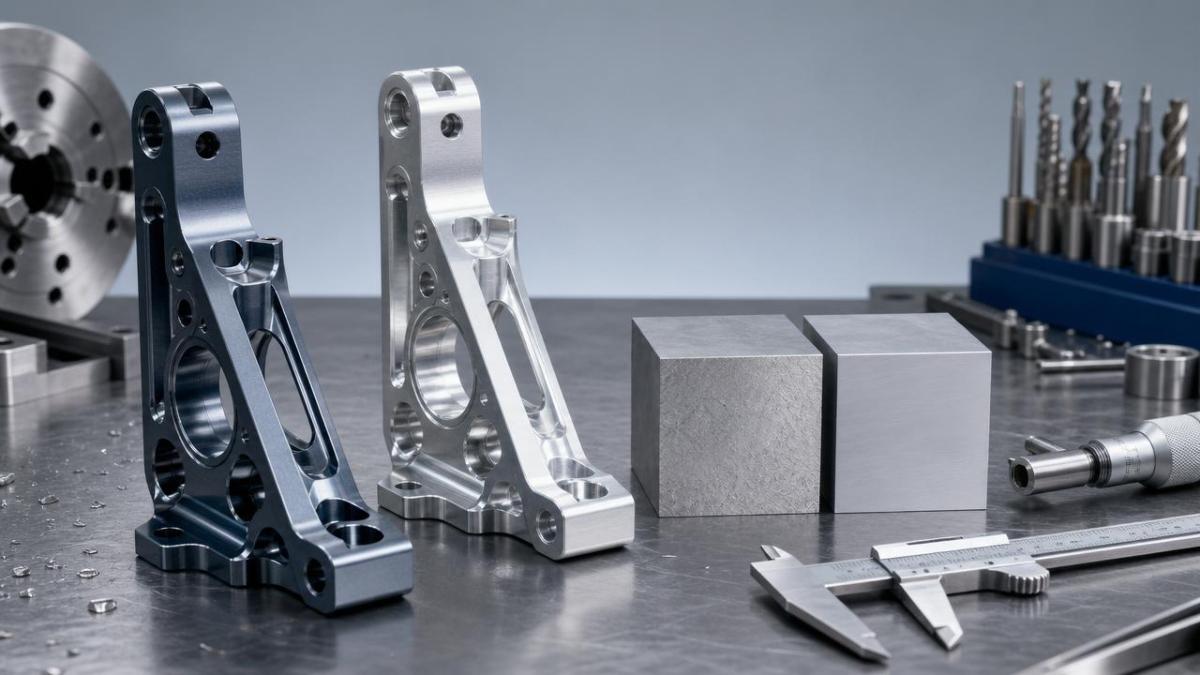
The headline advantage of 7075 is clear: in common tempers such as T6, its ultimate tensile strength is often around 510–570 MPa, while 6061-T6 typically falls near 290–320 MPa. Yield strength shows a similar gap, with 7075 commonly around 430–500 MPa and 6061-T6 around 240–280 MPa. If your decision model stops there, 7075 looks like the obvious winner.
However, engineering parts rarely fail because a spreadsheet ignored one strength column. They fail because the selected alloy did not match the full operating context: vibration cycles, moisture exposure, coating method, machining complexity, joining process, or target cost. In aerospace structures, UAV frames, automation fixtures, and precision-machined housings, those secondary variables can outweigh a 2x strength difference.
A data-first comparison of core properties
The table below compares the properties most often reviewed during early-stage material screening. Values vary by temper, product form, and supplier route, so they should be treated as typical ranges rather than absolute certification data.
This comparison shows why aluminum 7075 vs 6061 strength is only part of the choice. 7075 offers a stronger strength-to-weight profile, but 6061 often wins when corrosion margin, weldability, and lower total part cost are more important than peak mechanical loading.
Three common decision traps in procurement and design
1. Using tensile strength as the only approval gate
A part that sees only static load may justify 7075. A part exposed to outdoor humidity, salt spray, or intermittent chemical cleaning may shift the balance toward 6061, especially if coatings are inconsistent across suppliers. One missed environmental requirement can erase the paper advantage of stronger metal.
2. Ignoring manufacturing route and scrap risk
If a component requires thin walls, deep pockets, 5-axis machining, or tight flatness after stress relief, material behavior during cutting matters. Shops frequently review tolerances such as ±0.02 mm, hole position within 0.05 mm, or flatness below 0.1 mm over 300 mm. A stronger alloy is not automatically the easier alloy to hold stable in production.
3. Confusing prototype success with production readiness
A batch of 5 prototypes can hide problems that appear at 500 pieces. Supply chain teams should assess not only alloy grade, but also temper consistency, mill certification, coating compatibility, and post-machining inspection workload. In many industrial programs, 2–4 weeks of qualification delay costs more than the raw metal premium itself.
Machinability, corrosion, fatigue, and cost in real manufacturing programs
For CNC machining and production sourcing, the practical comparison between 7075 and 6061 becomes more nuanced. Engineers may prefer 7075 for highly loaded brackets, aerospace fittings, and performance-critical frames, but buyers often prefer 6061 when the assembly needs easier sourcing, broader finishing options, and lower downstream risk.
Machinability and dimensional control
Both alloys machine well compared with many steels, but their production behavior is not identical. 7075 is often chosen for high-strength machined parts because it cuts cleanly and can support precise features. Yet residual stress, part geometry, and removal rate still matter. For parts with 60%–80% material removal, distortion management may become a process issue, not just a material issue.
6061 is widely used for fixtures, housings, machine bases, and custom plates because it balances machinability, cost, and general-purpose stability. If your tolerance band is moderate, such as ±0.05 mm to ±0.10 mm, and the part is not heavily load-bearing, 6061 often delivers faster quoting, better supplier availability, and fewer objections during vendor onboarding.
Corrosion and finishing considerations
In the aluminum 7075 vs 6061 strength debate, corrosion is one of the most underestimated variables. 6061 generally provides better natural corrosion resistance in many industrial environments. 7075 can still perform well, but it often demands stricter finishing discipline, especially in humid, marine-adjacent, or chemically exposed applications.
- For indoor automation equipment, both alloys may be suitable with controlled exposure.
- For outdoor UAV or drone-adjacent hardware, coating selection becomes more critical for 7075.
- For components exposed to washdown or intermittent condensate, 6061 may reduce long-term maintenance risk.
- For anodized cosmetic parts, visual consistency and finishing expectations should be validated at sample stage.
A procurement team should therefore review not only the alloy but also the entire finishing chain: deburring, surface prep, anodizing, sealing, and inspection. A coating process window of even 24–48 hours between machining and finishing can influence oxidation behavior and cosmetic yield.
Fatigue behavior and lifecycle loading
Parts used in robotics, aerospace substructures, and dynamic tooling rarely see one-time static load. They see repeated cycles. In those conditions, the material decision must include fatigue, notch sensitivity, and stress concentration around holes, fillets, and threads. A stronger alloy can still fail early if geometry or finishing creates local stress risers.
As a screening rule, teams should define at least 3 loading questions before selecting alloy: expected cycle count, maximum stress ratio, and environmental exposure. If your design will see 10,000 cycles, your risk model is different from one designed for 1 million cycles. That difference changes whether high nominal strength actually delivers better field reliability.
Total cost is more than raw material price
7075 usually costs more per kilogram than 6061, but the larger cost question is cost per accepted part. If 7075 allows a thinner section and lowers total mass by 15%–25%, it may justify itself in aerospace or high-performance mobile systems. If the part is overdesigned and lightly loaded, that premium may produce no operational value.
Likewise, 6061 can be cheaper to buy yet more expensive if it forces a thicker cross-section, larger envelope, or extra reinforcement. Good sourcing teams compare 4 cost layers: raw material, machining time, finishing cost, and failure-risk cost over the service life.
How to choose the right alloy by application scenario
For most industrial buyers, the fastest way to resolve aluminum 7075 vs 6061 strength is to tie the choice directly to application demands. The matrix below helps convert material data into a sourcing decision that aligns with performance, production, and risk control.
The key takeaway is simple: 7075 is often a performance alloy, while 6061 is often a systems-efficiency alloy. One optimizes strength and weight. The other often optimizes manufacturability, availability, and lower operational friction across sourcing, finishing, and maintenance.
A 5-step selection workflow for engineering and procurement teams
- Define the real load case: static, shock, vibration, or fatigue over a target cycle count.
- Set non-negotiable manufacturing requirements such as welding, anodizing, or tolerance below ±0.05 mm.
- Review service environment for humidity, salt exposure, chemicals, or outdoor UV and temperature swings.
- Compare full landed cost, including machining yield, finishing, inspection, and supplier qualification time.
- Validate with prototype testing and supplier process review before locking production material.
This workflow is especially useful in cross-functional teams where design engineers, quality managers, and sourcing specialists evaluate the same component from different risk angles. A disciplined 5-step review can prevent late-stage material changes that disrupt release schedules by 2–6 weeks.
Questions to ask suppliers before committing
Material and traceability
Ask for alloy temper, mill cert availability, product form, and traceability method. Plate, bar, and extruded forms can behave differently in machining and finishing, even when the alloy designation is the same.
Process capability
Confirm whether the supplier can maintain your critical dimensions over repeated lots, not just one sample run. Typical B2B questions include CMM inspection capability, flatness control after machining, and whether secondary stress-relief steps are used for large parts.
Finishing and post-processing
If the part must be anodized, dyed, or sealed, ask for prior experience with the selected alloy and expected cosmetic variation. This is particularly important when appearance and corrosion protection both matter.
Common misconceptions and practical recommendations
Many online comparisons reduce aluminum 7075 vs 6061 strength to a simple winner-loser narrative. That may work for casual reference, but it is not sufficient for procurement-grade decision making. Real projects need a material choice that survives production, assembly, and field use.
Misconception 1: Higher strength always means better material
Better means better fit to requirements. If a part uses only 35%–45% of 6061’s available strength in service, moving to 7075 may add cost without reducing failure risk. The stronger alloy only creates value when the design genuinely benefits from the extra mechanical margin.
Misconception 2: 6061 is only for low-end parts
6061 remains a serious engineering alloy across automation, transportation, electronics enclosures, and precision tooling. Its popularity comes not from weakness, but from balance. It often meets performance needs while simplifying fabrication and lowering sourcing friction.
Misconception 3: Material grade can compensate for poor design
No alloy can fully rescue poor geometry, undersized fillets, sharp internal corners, or unreviewed fatigue loads. In many failure investigations, design details and process variation matter more than nominal material strength. Material choice should therefore be one part of a broader engineering control plan.
For teams evaluating aluminum 7075 vs 6061 strength in aerospace, UAV, robotics, or precision-machining contexts, the most reliable path is to align alloy selection with loading profile, environmental exposure, finishing route, and supplier capability. If maximum strength-to-weight ratio is central, 7075 often deserves first review. If balanced performance, corrosion resistance, weldability, and production flexibility matter more, 6061 may be the stronger commercial decision.
TechStat Vanguard supports data-driven material evaluation by focusing on what engineering teams actually need: measurable performance ranges, manufacturing realism, and sourcing clarity. If you need a deeper comparison framework for CNC-machined parts, UAV structures, or precision industrial assemblies, contact us to discuss your application, request a tailored material assessment, or explore more engineering benchmarking solutions.
Search News
Hot Articles
- Carbon Fiber StructuresHow to Specify Aerospace Carbon Fiber Assemblies for Lightweight, Load-Bearing PartsJul 11, 2026
- Machine VisionXiaomi, Alibaba DAMO Academy Drive Open-Source Robotics Model Ecosystem, Lowering Algorithm Development Barriers for Overseas SMEs Adopting Chinese Robotics SolutionsMar 30, 2026
- Cobots & ArmsShanxi 'AI+' Conference Showcases Embodied Intelligence with Multinational Buyer Engagement: Key Industry ImplicationsMar 30, 2026
Popular Tags
Recommended News
 Jul 11, 2026How to Specify Aerospace Carbon Fiber Assemblies for Lightweight, Load-Bearing PartsAerospace carbon fiber assemblies: learn how to specify laminate design, load data, joining methods, and inspection controls for lighter, reliable load-bearing aerospace parts.Elena Rostova (UAV Systems Researcher)
 Mar 30, 2026Xiaomi, Alibaba DAMO Academy Drive Open-Source Robotics Model Ecosystem, Lowering Algorithm Development Barriers for Overseas SMEs Adopting Chinese Robotics SolutionsXiaomi & Alibaba DAMO Academy's open-source robotics models lower algorithm barriers for global SMEs. Boost efficiency in manufacturing, logistics & smart retail with ROS 2 compatible solutions.TSV Data Lab
 Mar 30, 2026Shanxi 'AI+' Conference Showcases Embodied Intelligence with Multinational Buyer Engagement: Key Industry ImplicationsShanxi 'AI+' Conference highlights embodied intelligence with Tesla, Ubtech & Jiantao showcasing multimodal robotics. 40+ global buyers validated tech on-site, creating new B2B channels for industrial automation & AI solutions.Chen Wei (Automation Lead Engineer)
 Mar 30, 2026Zhongguancun Unveils 6G Integrated Sensing-Computing-Intelligence Platform to Empower Embodied Robots for Global Industrial ApplicationsZhongguancun's new 6G platform revolutionizes industrial robotics with <10ms latency, empowering global automotive, logistics & port automation. Discover how this tech boosts China's smart manufacturing exports.TSV Data Lab
 Mar 30, 2026Mech-Mind Tianjin Embodied Intelligence R&D and Production Base Goes Live, Cutting Delivery Time by 20%–30% for Global Customized AMR+Vision SolutionsMech-Mind's Tianjin AMR+Vision production base cuts delivery time by 20%-30% for欧美 & Latin American markets. Discover how this PLd-certified facility accelerates customized robotics solutions for smart manufacturing and logistics.Chen Wei (Automation Lead Engineer)
 Mar 30, 2026Boao Forum Reveals 'Co-evolution of Big and Small Brains' Trend in Humanoid Robots, China's Embodied Intelligence Accelerates Adaptation to Overseas Manufacturing Service ScenariosDiscover how China's humanoid robots, featuring 'Co-evolution of Big and Small Brains,' are revolutionizing global manufacturing. Learn about Embodied Tian Gong 3.0's ISO compliance and overseas deployment at Boao Forum 2026.Chen Wei (Automation Lead Engineer)
 Mar 30, 2026China Railway Industrial Secures Patent for Embodied Robotics in Material Handling, Boosting High-Precision Delivery Capabilities for Overseas Infrastructure and Manufacturing ProjectsChina Railway Industrial's new patent for embodied robotics in material handling boosts high-precision delivery for global infrastructure & manufacturing. Discover how this innovation enhances logistics accuracy in automotive, rail transit & EPC projects.Chen Wei (Automation Lead Engineer)
 Sep 28, 2026Spindle Runout Measurement in Germany: DIN Standards, Methods, and Acceptance LimitsSpindle runout measurement Germany: explore DIN standards, proven methods, acceptance limits, and audit-ready practices for reliable machining quality.Dr. Marcus Vance
 Sep 27, 2026How to Select Wall-Mount Edge Devices for Space-Constrained Factory NetworksWall mount edge devices for space-constrained factories: evaluate workload, thermal design, power resilience, cable access, and network reliability for smarter deployments.TSV Data Lab
 Sep 26, 2026Machining Tolerance Analysis: How to Set Limits That Meet Function and Cost TargetsMachining tolerance analysis: learn how to set functional limits, control tolerance stacks, reduce inspection risk, and balance precision with production cost.Dr. Marcus Vance
 Sep 25, 2026How to Evaluate an Industrial Infrastructure Data Platform for Multi-Site OperationsIndustrial infrastructure data platform evaluation guide for multi-site operations: compare data quality, edge resilience, interoperability, governance, and scalable proof-of-value criteria.Victor Lin (Chief Software Architect)
 Sep 24, 2026How to Select Machine Vision Optics for Accurate Inspection at Different Working DistancesMachine vision optics selection guide for accurate inspection at every working distance. Compare FOV, pixel scale, DOF, distortion, lighting, and telecentric options.TSV Data Lab
 Sep 23, 2026How to Evaluate a Machine Vision System Integrator for High-Speed Inspection LinesChoose a machine vision system integrator with proven expertise in high-speed inspection, reliable reject timing, robust optics, and measurable acceptance criteria.TSV Data Lab
 Sep 28, 2026When is a SCADA API the right choice for connecting plant systems?SCADA API guide: learn when governed plant data integration improves traceability, security, and scalability—without compromising real-time control.Victor Lin (Chief Software Architect)
 Sep 27, 2026How SCADA data integration improves traceability across production linesSCADA data integration connects production-line data to improve traceability, accelerate quality investigations, and strengthen safety decisions.Victor Lin (Chief Software Architect)
 Sep 26, 2026What to define before starting SCADA integration planningSCADA integration planning starts with clear scope, control boundaries, data models, cybersecurity, and testing. Discover the definitions that reduce risk and costly rework.Victor Lin (Chief Software Architect)
 Sep 25, 2026How a smart factory with Industrial IoT reduces production blind spotsDiscover how a smart factory with Industrial IoT turns real-time machine, quality, and workflow data into actionable insights that reduce production blind spots and delivery risks.Victor Lin (Chief Software Architect)
 Sep 24, 2026When does Industrial IoT make smart manufacturing easier to scale?Smart manufacturing Industrial IoT scales when trusted data, interoperable systems, and secure workflows turn connected assets into measurable gains.TSV Data Lab
 Sep 23, 2026What drives ultra-precision machining cost at 1-micron tolerance?Ultra precision machining cost per part at 1 micron tolerance depends on process, material, metrology, and yield. Learn how to compare quotes confidently.Dr. Marcus Vance
 Sep 22, 2026Drone Engine-T550CC Applications: Build the UAV Power System Around the MissionAn application guide for Drone Engine-T550CC integration, covering payload planning, airframe matching, cooling, fuel, vibration, test procedures, documentation, and service preparation.Elena Rostova (UAV Systems Researcher)
 Sep 22, 2026How to Evaluate Industrial Edge Computing Vendors for Factory DeploymentIndustrial edge computing vendor evaluation guide for factories: compare latency, protocol fit, reliability, security, and lifecycle support before deployment.TSV Data Lab
 Sep 21, 2026Drone Payload Integration: Matching Power, Data, and Center of Gravity for Reliable FlightsDrone payload integration made practical: balance power, data, center of gravity, and endurance to build safer, more reliable mission-ready flights.Elena Rostova (UAV Systems Researcher)
 Sep 20, 2026Autonomous Navigation Pricing: Cost Drivers and Budget Benchmarks for AMR ProjectsAutonomous navigation price explained: compare AMR cost drivers, software, sensors, integration, safety, and lifecycle budgets to build a scalable project plan.Chen Wei (Automation Lead Engineer)
 Sep 19, 2026How to Scope Automation Integration Services for Multi-System Factory ProjectsAutomation integration services: learn how to scope multi-system factory projects with clear workflows, interface contracts, safety boundaries, and acceptance criteria.Victor Lin (Chief Software Architect)