Aerospace Aluminum Alloy Yield Strength at Heat Risk
Publication Date
author
For technical evaluators, aerospace aluminum alloy yield strength is not a brochure metric but a decisive engineering threshold when thermal exposure alters structural reliability. This article examines how heat risk influences yield behavior, material selection, and compliance judgment, helping teams compare alloys with data-driven clarity before design approval, sourcing decisions, or aerospace performance validation.
Why Heat Risk Changes the Meaning of Aerospace Aluminum Alloy Yield Strength
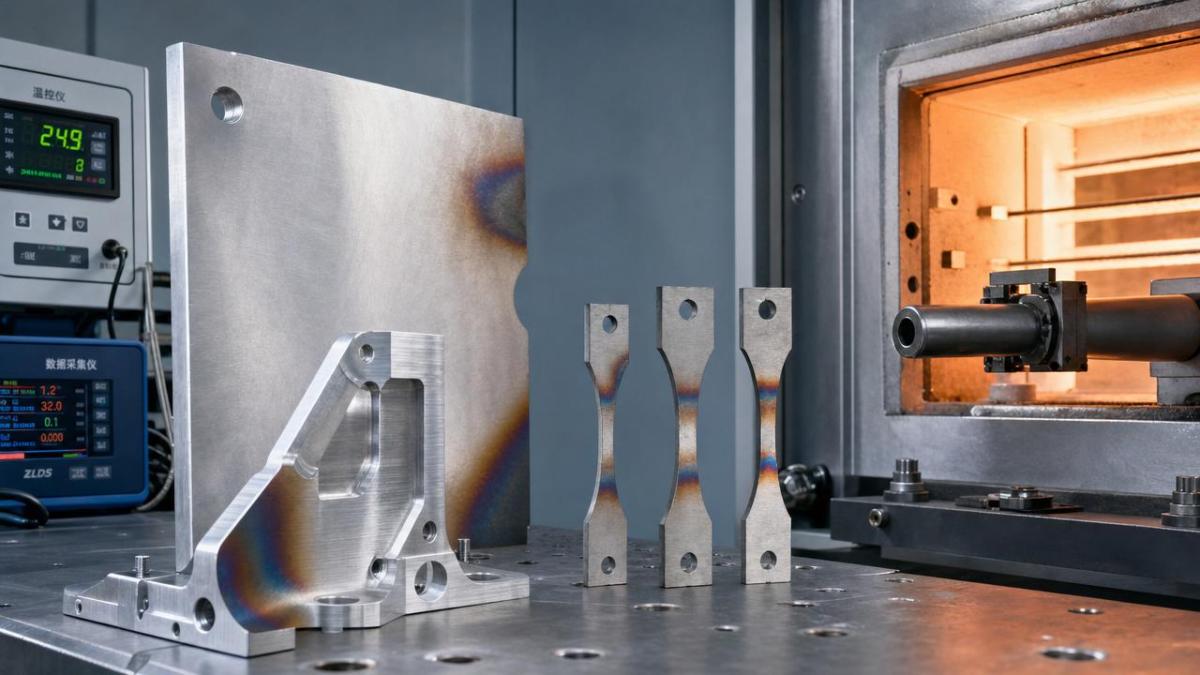
At room temperature, an alloy data sheet may present a stable yield value that appears sufficient for structural margins. Under thermal exposure, however, aerospace aluminum alloy yield strength can decline sharply due to overaging, microstructural instability, or stress-assisted softening. That means the design allowables used at qualification stage may no longer represent the actual in-service condition.
This issue matters across the broader industrial landscape, not only in aircraft primary structure. Heat-affected fastener zones, UAV powertrain enclosures, machined brackets near electronics, and aerospace-adjacent mobility systems all face the same question: does the material still maintain enough yield reserve after real thermal cycles, not just after ideal laboratory conditioning?
A checklist-based review is useful because heat risk is rarely controlled by one variable. Yield behavior depends on alloy family, temper, section thickness, exposure duration, peak temperature, residual stress state, manufacturing method, and downstream finishing. Without a structured verification path, teams often compare nominal numbers that are technically correct but operationally misleading.
Core Evaluation Points Before Accepting Any Yield Strength Claim
Use the following points to verify whether a stated aerospace aluminum alloy yield strength value remains relevant under heat risk, rework conditions, and mission-specific exposure.
- Confirm the exact alloy and temper, because 2024-T3, 6061-T6, 7075-T6, and 7050-T7451 can show very different yield retention after elevated-temperature exposure.
- Check whether the reported yield value was measured at room temperature only or after thermal conditioning that reflects realistic dwell time and service temperature.
- Review exposure duration, since short thermal spikes and long soaks can produce very different softening behavior even when the peak temperature looks identical.
- Verify section thickness and product form, because plate, extrusion, sheet, and forged stock may respond differently to heat due to quench sensitivity and through-thickness variation.
- Determine whether welding, friction stir processing, machining heat, or repair operations created local heat-affected zones with lower effective yield strength.
- Compare yield retention rather than nominal yield alone, especially when screening materials for hot compartments, avionics bays, engine-adjacent brackets, or UAV propulsion assemblies.
- Ask for test standard references such as ASTM or aerospace allowables sources to ensure the yield claim is traceable, repeatable, and suitable for engineering review.
- Examine elongation, fatigue response, and stress-corrosion implications together with yield, because a high initial strength alloy may degrade system reliability elsewhere.
- Confirm coating, anodizing, paint cure, or adhesive bonding temperatures, since secondary processing may unintentionally alter final mechanical properties.
- Require lot-level traceability and heat-treatment records so the accepted aerospace aluminum alloy yield strength reflects the delivered material, not a generic catalog value.
How to Compare Common Alloys Under Thermal Exposure
Not every alloy reacts to heat risk in the same way. In many aerospace and cross-industry applications, 7075 is selected for high strength-to-weight ratio, while 6061 is preferred for manufacturability and corrosion performance. Yet the best choice depends less on headline strength and more on retained aerospace aluminum alloy yield strength after the intended thermal history.
A practical comparison starts with three questions: What temperature does the part truly see? For how long? And does the part need maximum static strength, dimensional stability, damage tolerance, or easier rework? A highly loaded bracket near intermittent heat may favor one alloy, while a complex machined housing with repeated maintenance exposure may favor another.
Application Notes for Different Thermal Scenarios
Flight Structures and Load-Bearing Brackets
For brackets, fittings, and stiffened structural elements, aerospace aluminum alloy yield strength must be checked against both the certification load path and the hottest local operating condition. If the part sits near bleed-air ducts, actuators, or enclosed electronics, the actual metal temperature may exceed ambient bay temperature by a meaningful margin.
The critical point is not only peak strength but retained margin after repeated exposure. A design that passes room-temperature finite element review can still become nonconforming if thermal softening shifts local stress above yield during limit or ultimate load events.
UAV Frames, Payload Mounts, and Propulsion-Adjacent Parts
In UAV systems, weight pressure often pushes selection toward high-strength aluminum. Yet battery heat, motor proximity, dark-surface solar gain, and frequent field rework all affect aerospace aluminum alloy yield strength in service. Small components are especially vulnerable because localized heating can be severe relative to section size.
For these assemblies, compare alloys by retained yield after representative mission cycles, not just coupon strength. Also verify whether fastener preload, vibration, and thermal expansion mismatch may intensify stress near softened regions.
Precision Machined Housings and Multi-Process Assemblies
A machined enclosure may seem noncritical, but dimensional precision and fastener clamping can depend heavily on stable aerospace aluminum alloy yield strength. Paint curing, bonding cycles, insert installation, and repair heating can all shift local properties enough to affect thread performance, flatness retention, or bearing seat integrity.
Here, the review should connect mechanical data to process routing. If one facility machines in the T6 condition and another adds a thermal secondary operation, the same alloy designation may no longer represent the same delivered performance envelope.
Commonly Missed Factors That Distort Yield Strength Decisions
Using catalog values without thermal context. Many selections fail because the accepted number reflects virgin material only. Real qualification should reference post-exposure data, especially when the component sees recurring heat or manufacturing reheating.
Confusing alloy strength with assembly strength. Even when bulk aerospace aluminum alloy yield strength is acceptable, joints, bends, countersinks, and local machining features may yield earlier due to stress concentration and altered microstructure.
Ignoring temper recovery assumptions. Some teams assume a part can be restored simply by re-heat treatment. In reality, geometry distortion, residual stress change, and certification constraints may make that assumption impractical or invalid.
Overlooking standards alignment. Test method, specimen orientation, and allowable basis matter. A valid engineering decision should connect the measured yield value to recognized aerospace or industrial verification practice.
Practical Execution Steps for Data-Driven Review
- Map the actual thermal profile of the part, including peak temperature, dwell time, cycle count, and nearby process heat from assembly or maintenance events.
- Match candidate alloys and tempers to that profile, then screen them by retained aerospace aluminum alloy yield strength rather than room-temperature yield alone.
- Request traceable mill certification, heat-treatment records, and test references for every shortlisted material condition and product form.
- Validate local weak points such as weld zones, machined fillets, fastener interfaces, and thin-wall sections using representative testing or conservative allowables.
- Freeze secondary processes only after confirming that curing, bonding, coating, or repair temperatures do not compromise the approved yield strength basis.
FAQ on Aerospace Aluminum Alloy Yield Strength at Heat Risk
Is the highest initial yield strength always the safest choice?
No. The best choice is the alloy with the most suitable retained performance after realistic thermal exposure, fabrication steps, and environmental conditions.
Why is post-process verification necessary if the alloy specification is correct?
Because correct specification does not guarantee unchanged properties. Welding, curing, local overheating, or prolonged service temperature can reduce effective aerospace aluminum alloy yield strength.
What is the fastest way to reduce selection risk?
Create a comparison matrix that includes alloy, temper, product form, exposure profile, retained yield, process limits, and traceability documents before design release.
Conclusion and Next-Step Guidance
When heat enters the equation, aerospace aluminum alloy yield strength becomes a moving engineering parameter rather than a fixed catalog number. The most reliable decisions come from checking retained yield against actual thermal history, manufacturing sequence, geometry-sensitive weak points, and standards-backed test evidence.
A practical next step is to build a one-page internal review sheet for every candidate alloy: alloy and temper, product form, thermal envelope, expected post-process exposure, retained yield basis, verification standard, and disqualifying risks. That approach aligns with TSV’s principle that parameters, not slogans, should define material acceptance. In any high-consequence program, better thermal scrutiny today prevents expensive redesign, qualification delay, and structural uncertainty tomorrow.
Search News
Hot Articles
- Carbon Fiber StructuresHow to Specify Aerospace Carbon Fiber Assemblies for Lightweight, Load-Bearing PartsJul 11, 2026
- Machine VisionXiaomi, Alibaba DAMO Academy Drive Open-Source Robotics Model Ecosystem, Lowering Algorithm Development Barriers for Overseas SMEs Adopting Chinese Robotics SolutionsMar 30, 2026
- Cobots & ArmsShanxi 'AI+' Conference Showcases Embodied Intelligence with Multinational Buyer Engagement: Key Industry ImplicationsMar 30, 2026
Popular Tags
Recommended News
 Jul 11, 2026How to Specify Aerospace Carbon Fiber Assemblies for Lightweight, Load-Bearing PartsAerospace carbon fiber assemblies: learn how to specify laminate design, load data, joining methods, and inspection controls for lighter, reliable load-bearing aerospace parts.Elena Rostova (UAV Systems Researcher)
 Mar 30, 2026Xiaomi, Alibaba DAMO Academy Drive Open-Source Robotics Model Ecosystem, Lowering Algorithm Development Barriers for Overseas SMEs Adopting Chinese Robotics SolutionsXiaomi & Alibaba DAMO Academy's open-source robotics models lower algorithm barriers for global SMEs. Boost efficiency in manufacturing, logistics & smart retail with ROS 2 compatible solutions.TSV Data Lab
 Mar 30, 2026Shanxi 'AI+' Conference Showcases Embodied Intelligence with Multinational Buyer Engagement: Key Industry ImplicationsShanxi 'AI+' Conference highlights embodied intelligence with Tesla, Ubtech & Jiantao showcasing multimodal robotics. 40+ global buyers validated tech on-site, creating new B2B channels for industrial automation & AI solutions.Chen Wei (Automation Lead Engineer)
 Mar 30, 2026Zhongguancun Unveils 6G Integrated Sensing-Computing-Intelligence Platform to Empower Embodied Robots for Global Industrial ApplicationsZhongguancun's new 6G platform revolutionizes industrial robotics with <10ms latency, empowering global automotive, logistics & port automation. Discover how this tech boosts China's smart manufacturing exports.TSV Data Lab
 Mar 30, 2026Mech-Mind Tianjin Embodied Intelligence R&D and Production Base Goes Live, Cutting Delivery Time by 20%–30% for Global Customized AMR+Vision SolutionsMech-Mind's Tianjin AMR+Vision production base cuts delivery time by 20%-30% for欧美 & Latin American markets. Discover how this PLd-certified facility accelerates customized robotics solutions for smart manufacturing and logistics.Chen Wei (Automation Lead Engineer)
 Mar 30, 2026Boao Forum Reveals 'Co-evolution of Big and Small Brains' Trend in Humanoid Robots, China's Embodied Intelligence Accelerates Adaptation to Overseas Manufacturing Service ScenariosDiscover how China's humanoid robots, featuring 'Co-evolution of Big and Small Brains,' are revolutionizing global manufacturing. Learn about Embodied Tian Gong 3.0's ISO compliance and overseas deployment at Boao Forum 2026.Chen Wei (Automation Lead Engineer)
 Mar 30, 2026China Railway Industrial Secures Patent for Embodied Robotics in Material Handling, Boosting High-Precision Delivery Capabilities for Overseas Infrastructure and Manufacturing ProjectsChina Railway Industrial's new patent for embodied robotics in material handling boosts high-precision delivery for global infrastructure & manufacturing. Discover how this innovation enhances logistics accuracy in automotive, rail transit & EPC projects.Chen Wei (Automation Lead Engineer)
 Sep 28, 2026Spindle Runout Measurement in Germany: DIN Standards, Methods, and Acceptance LimitsSpindle runout measurement Germany: explore DIN standards, proven methods, acceptance limits, and audit-ready practices for reliable machining quality.Dr. Marcus Vance
 Sep 27, 2026How to Select Wall-Mount Edge Devices for Space-Constrained Factory NetworksWall mount edge devices for space-constrained factories: evaluate workload, thermal design, power resilience, cable access, and network reliability for smarter deployments.TSV Data Lab
 Sep 26, 2026Machining Tolerance Analysis: How to Set Limits That Meet Function and Cost TargetsMachining tolerance analysis: learn how to set functional limits, control tolerance stacks, reduce inspection risk, and balance precision with production cost.Dr. Marcus Vance
 Sep 25, 2026How to Evaluate an Industrial Infrastructure Data Platform for Multi-Site OperationsIndustrial infrastructure data platform evaluation guide for multi-site operations: compare data quality, edge resilience, interoperability, governance, and scalable proof-of-value criteria.Victor Lin (Chief Software Architect)
 Sep 24, 2026How to Select Machine Vision Optics for Accurate Inspection at Different Working DistancesMachine vision optics selection guide for accurate inspection at every working distance. Compare FOV, pixel scale, DOF, distortion, lighting, and telecentric options.TSV Data Lab
 Sep 23, 2026How to Evaluate a Machine Vision System Integrator for High-Speed Inspection LinesChoose a machine vision system integrator with proven expertise in high-speed inspection, reliable reject timing, robust optics, and measurable acceptance criteria.TSV Data Lab
 Sep 28, 2026When is a SCADA API the right choice for connecting plant systems?SCADA API guide: learn when governed plant data integration improves traceability, security, and scalability—without compromising real-time control.Victor Lin (Chief Software Architect)
 Sep 27, 2026How SCADA data integration improves traceability across production linesSCADA data integration connects production-line data to improve traceability, accelerate quality investigations, and strengthen safety decisions.Victor Lin (Chief Software Architect)
 Sep 26, 2026What to define before starting SCADA integration planningSCADA integration planning starts with clear scope, control boundaries, data models, cybersecurity, and testing. Discover the definitions that reduce risk and costly rework.Victor Lin (Chief Software Architect)
 Sep 25, 2026How a smart factory with Industrial IoT reduces production blind spotsDiscover how a smart factory with Industrial IoT turns real-time machine, quality, and workflow data into actionable insights that reduce production blind spots and delivery risks.Victor Lin (Chief Software Architect)
 Sep 24, 2026When does Industrial IoT make smart manufacturing easier to scale?Smart manufacturing Industrial IoT scales when trusted data, interoperable systems, and secure workflows turn connected assets into measurable gains.TSV Data Lab
 Sep 23, 2026What drives ultra-precision machining cost at 1-micron tolerance?Ultra precision machining cost per part at 1 micron tolerance depends on process, material, metrology, and yield. Learn how to compare quotes confidently.Dr. Marcus Vance
 Sep 22, 2026Drone Engine-T550CC Applications: Build the UAV Power System Around the MissionAn application guide for Drone Engine-T550CC integration, covering payload planning, airframe matching, cooling, fuel, vibration, test procedures, documentation, and service preparation.Elena Rostova (UAV Systems Researcher)
 Sep 22, 2026How to Evaluate Industrial Edge Computing Vendors for Factory DeploymentIndustrial edge computing vendor evaluation guide for factories: compare latency, protocol fit, reliability, security, and lifecycle support before deployment.TSV Data Lab
 Sep 21, 2026Drone Payload Integration: Matching Power, Data, and Center of Gravity for Reliable FlightsDrone payload integration made practical: balance power, data, center of gravity, and endurance to build safer, more reliable mission-ready flights.Elena Rostova (UAV Systems Researcher)
 Sep 20, 2026Autonomous Navigation Pricing: Cost Drivers and Budget Benchmarks for AMR ProjectsAutonomous navigation price explained: compare AMR cost drivers, software, sensors, integration, safety, and lifecycle budgets to build a scalable project plan.Chen Wei (Automation Lead Engineer)
 Sep 19, 2026How to Scope Automation Integration Services for Multi-System Factory ProjectsAutomation integration services: learn how to scope multi-system factory projects with clear workflows, interface contracts, safety boundaries, and acceptance criteria.Victor Lin (Chief Software Architect)