EDM Wire Cutting Service China and Surface Finish Tradeoffs
Publication Date
author
For technical evaluators comparing precision suppliers, edm wire cutting service china is not just about price or lead time—it is a balance between achievable tolerance, recast layer control, edge integrity, and downstream surface finish requirements. This article examines the key tradeoffs that influence machining performance, qualification risk, and total manufacturing efficiency in high-spec applications.
What does edm wire cutting service china actually include?
At its core, edm wire cutting service china refers to precision wire electrical discharge machining delivered by Chinese contract machining suppliers for conductive materials. The process uses a continuously fed wire electrode and controlled spark erosion to cut hardened steel, carbide, titanium, aluminum alloys, copper alloys, and specialty metals without direct cutting force. That makes it especially valuable when part geometry is delicate, thin-walled, sharp-cornered, or already heat treated.
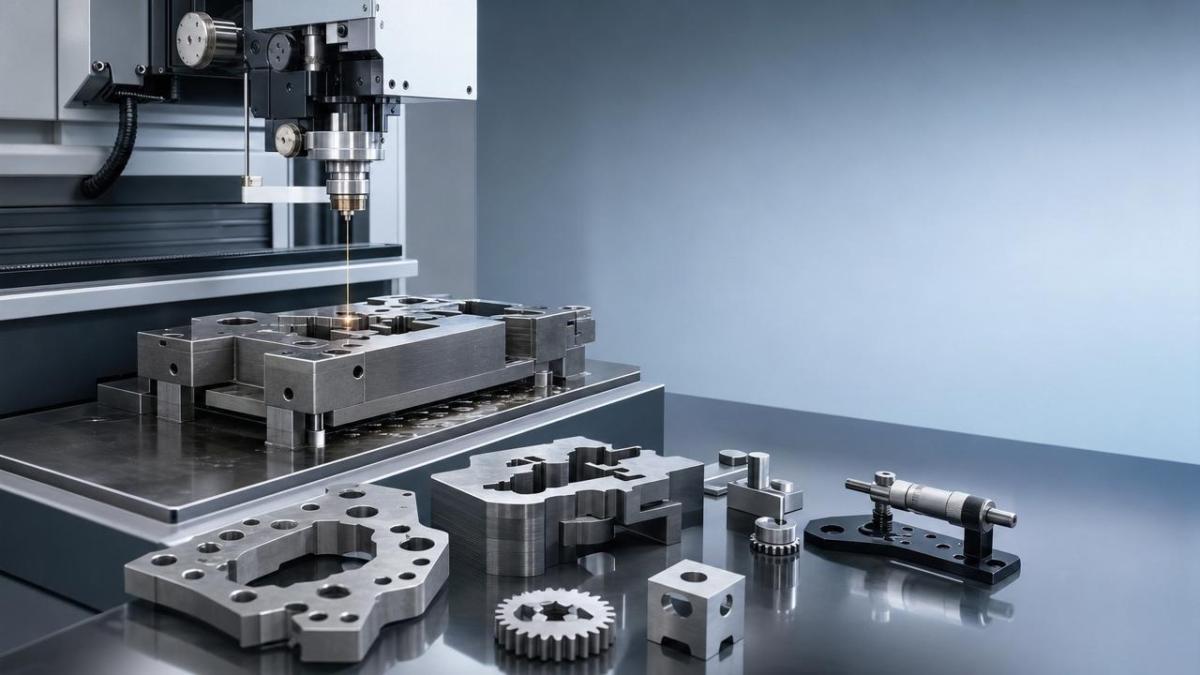
However, not all wire EDM capability is equal. One supplier may highlight micron-level tolerance, while another may be stronger in thicker sections, unstable materials, or better surface finish through multi-pass skim cutting. In practical sourcing, the scope often includes material review, programming, starter hole planning, rough cut plus skim cuts, inspection reporting, and post-processing recommendations. For high-spec projects, the useful question is not simply whether a shop offers wire EDM, but whether its process window fits the part’s tolerance stack, surface target, and metallurgical limits.
This matters in broad industrial settings such as aerospace fixtures, medical tooling, sensor housings, robotics parts, stamping dies, precision gears, and semiconductor support components. In these applications, edm wire cutting service china becomes a decision about process capability consistency rather than only unit cost.
Why is surface finish a key tradeoff in wire EDM?
Surface finish is one of the most misunderstood variables in wire EDM. A smoother finish often requires more skim passes, slower cutting speed, tighter flushing control, and more stable machine conditions. That improves appearance and can reduce secondary polishing, but it also increases machine time and cost. In edm wire cutting service china, this tradeoff appears frequently when drawings specify both tight tolerance and low roughness on the same edge.
The rough cut removes material fastest, but it leaves a thicker recast layer, more micro-texture, and higher risk of thermal influence at the edge. Skim cuts reduce these effects. A part that only needs dimensional separation in a non-critical fixture may accept a coarser surface. A sealing edge, fatigue-sensitive notch region, or mating profile usually cannot. Better finish can improve contact behavior, reduce stress concentration at micro peaks, and simplify assembly fit, but over-specifying finish where function does not require it can waste both budget and capacity.
A useful interpretation is this: surface finish in wire EDM is not just cosmetic. It is linked to recast layer thickness, edge microcracking risk, and downstream process burden. When reviewing edm wire cutting service china, surface finish should be discussed together with cut strategy, not as an isolated drawing note.
How do tolerance, recast layer, and edge integrity affect supplier selection?
Tolerance claims are easy to advertise and harder to verify under production conditions. A supplier may hold very fine tolerance on a small coupon but struggle on tall parts, thick blocks, intricate contours, or heat-sensitive alloys. With edm wire cutting service china, the real evaluation should include machine accuracy, thermal stability, wire path compensation, flushing design, workpiece thickness, and in-process inspection discipline.
Recast layer is another critical point. Because wire EDM removes material through electrical discharge, a thin resolidified layer remains on the cut surface. In some parts this is acceptable. In others—especially high-cycle fatigue parts, critical tooling edges, or medical and aerospace components—it may need strict control. Excessive recast can affect crack initiation, coating adhesion, or final polishing behavior.
Edge integrity sits at the intersection of tolerance and finish. A sharp profile with burr-free appearance may still contain thermal damage if the process is too aggressive. Likewise, a dimensionally accurate slot may taper slightly through thickness if flushing is poor. For that reason, evaluating edm wire cutting service china should involve questions such as:
- How many skim cuts are standard for the required finish?
- What recast layer range is typically achieved on the target material?
- How is taper checked across full thickness?
- Are inspection reports based on CMM, vision measurement, or only operator checks?
- Is the quoted tolerance repeatable over batch production or only prototype quantity?
Which applications benefit most from edm wire cutting service china?
Edm wire cutting service china is especially effective where conventional milling introduces too much force, tool wear, or geometric limitation. Thin ribs, internal corners with small radii, hardened die sections, and stacked conductive sheets are classic examples. The process also excels when the part is already heat treated and distortion from mechanical cutting must be minimized.
Typical high-value scenarios include punch and die components, aerospace brackets with intricate profiles, encoder parts, shims with critical thickness behavior, carbide wear components, and precision slots for sensors or connectors. In these cases, wire EDM can reduce custom tool dependency and improve profile accuracy compared with conventional cutting routes.
Still, it is not automatically the best choice for every conductive part. If the geometry is open, tolerance is moderate, and finish can be achieved by milling or grinding faster, wire EDM may add unnecessary cost. The best use of edm wire cutting service china comes when geometry complexity, hardness, or edge condition justifies the slower but highly controllable process.
How should cost and lead time be judged beyond the quote?
A low quoted rate can hide higher total cost if the process requires extra polishing, more rejected parts, or qualification delays. For edm wire cutting service china, the commercial picture should include programming time, fixture complexity, number of skim passes, material thickness, tolerance verification method, and whether any secondary treatment is needed after cutting.
Lead time should also be interpreted carefully. A supplier may promise fast cutting but not mention waiting time for inspection, outbound quality approval, or rework if taper and finish miss the target. In high-mix production, process planning quality often matters more than raw machine speed. A slightly longer initial setup can produce a more stable batch result and lower overall risk.
The table below can help compare options when reviewing edm wire cutting service china for critical parts:
What are the most common mistakes when specifying wire EDM requirements?
One common mistake is requesting the finest possible finish on every profile without linking it to function. Another is specifying very tight tolerances without identifying which features are truly critical. This can force an expensive machining route for dimensions that do not affect fit, load path, or sealing performance.
A third issue is overlooking the relationship between material and process behavior. Thick tool steel, tungsten carbide, and titanium do not respond exactly the same way under EDM conditions. When using edm wire cutting service china, drawings and technical discussions are stronger when they define feature priority: dimensional accuracy, finish, edge condition, metallurgical condition, or delivery speed.
Another avoidable error is asking for quotations without enough context. Better RFQ inputs include material grade, thickness, 2D or 3D files, critical dimensions, finish expectation, quantity, and whether secondary polishing or coating follows. This allows the supplier to choose a realistic cut plan instead of guessing from incomplete notes.
Quick FAQ reference
In summary, selecting edm wire cutting service china is a technical judgment about tradeoffs, not a simple price comparison. The best outcome comes from matching part function with realistic tolerance, appropriate skim-cut strategy, controlled recast layer, and a verification method that supports qualification. When these factors are aligned early, machining becomes more predictable and downstream finishing becomes easier to manage.
For the next step, prepare an RFQ package that identifies critical features, acceptable finish range, material grade, section thickness, and any fatigue or coating concerns. That approach makes edm wire cutting service china easier to compare on engineering value, process stability, and total manufacturing efficiency rather than on headline price alone.
Search News
Hot Articles
- Carbon Fiber StructuresHow to Specify Aerospace Carbon Fiber Assemblies for Lightweight, Load-Bearing PartsJul 11, 2026
- Machine VisionXiaomi, Alibaba DAMO Academy Drive Open-Source Robotics Model Ecosystem, Lowering Algorithm Development Barriers for Overseas SMEs Adopting Chinese Robotics SolutionsMar 30, 2026
- Cobots & ArmsShanxi 'AI+' Conference Showcases Embodied Intelligence with Multinational Buyer Engagement: Key Industry ImplicationsMar 30, 2026
Popular Tags
Recommended News
 Jul 11, 2026How to Specify Aerospace Carbon Fiber Assemblies for Lightweight, Load-Bearing PartsAerospace carbon fiber assemblies: learn how to specify laminate design, load data, joining methods, and inspection controls for lighter, reliable load-bearing aerospace parts.Elena Rostova (UAV Systems Researcher)
 Mar 30, 2026Xiaomi, Alibaba DAMO Academy Drive Open-Source Robotics Model Ecosystem, Lowering Algorithm Development Barriers for Overseas SMEs Adopting Chinese Robotics SolutionsXiaomi & Alibaba DAMO Academy's open-source robotics models lower algorithm barriers for global SMEs. Boost efficiency in manufacturing, logistics & smart retail with ROS 2 compatible solutions.TSV Data Lab
 Mar 30, 2026Shanxi 'AI+' Conference Showcases Embodied Intelligence with Multinational Buyer Engagement: Key Industry ImplicationsShanxi 'AI+' Conference highlights embodied intelligence with Tesla, Ubtech & Jiantao showcasing multimodal robotics. 40+ global buyers validated tech on-site, creating new B2B channels for industrial automation & AI solutions.Chen Wei (Automation Lead Engineer)
 Mar 30, 2026Zhongguancun Unveils 6G Integrated Sensing-Computing-Intelligence Platform to Empower Embodied Robots for Global Industrial ApplicationsZhongguancun's new 6G platform revolutionizes industrial robotics with <10ms latency, empowering global automotive, logistics & port automation. Discover how this tech boosts China's smart manufacturing exports.TSV Data Lab
 Mar 30, 2026Mech-Mind Tianjin Embodied Intelligence R&D and Production Base Goes Live, Cutting Delivery Time by 20%–30% for Global Customized AMR+Vision SolutionsMech-Mind's Tianjin AMR+Vision production base cuts delivery time by 20%-30% for欧美 & Latin American markets. Discover how this PLd-certified facility accelerates customized robotics solutions for smart manufacturing and logistics.Chen Wei (Automation Lead Engineer)
 Mar 30, 2026Boao Forum Reveals 'Co-evolution of Big and Small Brains' Trend in Humanoid Robots, China's Embodied Intelligence Accelerates Adaptation to Overseas Manufacturing Service ScenariosDiscover how China's humanoid robots, featuring 'Co-evolution of Big and Small Brains,' are revolutionizing global manufacturing. Learn about Embodied Tian Gong 3.0's ISO compliance and overseas deployment at Boao Forum 2026.Chen Wei (Automation Lead Engineer)
 Mar 30, 2026China Railway Industrial Secures Patent for Embodied Robotics in Material Handling, Boosting High-Precision Delivery Capabilities for Overseas Infrastructure and Manufacturing ProjectsChina Railway Industrial's new patent for embodied robotics in material handling boosts high-precision delivery for global infrastructure & manufacturing. Discover how this innovation enhances logistics accuracy in automotive, rail transit & EPC projects.Chen Wei (Automation Lead Engineer)
 Sep 28, 2026Spindle Runout Measurement in Germany: DIN Standards, Methods, and Acceptance LimitsSpindle runout measurement Germany: explore DIN standards, proven methods, acceptance limits, and audit-ready practices for reliable machining quality.Dr. Marcus Vance
 Sep 27, 2026How to Select Wall-Mount Edge Devices for Space-Constrained Factory NetworksWall mount edge devices for space-constrained factories: evaluate workload, thermal design, power resilience, cable access, and network reliability for smarter deployments.TSV Data Lab
 Sep 26, 2026Machining Tolerance Analysis: How to Set Limits That Meet Function and Cost TargetsMachining tolerance analysis: learn how to set functional limits, control tolerance stacks, reduce inspection risk, and balance precision with production cost.Dr. Marcus Vance
 Sep 25, 2026How to Evaluate an Industrial Infrastructure Data Platform for Multi-Site OperationsIndustrial infrastructure data platform evaluation guide for multi-site operations: compare data quality, edge resilience, interoperability, governance, and scalable proof-of-value criteria.Victor Lin (Chief Software Architect)
 Sep 24, 2026How to Select Machine Vision Optics for Accurate Inspection at Different Working DistancesMachine vision optics selection guide for accurate inspection at every working distance. Compare FOV, pixel scale, DOF, distortion, lighting, and telecentric options.TSV Data Lab
 Sep 23, 2026How to Evaluate a Machine Vision System Integrator for High-Speed Inspection LinesChoose a machine vision system integrator with proven expertise in high-speed inspection, reliable reject timing, robust optics, and measurable acceptance criteria.TSV Data Lab
 Sep 28, 2026When is a SCADA API the right choice for connecting plant systems?SCADA API guide: learn when governed plant data integration improves traceability, security, and scalability—without compromising real-time control.Victor Lin (Chief Software Architect)
 Sep 27, 2026How SCADA data integration improves traceability across production linesSCADA data integration connects production-line data to improve traceability, accelerate quality investigations, and strengthen safety decisions.Victor Lin (Chief Software Architect)
 Sep 26, 2026What to define before starting SCADA integration planningSCADA integration planning starts with clear scope, control boundaries, data models, cybersecurity, and testing. Discover the definitions that reduce risk and costly rework.Victor Lin (Chief Software Architect)
 Sep 25, 2026How a smart factory with Industrial IoT reduces production blind spotsDiscover how a smart factory with Industrial IoT turns real-time machine, quality, and workflow data into actionable insights that reduce production blind spots and delivery risks.Victor Lin (Chief Software Architect)
 Sep 24, 2026When does Industrial IoT make smart manufacturing easier to scale?Smart manufacturing Industrial IoT scales when trusted data, interoperable systems, and secure workflows turn connected assets into measurable gains.TSV Data Lab
 Sep 23, 2026What drives ultra-precision machining cost at 1-micron tolerance?Ultra precision machining cost per part at 1 micron tolerance depends on process, material, metrology, and yield. Learn how to compare quotes confidently.Dr. Marcus Vance
 Sep 22, 2026Drone Engine-T550CC Applications: Build the UAV Power System Around the MissionAn application guide for Drone Engine-T550CC integration, covering payload planning, airframe matching, cooling, fuel, vibration, test procedures, documentation, and service preparation.Elena Rostova (UAV Systems Researcher)
 Sep 22, 2026How to Evaluate Industrial Edge Computing Vendors for Factory DeploymentIndustrial edge computing vendor evaluation guide for factories: compare latency, protocol fit, reliability, security, and lifecycle support before deployment.TSV Data Lab
 Sep 21, 2026Drone Payload Integration: Matching Power, Data, and Center of Gravity for Reliable FlightsDrone payload integration made practical: balance power, data, center of gravity, and endurance to build safer, more reliable mission-ready flights.Elena Rostova (UAV Systems Researcher)
 Sep 20, 2026Autonomous Navigation Pricing: Cost Drivers and Budget Benchmarks for AMR ProjectsAutonomous navigation price explained: compare AMR cost drivers, software, sensors, integration, safety, and lifecycle budgets to build a scalable project plan.Chen Wei (Automation Lead Engineer)
 Sep 19, 2026How to Scope Automation Integration Services for Multi-System Factory ProjectsAutomation integration services: learn how to scope multi-system factory projects with clear workflows, interface contracts, safety boundaries, and acceptance criteria.Victor Lin (Chief Software Architect)