5-axis CNC machining center specifications that affect uptime
Publication Date
author
For enterprise buyers, uptime is not a marketing slogan but a measurable asset tied to throughput, delivery reliability, and total cost. Understanding which 5-axis CNC machining center specifications truly affect uptime helps separate usable engineering data from vague claims. This article highlights the critical parameters that influence stability, maintenance intervals, fault recovery, and long-term production continuity.
What uptime means in a 5-axis production environment
In precision manufacturing, uptime is the share of scheduled production time during which a machine is actually capable of making conforming parts. For a 5-axis CNC machining center, that definition is broader than simple spindle-on time. It includes warm-up stability, probing reliability, axis synchronization, chip evacuation, tool change consistency, software recovery, and the ability to hold tolerance over long runs without unexpected stoppages.
This is why 5-axis CNC machining center specifications matter so much to executive decision-makers. A machine can appear impressive on paper because of high spindle speed or large travels, yet still underperform in real production if thermal drift, servo alarms, poor chip management, or limited spare parts support reduce available hours. For buyers in aerospace, medical, energy, mold, and advanced industrial sectors, uptime is a financial variable that directly affects margin, inventory exposure, and customer confidence.
Why the industry pays close attention to these specifications
Across advanced manufacturing, production programs are becoming more complex and less forgiving. Components increasingly combine tight tolerance features, hard-to-machine alloys, and shorter delivery cycles. At the same time, engineering teams are under pressure to qualify suppliers faster and reduce trial-and-error during equipment selection. In that context, the most useful 5-axis CNC machining center specifications are the ones that reveal process stability rather than marketing ambition.
For organizations aligned with a data-first view of manufacturing, the central question is simple: which technical parameters correlate with predictable machine availability? The answer usually spans mechanical rigidity, spindle life, thermal control, control architecture, lubrication, contamination protection, maintainability, and diagnostics. Each specification influences whether a machine can stay productive over months and years, not just during acceptance testing.
Core 5-axis CNC machining center specifications that affect uptime
A useful way to read 5-axis CNC machining center specifications is to group them by the failure modes they help prevent. The most uptime-relevant categories are listed below.
Spindle system specifications
The spindle is often the most stressed subsystem in a 5-axis machine. Buyers should evaluate power curve, torque at low and mid-range speed, bearing type, cooling method, vibration behavior, and rated duty cycle. A spindle with high peak speed but weak thermal stability can increase stoppages during heavy roughing or mixed-material programs. Oil-air lubrication, chiller integration, and vibration monitoring can significantly extend service intervals and improve uptime.
Rotary axis construction and clamping
In a 5-axis CNC machining center, the A/B or B/C rotary assembly is a major source of both value and risk. Uptime depends on backlash control, encoder accuracy, clamping torque, bearing preload, and resistance to contamination from chips and coolant. Weak rotary axis sealing or poor cable routing can lead to recurring alarms, position loss, or maintenance-intensive behavior. For long unattended cycles, robust rotary clamping and stable positioning are critical.
Thermal stability and compensation
Many unplanned interruptions begin as accuracy drift rather than catastrophic failure. Thermal compensation logic, temperature sensor placement, spindle growth control, coolant temperature management, and machine structure symmetry all influence whether the machine remains stable across a shift. If operators must frequently stop to re-qualify offsets or recheck dimensions, uptime is already being lost even if the machine is technically running.
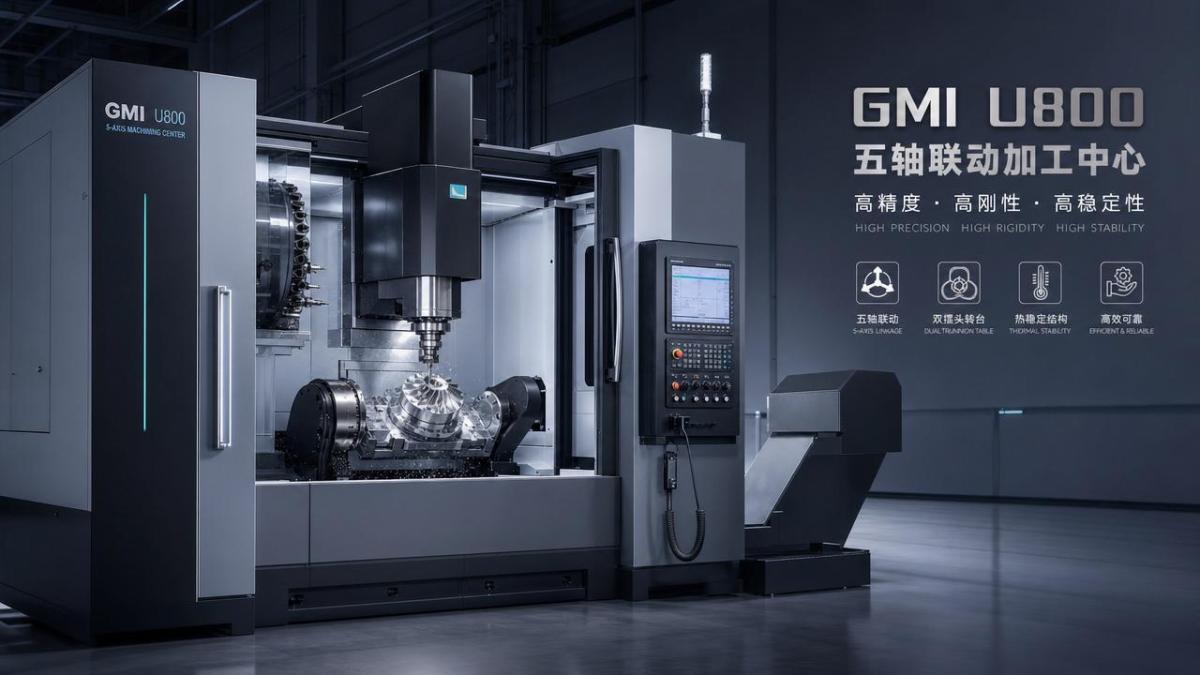
Tool changer and probing reliability
Automatic tool changer design affects uptime more than many buyers expect. Tool change time matters, but tool retention consistency, pocket cleanliness, broken tool detection, and recovery after interruption matter more. The same applies to spindle probes and tool setters. If in-process measurement is unstable or collision recovery is slow, a short disturbance can become a long stop. Good 5-axis CNC machining center specifications should include repeatability data for tool change and measurement systems, not just magazine capacity.
Servo, control, and fault recovery architecture
Modern uptime is partly a software issue. Servo tuning robustness, look-ahead capability, jerk control, alarm diagnostics, and restart logic all affect how quickly a machine recovers from process disruptions. A control that provides detailed alarm history, remote diagnostics, and reliable block restart reduces downtime dramatically. For complex 5-axis toolpaths, stable interpolation and collision avoidance functions are not optional productivity features; they are continuity features.
Lubrication, chip evacuation, and contamination control
Many uptime losses come from ordinary but persistent causes: blocked conveyors, inadequate way lubrication, fine chip buildup, and coolant contamination. Therefore, 5-axis CNC machining center specifications should be reviewed for lubrication monitoring, coolant filtration level, tank accessibility, auger or conveyor design, and enclosure geometry. Machines cutting aluminum, titanium, Inconel, composites, or cast materials each present different contamination loads. The better the evacuation and sealing design, the lower the maintenance burden.
Industry overview table: which specifications matter most for uptime
The table below summarizes how key 5-axis CNC machining center specifications connect to production continuity from a decision-maker’s perspective.
Business value for enterprise decision-makers
For senior leadership, reviewing 5-axis CNC machining center specifications through an uptime lens improves more than technical confidence. It sharpens capital allocation. A machine with better maintainability and process stability can support higher schedule adherence, lower rework, and reduced overtime pressure. It can also shorten qualification cycles because engineering teams spend less time compensating for machine behavior and more time validating the process itself.
This matters especially in sectors where one delayed component can disrupt a larger assembly chain. In aerospace structures, surgical instruments, turbine components, satellite hardware, or high-mix industrial parts, uptime protects revenue indirectly by preserving delivery credibility. That is why data-driven buyers should connect machine specifications not only to cutting capability, but also to serviceability, diagnostic visibility, and long-run consistency.
Typical use cases and how specification priorities shift
Not every operation values the same uptime drivers. The importance of 5-axis CNC machining center specifications changes with production profile, material, and risk exposure.
Practical evaluation points before approval
When reviewing 5-axis CNC machining center specifications, buyers should ask for evidence that goes beyond brochure values. Request spindle load history under representative cuts, thermal growth test data over a full shift, mean time between maintenance events, and examples of alarm logs with root-cause resolution. If possible, compare not only the machine builder’s nominal data but also field performance from users machining similar materials and geometries.
It is also wise to assess the local service ecosystem. Spare parts lead time, remote diagnostic capability, technician availability, and software support cadence all influence practical uptime. A strong machine specification paired with weak service infrastructure can still produce poor operational results. In many cases, the best-performing asset is not the one with the most aggressive speed claims, but the one with the most transparent engineering data and the fastest path to recovery.
Common interpretation mistakes to avoid
One common mistake is to treat peak specifications as evidence of production durability. Maximum spindle speed, rapid traverse, or tool count may improve flexibility, but they do not automatically improve uptime. Another mistake is to separate accuracy from availability. In reality, poor thermal behavior and unstable axis performance reduce uptime because they trigger inspections, offset changes, and process interruptions. Finally, buyers often underestimate maintainability. Access to filters, lubrication points, sensors, and electrical modules can strongly influence planned downtime over the life of the machine.
A data-first approach to specification review
For enterprise teams, the most effective approach is to build an internal review framework that scores 5-axis CNC machining center specifications against production continuity. That framework should include mechanical stability, control resilience, maintenance burden, and support response. By translating technical details into uptime risk categories, procurement, operations, and engineering can make decisions from the same evidence base.
This is where a benchmark mindset becomes valuable. Instead of asking which machine sounds more advanced, ask which machine can keep delivering conforming parts with fewer interruptions, fewer manual interventions, and faster recovery when something goes wrong. In modern manufacturing, that is the practical meaning of engineering truth.
Conclusion and next-step guidance
The most important 5-axis CNC machining center specifications are not always the loudest ones. The parameters that affect uptime are usually those tied to spindle durability, rotary axis integrity, thermal control, dependable tool handling, strong diagnostics, and maintainable machine architecture. For decision-makers, focusing on these areas improves supplier evaluation, reduces qualification risk, and supports long-term production continuity.
If your organization is comparing platforms or refining a technical requirement sheet, use 5-axis CNC machining center specifications as a filter for uptime risk rather than a list of headline features. A disciplined, data-backed review process will lead to better machine selection, more reliable operations, and stronger return on capital over the full lifecycle of the asset.
Search News
Hot Articles
- Carbon Fiber StructuresHow to Specify Aerospace Carbon Fiber Assemblies for Lightweight, Load-Bearing PartsJul 11, 2026
- Machine VisionXiaomi, Alibaba DAMO Academy Drive Open-Source Robotics Model Ecosystem, Lowering Algorithm Development Barriers for Overseas SMEs Adopting Chinese Robotics SolutionsMar 30, 2026
- Cobots & ArmsShanxi 'AI+' Conference Showcases Embodied Intelligence with Multinational Buyer Engagement: Key Industry ImplicationsMar 30, 2026
Popular Tags
Recommended News
 Jul 11, 2026How to Specify Aerospace Carbon Fiber Assemblies for Lightweight, Load-Bearing PartsAerospace carbon fiber assemblies: learn how to specify laminate design, load data, joining methods, and inspection controls for lighter, reliable load-bearing aerospace parts.Elena Rostova (UAV Systems Researcher)
 Mar 30, 2026Xiaomi, Alibaba DAMO Academy Drive Open-Source Robotics Model Ecosystem, Lowering Algorithm Development Barriers for Overseas SMEs Adopting Chinese Robotics SolutionsXiaomi & Alibaba DAMO Academy's open-source robotics models lower algorithm barriers for global SMEs. Boost efficiency in manufacturing, logistics & smart retail with ROS 2 compatible solutions.TSV Data Lab
 Mar 30, 2026Shanxi 'AI+' Conference Showcases Embodied Intelligence with Multinational Buyer Engagement: Key Industry ImplicationsShanxi 'AI+' Conference highlights embodied intelligence with Tesla, Ubtech & Jiantao showcasing multimodal robotics. 40+ global buyers validated tech on-site, creating new B2B channels for industrial automation & AI solutions.Chen Wei (Automation Lead Engineer)
 Mar 30, 2026Zhongguancun Unveils 6G Integrated Sensing-Computing-Intelligence Platform to Empower Embodied Robots for Global Industrial ApplicationsZhongguancun's new 6G platform revolutionizes industrial robotics with <10ms latency, empowering global automotive, logistics & port automation. Discover how this tech boosts China's smart manufacturing exports.TSV Data Lab
 Mar 30, 2026Mech-Mind Tianjin Embodied Intelligence R&D and Production Base Goes Live, Cutting Delivery Time by 20%–30% for Global Customized AMR+Vision SolutionsMech-Mind's Tianjin AMR+Vision production base cuts delivery time by 20%-30% for欧美 & Latin American markets. Discover how this PLd-certified facility accelerates customized robotics solutions for smart manufacturing and logistics.Chen Wei (Automation Lead Engineer)
 Mar 30, 2026Boao Forum Reveals 'Co-evolution of Big and Small Brains' Trend in Humanoid Robots, China's Embodied Intelligence Accelerates Adaptation to Overseas Manufacturing Service ScenariosDiscover how China's humanoid robots, featuring 'Co-evolution of Big and Small Brains,' are revolutionizing global manufacturing. Learn about Embodied Tian Gong 3.0's ISO compliance and overseas deployment at Boao Forum 2026.Chen Wei (Automation Lead Engineer)
 Mar 30, 2026China Railway Industrial Secures Patent for Embodied Robotics in Material Handling, Boosting High-Precision Delivery Capabilities for Overseas Infrastructure and Manufacturing ProjectsChina Railway Industrial's new patent for embodied robotics in material handling boosts high-precision delivery for global infrastructure & manufacturing. Discover how this innovation enhances logistics accuracy in automotive, rail transit & EPC projects.Chen Wei (Automation Lead Engineer)
 Sep 29, 2026ISO 9283 Repeatability: How to Evaluate Cobot Positioning PerformanceISO 9283 cobot repeatability explained: learn how payload, reach, approach direction, and test conditions affect positioning performance and cell capability.Chen Wei (Automation Lead Engineer)
 Sep 28, 2026Spindle Runout Measurement in Germany: DIN Standards, Methods, and Acceptance LimitsSpindle runout measurement Germany: explore DIN standards, proven methods, acceptance limits, and audit-ready practices for reliable machining quality.Dr. Marcus Vance
 Sep 27, 2026How to Select Wall-Mount Edge Devices for Space-Constrained Factory NetworksWall mount edge devices for space-constrained factories: evaluate workload, thermal design, power resilience, cable access, and network reliability for smarter deployments.TSV Data Lab
 Sep 26, 2026Machining Tolerance Analysis: How to Set Limits That Meet Function and Cost TargetsMachining tolerance analysis: learn how to set functional limits, control tolerance stacks, reduce inspection risk, and balance precision with production cost.Dr. Marcus Vance
 Sep 25, 2026How to Evaluate an Industrial Infrastructure Data Platform for Multi-Site OperationsIndustrial infrastructure data platform evaluation guide for multi-site operations: compare data quality, edge resilience, interoperability, governance, and scalable proof-of-value criteria.Victor Lin (Chief Software Architect)
 Sep 24, 2026How to Select Machine Vision Optics for Accurate Inspection at Different Working DistancesMachine vision optics selection guide for accurate inspection at every working distance. Compare FOV, pixel scale, DOF, distortion, lighting, and telecentric options.TSV Data Lab
 Sep 23, 2026How to Evaluate a Machine Vision System Integrator for High-Speed Inspection LinesChoose a machine vision system integrator with proven expertise in high-speed inspection, reliable reject timing, robust optics, and measurable acceptance criteria.TSV Data Lab
 Sep 28, 2026When is a SCADA API the right choice for connecting plant systems?SCADA API guide: learn when governed plant data integration improves traceability, security, and scalability—without compromising real-time control.Victor Lin (Chief Software Architect)
 Sep 27, 2026How SCADA data integration improves traceability across production linesSCADA data integration connects production-line data to improve traceability, accelerate quality investigations, and strengthen safety decisions.Victor Lin (Chief Software Architect)
 Sep 26, 2026What to define before starting SCADA integration planningSCADA integration planning starts with clear scope, control boundaries, data models, cybersecurity, and testing. Discover the definitions that reduce risk and costly rework.Victor Lin (Chief Software Architect)
 Sep 25, 2026How a smart factory with Industrial IoT reduces production blind spotsDiscover how a smart factory with Industrial IoT turns real-time machine, quality, and workflow data into actionable insights that reduce production blind spots and delivery risks.Victor Lin (Chief Software Architect)
 Sep 24, 2026When does Industrial IoT make smart manufacturing easier to scale?Smart manufacturing Industrial IoT scales when trusted data, interoperable systems, and secure workflows turn connected assets into measurable gains.TSV Data Lab
 Sep 23, 2026What drives ultra-precision machining cost at 1-micron tolerance?Ultra precision machining cost per part at 1 micron tolerance depends on process, material, metrology, and yield. Learn how to compare quotes confidently.Dr. Marcus Vance
 Sep 22, 2026Drone Engine-T550CC Applications: Build the UAV Power System Around the MissionAn application guide for Drone Engine-T550CC integration, covering payload planning, airframe matching, cooling, fuel, vibration, test procedures, documentation, and service preparation.Elena Rostova (UAV Systems Researcher)
 Sep 22, 2026How to Evaluate Industrial Edge Computing Vendors for Factory DeploymentIndustrial edge computing vendor evaluation guide for factories: compare latency, protocol fit, reliability, security, and lifecycle support before deployment.TSV Data Lab
 Sep 21, 2026Drone Payload Integration: Matching Power, Data, and Center of Gravity for Reliable FlightsDrone payload integration made practical: balance power, data, center of gravity, and endurance to build safer, more reliable mission-ready flights.Elena Rostova (UAV Systems Researcher)
 Sep 20, 2026Autonomous Navigation Pricing: Cost Drivers and Budget Benchmarks for AMR ProjectsAutonomous navigation price explained: compare AMR cost drivers, software, sensors, integration, safety, and lifecycle budgets to build a scalable project plan.Chen Wei (Automation Lead Engineer)