
Why an aerospace CNC turning factory may quote higher but safer
Publication Date
author
An aerospace CNC turning factory often quotes more because safety-critical work demands proven process control, tighter traceability, and deeper validation than standard machining. For buyers comparing an aerospace cnc turning factory with a heavy duty cnc machining supplier, the real cost difference often lies in micro machining tolerance limits, cnc milling chatter frequency analysis, and documented edm surface integrity analysis that reduce downstream risk.
That difference matters most when a turned component will enter a flight-control assembly, fuel system, sensor housing, landing subsystem, or UAV structural node where one dimensional drift, one material mix-up, or one undocumented process change can create a cascade of cost. In these programs, the quote is not just paying for machine time. It is paying for control over variation, evidence behind conformity, and the ability to defend every critical feature months or years after shipment.
For engineers, operators, procurement teams, and executive decision-makers, the practical question is not simply why the aerospace supplier is more expensive. The better question is which cost elements actually reduce technical, regulatory, and warranty exposure. A lower quote can look attractive at PO stage, yet become far more expensive once first article delays, scrap, revalidation, or field failures appear.
Why aerospace turning quotes are built differently
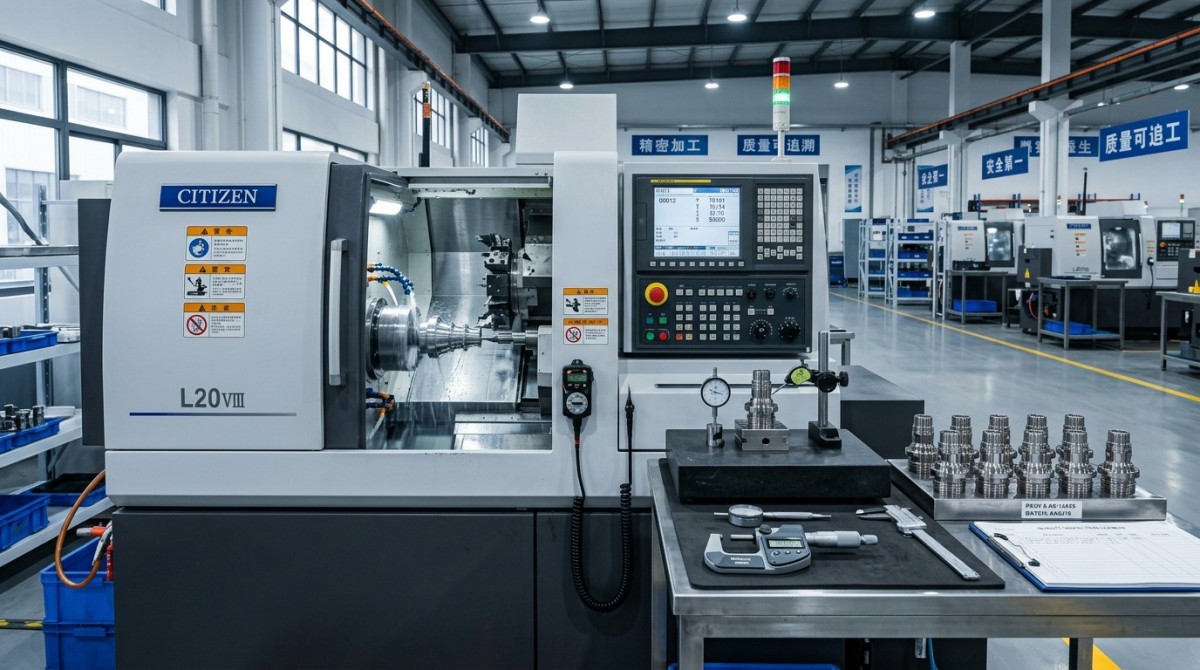
An aerospace CNC turning factory usually prices around a broader control envelope than a general machining shop. The quote may include first article inspection, documented tool life control, lot traceability, operator qualification records, calibrated gauges, special material handling, and nonconformance response procedures. None of these items removes metal from the workpiece, but all of them reduce uncertainty in how the part was produced.
In many aerospace and UAV programs, a tolerance that looks small on paper can drive a major cost shift in process design. A turned titanium or Inconel component with a feature tolerance of ±0.005 mm, roundness below 0.003 mm, or surface finish of Ra 0.4–0.8 µm may require slower feeds, tighter thermal control, and more frequent in-process checks than a heavy duty cnc machining supplier would typically budget for industrial equipment parts.
Traceability is another hidden cost driver. Aerospace buyers often expect material certificates, heat numbers, revision control, inspection records, and retention periods that may extend for 5–10 years depending on contract flow-down. This means the factory must maintain document discipline, ERP or MES support, segregated part identification, and reliable archive practices. A lower-cost shop may be technically capable of machining the part, yet unable to support the evidence trail required during audits or failure investigations.
The quote also reflects risk planning. When a supplier prices safety-critical turning, they are often factoring in preventive controls for burr management, chip evacuation, tool break detection, coolant condition, and machine capability checks before production scaling. These controls can reduce output rate by 10%–25%, but they protect against far larger downstream costs linked to escapes, MRB review, and assembly stoppage.
Where the extra cost usually goes
Aerospace pricing is rarely a simple margin uplift. In most cases, it spreads across labor, validation, metrology, quality overhead, and process reserves. Buyers should map quote differences to specific control activities rather than treating them as generic “quality premiums.”
- Additional setup verification before batch release, often adding 2–6 hours for complex parts.
- Higher inspection density, including first-off, in-process, and final dimensional confirmation.
- Material and process documentation review for every lot, not just incoming stock.
- More conservative tooling replacement intervals to avoid feature drift or chatter marks.
The table below shows how quoting logic often differs between an aerospace CNC turning factory and a general heavy-duty machining source.
The key takeaway is simple: the higher quote is often not buying “better marketing.” It is buying a more measurable manufacturing system. For high-consequence components, that distinction can outweigh a 10%–30% price gap very quickly.
The real safety value: tolerance, chatter control, and surface integrity
Three technical areas frequently explain why an aerospace CNC turning factory may quote higher but safer: micro machining tolerance control, cnc milling chatter frequency analysis on related secondary operations, and edm surface integrity analysis where wire EDM or sinker EDM is used for complementary features. These are not abstract quality terms. They directly affect fatigue life, sealing performance, fit-up stability, and long-term reliability.
Micro machining tolerance limits matter because aerospace assemblies are less forgiving than many industrial systems. A bore, seat, thread runout, or concentric diameter that shifts by 8–12 microns may still look acceptable in a general context, yet produce preload imbalance, leak path growth, or unstable sensor alignment in aerospace use. Shops quoting for this level of control often plan spindle warm-up routines, tool offset monitoring, and staged inspection points every 10–30 parts instead of only final-batch checks.
Cnc milling chatter frequency analysis also influences turned-part pricing when the component requires milled flats, slots, ports, or cross features after turning. Chatter is not only a cosmetic issue. It can alter local geometry, raise roughness, and create microstructural stress risers. A supplier that models spindle speed bands, fixture stiffness, and harmonics before production may consume more engineering time up front, but that effort lowers the chance of rework and inconsistent surface behavior across batches.
Documented edm surface integrity analysis is equally important where thermal processes are used. Recast layer, heat-affected zone, and microcrack risk can become critical in thin-wall or fatigue-loaded features. If the factory includes process windows, post-EDM finishing criteria, and verification methods in the quote, the price rises for a reason: it is controlling what the naked eye cannot reliably detect.
Technical checkpoints buyers should request
A practical RFQ should ask the supplier how they control the variables behind geometry, not just whether they can “hold tolerance.” The answer reveals whether the quote is rooted in engineering discipline or optimistic assumptions.
- Define 3–5 critical-to-function dimensions and ask for the planned inspection frequency.
- Request the expected surface finish range on sealing, bearing, or fatigue-sensitive areas.
- Ask whether chatter risk has been evaluated for secondary milling operations.
- If EDM is involved, ask how recast layer or microcrack risk is assessed and controlled.
The comparison below helps procurement and engineering teams translate technical language into sourcing decisions.
If a supplier cannot clearly explain these controls, a lower quote may be reflecting omitted process discipline rather than better manufacturing efficiency. For mission-sensitive parts, that is a major distinction.
What procurement teams should compare beyond unit price
Procurement decisions often fail when buyers compare line-item price without comparing the probability and cost of deviation. For aerospace and advanced UAV supply chains, the better framework is total risk-adjusted acquisition cost. That includes quotation clarity, engineering responsiveness, first article lead time, batch consistency, and the supplier’s ability to support audits or corrective action within 24–72 hours when a problem appears.
Lead time should also be read carefully. A quote that promises parts in 10 days but excludes first article review, inspection report generation, and material document closure may not actually shorten your program timeline. In many projects, a realistic aerospace route might take 2–4 weeks for prototype validation and 4–8 weeks for stable production, but it reduces the chance of stop-start qualification loops that cost far more than one extra week of disciplined preparation.
Another issue is change control. Aerospace CNC turning suppliers with safer quotes usually control drawing revisions, tooling updates, and process substitutions with formal approval steps. This can feel slower at PO stage, but it prevents undocumented changes that break fit, invalidate test data, or create mixed-configuration inventory. Decision-makers should view this not as bureaucracy but as insurance against expensive ambiguity.
For operators and production users, stable process control has daily value as well. Better documentation means fewer shop-floor surprises, clearer setup instructions, more consistent incoming quality, and less emergency sorting. The quote difference therefore affects not only procurement but also assembly uptime, maintenance planning, and production confidence.
A practical supplier evaluation checklist
Instead of asking who is cheapest, ask which supplier can reduce the number of unknowns in the first 90 days of a program. The list below helps align sourcing with engineering outcomes.
- Can the factory identify critical features, not just quote from a drawing package?
- Do they define inspection method, frequency, and reaction plan for out-of-control trends?
- Can they support lot traceability and certificate linkage from raw stock to shipment?
- Do they explain how they control thermal growth, chatter, burrs, and surface damage?
- Can they provide clear timelines for prototype, FAI, pilot batch, and production batch release?
Decision matrix for buyers
This simple matrix can be used during sourcing reviews to compare quotations on more than price alone.
When this matrix is applied, a higher aerospace quote often becomes easier to justify. It is frequently the option with fewer unpriced risks hidden in the background.
Common sourcing mistakes and how to avoid them
One common mistake is treating aerospace and heavy-duty industrial machining as interchangeable. They may use similar machine platforms, but the operating assumptions are different. Heavy equipment parts often prioritize material removal rate, robust function, and cost per kilogram. Aerospace turning prioritizes geometric consistency, documentation continuity, and proof of control at every critical point. Confusing those priorities can distort RFQs and invite mismatched suppliers into the process.
Another mistake is under-specifying the drawing package. If buyers omit critical-to-function notes, surface requirements, edge conditions, inspection expectations, or material substitution limits, suppliers will quote to different assumptions. One supplier may include FAI, serialized traceability, and controlled deburr. Another may not. The price gap then looks dramatic, but the quotations are not actually comparable.
A third error is delaying process discussion until after purchase order release. The safer path is to align early on 4 areas: tolerances, verification method, special process controls, and documentation deliverables. A 30–60 minute technical review before PO can prevent weeks of downstream debate about acceptance criteria.
Finally, some buyers assume the safest supplier is always the slowest. In reality, a factory with mature aerospace routines may reduce total program time by shortening NCR cycles, lowering rework rates, and getting first article approval right the first time. Speed should therefore be measured across the full qualification chain, not only by spindle utilization.
FAQ for engineering and sourcing teams
How much higher can an aerospace CNC turning factory quote?
For comparable geometry, a quote may be roughly 10%–40% higher depending on tolerance class, material, inspection burden, and traceability requirements. The premium can be higher for low-volume prototypes, exotic alloys, or parts requiring multiple validation steps.
When is the higher quote clearly justified?
It is usually justified when the part has fatigue-sensitive geometry, sealing interfaces, tight concentricity, regulated documentation needs, or any feature that could trigger expensive test repetition or field risk. In these cases, process evidence is part of the product value.
What should operators and end users care about?
Operators benefit from better incoming consistency, less fit-up correction, fewer burr-related issues, and clearer acceptance criteria. Even if they do not manage the quote, they feel the effects of process control in daily assembly and maintenance work.
How can buyers make quotes easier to compare?
Require every supplier to respond to the same checklist covering tolerances, surface finish, FAI expectations, material traceability, secondary process control, and record package. Without that baseline, a low quote may simply reflect missing scope.
A data-first approach to safer supplier selection
For organizations that follow a data-driven sourcing philosophy, the best way to evaluate an aerospace CNC turning factory is to look at measurable process discipline rather than brand language. Ask for actual control logic: critical tolerance ranges, inspection frequency, surface integrity approach, and document retention structure. Parameters do not need to be glamorous to be useful. They need to be specific enough to reduce uncertainty.
This is especially relevant in hard-tech ecosystems where aerospace, robotics, sensors, and autonomous platforms share overlapping supply chains. A component may be small, but its failure can disrupt a system worth thousands or millions of dollars. In such contexts, paying more for controlled machining is often less about premium manufacturing and more about protecting system-level performance.
A disciplined supplier should be able to explain how they move from RFQ to production through defined stages such as manufacturability review, control-plan alignment, first article submission, pilot lot monitoring, and steady-state batch release. Even a 5-step framework gives buyers more confidence than vague assurances of “high quality.” Clear sequence is a strong indicator that the quote is grounded in execution.
In the end, the safer quote is the one that makes hidden variables visible. If the aerospace CNC turning factory can show why their controls exist and how those controls reduce downstream risk, the higher price becomes easier to defend internally across engineering, procurement, quality, and executive review.
A higher quote from an aerospace CNC turning factory is often the price of lower uncertainty, stronger traceability, and better protection against costly downstream failure. For teams sourcing flight-related, UAV, sensor, or other precision-critical components, the right comparison is not cheap versus expensive, but undocumented risk versus validated control.
If you are evaluating suppliers, defining RFQ requirements, or trying to separate true engineering capability from marketing language, now is the time to review your process against measurable criteria. Contact us to discuss your machining requirements, request a tailored sourcing framework, or explore more data-driven solutions for safer precision manufacturing decisions.
Search News
Hot Articles
- Carbon Fiber StructuresHow to Specify Aerospace Carbon Fiber Assemblies for Lightweight, Load-Bearing PartsJul 11, 2026
- Machine VisionXiaomi, Alibaba DAMO Academy Drive Open-Source Robotics Model Ecosystem, Lowering Algorithm Development Barriers for Overseas SMEs Adopting Chinese Robotics SolutionsMar 30, 2026
- Cobots & ArmsShanxi 'AI+' Conference Showcases Embodied Intelligence with Multinational Buyer Engagement: Key Industry ImplicationsMar 30, 2026
Popular Tags
Recommended News
 Jul 11, 2026How to Specify Aerospace Carbon Fiber Assemblies for Lightweight, Load-Bearing PartsAerospace carbon fiber assemblies: learn how to specify laminate design, load data, joining methods, and inspection controls for lighter, reliable load-bearing aerospace parts.Elena Rostova (UAV Systems Researcher)
 Mar 30, 2026Xiaomi, Alibaba DAMO Academy Drive Open-Source Robotics Model Ecosystem, Lowering Algorithm Development Barriers for Overseas SMEs Adopting Chinese Robotics SolutionsXiaomi & Alibaba DAMO Academy's open-source robotics models lower algorithm barriers for global SMEs. Boost efficiency in manufacturing, logistics & smart retail with ROS 2 compatible solutions.TSV Data Lab
 Mar 30, 2026Shanxi 'AI+' Conference Showcases Embodied Intelligence with Multinational Buyer Engagement: Key Industry ImplicationsShanxi 'AI+' Conference highlights embodied intelligence with Tesla, Ubtech & Jiantao showcasing multimodal robotics. 40+ global buyers validated tech on-site, creating new B2B channels for industrial automation & AI solutions.Chen Wei (Automation Lead Engineer)
 Mar 30, 2026Zhongguancun Unveils 6G Integrated Sensing-Computing-Intelligence Platform to Empower Embodied Robots for Global Industrial ApplicationsZhongguancun's new 6G platform revolutionizes industrial robotics with <10ms latency, empowering global automotive, logistics & port automation. Discover how this tech boosts China's smart manufacturing exports.TSV Data Lab
 Mar 30, 2026Mech-Mind Tianjin Embodied Intelligence R&D and Production Base Goes Live, Cutting Delivery Time by 20%–30% for Global Customized AMR+Vision SolutionsMech-Mind's Tianjin AMR+Vision production base cuts delivery time by 20%-30% for欧美 & Latin American markets. Discover how this PLd-certified facility accelerates customized robotics solutions for smart manufacturing and logistics.Chen Wei (Automation Lead Engineer)
 Mar 30, 2026Boao Forum Reveals 'Co-evolution of Big and Small Brains' Trend in Humanoid Robots, China's Embodied Intelligence Accelerates Adaptation to Overseas Manufacturing Service ScenariosDiscover how China's humanoid robots, featuring 'Co-evolution of Big and Small Brains,' are revolutionizing global manufacturing. Learn about Embodied Tian Gong 3.0's ISO compliance and overseas deployment at Boao Forum 2026.Chen Wei (Automation Lead Engineer)
 Mar 30, 2026China Railway Industrial Secures Patent for Embodied Robotics in Material Handling, Boosting High-Precision Delivery Capabilities for Overseas Infrastructure and Manufacturing ProjectsChina Railway Industrial's new patent for embodied robotics in material handling boosts high-precision delivery for global infrastructure & manufacturing. Discover how this innovation enhances logistics accuracy in automotive, rail transit & EPC projects.Chen Wei (Automation Lead Engineer)
 Oct 27, 2026GXO and Agility Robotics Expand Partnership to Accelerate US Humanoid Robot DeploymentGXO and Agility Robotics plan to expand US humanoid robot deployment with Digit 4 in early 2027. Explore warehouse automation plans, service terms and future Digit 5 upgrades.Chen Wei (Automation Lead Engineer)
 Oct 27, 2026Robotic Automation Costs: Budgeting for Equipment, Integration, and MaintenancePlan your robotics automation cost with confidence. Explore equipment, integration, and maintenance expenses, compare quotes, and build a realistic budget for better ROI.Chen Wei (Automation Lead Engineer)
 Oct 26, 2026AMAXiMAL Releases Open-Source TopMod 3D v3 With Claude AIExplore AMAXiMAL’s free, open-source TopMod 3D v3 with Claude AI assistance, topology-based modeling and plywood fabrication tools that connect complex designs to physical builds.Dr. Marcus Vance
 Oct 26, 2026Choosing a SCADA System Integrator Company: PLC Compatibility and Long-Term SupportChoose a scada system integrator company with proven PLC compatibility and reliable long-term support. Discover what to test, compare, and require before investing.Victor Lin (Chief Software Architect)
 Oct 25, 2026Hesai Leads Global ADAS Main Lidar Shipments in Yole’s 2026 ReportHesai led global ADAS main lidar shipments with a 43% share in 2025, according to Yole’s 2026 report. Explore what this ranking reveals about its automotive market position.TSV Data Lab
 Oct 25, 2026Choosing an Aerospace Materials Manufacturer: Quality and Traceability ChecksChoosing an aerospace materials manufacturer? Learn how to verify certifications, test reports, and lot traceability to qualify suppliers confidently and reduce costly sourcing risks.Dr. Marcus Vance
 Oct 24, 2026Guotai Haitong: Global Entry-Level 3D Printer Shipments Rose 39% in Q1 2026Entry-level 3D printer shipments rose 39% in Q1 2026, Guotai Haitong reports. Explore how AI, multicolor printing and print farms are shaping market growth.Dr. Marcus Vance
 Oct 24, 2026Choosing an Industrial Vision Inspection Supplier: Acceptance Tests That MatterChoose an industrial vision inspection supplier with confidence. Discover acceptance tests for defect detection, false rejects, production speed, and reliable part rejection before you buy.TSV Data Lab
 Oct 23, 2026US Navy Raises Gecko Robotics Contract Ceiling to $300M for Robotic Fleet MaintenanceUS Navy raises Gecko Robotics’ contract ceiling to $300M for Pacific Fleet robotic inspections. Explore potential opportunities for maintenance suppliers and key procurement considerations.Chen Wei (Automation Lead Engineer)
 Oct 23, 2026Choosing Industrial Sensing Systems for Global Plants: Protocol CompatibilityCompare industrial sensing systems international buyers can trust. Explore protocol compatibility, reduce integration risks, and select proven configurations for reliable global plant deployments.TSV Data Lab
 Oct 22, 2026KUKA Showcases Physical AI and iiQKA.AI Vision at NVIDIA GTC BerlinExplore KUKA’s Physical AI showcase at NVIDIA GTC Berlin and discover how iiQKA.AI Vision aims to simplify robotic vision integration and improve 2D and 3D scene recognition.TSV Data Lab
 Oct 22, 2026Robotic Machining of Advanced Composites: What Tolerances Are Achievable?Explore advanced materials machining robotics: discover what drives achievable composite tolerances and how to validate accuracy before investing in your next machining system.Dr. Marcus Vance
 Oct 21, 2026China’s Industrial Robot Exports Near RMB 10 Billion in First Nine Months of 2026China’s industrial robot exports neared RMB 10 billion in January–September 2026, with value rising faster than volume. Explore the data and what it could mean for suppliers.Chen Wei (Automation Lead Engineer)
 Oct 21, 2026Low-Latency Industrial Data Processing: Pricing and Key Cost DriversExplore industrial data latency price drivers, from edge hardware to integration and support. Learn how to compare quotes, verify performance, and avoid unnecessary costs.TSV Data Lab
 Oct 20, 2026KUKA Launches iiQKA.AI Vision to Simplify Industrial Image ProcessingKUKA iiQKA.AI Vision simplifies industrial image processing with controller-based 2D and 3D vision. Explore drag-and-drop setup for vision-guided automation.TSV Data Lab
 Oct 20, 2026Smart Industrial Edge Devices: Key Criteria for Legacy PLC IntegrationChoose smart industrial edge devices for legacy PLC integration. Discover key criteria for compatibility, data quality, security, and reliable collection without disrupting control.TSV Data Lab
 Oct 19, 2026Choosing a Radar Sensor by Application: Range, Resolution, and Field of ViewSimplify radar sensor application based product selection. Compare range, resolution, and field of view to avoid blind spots and choose with confidence. Explore the guide.TSV Data Lab























