
White label ERP for manufacturing: what to avoid?
Publication Date
author
Choosing a white label ERP for manufacturing can speed up rollout and help brands launch faster, but the biggest buyer mistake is assuming “white label” only affects appearance. In reality, the wrong platform can lock manufacturers into weak production logic, poor traceability, fragile integrations, and expensive customization cycles. For procurement teams, plant operators, and decision-makers evaluating options alongside food beverage traceability software, digital twin solution provider capabilities, or AGV AMR connectivity, the real question is not whether a system can be rebranded. It is whether the underlying architecture can support manufacturing reality without introducing hidden operational risk.
For most buyers, the core search intent behind “White label ERP for manufacturing: what to avoid?” is practical risk reduction. They want to know which mistakes lead to failed implementation, rising total cost of ownership, compliance gaps, poor user adoption, and long-term vendor dependence. They are less interested in generic ERP definitions and more interested in a clear framework for avoiding bad-fit platforms before contracts are signed.
The most useful way to evaluate a white label ERP for manufacturing is to focus on what breaks first in real operations: production planning, shop floor data capture, lot and serial traceability, quality workflows, supplier coordination, maintenance visibility, and integration with MES, WMS, IoT, AGV/AMR, and analytics environments. If those foundations are weak, branding flexibility has little value.
What should buyers avoid first when selecting a white label ERP for manufacturing?
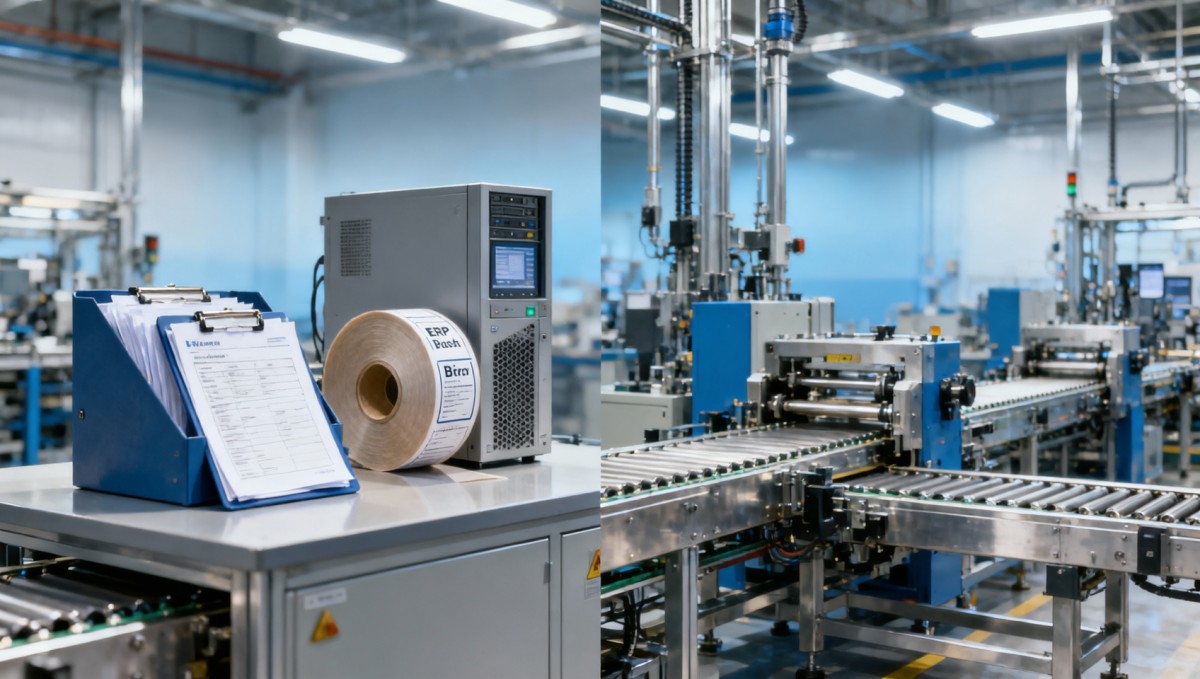
The first thing to avoid is treating a white label ERP as a branding project instead of an operational platform decision. In manufacturing, the software’s hidden structure matters far more than the logo, color theme, or reseller packaging.
A strong manufacturing ERP should support:
- Multi-level bills of materials
- Routing and work order management
- Inventory accuracy across raw materials, WIP, and finished goods
- Lot, batch, and serial traceability
- Quality control and nonconformance management
- Supplier and purchasing workflows
- Real-time production visibility
- Integration with automation, warehouse, and data systems
If the white label ERP is essentially a generic business platform with manufacturing features bolted on later, buyers should be cautious. These systems often look polished in demos but struggle under actual production complexity. That gap becomes expensive once implementation begins.
Avoid platforms that only “look” manufacturing-ready
One of the most common failures is choosing software that markets itself to manufacturers but lacks deep support for factory operations. This usually appears in several ways:
- Basic inventory tracking without true batch genealogy
- Simple order management but weak finite production scheduling
- No support for rework, scrap, yield, or downtime reporting
- Limited handling of subcontracting or multi-site production
- Minimal quality management tied to actual process steps
This matters because manufacturing ERP requirements are structurally different from wholesale, retail, or generic distribution. A platform that cannot model process manufacturing, discrete assembly, hybrid production, or regulated traceability will force your team into spreadsheets and manual workarounds.
For buyers in food, electronics, aerospace, medical, or precision machining environments, this risk is even higher. If traceability, revision control, or compliance evidence is business-critical, avoid systems that cannot prove manufacturing depth beyond sales claims.
Avoid weak traceability and compliance architecture
Many manufacturing teams begin ERP evaluation with production efficiency in mind, but traceability often becomes the deciding factor after implementation. If the platform cannot maintain reliable lot, serial, ingredient, component, and process history, the business may face major operational and regulatory exposure.
This is especially important for companies also comparing food beverage traceability software or supplier quality systems. In those environments, the ERP must do more than store transaction records. It should support:
- Forward and backward lot traceability
- Batch genealogy across raw materials and finished goods
- Supplier lot linkage
- Quality hold and release status
- Recall support and audit reporting
- Version control for formulations, BOMs, and work instructions
Avoid any white label ERP that requires major customization just to produce basic compliance reports. That usually means traceability was not designed into the data model from the beginning.
Avoid vendor lock-in disguised as customization
White label ERP offerings are often sold through implementation partners, resellers, or vertical solution providers. That can be useful, but it also introduces a major risk: dependence on one vendor for every change, integration, and support request.
Warning signs include:
- Heavy reliance on proprietary scripts or undocumented custom code
- No clear separation between core product and partner modifications
- Upgrade paths that break custom workflows
- Limited API access or extra fees for integrations
- No direct visibility into platform roadmap or product governance
Buyers should ask a simple question: if we scale, change plants, add automation, or switch implementation partners in three years, can we still operate without rebuilding everything?
If the answer is unclear, avoid the platform. A manufacturing ERP should reduce dependency risk, not increase it.
Avoid poor integration with shop floor and industrial systems
Modern manufacturing ERP does not operate alone. It must exchange data with MES, WMS, PLC-connected systems, IIoT platforms, maintenance tools, supplier portals, and increasingly with robotics and warehouse automation. Companies working with AGV AMR fleets or evaluating a digital twin solution provider should pay especially close attention here.
Avoid white label ERP platforms that:
- Only support manual CSV imports for critical workflows
- Lack modern APIs or event-based integration
- Cannot ingest real-time machine or sensor data
- Have no practical method for syncing inventory movement with automated systems
- Struggle with master data consistency across systems
If AGV/AMR dispatch, warehouse automation, machine states, or digital twin models depend on ERP data, then latency, data quality, and integration reliability directly affect operations. A platform that is merely “connectable” on paper may still be unsuitable in a real factory environment.
Avoid user experiences that fail on the shop floor
Executive teams often focus on architecture, but operators and planners deal with the system every day. If the interface is slow, confusing, or built mainly for office users, adoption will fail quietly. Workers will revert to side systems, delayed data entry, and manual updates.
That creates familiar downstream problems:
- Inaccurate inventory
- Delayed production reporting
- Missed quality events
- Weak maintenance coordination
- Low trust in ERP data
Avoid platforms that do not support role-based usability for:
- Shop floor operators
- Production planners
- Quality teams
- Procurement staff
- Plant managers
In manufacturing, a good ERP is not just feature-rich. It must be practical at the point of use.
Avoid pricing models that hide total cost of ownership
White label ERP solutions can appear cost-effective at first because the entry price is lower or the package looks more tailored. But buyers should examine the full cost structure, not just licensing.
Look beyond:
- Initial subscription or implementation fees
And assess:
- Customization costs
- Integration development
- Data migration
- Training and change management
- Upgrade maintenance
- Support response quality
- Reporting and analytics add-ons
- Multi-site expansion costs
Avoid platforms that become expensive each time the business adds a plant, workflow, user type, integration, or reporting requirement. In many failed ERP projects, the real issue was not software price. It was the accumulation of small dependencies that made scaling financially painful.
What should manufacturing buyers verify before signing?
To make a better decision, buyers should validate fit using operational scenarios instead of generic demos. Ask vendors to show the exact workflows that matter to your plant.
Examples include:
- Create a work order and consume lot-controlled raw material
- Trace a finished product back to supplier batch and inspection result
- Handle scrap, rework, and yield loss
- Update inventory based on warehouse automation movement
- Integrate machine or sensor data into production visibility
- Manage engineering changes across BOM revisions
- Support recall reporting or audit retrieval
Also verify these questions:
- Which functions are native, and which require customization?
- What happens during upgrades?
- Who owns the custom layer?
- How open is the integration framework?
- How well does the platform perform in multi-site manufacturing?
- Can the vendor provide manufacturing references with similar complexity?
The goal is to test operational truth, not presentation quality.
When is a white label ERP actually a good fit?
A white label ERP for manufacturing can be a strong option when the underlying platform is mature, manufacturing-capable, integration-ready, and supported by a partner with real domain knowledge. It may work well for companies that need faster deployment, regional adaptation, industry packaging, or branded ecosystem delivery.
It is more likely to succeed when:
- The manufacturing data model is proven
- Traceability and quality functions are native
- Customization is limited and well-governed
- Integration with automation and analytics is practical
- The user experience fits both plant and management roles
- Total cost of ownership is transparent
In other words, white label is not the problem. Superficial packaging over weak manufacturing foundations is the problem.
Conclusion
If you are evaluating a white label ERP for manufacturing, the safest mindset is to judge the platform by production truth, not branding flexibility. Avoid systems that are generic at the core, weak in traceability, difficult to integrate, heavily dependent on custom code, or impractical for shop floor users. These are the mistakes that lead to long implementation cycles, low adoption, unreliable data, and rising costs.
For procurement leaders, operators, and enterprise decision-makers, the best choice is usually the one that can clearly support manufacturing workflows, compliance demands, and future system connectivity from day one. A white label ERP can accelerate growth, but only if the underlying platform is engineered for manufacturing reality.
Search News
Hot Articles
- Carbon Fiber StructuresHow to Specify Aerospace Carbon Fiber Assemblies for Lightweight, Load-Bearing PartsJul 11, 2026
- Machine VisionXiaomi, Alibaba DAMO Academy Drive Open-Source Robotics Model Ecosystem, Lowering Algorithm Development Barriers for Overseas SMEs Adopting Chinese Robotics SolutionsMar 30, 2026
- Cobots & ArmsShanxi 'AI+' Conference Showcases Embodied Intelligence with Multinational Buyer Engagement: Key Industry ImplicationsMar 30, 2026
Popular Tags
Recommended News
 Jul 11, 2026How to Specify Aerospace Carbon Fiber Assemblies for Lightweight, Load-Bearing PartsAerospace carbon fiber assemblies: learn how to specify laminate design, load data, joining methods, and inspection controls for lighter, reliable load-bearing aerospace parts.Elena Rostova (UAV Systems Researcher)
 Mar 30, 2026Xiaomi, Alibaba DAMO Academy Drive Open-Source Robotics Model Ecosystem, Lowering Algorithm Development Barriers for Overseas SMEs Adopting Chinese Robotics SolutionsXiaomi & Alibaba DAMO Academy's open-source robotics models lower algorithm barriers for global SMEs. Boost efficiency in manufacturing, logistics & smart retail with ROS 2 compatible solutions.TSV Data Lab
 Mar 30, 2026Shanxi 'AI+' Conference Showcases Embodied Intelligence with Multinational Buyer Engagement: Key Industry ImplicationsShanxi 'AI+' Conference highlights embodied intelligence with Tesla, Ubtech & Jiantao showcasing multimodal robotics. 40+ global buyers validated tech on-site, creating new B2B channels for industrial automation & AI solutions.Chen Wei (Automation Lead Engineer)
 Mar 30, 2026Zhongguancun Unveils 6G Integrated Sensing-Computing-Intelligence Platform to Empower Embodied Robots for Global Industrial ApplicationsZhongguancun's new 6G platform revolutionizes industrial robotics with <10ms latency, empowering global automotive, logistics & port automation. Discover how this tech boosts China's smart manufacturing exports.TSV Data Lab
 Mar 30, 2026Mech-Mind Tianjin Embodied Intelligence R&D and Production Base Goes Live, Cutting Delivery Time by 20%–30% for Global Customized AMR+Vision SolutionsMech-Mind's Tianjin AMR+Vision production base cuts delivery time by 20%-30% for欧美 & Latin American markets. Discover how this PLd-certified facility accelerates customized robotics solutions for smart manufacturing and logistics.Chen Wei (Automation Lead Engineer)
 Mar 30, 2026Boao Forum Reveals 'Co-evolution of Big and Small Brains' Trend in Humanoid Robots, China's Embodied Intelligence Accelerates Adaptation to Overseas Manufacturing Service ScenariosDiscover how China's humanoid robots, featuring 'Co-evolution of Big and Small Brains,' are revolutionizing global manufacturing. Learn about Embodied Tian Gong 3.0's ISO compliance and overseas deployment at Boao Forum 2026.Chen Wei (Automation Lead Engineer)
 Mar 30, 2026China Railway Industrial Secures Patent for Embodied Robotics in Material Handling, Boosting High-Precision Delivery Capabilities for Overseas Infrastructure and Manufacturing ProjectsChina Railway Industrial's new patent for embodied robotics in material handling boosts high-precision delivery for global infrastructure & manufacturing. Discover how this innovation enhances logistics accuracy in automotive, rail transit & EPC projects.Chen Wei (Automation Lead Engineer)
 Oct 18, 2026Comparing Material Options for Procurement: Specs, Costs, and Supply RisksExplore procurement oriented technical content on material options, specs, costs, and supply risks. Compare alternatives to cut hidden expenses and make confident sourcing decisions.Dr. Marcus Vance
 Oct 17, 20265-Axis CNC Positioning Accuracy: How to Interpret ISO 230-2 Test ResultsAssess 5 axis CNC machining positioning accuracy with ISO 230-2. Learn to interpret repeatability, reversal error, and test conditions to compare suppliers and make confident acceptance decisions.Dr. Marcus Vance
 Oct 16, 2026Choosing a Rugged Edge AI Box Supplier: Thermal Tests and Lifecycle SupportChoose a rugged edge AI box supplier with proven thermal performance and reliable lifecycle support. Discover the tests and commitments to verify before you buy.TSV Data Lab
 Oct 15, 2026R&D Cost Reduction Services: How to Evaluate Fees, Savings, and ROIEvaluate R&D cost reduction services with confidence. Compare fees, verify savings, and calculate ROI without compromising performance. Discover how to choose a provider that delivers real value.Chen Wei (Automation Lead Engineer)
 Oct 17, 2026How Should You Interpret Industrial Robot Repeatability Specs?Decode industrial robot repeatability specifications, understand ISO 9283 test conditions, and avoid costly selection mistakes. Learn how to verify performance for your process.Chen Wei (Automation Lead Engineer)
 Oct 16, 2026How Can You Fairly Compare MTBF Across Industrial Servo Motors?Make a fair industrial servo motor MTBF comparison with matched operating profiles, failure criteria, and confidence bounds. Discover how to assess reliability beyond advertised numbers.Chen Wei (Automation Lead Engineer)
 Oct 15, 2026How Should You Compare TechStat Vanguard 5-Axis CNC Tolerances?TechStat Vanguard 5-axis CNC tolerance comparison: learn how to verify part accuracy, assess inspection evidence, and choose suppliers that reliably meet your drawing requirements.Dr. Marcus Vance
 Oct 14, 2026Drone Frame Composites: Carbon Fiber vs. Fiberglass for Weight and StiffnessExplore drone structural materials composites: compare carbon fiber and fiberglass for weight, stiffness, cost, and antenna compatibility. Find the right material for your drone frame.Elena Rostova (UAV Systems Researcher)
 Oct 13, 2026Smart Cameras vs. PC-Based Machine Vision: Which Fits High-Speed Inspection?This industrial product comparison for machine vision weighs smart cameras vs. PC-based systems on latency, throughput, and cost. Discover your best fit for high-speed inspection.TSV Data Lab
 Oct 12, 2026How to Verify RoHS Compliance in Industrial Sensing Systems Before DeploymentRoHS compliant sensing systems: learn how to verify materials, supplier declarations, testing, and configuration controls before industrial deployment.TSV Data Lab
 Oct 11, 2026How Procurement-Oriented Content Taxonomy Improves B2B Buying JourneysProcurement-oriented content taxonomy streamlines B2B buying journeys with clearer evidence, supplier comparisons, risk visibility, and faster approvals.TSV Data Lab
 Oct 10, 2026How to Select a Machine Performance Monitoring Platform for OEE and Downtime ReductionMachine performance monitoring platform selection guide: validate machine states, OEE data, downtime reasons, integrations, and scalability to reduce losses with confidence.TSV Data Lab
 Oct 08, 2026How to Machine Inconel 625 Blades Without Heat Cracks or Edge ChippingInconel 625 blade machining guide: prevent heat cracks, edge chipping, chatter, and work hardening with proven tooling, cooling, fixturing, and inspection strategies.Dr. Marcus Vance
 Oct 07, 2026How to Evaluate an HMI Panel Distributor for Industrial Automation ProjectsHMI panel distributor evaluation guide: verify technical compatibility, traceability, supply reliability, lifecycle support, and total cost for automation projects.Victor Lin (Chief Software Architect)
 Oct 06, 2026Navigation Fault Tolerance Standards for AMRs: What Safety Teams Must VerifyNavigation fault tolerance standards: learn what AMR safety teams must verify, from localization loss and sensor faults to stopping distance, safe restart, and site-specific validation.Chen Wei (Automation Lead Engineer)
 Oct 05, 2026Calculating Edge Computing Total Cost of Ownership Across Distributed SitesEdge computing ownership cost explained: calculate deployment, energy, connectivity, security, remote support, and refresh costs across distributed sites.TSV Data Lab
 Oct 04, 2026CAD/CAM Benchmarking in the GCC: What Manufacturers Should Ask a ConsultantCAD CAM benchmark consultant GCC guide: learn the key questions manufacturers should ask to validate post-processors, workflows, machine performance, and production risk.Victor Lin (Chief Software Architect)























