
Why robotic arm software fails on the shop floor?
Publication Date
author
Robotic arm software often looks flawless in demos, yet fails on the shop floor when robotic arm programming software collides with unstable PLC logic, machine vision software license limits, AGV AMR coordination gaps, and noisy edge data. For engineers, operators, buyers, and decision-makers, the real issue is not hype but whether software can survive production variability, integrate with iot edge gateway software, and deliver repeatable results under industrial conditions.
That gap between lab success and factory failure is where many automation projects lose time, scrap parts, and budget. A robotic arm can repeat a path within sub-millimeter tolerance in a clean demo cell, but real production introduces shift changes, part variation, network latency, fixture wear, electrical noise, and upstream machine instability. Software is the layer expected to absorb that variability, yet it is often the least validated part of the deployment.
For B2B buyers and technical teams, the practical question is not whether a vendor can show a smooth simulation. It is whether the robotic arm software can maintain cycle stability over 8-hour, 16-hour, or 24-hour operations, recover from exceptions in less than 30 seconds, and exchange reliable data with PLCs, cameras, MES, and edge devices without creating hidden bottlenecks.
At TechStat Vanguard, the focus is on engineering truth rather than marketing claims. On the shop floor, robotic arm software fails for measurable reasons: poor integration design, weak exception handling, over-optimized demos, unclear ownership between hardware and software teams, and procurement decisions that prioritize feature lists over tolerance to real industrial noise.
Why demo-ready robotic arm software breaks in real production
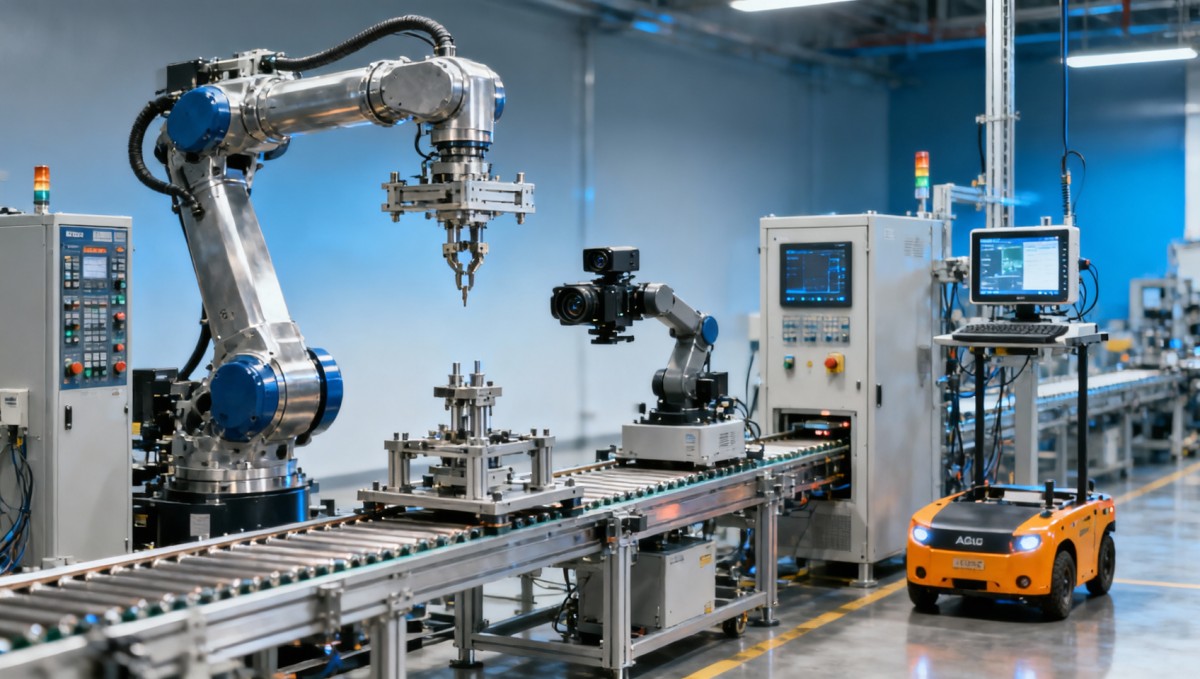
Most robotic arm software is first proven in controlled conditions. The lighting is stable, the part orientation is predictable, the communication network is quiet, and the robot works with a narrow recipe set. In that setting, a path planner or robotic arm programming software may appear robust. Once deployed in a plant, however, the software must handle hundreds or even thousands of production cycles per shift with varying operator behavior and upstream equipment states.
A common failure pattern is hidden dependency stacking. The robot program depends on PLC handshake timing, machine vision software response, fieldbus communication quality, gripper feedback, and iot edge gateway software that pushes status data to higher-level systems. If one layer adds 100 to 300 milliseconds of delay, the full cell may still run. If three layers drift together, the robot can miss windows, queue the wrong task, or trigger a stop condition that was never tested in the demo.
Another issue is overfitting. Integrators often optimize software for a specific SKU, a fixed tray position, or one ideal lighting profile. Real production may involve 5 to 20 part variants, tolerance drift of ±0.2 mm to ±1.0 mm, and camera contamination that reduces detection confidence. Software that was not designed around acceptable process windows tends to become brittle the moment variation rises above the original commissioning setup.
Failure also comes from organizational design. In many projects, the robot supplier, PLC contractor, vision vendor, and MES team each validate only their own block. No team owns end-to-end exception recovery. As a result, the line works for the first 50 cycles, then stalls on a sensor timeout, recipe mismatch, or AGV AMR scheduling conflict that nobody defined in the interface document.
The table below outlines the difference between demo assumptions and shop-floor realities that frequently cause robotic arm software to fail.
The key lesson is simple: robotic arm software does not fail because robots are inherently unreliable. It fails because software is often validated for capability, not for production resilience. Plants should test not just path accuracy, but also timeout recovery, packet loss behavior, variant switching, and run stability over at least 1 to 3 full shifts.
The integration points that create the highest failure risk
The most expensive software problems usually appear at interfaces, not inside a single code block. Robotic arm software may be stable on its own, yet unstable when connected to a PLC, machine vision software, conveyor controls, and AGV AMR fleet software. In real plants, each interface adds state transitions, timing assumptions, and failure modes that are rarely documented in enough detail.
PLC logic and handshake instability
PLC interaction is one of the first stress points. Many robot cells rely on 10 to 30 handshake signals for ready, busy, complete, fault, reset, recipe ID, and safety states. If the PLC logic is modified after commissioning, even a small change in sequence priority can create race conditions. The robot may wait for a done bit that arrives 200 milliseconds too late, or the PLC may issue a new command before the robot has cleared its previous state.
Machine vision and licensing constraints
Machine vision software is another weak link. In many deployments, the proof-of-concept runs with a full feature license, but the purchased package has runtime limits, camera count restrictions, or lower update frequency. A vision algorithm that worked at 12 frames per second may drop to 5 to 8 frames per second under production load, especially when multiple recipes are enabled. That delay can push the robot beyond its process window and increase miss picks or false rejects.
AGV AMR coordination and edge data noise
As more plants connect robots with AGV AMR logistics, software failure shifts from isolated motion control to distributed orchestration. The robotic arm may be available, but the mobile platform is 15 seconds late, or the pallet identity was not synchronized through the iot edge gateway software. When timestamps, location status, and job IDs are inconsistent across systems, the robot executes valid logic on invalid context.
The following checklist helps identify the interface areas that deserve deeper validation before purchase or acceptance.
- Confirm PLC-robot handshake maps, timeout values, and reset rules for at least 3 fault classes: recoverable, operator-assisted, and hard stop.
- Verify machine vision software license scope, camera limits, recipe counts, and expected frame rate under full production load.
- Review AGV AMR coordination logic for delayed arrivals, route changes, blocked aisles, and stale position data older than 1 to 2 seconds.
- Measure edge gateway latency, packet retry behavior, and buffering capacity during peak traffic rather than idle conditions.
Plants that treat these interfaces as procurement line items instead of engineering risk areas often experience the same pattern: successful FAT, unstable SAT, and months of low-grade downtime after launch. The software did not fail in isolation; the system architecture failed to define ownership at the interfaces.
What engineers, operators, and buyers should measure before deployment
A practical deployment review should focus on measurable operating windows. Engineers need to know not only what the robotic arm software can do, but under which limits it still performs acceptably. Operators need fast fault recovery and clear HMI messaging. Buyers need to compare vendors on downtime risk, not only on license price or programming convenience.
Core validation metrics
Useful metrics include cycle-time stability, communication timeout frequency, vision confidence thresholds, and recovery time after a fault. For example, a cell that averages a 14-second cycle may still be unacceptable if cycle spread ranges from 14 to 22 seconds during normal upstream variation. Likewise, a 99% vision detection rate may sound strong, but in a line processing 12,000 picks per day, even a 1% miss rate can mean 120 disruptions.
Recommended pre-acceptance targets
Typical industrial targets vary by process, but several ranges are widely useful. Exception recovery for routine stops should generally be under 30 seconds. Recipe switch time should be under 60 to 180 seconds depending on tooling complexity. Network message loss should remain low enough that retries do not materially shift cycle time, especially during peak traffic windows such as shift start or lot changeover.
The comparison table below can support technical and purchasing reviews during vendor evaluation or factory acceptance testing.
These targets should be adjusted to the process, but the principle remains: software acceptance must include sustained-run validation, not only functional completion. A cell should be observed across at least 500 to 1,000 consecutive cycles where possible, because many timing and state errors do not appear in the first 20 cycles.
For operators, human factors matter too. The HMI should distinguish between sensor fault, communication fault, and recipe conflict in plain language. If every stop produces the same generic alarm, root-cause identification slows down and the line becomes dependent on one programmer or one external integrator.
How to buy robotic arm software with lower operational risk
Procurement teams often compare robotic arm software by interface polish, simulation quality, and initial quote value. Those factors matter, but they do not predict whether the system will hold performance for 12 months in a noisy industrial environment. A lower-risk buying process should evaluate architecture transparency, license clarity, service response, and integration accountability.
What to request from vendors
Buyers should request an interface responsibility matrix, a fault-recovery map, a software change-control process, and a list of runtime dependencies. Ask whether machine vision software features shown in testing are included in the purchased license. Ask whether iot edge gateway software, analytics connectors, and AGV AMR interfaces require separate subscriptions or version locks. Ask how long typical patch validation takes: 48 hours, 2 weeks, or longer.
The vendor should also define support boundaries. If a robot waits on a PLC bit that never arrives, who diagnoses the failure first? If edge data is delayed by 800 milliseconds, does the robot vendor help prove root cause, or is that outside scope? Ambiguity at this stage becomes downtime later.
A practical procurement checklist
- Validate full software licensing, including runtime, recipes, users, and third-party connectors.
- Require documented FAT and SAT criteria with cycle counts, fault injection, and restart tests.
- Confirm spare engineering capacity: remote support hours, on-site response window, and patch release process.
- Review data ownership, logging retention, and exportability for troubleshooting and traceability.
The procurement matrix below helps compare vendors on factors that directly affect long-term production reliability.
For decision-makers, this shifts the conversation from “Which software looks more advanced?” to “Which software can be audited, supported, and stabilized under production variability?” That is a more useful buying question in any hard-tech environment.
Implementation practices that improve software survival on the shop floor
Even strong robotic arm software can fail if implementation is rushed. A resilient deployment usually follows a staged process: interface definition, offline validation, FAT, SAT, controlled ramp-up, and performance review after 2 to 6 weeks. Each phase should capture not just whether the robot works, but whether it keeps working under realistic plant conditions.
Build around abnormal states, not only nominal flow
The best implementations spend serious effort on abnormal states. What happens if an operator loads the wrong tote, if the camera loses confidence, if the AGV AMR is delayed, or if the PLC restarts mid-cycle? Each event should have a defined software response, alarm hierarchy, and recovery path. Systems designed around only nominal flow often appear efficient during launch and then degrade during real throughput pressure.
Use layered logging and version control
Version control is often ignored in mid-sized plants, yet it is one of the fastest ways to reduce recurring faults. Robot software, PLC logic, vision recipes, and edge connector settings should all carry synchronized version records. If a line starts failing after a weekend adjustment, teams need to identify within minutes which parameter changed, not spend 6 hours guessing across four vendors.
Recommended rollout sequence
- Run a dry integration review covering I/O maps, network architecture, and alarm definitions before code freeze.
- Perform fault injection tests for at least 10 to 15 common exceptions, including sensor loss, delayed handshake, and part absence.
- During SAT, collect logs across at least 1 full shift and compare event timestamps among robot, PLC, vision, and edge gateway layers.
- After go-live, review stop causes for the first 2 to 4 weeks and patch only through documented change approval.
This discipline matters because software failure on the shop floor is rarely a mystery. In most cases, the evidence exists in event timing, poor alarm definitions, missing fallback logic, or undocumented changes. Plants that instrument these points can reduce troubleshooting time sharply and turn unstable automation into manageable engineering work.
Robotic arm software succeeds when it is treated as production infrastructure rather than a visual demo tool. That means testing for drift, latency, exceptions, and maintainability with the same seriousness used for mechanical repeatability or motor MTBF.
FAQ for teams evaluating robotic arm software reliability
How long should a realistic software acceptance test last?
For many industrial cells, a meaningful acceptance window is longer than a short demo batch. A useful baseline is 500 to 1,000 consecutive cycles or at least 1 full production shift. If the process is high mix or linked to AGV AMR delivery, extending observation to 2 or 3 shifts is often justified because shift changes and traffic peaks reveal timing flaws.
What is the most overlooked cause of robotic arm software failure?
The most overlooked cause is unclear interface ownership. Plants may have excellent robot hardware and capable software teams, yet still suffer repeated stoppages because nobody owns PLC timing logic, machine vision software licensing limits, or edge data validity from the iot edge gateway software. Undefined responsibility turns minor faults into chronic downtime.
Can better programming alone solve shop-floor instability?
Not always. Better robotic arm programming software helps, but it cannot compensate for unstable fixtures, poor lighting control, noisy networks, or bad upstream process discipline. Reliable performance usually requires a combined fix across software logic, electrical quality, process tolerances, operator workflow, and data synchronization.
What should buyers prioritize if budgets are tight?
If budgets are constrained, prioritize software transparency over advanced optional features. Clear alarm logs, complete licensing, exportable event history, and defined support response often create more value than premium simulation layers. For many plants, reducing fault diagnosis from 2 hours to 20 minutes produces faster return than adding features rarely used in production.
Robotic arm software fails on the shop floor for reasons that are visible, measurable, and preventable. The core issues are not marketing claims but interface control, exception design, production variability, and disciplined validation across PLCs, vision, AGV AMR systems, and edge data layers. Teams that buy and deploy based on engineering evidence rather than polished demos reduce qualification cycles, lower troubleshooting costs, and improve long-run stability.
If your team is comparing robotic arm software, validating integration risks, or preparing a new automation project, TechStat Vanguard can help you assess the technical details that matter in real production. Contact us to discuss your application, request a tailored evaluation framework, or explore more hard-tech solutions built around measurable performance.
Search News
Hot Articles
- Carbon Fiber StructuresHow to Specify Aerospace Carbon Fiber Assemblies for Lightweight, Load-Bearing PartsJul 11, 2026
- Machine VisionXiaomi, Alibaba DAMO Academy Drive Open-Source Robotics Model Ecosystem, Lowering Algorithm Development Barriers for Overseas SMEs Adopting Chinese Robotics SolutionsMar 30, 2026
- Cobots & ArmsShanxi 'AI+' Conference Showcases Embodied Intelligence with Multinational Buyer Engagement: Key Industry ImplicationsMar 30, 2026
Popular Tags
Recommended News
 Jul 11, 2026How to Specify Aerospace Carbon Fiber Assemblies for Lightweight, Load-Bearing PartsAerospace carbon fiber assemblies: learn how to specify laminate design, load data, joining methods, and inspection controls for lighter, reliable load-bearing aerospace parts.Elena Rostova (UAV Systems Researcher)
 Mar 30, 2026Xiaomi, Alibaba DAMO Academy Drive Open-Source Robotics Model Ecosystem, Lowering Algorithm Development Barriers for Overseas SMEs Adopting Chinese Robotics SolutionsXiaomi & Alibaba DAMO Academy's open-source robotics models lower algorithm barriers for global SMEs. Boost efficiency in manufacturing, logistics & smart retail with ROS 2 compatible solutions.TSV Data Lab
 Mar 30, 2026Shanxi 'AI+' Conference Showcases Embodied Intelligence with Multinational Buyer Engagement: Key Industry ImplicationsShanxi 'AI+' Conference highlights embodied intelligence with Tesla, Ubtech & Jiantao showcasing multimodal robotics. 40+ global buyers validated tech on-site, creating new B2B channels for industrial automation & AI solutions.Chen Wei (Automation Lead Engineer)
 Mar 30, 2026Zhongguancun Unveils 6G Integrated Sensing-Computing-Intelligence Platform to Empower Embodied Robots for Global Industrial ApplicationsZhongguancun's new 6G platform revolutionizes industrial robotics with <10ms latency, empowering global automotive, logistics & port automation. Discover how this tech boosts China's smart manufacturing exports.TSV Data Lab
 Mar 30, 2026Mech-Mind Tianjin Embodied Intelligence R&D and Production Base Goes Live, Cutting Delivery Time by 20%–30% for Global Customized AMR+Vision SolutionsMech-Mind's Tianjin AMR+Vision production base cuts delivery time by 20%-30% for欧美 & Latin American markets. Discover how this PLd-certified facility accelerates customized robotics solutions for smart manufacturing and logistics.Chen Wei (Automation Lead Engineer)
 Mar 30, 2026Boao Forum Reveals 'Co-evolution of Big and Small Brains' Trend in Humanoid Robots, China's Embodied Intelligence Accelerates Adaptation to Overseas Manufacturing Service ScenariosDiscover how China's humanoid robots, featuring 'Co-evolution of Big and Small Brains,' are revolutionizing global manufacturing. Learn about Embodied Tian Gong 3.0's ISO compliance and overseas deployment at Boao Forum 2026.Chen Wei (Automation Lead Engineer)
 Mar 30, 2026China Railway Industrial Secures Patent for Embodied Robotics in Material Handling, Boosting High-Precision Delivery Capabilities for Overseas Infrastructure and Manufacturing ProjectsChina Railway Industrial's new patent for embodied robotics in material handling boosts high-precision delivery for global infrastructure & manufacturing. Discover how this innovation enhances logistics accuracy in automotive, rail transit & EPC projects.Chen Wei (Automation Lead Engineer)
 Oct 18, 2026Comparing Material Options for Procurement: Specs, Costs, and Supply RisksExplore procurement oriented technical content on material options, specs, costs, and supply risks. Compare alternatives to cut hidden expenses and make confident sourcing decisions.Dr. Marcus Vance
 Oct 17, 20265-Axis CNC Positioning Accuracy: How to Interpret ISO 230-2 Test ResultsAssess 5 axis CNC machining positioning accuracy with ISO 230-2. Learn to interpret repeatability, reversal error, and test conditions to compare suppliers and make confident acceptance decisions.Dr. Marcus Vance
 Oct 16, 2026Choosing a Rugged Edge AI Box Supplier: Thermal Tests and Lifecycle SupportChoose a rugged edge AI box supplier with proven thermal performance and reliable lifecycle support. Discover the tests and commitments to verify before you buy.TSV Data Lab
 Oct 15, 2026R&D Cost Reduction Services: How to Evaluate Fees, Savings, and ROIEvaluate R&D cost reduction services with confidence. Compare fees, verify savings, and calculate ROI without compromising performance. Discover how to choose a provider that delivers real value.Chen Wei (Automation Lead Engineer)
 Oct 17, 2026How Should You Interpret Industrial Robot Repeatability Specs?Decode industrial robot repeatability specifications, understand ISO 9283 test conditions, and avoid costly selection mistakes. Learn how to verify performance for your process.Chen Wei (Automation Lead Engineer)
 Oct 16, 2026How Can You Fairly Compare MTBF Across Industrial Servo Motors?Make a fair industrial servo motor MTBF comparison with matched operating profiles, failure criteria, and confidence bounds. Discover how to assess reliability beyond advertised numbers.Chen Wei (Automation Lead Engineer)
 Oct 15, 2026How Should You Compare TechStat Vanguard 5-Axis CNC Tolerances?TechStat Vanguard 5-axis CNC tolerance comparison: learn how to verify part accuracy, assess inspection evidence, and choose suppliers that reliably meet your drawing requirements.Dr. Marcus Vance
 Oct 14, 2026Drone Frame Composites: Carbon Fiber vs. Fiberglass for Weight and StiffnessExplore drone structural materials composites: compare carbon fiber and fiberglass for weight, stiffness, cost, and antenna compatibility. Find the right material for your drone frame.Elena Rostova (UAV Systems Researcher)
 Oct 13, 2026Smart Cameras vs. PC-Based Machine Vision: Which Fits High-Speed Inspection?This industrial product comparison for machine vision weighs smart cameras vs. PC-based systems on latency, throughput, and cost. Discover your best fit for high-speed inspection.TSV Data Lab
 Oct 12, 2026How to Verify RoHS Compliance in Industrial Sensing Systems Before DeploymentRoHS compliant sensing systems: learn how to verify materials, supplier declarations, testing, and configuration controls before industrial deployment.TSV Data Lab
 Oct 11, 2026How Procurement-Oriented Content Taxonomy Improves B2B Buying JourneysProcurement-oriented content taxonomy streamlines B2B buying journeys with clearer evidence, supplier comparisons, risk visibility, and faster approvals.TSV Data Lab
 Oct 10, 2026How to Select a Machine Performance Monitoring Platform for OEE and Downtime ReductionMachine performance monitoring platform selection guide: validate machine states, OEE data, downtime reasons, integrations, and scalability to reduce losses with confidence.TSV Data Lab
 Oct 08, 2026How to Machine Inconel 625 Blades Without Heat Cracks or Edge ChippingInconel 625 blade machining guide: prevent heat cracks, edge chipping, chatter, and work hardening with proven tooling, cooling, fixturing, and inspection strategies.Dr. Marcus Vance
 Oct 07, 2026How to Evaluate an HMI Panel Distributor for Industrial Automation ProjectsHMI panel distributor evaluation guide: verify technical compatibility, traceability, supply reliability, lifecycle support, and total cost for automation projects.Victor Lin (Chief Software Architect)
 Oct 06, 2026Navigation Fault Tolerance Standards for AMRs: What Safety Teams Must VerifyNavigation fault tolerance standards: learn what AMR safety teams must verify, from localization loss and sensor faults to stopping distance, safe restart, and site-specific validation.Chen Wei (Automation Lead Engineer)
 Oct 05, 2026Calculating Edge Computing Total Cost of Ownership Across Distributed SitesEdge computing ownership cost explained: calculate deployment, energy, connectivity, security, remote support, and refresh costs across distributed sites.TSV Data Lab
 Oct 04, 2026CAD/CAM Benchmarking in the GCC: What Manufacturers Should Ask a ConsultantCAD CAM benchmark consultant GCC guide: learn the key questions manufacturers should ask to validate post-processors, workflows, machine performance, and production risk.Victor Lin (Chief Software Architect)























