Best use cases for digital twin in 2026?
Publication Date
author
In 2026, the best digital twin use cases will move beyond hype into measurable engineering value—from AGV/AMR fleet optimization and solid-state LiDAR simulation to predictive maintenance across industrial Raspberry Pi Compute Module, IoT edge gateway software, and machine vision software license ecosystems. For buyers, operators, and executives, choosing the right digital twin solution provider will define faster decisions, lower risk, and traceable ROI.
If you are searching for the best use cases for digital twin in 2026, the short answer is this: the strongest use cases are no longer generic “virtual replicas” for presentations. They are operational tools tied to measurable outcomes such as lower downtime, faster commissioning, improved throughput, reduced field failures, tighter energy control, and better procurement decisions. For most industrial teams, the winning applications will be the ones connected to real sensor data, engineering constraints, and closed-loop action—not static 3D models.
That distinction matters. By 2026, digital twin adoption will likely split into two camps: organizations using it as a visualization layer, and organizations using it as a decision system. The second group will capture the real value. For R&D teams, operators, procurement leaders, and enterprise decision-makers, the practical question is not whether digital twins are “important,” but where they create the fastest, most defensible return.
What will actually make a digital twin valuable in 2026?

The core search intent behind this topic is usually commercial and evaluative. Readers want to know which digital twin use cases are truly worth budget, where the technology works in practice, and how to distinguish useful deployment from vendor marketing. That means the most important answer is not a definition—it is a decision framework.
In 2026, a digital twin will be valuable when it does at least one of the following:
- Improves a measurable operational KPI such as OEE, MTBF, scrap rate, cycle time, or energy cost
- Reduces risk before physical deployment, commissioning, or supplier selection
- Enables better predictive maintenance using live equipment and sensor data
- Supports faster engineering iteration for robotics, UAV, edge AI, or precision manufacturing systems
- Creates traceable evidence for procurement, compliance, or executive investment decisions
The best use cases are therefore concentrated in environments where physical complexity, asset cost, downtime penalties, or safety constraints are high. This is why digital twin demand is rising across advanced manufacturing, industrial automation, aerospace-adjacent systems, sensor-rich environments, and machine vision workflows.
Best digital twin use cases for industrial operations and automation
For operators and plant managers, the most useful digital twin applications are the ones that solve daily bottlenecks. In industrial settings, five use cases stand out.
1. AGV and AMR fleet optimization
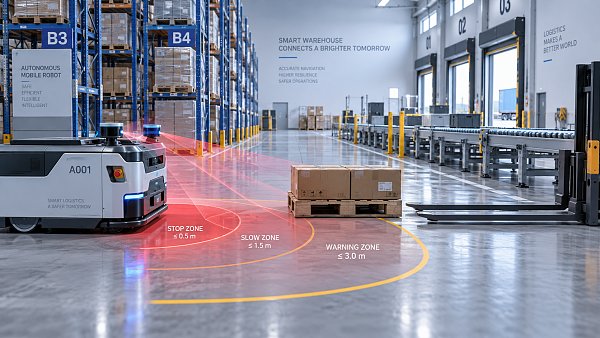
One of the strongest digital twin use cases in 2026 is AGV/AMR fleet modeling. A well-built twin can simulate traffic conflicts, battery charging logic, route congestion, docking behavior, and task scheduling under real production constraints. This is especially valuable in facilities with mixed traffic, changing layouts, or seasonal throughput spikes.
Instead of finding bottlenecks after deployment, operations teams can test fleet size, pathway design, queue behavior, and failure scenarios in advance. For buyers, this also reduces the risk of overbuying vehicles or underestimating control software requirements.
2. Predictive maintenance for rotating equipment, conveyors, and servo systems
Predictive maintenance remains one of the highest-ROI digital twin use cases because it connects directly to downtime cost. In 2026, the better implementations will combine historical maintenance data, real-time telemetry, vibration signatures, thermal behavior, and edge analytics to estimate remaining useful life.
This matters for production lines, robotic cells, packaging systems, and CNC environments where a single failed component can interrupt an entire process chain. A digital twin becomes especially powerful when linked to spare parts planning and maintenance scheduling, not just anomaly alerts.
3. Virtual commissioning of robotic and automated production cells
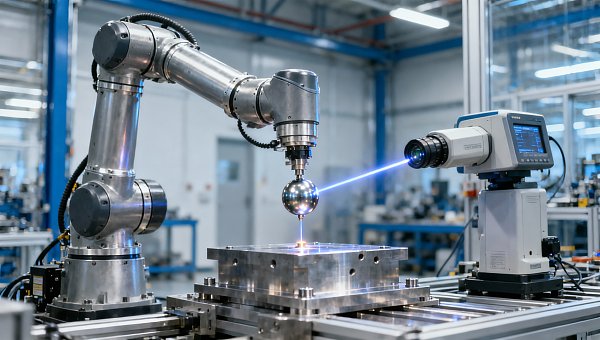
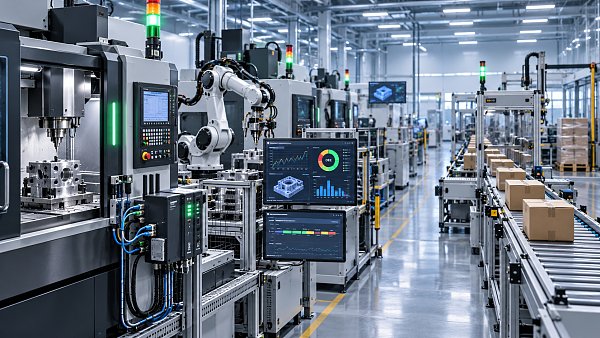
Manufacturers increasingly use digital twins before physical installation to validate robot reach, collision zones, cycle times, PLC logic, and sensor interactions. Virtual commissioning shortens ramp-up time and lowers integration risk, especially in complex cells involving cobots, machine vision, feeders, safety systems, and conveyors.
For enterprise decision-makers, this is one of the clearest examples of value because it compresses project timelines and reduces expensive on-site debugging.
4. Energy and utility optimization
In energy-intensive plants, digital twins can model compressed air systems, HVAC loads, thermal processes, or machine-level energy consumption. As energy pricing and sustainability reporting become more important, this use case moves from “nice to have” to budget-relevant. The practical value is not the dashboard itself, but the ability to test operational changes and verify savings before capital upgrades.
5. Layout planning and capacity simulation
Factories regularly struggle with line balancing, work-in-process congestion, and underutilized assets. A digital twin can simulate alternative layouts, staffing scenarios, shift patterns, and machine interactions before a physical change is made. This is particularly useful during expansion, product mix changes, or brownfield modernization.
Best digital twin use cases for sensors, edge AI, and machine vision
In sensor-rich systems, digital twins are becoming more technical and more valuable. Here, the twin is not only a model of the asset, but also a test environment for perception, signal quality, and software behavior.
Solid-state LiDAR simulation and perception validation
For teams working with autonomous vehicles, mobile robots, smart infrastructure, or industrial safety systems, digital twins can simulate point cloud behavior under different surfaces, distances, lighting conditions, and motion states. This helps engineers validate sensor placement, detect perception blind spots, and assess environmental edge cases without relying only on expensive field trials.
By 2026, this will be one of the best digital twin use cases because LiDAR performance is highly context-dependent. Procurement teams can also use these simulations to compare sensor configurations more rigorously than vendor brochures allow.
Machine vision tuning and deployment risk reduction
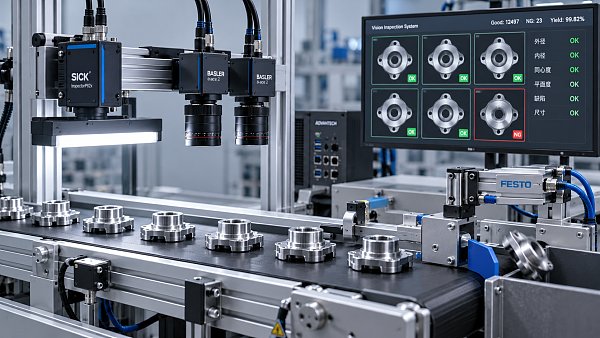
Machine vision systems often fail in practice not because the algorithm is weak, but because the physical environment changes: lighting shifts, part orientation varies, reflective materials distort results, or lens selection is suboptimal. A digital twin can help teams simulate inspection conditions, camera positioning, defect appearance, and throughput tradeoffs before full rollout.
This matters even more when machine vision software license costs scale across lines or sites. Buyers need confidence that the software can deliver usable inspection accuracy in the real environment, not just in demo conditions.
IoT edge gateway software and industrial edge compute validation
As more analytics move closer to the machine, digital twins can validate how IoT edge gateway software behaves under realistic device loads, latency requirements, data bursts, and connectivity disruptions. This is relevant for plants deploying mixed fleets of sensors, legacy machines, and industrial PCs.
It is also highly relevant in environments using industrial Raspberry Pi Compute Module platforms or similar embedded edge systems. In those cases, a digital twin helps test data throughput, thermal load, application stability, and failover behavior before production deployment.
Best digital twin use cases for aerospace, UAV, and high-reliability engineering
In aerospace-adjacent and UAV environments, digital twins matter because failure cost is high and environmental variability is extreme. The use cases here tend to be more engineering-intensive, but also more strategically valuable.
UAV mission planning and payload-performance simulation
Commercial and industrial UAV programs can use digital twins to model payload effects, power consumption, route planning, communication stability, and environmental factors such as wind or electromagnetic interference. This helps engineering teams determine whether a design or mission profile is feasible before physical test flights.
For procurement and program leaders, the benefit is better platform selection and fewer surprises in field deployment.
Structural health and fatigue monitoring
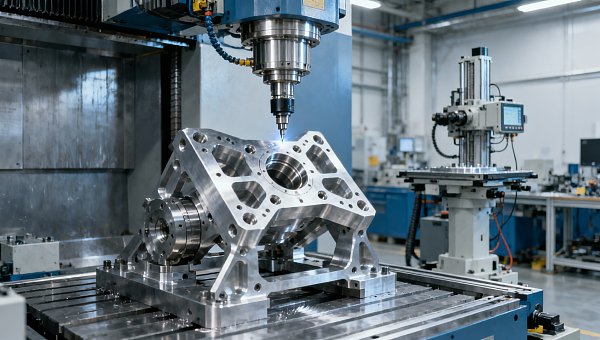
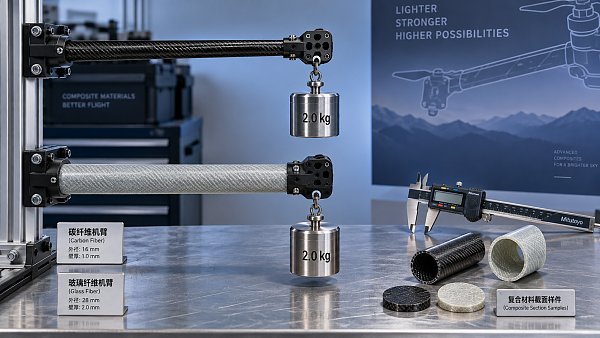
Digital twins can combine inspection history, usage conditions, and sensor data to track structural degradation over time. This is valuable in aerospace components, lightweight frames, composite structures, and precision-machined parts subject to cyclical load. Instead of relying on fixed maintenance intervals alone, teams can make condition-based decisions with better confidence.
Flight controller and subsystem validation
For control-critical systems, a digital twin can test how software and hardware behave across a range of inputs, disturbances, and failure modes. This supports safer iteration, faster troubleshooting, and better system understanding—especially in programs where real-world testing is costly or operationally restricted.
How buyers and decision-makers should evaluate digital twin opportunities
Many organizations ask the wrong question: “What is the most advanced digital twin platform?” The better question is: “Which use case gives us a measurable gain within a credible implementation scope?”
For procurement teams and executives, evaluation should focus on five areas.
1. Data readiness
A digital twin is only as useful as the data feeding it. Check whether the required sensor signals, equipment states, maintenance logs, CAD models, MES/ERP links, or operational history actually exist and are trustworthy.
2. Decision linkage
If the twin only visualizes information but does not support scheduling, maintenance, design, routing, inspection, or procurement decisions, its value will be limited. The strongest projects connect directly to a real workflow.
3. ROI timeline
Good digital twin projects should show a plausible path to value within a realistic timeframe. Common return areas include reduced downtime, shorter commissioning, lower scrap, fewer field failures, improved utilization, and faster new line deployment.
4. Model fidelity versus cost
Not every use case needs a fully detailed high-fidelity twin. Some applications only need process simulation and operational logic; others require physics-based modeling. Overspending on fidelity is a common mistake.
5. Vendor transparency
Ask vendors for proof tied to engineering outcomes: model update frequency, integration depth, latency behavior, simulation assumptions, validation methods, and customer deployment evidence. Avoid platforms that rely on generic AI claims without parameter-level clarity.
Where digital twin projects fail most often
Digital twin initiatives usually fail for predictable reasons, not because the concept itself is weak.
- They start with a platform purchase instead of a business-critical use case
- They lack clean operational data or sensor reliability
- They model too much too early and become difficult to maintain
- They remain isolated from maintenance, controls, quality, or planning teams
- They promise transformation but cannot prove KPI improvement
In 2026, the market will likely reward narrower, outcome-driven deployments over broad, vague “enterprise twin” programs. The most effective teams will begin with one high-value system, prove operational impact, and then expand selectively.
Which digital twin use cases are most likely to deliver ROI first?
If speed to value matters, the best starting points are usually:
- Predictive maintenance for high-cost or failure-prone assets
- Virtual commissioning for robotic or automated production cells
- AGV/AMR route and fleet optimization in dynamic facilities
- Machine vision deployment simulation where software and rework costs are high
- Edge AI and IoT infrastructure validation in sensor-dense operations
These use cases work well because they are operationally specific, measurable, and easier to connect to financial outcomes than abstract digital transformation programs.
Conclusion: the best digital twin use cases in 2026 will be the ones tied to engineering truth
The best digital twin use cases for 2026 are not the most visually impressive ones. They are the ones that reduce uncertainty in real systems: automated fleets, predictive maintenance, machine vision, LiDAR perception, edge computing infrastructure, UAV operations, and high-reliability industrial assets.
For information researchers, the key takeaway is that digital twin value is becoming easier to verify. For operators, the opportunity is faster troubleshooting and better system performance. For procurement teams, digital twins can reduce supplier and deployment risk. For enterprise leaders, the right use case can create traceable ROI, not just innovation theater.
In other words, the digital twin market is maturing. By 2026, the winners will be organizations that use digital twins to make better engineering and operating decisions—not simply to create a virtual model of reality, but to improve reality itself.
Search News
Hot Articles
- Carbon Fiber StructuresHow to Specify Aerospace Carbon Fiber Assemblies for Lightweight, Load-Bearing PartsJul 11, 2026
- Machine VisionXiaomi, Alibaba DAMO Academy Drive Open-Source Robotics Model Ecosystem, Lowering Algorithm Development Barriers for Overseas SMEs Adopting Chinese Robotics SolutionsMar 30, 2026
- Cobots & ArmsShanxi 'AI+' Conference Showcases Embodied Intelligence with Multinational Buyer Engagement: Key Industry ImplicationsMar 30, 2026
Popular Tags
Recommended News
 Jul 11, 2026How to Specify Aerospace Carbon Fiber Assemblies for Lightweight, Load-Bearing PartsAerospace carbon fiber assemblies: learn how to specify laminate design, load data, joining methods, and inspection controls for lighter, reliable load-bearing aerospace parts.Elena Rostova (UAV Systems Researcher)
 Mar 30, 2026Xiaomi, Alibaba DAMO Academy Drive Open-Source Robotics Model Ecosystem, Lowering Algorithm Development Barriers for Overseas SMEs Adopting Chinese Robotics SolutionsXiaomi & Alibaba DAMO Academy's open-source robotics models lower algorithm barriers for global SMEs. Boost efficiency in manufacturing, logistics & smart retail with ROS 2 compatible solutions.TSV Data Lab
 Mar 30, 2026Shanxi 'AI+' Conference Showcases Embodied Intelligence with Multinational Buyer Engagement: Key Industry ImplicationsShanxi 'AI+' Conference highlights embodied intelligence with Tesla, Ubtech & Jiantao showcasing multimodal robotics. 40+ global buyers validated tech on-site, creating new B2B channels for industrial automation & AI solutions.Chen Wei (Automation Lead Engineer)
 Mar 30, 2026Zhongguancun Unveils 6G Integrated Sensing-Computing-Intelligence Platform to Empower Embodied Robots for Global Industrial ApplicationsZhongguancun's new 6G platform revolutionizes industrial robotics with <10ms latency, empowering global automotive, logistics & port automation. Discover how this tech boosts China's smart manufacturing exports.TSV Data Lab
 Mar 30, 2026Mech-Mind Tianjin Embodied Intelligence R&D and Production Base Goes Live, Cutting Delivery Time by 20%–30% for Global Customized AMR+Vision SolutionsMech-Mind's Tianjin AMR+Vision production base cuts delivery time by 20%-30% for欧美 & Latin American markets. Discover how this PLd-certified facility accelerates customized robotics solutions for smart manufacturing and logistics.Chen Wei (Automation Lead Engineer)
 Mar 30, 2026Boao Forum Reveals 'Co-evolution of Big and Small Brains' Trend in Humanoid Robots, China's Embodied Intelligence Accelerates Adaptation to Overseas Manufacturing Service ScenariosDiscover how China's humanoid robots, featuring 'Co-evolution of Big and Small Brains,' are revolutionizing global manufacturing. Learn about Embodied Tian Gong 3.0's ISO compliance and overseas deployment at Boao Forum 2026.Chen Wei (Automation Lead Engineer)
 Mar 30, 2026China Railway Industrial Secures Patent for Embodied Robotics in Material Handling, Boosting High-Precision Delivery Capabilities for Overseas Infrastructure and Manufacturing ProjectsChina Railway Industrial's new patent for embodied robotics in material handling boosts high-precision delivery for global infrastructure & manufacturing. Discover how this innovation enhances logistics accuracy in automotive, rail transit & EPC projects.Chen Wei (Automation Lead Engineer)
 Oct 19, 2026Choosing a Radar Sensor by Application: Range, Resolution, and Field of ViewSimplify radar sensor application based product selection. Compare range, resolution, and field of view to avoid blind spots and choose with confidence. Explore the guide.TSV Data Lab
 Oct 18, 2026Comparing Material Options for Procurement: Specs, Costs, and Supply RisksExplore procurement oriented technical content on material options, specs, costs, and supply risks. Compare alternatives to cut hidden expenses and make confident sourcing decisions.Dr. Marcus Vance
 Oct 17, 20265-Axis CNC Positioning Accuracy: How to Interpret ISO 230-2 Test ResultsAssess 5 axis CNC machining positioning accuracy with ISO 230-2. Learn to interpret repeatability, reversal error, and test conditions to compare suppliers and make confident acceptance decisions.Dr. Marcus Vance
 Oct 16, 2026Choosing a Rugged Edge AI Box Supplier: Thermal Tests and Lifecycle SupportChoose a rugged edge AI box supplier with proven thermal performance and reliable lifecycle support. Discover the tests and commitments to verify before you buy.TSV Data Lab
 Oct 15, 2026R&D Cost Reduction Services: How to Evaluate Fees, Savings, and ROIEvaluate R&D cost reduction services with confidence. Compare fees, verify savings, and calculate ROI without compromising performance. Discover how to choose a provider that delivers real value.Chen Wei (Automation Lead Engineer)
 Oct 18, 2026What Should an AS9100 Machining Supplier Checklist Include?Build an AS9100 machining supplier checklist that verifies capability, traceability, inspection, and outsourced processes. Discover what to check before approving your next aerospace supplier.Dr. Marcus Vance
 Oct 17, 2026How Should You Interpret Industrial Robot Repeatability Specs?Decode industrial robot repeatability specifications, understand ISO 9283 test conditions, and avoid costly selection mistakes. Learn how to verify performance for your process.Chen Wei (Automation Lead Engineer)
 Oct 16, 2026How Can You Fairly Compare MTBF Across Industrial Servo Motors?Make a fair industrial servo motor MTBF comparison with matched operating profiles, failure criteria, and confidence bounds. Discover how to assess reliability beyond advertised numbers.Chen Wei (Automation Lead Engineer)
 Oct 15, 2026How Should You Compare TechStat Vanguard 5-Axis CNC Tolerances?TechStat Vanguard 5-axis CNC tolerance comparison: learn how to verify part accuracy, assess inspection evidence, and choose suppliers that reliably meet your drawing requirements.Dr. Marcus Vance
 Oct 14, 2026Drone Frame Composites: Carbon Fiber vs. Fiberglass for Weight and StiffnessExplore drone structural materials composites: compare carbon fiber and fiberglass for weight, stiffness, cost, and antenna compatibility. Find the right material for your drone frame.Elena Rostova (UAV Systems Researcher)
 Oct 13, 2026Smart Cameras vs. PC-Based Machine Vision: Which Fits High-Speed Inspection?This industrial product comparison for machine vision weighs smart cameras vs. PC-based systems on latency, throughput, and cost. Discover your best fit for high-speed inspection.TSV Data Lab
 Oct 12, 2026How to Verify RoHS Compliance in Industrial Sensing Systems Before DeploymentRoHS compliant sensing systems: learn how to verify materials, supplier declarations, testing, and configuration controls before industrial deployment.TSV Data Lab
 Oct 11, 2026How Procurement-Oriented Content Taxonomy Improves B2B Buying JourneysProcurement-oriented content taxonomy streamlines B2B buying journeys with clearer evidence, supplier comparisons, risk visibility, and faster approvals.TSV Data Lab
 Oct 10, 2026How to Select a Machine Performance Monitoring Platform for OEE and Downtime ReductionMachine performance monitoring platform selection guide: validate machine states, OEE data, downtime reasons, integrations, and scalability to reduce losses with confidence.TSV Data Lab
 Oct 08, 2026How to Machine Inconel 625 Blades Without Heat Cracks or Edge ChippingInconel 625 blade machining guide: prevent heat cracks, edge chipping, chatter, and work hardening with proven tooling, cooling, fixturing, and inspection strategies.Dr. Marcus Vance
 Oct 07, 2026How to Evaluate an HMI Panel Distributor for Industrial Automation ProjectsHMI panel distributor evaluation guide: verify technical compatibility, traceability, supply reliability, lifecycle support, and total cost for automation projects.Victor Lin (Chief Software Architect)
 Oct 06, 2026Navigation Fault Tolerance Standards for AMRs: What Safety Teams Must VerifyNavigation fault tolerance standards: learn what AMR safety teams must verify, from localization loss and sensor faults to stopping distance, safe restart, and site-specific validation.Chen Wei (Automation Lead Engineer)