Where edge AI for smart manufacturing saves time and where it does not
Publication Date
author
Edge AI for smart manufacturing can shorten response loops, improve machine vision for defect detection, and strengthen industrial IoT for predictive maintenance—but only in workflows where latency, data quality, and deployment constraints are engineered correctly. This article examines where edge AI for smart manufacturing truly saves time, where it does not, and how decision-makers can assess ROI beyond vendor claims.
Where edge AI for smart manufacturing creates measurable time savings
For researchers, operators, buyers, and executives, the central question is not whether edge AI is advanced, but whether it removes delay from a real manufacturing loop. In practical terms, edge AI for smart manufacturing saves time when a decision must happen in milliseconds to seconds, not minutes to hours. That usually includes visual inspection, motion correction, anomaly alerts, and local process adaptation on the line.
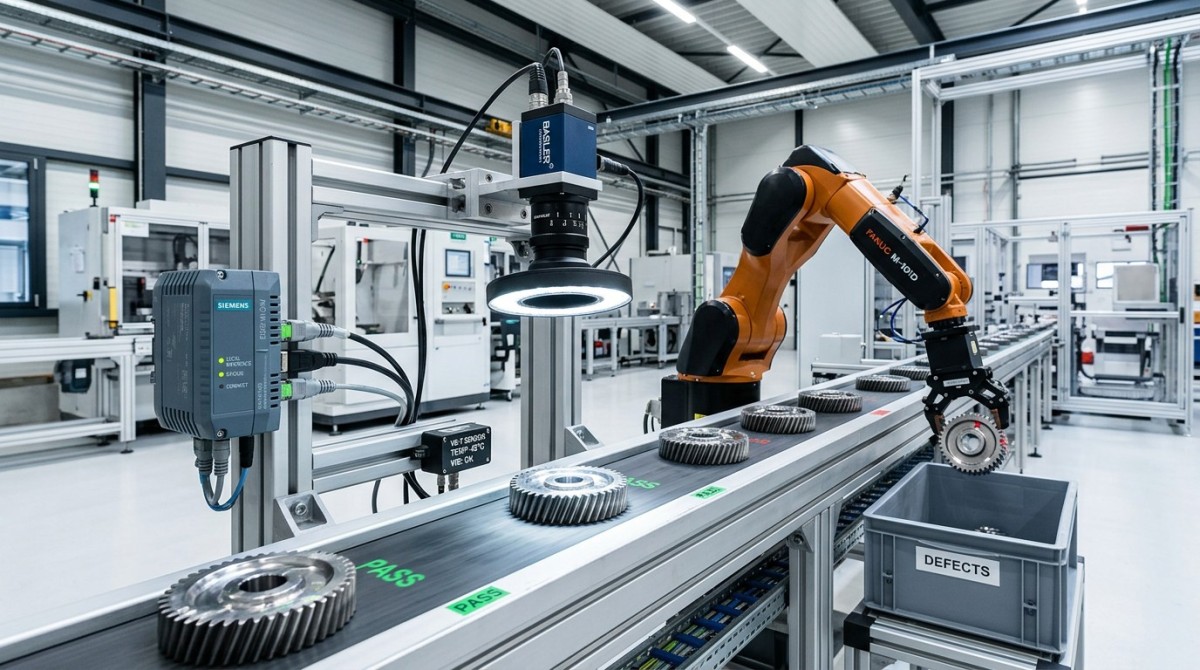
The strongest use case appears when data originates at the machine and loses value if it travels too far. A camera detecting surface defects on a fast conveyor, for example, may require inference in under 100 ms to trigger rejection hardware. If the same image must be sent to a distant cloud platform, compressed, queued, and returned, the production line may already have moved on. In that case, the time benefit of edge AI is structural, not cosmetic.
Another area is predictive maintenance tied to industrial IoT gateways. When vibration, temperature, current, or acoustic data is sampled continuously, local filtering can reduce unnecessary upstream traffic and escalate only relevant events. This can shorten maintenance triage from several hours of manual log review to near-real-time alerts, especially in plants running 2-shift or 3-shift schedules with limited maintenance windows.
TSV’s engineering-first view is useful here: parameters matter more than slogans. Buyers should ask for inference latency ranges, supported sensor interfaces, local storage behavior, thermal operating limits, and fail-safe modes. Without these details, “real-time intelligence” is often just a marketing phrase. In hard-tech environments, microsecond-level gateway latency, repeatable capture conditions, and deterministic control paths define whether edge AI actually saves time.
Typical workflows where local inference has an advantage
Time savings are easiest to justify when the system closes a loop directly on-site. A useful rule is to separate high-frequency control tasks from low-frequency analytics tasks. If the action window is below 1 second, local inference deserves priority review. If the action window is measured in hours or days, edge deployment may still help, but the time advantage is less decisive.
- Machine vision inspection for scratches, dimensional deviations, label errors, solder defects, or assembly omissions where reject triggers must respond in under 50–300 ms.
- AGV, AMR, or robotic cell monitoring where obstacle detection, path correction, or sensor fusion benefits from local compute rather than round-trip traffic.
- Predictive maintenance at gateways where local models score vibration or thermal drift every few seconds and only escalate threshold breaches.
- Remote or bandwidth-limited sites where continuous streaming of high-resolution images or point clouds is impractical.
In these scenarios, the benefit is not only shorter response time. Plants also save engineering time because fewer raw datasets need to be moved, labeled, reviewed, and reprocessed centrally. That matters for procurement teams comparing not just hardware price, but integration burden across 6-month to 18-month deployment horizons.
Where edge AI for smart manufacturing does not save time
Edge AI does not automatically accelerate every workflow. In many factories, the biggest delays are caused by poor process design, unstable data capture, incomplete MES integration, or weak maintenance discipline. If labels are inconsistent, lighting is uncontrolled, sensor calibration drifts every few weeks, or operators do not trust alerts, deploying inference at the edge may add complexity without reducing cycle time.
A frequent mistake is forcing edge AI into low-urgency tasks. Monthly quality reporting, long-horizon energy optimization, and supplier-level yield analysis rarely require on-device inference. In such cases, cloud or centralized analytics may be simpler to maintain. The bottleneck is not network delay; it is data governance, model retraining, or organizational decision speed.
Another weak case appears when the edge hardware cannot support the model reliably. If a vision model needs more compute than the industrial PC or gateway can deliver, teams often compensate with reduced image resolution, lower frame rate, or aggressive compression. The result may be a faster but less useful system. Saving 200 ms is meaningless if defect escape rates rise or false alarms double.
There is also a hidden deployment cost. Multi-line factories may need model version control, local cybersecurity hardening, spare unit planning, and on-site support procedures. For enterprises operating across 5, 10, or 20 plants, edge AI can create a fragmented infrastructure if standards are not defined in advance. Time then shifts from production waiting to IT and OT troubleshooting.
Common causes of disappointment
The following comparison helps separate workflows where edge AI for smart manufacturing usually produces real operational gains from those where it often underperforms expectations.
The key insight is simple: edge AI for smart manufacturing saves time only when time-sensitive action sits close to the data source. If the real bottleneck is reporting cadence, approval flow, or poor input quality, moving models to the edge will not fix the delay.
Three misconceptions procurement teams should reject
- “Lower latency always means higher ROI.” Not if the process only needs hourly decisions or if false positives increase operator intervention.
- “Any industrial gateway can run vision AI.” Compute, thermal design, memory, and I/O behavior differ widely across devices.
- “Local deployment reduces all integration work.” In reality, plant-level rollout often adds version control, validation, and maintenance tasks.
For decision-makers, this is exactly why benchmarking matters. TSV’s approach—looking at tolerances, throughput, interference resistance, and gateway latency—helps teams filter out generic claims and focus on deployment conditions that can be verified before purchase.
How to evaluate ROI beyond vendor claims
A credible ROI review starts with time accounting. Measure the current process in 4 stages: data capture, transfer, inference, and action. Then identify where the queue forms. In many smart manufacturing programs, only one of these stages is materially improved by edge AI. Buyers should therefore compare baseline and target values in a pilot lasting 2–6 weeks rather than rely on generalized vendor demos.
The next step is cost visibility. The business case should include hardware, model deployment, enclosure and cooling, industrial networking, system integration, retraining cycles, validation effort, and operator training. A low-cost device can become an expensive solution if it requires frequent on-site intervention or if performance degrades under dust, vibration, or heat.
For B2B procurement, it is also important to map benefits to the correct level. Operators care about fewer nuisance alarms and faster response. Engineers care about image quality, model drift, and deterministic interfaces. Procurement teams care about lead times, spare unit strategy, and lifecycle support. Executives care about throughput, scrap, unplanned downtime, and qualification speed across multiple suppliers or plants.
An engineering-based review should avoid abstract phrases such as “improved intelligence.” Instead, ask whether the project reduces inspection cycle time by a measurable range, shortens troubleshooting from hours to minutes, or lowers network load enough to defer infrastructure upgrades. If those gains cannot be framed in a specific workflow, the ROI case is weak.
A practical procurement checklist for edge AI projects
The table below summarizes decision criteria that help buyers compare edge AI for smart manufacturing solutions in a structured way rather than through feature lists alone.
This checklist is especially relevant for organizations sourcing across robotics, sensors, machine vision, and industrial IoT. The more cross-domain the system becomes, the more important it is to evaluate the entire response chain rather than benchmark only model accuracy on a lab dataset.
A 4-step pilot structure that exposes real ROI
- Define one production constraint: false reject rate, unplanned downtime, defect escape, or response delay.
- Run baseline measurement for 7–14 days under normal shifts and changeovers.
- Deploy edge AI on one line or one cell, then compare inference time, intervention count, and operator acceptance.
- Review scale-up conditions, including spare parts, retraining cycles, cybersecurity, and plant-to-plant repeatability.
Teams that skip this structure often overestimate benefits. They see a fast demo, but not the full burden of deployment and upkeep. A controlled pilot creates the evidence procurement and executive teams need before signing multi-site commitments.
What technical and compliance details should decision-makers check?
In smart manufacturing, time savings disappear quickly if the platform is difficult to qualify or maintain. That is why technical and compliance review should happen before final vendor selection. For example, if the edge node interacts with production equipment, buyers should verify interface compatibility, fail-safe behavior, data logging method, and patch management responsibilities. These items often influence deployment time more than raw processor specifications.
For machine vision applications, the full signal chain matters: optics, illumination, mounting repeatability, vibration isolation, and image transfer. A model can perform well in testing and fail on the line because of glare, lens contamination, or positional variation after maintenance. In those cases, the issue is not AI quality alone but engineering discipline around the vision cell.
For industrial IoT and predictive maintenance, verify how thresholds are set, how local storage behaves during network loss, and how event escalation reaches maintenance teams. A local alert that stays isolated on one device saves no time if nobody receives it. Plants should also align alerting frequency with operator workload to avoid alarm fatigue during every shift.
Compliance matters as well. The exact requirement varies by application and geography, but buyers should expect review of electrical safety, EMC behavior, cybersecurity policy, data retention, and sector-specific quality systems where relevant. In high-value sectors such as aerospace or medical-related manufacturing, document traceability and validation discipline may be as important as speed itself.
Technical checks that prevent hidden delays
- Confirm whether the quoted latency covers capture-to-action time or only model inference time. The difference can be several multiples.
- Request environmental operating ranges and derating behavior, especially for cabinets exposed to heat, dust, or vibration.
- Check model update procedures, rollback options, and downtime impact during maintenance windows.
- Review data retention and auditability if results must support quality records, supplier qualification, or regulated documentation.
This is where TSV’s hard-tech positioning is especially relevant. Instead of treating edge AI as a generic software add-on, TSV evaluates the surrounding engineering stack: gateway throughput, anti-interference characteristics, machine vision precision, and deployment realism. That perspective helps buyers avoid procurement based on vague adjectives and focus on measurable constraints.
FAQ for search-driven buyers and engineering teams
The questions below reflect common search intent from factories evaluating edge AI for smart manufacturing under budget, qualification, and delivery pressure.
How do I know if edge AI is better than cloud AI for my factory?
Start with the action window. If a decision must happen in under 1 second, if bandwidth is constrained, or if image and sensor streams are too heavy to move continuously, edge AI is often the better fit. If the task is trend analysis, fleet reporting, or monthly optimization, centralized or cloud analytics may be more practical and easier to maintain.
What should procurement ask vendors before buying?
Ask for end-to-end latency, not isolated benchmark numbers. Ask what happens during network interruption, how model updates are handled, what environmental limits apply, how many system interfaces must be integrated, and what the usual pilot duration is. Also request clarity on spare hardware strategy, support windows, and data ownership.
Can edge AI reduce downtime immediately?
Sometimes, but not automatically. If the downtime source is detectable through local vibration, thermal, vision, or current signals and the maintenance workflow can act on alerts quickly, benefits may appear within the first pilot cycle of 2–6 weeks. If downtime is caused by spare parts delays, poor maintenance planning, or inconsistent root-cause analysis, edge AI alone will not solve it.
What is the biggest mistake in edge AI deployment?
Treating the model as the product. In manufacturing, the real product is the whole decision chain: sensors, optics, compute, environmental stability, interfaces, alarms, operator response, and validation. If any one of those breaks, time savings can disappear even when the algorithm itself looks impressive.
Why work with TSV when evaluating edge AI for smart manufacturing?
TechStat Vanguard serves teams that need engineering truth, not inflated claims. For information researchers, TSV helps cut through noisy vendor language with benchmark-oriented analysis. For operators and technical users, TSV focuses on the variables that shape daily performance: repeatability, latency, interference resistance, throughput, and maintenance realism. For procurement and executive teams, TSV helps shorten supplier qualification cycles by translating technical parameters into decision-ready evaluation criteria.
If you are comparing edge AI for smart manufacturing across machine vision, industrial IoT gateways, robotics, or sensor-driven inspection, TSV can support parameter confirmation, solution comparison, application fit analysis, and specification drafting. This is especially useful when multiple suppliers use similar marketing language but offer very different real-world deployment conditions.
You can contact TSV to discuss practical topics such as inference latency ranges, camera and lens selection logic, gateway throughput requirements, expected pilot duration, integration checkpoints, environmental suitability, and documentation expectations for qualification. If your team is under pressure to move from concept to sourcing, a structured technical review can prevent months of avoidable trial and error.
For buyer-side evaluation, supplier screening, or benchmark-driven spec sheet preparation, reach out with your workflow details, target cycle time, sensor stack, and line constraints. TSV can help you determine where edge AI for smart manufacturing will genuinely save time, where a centralized alternative is more rational, and which technical checkpoints should be clarified before quote comparison, pilot approval, or final procurement.
Search News
Hot Articles
- Carbon Fiber StructuresHow to Specify Aerospace Carbon Fiber Assemblies for Lightweight, Load-Bearing PartsJul 11, 2026
- Machine VisionXiaomi, Alibaba DAMO Academy Drive Open-Source Robotics Model Ecosystem, Lowering Algorithm Development Barriers for Overseas SMEs Adopting Chinese Robotics SolutionsMar 30, 2026
- Cobots & ArmsShanxi 'AI+' Conference Showcases Embodied Intelligence with Multinational Buyer Engagement: Key Industry ImplicationsMar 30, 2026
Popular Tags
Recommended News
 Jul 11, 2026How to Specify Aerospace Carbon Fiber Assemblies for Lightweight, Load-Bearing PartsAerospace carbon fiber assemblies: learn how to specify laminate design, load data, joining methods, and inspection controls for lighter, reliable load-bearing aerospace parts.Elena Rostova (UAV Systems Researcher)
 Mar 30, 2026Xiaomi, Alibaba DAMO Academy Drive Open-Source Robotics Model Ecosystem, Lowering Algorithm Development Barriers for Overseas SMEs Adopting Chinese Robotics SolutionsXiaomi & Alibaba DAMO Academy's open-source robotics models lower algorithm barriers for global SMEs. Boost efficiency in manufacturing, logistics & smart retail with ROS 2 compatible solutions.TSV Data Lab
 Mar 30, 2026Shanxi 'AI+' Conference Showcases Embodied Intelligence with Multinational Buyer Engagement: Key Industry ImplicationsShanxi 'AI+' Conference highlights embodied intelligence with Tesla, Ubtech & Jiantao showcasing multimodal robotics. 40+ global buyers validated tech on-site, creating new B2B channels for industrial automation & AI solutions.Chen Wei (Automation Lead Engineer)
 Mar 30, 2026Zhongguancun Unveils 6G Integrated Sensing-Computing-Intelligence Platform to Empower Embodied Robots for Global Industrial ApplicationsZhongguancun's new 6G platform revolutionizes industrial robotics with <10ms latency, empowering global automotive, logistics & port automation. Discover how this tech boosts China's smart manufacturing exports.TSV Data Lab
 Mar 30, 2026Mech-Mind Tianjin Embodied Intelligence R&D and Production Base Goes Live, Cutting Delivery Time by 20%–30% for Global Customized AMR+Vision SolutionsMech-Mind's Tianjin AMR+Vision production base cuts delivery time by 20%-30% for欧美 & Latin American markets. Discover how this PLd-certified facility accelerates customized robotics solutions for smart manufacturing and logistics.Chen Wei (Automation Lead Engineer)
 Mar 30, 2026Boao Forum Reveals 'Co-evolution of Big and Small Brains' Trend in Humanoid Robots, China's Embodied Intelligence Accelerates Adaptation to Overseas Manufacturing Service ScenariosDiscover how China's humanoid robots, featuring 'Co-evolution of Big and Small Brains,' are revolutionizing global manufacturing. Learn about Embodied Tian Gong 3.0's ISO compliance and overseas deployment at Boao Forum 2026.Chen Wei (Automation Lead Engineer)
 Mar 30, 2026China Railway Industrial Secures Patent for Embodied Robotics in Material Handling, Boosting High-Precision Delivery Capabilities for Overseas Infrastructure and Manufacturing ProjectsChina Railway Industrial's new patent for embodied robotics in material handling boosts high-precision delivery for global infrastructure & manufacturing. Discover how this innovation enhances logistics accuracy in automotive, rail transit & EPC projects.Chen Wei (Automation Lead Engineer)
 Oct 27, 2026Robotic Automation Costs: Budgeting for Equipment, Integration, and MaintenancePlan your robotics automation cost with confidence. Explore equipment, integration, and maintenance expenses, compare quotes, and build a realistic budget for better ROI.Chen Wei (Automation Lead Engineer)
 Oct 26, 2026AMAXiMAL Releases Open-Source TopMod 3D v3 With Claude AIExplore AMAXiMAL’s free, open-source TopMod 3D v3 with Claude AI assistance, topology-based modeling and plywood fabrication tools that connect complex designs to physical builds.Dr. Marcus Vance
 Oct 26, 2026Choosing a SCADA System Integrator Company: PLC Compatibility and Long-Term SupportChoose a scada system integrator company with proven PLC compatibility and reliable long-term support. Discover what to test, compare, and require before investing.Victor Lin (Chief Software Architect)
 Oct 25, 2026Hesai Leads Global ADAS Main Lidar Shipments in Yole’s 2026 ReportHesai led global ADAS main lidar shipments with a 43% share in 2025, according to Yole’s 2026 report. Explore what this ranking reveals about its automotive market position.TSV Data Lab
 Oct 25, 2026Choosing an Aerospace Materials Manufacturer: Quality and Traceability ChecksChoosing an aerospace materials manufacturer? Learn how to verify certifications, test reports, and lot traceability to qualify suppliers confidently and reduce costly sourcing risks.Dr. Marcus Vance
 Oct 24, 2026Guotai Haitong: Global Entry-Level 3D Printer Shipments Rose 39% in Q1 2026Entry-level 3D printer shipments rose 39% in Q1 2026, Guotai Haitong reports. Explore how AI, multicolor printing and print farms are shaping market growth.Dr. Marcus Vance
 Oct 24, 2026Choosing an Industrial Vision Inspection Supplier: Acceptance Tests That MatterChoose an industrial vision inspection supplier with confidence. Discover acceptance tests for defect detection, false rejects, production speed, and reliable part rejection before you buy.TSV Data Lab
 Oct 23, 2026US Navy Raises Gecko Robotics Contract Ceiling to $300M for Robotic Fleet MaintenanceUS Navy raises Gecko Robotics’ contract ceiling to $300M for Pacific Fleet robotic inspections. Explore potential opportunities for maintenance suppliers and key procurement considerations.Chen Wei (Automation Lead Engineer)
 Oct 23, 2026Choosing Industrial Sensing Systems for Global Plants: Protocol CompatibilityCompare industrial sensing systems international buyers can trust. Explore protocol compatibility, reduce integration risks, and select proven configurations for reliable global plant deployments.TSV Data Lab
 Oct 22, 2026KUKA Showcases Physical AI and iiQKA.AI Vision at NVIDIA GTC BerlinExplore KUKA’s Physical AI showcase at NVIDIA GTC Berlin and discover how iiQKA.AI Vision aims to simplify robotic vision integration and improve 2D and 3D scene recognition.TSV Data Lab
 Oct 22, 2026Robotic Machining of Advanced Composites: What Tolerances Are Achievable?Explore advanced materials machining robotics: discover what drives achievable composite tolerances and how to validate accuracy before investing in your next machining system.Dr. Marcus Vance
 Oct 21, 2026China’s Industrial Robot Exports Near RMB 10 Billion in First Nine Months of 2026China’s industrial robot exports neared RMB 10 billion in January–September 2026, with value rising faster than volume. Explore the data and what it could mean for suppliers.Chen Wei (Automation Lead Engineer)
 Oct 21, 2026Low-Latency Industrial Data Processing: Pricing and Key Cost DriversExplore industrial data latency price drivers, from edge hardware to integration and support. Learn how to compare quotes, verify performance, and avoid unnecessary costs.TSV Data Lab
 Oct 20, 2026KUKA Launches iiQKA.AI Vision to Simplify Industrial Image ProcessingKUKA iiQKA.AI Vision simplifies industrial image processing with controller-based 2D and 3D vision. Explore drag-and-drop setup for vision-guided automation.TSV Data Lab
 Oct 20, 2026Smart Industrial Edge Devices: Key Criteria for Legacy PLC IntegrationChoose smart industrial edge devices for legacy PLC integration. Discover key criteria for compatibility, data quality, security, and reliable collection without disrupting control.TSV Data Lab
 Oct 19, 2026Choosing a Radar Sensor by Application: Range, Resolution, and Field of ViewSimplify radar sensor application based product selection. Compare range, resolution, and field of view to avoid blind spots and choose with confidence. Explore the guide.TSV Data Lab
 Oct 18, 2026Comparing Material Options for Procurement: Specs, Costs, and Supply RisksExplore procurement oriented technical content on material options, specs, costs, and supply risks. Compare alternatives to cut hidden expenses and make confident sourcing decisions.Dr. Marcus Vance