
What drives industrial automation project cost before installation begins?
Publication Date
author
Most industrial automation budgets are substantially shaped before installation begins. By the time a robot, conveyor, vision camera, or control cabinet reaches the plant, many of the expensive decisions have already been made: what the system must handle, how reliably it must run, what happens when it encounters variation, how it connects to existing operations, and who carries responsibility when performance falls short.
For a business evaluator, the useful question is not simply, “How much does automation cost?” It is, “Which early assumptions will turn a modest equipment quote into a larger engineering commitment?” The answer usually sits in scope definition, process variability, interface design, safety, data requirements, and the level of proof demanded from suppliers. A low initial quote can be credible for a tightly bounded task. It becomes misleading when the project has unresolved production, compliance, or integration requirements.
System scope sets the cost boundary
The first cost driver is the definition of the job itself. “Automate packaging,” “add robotic palletizing,” or “deploy material handling robots” describes an intention, not an executable scope. A supplier cannot accurately price a system until the operating boundaries are specified.
Those boundaries include throughput, shift pattern, product range, allowable changeover time, available floor space, operator intervention, quality expectations, and the required response to abnormal conditions. Each requirement can introduce equipment, controls logic, guarding, testing, or engineering time that is invisible in an early concept quote.
A station designed to process one stable product format at a fixed rate has a different cost structure from one expected to accept multiple sizes, orientations, packaging materials, and production schedules. The robot may be identical in both proposals. The surrounding system will not be. End-of-arm tooling, part presentation, sensing, recipe management, rejection handling, and validation all expand when variation must be managed rather than avoided.
Business teams should therefore separate the “happy path” from the full operating requirement. The happy path describes normal production under controlled inputs. The full requirement includes jams, skewed parts, incomplete loads, consumable changes, manual recovery, restart conditions, and product transitions. Industrial automation project cost rises when a project is priced around the former but expected to deliver the latter.
Ask where the manual work is really going
Manual work is often described as a single task even when it is a chain of decisions. An operator may load parts, inspect orientation, correct minor defects, decide whether a part is acceptable, recover from a jam, and update a record. Replacing only the loading motion may be straightforward. Replacing the judgment, recovery, and documentation around it is a different project.
Before approving a business case, map the task at the level of exceptions, not just nominal cycle time. This helps distinguish a valid phased automation plan from a proposal that has quietly excluded the work most likely to stop the cell.
- What inputs are controlled by upstream equipment, and what arrives in inconsistent condition?
- Which decisions are currently made by operators without written rules?
- How often do product formats, materials, or production recipes change?
- What level of manual intervention is acceptable during normal operation?
- Which failures must stop the process, reject product, trigger an alarm, or be recoverable by an operator?
Equipment specifications are only one layer of the budget
Buyers often begin with the visible assets: robot arms, AMRs, conveyors, PLCs, cameras, scanners, servo drives, and grippers. These matter, but their purchase price rarely represents the whole financial exposure. Supporting mechanical design, electrical controls, safety systems, programming, commissioning, documentation, and acceptance testing can be as important as the selected machine.
Higher specifications can be justified, but only where the process requires them. A robot selected for additional payload, reach, speed, environmental protection, or repeatability may demand a different base, safety envelope, controller, cable routing arrangement, and tooling design. A vision system specified for fine inspection may require controlled lighting, stable part positioning, computing capacity, calibration routines, and an agreed definition of an acceptable defect.
Specification inflation is one risk. Under-specification is another. A low-cost component can appear attractive until the system must maintain performance under real conditions: dust, washdown, vibration, reflected surfaces, temperature shifts, inconsistent parts, electromagnetic interference, or prolonged duty cycles. The commercial evaluation should connect each major specification to an operating condition or measurable production need. Requirements without that link are candidates for challenge; omitted requirements can become costly changes later.
Precision requirements deserve particular scrutiny. Tighter positioning, inspection, or machining tolerances can affect fixture design, sensor selection, calibration, environmental control, and quality validation. The question is not whether a supplier claims high accuracy. It is whether the required accuracy can be maintained across the actual material, process speed, operating environment, and maintenance interval.
Similarly, availability targets should be translated into design consequences. A cell expected to tolerate a single maintenance shift and occasional recovery has a different architecture from one expected to sustain a high-utilization production schedule with defined recovery procedures, spare-part coverage, and fault diagnostics. Reliability claims are weak procurement inputs unless their assumptions are stated.
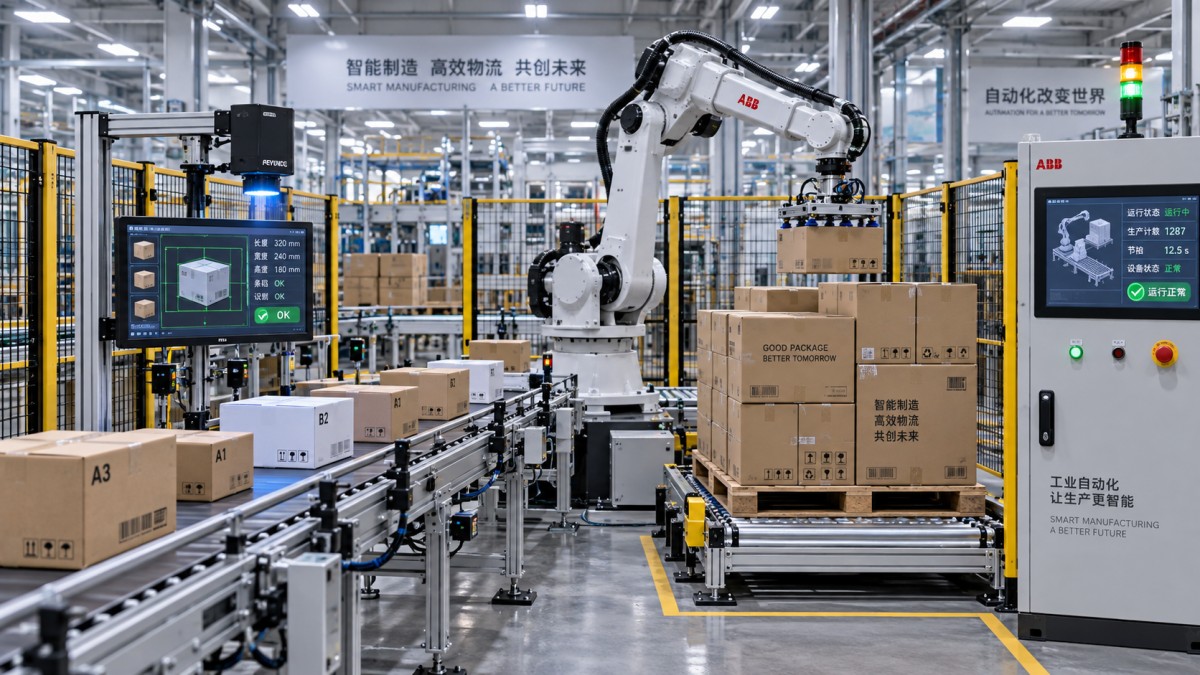
Integration complexity is where early estimates often break down
Automation does not operate as an isolated machine. It receives material, exchanges signals, occupies a physical space, follows safety rules, and often reports production data to other systems. The more interfaces involved, the more project cost depends on engineering coordination rather than catalog pricing.
Physical integration can include foundations, structural supports, compressed air, electrical supply, dust extraction, network cabling, conveyors, racks, workstations, and access for maintenance. Existing facilities introduce their own constraints: restricted installation windows, undocumented utilities, congested layouts, legacy machinery, and production continuity requirements. These conditions may not be visible in an initial supplier quotation.
Controls integration creates a second layer. Equipment may need to exchange status, recipes, alarms, interlocks, production counts, or traceability records with upstream machines, supervisory systems, manufacturing execution software, warehouse systems, or quality platforms. The cost is influenced less by the existence of a connection than by the clarity of the interface contract. Which system owns the recipe? Who validates a production record? What happens when the network is unavailable? Which alarm stops upstream flow? Who has authority to change the control logic?
Vague answers produce expensive ambiguity during commissioning. A commercial proposal should identify interfaces explicitly, state the assumed protocol or handoff method, and assign ownership for each external dependency. “Integration included” is too broad to support a meaningful cost comparison.
Safety and compliance are design inputs, not closing-stage add-ons
Safety requirements affect layout, equipment selection, controls architecture, validation, and operator workflow. Treating them as a final checklist item invites redesign after mechanical and controls decisions have already been made.
The required safeguarding approach depends on the hazard profile and operating model. It may involve fixed guards, interlocked doors, light curtains, area scanners, safety-rated control systems, lockout provisions, emergency stops, safe-speed functions, or controlled collaborative operation. The label “collaborative robot” does not eliminate the need for a task-specific risk assessment. Tooling, payload, speed, reach, pinch points, adjacent equipment, and human access all influence the safeguarding design.
Business evaluators do not need to perform the engineering assessment themselves, but they should make sure the quote identifies what is included. Does it include a documented safety concept, a risk assessment process, guarding, safety programming, validation support, and operator access provisions? Are site-specific conditions assumed or priced? A proposal that leaves these items undefined may look lower because critical work has been deferred.
Regulated or quality-sensitive operations can add another layer. Traceability, controlled access, validation documentation, formal testing, and change-control expectations may be necessary for the buyer’s internal obligations even where no single equipment component appears unusual. These requirements should be defined before vendors commit to schedule and price, because retrofitting records and controls discipline after commissioning is rarely efficient.
Data architecture can be either a limited feature or a major workstream
Data requirements are frequently underestimated because they are described in broad terms: dashboarding, remote monitoring, traceability, predictive maintenance, or AI inspection. Each phrase hides decisions about data source, retention, quality, access, ownership, cybersecurity, and operational use.
A local display showing machine status is materially different from a system that must create durable records tied to product lots, operators, inspection outcomes, maintenance events, and enterprise reporting. The latter may require data modeling, time synchronization, network segmentation, identity management, integration testing, and procedures for handling missing or incorrect records.
Machine vision and edge computing deserve the same discipline. A proof-of-concept image classifier can demonstrate technical potential, but production deployment requires decisions about lighting stability, image retention, model updates, false-reject handling, escalation, and the acceptable trade-off between missed defects and unnecessary rejection. Procurement should avoid treating an experimental capability and a validated production function as equivalent line items.
Define the business decision each data element is expected to support. If a signal will not alter maintenance, quality, scheduling, compliance, or management action, its collection may not justify the integration burden. Conversely, a traceability requirement that is essential to release, investigate, or contain product should be treated as a core scope item, not an optional software add-on.
Supplier qualification changes both price and project risk
Two suppliers can quote similar equipment while offering very different levels of execution confidence. The relevant comparison is not just commercial value at order placement; it is the probability that the system will meet agreed performance without protracted rework, disputed scope, or difficult support after handover.
Supplier qualification should examine whether the proposed solution is anchored in disclosed assumptions. Buyers should ask for evidence of how cycle time was calculated, how products will be presented to the machine, how accuracy will be measured, what conditions apply to throughput, and which exceptions are excluded. They should also review the maturity of the proposed architecture. A custom mechanism may be necessary for a difficult process, but it carries a different validation and service profile from a design built around established components and documented interfaces.
The contract structure matters as much as the technical presentation. Acceptance criteria should define the test conditions, material supplied, throughput measure, quality thresholds, uptime or run-duration expectations where applicable, responsibility for corrective action, and rules for changes. A system can pass a loosely written factory test yet remain unready for the buyer’s actual operation.
Qualification cost should not be viewed merely as overhead. Engineering reviews, design sign-off, factory acceptance testing, site acceptance testing, documentation review, and operator training create checkpoints where wrong assumptions can be exposed before they become embedded in the plant. The appropriate level of rigor depends on the project’s production and quality impact, but eliminating these steps to preserve an early budget often transfers cost into later disruption.
Build the budget around uncertainty, not just equipment lines
A defensible automation budget separates known scope from unresolved scope. It should distinguish equipment, engineering, integration, site preparation, installation, testing, training, spares, and contingency. More importantly, it should identify the assumptions behind each category.
For example, an estimate may assume stable incoming parts, existing utility capacity, a defined installation window, buyer-provided network access, or no changes to upstream machinery. These are not minor footnotes. They are commercial conditions. When one fails, the resulting work can affect schedule, labor, controls changes, and acceptance testing simultaneously.
Business evaluators should resist two equal and opposite errors: approving a large contingency without understanding what it covers, or demanding its removal simply to make the project appear more attractive. A better approach is to convert high-uncertainty items into early engineering tasks. Site surveys, sample-part studies, layout validation, interface workshops, risk reviews, and pilot tests can narrow the range before a full commitment is made.
Industrial automation project cost is therefore best understood as the price of a defined production outcome under stated conditions. The equipment quote is only one expression of that outcome. Projects become financially credible when the scope includes the variability, interfaces, safety obligations, data needs, and acceptance conditions that the operation will actually impose. That discipline gives decision-makers a clearer basis for comparing proposals and a better chance of funding automation that performs beyond the demonstration stage.
Search News
Hot Articles
- Carbon Fiber StructuresHow to Specify Aerospace Carbon Fiber Assemblies for Lightweight, Load-Bearing PartsJul 11, 2026
- Machine VisionXiaomi, Alibaba DAMO Academy Drive Open-Source Robotics Model Ecosystem, Lowering Algorithm Development Barriers for Overseas SMEs Adopting Chinese Robotics SolutionsMar 30, 2026
- Cobots & ArmsShanxi 'AI+' Conference Showcases Embodied Intelligence with Multinational Buyer Engagement: Key Industry ImplicationsMar 30, 2026
Popular Tags
Recommended News
 Jul 11, 2026How to Specify Aerospace Carbon Fiber Assemblies for Lightweight, Load-Bearing PartsAerospace carbon fiber assemblies: learn how to specify laminate design, load data, joining methods, and inspection controls for lighter, reliable load-bearing aerospace parts.Elena Rostova (UAV Systems Researcher)
 Mar 30, 2026Xiaomi, Alibaba DAMO Academy Drive Open-Source Robotics Model Ecosystem, Lowering Algorithm Development Barriers for Overseas SMEs Adopting Chinese Robotics SolutionsXiaomi & Alibaba DAMO Academy's open-source robotics models lower algorithm barriers for global SMEs. Boost efficiency in manufacturing, logistics & smart retail with ROS 2 compatible solutions.TSV Data Lab
 Mar 30, 2026Shanxi 'AI+' Conference Showcases Embodied Intelligence with Multinational Buyer Engagement: Key Industry ImplicationsShanxi 'AI+' Conference highlights embodied intelligence with Tesla, Ubtech & Jiantao showcasing multimodal robotics. 40+ global buyers validated tech on-site, creating new B2B channels for industrial automation & AI solutions.Chen Wei (Automation Lead Engineer)
 Mar 30, 2026Zhongguancun Unveils 6G Integrated Sensing-Computing-Intelligence Platform to Empower Embodied Robots for Global Industrial ApplicationsZhongguancun's new 6G platform revolutionizes industrial robotics with <10ms latency, empowering global automotive, logistics & port automation. Discover how this tech boosts China's smart manufacturing exports.TSV Data Lab
 Mar 30, 2026Mech-Mind Tianjin Embodied Intelligence R&D and Production Base Goes Live, Cutting Delivery Time by 20%–30% for Global Customized AMR+Vision SolutionsMech-Mind's Tianjin AMR+Vision production base cuts delivery time by 20%-30% for欧美 & Latin American markets. Discover how this PLd-certified facility accelerates customized robotics solutions for smart manufacturing and logistics.Chen Wei (Automation Lead Engineer)
 Mar 30, 2026Boao Forum Reveals 'Co-evolution of Big and Small Brains' Trend in Humanoid Robots, China's Embodied Intelligence Accelerates Adaptation to Overseas Manufacturing Service ScenariosDiscover how China's humanoid robots, featuring 'Co-evolution of Big and Small Brains,' are revolutionizing global manufacturing. Learn about Embodied Tian Gong 3.0's ISO compliance and overseas deployment at Boao Forum 2026.Chen Wei (Automation Lead Engineer)
 Mar 30, 2026China Railway Industrial Secures Patent for Embodied Robotics in Material Handling, Boosting High-Precision Delivery Capabilities for Overseas Infrastructure and Manufacturing ProjectsChina Railway Industrial's new patent for embodied robotics in material handling boosts high-precision delivery for global infrastructure & manufacturing. Discover how this innovation enhances logistics accuracy in automotive, rail transit & EPC projects.Chen Wei (Automation Lead Engineer)
 Oct 15, 2026R&D Cost Reduction Services: How to Evaluate Fees, Savings, and ROIEvaluate R&D cost reduction services with confidence. Compare fees, verify savings, and calculate ROI without compromising performance. Discover how to choose a provider that delivers real value.Chen Wei (Automation Lead Engineer)
 Oct 15, 2026How Should You Compare TechStat Vanguard 5-Axis CNC Tolerances?TechStat Vanguard 5-axis CNC tolerance comparison: learn how to verify part accuracy, assess inspection evidence, and choose suppliers that reliably meet your drawing requirements.Dr. Marcus Vance
 Oct 14, 2026Drone Frame Composites: Carbon Fiber vs. Fiberglass for Weight and StiffnessExplore drone structural materials composites: compare carbon fiber and fiberglass for weight, stiffness, cost, and antenna compatibility. Find the right material for your drone frame.Elena Rostova (UAV Systems Researcher)
 Oct 13, 2026Smart Cameras vs. PC-Based Machine Vision: Which Fits High-Speed Inspection?This industrial product comparison for machine vision weighs smart cameras vs. PC-based systems on latency, throughput, and cost. Discover your best fit for high-speed inspection.TSV Data Lab
 Oct 12, 2026How to Verify RoHS Compliance in Industrial Sensing Systems Before DeploymentRoHS compliant sensing systems: learn how to verify materials, supplier declarations, testing, and configuration controls before industrial deployment.TSV Data Lab
 Oct 11, 2026How Procurement-Oriented Content Taxonomy Improves B2B Buying JourneysProcurement-oriented content taxonomy streamlines B2B buying journeys with clearer evidence, supplier comparisons, risk visibility, and faster approvals.TSV Data Lab
 Oct 10, 2026How to Select a Machine Performance Monitoring Platform for OEE and Downtime ReductionMachine performance monitoring platform selection guide: validate machine states, OEE data, downtime reasons, integrations, and scalability to reduce losses with confidence.TSV Data Lab
 Oct 08, 2026How to Machine Inconel 625 Blades Without Heat Cracks or Edge ChippingInconel 625 blade machining guide: prevent heat cracks, edge chipping, chatter, and work hardening with proven tooling, cooling, fixturing, and inspection strategies.Dr. Marcus Vance
 Oct 07, 2026How to Evaluate an HMI Panel Distributor for Industrial Automation ProjectsHMI panel distributor evaluation guide: verify technical compatibility, traceability, supply reliability, lifecycle support, and total cost for automation projects.Victor Lin (Chief Software Architect)
 Oct 06, 2026Navigation Fault Tolerance Standards for AMRs: What Safety Teams Must VerifyNavigation fault tolerance standards: learn what AMR safety teams must verify, from localization loss and sensor faults to stopping distance, safe restart, and site-specific validation.Chen Wei (Automation Lead Engineer)
 Oct 05, 2026Calculating Edge Computing Total Cost of Ownership Across Distributed SitesEdge computing ownership cost explained: calculate deployment, energy, connectivity, security, remote support, and refresh costs across distributed sites.TSV Data Lab
 Oct 04, 2026CAD/CAM Benchmarking in the GCC: What Manufacturers Should Ask a ConsultantCAD CAM benchmark consultant GCC guide: learn the key questions manufacturers should ask to validate post-processors, workflows, machine performance, and production risk.Victor Lin (Chief Software Architect)
 Oct 03, 2026Selecting Automotive Radar Sensor Modules for ADAS Range, Resolution, and IntegrationAutomotive radar sensor module selection guide for ADAS: compare range, resolution, field of view, latency, and integration to build safer, reliable vehicle systems.TSV Data Lab
 Oct 02, 2026How to Qualify Machined Parts Suppliers for Hard Tech ProgramsHard tech supply chain machined parts demand rigorous supplier qualification. Learn how to assess capability, traceability, quality controls, and delivery resilience.Dr. Marcus Vance
 Oct 01, 2026How to Select an Outdoor Security Radar Sensor for Perimeter Detection?Outdoor security radar sensor selection guide: compare range, accuracy, false-alarm control, integration, and field testing for reliable perimeter detection.TSV Data Lab
 Sep 30, 2026How to Evaluate Solid-State LiDAR Hardware for Outdoor Autonomous VehiclesSolid state LiDAR hardware evaluation guide for outdoor autonomous vehicles—compare range, point-cloud quality, environmental resilience, integration, and safety.TSV Data Lab
 Sep 29, 2026ISO 9283 Repeatability: How to Evaluate Cobot Positioning PerformanceISO 9283 cobot repeatability explained: learn how payload, reach, approach direction, and test conditions affect positioning performance and cell capability.Chen Wei (Automation Lead Engineer)























