Trampoline park construction mistakes that inflate rebuild costs
Publication Date
author
In trampoline park construction, the most expensive mistakes are rarely visible on opening day—they surface later as structural revisions, safety retrofits, drainage failures, and layout inefficiencies that force costly rebuilds. For business decision-makers, understanding these preventable errors is essential to protecting capital, shortening payback cycles, and ensuring that every design choice supports long-term operational performance.
The core search intent behind this topic is practical and investment-oriented: readers want to know which mistakes in trampoline park construction lead to avoidable rebuild costs, how to identify those risks before signing contracts, and what decisions improve lifecycle return on capital. For enterprise decision-makers, the article must focus less on generic design theory and more on budget protection, contractor evaluation, compliance risk, operational efficiency, and long-term asset durability.
The most useful content, therefore, is not a broad overview of indoor recreation development. It is a decision framework: where projects typically go wrong, what those failures cost later, what warning signs appear during planning, and how owners can structure procurement, design review, and technical validation to avoid expensive reconstruction.
Why rebuild costs in trampoline park construction usually begin before construction starts
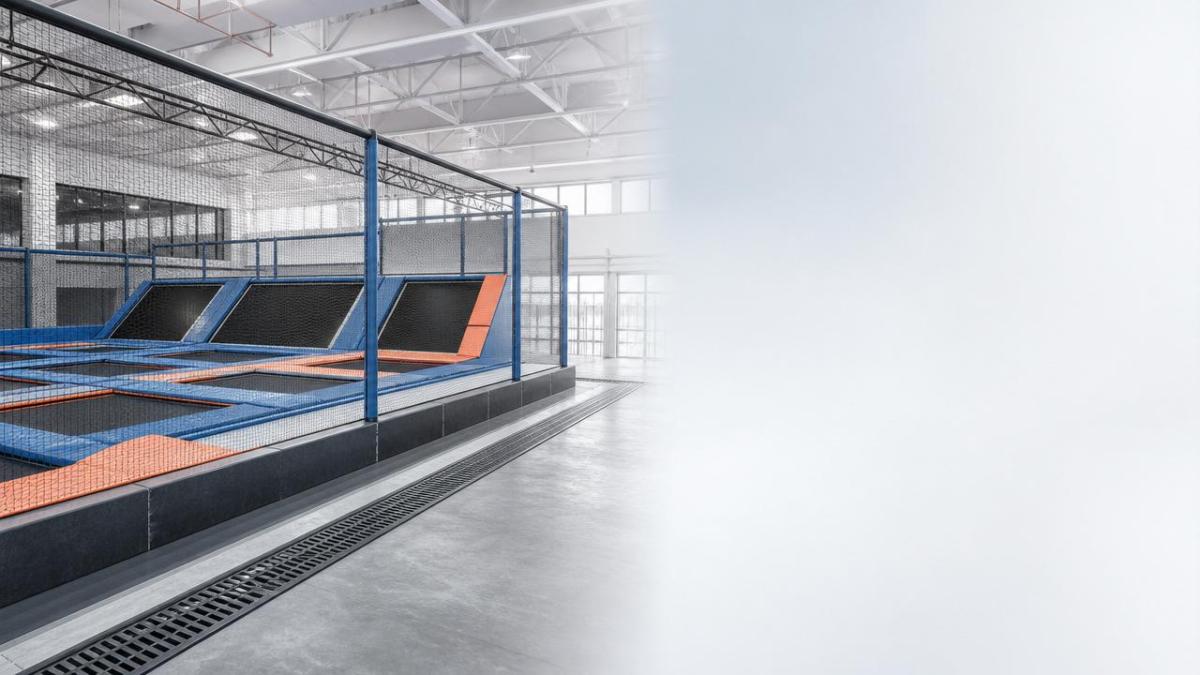
In most cases, rebuild costs are not caused by bad luck. They are created by early decisions that look efficient in the pre-opening phase but fail under operational reality. A trampoline park can open on time and still contain embedded errors in structural coordination, circulation design, floor loading assumptions, impact-zone planning, maintenance access, and water management.
For investors and operators, this is the key point: the cheapest initial proposal is often the most expensive operating asset. When design teams, equipment suppliers, general contractors, and landlords work from incomplete technical assumptions, the result is usually not immediate collapse. Instead, the park suffers from underperforming layouts, recurring repairs, non-compliance upgrades, or partial demolition during expansion.
That is why trampoline park construction should be evaluated as a long-life operating system, not a one-time fit-out package. Decision-makers need to assess whether the project has been engineered for throughput, safety, maintainability, and code resilience over multiple years.
Mistake 1: Choosing a building shell that does not match the park’s structural and operational requirements
One of the most common cost inflators is forcing the concept into the wrong building. Many developers prioritize rent, location, or speed of occupancy, then discover that the shell cannot efficiently support the attraction mix. Ceiling height, column spacing, slab capacity, roof drainage, fire separation, egress paths, and HVAC distribution all affect whether the final park can operate without compromise.
If the building has poor clear-span geometry, structural columns may interfere with trampoline courts, foam pits, zip elements, climbing walls, or spectator sightlines. If the slab cannot support concentrated loads in key zones, reinforcement may be required after the design is already finalized. If the roof or envelope is vulnerable to moisture intrusion, high-humidity activity and dense occupancy can accelerate maintenance issues.
For decision-makers, the lesson is simple: do not ask whether a site can technically host a trampoline park. Ask whether it can do so without forcing redesign, reduced capacity, or deferred corrections. A low-cost shell with high adaptation friction often becomes a rebuild project in phases.
Mistake 2: Underestimating code, safety, and inspection-driven redesign
In trampoline park construction, compliance mistakes are among the fastest ways to destroy budget certainty. Parks sit at the intersection of assembly occupancy, active recreation, child safety, fire code, accessibility, mechanical ventilation, and often local amusement-related regulations. If these are addressed late, redesign cascades through the entire facility.
Typical failures include insufficient egress width, mislocated exits, poor guardrail and barrier integration, inaccessible circulation paths, inadequate restroom counts, and impact-zone details that do not satisfy inspectors or insurers. In some cases, equipment layouts are approved commercially before they are validated against local code interpretation, creating expensive downstream revisions.
Business leaders should be especially cautious when suppliers present “standard layouts” as if they are universally transferable. Compliance is site-specific and jurisdiction-specific. A design that worked elsewhere may require major adaptation in another market. The cost of moving walls, revising occupancy load assumptions, or rebuilding circulation paths after construction starts is significantly higher than the cost of upfront code coordination.
Mistake 3: Designing for visual appeal instead of operational throughput
Many trampoline parks are designed to look exciting in renderings but perform poorly under real customer flow. This creates hidden rebuild pressure because congestion, queue conflict, staff visibility gaps, and inefficient supervision eventually force operators to reconfigure attraction zones or support areas.
From an executive standpoint, layout performance matters as much as attraction appeal. A park that cannot move guests smoothly through check-in, waiver processing, shoe exchange, orientation, open jump zones, party rooms, food service, and spectator areas will lose revenue even if attendance demand exists. Over time, operators try to recover throughput by shifting barriers, repurposing rooms, or relocating functions, which often means physical rebuilding.
In effective trampoline park construction, layout decisions should be modeled around capacity per hour, line-of-sight supervision, age-group separation, emergency response access, cleaning circulation, and birthday/event monetization. These are not secondary operational details. They determine whether the asset can maximize revenue per square foot without later reconstruction.
Mistake 4: Poor drainage and moisture control planning
Moisture-related failures are often overlooked because they do not appear glamorous during design review. Yet drainage and humidity control problems can become some of the most disruptive and expensive rebuild triggers in indoor recreation facilities. Water intrusion, condensation, floor deterioration, mold risk, and corrosion can damage both the building shell and the installed attraction infrastructure.
Problem sources vary. Some parks inherit roof drainage weaknesses from older industrial buildings. Others suffer from poorly sloped exterior areas, unresolved door threshold details, inadequate dehumidification, or mechanical systems not designed for peak occupancy and active-use heat loads. Once these problems surface, repairs may require ceiling access, flooring replacement, insulation work, or temporary closure of revenue zones.
For decision-makers, the right question is not whether the current design includes HVAC and drainage systems. The question is whether those systems were engineered around actual occupancy density, seasonal climate, and maintenance realities. A moisture problem in trampoline park construction is rarely a quick fix; it often evolves into a recurring capital drain.
Mistake 5: Weak coordination between building systems and attraction equipment
A recurring source of rebuild cost is the gap between architectural design and equipment integration. Trampoline parks are not simple empty-box interiors with recreational furniture added later. Their equipment systems interact with structure, padding, netting, lighting, fire protection, power distribution, sound systems, and maintenance access zones.
When these interfaces are poorly coordinated, conflicts appear during installation. Sprinkler heads may require relocation. Lighting may create glare or supervision blind spots. Structural supports may interfere with equipment anchoring. Maintenance clearances may be missing. Access routes for replacing pads, springs, nets, or modular components may not be practical once the park is operational.
This is where disciplined technical review matters. Owners should require coordinated drawings, clash detection where possible, explicit interface responsibility matrices, and installation sequencing plans. Rebuilds often happen not because one component failed, but because no party fully owned the connection between components.
Mistake 6: Buying on upfront package price instead of lifecycle cost
For many buyers, the strongest temptation is to compare vendors mainly on turnkey price. That is understandable, especially when trying to control launch capital. But in trampoline park construction, a lower initial package can conceal high future costs in repairs, downtime, spare parts, supervision burden, or early obsolescence.
Lifecycle cost should include durability of materials, replacement frequency, warranty structure, local service responsiveness, cleaning demands, insurance implications, and the cost of closing parts of the park for maintenance. A component that is cheaper to install but requires frequent replacement is not economical if it interrupts revenue generation and creates safety exposure.
Enterprise decision-makers should evaluate equipment and construction proposals the way they would assess an industrial operating asset: total cost of ownership, not invoice value. That means asking for service records, expected wear profiles, maintenance schedules, material specifications, and references from facilities with similar utilization intensity.
Mistake 7: Failing to plan for future reconfiguration, expansion, or refresh cycles
Even a successful park will need adaptation. Customer preferences change, safety standards evolve, and operators refine their revenue model after seeing actual usage patterns. If the original project is built without flexibility, even modest improvements can trigger disproportionate demolition and rebuild expense.
Examples include party areas that cannot be expanded, underused attractions that are difficult to replace, mezzanine or spectator zones with poor utility access, and partitions or storage layouts that prevent reprogramming. In a competitive market, the ability to refresh attractions without major structural disruption is a strategic advantage.
Smart trampoline park construction includes modular thinking from the start. That does not mean overbuilding everything. It means identifying likely future change zones and designing utility paths, access clearances, structural allowances, and circulation logic that reduce the cost of future adaptation.
How business decision-makers can reduce rebuild risk before contract award
The most effective protection against inflated rebuild costs is a better preconstruction decision process. Owners should not rely only on supplier enthusiasm, generic concept art, or broad promises of turnkey delivery. They need a structured review system that tests technical assumptions before capital is locked in.
First, verify building suitability using a detailed site assessment tied to the intended attraction mix. Second, require code and life-safety review early, not after equipment planning is complete. Third, compare layout options based on throughput, supervision, monetization, and maintenance access, not aesthetics alone.
Fourth, force clarity on interface responsibility. Who owns structural verification, anchoring details, MEP coordination, drainage compatibility, and inspection closeout? Fifth, request lifecycle-oriented documentation: material specifications, warranty limits, replacement schedules, and expected downtime implications. Sixth, stress-test the design for future modifications so the asset does not become rigid after launch.
These disciplines are common in advanced industrial project planning because they reduce downstream uncertainty. The same logic applies here. Trampoline park construction may belong to the recreation sector, but the capital risk profile still rewards engineering rigor over sales-driven simplification.
What a resilient trampoline park construction strategy looks like
A resilient project strategy starts with the recognition that success is measured after opening, not at opening. The right project is not merely one that launches quickly. It is one that maintains compliance, supports strong guest flow, minimizes downtime, protects staffing efficiency, and can evolve without repeated capital shock.
That means selecting the right building shell, validating codes early, engineering moisture and drainage correctly, coordinating systems in detail, and evaluating vendors on lifecycle performance. It also means treating layout as a revenue engine and maintenance variable, not just a design exercise.
For enterprise readers, the broader conclusion is clear: rebuild costs are usually the result of preventable planning failures, not unavoidable market conditions. The earlier these risks are identified, the more negotiating power, design flexibility, and capital efficiency the owner preserves.
Conclusion
The biggest trampoline park construction mistakes are not dramatic construction failures. They are quiet early-stage compromises that later force redesign, retrofits, closures, and expensive reconstruction. For business decision-makers, the priority is to identify those hidden liabilities before contracts are finalized and before the building shell, layout, and equipment package become difficult to change.
If you evaluate trampoline park construction through the lens of lifecycle cost, operational throughput, compliance resilience, and future adaptability, you dramatically reduce the odds of paying twice for the same square footage. In capital-intensive projects, that discipline is not optional. It is the difference between a park that opens and a park that performs.
Search News
Hot Articles
- Carbon Fiber StructuresHow to Specify Aerospace Carbon Fiber Assemblies for Lightweight, Load-Bearing PartsJul 11, 2026
- Machine VisionXiaomi, Alibaba DAMO Academy Drive Open-Source Robotics Model Ecosystem, Lowering Algorithm Development Barriers for Overseas SMEs Adopting Chinese Robotics SolutionsMar 30, 2026
- Cobots & ArmsShanxi 'AI+' Conference Showcases Embodied Intelligence with Multinational Buyer Engagement: Key Industry ImplicationsMar 30, 2026
Popular Tags
Recommended News
 Jul 11, 2026How to Specify Aerospace Carbon Fiber Assemblies for Lightweight, Load-Bearing PartsAerospace carbon fiber assemblies: learn how to specify laminate design, load data, joining methods, and inspection controls for lighter, reliable load-bearing aerospace parts.Elena Rostova (UAV Systems Researcher)
 Mar 30, 2026Xiaomi, Alibaba DAMO Academy Drive Open-Source Robotics Model Ecosystem, Lowering Algorithm Development Barriers for Overseas SMEs Adopting Chinese Robotics SolutionsXiaomi & Alibaba DAMO Academy's open-source robotics models lower algorithm barriers for global SMEs. Boost efficiency in manufacturing, logistics & smart retail with ROS 2 compatible solutions.TSV Data Lab
 Mar 30, 2026Shanxi 'AI+' Conference Showcases Embodied Intelligence with Multinational Buyer Engagement: Key Industry ImplicationsShanxi 'AI+' Conference highlights embodied intelligence with Tesla, Ubtech & Jiantao showcasing multimodal robotics. 40+ global buyers validated tech on-site, creating new B2B channels for industrial automation & AI solutions.Chen Wei (Automation Lead Engineer)
 Mar 30, 2026Zhongguancun Unveils 6G Integrated Sensing-Computing-Intelligence Platform to Empower Embodied Robots for Global Industrial ApplicationsZhongguancun's new 6G platform revolutionizes industrial robotics with <10ms latency, empowering global automotive, logistics & port automation. Discover how this tech boosts China's smart manufacturing exports.TSV Data Lab
 Mar 30, 2026Mech-Mind Tianjin Embodied Intelligence R&D and Production Base Goes Live, Cutting Delivery Time by 20%–30% for Global Customized AMR+Vision SolutionsMech-Mind's Tianjin AMR+Vision production base cuts delivery time by 20%-30% for欧美 & Latin American markets. Discover how this PLd-certified facility accelerates customized robotics solutions for smart manufacturing and logistics.Chen Wei (Automation Lead Engineer)
 Mar 30, 2026Boao Forum Reveals 'Co-evolution of Big and Small Brains' Trend in Humanoid Robots, China's Embodied Intelligence Accelerates Adaptation to Overseas Manufacturing Service ScenariosDiscover how China's humanoid robots, featuring 'Co-evolution of Big and Small Brains,' are revolutionizing global manufacturing. Learn about Embodied Tian Gong 3.0's ISO compliance and overseas deployment at Boao Forum 2026.Chen Wei (Automation Lead Engineer)
 Mar 30, 2026China Railway Industrial Secures Patent for Embodied Robotics in Material Handling, Boosting High-Precision Delivery Capabilities for Overseas Infrastructure and Manufacturing ProjectsChina Railway Industrial's new patent for embodied robotics in material handling boosts high-precision delivery for global infrastructure & manufacturing. Discover how this innovation enhances logistics accuracy in automotive, rail transit & EPC projects.Chen Wei (Automation Lead Engineer)
 Sep 28, 2026Spindle Runout Measurement in Germany: DIN Standards, Methods, and Acceptance LimitsSpindle runout measurement Germany: explore DIN standards, proven methods, acceptance limits, and audit-ready practices for reliable machining quality.Dr. Marcus Vance
 Sep 27, 2026How to Select Wall-Mount Edge Devices for Space-Constrained Factory NetworksWall mount edge devices for space-constrained factories: evaluate workload, thermal design, power resilience, cable access, and network reliability for smarter deployments.TSV Data Lab
 Sep 26, 2026Machining Tolerance Analysis: How to Set Limits That Meet Function and Cost TargetsMachining tolerance analysis: learn how to set functional limits, control tolerance stacks, reduce inspection risk, and balance precision with production cost.Dr. Marcus Vance
 Sep 25, 2026How to Evaluate an Industrial Infrastructure Data Platform for Multi-Site OperationsIndustrial infrastructure data platform evaluation guide for multi-site operations: compare data quality, edge resilience, interoperability, governance, and scalable proof-of-value criteria.Victor Lin (Chief Software Architect)
 Sep 24, 2026How to Select Machine Vision Optics for Accurate Inspection at Different Working DistancesMachine vision optics selection guide for accurate inspection at every working distance. Compare FOV, pixel scale, DOF, distortion, lighting, and telecentric options.TSV Data Lab
 Sep 23, 2026How to Evaluate a Machine Vision System Integrator for High-Speed Inspection LinesChoose a machine vision system integrator with proven expertise in high-speed inspection, reliable reject timing, robust optics, and measurable acceptance criteria.TSV Data Lab
 Sep 28, 2026When is a SCADA API the right choice for connecting plant systems?SCADA API guide: learn when governed plant data integration improves traceability, security, and scalability—without compromising real-time control.Victor Lin (Chief Software Architect)
 Sep 27, 2026How SCADA data integration improves traceability across production linesSCADA data integration connects production-line data to improve traceability, accelerate quality investigations, and strengthen safety decisions.Victor Lin (Chief Software Architect)
 Sep 26, 2026What to define before starting SCADA integration planningSCADA integration planning starts with clear scope, control boundaries, data models, cybersecurity, and testing. Discover the definitions that reduce risk and costly rework.Victor Lin (Chief Software Architect)
 Sep 25, 2026How a smart factory with Industrial IoT reduces production blind spotsDiscover how a smart factory with Industrial IoT turns real-time machine, quality, and workflow data into actionable insights that reduce production blind spots and delivery risks.Victor Lin (Chief Software Architect)
 Sep 24, 2026When does Industrial IoT make smart manufacturing easier to scale?Smart manufacturing Industrial IoT scales when trusted data, interoperable systems, and secure workflows turn connected assets into measurable gains.TSV Data Lab
 Sep 23, 2026What drives ultra-precision machining cost at 1-micron tolerance?Ultra precision machining cost per part at 1 micron tolerance depends on process, material, metrology, and yield. Learn how to compare quotes confidently.Dr. Marcus Vance
 Sep 22, 2026Drone Engine-T550CC Applications: Build the UAV Power System Around the MissionAn application guide for Drone Engine-T550CC integration, covering payload planning, airframe matching, cooling, fuel, vibration, test procedures, documentation, and service preparation.Elena Rostova (UAV Systems Researcher)
 Sep 22, 2026How to Evaluate Industrial Edge Computing Vendors for Factory DeploymentIndustrial edge computing vendor evaluation guide for factories: compare latency, protocol fit, reliability, security, and lifecycle support before deployment.TSV Data Lab
 Sep 21, 2026Drone Payload Integration: Matching Power, Data, and Center of Gravity for Reliable FlightsDrone payload integration made practical: balance power, data, center of gravity, and endurance to build safer, more reliable mission-ready flights.Elena Rostova (UAV Systems Researcher)
 Sep 20, 2026Autonomous Navigation Pricing: Cost Drivers and Budget Benchmarks for AMR ProjectsAutonomous navigation price explained: compare AMR cost drivers, software, sensors, integration, safety, and lifecycle budgets to build a scalable project plan.Chen Wei (Automation Lead Engineer)
 Sep 19, 2026How to Scope Automation Integration Services for Multi-System Factory ProjectsAutomation integration services: learn how to scope multi-system factory projects with clear workflows, interface contracts, safety boundaries, and acceptance criteria.Victor Lin (Chief Software Architect)