
How to Choose Predictive Maintenance Software for CNC: Features, Data Inputs, and ROI
Publication Date
author
How to Choose Predictive Maintenance Software for CNC: Features, Data Inputs, and ROI
Choosing predictive maintenance software for CNC is no longer just an IT decision. It affects uptime, scrap rates, maintenance timing, and capital efficiency every day.
The harder part is not finding vendors. It is telling apart real engineering value from dashboards full of vague promises and polished sales language.
A strong predictive maintenance software for CNC deployment should fit actual machine behavior, data quality, maintenance workflows, and business targets.
That means looking beyond surface features. You need to evaluate signal coverage, model transparency, integration limits, and how quickly the platform produces measurable returns.
Why CNC shops need a stricter evaluation framework
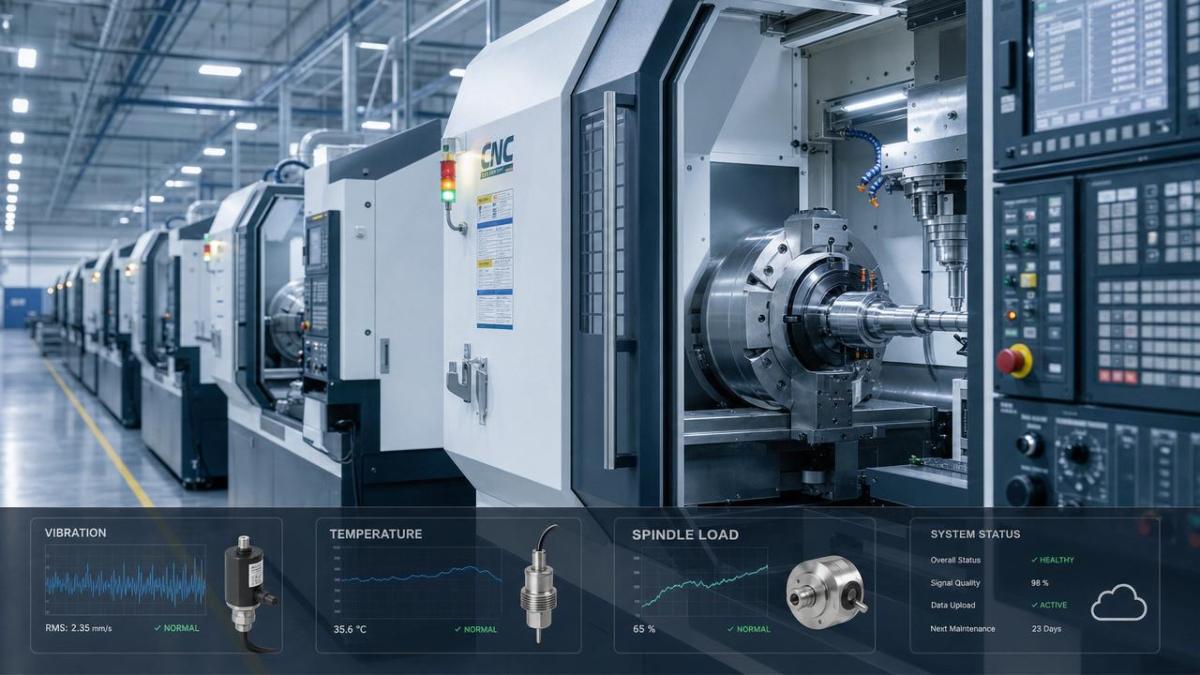
CNC operations create expensive failure modes. A spindle issue can trigger scrap, missed delivery dates, overtime labor, and unplanned service costs in one event.
From recent market shifts, the clearer signal is this: buyers want proof. They want software that connects condition monitoring to maintenance action, not just colorful trend charts.
This is where TechStat Vanguard’s philosophy matters. Parameters do not lie, and predictive maintenance software for CNC should be judged the same way.
In practice, the right platform helps teams detect bearing wear, spindle imbalance, lubrication issues, thermal drift, and abnormal load patterns before failure becomes visible.
The wrong platform adds another monitoring layer but fails to improve maintenance timing, machine availability, or part consistency.
Start with the real use case, not the software demo
Before comparing vendors, define the failure modes that matter most in your environment. This sounds basic, but it changes the entire evaluation process.
A high-mix aerospace supplier faces different risks than a volume automotive plant. Tool wear, coolant contamination, axis backlash, and spindle degradation do not carry equal cost.
So ask four practical questions first.
- Which machine failures create the largest production loss?
- Which failures are currently caught too late?
- Which machine families have enough stable data for modeling?
- Which maintenance decisions could change if earlier warnings existed?
This also means a vendor should explain how its predictive maintenance software for CNC handles your exact equipment mix, not a generic smart factory example.
Core features that actually matter
Feature lists often look impressive. The better approach is to separate operationally useful functions from features that rarely influence machine decisions.
1. Multi-signal condition monitoring
Good predictive maintenance software for CNC should combine more than one signal source. Vibration alone is helpful, but rarely sufficient across all failure modes.
Look for support for spindle load, axis current, temperature, lubrication status, acoustic signals, alarms, and cycle history.
2. Failure prediction with usable lead time
A warning is only valuable if it arrives early enough to act. Ask how much notice the system typically gives before a spindle, bearing, or servo issue becomes critical.
Useful lead time depends on part schedules, shift patterns, and spare part availability. A six-hour alert may help one plant and fail another.
3. Explainable alerts
Black-box alerts create resistance. Maintenance teams need to understand what changed, which signals moved, and why the software flagged a risk.
This matters even more in regulated or precision-driven sectors, where maintenance decisions may require traceable technical evidence.
4. Workflow integration
Predictive maintenance software for CNC should connect to CMMS, MES, SCADA, or ERP environments without creating manual duplication.
If an alert cannot trigger work orders, inspection steps, or maintenance approval paths, its business value drops quickly.
5. Fleet comparison and benchmarking
Comparing similar machines is often where hidden patterns appear. One machine may consume more spindle current, run hotter, or show growing vibration at the same job mix.
That benchmarking layer is especially useful for multi-site manufacturers trying to standardize maintenance thresholds.
What data inputs are required for reliable results
Software quality cannot overcome weak input quality. In real-world CNC settings, data readiness is often the main reason predictive projects stall.
A vendor should clearly state which data inputs are mandatory, optional, and recommended for each use case.
Essential machine data
- Spindle speed and load
- Axis position, feed rate, and current
- Machine alarms and fault logs
- Cycle time and utilization history
- Temperature and vibration signals
Important context data
- Part family or job type
- Tooling information
- Material grade
- Maintenance records
- Operator or shift patterns
Without context, the model may misread normal variation as a fault. Titanium machining and aluminum machining can produce very different signal patterns.
This is why predictive maintenance software for CNC should be tested against real production diversity, not only clean lab-like machine runs.
A simple data readiness check
How to evaluate ROI without oversimplifying it
ROI is often reduced to avoided downtime. That is important, but incomplete. A realistic business case should include direct and indirect operational effects.
A useful ROI model for predictive maintenance software for CNC usually covers five cost or value areas.
- Reduced unplanned downtime
- Lower scrap and rework from degraded machine conditions
- Better maintenance labor scheduling
- Longer asset life through earlier intervention
- Lower spare part and emergency service costs
More importantly, measure the baseline first. If current downtime coding is vague, ROI estimates can become fiction very quickly.
This also means vendors should explain expected time to value. Some plants can show early gains in one asset class within months. Others need longer data collection cycles.
ROI questions worth asking vendors
- Which failure modes have delivered proven savings?
- What baseline data is needed to quantify improvement?
- How are false positives measured and reduced?
- What deployment costs appear after the initial quote?
- How much internal engineering support is required?
Common selection mistakes to avoid
One common mistake is buying for dashboard appeal. Another is assuming more AI always means better results.
In actual machining environments, the best predictive maintenance software for CNC is often the platform that fits data reality and maintenance discipline most closely.
- Do not ignore sensor installation and calibration effort.
- Do not accept vague claims about prediction accuracy.
- Do not evaluate software without maintenance team input.
- Do not skip pilot validation on representative machines.
- Do not treat integration work as a minor detail.
A short pilot with clear success criteria is usually the best decision filter. It reveals data gaps, alert quality, workflow fit, and hidden deployment costs early.
A practical shortlist framework
If you need a structured path, score each vendor across a few weighted categories rather than relying on a general impression.
- Signal coverage for CNC-specific failure modes
- Data readiness fit with current infrastructure
- Model transparency and alert explainability
- Integration with CMMS, MES, and plant systems
- Pilot evidence and measurable ROI assumptions
- Total deployment effort across sites
This keeps the evaluation grounded in engineering reality. It also supports cleaner internal alignment between operations, maintenance, IT, and procurement teams.
The final decision should not be based on who says the most. It should be based on who proves the most with data, fit, and operational discipline.
Final takeaway
Choosing predictive maintenance software for CNC is really about choosing a decision system for machine health, maintenance timing, and production risk.
The strongest option will show clear signal logic, realistic data requirements, useful lead time, and ROI tied to actual machine behavior.
Start with failure modes, validate data quality, run a focused pilot, and demand measurable outcomes. That approach keeps selection grounded in engineering truth rather than marketing noise.
Search News
Hot Articles
- Carbon Fiber StructuresHow to Specify Aerospace Carbon Fiber Assemblies for Lightweight, Load-Bearing PartsJul 11, 2026
- Machine VisionXiaomi, Alibaba DAMO Academy Drive Open-Source Robotics Model Ecosystem, Lowering Algorithm Development Barriers for Overseas SMEs Adopting Chinese Robotics SolutionsMar 30, 2026
- Cobots & ArmsShanxi 'AI+' Conference Showcases Embodied Intelligence with Multinational Buyer Engagement: Key Industry ImplicationsMar 30, 2026
Popular Tags
Recommended News
 Jul 11, 2026How to Specify Aerospace Carbon Fiber Assemblies for Lightweight, Load-Bearing PartsAerospace carbon fiber assemblies: learn how to specify laminate design, load data, joining methods, and inspection controls for lighter, reliable load-bearing aerospace parts.Elena Rostova (UAV Systems Researcher)
 Mar 30, 2026Xiaomi, Alibaba DAMO Academy Drive Open-Source Robotics Model Ecosystem, Lowering Algorithm Development Barriers for Overseas SMEs Adopting Chinese Robotics SolutionsXiaomi & Alibaba DAMO Academy's open-source robotics models lower algorithm barriers for global SMEs. Boost efficiency in manufacturing, logistics & smart retail with ROS 2 compatible solutions.TSV Data Lab
 Mar 30, 2026Shanxi 'AI+' Conference Showcases Embodied Intelligence with Multinational Buyer Engagement: Key Industry ImplicationsShanxi 'AI+' Conference highlights embodied intelligence with Tesla, Ubtech & Jiantao showcasing multimodal robotics. 40+ global buyers validated tech on-site, creating new B2B channels for industrial automation & AI solutions.Chen Wei (Automation Lead Engineer)
 Mar 30, 2026Zhongguancun Unveils 6G Integrated Sensing-Computing-Intelligence Platform to Empower Embodied Robots for Global Industrial ApplicationsZhongguancun's new 6G platform revolutionizes industrial robotics with <10ms latency, empowering global automotive, logistics & port automation. Discover how this tech boosts China's smart manufacturing exports.TSV Data Lab
 Mar 30, 2026Mech-Mind Tianjin Embodied Intelligence R&D and Production Base Goes Live, Cutting Delivery Time by 20%–30% for Global Customized AMR+Vision SolutionsMech-Mind's Tianjin AMR+Vision production base cuts delivery time by 20%-30% for欧美 & Latin American markets. Discover how this PLd-certified facility accelerates customized robotics solutions for smart manufacturing and logistics.Chen Wei (Automation Lead Engineer)
 Mar 30, 2026Boao Forum Reveals 'Co-evolution of Big and Small Brains' Trend in Humanoid Robots, China's Embodied Intelligence Accelerates Adaptation to Overseas Manufacturing Service ScenariosDiscover how China's humanoid robots, featuring 'Co-evolution of Big and Small Brains,' are revolutionizing global manufacturing. Learn about Embodied Tian Gong 3.0's ISO compliance and overseas deployment at Boao Forum 2026.Chen Wei (Automation Lead Engineer)
 Mar 30, 2026China Railway Industrial Secures Patent for Embodied Robotics in Material Handling, Boosting High-Precision Delivery Capabilities for Overseas Infrastructure and Manufacturing ProjectsChina Railway Industrial's new patent for embodied robotics in material handling boosts high-precision delivery for global infrastructure & manufacturing. Discover how this innovation enhances logistics accuracy in automotive, rail transit & EPC projects.Chen Wei (Automation Lead Engineer)
 Oct 26, 2026AMAXiMAL Releases Open-Source TopMod 3D v3 With Claude AIExplore AMAXiMAL’s free, open-source TopMod 3D v3 with Claude AI assistance, topology-based modeling and plywood fabrication tools that connect complex designs to physical builds.Dr. Marcus Vance
 Oct 26, 2026Choosing a SCADA System Integrator Company: PLC Compatibility and Long-Term SupportChoose a scada system integrator company with proven PLC compatibility and reliable long-term support. Discover what to test, compare, and require before investing.Victor Lin (Chief Software Architect)
 Oct 25, 2026Hesai Leads Global ADAS Main Lidar Shipments in Yole’s 2026 ReportHesai led global ADAS main lidar shipments with a 43% share in 2025, according to Yole’s 2026 report. Explore what this ranking reveals about its automotive market position.TSV Data Lab
 Oct 25, 2026Choosing an Aerospace Materials Manufacturer: Quality and Traceability ChecksChoosing an aerospace materials manufacturer? Learn how to verify certifications, test reports, and lot traceability to qualify suppliers confidently and reduce costly sourcing risks.Dr. Marcus Vance
 Oct 24, 2026Guotai Haitong: Global Entry-Level 3D Printer Shipments Rose 39% in Q1 2026Entry-level 3D printer shipments rose 39% in Q1 2026, Guotai Haitong reports. Explore how AI, multicolor printing and print farms are shaping market growth.Dr. Marcus Vance
 Oct 24, 2026Choosing an Industrial Vision Inspection Supplier: Acceptance Tests That MatterChoose an industrial vision inspection supplier with confidence. Discover acceptance tests for defect detection, false rejects, production speed, and reliable part rejection before you buy.TSV Data Lab
 Oct 23, 2026US Navy Raises Gecko Robotics Contract Ceiling to $300M for Robotic Fleet MaintenanceUS Navy raises Gecko Robotics’ contract ceiling to $300M for Pacific Fleet robotic inspections. Explore potential opportunities for maintenance suppliers and key procurement considerations.Chen Wei (Automation Lead Engineer)
 Oct 23, 2026Choosing Industrial Sensing Systems for Global Plants: Protocol CompatibilityCompare industrial sensing systems international buyers can trust. Explore protocol compatibility, reduce integration risks, and select proven configurations for reliable global plant deployments.TSV Data Lab
 Oct 22, 2026KUKA Showcases Physical AI and iiQKA.AI Vision at NVIDIA GTC BerlinExplore KUKA’s Physical AI showcase at NVIDIA GTC Berlin and discover how iiQKA.AI Vision aims to simplify robotic vision integration and improve 2D and 3D scene recognition.TSV Data Lab
 Oct 22, 2026Robotic Machining of Advanced Composites: What Tolerances Are Achievable?Explore advanced materials machining robotics: discover what drives achievable composite tolerances and how to validate accuracy before investing in your next machining system.Dr. Marcus Vance
 Oct 21, 2026China’s Industrial Robot Exports Near RMB 10 Billion in First Nine Months of 2026China’s industrial robot exports neared RMB 10 billion in January–September 2026, with value rising faster than volume. Explore the data and what it could mean for suppliers.Chen Wei (Automation Lead Engineer)
 Oct 21, 2026Low-Latency Industrial Data Processing: Pricing and Key Cost DriversExplore industrial data latency price drivers, from edge hardware to integration and support. Learn how to compare quotes, verify performance, and avoid unnecessary costs.TSV Data Lab
 Oct 20, 2026KUKA Launches iiQKA.AI Vision to Simplify Industrial Image ProcessingKUKA iiQKA.AI Vision simplifies industrial image processing with controller-based 2D and 3D vision. Explore drag-and-drop setup for vision-guided automation.TSV Data Lab
 Oct 20, 2026Smart Industrial Edge Devices: Key Criteria for Legacy PLC IntegrationChoose smart industrial edge devices for legacy PLC integration. Discover key criteria for compatibility, data quality, security, and reliable collection without disrupting control.TSV Data Lab
 Oct 19, 2026Choosing a Radar Sensor by Application: Range, Resolution, and Field of ViewSimplify radar sensor application based product selection. Compare range, resolution, and field of view to avoid blind spots and choose with confidence. Explore the guide.TSV Data Lab
 Oct 18, 2026Comparing Material Options for Procurement: Specs, Costs, and Supply RisksExplore procurement oriented technical content on material options, specs, costs, and supply risks. Compare alternatives to cut hidden expenses and make confident sourcing decisions.Dr. Marcus Vance
 Oct 17, 20265-Axis CNC Positioning Accuracy: How to Interpret ISO 230-2 Test ResultsAssess 5 axis CNC machining positioning accuracy with ISO 230-2. Learn to interpret repeatability, reversal error, and test conditions to compare suppliers and make confident acceptance decisions.Dr. Marcus Vance























